Library
Browse and search books
2,037 novels found
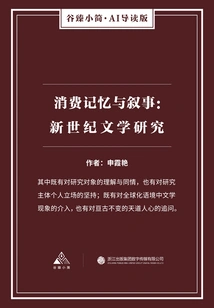
消费记忆与叙事:新世纪文学研究(谷臻小简·AI导读版)
Shen Xiayan
This book uses consumption as the entry point to study current literary narratives, and examines important writers, works, literary phenomena and literary criticism in the new century. Among them are not only the understanding and sympathy for the research object, but also the persistence of the personal position of the research subject; not only the intervention of literary phenomena in the context of globalization, but also the questioning of the eternal way of heaven and the human heart.
This book uses consumption as the entry point to study current literary narratives, and examines important writers, works, literary phenomena and literary criticism in the new century. Among them are not only the understanding and sympathy for the research object, but also the persistence of the personal position of the research subject; not only the intervention of literary phenomena in the context of globalization, but also the questioning of the eternal way of heaven and the human heart.
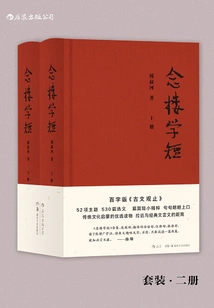
念楼学短(套装共2册)
Chung Shu Ho
It is difficult to write Chinese characters, especially when using a knife to carve oracle bones or lacquer to write on bamboo slips. It is impossible to use a computer like today, and a large version can be written in a few minutes. Therefore, ancient prose is the most concise and contains less nonsense. This is a specialty of our ancestors and should not be thrown away easily. Zhong Shuhe copied several short articles over the years. The short standard is that they should not exceed one hundred Chinese characters, and they must be independent articles. Now I will select some of them and explain them slightly for the benefit of readers. To borrow a sentence from Zheng Banqiao: "There are some benefits, let's take a look; if there are no benefits, it's just a window covering and a wall covering."
It is difficult to write Chinese characters, especially when using a knife to carve oracle bones or lacquer to write on bamboo slips. It is impossible to use a computer like today, and a large version can be written in a few minutes. Therefore, ancient prose is the most concise and contains less nonsense. This is a specialty of our ancestors and should not be thrown away easily. Zhong Shuhe copied several short articles over the years. The short standard is that they should not exceed one hundred Chinese characters, and they must be independent articles. Now I will select some of them and explain them slightly for the benefit of readers. To borrow a sentence from Zheng Banqiao: "There are some benefits, let's take a look; if there are no benefits, it's just a window covering and a wall covering."
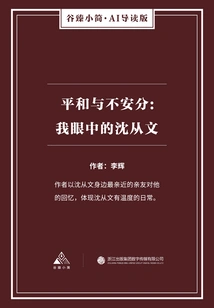
平和与不安分:我眼中的沈从文(谷臻小简·AI导读版)
Li Hui
The author uses the memories of Shen Congwen's closest relatives and friends to reflect Shen Congwen's warm daily life. The author's writing style is concise and atmospheric, expressing Mr. Shen's gentle and pure character, and also portraying Mr. Shen's courageous and upright spirit.
The author uses the memories of Shen Congwen's closest relatives and friends to reflect Shen Congwen's warm daily life. The author's writing style is concise and atmospheric, expressing Mr. Shen's gentle and pure character, and also portraying Mr. Shen's courageous and upright spirit.
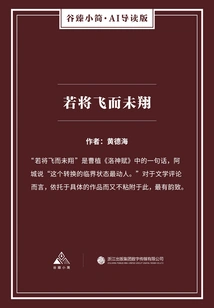
若将飞而未翔(谷臻小简·AI导读版)
Huang Dehai
"If you are about to fly but have not yet soared" is a sentence in Cao Zhi's "Luo Shen Fu". Acheng said, "This critical state of transition is the most moving." For literary criticism, relying on specific works without being attached to them is the most charming.
"If you are about to fly but have not yet soared" is a sentence in Cao Zhi's "Luo Shen Fu". Acheng said, "This critical state of transition is the most moving." For literary criticism, relying on specific works without being attached to them is the most charming.
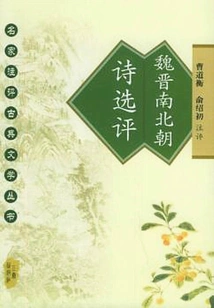
魏晋南北朝诗选评
Commentary By Cao Daoheng And Yu Shaochu
This book collects poetry works from the Wei, Jin, Southern and Northern Dynasties, as well as some pseudo-Yuefu and Three Kingdoms poems with main names. In addition to providing captions and brief annotations for each work, it also comments on the works chapter by chapter.
This book collects poetry works from the Wei, Jin, Southern and Northern Dynasties, as well as some pseudo-Yuefu and Three Kingdoms poems with main names. In addition to providing captions and brief annotations for each work, it also comments on the works chapter by chapter.
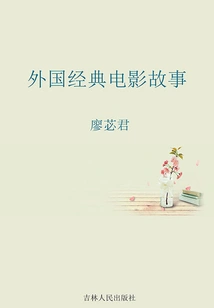
Foreign Classic Movie Stories
Literature外国经典电影故事
Liao Bijun
This book appreciates movies such as The Blue Bridge, Roman Holiday, Hibiscus, Gone with the Wind, It Happened One Night, Love Story, Butterfly Dream, Life and Death, Cleopatra, Manhunt, Witness, Kamata March, etc.
This book appreciates movies such as The Blue Bridge, Roman Holiday, Hibiscus, Gone with the Wind, It Happened One Night, Love Story, Butterfly Dream, Life and Death, Cleopatra, Manhunt, Witness, Kamata March, etc.
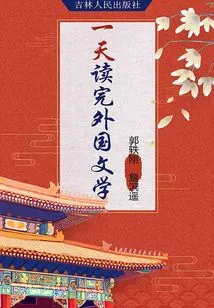
Read Foreign Literature in One Day
Literature一天读完外国文学
Guo Yigang Zhan Binyao
The content of this book includes: Homer's "Iliad", Ovid's "Metamorphoses", Molière's "The Hypocrite", Stendhal's "The Red and the Black", Zola's "The Germination", Shakespeare's "Hamlet", etc.
The content of this book includes: Homer's "Iliad", Ovid's "Metamorphoses", Molière's "The Hypocrite", Stendhal's "The Red and the Black", Zola's "The Germination", Shakespeare's "Hamlet", etc.
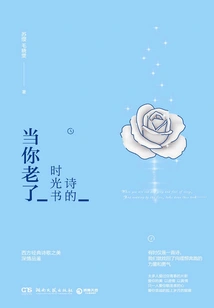
诗的时光书:当你老了
Su Ying Mao Xiaowen
The book opens with Yeats, who was hailed by Eliot as "the greatest contemporary poet". This book opens the door to the classics of Western poetry for readers. The author has selected 21 important poets in the history of modern Western poetry: from Rimbaud, the originator of surrealist poetry, to Amy Lowell, the representative poet of Imagism; from Frost, the poet laureate who abides by meter, to Whitman, who created "free form"; from Eluard, a modernist poet who pursued freedom all his life, to Mrs. Browning, who wrote all innocence and love in sonnets... These 21 poetic stories are about love and loss, about ideals and freedom. The fate of the poet blends with the mood of the critic, reproducing the charm of these poems that have been washed by time.
The book opens with Yeats, who was hailed by Eliot as "the greatest contemporary poet". This book opens the door to the classics of Western poetry for readers. The author has selected 21 important poets in the history of modern Western poetry: from Rimbaud, the originator of surrealist poetry, to Amy Lowell, the representative poet of Imagism; from Frost, the poet laureate who abides by meter, to Whitman, who created "free form"; from Eluard, a modernist poet who pursued freedom all his life, to Mrs. Browning, who wrote all innocence and love in sonnets... These 21 poetic stories are about love and loss, about ideals and freedom. The fate of the poet blends with the mood of the critic, reproducing the charm of these poems that have been washed by time.
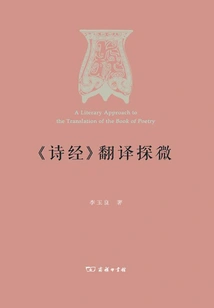
《诗经》翻译探微
Li Yuliang
Starting from the perspective of Chinese and Western comparative literature, this book takes nearly 200 poems from multiple English translations of the Book of Songs as the research object, focusing on the translation of famous objects, rhymes, rhetoric, images, and themes in the Book of Songs. It conducts an objective, in-depth, and detailed analysis and commentary on the literary nature of the translation of the Book of Songs and its relationship with history and culture, as well as the external translation and dissemination of the cultural tradition of the Book of Songs. The book also puts forward many new views and insights on the translation of The Book of Songs from the perspectives of literary aesthetics and cultural communication.
Starting from the perspective of Chinese and Western comparative literature, this book takes nearly 200 poems from multiple English translations of the Book of Songs as the research object, focusing on the translation of famous objects, rhymes, rhetoric, images, and themes in the Book of Songs. It conducts an objective, in-depth, and detailed analysis and commentary on the literary nature of the translation of the Book of Songs and its relationship with history and culture, as well as the external translation and dissemination of the cultural tradition of the Book of Songs. The book also puts forward many new views and insights on the translation of The Book of Songs from the perspectives of literary aesthetics and cultural communication.
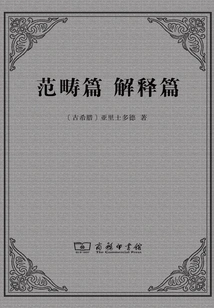
Category Chapter Explanation Chapter
Literature范畴篇 解释篇
(ancient Greece) Aristotle
"Categories and Interpretation" includes "Categories" and "Explanation", which are the shorter two chapters in Aristotle's "Reference Book" of logic. "Categories" describes the theory of logic and formulates the doctrine of categories; "Explanation" expounds the general principles of argumentation and discusses the problem of syllogism. We must study this work with a correct analytical attitude, absorb the essence that is useful to me, and eliminate the outdated dross.
"Categories and Interpretation" includes "Categories" and "Explanation", which are the shorter two chapters in Aristotle's "Reference Book" of logic. "Categories" describes the theory of logic and formulates the doctrine of categories; "Explanation" expounds the general principles of argumentation and discusses the problem of syllogism. We must study this work with a correct analytical attitude, absorb the essence that is useful to me, and eliminate the outdated dross.
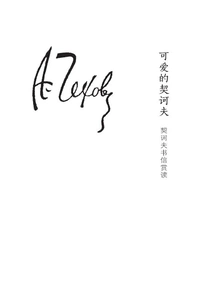
Lovely Chekhov
Literature可爱的契诃夫
(russian) Chekhov
Chekhov wrote more than 4,000 letters in his lifetime. The author of this book has selected more than 200 of Chekhov's most valuable letters, and each letter is followed by the author's appreciation text. The contents of the letters include important events in Chekhov's interactions with giants such as Tolstoy, Gorky, Tchaikovsky, Bunin, etc., As well as rare love letters he wrote to his wife Knibill, as well as records of his love for nature and his selfless help to the people at the bottom during his travels. Chekhov's letters have a strong sense of picture and reveal his true temperament everywhere. They vividly and truly restore the little-known lovely side behind the majestic figure of this master of realist criticism and the world's short story giant, reflecting his unique personality charm.
Chekhov wrote more than 4,000 letters in his lifetime. The author of this book has selected more than 200 of Chekhov's most valuable letters, and each letter is followed by the author's appreciation text. The contents of the letters include important events in Chekhov's interactions with giants such as Tolstoy, Gorky, Tchaikovsky, Bunin, etc., As well as rare love letters he wrote to his wife Knibill, as well as records of his love for nature and his selfless help to the people at the bottom during his travels. Chekhov's letters have a strong sense of picture and reveal his true temperament everywhere. They vividly and truly restore the little-known lovely side behind the majestic figure of this master of realist criticism and the world's short story giant, reflecting his unique personality charm.
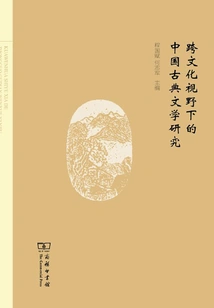
跨文化视野下的中国古典文学研究
Cheng Guofu He Zhijun
"Research on Chinese Classical Literature from a Cross-Cultural Perspective" contains 21 articles by teachers from the School of Liberal Arts of Jinan University. It is divided into four series, including cultural studies and ancient literature research, literature and ancient literature research, ancient novels and communication research, philology and ancient literature research. The content involves specific text research such as "Li Sao", "Explanation of Names", "Annotations of Du Gongbu's Poems and Essays in Reading Hall", etc. , There are also studies on the historical context of literature and literary phenomena, such as the Seven Sons of the Ming Dynasty, the Jingling School, popular novels of the Ming and Qing Dynasties, etc.; There are also discussions on the relationship between social culture and literary phenomena, such as the wearing of Taoist uniforms by literati and officials in the Northern Song Dynasty, the singing style of the early "Shenbao" authors, the Buddha's "love" and the feminization of male aesthetic images in the Six Dynasties, and philological research, such as the second examination of Zhou Bangyan's deeds in his later years, and the five examinations of writers in the late Ming Dynasty. This book is rich in content, broad in vision, and academically standardized. It demonstrates the rich academic achievements of teachers from the School of Liberal Arts of Jinan University and contributes to further research on the cross-cultural perspective of Chinese classical literature.
"Research on Chinese Classical Literature from a Cross-Cultural Perspective" contains 21 articles by teachers from the School of Liberal Arts of Jinan University. It is divided into four series, including cultural studies and ancient literature research, literature and ancient literature research, ancient novels and communication research, philology and ancient literature research. The content involves specific text research such as "Li Sao", "Explanation of Names", "Annotations of Du Gongbu's Poems and Essays in Reading Hall", etc. , There are also studies on the historical context of literature and literary phenomena, such as the Seven Sons of the Ming Dynasty, the Jingling School, popular novels of the Ming and Qing Dynasties, etc.; There are also discussions on the relationship between social culture and literary phenomena, such as the wearing of Taoist uniforms by literati and officials in the Northern Song Dynasty, the singing style of the early "Shenbao" authors, the Buddha's "love" and the feminization of male aesthetic images in the Six Dynasties, and philological research, such as the second examination of Zhou Bangyan's deeds in his later years, and the five examinations of writers in the late Ming Dynasty. This book is rich in content, broad in vision, and academically standardized. It demonstrates the rich academic achievements of teachers from the School of Liberal Arts of Jinan University and contributes to further research on the cross-cultural perspective of Chinese classical literature.
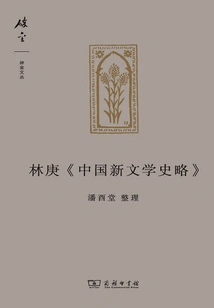
林庚《中国新文学史略》
Youtang
This book is the lecture notes of the new literature course taught by Mr. Lin Geng at the National Peking Normal University from 1936 to 1937. It was originally the old collection of the famous scholar Professor Luo Genze. It was only discovered and compiled in recent years that it became known to the world. The handout is an "on-the-spot" summary of the new literature that just passed away at that time. It briefly and completely records the development of new literature before the Anti-Japanese War. It can be called an instant reflection on the twenty years of Chinese new literature. This lecture, completed eighty years ago, also highlights Mr. Lin Geng's dual perspectives as a literary researcher and a modern poet, providing a series of original literary scenes, filled with precious freshness and a vibrant sense of presence.
This book is the lecture notes of the new literature course taught by Mr. Lin Geng at the National Peking Normal University from 1936 to 1937. It was originally the old collection of the famous scholar Professor Luo Genze. It was only discovered and compiled in recent years that it became known to the world. The handout is an "on-the-spot" summary of the new literature that just passed away at that time. It briefly and completely records the development of new literature before the Anti-Japanese War. It can be called an instant reflection on the twenty years of Chinese new literature. This lecture, completed eighty years ago, also highlights Mr. Lin Geng's dual perspectives as a literary researcher and a modern poet, providing a series of original literary scenes, filled with precious freshness and a vibrant sense of presence.
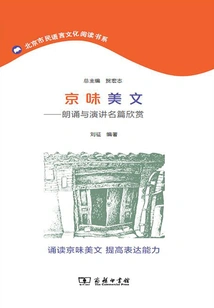
京味美文:朗诵与演讲名篇欣赏
Liu Zheng
This little book is a "little gift for learning recitation and speech" dedicated to readers. After introducing the general knowledge of recitation and speech, the editor quotes 28 famous articles with a strong Beijing flavor to provide specific guidance on content appreciation and technical skills. This will be helpful to every friend who studies, works, works, and struggles in Beijing, whether it is from the perspective of experiencing cultural influence and gaining spiritual nourishment, or from the perspective of improving language expression and building communication confidence.
This little book is a "little gift for learning recitation and speech" dedicated to readers. After introducing the general knowledge of recitation and speech, the editor quotes 28 famous articles with a strong Beijing flavor to provide specific guidance on content appreciation and technical skills. This will be helpful to every friend who studies, works, works, and struggles in Beijing, whether it is from the perspective of experiencing cultural influence and gaining spiritual nourishment, or from the perspective of improving language expression and building communication confidence.
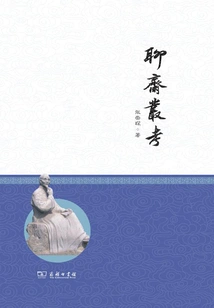
Liaozhai Congkao
Literature聊斋丛考
Zhang Chongchen
This is a monograph that examines Pu Songling's life, "Liao Zhai" skills and reveals the multiple cultural implications of "Liao Zhai". It specifically includes three parts: the first is the textual research on the life story of Pu Songling, the author of "Liao Zhai"; the second is the textual research on the ability of "Liao Zhai"; the third is the revelation and micro-examination of the multiple cultural connotations of "Liao Zhai". Many of the textual researches in the book are unique and take a step forward based on previous research. For example, the inscriptions on Pu Songling's portrait reveal his complicated mentality in his later years; the research on Pu Songling's relationship with the Zhucheng survivor group explores the impact on his thoughts and creations; the research on the deeds of the "Jin Monk" in "Liao Zhai" points out the important historical value of the "Jin Monk" chapter in the study of the temple economy during the Ming and Qing Dynasties. Previous researchers have never mentioned these aspects.
This is a monograph that examines Pu Songling's life, "Liao Zhai" skills and reveals the multiple cultural implications of "Liao Zhai". It specifically includes three parts: the first is the textual research on the life story of Pu Songling, the author of "Liao Zhai"; the second is the textual research on the ability of "Liao Zhai"; the third is the revelation and micro-examination of the multiple cultural connotations of "Liao Zhai". Many of the textual researches in the book are unique and take a step forward based on previous research. For example, the inscriptions on Pu Songling's portrait reveal his complicated mentality in his later years; the research on Pu Songling's relationship with the Zhucheng survivor group explores the impact on his thoughts and creations; the research on the deeds of the "Jin Monk" in "Liao Zhai" points out the important historical value of the "Jin Monk" chapter in the study of the temple economy during the Ming and Qing Dynasties. Previous researchers have never mentioned these aspects.
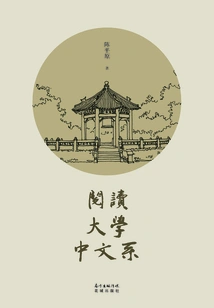
Reading·university·chinese Department
Literature阅读·大学·中文系
Chen Pingyuan
This book is a "continuation" of "Answering Questions from Guests in West Beijing". The famous scholar Chen Pingyuan revised and compiled the answers to reporters' questions and dictations published in recent years into a book. This book contains more than fifty questions and answers. The author has slightly modified each article and changed most of the titles. However, the title of the publication has been noted at the end of the article for easy retrieval. This book focuses on the three keywords of "reading", "university" and "Chinese Department". The author puts forward his own views on some issues in current society and academia in the form of questions and answers.
This book is a "continuation" of "Answering Questions from Guests in West Beijing". The famous scholar Chen Pingyuan revised and compiled the answers to reporters' questions and dictations published in recent years into a book. This book contains more than fifty questions and answers. The author has slightly modified each article and changed most of the titles. However, the title of the publication has been noted at the end of the article for easy retrieval. This book focuses on the three keywords of "reading", "university" and "Chinese Department". The author puts forward his own views on some issues in current society and academia in the form of questions and answers.
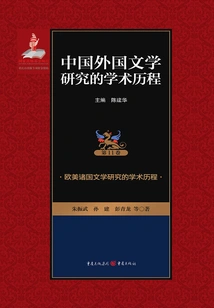
欧美诸国文学研究的学术历程
Zhu Zhenwu Et Al.
"The Academic Process of Literature Research in European and American Countries" is the 11th volume out of the total 12 volumes of "The Academic Process of Chinese Foreign Literature Research". This volume systematically and comprehensively organizes academic research in China on Australian literature, Canadian English literature, New Zealand literature, Eastern European literature, Latin American literature, Spanish literature, Nordic literature, and ancient Greek and Roman literature, in addition to the five mainstream countries in Europe and the United States (the United States, Britain, France, Germany, and Russia). The book details their occurrence, development, and transformation in China, as well as their value in academic history. The significance of this study explores the influence of the humanistic atmosphere, political climate, social development and various domestic and international ideological trends in different periods on the above-mentioned research. It explores the mental process and evolution of Chinese scholars' absorption, reference, translation and comment on writers, works and literary phenomena from the above-mentioned countries and regions. It also reveals the emergence of the subject consciousness of Chinese scholars and even the gradual emergence and emphasis of academic consciousness and critical consciousness.
"The Academic Process of Literature Research in European and American Countries" is the 11th volume out of the total 12 volumes of "The Academic Process of Chinese Foreign Literature Research". This volume systematically and comprehensively organizes academic research in China on Australian literature, Canadian English literature, New Zealand literature, Eastern European literature, Latin American literature, Spanish literature, Nordic literature, and ancient Greek and Roman literature, in addition to the five mainstream countries in Europe and the United States (the United States, Britain, France, Germany, and Russia). The book details their occurrence, development, and transformation in China, as well as their value in academic history. The significance of this study explores the influence of the humanistic atmosphere, political climate, social development and various domestic and international ideological trends in different periods on the above-mentioned research. It explores the mental process and evolution of Chinese scholars' absorption, reference, translation and comment on writers, works and literary phenomena from the above-mentioned countries and regions. It also reveals the emergence of the subject consciousness of Chinese scholars and even the gradual emergence and emphasis of academic consciousness and critical consciousness.
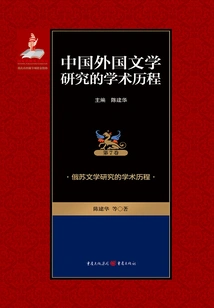
俄苏文学研究的学术历程
Chen Jianhua
"The Academic Process of Russian-Soviet Literature Research" is the seventh volume out of the total 12 volumes of "The Academic Process of Chinese Foreign Literature Research". This book is an academic historical research work. This book takes the century-old history of Russian-Soviet literature research as a clue and academic transformation as a theoretical framework. It conducts an in-depth investigation of the research situation of Russian-Soviet literature and takes a comprehensive look at the research on Russian-Soviet literature in China that has lasted for more than a hundred years.
"The Academic Process of Russian-Soviet Literature Research" is the seventh volume out of the total 12 volumes of "The Academic Process of Chinese Foreign Literature Research". This book is an academic historical research work. This book takes the century-old history of Russian-Soviet literature research as a clue and academic transformation as a theoretical framework. It conducts an in-depth investigation of the research situation of Russian-Soviet literature and takes a comprehensive look at the research on Russian-Soviet literature in China that has lasted for more than a hundred years.
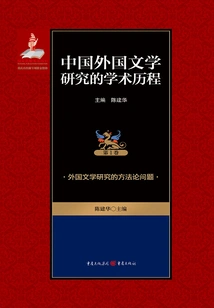
外国文学研究的方法论问题
Chen Jianhua
"Methodological Issues in Foreign Literature Research" is the first of the 12 volumes in "The Academic Process of Foreign Literature Research in China" and is one of the "General Discussions". The whole book involves two important issues in the study of foreign literature in my country in the past century: methodology and discourse transformation. The author of the manuscript has a high-level discussion on the methodological issues and discourse transformation issues of foreign literature research in my country over the past century, especially in the past thirty years. He has made a comprehensive review and concise review of the academic history of foreign literature research in my country, comprehensively summarized and analyzed the achievements of my country's foreign literature research, pointed out the existing problems and deficiencies in the research from a methodological perspective, looked forward to foreign literature research, and proposed the direction for future efforts.
"Methodological Issues in Foreign Literature Research" is the first of the 12 volumes in "The Academic Process of Foreign Literature Research in China" and is one of the "General Discussions". The whole book involves two important issues in the study of foreign literature in my country in the past century: methodology and discourse transformation. The author of the manuscript has a high-level discussion on the methodological issues and discourse transformation issues of foreign literature research in my country over the past century, especially in the past thirty years. He has made a comprehensive review and concise review of the academic history of foreign literature research in my country, comprehensively summarized and analyzed the achievements of my country's foreign literature research, pointed out the existing problems and deficiencies in the research from a methodological perspective, looked forward to foreign literature research, and proposed the direction for future efforts.
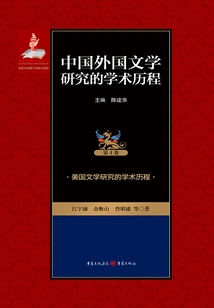
美国文学研究的学术历程
Jiang Ningkang Et Al.
"The Academic History of American Literature Studies" is the fourth volume out of the total 12 volumes of "The Academic History of Chinese Foreign Literature Studies". This book systematically examines and analyzes the context and important results of American literary studies in China over the past century, and sorts out and explains the origins of the subject's history and related academic and teaching institutions. This book draws on the data statistics and analysis methods of quantitative history to conduct qualitative and quantitative analysis of the development status of the discipline, achieving a research effect that combines empirical research and diachronic elaboration. In addition, it focuses on in-depth analysis of the dissemination of literary works, evaluation of literary creation, literary theoretical research, activities of academic organizations and institutions, and important research works. It also conducts special inspections of the monographs of current young scholars. After summarizing the experience of American literary research, this volume puts forward the disciplinary historical significance of academic consciousness and academic innovation, reflecting the high emphasis on innovation in American literary research in the new century.
"The Academic History of American Literature Studies" is the fourth volume out of the total 12 volumes of "The Academic History of Chinese Foreign Literature Studies". This book systematically examines and analyzes the context and important results of American literary studies in China over the past century, and sorts out and explains the origins of the subject's history and related academic and teaching institutions. This book draws on the data statistics and analysis methods of quantitative history to conduct qualitative and quantitative analysis of the development status of the discipline, achieving a research effect that combines empirical research and diachronic elaboration. In addition, it focuses on in-depth analysis of the dissemination of literary works, evaluation of literary creation, literary theoretical research, activities of academic organizations and institutions, and important research works. It also conducts special inspections of the monographs of current young scholars. After summarizing the experience of American literary research, this volume puts forward the disciplinary historical significance of academic consciousness and academic innovation, reflecting the high emphasis on innovation in American literary research in the new century.
文史探微
Wang Zengwen
"Investigation of Literature and History" mainly includes: a discussion on the characteristics of the narrative in Guoyu; an examination of Confucius' deleted poems; the ethics and moral standards advocated by Confucius and their limitations; an examination of Mozi as a person in the Song Dynasty - and a refutation of the three theories that Mozi was a Lu, a Luyang, and an Indian; a review of the debate on the hometown of Zhuangzhou; an analysis of Zhuangzi's aesthetic thoughts from the fables of "Zhuangzi"; a discussion on the creation of characters in "Zhuangzi", etc.
"Investigation of Literature and History" mainly includes: a discussion on the characteristics of the narrative in Guoyu; an examination of Confucius' deleted poems; the ethics and moral standards advocated by Confucius and their limitations; an examination of Mozi as a person in the Song Dynasty - and a refutation of the three theories that Mozi was a Lu, a Luyang, and an Indian; a review of the debate on the hometown of Zhuangzhou; an analysis of Zhuangzi's aesthetic thoughts from the fables of "Zhuangzi"; a discussion on the creation of characters in "Zhuangzi", etc.
英美文学与女性视角
Yu Miao Wang Yangyang Zhu Li
This book mainly studies the relevant development changes and characteristics of British and American literature from a female perspective. Due to changes in the historical traditions, cultural background, and life styles of British and American countries, the images of women in literary works are also very different. There are all kinds of female images created in British and American literary works, but regardless of their personalities, these female images have significantly different approaches to love and life.
This book mainly studies the relevant development changes and characteristics of British and American literature from a female perspective. Due to changes in the historical traditions, cultural background, and life styles of British and American countries, the images of women in literary works are also very different. There are all kinds of female images created in British and American literary works, but regardless of their personalities, these female images have significantly different approaches to love and life.
Narrative Ethics in Yan Geling's Novels
Literature严歌苓小说的叙事伦理
Dong Na
Among contemporary overseas Chinese writers, Yan Geling is considered one of the more active. So far, Yan Geling's literary creation career has spanned more than thirty years. During this period, she kept writing and dedicated a large number of works to readers. In the literary world, especially in the field of Chinese literature, she has opened up her own sky and formed a unique and distinctive style. Therefore, the study of Yan Geling's novels not only helps to achieve a comprehensive understanding of her, but is also an important measure to enrich the research results of Chinese literature in the world. By combing Yan Geling's works, we can find that her novel creation has certain concentration and stage characteristics in subject selection and ethical expression. At the same time, it also reflects overall changes over time. This book follows his creative process, focuses on the focus and characteristics of his works, and attempts to make a diachronic and holistic summary of the ethical expression of Yan Geling's novels from the five ethical relationships of political ethics, cultural ethics, gender ethics, survival ethics and interpersonal ethics.
Among contemporary overseas Chinese writers, Yan Geling is considered one of the more active. So far, Yan Geling's literary creation career has spanned more than thirty years. During this period, she kept writing and dedicated a large number of works to readers. In the literary world, especially in the field of Chinese literature, she has opened up her own sky and formed a unique and distinctive style. Therefore, the study of Yan Geling's novels not only helps to achieve a comprehensive understanding of her, but is also an important measure to enrich the research results of Chinese literature in the world. By combing Yan Geling's works, we can find that her novel creation has certain concentration and stage characteristics in subject selection and ethical expression. At the same time, it also reflects overall changes over time. This book follows his creative process, focuses on the focus and characteristics of his works, and attempts to make a diachronic and holistic summary of the ethical expression of Yan Geling's novels from the five ethical relationships of political ethics, cultural ethics, gender ethics, survival ethics and interpersonal ethics.
Contemporary Political Philosophy
Literature当代政治哲学
B
After the publication of Rawls's "A Theory of Justice", the landscape of contemporary political philosophy was reorganized. Not only did the coordinates of the historically established theoretical schools such as utilitarianism and liberalism undergo fundamental changes, but also along with the theoretical debates surrounding "A Theory of Justice", theoretical schools such as citizenship theory, communitarianism, multiculturalism, and feminism suddenly emerged, fundamentally changing the dominant pattern of utilitarianism. ? The book "Contemporary Political Philosophy" is a presentation of this theoretical scene. In the book, author Kymlicka examines various theories active in the contemporary political philosophy arena in detail, and critically analyzes their different arguments and interpretations of equality, freedom, and a just society based on the two. It not only clarifies the complex background of the emergence of the theories of each faction and the historical process of their continuous development beyond the original point in the process of mutual debate, but also clarifies the different interests behind various confusing concepts of justice through rigorous logical argumentation. Reading "Contemporary Political Philosophy" not only allows readers to appreciate the colorful pictures drawn by the most thoughtful theorists of the era we live in on social institutional issues, thereby gaining spiritual experience, but also provides a good theoretical guide for people to understand and understand various complex issues of the era.
After the publication of Rawls's "A Theory of Justice", the landscape of contemporary political philosophy was reorganized. Not only did the coordinates of the historically established theoretical schools such as utilitarianism and liberalism undergo fundamental changes, but also along with the theoretical debates surrounding "A Theory of Justice", theoretical schools such as citizenship theory, communitarianism, multiculturalism, and feminism suddenly emerged, fundamentally changing the dominant pattern of utilitarianism. ? The book "Contemporary Political Philosophy" is a presentation of this theoretical scene. In the book, author Kymlicka examines various theories active in the contemporary political philosophy arena in detail, and critically analyzes their different arguments and interpretations of equality, freedom, and a just society based on the two. It not only clarifies the complex background of the emergence of the theories of each faction and the historical process of their continuous development beyond the original point in the process of mutual debate, but also clarifies the different interests behind various confusing concepts of justice through rigorous logical argumentation. Reading "Contemporary Political Philosophy" not only allows readers to appreciate the colorful pictures drawn by the most thoughtful theorists of the era we live in on social institutional issues, thereby gaining spiritual experience, but also provides a good theoretical guide for people to understand and understand various complex issues of the era.
赛博空间与文学存在方式的嬗变
Zhang Yi
The influence of cyberspace on the way literature exists is as follows: it reconstructs the subject of literary and artistic creation from aspects such as identity, psychology, and body (cybers, posthumans); it promotes the evolution of reader functions from aspects such as reading methods, aesthetic psychology, and experience methods; it reshapes text forms from aspects such as text type, text openness, spatialization, and temporality. Traditional narrative theory cannot adapt to the characteristics of digital media, so "interactive narrative" emerged in response to the trend. Micro-level analysis of works, taking hypertext, hypermedia literature, interactive drama and other literary types as examples, strives to outline a panoramic view of literary reconstruction.
The influence of cyberspace on the way literature exists is as follows: it reconstructs the subject of literary and artistic creation from aspects such as identity, psychology, and body (cybers, posthumans); it promotes the evolution of reader functions from aspects such as reading methods, aesthetic psychology, and experience methods; it reshapes text forms from aspects such as text type, text openness, spatialization, and temporality. Traditional narrative theory cannot adapt to the characteristics of digital media, so "interactive narrative" emerged in response to the trend. Micro-level analysis of works, taking hypertext, hypermedia literature, interactive drama and other literary types as examples, strives to outline a panoramic view of literary reconstruction.
论唐·德里罗小说的后现代政治写作
Shi Yanlin
Starting from DeLillo's overall creative process, this book not only focuses on the literary aesthetic dimension in DeLillo's novel creation, but also reveals the power logic and political direction behind the text by exploring the ideological connotation of the work. It can be said that DeLillo's works are multi-dimensional and involve many issues such as gender, race, class, ethnicity, and ideology. An in-depth discussion of these issues will help us broaden the research topics of postmodernist novels, highlight the intervention of postmodernist novels in reality and history, and highlight the consistent political themes in DeLillo's novel creation.
Starting from DeLillo's overall creative process, this book not only focuses on the literary aesthetic dimension in DeLillo's novel creation, but also reveals the power logic and political direction behind the text by exploring the ideological connotation of the work. It can be said that DeLillo's works are multi-dimensional and involve many issues such as gender, race, class, ethnicity, and ideology. An in-depth discussion of these issues will help us broaden the research topics of postmodernist novels, highlight the intervention of postmodernist novels in reality and history, and highlight the consistent political themes in DeLillo's novel creation.
庙堂之高,江湖之远:透过金庸《鹿鼎记》看清初政治、生活与文化
Guan Yanjie
The early Qing Dynasty was full of complex political struggles and beautiful youth. This unique style of the times is vividly expressed in "The Deer and the Cauldron". The emotional and flavorful descriptions are as if they were seen in person. All aspects of traditional Chinese life and classical culture are shown in the book, including food, clothing, housing, transportation, music, chess, calligraphy and painting, astronomy and geography, poetry and music, hundreds of schools of thought, and nine streams and three religions, almost everything is covered. The period from 1667 to 1689 was in the first half of Kangxi's reign and was also the peak of the military and political ambitions of the rulers of the early Qing Dynasty. In this book, the author uses "Wei Xiaobao's perspective and experience" in "The Deer and the Cauldron" to analyze, examine and restore as much as possible the real historical politics, social life and cultural conditions of this period.
The early Qing Dynasty was full of complex political struggles and beautiful youth. This unique style of the times is vividly expressed in "The Deer and the Cauldron". The emotional and flavorful descriptions are as if they were seen in person. All aspects of traditional Chinese life and classical culture are shown in the book, including food, clothing, housing, transportation, music, chess, calligraphy and painting, astronomy and geography, poetry and music, hundreds of schools of thought, and nine streams and three religions, almost everything is covered. The period from 1667 to 1689 was in the first half of Kangxi's reign and was also the peak of the military and political ambitions of the rulers of the early Qing Dynasty. In this book, the author uses "Wei Xiaobao's perspective and experience" in "The Deer and the Cauldron" to analyze, examine and restore as much as possible the real historical politics, social life and cultural conditions of this period.
瓦尔登湖畔的自由之帆:梭罗散文诗学研究
Sun Xiao
This book explains Thoreau's poetics of freedom from the perspectives of romantic poetics, realist poetics and transcendentalist poetics. The author believes that Thoreau explored the realm of life and spirit freedom in the freedom in the wilderness world, the freedom in moral society, and the freedom in religious experience, and formed his unique view of freedom in the natural system. Thoreau's poetics of freedom is a product of the romantic era and the result of his poetic philosophical thinking, with a strong utopian color. Thoreau used poetic wisdom to describe an eternally free "Walden Pond", constructing a spiritual home for human beings to live in poetically in this "absurd" world.
This book explains Thoreau's poetics of freedom from the perspectives of romantic poetics, realist poetics and transcendentalist poetics. The author believes that Thoreau explored the realm of life and spirit freedom in the freedom in the wilderness world, the freedom in moral society, and the freedom in religious experience, and formed his unique view of freedom in the natural system. Thoreau's poetics of freedom is a product of the romantic era and the result of his poetic philosophical thinking, with a strong utopian color. Thoreau used poetic wisdom to describe an eternally free "Walden Pond", constructing a spiritual home for human beings to live in poetically in this "absurd" world.
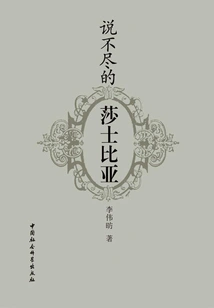
Indescribable Shakespeare
Literature说不尽的莎士比亚
Li Weifang
This book mainly consists of three parts: the first part is a selection and analysis of Shakespeare's sonnets; the second part is a selection and analysis of Shakespeare's wonderful monologues in his plays; the third part is a brief history of Western Shakespeare criticism. Also included is a research paper exploring the relationship between Shakespeare and the Bible. The author has several main considerations in structuring this book. First of all, the research results on Shakespeare, especially on Shakespeare's plays, can be said to be numerous and innumerable, and their research contents cover almost every corner. But comparatively speaking, the analysis and discussion of Shakespeare's sonnets are relatively weak. Although some scholars have analyzed and evaluated some of Shakespeare's important sonnets, so far there has not been a book analyzing Shakespeare's sonnets. The central theme of Shakespeare's sonnets is love and friendship, which expresses the poet's understanding and views of love, friendship, youth and beauty, which strongly reflects the poet's innocent and pure altruistic thoughts and broad mind of tolerance and understanding; it also expresses the poet's aggressive outlook on life that desires to defeat time and cherish life. At the same time, the poem also reveals some broader and deeper thoughts and feelings, such as strong resentment and hatred towards the ugly realities of the society at that time, such as intrigues, the weak and the strong, and the confusion of right and wrong. This emotion is the basic starting point for the poet's future tragedy creation. In addition, many poems also express the poet's persistent pursuit of aesthetic ideals in literary and artistic creation. This is an important document for understanding the poet's artistic outlook. Obviously, a more comprehensive and specific analysis of these poems will help people understand Shakespeare's greatness and profundity more comprehensively and emotionally from a poetic perspective. Secondly, it is also very meaningful to understand and analyze Shakespeare from the perspective of dramatic character monologues. There are many wonderful monologues in Shakespeare's plays that are familiar to readers of all generations and have been passed down for generations.
This book mainly consists of three parts: the first part is a selection and analysis of Shakespeare's sonnets; the second part is a selection and analysis of Shakespeare's wonderful monologues in his plays; the third part is a brief history of Western Shakespeare criticism. Also included is a research paper exploring the relationship between Shakespeare and the Bible. The author has several main considerations in structuring this book. First of all, the research results on Shakespeare, especially on Shakespeare's plays, can be said to be numerous and innumerable, and their research contents cover almost every corner. But comparatively speaking, the analysis and discussion of Shakespeare's sonnets are relatively weak. Although some scholars have analyzed and evaluated some of Shakespeare's important sonnets, so far there has not been a book analyzing Shakespeare's sonnets. The central theme of Shakespeare's sonnets is love and friendship, which expresses the poet's understanding and views of love, friendship, youth and beauty, which strongly reflects the poet's innocent and pure altruistic thoughts and broad mind of tolerance and understanding; it also expresses the poet's aggressive outlook on life that desires to defeat time and cherish life. At the same time, the poem also reveals some broader and deeper thoughts and feelings, such as strong resentment and hatred towards the ugly realities of the society at that time, such as intrigues, the weak and the strong, and the confusion of right and wrong. This emotion is the basic starting point for the poet's future tragedy creation. In addition, many poems also express the poet's persistent pursuit of aesthetic ideals in literary and artistic creation. This is an important document for understanding the poet's artistic outlook. Obviously, a more comprehensive and specific analysis of these poems will help people understand Shakespeare's greatness and profundity more comprehensively and emotionally from a poetic perspective. Secondly, it is also very meaningful to understand and analyze Shakespeare from the perspective of dramatic character monologues. There are many wonderful monologues in Shakespeare's plays that are familiar to readers of all generations and have been passed down for generations.
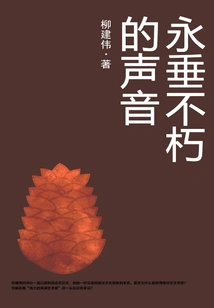
Everlasting Voice
Literature永垂不朽的声音
Liu Jianwei
As a collection of reviews, this book focuses on literature, movies, representative figures in the literary world, literary phenomena, trends, etc., Which form the main direction of the author's reviews. The target audience includes emerging military literary writers, famous literary critics, and well-known figures in the literary and art circles such as Mo Yan, Zhou Daxin, and Zhang Yimou. It presents readers with a sharp and unique spicy feast.
As a collection of reviews, this book focuses on literature, movies, representative figures in the literary world, literary phenomena, trends, etc., Which form the main direction of the author's reviews. The target audience includes emerging military literary writers, famous literary critics, and well-known figures in the literary and art circles such as Mo Yan, Zhou Daxin, and Zhang Yimou. It presents readers with a sharp and unique spicy feast.
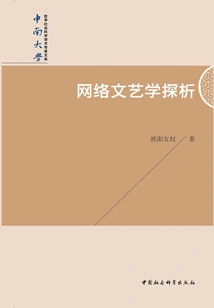
Analysis of Internet Literature and Art
Literature网络文艺学探析
Ouyang Youquan
This book discusses the basic theoretical issues of Internet literature and art in the context of Internet media. The book is composed of 7 parts and 42 papers, including academic logic, theoretical transformation, concept genealogy, value construction, body shape, status quo evaluation, and critical paradigm. It mainly discusses the ontological structure of Internet literature, the transformation of Chinese literature under digital media and its theoretical turn, the institutional genealogy of Internet literature and art, the value orientation and aesthetic choices of Internet literature and art, the laws and paradoxes of Internet creation, image representation and text aesthetics in the digital media era, and issues of literary classics and literary and artistic forms in the Internet era. The topic, the significance and limitations of Internet literature criticism, the paradigm boundaries and media of new media literature and art research, and a detailed analysis of the theoretical construction and conceptual changes of different Internet literature and art types such as Internet novels, blog literature, Weibo literature, WeChat literature, mobile phone text message literature, digital animation, online games, and Internet Martian literature. These papers were published in "Chinese Social Sciences", "Literary Review", "People's Daily", "Guangming Daily" and other CSSCI publications, and many of them were reprinted by "Xinhua Digest", "National People's Congress Copy Materials", "Chinese Social Sciences Digest", and "China University Liberal Arts Academic Digest".
This book discusses the basic theoretical issues of Internet literature and art in the context of Internet media. The book is composed of 7 parts and 42 papers, including academic logic, theoretical transformation, concept genealogy, value construction, body shape, status quo evaluation, and critical paradigm. It mainly discusses the ontological structure of Internet literature, the transformation of Chinese literature under digital media and its theoretical turn, the institutional genealogy of Internet literature and art, the value orientation and aesthetic choices of Internet literature and art, the laws and paradoxes of Internet creation, image representation and text aesthetics in the digital media era, and issues of literary classics and literary and artistic forms in the Internet era. The topic, the significance and limitations of Internet literature criticism, the paradigm boundaries and media of new media literature and art research, and a detailed analysis of the theoretical construction and conceptual changes of different Internet literature and art types such as Internet novels, blog literature, Weibo literature, WeChat literature, mobile phone text message literature, digital animation, online games, and Internet Martian literature. These papers were published in "Chinese Social Sciences", "Literary Review", "People's Daily", "Guangming Daily" and other CSSCI publications, and many of them were reprinted by "Xinhua Digest", "National People's Congress Copy Materials", "Chinese Social Sciences Digest", and "China University Liberal Arts Academic Digest".
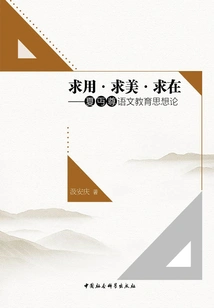
求用·求美·求在:夏丏尊语文教育思想论
Ji Anqing
From the perspective of modern curriculum theory and teaching theory, combined with the history of modern Chinese education, this book is systematic and in-depth from seven aspects: thinking on the ontology of Chinese education, Chinese curriculum thinking, teaching material compilation thinking, reading education thinking, writing education thinking, Chinese assessment thinking, and formal aesthetics thinking. It thoroughly combs through the thoughts of Mr. Xia Qizun, a master of Chinese language education during the Republic of China. His elucidation and expression of Xia Qizun's ontological thoughts on Chinese education, and his combing and discussion of "why to read" and "why to write" in his thoughts on reading education and writing education are particularly innovative.
From the perspective of modern curriculum theory and teaching theory, combined with the history of modern Chinese education, this book is systematic and in-depth from seven aspects: thinking on the ontology of Chinese education, Chinese curriculum thinking, teaching material compilation thinking, reading education thinking, writing education thinking, Chinese assessment thinking, and formal aesthetics thinking. It thoroughly combs through the thoughts of Mr. Xia Qizun, a master of Chinese language education during the Republic of China. His elucidation and expression of Xia Qizun's ontological thoughts on Chinese education, and his combing and discussion of "why to read" and "why to write" in his thoughts on reading education and writing education are particularly innovative.
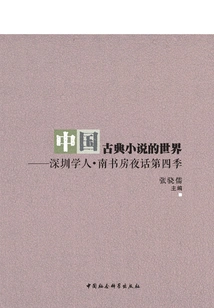
中国古典小说的世界:深圳学人·南书房夜话第四季
Editor-in-chief Zhang Xiaoru
"The World of Chinese Classical Novels - Shenzhen Scholars·South Study Room Night Talk Season 4" is a revision and compilation of the exciting content from the 20th issue of the brand academic salon "Shenzhen Scholars·South Study Room Night Talk Season 3" jointly organized by the Shenzhen Academy of Social Sciences and Shenzhen Library. The main content is to analyze and interpret four representative works of Chinese classical novels: "A Dream of Red Mansions", "Romance of the Three Kingdoms", "Water Margin" and "Journey to the West", to guide readers into the world of classical literature.
"The World of Chinese Classical Novels - Shenzhen Scholars·South Study Room Night Talk Season 4" is a revision and compilation of the exciting content from the 20th issue of the brand academic salon "Shenzhen Scholars·South Study Room Night Talk Season 3" jointly organized by the Shenzhen Academy of Social Sciences and Shenzhen Library. The main content is to analyze and interpret four representative works of Chinese classical novels: "A Dream of Red Mansions", "Romance of the Three Kingdoms", "Water Margin" and "Journey to the West", to guide readers into the world of classical literature.
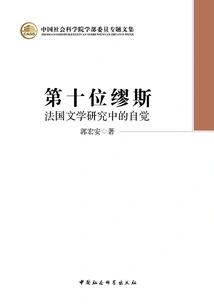
第十位缪斯:法国文学研究中的自觉
Guo Hongan
This book contains more than 30 articles on French literary criticism by Mr. Guo Hongan. The content can be roughly divided into writers (critics), work criticism, preface to the Chinese translation, random thoughts on literary criticism, and essay research. The compilation intention of the whole book is relatively prominent, and it is intended to express the author's views on literary criticism in a comprehensive, concentrated and concrete way.
This book contains more than 30 articles on French literary criticism by Mr. Guo Hongan. The content can be roughly divided into writers (critics), work criticism, preface to the Chinese translation, random thoughts on literary criticism, and essay research. The compilation intention of the whole book is relatively prominent, and it is intended to express the author's views on literary criticism in a comprehensive, concentrated and concrete way.
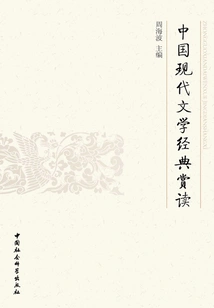
中国现代文学经典赏读
Editor-in-chief Zhou Haibo
This book selects sixteen classic and significant works of modern Chinese literature by sixteen writers, and divides them into four units: the first unit: social life of literature, the second unit: the world and customs of literature, the third unit: love and family of literature, and the fourth unit: the philosophy and psychology of literature. The whole book conducts a unique appreciation analysis of these classic texts, guiding readers to re-understand and read literary works. Each writer is accompanied by a brief biography and the original text or excerpts from the original text for the convenience of readers.
This book selects sixteen classic and significant works of modern Chinese literature by sixteen writers, and divides them into four units: the first unit: social life of literature, the second unit: the world and customs of literature, the third unit: love and family of literature, and the fourth unit: the philosophy and psychology of literature. The whole book conducts a unique appreciation analysis of these classic texts, guiding readers to re-understand and read literary works. Each writer is accompanied by a brief biography and the original text or excerpts from the original text for the convenience of readers.
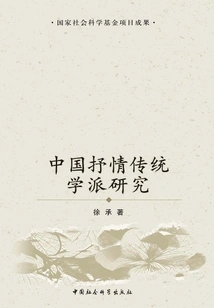
中国抒情传统学派研究
Xu Cheng
The author of "Research on the Chinese Lyrical Traditional School" traces the ideological origin of the school, describes its development process, analyzes its academic methods, and finally points out that the Chinese Lyric Traditional School is essentially a modern invention of the history of Chinese literary and aesthetics based on the Western Romantic stylistic concept as an ideal, and reflects the mirror-image recognition and imagination of overseas Chinese scholars towards Chinese traditional culture. Out of reflection on the theory of lyric tradition, the author advocates an objective and pluralistic comparative perspective and a more microscopic research method on Chinese literary aesthetics.
The author of "Research on the Chinese Lyrical Traditional School" traces the ideological origin of the school, describes its development process, analyzes its academic methods, and finally points out that the Chinese Lyric Traditional School is essentially a modern invention of the history of Chinese literary and aesthetics based on the Western Romantic stylistic concept as an ideal, and reflects the mirror-image recognition and imagination of overseas Chinese scholars towards Chinese traditional culture. Out of reflection on the theory of lyric tradition, the author advocates an objective and pluralistic comparative perspective and a more microscopic research method on Chinese literary aesthetics.
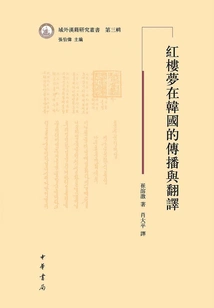
红楼梦在韩国的传播与翻译(域外汉籍研究丛书第三辑)
Cui Rongche
The introduction of "Dream of Red Mansions" to South Korea began in the early 19th century after the appearance of Cheng Keben. This book focuses on the introduction of "Dream of Red Mansions" in Korea, Le Shanzhai's translation of "Dream of Red Mansions" and its sequels, and modern translators' translations. It is divided into ten chapters and provides an in-depth discussion of the dissemination and translation of "Dream of Red Mansions" in Korea.
The introduction of "Dream of Red Mansions" to South Korea began in the early 19th century after the appearance of Cheng Keben. This book focuses on the introduction of "Dream of Red Mansions" in Korea, Le Shanzhai's translation of "Dream of Red Mansions" and its sequels, and modern translators' translations. It is divided into ten chapters and provides an in-depth discussion of the dissemination and translation of "Dream of Red Mansions" in Korea.
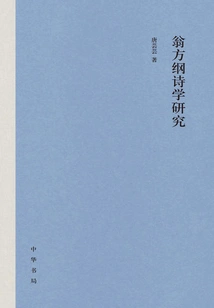
Research on Weng Fanggang's Poetry
Literature翁方纲诗学研究
Tang Yunyun
There are currently two misunderstandings in the academic research on Weng Fanggang's poetics: one is to interpret "texture" as "righteousness" and "literary theory", and the other is to equate "texture" with the entire Weng Fanggang's poetics. This book uses Volume 10 of "Shizhou Poetry", a manuscript collected by the Shanghai Library, to analyze in detail the connotation of the "texture" theory and its lack of theoretical construction. It also examines how Weng Fanggang emerged from the "spirit" and his contribution to defining the aesthetic characteristics of Song poetry. Among them, concepts such as "frontal writing", "situation" and "incorporating learning into poetry" are mainly discussed. Finally, Weng Fanggang's creative practice of "using textual research into poetry" and his influence on Feng Minchang, Liang Zhangju, Ruan Yuan, Pan Zuyin and others were examined, and he was characterized as "the perfect mediator of traditional poetics" from the perspective of the history of poetics.
There are currently two misunderstandings in the academic research on Weng Fanggang's poetics: one is to interpret "texture" as "righteousness" and "literary theory", and the other is to equate "texture" with the entire Weng Fanggang's poetics. This book uses Volume 10 of "Shizhou Poetry", a manuscript collected by the Shanghai Library, to analyze in detail the connotation of the "texture" theory and its lack of theoretical construction. It also examines how Weng Fanggang emerged from the "spirit" and his contribution to defining the aesthetic characteristics of Song poetry. Among them, concepts such as "frontal writing", "situation" and "incorporating learning into poetry" are mainly discussed. Finally, Weng Fanggang's creative practice of "using textual research into poetry" and his influence on Feng Minchang, Liang Zhangju, Ruan Yuan, Pan Zuyin and others were examined, and he was characterized as "the perfect mediator of traditional poetics" from the perspective of the history of poetics.
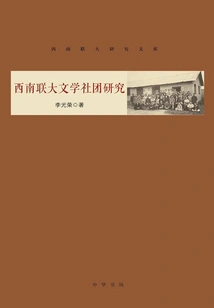
西南联大文学社团研究
Li Guangrong
This book is an updated version of the 2011 edition of "Flowers Burning in Season: A Study of the Literary Society of Southwest Associated University" published by Zhonghua Book Company. It has a total of about 400,000 words. It conducts a systematic study of the literary societies of Southwest Associated University in the history of modern literature, and the representative Nanhu Poetry Society, Plateau Literature and Art Society, and Nanhuang The emergence, development, creative achievements, influence and status of important societies such as the Literary Society, Dongqing Literary Society, Wenju Society, Literary Society, and New Poetry Society are reviewed and discussed in depth. It is a research monograph that reflects the cutting-edge academic level in the fields of modern literary history, university education, etc., And has considerable reference value.
This book is an updated version of the 2011 edition of "Flowers Burning in Season: A Study of the Literary Society of Southwest Associated University" published by Zhonghua Book Company. It has a total of about 400,000 words. It conducts a systematic study of the literary societies of Southwest Associated University in the history of modern literature, and the representative Nanhu Poetry Society, Plateau Literature and Art Society, and Nanhuang The emergence, development, creative achievements, influence and status of important societies such as the Literary Society, Dongqing Literary Society, Wenju Society, Literary Society, and New Poetry Society are reviewed and discussed in depth. It is a research monograph that reflects the cutting-edge academic level in the fields of modern literary history, university education, etc., And has considerable reference value.
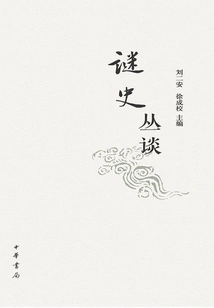
Mysterious History Series
Literature谜史丛谈
Liu Er'an Editor-in-chief Xu Chengxiao
The text in this book is divided into: a collated version of "History of Mysteries", a collection of research articles on "History of Mysteries", a collection of Qian Nanyang's essays on mystery and appendices. The "Mysterious History" included in this book is based on the 1986 re-edition, with reference to various previous proofreadings and unpublished proofreadings, and a comprehensive and detailed proofreading. Although I cannot say that it is perfect, it can be said to be the most complete version so far. A collection of research articles covering all aspects of "Mysterious History" both inside and outside the book.
The text in this book is divided into: a collated version of "History of Mysteries", a collection of research articles on "History of Mysteries", a collection of Qian Nanyang's essays on mystery and appendices. The "Mysterious History" included in this book is based on the 1986 re-edition, with reference to various previous proofreadings and unpublished proofreadings, and a comprehensive and detailed proofreading. Although I cannot say that it is perfect, it can be said to be the most complete version so far. A collection of research articles covering all aspects of "Mysterious History" both inside and outside the book.
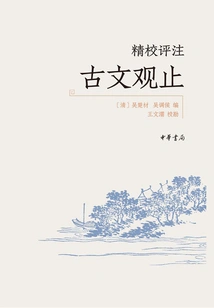
精校评注古文观止
(qing Dynasty) Wu Chucai (qing Dynasty) Wu Tiaohou Collated By Wang Wenru
This book is a refined edition compiled by Wang Wenru, a recent scholar, based on the commentaries on ancient prose compiled by Wu Chucai and Wu Tiaohou during the Kangxi period of the Qing Dynasty. This book is completely different from the currently popular ancient texts, which are mainly translations and annotations, or supplemented by simple explanations. The focus is to reveal the main purpose of each article or explain the artistic features in the form of eyebrow criticism, analyze the subtle meaning of the article paragraph by paragraph in the form of comments and comments, sort out the structure of the article, and explain difficult words in the article. There is also a biography of the author at the front of the book for reading reference. It is a commentary that explains profound things in simple terms and has unique characteristics.
This book is a refined edition compiled by Wang Wenru, a recent scholar, based on the commentaries on ancient prose compiled by Wu Chucai and Wu Tiaohou during the Kangxi period of the Qing Dynasty. This book is completely different from the currently popular ancient texts, which are mainly translations and annotations, or supplemented by simple explanations. The focus is to reveal the main purpose of each article or explain the artistic features in the form of eyebrow criticism, analyze the subtle meaning of the article paragraph by paragraph in the form of comments and comments, sort out the structure of the article, and explain difficult words in the article. There is also a biography of the author at the front of the book for reading reference. It is a commentary that explains profound things in simple terms and has unique characteristics.
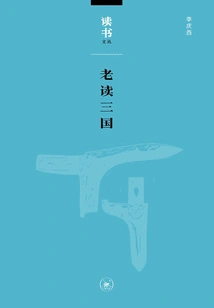
Read the Three Kingdoms
Literature老读三国
Li Qingxi
This book is Li Qingxi's reading experience of Chinese classical novels in recent years, focusing on "Romance of the Three Kingdoms", "Water Margin", "Journey to the West" and "The Scholars". Some of these articles were published in "Dushu" and some in "Book City". They are all fluent, fresh and readable words. The method is to start with a certain character or event in a classical novel, compare it with multiple historical versions, and read out the gaps and subtleties in it. If history is understood as the common memory of a nation, then classic classical romance novels are undoubtedly better than orthodox history books in terms of narrating history and being deeply rooted in people's hearts. "Lao Du Three Kingdoms" can be regarded as an interpretation of the spiritual world of the Chinese people from a modern perspective, combined with historical books, novels and other materials.
This book is Li Qingxi's reading experience of Chinese classical novels in recent years, focusing on "Romance of the Three Kingdoms", "Water Margin", "Journey to the West" and "The Scholars". Some of these articles were published in "Dushu" and some in "Book City". They are all fluent, fresh and readable words. The method is to start with a certain character or event in a classical novel, compare it with multiple historical versions, and read out the gaps and subtleties in it. If history is understood as the common memory of a nation, then classic classical romance novels are undoubtedly better than orthodox history books in terms of narrating history and being deeply rooted in people's hearts. "Lao Du Three Kingdoms" can be regarded as an interpretation of the spiritual world of the Chinese people from a modern perspective, combined with historical books, novels and other materials.
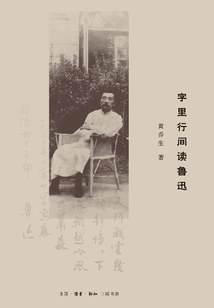
Reading Lu Xun between the Lines
Literature字里行间读鲁迅
Huang Qiaosheng
This book contains thirteen papers I have written in recent years. The study of Lu Xun has a history of a hundred years, and there are countless commentators and numerous writings. However, when it comes to evaluating Lu Xun, everyone has different views on benevolence and wisdom, and everyone has different opinions. A wise man writes a great work early, but the author has little talent and little knowledge, and can only recognize the small details. The collection of essays is compiled with a difficult proposition. Lu Xun received many titles during his lifetime, including writer, revolutionist, thinker, warrior, flag-bearer, saint, national soul, etc. If you put one of them in the title of a book, it is enough to shock your eyes and ears.
This book contains thirteen papers I have written in recent years. The study of Lu Xun has a history of a hundred years, and there are countless commentators and numerous writings. However, when it comes to evaluating Lu Xun, everyone has different views on benevolence and wisdom, and everyone has different opinions. A wise man writes a great work early, but the author has little talent and little knowledge, and can only recognize the small details. The collection of essays is compiled with a difficult proposition. Lu Xun received many titles during his lifetime, including writer, revolutionist, thinker, warrior, flag-bearer, saint, national soul, etc. If you put one of them in the title of a book, it is enough to shock your eyes and ears.
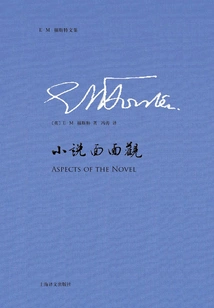
A
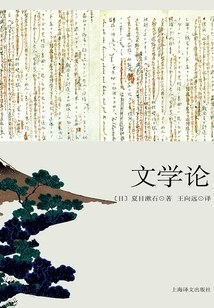
Literary Theory
Literature文学论
H
"On Literature" is a famous work by Natsume Soseki, a great modern Japanese writer and national writer. It is the author's lecture notes at the University of Tokyo. It is also the world's first work on literary principles written from the perspective of psychological aesthetics and reader acceptance. It has both textual characteristics and wide influence worldwide. "On Literature" can be said to be a collection of British literary criticism. Starting from social psychology and aesthetics, Natsume Soseki believed that the content of literature consists of "cognitive" elements such as concepts, reason, and impressions (Soseki used F) and emotional elements (Soseki used f), and created the literary formula F+f, thus unfolding his literary view. Many later Japanese writers and scholars spoke highly of "On Literature". They pointed out that such a self-contained tome on literature as "On Literature" was the only one in Europe at that time.
"On Literature" is a famous work by Natsume Soseki, a great modern Japanese writer and national writer. It is the author's lecture notes at the University of Tokyo. It is also the world's first work on literary principles written from the perspective of psychological aesthetics and reader acceptance. It has both textual characteristics and wide influence worldwide. "On Literature" can be said to be a collection of British literary criticism. Starting from social psychology and aesthetics, Natsume Soseki believed that the content of literature consists of "cognitive" elements such as concepts, reason, and impressions (Soseki used F) and emotional elements (Soseki used f), and created the literary formula F+f, thus unfolding his literary view. Many later Japanese writers and scholars spoke highly of "On Literature". They pointed out that such a self-contained tome on literature as "On Literature" was the only one in Europe at that time.
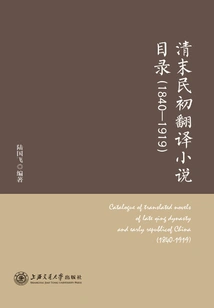
Catalog of Translated Novels in the Late Qing Dynasty and Early Republic of China: 1840-1919
Literature清末民初翻译小说目录:1840—1919
Editor-in-chief Lu Guofei
This book collects a total of more than 2,900 catalogs of translated novels published in newspapers, periodicals and single volumes in my country from 1840 to 1919. It is currently the most comprehensive catalog of translated novels of this period in China. The main contents of this book include the title of each novel and part of the original title, the author, translator and some translators' introduction, the publication and year of publication, the publishing house and year of publication, novel type annotation and other information. It can provide researchers and enthusiasts in this field with basic research materials and a roadmap for studying Chinese translated novels in the late Qing Dynasty and the early Republic of China.
This book collects a total of more than 2,900 catalogs of translated novels published in newspapers, periodicals and single volumes in my country from 1840 to 1919. It is currently the most comprehensive catalog of translated novels of this period in China. The main contents of this book include the title of each novel and part of the original title, the author, translator and some translators' introduction, the publication and year of publication, the publishing house and year of publication, novel type annotation and other information. It can provide researchers and enthusiasts in this field with basic research materials and a roadmap for studying Chinese translated novels in the late Qing Dynasty and the early Republic of China.
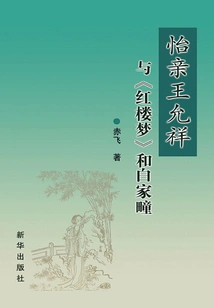
怡亲王允祥与《红楼梦》和白家疃
Chi Fei
This book mainly describes the story between Yunxiang, Cao Xueqin and Bai Jiatuan. Prince Yi Yunxiang came to Baijiatuan for flood control; it is said that Cao Xueqin lived alone in Baijiatuan in his later years. The author, as a Baijiatuan native, describes the story in more detail to help readers comprehensively and objectively understand this period of history.
This book mainly describes the story between Yunxiang, Cao Xueqin and Bai Jiatuan. Prince Yi Yunxiang came to Baijiatuan for flood control; it is said that Cao Xueqin lived alone in Baijiatuan in his later years. The author, as a Baijiatuan native, describes the story in more detail to help readers comprehensively and objectively understand this period of history.
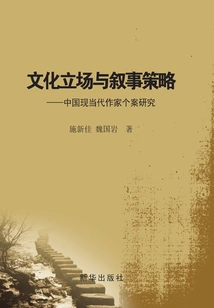
Cultural Stance and Narrative Strategy: a Case Study of Modern and Contemporary Chinese Writers
Literature文化立场与叙事策略:中国现当代作家个案研究
Shi Xinjia Wei Guoyan
This manuscript is a research work on modern and contemporary Chinese writers and works. The manuscript cuts into the study of modern and contemporary Chinese literature from the perspective of cultural narrative, and explores the author's attitudes and social phenomena behind literature. Out of interest in writers' cultural choices and narrative strategies, the author selected Shen Congwen, Qian Zhongshu, Wang Zengqi, Liang Xiaosheng, Chi Zijian, and the Shaanxi writers group as my objects of observation. Through the cultural and narrative perspectives, I interpret the writers and their works, highlight the rich cultural connotation and aesthetic expression of their works, study the narrative strategies of their works, and explore their attitudes towards Chinese and Western culture, old and new culture, rural urban culture, elite popular culture, etc.
This manuscript is a research work on modern and contemporary Chinese writers and works. The manuscript cuts into the study of modern and contemporary Chinese literature from the perspective of cultural narrative, and explores the author's attitudes and social phenomena behind literature. Out of interest in writers' cultural choices and narrative strategies, the author selected Shen Congwen, Qian Zhongshu, Wang Zengqi, Liang Xiaosheng, Chi Zijian, and the Shaanxi writers group as my objects of observation. Through the cultural and narrative perspectives, I interpret the writers and their works, highlight the rich cultural connotation and aesthetic expression of their works, study the narrative strategies of their works, and explore their attitudes towards Chinese and Western culture, old and new culture, rural urban culture, elite popular culture, etc.
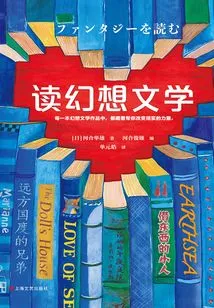
Read Fantasy Literature
Literature读幻想文学
(japan) Written By Hayao Kawai And Edited By Toshio Kawai
Hayao Kawai, the spiritual mentor who guided Haruki Murakami's creations, interprets the top ten classics of fantasy literature to help you solve various problems encountered in reality. Every fantasy literary work contains the power to help you change reality. "Reading Fantasy Literature" interprets fantasy literature masterpieces including "A Doll's House", "The Borrower" and "Legends of Earthsea" in vivid and simple language, bringing people positive energy to change real life.
Hayao Kawai, the spiritual mentor who guided Haruki Murakami's creations, interprets the top ten classics of fantasy literature to help you solve various problems encountered in reality. Every fantasy literary work contains the power to help you change reality. "Reading Fantasy Literature" interprets fantasy literature masterpieces including "A Doll's House", "The Borrower" and "Legends of Earthsea" in vivid and simple language, bringing people positive energy to change real life.