Library
Browse and search books
1,338 novels found
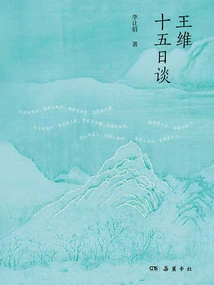
Wang Wei's Talks on the 15th
Literature王维十五日谈
Li Rangmei
Young poet and writer Li Rangmei's new masterpiece! Between the two ends of life and poetry, we can truly see Wang Wei. "Red beans grow in the south, and when spring comes, they will sprout a few branches." "Walking to a waterless place, sitting and watching the clouds rise." Wang Wei is a great poet who we have read and recited since childhood, but if we think about it carefully, we still can't seem to say what is good about his poems. And Wang Wei himself seems to be solidified in the image of a young man from an aristocratic family, a beautiful young man, good at playing the pipa, "paintings in poems, poems in paintings", poetry and Buddha... Behind the labels, what is the real Wang Wei like? Li Rangmei, a young writer and poet, uses his rich and solid education, insight and keen perception to unfold the exquisite world of "Wang Wei" in fifteen essays, step by step analyzing Wang Wei's life, times, relatives, Buddhism, music, painting, poetry, etc., Breaking away from the existing labels, truly understanding Wang Wei as a person and his poems, and understanding Wang Wei's helplessness, struggle, and his ultimate freedom in facing difficulties.
Young poet and writer Li Rangmei's new masterpiece! Between the two ends of life and poetry, we can truly see Wang Wei. "Red beans grow in the south, and when spring comes, they will sprout a few branches." "Walking to a waterless place, sitting and watching the clouds rise." Wang Wei is a great poet who we have read and recited since childhood, but if we think about it carefully, we still can't seem to say what is good about his poems. And Wang Wei himself seems to be solidified in the image of a young man from an aristocratic family, a beautiful young man, good at playing the pipa, "paintings in poems, poems in paintings", poetry and Buddha... Behind the labels, what is the real Wang Wei like? Li Rangmei, a young writer and poet, uses his rich and solid education, insight and keen perception to unfold the exquisite world of "Wang Wei" in fifteen essays, step by step analyzing Wang Wei's life, times, relatives, Buddhism, music, painting, poetry, etc., Breaking away from the existing labels, truly understanding Wang Wei as a person and his poems, and understanding Wang Wei's helplessness, struggle, and his ultimate freedom in facing difficulties.
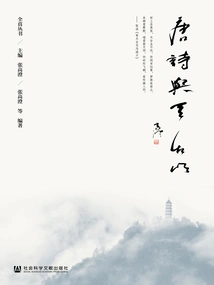
Tang Poems and Tiantai Mountain
Literature唐诗与天台山
Editor-in-chief Zhang Gaocheng
Tiantai Mountain (tiān tāi shān) is located in the north of Tiantai County, Zhejiang Province, China. It has been a famous mountain since ancient times and is favored by practitioners. By sorting out the poems related to Tiantai Mountain in "The Complete Poems of the Tang Dynasty", the author found that there are more than 400 poems by more than 150 poets involving this mountain. The authors of the poems have either been there personally, such as Meng Haoran, Li Bai, Yuan Zhen, etc., Or they have been famous for their poems, such as Li Qiao, Zhang Shuo, Du Fu and others. This book explores the reasons why literati in the Tang Dynasty loved Tiantai Mountain, and sorts out Tang poems involving humanistic and natural images of Tiantai Mountain.
Tiantai Mountain (tiān tāi shān) is located in the north of Tiantai County, Zhejiang Province, China. It has been a famous mountain since ancient times and is favored by practitioners. By sorting out the poems related to Tiantai Mountain in "The Complete Poems of the Tang Dynasty", the author found that there are more than 400 poems by more than 150 poets involving this mountain. The authors of the poems have either been there personally, such as Meng Haoran, Li Bai, Yuan Zhen, etc., Or they have been famous for their poems, such as Li Qiao, Zhang Shuo, Du Fu and others. This book explores the reasons why literati in the Tang Dynasty loved Tiantai Mountain, and sorts out Tang poems involving humanistic and natural images of Tiantai Mountain.
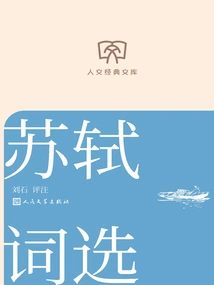
苏轼词选(人文经典文库)
Commentary By Liu Shi
Su Dongpo has always been one of the Chinese people's favorite literati. From "Nian Nujiao" to "Shui Diao Ge Tou" to "Ding Feng Bo" and so on, his wonderful lyrics have been recited by people. This book selects more than a hundred of Dongpo's poems, allowing readers to once again appreciate the pride, meditation, joy, tranquility, sadness and sighs of this "student and heavenly man". This book has word selection, annotations, and detailed interpretation comments. The book's word selection is comprehensive and thoughtful, the annotations are clear and easy to understand, the literature is rich and solid, and the interpretation is exquisite and appropriate; the preface briefly and concisely introduces Su Shi's basic life and poetry creation, allowing readers to have a concise understanding of Su Shi's poetry.
Su Dongpo has always been one of the Chinese people's favorite literati. From "Nian Nujiao" to "Shui Diao Ge Tou" to "Ding Feng Bo" and so on, his wonderful lyrics have been recited by people. This book selects more than a hundred of Dongpo's poems, allowing readers to once again appreciate the pride, meditation, joy, tranquility, sadness and sighs of this "student and heavenly man". This book has word selection, annotations, and detailed interpretation comments. The book's word selection is comprehensive and thoughtful, the annotations are clear and easy to understand, the literature is rich and solid, and the interpretation is exquisite and appropriate; the preface briefly and concisely introduces Su Shi's basic life and poetry creation, allowing readers to have a concise understanding of Su Shi's poetry.
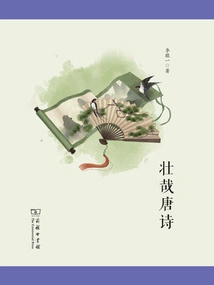
Zhuangzai Tang Poems
Literature壮哉唐诗
Li Jingyi
The author of this book provides a systematic and popular modern interpretation of Tang poetry, a treasure of traditional Chinese culture, from a professional standpoint and a humanistic perspective: he outlines the basic development of Tang poetry, introduces important poets and major schools in the history of Tang poetry development, analyzes the overall artistic characteristics of Tang poetry, and appreciates the famous Tang poetry that has been recited through the ages. It involves more than 100 poets of the Tang Dynasty and nearly 500 works. It can be regarded as a concise collection of the development history of Tang poetry, the history of Tang poetry art and the appreciation of Tang poetry. This book is compiled from TV speeches. It has a unique style, vivid and humorous language, and is suitable for both refined and popular tastes. It is suitable for reading and collecting by friends from all walks of life who love Tang poetry. It can be used as a teaching reference book for universities, middle schools and primary schools.
The author of this book provides a systematic and popular modern interpretation of Tang poetry, a treasure of traditional Chinese culture, from a professional standpoint and a humanistic perspective: he outlines the basic development of Tang poetry, introduces important poets and major schools in the history of Tang poetry development, analyzes the overall artistic characteristics of Tang poetry, and appreciates the famous Tang poetry that has been recited through the ages. It involves more than 100 poets of the Tang Dynasty and nearly 500 works. It can be regarded as a concise collection of the development history of Tang poetry, the history of Tang poetry art and the appreciation of Tang poetry. This book is compiled from TV speeches. It has a unique style, vivid and humorous language, and is suitable for both refined and popular tastes. It is suitable for reading and collecting by friends from all walks of life who love Tang poetry. It can be used as a teaching reference book for universities, middle schools and primary schools.
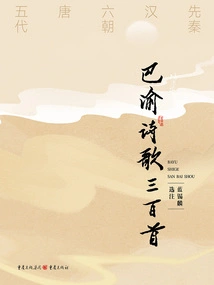
Three Hundred Poems of Bayu
Literature巴渝诗歌三百首
Selected Notes Of Lan Xilin
The book takes "Three Hundred Poems" and "Three Hundred Tang Poems" as examples. It is an appreciation collection of Bayu poetry. In order from ancient times to the present, from pre-Qin to modern times, it selects and includes 300 works in the history of Bayu poetry. They are works created by historical celebrities from Chongqing and overseas when they were in the Bayu area. These works cover multiple fields and present themes related to Chongqing in different eras in an all-round and multi-dimensional way. These poems are full of literary talent, lively and interesting, and have strong appeal and appeal. The works included in the book are mainly literati poems, with a moderate amount of folk songs. The poets and works included are representative and reputable. Each poem is followed by a brief introduction of the poet and detailed notes on the poem. The detailed notes mainly include word notes, word explanations, sentence explanations and couplets. The annotations in the book have been verified by many versions, and the interpretation is accurate. The whole book has high academic and literary value.
The book takes "Three Hundred Poems" and "Three Hundred Tang Poems" as examples. It is an appreciation collection of Bayu poetry. In order from ancient times to the present, from pre-Qin to modern times, it selects and includes 300 works in the history of Bayu poetry. They are works created by historical celebrities from Chongqing and overseas when they were in the Bayu area. These works cover multiple fields and present themes related to Chongqing in different eras in an all-round and multi-dimensional way. These poems are full of literary talent, lively and interesting, and have strong appeal and appeal. The works included in the book are mainly literati poems, with a moderate amount of folk songs. The poets and works included are representative and reputable. Each poem is followed by a brief introduction of the poet and detailed notes on the poem. The detailed notes mainly include word notes, word explanations, sentence explanations and couplets. The annotations in the book have been verified by many versions, and the interpretation is accurate. The whole book has high academic and literary value.
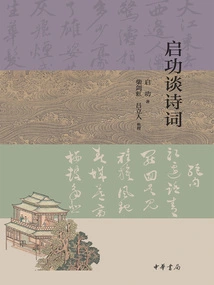
Qigong Talks About Poetry
Literature启功谈诗词
Written By Qi Gong, Chai Jianhong, Compiled By Lu Liren
This book is compiled from the lecture notes on ancient poetry taught by Mr. Qi Gong at Beijing Normal University, and is divided into upper and lower parts. The first part is Mr. Qi Gong's explanation of Tang Dynasty poetry. With his profound literary and historical literacy and plain and clear language, he sorted out the development of poetry in the Tang Dynasty, deeply analyzed the stylistic characteristics of poetry in the early Tang, prosperous Tang, and late Tang periods, and made unique comments on the characteristics of the works of representative poets such as Li Bai and Du Fu, which were profound and inspiring. The second volume contains 58 lyrics by 26 people from the Tang and Song dynasties selected by Mr. Qi Gong, supplemented by relevant historical facts and poetic materials for annotation and explanation. Mr. Qigong has a unique vision for the selection of words, and his annotations are concise and concise, which helps readers to understand the original words more thoroughly and appreciate his scholarship.
This book is compiled from the lecture notes on ancient poetry taught by Mr. Qi Gong at Beijing Normal University, and is divided into upper and lower parts. The first part is Mr. Qi Gong's explanation of Tang Dynasty poetry. With his profound literary and historical literacy and plain and clear language, he sorted out the development of poetry in the Tang Dynasty, deeply analyzed the stylistic characteristics of poetry in the early Tang, prosperous Tang, and late Tang periods, and made unique comments on the characteristics of the works of representative poets such as Li Bai and Du Fu, which were profound and inspiring. The second volume contains 58 lyrics by 26 people from the Tang and Song dynasties selected by Mr. Qi Gong, supplemented by relevant historical facts and poetic materials for annotation and explanation. Mr. Qigong has a unique vision for the selection of words, and his annotations are concise and concise, which helps readers to understand the original words more thoroughly and appreciate his scholarship.
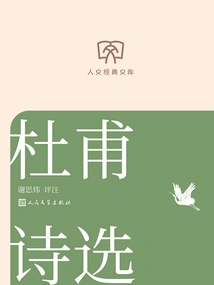
杜甫诗选(人文经典文库)
Commentary By Xie Siwei
Due to its exemplary significance in terms of ideological connotation and artistic form, Du Fu's poetry has been widely welcomed by readers of all levels since the Song Dynasty, and has also aroused great interest among annotators and researchers. Many of his annotations have had a wide impact on ordinary readers. The compilation and selection of this book refers to the annotated editions of the Qing Dynasty and modern times. The selection strives to include Du Fu's most widely read and representative famous works. The annotations are relatively simple, but also strive to be reliable and reliable, which will help readers understand the original works. Among the selected and annotated volumes, "Selected Poems of Du Fu" by Feng Zhi, Pu Jiangqing and others, and "Selected Annotations of Du Fu's Poems" by Mr. Xiao Difei have had a great influence. This book refers to these annotated editions, and absorbs modern and contemporary achievements in the selection of chapters and annotations, not only explaining the original work, but also clarifying its own meaning.
Due to its exemplary significance in terms of ideological connotation and artistic form, Du Fu's poetry has been widely welcomed by readers of all levels since the Song Dynasty, and has also aroused great interest among annotators and researchers. Many of his annotations have had a wide impact on ordinary readers. The compilation and selection of this book refers to the annotated editions of the Qing Dynasty and modern times. The selection strives to include Du Fu's most widely read and representative famous works. The annotations are relatively simple, but also strive to be reliable and reliable, which will help readers understand the original works. Among the selected and annotated volumes, "Selected Poems of Du Fu" by Feng Zhi, Pu Jiangqing and others, and "Selected Annotations of Du Fu's Poems" by Mr. Xiao Difei have had a great influence. This book refers to these annotated editions, and absorbs modern and contemporary achievements in the selection of chapters and annotations, not only explaining the original work, but also clarifying its own meaning.
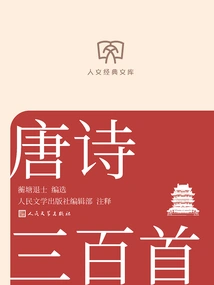
唐诗三百首(人文经典文库)
L
Tang poetry is a monument in the history of Chinese classical poetry, attracting generations of readers for thousands of years. "Three Hundred Tang Poems" compiled by Sun Zhu (a retired scholar from Hengtang) in the Qing Dynasty was widely praised by readers because most of the selected poems were well-known poems. This book is an annotated version, and the annotations are collectively completed by senior comrades in the editorial department. It adopts the "simple annotation" method, focusing on concise annotations of difficult words to eliminate reading obstacles for ordinary readers. It has a detailed introduction to the poetry author, which is helpful for understanding his poetry works. The manuscript has an excellent manuscript and accurate annotations. It is a popular book suitable for the general public.
Tang poetry is a monument in the history of Chinese classical poetry, attracting generations of readers for thousands of years. "Three Hundred Tang Poems" compiled by Sun Zhu (a retired scholar from Hengtang) in the Qing Dynasty was widely praised by readers because most of the selected poems were well-known poems. This book is an annotated version, and the annotations are collectively completed by senior comrades in the editorial department. It adopts the "simple annotation" method, focusing on concise annotations of difficult words to eliminate reading obstacles for ordinary readers. It has a detailed introduction to the poetry author, which is helpful for understanding his poetry works. The manuscript has an excellent manuscript and accurate annotations. It is a popular book suitable for the general public.
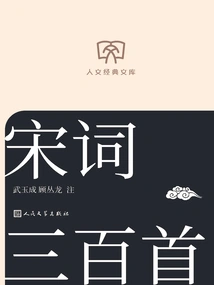
宋词三百首(人文经典文库)
Note By Wu Yucheng And Gu Conglong
Ci, which emerged in the Tang Dynasty and flourished in the Song Dynasty, is a new style of lyric poetry that can be sung with music. It is a literary style that is loved by people and is also a representative style of Song Dynasty literature. Selected editions of Song poetry existed in the Song Dynasty. However, the most influential one is "Three Hundred Song Ci Poems" written in the late Qing Dynasty. The book was written in the late Qing Dynasty. Initially, Zhu Zumou selected 87 poets and 300 poems from many Song poems and compiled it. After several revisions and deletions, it was determined to be 82 poets and 285 poems. This time, different versions of "Three Hundred Song Ci" are compiled into one volume, with 88 poets and 313 poems. Please make brief annotations. The focus is on the explanation of difficult words, explanations of classics, and explanations of poetry and poetry. It absorbs the annotation results of sages and current sages to facilitate readers' use.
Ci, which emerged in the Tang Dynasty and flourished in the Song Dynasty, is a new style of lyric poetry that can be sung with music. It is a literary style that is loved by people and is also a representative style of Song Dynasty literature. Selected editions of Song poetry existed in the Song Dynasty. However, the most influential one is "Three Hundred Song Ci Poems" written in the late Qing Dynasty. The book was written in the late Qing Dynasty. Initially, Zhu Zumou selected 87 poets and 300 poems from many Song poems and compiled it. After several revisions and deletions, it was determined to be 82 poets and 285 poems. This time, different versions of "Three Hundred Song Ci" are compiled into one volume, with 88 poets and 313 poems. Please make brief annotations. The focus is on the explanation of difficult words, explanations of classics, and explanations of poetry and poetry. It absorbs the annotation results of sages and current sages to facilitate readers' use.
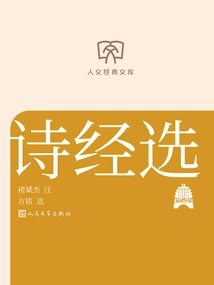
诗经选(人文经典文库)
Notes By Chu Binjie And Fang Mingxuan
The Book of Songs is the earliest extant poetry collection in my country, and contains 305 poems written between the early Western Zhou Dynasty and the mid-Spring and Autumn Period. It is the glorious beginning of Chinese literature and the first peak of classical poetry creation. For thousands of years, the Book of Songs has been regarded as an important classic by Confucianism and has had a profound impact on the culture and education of later generations. This book is annotated by Professor Chu Binjie of the Department of Chinese at Peking University, and selected by Professor Fang Ming of Beijing Language and Culture University. This book selects 152 works from the "Book of Songs", with detailed chanting and detailed explanations of the writing background and theme of each poem, and annotations on important words and key chapters. It is a classic selection of the "Book of Songs".
The Book of Songs is the earliest extant poetry collection in my country, and contains 305 poems written between the early Western Zhou Dynasty and the mid-Spring and Autumn Period. It is the glorious beginning of Chinese literature and the first peak of classical poetry creation. For thousands of years, the Book of Songs has been regarded as an important classic by Confucianism and has had a profound impact on the culture and education of later generations. This book is annotated by Professor Chu Binjie of the Department of Chinese at Peking University, and selected by Professor Fang Ming of Beijing Language and Culture University. This book selects 152 works from the "Book of Songs", with detailed chanting and detailed explanations of the writing background and theme of each poem, and annotations on important words and key chapters. It is a classic selection of the "Book of Songs".
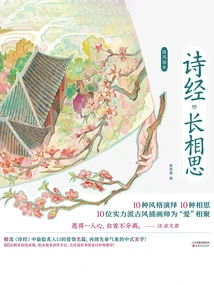
Book of Songs·sauvignon Blanc
Literature诗经·长相思
Moriyu Manga Editor
This picture book is adapted from the original texts of 10 poems in "The Book of Songs: Guofeng", namely: "Guan Ju", "Jian Jia", "A Girl in the Car", "Jing Nu", "Zi Jin", "Han Guang", "Drumming", "Peach Yao", "Out of the East Gate" and "Nv Yue Rooster Crow". They have a common theme - "love", and were created by 10 young illustrators. The authors drew their own "Book of Songs stories" through their own interpretations of the Book of Songs, describing the unrequited love and passionate pursuit before falling in love, the romantic dates and the pain of separation after falling in love, and the daily happiness after marriage... These beautiful feelings and stories can still resonate with us after thousands of years. This book is composed of original poems and texts paired with exquisite storyboard compositions, allowing readers of all ages to learn and feel in the same way, from poetry to painting, which is brilliant! In addition, 10 original text interpretations and creative interviews are added to present the story of the Book of Songs in depth!
This picture book is adapted from the original texts of 10 poems in "The Book of Songs: Guofeng", namely: "Guan Ju", "Jian Jia", "A Girl in the Car", "Jing Nu", "Zi Jin", "Han Guang", "Drumming", "Peach Yao", "Out of the East Gate" and "Nv Yue Rooster Crow". They have a common theme - "love", and were created by 10 young illustrators. The authors drew their own "Book of Songs stories" through their own interpretations of the Book of Songs, describing the unrequited love and passionate pursuit before falling in love, the romantic dates and the pain of separation after falling in love, and the daily happiness after marriage... These beautiful feelings and stories can still resonate with us after thousands of years. This book is composed of original poems and texts paired with exquisite storyboard compositions, allowing readers of all ages to learn and feel in the same way, from poetry to painting, which is brilliant! In addition, 10 original text interpretations and creative interviews are added to present the story of the Book of Songs in depth!
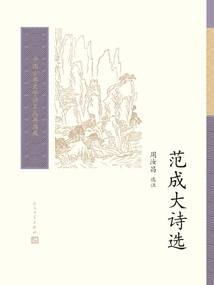
Selected Poems of Fan Cheng
Literature范成大诗选
Selected Notes By Zhou Ruchang
Fan Chengda is an important poet in the Southern Song Dynasty. Together with Yang Wanli, Lu You and You Miao, he is known as the four great poets of the Southern Song Dynasty. His poems inherit the realism spirit of the New Yuefu in the mid-late Tang Dynasty, with a fresh style and full of changes. The artistic value of pastoral poetry is particularly outstanding. This book selects more than 320 poems from Fan Chengda's existing 1,900 poems and provides detailed annotations. The poem selection takes into account the various forms and styles of model poems, with detailed annotations and dictionary explanations. Some chapters are also accompanied by the annotator's research on poetry-related issues. This book is one of the resources in our high-quality series "Chinese Classical Literature Reading Series". It was first published in 1959 and revised and reprinted in 1984.
Fan Chengda is an important poet in the Southern Song Dynasty. Together with Yang Wanli, Lu You and You Miao, he is known as the four great poets of the Southern Song Dynasty. His poems inherit the realism spirit of the New Yuefu in the mid-late Tang Dynasty, with a fresh style and full of changes. The artistic value of pastoral poetry is particularly outstanding. This book selects more than 320 poems from Fan Chengda's existing 1,900 poems and provides detailed annotations. The poem selection takes into account the various forms and styles of model poems, with detailed annotations and dictionary explanations. Some chapters are also accompanied by the annotator's research on poetry-related issues. This book is one of the resources in our high-quality series "Chinese Classical Literature Reading Series". It was first published in 1959 and revised and reprinted in 1984.
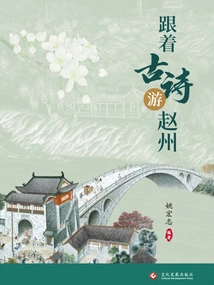
Travel to Zhaozhou with Ancient Poems
Literature跟着古诗游赵州
Compiled By Yao Hongzhi
This book shows the humanistic and historical silhouettes related to Zhaozhou through 334 poems. Along the lines of time, you can calmly feel the historical context, feelings of family and country, and the tension of cultural relics, and diligently read the wind and rain of Zhaozhou City, the perseverance, and the innovative communication of Zhaozhou Bridge. , Open and inclusive, the smart, pure, dreamy charm of Zhaozhou water, the purity, elegance, natural calmness of Zhaozhou tea, the ice-cold jade, plain and refreshing fragrance of Zhaozhou flowers, the moistness and beauty of Zhaozhou pears, the ancient customs and old ways of Zhaozhou traces, and the traces of vicissitudes of life.
This book shows the humanistic and historical silhouettes related to Zhaozhou through 334 poems. Along the lines of time, you can calmly feel the historical context, feelings of family and country, and the tension of cultural relics, and diligently read the wind and rain of Zhaozhou City, the perseverance, and the innovative communication of Zhaozhou Bridge. , Open and inclusive, the smart, pure, dreamy charm of Zhaozhou water, the purity, elegance, natural calmness of Zhaozhou tea, the ice-cold jade, plain and refreshing fragrance of Zhaozhou flowers, the moistness and beauty of Zhaozhou pears, the ancient customs and old ways of Zhaozhou traces, and the traces of vicissitudes of life.
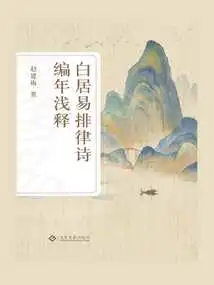
白居易排律诗编年浅释
Zhao Jianmei
Bai Juyi was a poet in the Tang Dynasty who created more verse poems after Du Fu. This book collects a total of 204 Bai Juyi's five-character verses and seven-character verses. These poems are sorted according to the year of creation, and each poem is interpreted. It strives to reveal the ideological and emotional connotations and artistic style characteristics of the poems; it intuitively shows the development process of Bai Juyi's verse creation in the form of chronology.
Bai Juyi was a poet in the Tang Dynasty who created more verse poems after Du Fu. This book collects a total of 204 Bai Juyi's five-character verses and seven-character verses. These poems are sorted according to the year of creation, and each poem is interpreted. It strives to reveal the ideological and emotional connotations and artistic style characteristics of the poems; it intuitively shows the development process of Bai Juyi's verse creation in the form of chronology.
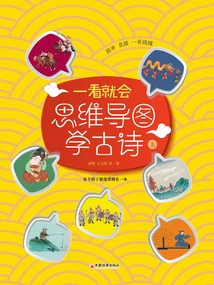
一看就会:思维导图学古诗(上)
Wang Yuyin
The full-color hand-drawn mind map by the winning contestant of the mind map competition uses 75+80 ancient poems that primary schools must master to provide a clear overview of all the key points of knowledge. The meaning of the poem is simple and clear, it can be learned and memorized in seconds, and it is full of fun. Based on the cognitive characteristics of primary school students, this book contains 155 ancient poems, which can meet the needs of primary school students learning ancient poems using various versions of textbooks, and lay a solid foundation for learning classical Chinese in middle schools. The book includes an introduction to the author's background knowledge, important and difficult words, words and definitions, key memory methods using mind maps, and practice diagrams to help children understand the content of the poems, experience the artistic conception of the poems, and appreciate the immortal charm of the poems. They can also memorize the key content and difficulties in the poems through clear map memory methods. Help children master the mind mapping method from an early age and establish a good habit of taking notes and studying.
The full-color hand-drawn mind map by the winning contestant of the mind map competition uses 75+80 ancient poems that primary schools must master to provide a clear overview of all the key points of knowledge. The meaning of the poem is simple and clear, it can be learned and memorized in seconds, and it is full of fun. Based on the cognitive characteristics of primary school students, this book contains 155 ancient poems, which can meet the needs of primary school students learning ancient poems using various versions of textbooks, and lay a solid foundation for learning classical Chinese in middle schools. The book includes an introduction to the author's background knowledge, important and difficult words, words and definitions, key memory methods using mind maps, and practice diagrams to help children understand the content of the poems, experience the artistic conception of the poems, and appreciate the immortal charm of the poems. They can also memorize the key content and difficulties in the poems through clear map memory methods. Help children master the mind mapping method from an early age and establish a good habit of taking notes and studying.
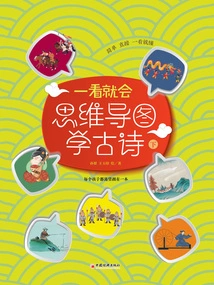
一看就会:思维导图学古诗(下)
Wang Yuyin
The full-color hand-drawn mind map by the winning contestant of the mind map competition uses 75+80 ancient poems that primary schools must master to provide a clear overview of all the key points of knowledge. The meaning of the poem is simple and clear, it can be learned and memorized in seconds, and it is full of fun. Based on the cognitive characteristics of primary school students, this book contains 155 ancient poems, which can meet the needs of primary school students learning ancient poems using various versions of textbooks, and lay a solid foundation for learning classical Chinese in middle schools. The book includes an introduction to the author's background knowledge, important and difficult words, words and definitions, key memory methods using mind maps, and practice diagrams to help children understand the content of the poems, experience the artistic conception of the poems, and appreciate the immortal charm of the poems. They can also memorize the key content and difficulties in the poems through clear map memory methods. Help children master the mind mapping method from an early age and establish a good habit of taking notes and studying.
The full-color hand-drawn mind map by the winning contestant of the mind map competition uses 75+80 ancient poems that primary schools must master to provide a clear overview of all the key points of knowledge. The meaning of the poem is simple and clear, it can be learned and memorized in seconds, and it is full of fun. Based on the cognitive characteristics of primary school students, this book contains 155 ancient poems, which can meet the needs of primary school students learning ancient poems using various versions of textbooks, and lay a solid foundation for learning classical Chinese in middle schools. The book includes an introduction to the author's background knowledge, important and difficult words, words and definitions, key memory methods using mind maps, and practice diagrams to help children understand the content of the poems, experience the artistic conception of the poems, and appreciate the immortal charm of the poems. They can also memorize the key content and difficulties in the poems through clear map memory methods. Help children master the mind mapping method from an early age and establish a good habit of taking notes and studying.
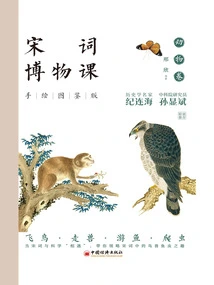
宋词博物课:手绘图鉴版·动物卷
Compiled By Xing Xin
This book integrates Song poetry from China's excellent traditional culture with popular science knowledge, and divides it into three major themes: "Flowers, Plants, Fruits and Trees", "Birds, Animals, Fish and Insects" and "Mountains and Scenery". It introduces hundreds of species of animals and plants as well as famous mountains and rivers that appear in Song poetry, tells popular science cultural knowledge about them, and breaks the boundaries between science and culture. At the same time, the book also selects relatively realistic paintings of animals, plants and landscapes from famous ancient Chinese paintings, showing readers the charm of Chinese classical poetry culture with pictures and texts, and exploring potential natural science knowledge. Each article is accompanied by exquisite ancient paintings. There are more than 200 ancient paintings as illustrations in the book. Combined with the text content, they clearly show the flowers, grass, fruits, trees and other plants in the Song Dynasty poems, as well as birds, beasts, fish, insects and other animals, as well as the mountains and rivers mentioned in them, which enhance readers' aesthetic ability and appreciation.
This book integrates Song poetry from China's excellent traditional culture with popular science knowledge, and divides it into three major themes: "Flowers, Plants, Fruits and Trees", "Birds, Animals, Fish and Insects" and "Mountains and Scenery". It introduces hundreds of species of animals and plants as well as famous mountains and rivers that appear in Song poetry, tells popular science cultural knowledge about them, and breaks the boundaries between science and culture. At the same time, the book also selects relatively realistic paintings of animals, plants and landscapes from famous ancient Chinese paintings, showing readers the charm of Chinese classical poetry culture with pictures and texts, and exploring potential natural science knowledge. Each article is accompanied by exquisite ancient paintings. There are more than 200 ancient paintings as illustrations in the book. Combined with the text content, they clearly show the flowers, grass, fruits, trees and other plants in the Song Dynasty poems, as well as birds, beasts, fish, insects and other animals, as well as the mountains and rivers mentioned in them, which enhance readers' aesthetic ability and appreciation.
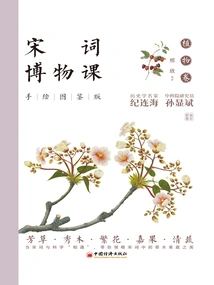
宋词博物课:手绘图鉴版·植物卷
Compiled By Xing Xin
This book integrates Song poetry from China's excellent traditional culture with popular science knowledge, and divides it into three major themes: "Flowers, Plants, Fruits and Trees", "Birds, Animals, Fish and Insects" and "Mountains and Scenery". It introduces hundreds of species of animals and plants as well as famous mountains and rivers that appear in Song poetry, tells popular science cultural knowledge about them, and breaks the boundaries between science and culture. At the same time, the book also selects relatively realistic paintings of animals, plants and landscapes from famous ancient Chinese paintings, showing readers the charm of Chinese classical poetry culture with pictures and texts, and exploring potential natural science knowledge. Each article is accompanied by exquisite ancient paintings. There are more than 200 ancient paintings as illustrations in the book. Combined with the text content, they clearly show the flowers, grass, fruits, trees and other plants in the Song Dynasty poems, as well as birds, beasts, fish, insects and other animals, as well as the mountains and rivers mentioned in them, which enhance readers' aesthetic ability and appreciation.
This book integrates Song poetry from China's excellent traditional culture with popular science knowledge, and divides it into three major themes: "Flowers, Plants, Fruits and Trees", "Birds, Animals, Fish and Insects" and "Mountains and Scenery". It introduces hundreds of species of animals and plants as well as famous mountains and rivers that appear in Song poetry, tells popular science cultural knowledge about them, and breaks the boundaries between science and culture. At the same time, the book also selects relatively realistic paintings of animals, plants and landscapes from famous ancient Chinese paintings, showing readers the charm of Chinese classical poetry culture with pictures and texts, and exploring potential natural science knowledge. Each article is accompanied by exquisite ancient paintings. There are more than 200 ancient paintings as illustrations in the book. Combined with the text content, they clearly show the flowers, grass, fruits, trees and other plants in the Song Dynasty poems, as well as birds, beasts, fish, insects and other animals, as well as the mountains and rivers mentioned in them, which enhance readers' aesthetic ability and appreciation.
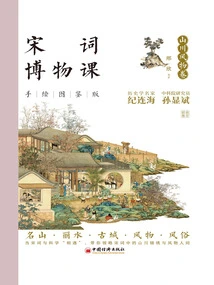
宋词博物课:手绘图鉴版·山川风物卷
Compiled By Xing Xin
This book integrates Song poetry from China's excellent traditional culture with popular science knowledge, and divides it into three major themes: "Flowers, Plants, Fruits and Trees", "Birds, Animals, Fish and Insects" and "Mountains and Scenery". It introduces hundreds of species of animals and plants as well as famous mountains and rivers that appear in Song poetry, tells popular science cultural knowledge about them, and breaks the boundaries between science and culture. At the same time, the book also selects relatively realistic paintings of animals, plants and landscapes from famous ancient Chinese paintings, showing readers the charm of Chinese classical poetry culture with pictures and texts, and exploring potential natural science knowledge. Each article is accompanied by exquisite ancient paintings. There are more than 200 ancient paintings as illustrations in the book. Combined with the text content, they clearly show the flowers, grass, fruits, trees and other plants in the Song Dynasty poems, as well as birds, beasts, fish, insects and other animals, as well as the mountains and rivers mentioned in them, which enhance readers' aesthetic ability and appreciation.
This book integrates Song poetry from China's excellent traditional culture with popular science knowledge, and divides it into three major themes: "Flowers, Plants, Fruits and Trees", "Birds, Animals, Fish and Insects" and "Mountains and Scenery". It introduces hundreds of species of animals and plants as well as famous mountains and rivers that appear in Song poetry, tells popular science cultural knowledge about them, and breaks the boundaries between science and culture. At the same time, the book also selects relatively realistic paintings of animals, plants and landscapes from famous ancient Chinese paintings, showing readers the charm of Chinese classical poetry culture with pictures and texts, and exploring potential natural science knowledge. Each article is accompanied by exquisite ancient paintings. There are more than 200 ancient paintings as illustrations in the book. Combined with the text content, they clearly show the flowers, grass, fruits, trees and other plants in the Song Dynasty poems, as well as birds, beasts, fish, insects and other animals, as well as the mountains and rivers mentioned in them, which enhance readers' aesthetic ability and appreciation.
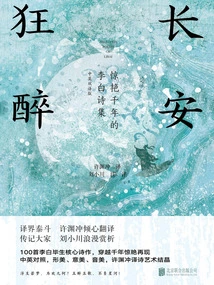
长安狂醉:惊艳千年的李白诗集(中英双语版)
Commentary By Liu Xiaochuan
100 core poems of Li Bai's life, stunningly reproduced through thousands of years! Have you ever yearned for the freedom and ease of "looking up to the sky and laughing and going out"? Have you ever felt the loneliness and romance of "raising a glass to the bright moon and making three people in the shadow" while drinking alone late at night? This book carefully selects 100 classic poems by Li Bai. From his youth coming out of Shu with a sword to his wandering in the rivers and lakes in his later years, every poem is a footnote to his life. Xu Yuanchong's classic translation retains the rhythm and artistic conception of the original poem, while Liu Xiaochuan's commentary takes you into the changes of the prosperous Tang Dynasty. Reading Li Bai is not only reading poetry, but also reading an unruly attitude towards life - even if the reality is difficult, there is still a world of intoxication and madness in the heart.
100 core poems of Li Bai's life, stunningly reproduced through thousands of years! Have you ever yearned for the freedom and ease of "looking up to the sky and laughing and going out"? Have you ever felt the loneliness and romance of "raising a glass to the bright moon and making three people in the shadow" while drinking alone late at night? This book carefully selects 100 classic poems by Li Bai. From his youth coming out of Shu with a sword to his wandering in the rivers and lakes in his later years, every poem is a footnote to his life. Xu Yuanchong's classic translation retains the rhythm and artistic conception of the original poem, while Liu Xiaochuan's commentary takes you into the changes of the prosperous Tang Dynasty. Reading Li Bai is not only reading poetry, but also reading an unruly attitude towards life - even if the reality is difficult, there is still a world of intoxication and madness in the heart.
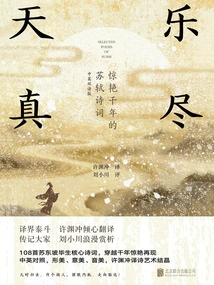
乐尽天真:惊艳千年的苏轼诗词(中英双语版)
Comment By Liu Xiaochuan
108 core poems of Su Dongpo's life, stunningly reproduced through thousands of years! Life is full of unsatisfactory things. Su Shi told us throughout his life: "Don't listen to the sound of beating leaves in the forest, why not whistling and walking slowly." This book has selected 108 poems by Su Shi. From his early days as an official in Fengxiang to his exile in Danzhou, from the mist and rain in Hangzhou to the desolation of Huangzhou, his words are always warm and open-minded. Xu Yuanchong's translation allows Su Shi's boldness and unrestrainedness to transcend language and touch the world; Liu Xiaochuan's interpretation reveals how Su Shi lived out his innocence and transparency in the face of adversity. When you are anxious and confused, open this book, and it will be like an old friend, patting you on the shoulder and saying: "Life is like a journey, and I am also a traveler - but don't forget, this place of peace is my hometown."
108 core poems of Su Dongpo's life, stunningly reproduced through thousands of years! Life is full of unsatisfactory things. Su Shi told us throughout his life: "Don't listen to the sound of beating leaves in the forest, why not whistling and walking slowly." This book has selected 108 poems by Su Shi. From his early days as an official in Fengxiang to his exile in Danzhou, from the mist and rain in Hangzhou to the desolation of Huangzhou, his words are always warm and open-minded. Xu Yuanchong's translation allows Su Shi's boldness and unrestrainedness to transcend language and touch the world; Liu Xiaochuan's interpretation reveals how Su Shi lived out his innocence and transparency in the face of adversity. When you are anxious and confused, open this book, and it will be like an old friend, patting you on the shoulder and saying: "Life is like a journey, and I am also a traveler - but don't forget, this place of peace is my hometown."
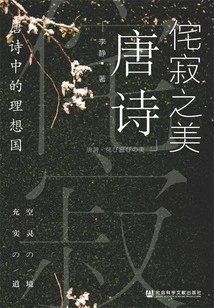
侘寂之美:唐诗中的理想国
Li Jing
This book selects 100 exquisite Tang poems, divided into ten classic categories, and reinterprets them. There are careful descriptions of natural scenery such as spring flowers and autumn moon, affectionate chants when climbing mountains and rivers, and deep reflections when facing historical monuments. The content basically covers all aspects of Tang people's life. From the interpretation of the ten types of poems, we can not only perceive the colorful poetic life of the poets of the Tang Dynasty, broaden our historical and cultural horizons, enrich our historical and cultural knowledge, and thus accept the influence of beauty, delight our spirits, and enjoy happiness; we can also cultivate our temperament and adjust our mood; we can also imbue the noble spirit of the ancients and improve our life cultivation.
This book selects 100 exquisite Tang poems, divided into ten classic categories, and reinterprets them. There are careful descriptions of natural scenery such as spring flowers and autumn moon, affectionate chants when climbing mountains and rivers, and deep reflections when facing historical monuments. The content basically covers all aspects of Tang people's life. From the interpretation of the ten types of poems, we can not only perceive the colorful poetic life of the poets of the Tang Dynasty, broaden our historical and cultural horizons, enrich our historical and cultural knowledge, and thus accept the influence of beauty, delight our spirits, and enjoy happiness; we can also cultivate our temperament and adjust our mood; we can also imbue the noble spirit of the ancients and improve our life cultivation.
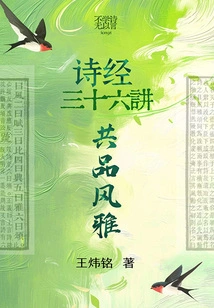
共品风雅:诗经三十六讲
Wang Weiming
If you don't learn poetry, you won't be able to express it. Welcome to enter the Book of Songs and enjoy the elegance together. Wei Jueye (Wang Weiming), the inheritor of Chinese traditional culture, combines literary and historical classics, annotations on the Book of Songs of past dynasties, and modern and contemporary research to go deep into famous poems in the Book of Songs and explain them word for word, close to history and the original meaning. Nowadays, the common understanding of many poems is completely different from the original intention, and it is even more urgent to restore the true colors of the classics. This book will give you a thorough explanation of "Ode to Fu Bixing Fengya", making the classic no longer difficult to understand. Is "Guan Ju" originally a poem about a noble wedding? Who is the protagonist of "Curly Ear"? "Drumming" Are we growing old together as comrades or as husband and wife? Is "Bo Zhou" the sorrow of a chaste woman or the sorrow of a divorced woman? "Big Car" Who are you afraid of if you don't dare to elope? In "Jiang Zhongzi", is Duke Zhuang advising his ministers or is it a woman persuading her lover? "Qingqing Zijin" is the teacher's concern for the students? Does "Fa Tan" express the dissatisfaction of the poor or the sage's self-pity? In "Jianjia" Cang Cang's "so-called beauty" is a god? ... This is a Chinese studies class that the whole family loves to listen to. Wei theory extends the Chinese cultural context and spreads the voice of classics!
If you don't learn poetry, you won't be able to express it. Welcome to enter the Book of Songs and enjoy the elegance together. Wei Jueye (Wang Weiming), the inheritor of Chinese traditional culture, combines literary and historical classics, annotations on the Book of Songs of past dynasties, and modern and contemporary research to go deep into famous poems in the Book of Songs and explain them word for word, close to history and the original meaning. Nowadays, the common understanding of many poems is completely different from the original intention, and it is even more urgent to restore the true colors of the classics. This book will give you a thorough explanation of "Ode to Fu Bixing Fengya", making the classic no longer difficult to understand. Is "Guan Ju" originally a poem about a noble wedding? Who is the protagonist of "Curly Ear"? "Drumming" Are we growing old together as comrades or as husband and wife? Is "Bo Zhou" the sorrow of a chaste woman or the sorrow of a divorced woman? "Big Car" Who are you afraid of if you don't dare to elope? In "Jiang Zhongzi", is Duke Zhuang advising his ministers or is it a woman persuading her lover? "Qingqing Zijin" is the teacher's concern for the students? Does "Fa Tan" express the dissatisfaction of the poor or the sage's self-pity? In "Jianjia" Cang Cang's "so-called beauty" is a god? ... This is a Chinese studies class that the whole family loves to listen to. Wei theory extends the Chinese cultural context and spreads the voice of classics!
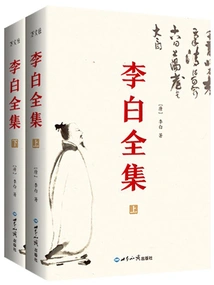
Complete Works of Li Bai
Literature李白全集
Li Bai
Li Bai left more than a thousand poems and essays in his lifetime, and the most authoritative is the Song Dynasty master version (not a word has been deleted, and even the typos in the original manuscript have been marked). This book reproduces the original appearance of the "Collected Works of Li Taibai" compiled by Song Minqiu and Zeng Gong (except that the traditional vertical layout is changed to simplified horizontal layout), phonetic notation, annotations, allusions (after all, it is a Tang Dynasty poem, there is a reading threshold), and 67 unpublished poems and essays in the Song and Shu editions are completed (still too comprehensive). Zeng Gong, one of the Eight Great Masters of the Tang and Song Dynasties, compiled the order and marked Li Bai's life journey (who doesn't want to see the location of Li Bai's circle of friends). We have also compiled many comments on Li Bai's poems from past dynasties (comparable to the ancient version of barrages). I hope to help readers appreciate Li Bai's works more comprehensively and deeply.
Li Bai left more than a thousand poems and essays in his lifetime, and the most authoritative is the Song Dynasty master version (not a word has been deleted, and even the typos in the original manuscript have been marked). This book reproduces the original appearance of the "Collected Works of Li Taibai" compiled by Song Minqiu and Zeng Gong (except that the traditional vertical layout is changed to simplified horizontal layout), phonetic notation, annotations, allusions (after all, it is a Tang Dynasty poem, there is a reading threshold), and 67 unpublished poems and essays in the Song and Shu editions are completed (still too comprehensive). Zeng Gong, one of the Eight Great Masters of the Tang and Song Dynasties, compiled the order and marked Li Bai's life journey (who doesn't want to see the location of Li Bai's circle of friends). We have also compiled many comments on Li Bai's poems from past dynasties (comparable to the ancient version of barrages). I hope to help readers appreciate Li Bai's works more comprehensively and deeply.
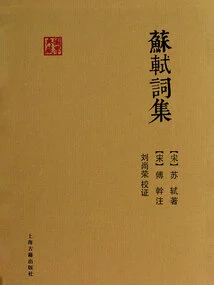
Su Shi's Collected Poems
Literature苏轼词集
Su Shi
Su Shi's poems are broad in content, majestic in spirit, and simple in language. They go against the limitations of Qiluo Xiangze and parting emotions in the past. They are an unprecedented and epoch-making innovation in Song poems and a further development of Song poems. This book collects all works of Su Shi's poems and comments from later generations, and also adds simple annotations and dates, which provides readers with more convenience in appreciating Su Shi's poems.
Su Shi's poems are broad in content, majestic in spirit, and simple in language. They go against the limitations of Qiluo Xiangze and parting emotions in the past. They are an unprecedented and epoch-making innovation in Song poems and a further development of Song poems. This book collects all works of Su Shi's poems and comments from later generations, and also adds simple annotations and dates, which provides readers with more convenience in appreciating Su Shi's poems.
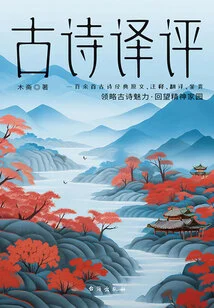
古诗译评
Muzhai
This book selects more than 100 ancient poems and tells the development process of ancient poems by translating and commenting on classic works. It covers classics such as the Book of Songs, Songs of Chu, Nineteen Ancient Poems, Jian'an Literature, Tao Yuanming's Poems, etc. The style includes the original text of the classics, annotations, translations and appreciation. The ancient poetry translation section includes both accurate interpretations of the original meaning of the original works and beautifully translated new poetry works. In the appreciation part, the author has devoted many years of academic research and explains the profound things in simple terms, pointing out the deep mysteries of the original work to readers. The author revised and compiled it based on the original work 25 years ago, filling the gap in the reading and publishing of pre-Tang Dynasty ancient poems in China. One book can read all the classics of ancient poetry and is a cherished pillow book for poetry lovers.
This book selects more than 100 ancient poems and tells the development process of ancient poems by translating and commenting on classic works. It covers classics such as the Book of Songs, Songs of Chu, Nineteen Ancient Poems, Jian'an Literature, Tao Yuanming's Poems, etc. The style includes the original text of the classics, annotations, translations and appreciation. The ancient poetry translation section includes both accurate interpretations of the original meaning of the original works and beautifully translated new poetry works. In the appreciation part, the author has devoted many years of academic research and explains the profound things in simple terms, pointing out the deep mysteries of the original work to readers. The author revised and compiled it based on the original work 25 years ago, filling the gap in the reading and publishing of pre-Tang Dynasty ancient poems in China. One book can read all the classics of ancient poetry and is a cherished pillow book for poetry lovers.
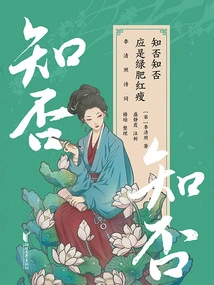
知否知否应是绿肥红瘦:李清照诗词
(song Dynasty) Written By Li Qingzhao, Annotated By Sheng Jingxia, Compiled By Lou Pei
Li Qingzhao is known as "the most talented woman of all time". Her words are both euphemistic and bold, vigorous and fresh, with sincere emotions, making her one of the "biggest poets". Most of her poems are poems that reflect the times and praise history. They are impassioned, full of fantasy and express strong patriotic feelings. And his prose often combines narrative and lyricism, with clear and beautiful language. Li Qingzhao's collection of words and essays recorded in previous books have been lost, and the existing collections of Li Qingzhao's works are all compiled by descendants. This book is the edited and annotated version of Mr. Sheng Jingxia, a talented woman from the Republic of China and the late famous poet. The book contains all existing works of Li Qingzhao's poetry. At the end of the book, there are essays on Sheng Jingxia's poetry and Li Qingzhao's chronology and travel charts. Here, the talents of ancient and modern generations of talented women complement each other.
Li Qingzhao is known as "the most talented woman of all time". Her words are both euphemistic and bold, vigorous and fresh, with sincere emotions, making her one of the "biggest poets". Most of her poems are poems that reflect the times and praise history. They are impassioned, full of fantasy and express strong patriotic feelings. And his prose often combines narrative and lyricism, with clear and beautiful language. Li Qingzhao's collection of words and essays recorded in previous books have been lost, and the existing collections of Li Qingzhao's works are all compiled by descendants. This book is the edited and annotated version of Mr. Sheng Jingxia, a talented woman from the Republic of China and the late famous poet. The book contains all existing works of Li Qingzhao's poetry. At the end of the book, there are essays on Sheng Jingxia's poetry and Li Qingzhao's chronology and travel charts. Here, the talents of ancient and modern generations of talented women complement each other.
Wine Poems and Comics
Literature酒诗漫说
Wang Chizhi
The author selected 300 classic poems about wine from the complete collection of poems from past dynasties. He originally planned to present them through calligraphy and publish them under the title "Three Hundred Poems on Wine". With the continuous deepening of research, the literati's feelings reflected in wine poems were classified and analyzed, and twenty-six theories of poetry and wine feelings were formed. This book can be used as a classified selection of famous wine poems from past dynasties, and can also help readers understand the wine culture in different historical periods. The manuscript is not large and can be made into a pocket book. This book will have a certain appeal to general readers who are interested in wine poetry and wine culture, as well as those engaged in the wine industry. The author selected 300 classic poems about wine from the complete collection of poems from past dynasties. He originally planned to present them through calligraphy and publish them under the title "Three Hundred Poems on Wine". With the continuous deepening of research, the literati's feelings reflected in wine poems were classified and analyzed, and the twenty-five theories of poetry and wine feelings were formed. This book can be used as a classified selection of famous wine poems from past dynasties, and can also help readers understand the wine culture in different historical periods.
The author selected 300 classic poems about wine from the complete collection of poems from past dynasties. He originally planned to present them through calligraphy and publish them under the title "Three Hundred Poems on Wine". With the continuous deepening of research, the literati's feelings reflected in wine poems were classified and analyzed, and twenty-six theories of poetry and wine feelings were formed. This book can be used as a classified selection of famous wine poems from past dynasties, and can also help readers understand the wine culture in different historical periods. The manuscript is not large and can be made into a pocket book. This book will have a certain appeal to general readers who are interested in wine poetry and wine culture, as well as those engaged in the wine industry. The author selected 300 classic poems about wine from the complete collection of poems from past dynasties. He originally planned to present them through calligraphy and publish them under the title "Three Hundred Poems on Wine". With the continuous deepening of research, the literati's feelings reflected in wine poems were classified and analyzed, and the twenty-five theories of poetry and wine feelings were formed. This book can be used as a classified selection of famous wine poems from past dynasties, and can also help readers understand the wine culture in different historical periods.
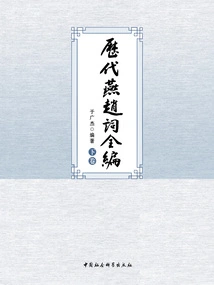
历代燕赵词全编(下卷)
Compiled By Yu Guangjie
"Yanzhao Ci in the Past Dynasties" compiles the lyrics created by poets from Yanzhao from the Sui and Tang Dynasties to modern times. The collection is organized by era and is divided into four parts: Tang, Five Dynasties, Song, Jin and Yuan, Ming Dynasty, Qing Dynasty and modern times. Based on the author, a biography is attached under the surname of the poet, which briefly introduces the poet's life and official career, and briefly comments on the poet's works based on previous discussions to see the origin, characteristics and influence of his Ci style and his influence on the Ci world; some writers on Ci studies summarize the essence to clarify the ideas and origins of his Ci studies. If there is no data to refer to, the analysis will be based on your own opinion. This compilation aims to compile the Yan-Zhao Ci poems of the past dynasties for the reference of researchers. It collects the lost pieces and adds fragments of sentences and chapters to show the creative achievements and development process of Yan-Zhao Ci poems, which are an important part of Chinese Ci studies.
"Yanzhao Ci in the Past Dynasties" compiles the lyrics created by poets from Yanzhao from the Sui and Tang Dynasties to modern times. The collection is organized by era and is divided into four parts: Tang, Five Dynasties, Song, Jin and Yuan, Ming Dynasty, Qing Dynasty and modern times. Based on the author, a biography is attached under the surname of the poet, which briefly introduces the poet's life and official career, and briefly comments on the poet's works based on previous discussions to see the origin, characteristics and influence of his Ci style and his influence on the Ci world; some writers on Ci studies summarize the essence to clarify the ideas and origins of his Ci studies. If there is no data to refer to, the analysis will be based on your own opinion. This compilation aims to compile the Yan-Zhao Ci poems of the past dynasties for the reference of researchers. It collects the lost pieces and adds fragments of sentences and chapters to show the creative achievements and development process of Yan-Zhao Ci poems, which are an important part of Chinese Ci studies.
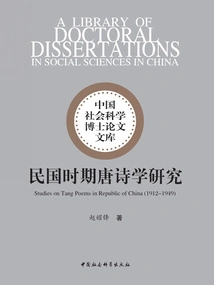
民国时期唐诗学研究
Zhao Yaofeng
This book comprehensively reviews the development of Tang poetics during the Republic of China, dividing it into three historical periods. During this period, Tang poetics showed the development characteristics of moving from tradition to modernity. Through textual interpretation of the research works on Tang poetry by scholars during the Republic of China, the rich academic perspectives formed by the research on Tang poetry during the Republic of China period were systematically refined. On this basis, the theoretical system formed by the research on Tang poetry during the Republic of China was constructed from three aspects: Tang poetry history theory, Tang poetry art theory, and Tang poetry style theory. Finally, on the basis of systematically summarizing the characteristics of Tang poetry during the Republic of China, it points out the shortcomings and future development trends of the research on Tang poetry during the Republic of China in terms of methodology and theoretical achievements.
This book comprehensively reviews the development of Tang poetics during the Republic of China, dividing it into three historical periods. During this period, Tang poetics showed the development characteristics of moving from tradition to modernity. Through textual interpretation of the research works on Tang poetry by scholars during the Republic of China, the rich academic perspectives formed by the research on Tang poetry during the Republic of China period were systematically refined. On this basis, the theoretical system formed by the research on Tang poetry during the Republic of China was constructed from three aspects: Tang poetry history theory, Tang poetry art theory, and Tang poetry style theory. Finally, on the basis of systematically summarizing the characteristics of Tang poetry during the Republic of China, it points out the shortcomings and future development trends of the research on Tang poetry during the Republic of China in terms of methodology and theoretical achievements.
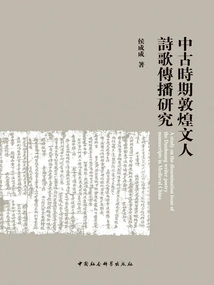
中古时期敦煌文人诗歌传播研究
Hou Chengcheng
Based on a systematic review of the formation of Han culture in the Dunhuang area before the Tang Dynasty, this book uses philological methods to conduct a detailed special study on the transmission of literati poetry in the Dunhuang area during the medieval period (referring to the Tang, Five Dynasties and early Song dynasties). It finds the following two phenomena: 1. The exchange of literati poetry between Dunhuang and the mainland was a single flow from east to west, and the flow of literati poetry from the Central Plains to Dunhuang was most likely interrupted during the Tubo period. 2. After the literati and poets from the Central Plains entered Dunhuang, their acceptance groups continued to expand and the scope of their circulation continued to expand. Some local Dunhuang people with higher cultural literacy even mastered the skills of poetry creation and engaged in poetry creation. The above two phenomena show that Dunhuang local poetry was produced under the long-term gestation of literati poetry in the Central Plains. This conclusion reminds us that in Dunhuang in the medieval period when multiple cultures coexisted, Chinese culture was the main body of Dunhuang regional culture. Dunhuang and places along the Silk Road further west have long become an important part of Chinese culture. This is a historical fact that cannot be denied by any external force. The greatest value of this book lies in this.
Based on a systematic review of the formation of Han culture in the Dunhuang area before the Tang Dynasty, this book uses philological methods to conduct a detailed special study on the transmission of literati poetry in the Dunhuang area during the medieval period (referring to the Tang, Five Dynasties and early Song dynasties). It finds the following two phenomena: 1. The exchange of literati poetry between Dunhuang and the mainland was a single flow from east to west, and the flow of literati poetry from the Central Plains to Dunhuang was most likely interrupted during the Tubo period. 2. After the literati and poets from the Central Plains entered Dunhuang, their acceptance groups continued to expand and the scope of their circulation continued to expand. Some local Dunhuang people with higher cultural literacy even mastered the skills of poetry creation and engaged in poetry creation. The above two phenomena show that Dunhuang local poetry was produced under the long-term gestation of literati poetry in the Central Plains. This conclusion reminds us that in Dunhuang in the medieval period when multiple cultures coexisted, Chinese culture was the main body of Dunhuang regional culture. Dunhuang and places along the Silk Road further west have long become an important part of Chinese culture. This is a historical fact that cannot be denied by any external force. The greatest value of this book lies in this.
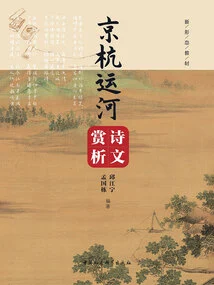
京杭运河诗文赏析
Compiled By Qiu Jiangning And Meng Guodong
"Appreciation of Poetry and Prose on the Beijing-Hangzhou Canal" is a new form of textbook written in conjunction with the online course "Lectures on Poetry and Prose on the Beijing-Hangzhou Canal". As far as the manuscript is concerned, the author strives to sort out the origins of the development of Chinese civilization and base it on the education of the material cultural heritage of the canal and the appreciation of traditional poetry and prose. It covers a series of related content such as the location and time of the canal's construction, the relevant people, the size, the purpose of the construction, and the significance of the construction at that time and today. We will show learners the intriguing stories behind each section of the canal, and select the lyrical, evaluation, and nostalgic works of literati throughout the history about the canal. After understanding the historical and geographical background of each section of the canal, we can look back on the past from the perspective of the poet, feel the poet's current state of mind, and deepen our understanding of the poem. Each appreciation article is exciting, vivid, and full of sentiment, which can be said to be appreciated by both refined and popular people, and has a strong sense of contemporary care.
"Appreciation of Poetry and Prose on the Beijing-Hangzhou Canal" is a new form of textbook written in conjunction with the online course "Lectures on Poetry and Prose on the Beijing-Hangzhou Canal". As far as the manuscript is concerned, the author strives to sort out the origins of the development of Chinese civilization and base it on the education of the material cultural heritage of the canal and the appreciation of traditional poetry and prose. It covers a series of related content such as the location and time of the canal's construction, the relevant people, the size, the purpose of the construction, and the significance of the construction at that time and today. We will show learners the intriguing stories behind each section of the canal, and select the lyrical, evaluation, and nostalgic works of literati throughout the history about the canal. After understanding the historical and geographical background of each section of the canal, we can look back on the past from the perspective of the poet, feel the poet's current state of mind, and deepen our understanding of the poem. Each appreciation article is exciting, vivid, and full of sentiment, which can be said to be appreciated by both refined and popular people, and has a strong sense of contemporary care.
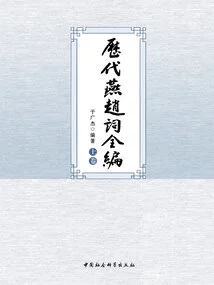
历代燕赵词全编(上卷)
Compiled By Yu Guangjie
"Yanzhao Ci in the Past Dynasties" compiles the lyrics created by poets from Yanzhao from the Sui and Tang Dynasties to modern times. The collection is organized by era and is divided into four parts: Tang, Five Dynasties, Song, Jin and Yuan, Ming Dynasty, Qing Dynasty and modern times. Based on the author, a biography is attached under the surname of the poet, which briefly introduces the poet's life and official career, and briefly comments on the poet's works based on previous discussions to see the origin, characteristics and influence of his Ci style and his influence on the Ci world; some writers on Ci studies summarize the essence to clarify the ideas and origins of his Ci studies. If there is no data to refer to, the analysis will be based on your own opinion. This compilation aims to compile the Yan-Zhao Ci poems of the past dynasties for the reference of researchers. It collects the lost pieces and adds fragments of sentences and chapters to show the creative achievements and development process of Yan-Zhao Ci poems, which are an important part of Chinese Ci studies.
"Yanzhao Ci in the Past Dynasties" compiles the lyrics created by poets from Yanzhao from the Sui and Tang Dynasties to modern times. The collection is organized by era and is divided into four parts: Tang, Five Dynasties, Song, Jin and Yuan, Ming Dynasty, Qing Dynasty and modern times. Based on the author, a biography is attached under the surname of the poet, which briefly introduces the poet's life and official career, and briefly comments on the poet's works based on previous discussions to see the origin, characteristics and influence of his Ci style and his influence on the Ci world; some writers on Ci studies summarize the essence to clarify the ideas and origins of his Ci studies. If there is no data to refer to, the analysis will be based on your own opinion. This compilation aims to compile the Yan-Zhao Ci poems of the past dynasties for the reference of researchers. It collects the lost pieces and adds fragments of sentences and chapters to show the creative achievements and development process of Yan-Zhao Ci poems, which are an important part of Chinese Ci studies.
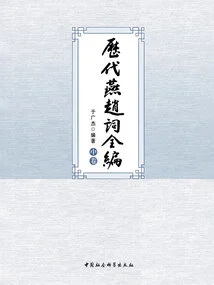
历代燕赵词全编(中卷)
Compiled By Yu Guangjie
"Yanzhao Ci in the Past Dynasties" compiles the lyrics created by poets from Yanzhao from the Sui and Tang Dynasties to modern times. The collection is organized by era and is divided into four parts: Tang, Five Dynasties, Song, Jin and Yuan, Ming Dynasty, Qing Dynasty and modern times. Based on the author, a biography is attached under the surname of the poet, which briefly introduces the poet's life and official career, and briefly comments on the poet's works based on previous discussions to see the origin, characteristics and influence of his Ci style and his influence on the Ci world; some writers on Ci studies summarize the essence to clarify the ideas and origins of his Ci studies. If there is no data to refer to, the analysis will be based on your own opinion. This compilation aims to compile the Yan-Zhao Ci poems of the past dynasties for the reference of researchers. It collects the lost pieces and adds fragments of sentences and chapters to show the creative achievements and development process of Yan-Zhao Ci poems, which are an important part of Chinese Ci studies.
"Yanzhao Ci in the Past Dynasties" compiles the lyrics created by poets from Yanzhao from the Sui and Tang Dynasties to modern times. The collection is organized by era and is divided into four parts: Tang, Five Dynasties, Song, Jin and Yuan, Ming Dynasty, Qing Dynasty and modern times. Based on the author, a biography is attached under the surname of the poet, which briefly introduces the poet's life and official career, and briefly comments on the poet's works based on previous discussions to see the origin, characteristics and influence of his Ci style and his influence on the Ci world; some writers on Ci studies summarize the essence to clarify the ideas and origins of his Ci studies. If there is no data to refer to, the analysis will be based on your own opinion. This compilation aims to compile the Yan-Zhao Ci poems of the past dynasties for the reference of researchers. It collects the lost pieces and adds fragments of sentences and chapters to show the creative achievements and development process of Yan-Zhao Ci poems, which are an important part of Chinese Ci studies.
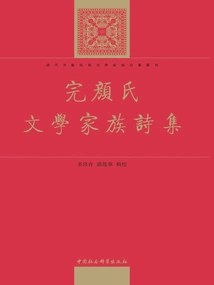
Wanyan Literary Family Poetry Collection
Literature完颜氏文学家族诗集
Doloken Edited By Lu Fenghua
The Wanyan family belongs to the Jinyuan noble family and has a long pedigree. In the Qing Dynasty, all family members were in prominent positions. More importantly, the family passed down its poetry and etiquette, and there were literati from generation to generation. From the early Qing Dynasty to the end of the Qing Dynasty, there were 14 poets in the Wanyan family, including 6 male poets and 8 female poets. They created a total of 11 poetry collections, of which 7 poetry collections have been handed down to the world, and 41 poems have survived. The family's literary style has lasted for three hundred years, forming an elegant literary production mechanism. The Wanyan family's poetry creation route expanded from family life to social life, and moved from the upper class to the lower class people. In the late Qing Dynasty, it increasingly showed the real life of the lower class people. It can be said to be a mirror of the life of the common people at that time. This downward vision and writing style give the Wanyan family's poetry a realist light and social significance. This book mainly focuses on the poems of the Wanyan family, and contains a total of seven poetry collections by six members of the Wanyan family.
The Wanyan family belongs to the Jinyuan noble family and has a long pedigree. In the Qing Dynasty, all family members were in prominent positions. More importantly, the family passed down its poetry and etiquette, and there were literati from generation to generation. From the early Qing Dynasty to the end of the Qing Dynasty, there were 14 poets in the Wanyan family, including 6 male poets and 8 female poets. They created a total of 11 poetry collections, of which 7 poetry collections have been handed down to the world, and 41 poems have survived. The family's literary style has lasted for three hundred years, forming an elegant literary production mechanism. The Wanyan family's poetry creation route expanded from family life to social life, and moved from the upper class to the lower class people. In the late Qing Dynasty, it increasingly showed the real life of the lower class people. It can be said to be a mirror of the life of the common people at that time. This downward vision and writing style give the Wanyan family's poetry a realist light and social significance. This book mainly focuses on the poems of the Wanyan family, and contains a total of seven poetry collections by six members of the Wanyan family.
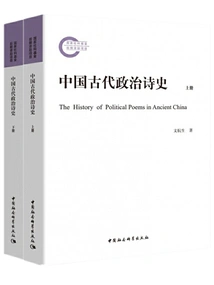
中国古代政治诗史(全二册)
Wen Hangsheng
Ancient Chinese political poetry is a special type of poetry with political affairs as the theme in ancient China. It mainly describes the state of national governance in ancient China, involving taxation, servitude, grain, famine, water, river and many other government affairs. Ancient Chinese political poetry praised or denounced various political figures and events, forming two categories of poems praising politics and poetry resenting politics. This book takes political poetry texts from the Pre-Qin Dynasty to the late Qing Dynasty as the research object, combs the development process of ancient Chinese political poetry, presents the basic appearance of ancient Chinese political poetry, analyzes the value system of ancient Chinese political poetry, and summarizes the creation rules of ancient Chinese political poetry. It is a monograph that systematically and comprehensively explains ancient Chinese political poetry.
Ancient Chinese political poetry is a special type of poetry with political affairs as the theme in ancient China. It mainly describes the state of national governance in ancient China, involving taxation, servitude, grain, famine, water, river and many other government affairs. Ancient Chinese political poetry praised or denounced various political figures and events, forming two categories of poems praising politics and poetry resenting politics. This book takes political poetry texts from the Pre-Qin Dynasty to the late Qing Dynasty as the research object, combs the development process of ancient Chinese political poetry, presents the basic appearance of ancient Chinese political poetry, analyzes the value system of ancient Chinese political poetry, and summarizes the creation rules of ancient Chinese political poetry. It is a monograph that systematically and comprehensively explains ancient Chinese political poetry.
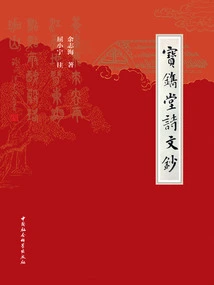
Bao Nuo Tang Poetry Notes
Literature宝镌堂诗文钞
Written By Yu Zhihai And Annotated By Qu Xiaoning
This book contains more than 300 original metrical poems and 2 research papers by the author. Among them, metrical poetry is created according to the traditional metrical poetry method, and is divided into four types: five-character rhyme poetry, seven-character rhyme poetry, five-character quatrains, and seven-character quatrains. Each type of poetry is basically arranged according to seven categories of content: festivals, chronicles, sentiments about things, sightseeing, pastoral home, topics about gifts and rewards, and discussions. Due to space limitations, only two research papers are included: "A Brief Introduction to the Concept of Rhythm Poetry" and "A Example of the Use of Rhythm Poetry". Taking into account the reading needs of different readers, some allusions in the poem have been appropriately annotated.
This book contains more than 300 original metrical poems and 2 research papers by the author. Among them, metrical poetry is created according to the traditional metrical poetry method, and is divided into four types: five-character rhyme poetry, seven-character rhyme poetry, five-character quatrains, and seven-character quatrains. Each type of poetry is basically arranged according to seven categories of content: festivals, chronicles, sentiments about things, sightseeing, pastoral home, topics about gifts and rewards, and discussions. Due to space limitations, only two research papers are included: "A Brief Introduction to the Concept of Rhythm Poetry" and "A Example of the Use of Rhythm Poetry". Taking into account the reading needs of different readers, some allusions in the poem have been appropriately annotated.
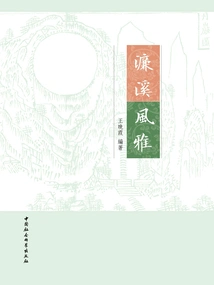
Huixi Fengya
Literature濓溪风雅
Compiled By Wang Wanxia
This book is a supplement to the poetry of Lianxi studies based on the existing literature on Lianxi studies in ancient and modern times. Specifically, five types of documents were collected and searched carefully. First, there are existing Lianxi studies documents in the academic circle; second, local chronicles of various relevant places over the past dynasties; third, separate collections and general collections of ancient Confucian scholars. Among these three categories, the first choice is the printed edition of the ancients' separate collections, the second is the printed edition of the ancient comprehensive collections, series of books, and similar books, the third is the photocopied version, and finally the selection of the comprehensive collections, series, and similar books compiled by contemporary people. To keep the writing concise, each manuscript is abbreviated and noted at the end of the chapter. The fourth category is collections of poems and essays by Korean gentlemen, all of which come from two large series of books that can be called the Four Complete Books of Korea - "Korean Anthology Series" and "Korean Anthology Series". The fifth category is that collections of poems and essays by Japanese gentlemen are mostly from Japan's large-scale Confucian series - "Xuxu Congshu Leicong", "Xuxu Congshu Leicong", "Japan Confucianism Series" and special collections of Japanese scholars. There are at least 110 kinds of documents mentioned above.
This book is a supplement to the poetry of Lianxi studies based on the existing literature on Lianxi studies in ancient and modern times. Specifically, five types of documents were collected and searched carefully. First, there are existing Lianxi studies documents in the academic circle; second, local chronicles of various relevant places over the past dynasties; third, separate collections and general collections of ancient Confucian scholars. Among these three categories, the first choice is the printed edition of the ancients' separate collections, the second is the printed edition of the ancient comprehensive collections, series of books, and similar books, the third is the photocopied version, and finally the selection of the comprehensive collections, series, and similar books compiled by contemporary people. To keep the writing concise, each manuscript is abbreviated and noted at the end of the chapter. The fourth category is collections of poems and essays by Korean gentlemen, all of which come from two large series of books that can be called the Four Complete Books of Korea - "Korean Anthology Series" and "Korean Anthology Series". The fifth category is that collections of poems and essays by Japanese gentlemen are mostly from Japan's large-scale Confucian series - "Xuxu Congshu Leicong", "Xuxu Congshu Leicong", "Japan Confucianism Series" and special collections of Japanese scholars. There are at least 110 kinds of documents mentioned above.
透过历史学唐诗(共2册)
Monman
The beauty of Tang poetry lies in its sentimentality. This book follows the order of friendship, nostalgia, official love, country love, ancient and modern love, from six aspects: "Who am I?", "Annotations", "Translation", "What's so good about this poem?", "Classroom Easter Eggs" and "You can also know more". Each Tang poem is interpreted in detail, and presented vividly and interestingly in the form of appreciation pictures and cartoons, allowing children to appreciate the beauty of Tang poetry and appreciate the feelings of the Tang Dynasty poets about their family and country in an entertaining and educational atmosphere.
The beauty of Tang poetry lies in its sentimentality. This book follows the order of friendship, nostalgia, official love, country love, ancient and modern love, from six aspects: "Who am I?", "Annotations", "Translation", "What's so good about this poem?", "Classroom Easter Eggs" and "You can also know more". Each Tang poem is interpreted in detail, and presented vividly and interestingly in the form of appreciation pictures and cartoons, allowing children to appreciate the beauty of Tang poetry and appreciate the feelings of the Tang Dynasty poets about their family and country in an entertaining and educational atmosphere.
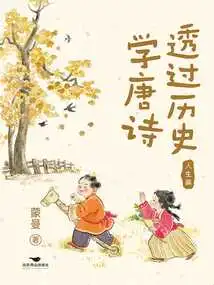
透过历史学唐诗:人生篇
Monman
Appreciating Tang poetry is a happy thing. In the order of happiness, anger, sorrow, joy and resentment, this book provides a detailed interpretation of each Tang poem from six aspects: "Who am I?", "Annotations", "Translation", "What's so good about this poem?", "Classroom Easter Eggs" and "You can know more". It is vividly and interestingly presented in the form of appreciation pictures and cartoons, allowing children to experience the rich life of the Tang Dynasty poets in an entertaining and educational atmosphere.
Appreciating Tang poetry is a happy thing. In the order of happiness, anger, sorrow, joy and resentment, this book provides a detailed interpretation of each Tang poem from six aspects: "Who am I?", "Annotations", "Translation", "What's so good about this poem?", "Classroom Easter Eggs" and "You can know more". It is vividly and interestingly presented in the form of appreciation pictures and cartoons, allowing children to experience the rich life of the Tang Dynasty poets in an entertaining and educational atmosphere.
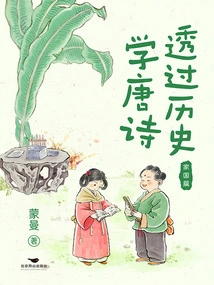
透过历史学唐诗:家国篇
Monman
The beauty of Tang poetry lies in its sentimentality. This book follows the order of friendship, nostalgia, official love, country love, ancient and modern love, from six aspects: "Who am I?", "Annotations", "Translation", "What's so good about this poem?", "Classroom Easter Eggs" and "You can also know more". Each Tang poem is interpreted in detail, and presented vividly and interestingly in the form of appreciation pictures and cartoons, allowing children to appreciate the beauty of Tang poetry and appreciate the feelings of the Tang Dynasty poets about their family and country in an entertaining and educational atmosphere.
The beauty of Tang poetry lies in its sentimentality. This book follows the order of friendship, nostalgia, official love, country love, ancient and modern love, from six aspects: "Who am I?", "Annotations", "Translation", "What's so good about this poem?", "Classroom Easter Eggs" and "You can also know more". Each Tang poem is interpreted in detail, and presented vividly and interestingly in the form of appreciation pictures and cartoons, allowing children to appreciate the beauty of Tang poetry and appreciate the feelings of the Tang Dynasty poets about their family and country in an entertaining and educational atmosphere.
先秦汉唐诗赋论稿
Leng Weiguo
This book is divided into three parts: poetry of the pre-Qin and Han dynasties, poetry criticism of the Han, Wei and Six Dynasties, and poetry and literary criticism of the Tang Dynasty. The first part mainly describes the evolution from the "bianya" of "The Book of Songs" to the thought of "Laozi" from the perspective of intellectual history, and reveals the artistic characteristics of Qu Yuan's works from the perspective of artistic thinking. The middle editor explores the hidden clues in the complicated historical materials, analyzes the Fu studies criticism of Sima Qian, Sima Xiangru, Yang Xiong, Liu Xiang, Liu Xin, Xiaoliang royal family, etc., And outlines the basic context of Fu study criticism in the Han, Wei and Six Dynasties. The following part takes the specific works of Li Bai, Bai Juyi, Li He, and Li Shangyin as examples to discuss the principles of interpretation of classical poetry. Starting from a close reading of the text and historical context, the book analyzes and analyzes the two major genres of poetry and poetry in the pre-Qin, Han and Tang Dynasties.
This book is divided into three parts: poetry of the pre-Qin and Han dynasties, poetry criticism of the Han, Wei and Six Dynasties, and poetry and literary criticism of the Tang Dynasty. The first part mainly describes the evolution from the "bianya" of "The Book of Songs" to the thought of "Laozi" from the perspective of intellectual history, and reveals the artistic characteristics of Qu Yuan's works from the perspective of artistic thinking. The middle editor explores the hidden clues in the complicated historical materials, analyzes the Fu studies criticism of Sima Qian, Sima Xiangru, Yang Xiong, Liu Xiang, Liu Xin, Xiaoliang royal family, etc., And outlines the basic context of Fu study criticism in the Han, Wei and Six Dynasties. The following part takes the specific works of Li Bai, Bai Juyi, Li He, and Li Shangyin as examples to discuss the principles of interpretation of classical poetry. Starting from a close reading of the text and historical context, the book analyzes and analyzes the two major genres of poetry and poetry in the pre-Qin, Han and Tang Dynasties.
《淮海词》选注·心解·集评
Original Work By Qin Guan, Translated By Chen Zumei
"Huaihai Ci" is a collection of poems by Qin Guan, a writer in the Northern Song Dynasty. Qin Guan's poems are gorgeous and exquisite, and he is a representative of the graceful poets of the Northern Song Dynasty. The annotator and translator of this book, Chen Zumei, is a researcher at the Institute of Literature of the Chinese Academy of Social Sciences and has been engaged in the study of Song poetry for a long time. She has put a lot of effort into the annotations, insights, and translations of "Huaihai Ci" and carefully considered every word. It is a set of books with the previously published translation of selected annotations and annotations to "Shu Yu Ci".
"Huaihai Ci" is a collection of poems by Qin Guan, a writer in the Northern Song Dynasty. Qin Guan's poems are gorgeous and exquisite, and he is a representative of the graceful poets of the Northern Song Dynasty. The annotator and translator of this book, Chen Zumei, is a researcher at the Institute of Literature of the Chinese Academy of Social Sciences and has been engaged in the study of Song poetry for a long time. She has put a lot of effort into the annotations, insights, and translations of "Huaihai Ci" and carefully considered every word. It is a set of books with the previously published translation of selected annotations and annotations to "Shu Yu Ci".
Zhongnan Collection: Poems by Tao Xuan
Literature终南集:陶轩主诗词
Li Xiaogang
This book contains the author's more than ten years of ancient poetry creation and some research results on poetry criticism and poetry theory. The book is divided into three volumes: the first volume is Tao Xuan's poetry, which contains original works such as Qilu, Wulu, Qijue, Wujue and Ci; the second volume is Tao Xuan's poetry reviews, which contains several essays by the author on poets of the Yuan, Ming and Qing Dynasties; the third volume is Tao Xuan's poetry theory, which contains the author's experience in creating ancient poetry for many years. The essence of the book lies in the more than 400 poems and lyrics collected in the book, covering natural mountains and rivers, scenic spots and historic sites, chanting history and expressing feelings, chanting objects and expressing ambitions, recording travel farewells and the style of the times, etc. Most of them focus on the natural mountains and rivers, cultural landscapes and historical places of the Three Qin Dynasty, so it is called "Zhongnan Collection".
This book contains the author's more than ten years of ancient poetry creation and some research results on poetry criticism and poetry theory. The book is divided into three volumes: the first volume is Tao Xuan's poetry, which contains original works such as Qilu, Wulu, Qijue, Wujue and Ci; the second volume is Tao Xuan's poetry reviews, which contains several essays by the author on poets of the Yuan, Ming and Qing Dynasties; the third volume is Tao Xuan's poetry theory, which contains the author's experience in creating ancient poetry for many years. The essence of the book lies in the more than 400 poems and lyrics collected in the book, covering natural mountains and rivers, scenic spots and historic sites, chanting history and expressing feelings, chanting objects and expressing ambitions, recording travel farewells and the style of the times, etc. Most of them focus on the natural mountains and rivers, cultural landscapes and historical places of the Three Qin Dynasty, so it is called "Zhongnan Collection".
宋代节令诗研究
Li Yi
The Song Dynasty was the heyday of the mature and developed festival system. The increasingly prosperous festival customs promoted the birth of a large number of festival poems. The seasonal poems of the Song Dynasty contain beautiful literary sentiments and vivid folk custom descriptions, and have high cultural value. The book "Research on Seasonal Poems of the Song Dynasty" is mainly based on a close reading of the text, and conducts a systematic thematic study of the Song Dynasty's seasonal poems from a diachronic comparative perspective. The book first examines women's writing, children's writing, and peasant writing in seasonal poems; secondly, it explores the penetration of seasonal poems into the life situations of Song people; and then analyzes the relationship between palace festivals, written writing, and the operation of power; and finally, it examines the aesthetic evolution of seasonal poems from the aspects of poem composition, allusions, themes, and language. The appendix explains the influence of seasonal poems on different seasonal genres such as Song poetry and Song Dynasty geography notes, and corrects the errors in the Song poems in "Ode to Ancient and Modern Years" by Pu Ji of the Southern Song Dynasty, thereby further revealing the close interactive relationship between festivals and Song poetry, folk customs and literature.
The Song Dynasty was the heyday of the mature and developed festival system. The increasingly prosperous festival customs promoted the birth of a large number of festival poems. The seasonal poems of the Song Dynasty contain beautiful literary sentiments and vivid folk custom descriptions, and have high cultural value. The book "Research on Seasonal Poems of the Song Dynasty" is mainly based on a close reading of the text, and conducts a systematic thematic study of the Song Dynasty's seasonal poems from a diachronic comparative perspective. The book first examines women's writing, children's writing, and peasant writing in seasonal poems; secondly, it explores the penetration of seasonal poems into the life situations of Song people; and then analyzes the relationship between palace festivals, written writing, and the operation of power; and finally, it examines the aesthetic evolution of seasonal poems from the aspects of poem composition, allusions, themes, and language. The appendix explains the influence of seasonal poems on different seasonal genres such as Song poetry and Song Dynasty geography notes, and corrects the errors in the Song poems in "Ode to Ancient and Modern Years" by Pu Ji of the Southern Song Dynasty, thereby further revealing the close interactive relationship between festivals and Song poetry, folk customs and literature.
跟着诗词游浙江:瓯江山水诗路
Written By Yang Xiao And Guan Jiayi, Compiled By Zhejiang Provincial Department Of Culture, Radio, Television And Tourism
This book is the "Oujiang Landscape Poetry Road" volume of the "Traveling in Zhejiang with Poetry" book series. The Oujiang Landscape Poetry Road takes Oujiang, Daxi and Longquan Stream as its main lines and covers part of the administrative areas of Wenzhou and Lishui. Yongjia is the birthplace of Chinese landscape poetry. This book takes poetry as the starting point, relies on the road, and uses scenes, stories and scenery as the narrative carrier to record the humanistic charm of Zhejiang contained in the natural scenery, traditional villages, historical relics, intangible cultural heritage and modern living space. In this way, it conveys the quietest scenery and the silent civilization contained in the poetic road of Zhejiang, as well as the unique and distinctive oriental life aesthetics behind them. This book fully considers the actual needs and future plans for the cultural tourism and lifestyle development and utilization of Poetry Road Zhejiang. It will also target young, business and mid-to-high-end consumer groups with study and leisure vacation as their consumption demands. It creatively and functionally presents the points along the route and provides tourist guide points (eating, drinking, traveling, entertainment, entertainment, shopping, accommodation and intangible cultural heritage experience), so as to realize that Poetry Road Zhejiang is not only a Zhejiang in terms of cultural concepts, but also a Zhejiang that can be felt, experienced and consumed.
This book is the "Oujiang Landscape Poetry Road" volume of the "Traveling in Zhejiang with Poetry" book series. The Oujiang Landscape Poetry Road takes Oujiang, Daxi and Longquan Stream as its main lines and covers part of the administrative areas of Wenzhou and Lishui. Yongjia is the birthplace of Chinese landscape poetry. This book takes poetry as the starting point, relies on the road, and uses scenes, stories and scenery as the narrative carrier to record the humanistic charm of Zhejiang contained in the natural scenery, traditional villages, historical relics, intangible cultural heritage and modern living space. In this way, it conveys the quietest scenery and the silent civilization contained in the poetic road of Zhejiang, as well as the unique and distinctive oriental life aesthetics behind them. This book fully considers the actual needs and future plans for the cultural tourism and lifestyle development and utilization of Poetry Road Zhejiang. It will also target young, business and mid-to-high-end consumer groups with study and leisure vacation as their consumption demands. It creatively and functionally presents the points along the route and provides tourist guide points (eating, drinking, traveling, entertainment, entertainment, shopping, accommodation and intangible cultural heritage experience), so as to realize that Poetry Road Zhejiang is not only a Zhejiang in terms of cultural concepts, but also a Zhejiang that can be felt, experienced and consumed.
跟着诗词游浙江:浙东唐诗之路
Written By Yang Xiao And Guan Jiayi, Compiled By Zhejiang Provincial Department Of Culture, Radio, Television And Tourism
This book is the "Road to Tang Poetry in Eastern Zhejiang" volume of the "Traveling in Zhejiang with Poetry" book series. The Tang Poetry Road in Eastern Zhejiang is a poetic road that runs from the Qiantang River through Shaoxing, the Eastern Zhejiang Canal, the Cao'e River to Yanxi, then to Xinchang, and then to Tiantai in Taizhou and Wenzhou. This book takes poetry as the starting point, relies on the road, and uses scenes, stories and scenery as the narrative carrier to record the humanistic charm of Zhejiang contained in the natural scenery, traditional villages, historical relics, intangible cultural heritage and modern living space. In this way, it conveys the quietest scenery and the silent civilization contained in the poetic road of Zhejiang, as well as the unique and distinctive oriental life aesthetics behind them. This book fully considers the actual needs and future plans for the cultural tourism and lifestyle development and utilization of Poetry Road Zhejiang. It will also target young, business and mid-to-high-end consumer groups with study and leisure vacation as their consumption demands. It creatively and functionally presents the points along the route and provides tourist guide points (eating, drinking, traveling, entertainment, entertainment, shopping, accommodation and intangible cultural heritage experience), so as to realize that Poetry Road Zhejiang is not only a Zhejiang in terms of cultural concepts, but also a Zhejiang that can be felt, experienced and consumed.
This book is the "Road to Tang Poetry in Eastern Zhejiang" volume of the "Traveling in Zhejiang with Poetry" book series. The Tang Poetry Road in Eastern Zhejiang is a poetic road that runs from the Qiantang River through Shaoxing, the Eastern Zhejiang Canal, the Cao'e River to Yanxi, then to Xinchang, and then to Tiantai in Taizhou and Wenzhou. This book takes poetry as the starting point, relies on the road, and uses scenes, stories and scenery as the narrative carrier to record the humanistic charm of Zhejiang contained in the natural scenery, traditional villages, historical relics, intangible cultural heritage and modern living space. In this way, it conveys the quietest scenery and the silent civilization contained in the poetic road of Zhejiang, as well as the unique and distinctive oriental life aesthetics behind them. This book fully considers the actual needs and future plans for the cultural tourism and lifestyle development and utilization of Poetry Road Zhejiang. It will also target young, business and mid-to-high-end consumer groups with study and leisure vacation as their consumption demands. It creatively and functionally presents the points along the route and provides tourist guide points (eating, drinking, traveling, entertainment, entertainment, shopping, accommodation and intangible cultural heritage experience), so as to realize that Poetry Road Zhejiang is not only a Zhejiang in terms of cultural concepts, but also a Zhejiang that can be felt, experienced and consumed.
跟着诗词游浙江:钱塘江诗路
Written By Yang Xiao And Guan Jiayi, Compiled By Zhejiang Provincial Department Of Culture, Radio, Television And Tourism
This book is the "Qiantang River Poetry Road" volume of the "Traveling in Zhejiang with Poetry" book series. Qiantang River Poetry Road is a strip cultural tourism route with "Xin'an River-Fuchun River-Qiantang River" as the main line. This route not only has beautiful natural scenery, but also has profound cultural heritage. It has been a favorite place for literati for thousands of years. More than 1,000 Tang and Song poems have been left along the route. This book takes poetry as the starting point, relies on the road, and uses scenes, stories and scenery as narrative carriers to record the humanistic charm of Zhejiang contained in the natural scenery, traditional villages, historical relics, intangible cultural heritage and modern living space. It also sorts out the travel strategies along the poetry road (including food, accommodation, transportation, travel, shopping, entertainment and intangible cultural heritage experiences, etc.), Which can be used as a travel strategy manual. Readers can follow this book to discover and savor the beautiful scenery and stories on the "Qiantang River Poetry Road".
This book is the "Qiantang River Poetry Road" volume of the "Traveling in Zhejiang with Poetry" book series. Qiantang River Poetry Road is a strip cultural tourism route with "Xin'an River-Fuchun River-Qiantang River" as the main line. This route not only has beautiful natural scenery, but also has profound cultural heritage. It has been a favorite place for literati for thousands of years. More than 1,000 Tang and Song poems have been left along the route. This book takes poetry as the starting point, relies on the road, and uses scenes, stories and scenery as narrative carriers to record the humanistic charm of Zhejiang contained in the natural scenery, traditional villages, historical relics, intangible cultural heritage and modern living space. It also sorts out the travel strategies along the poetry road (including food, accommodation, transportation, travel, shopping, entertainment and intangible cultural heritage experiences, etc.), Which can be used as a travel strategy manual. Readers can follow this book to discover and savor the beautiful scenery and stories on the "Qiantang River Poetry Road".
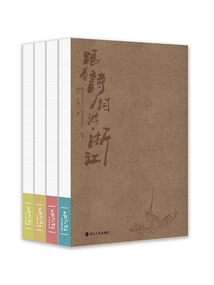
跟着诗词游浙江:瓯江山水诗路+钱塘江诗路+大运河诗路+浙东唐诗之路(全四册)
Written By Yang Xiao And Guan Jiayi, Compiled By Zhejiang Provincial Department Of Culture, Radio, Television And Tourism
"Traveling in Zhejiang with Poetry: Oujiang River, Qiantang River, Grand Canal, and the Road of Tang Poetry in Eastern Zhejiang (four volumes)" aims to show Zhejiang's natural scenery, traditional villages, historical relics, intangible cultural heritage, and humanistic charm in modern living space through poetry. It also provides travel strategies, including food, accommodation, transportation, travel, shopping, entertainment, and intangible cultural heritage experience. It is an interesting, informative, and practical travel guide.
"Traveling in Zhejiang with Poetry: Oujiang River, Qiantang River, Grand Canal, and the Road of Tang Poetry in Eastern Zhejiang (four volumes)" aims to show Zhejiang's natural scenery, traditional villages, historical relics, intangible cultural heritage, and humanistic charm in modern living space through poetry. It also provides travel strategies, including food, accommodation, transportation, travel, shopping, entertainment, and intangible cultural heritage experience. It is an interesting, informative, and practical travel guide.