Library
Browse and search novels
1,326 novels found
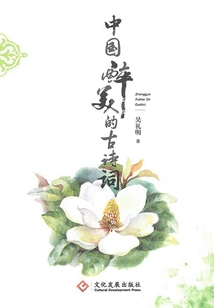
Beautiful Ancient Chinese Poems
Literature中国醉美的古诗词
Wu Liming
This book selects 39 classical poems and involves 12 other classical poems. The analysis of each poem starts from the specific language, trying to go deep into the details of the poem or the neglected parts, and comprehensively sort out and interpret the content of the poem. The analysis focuses on the structural techniques of poetry, as well as the use of allusions and other rhetoric in poetry. As for the imagery or artistic conception of poetry, it tries its best to describe the situation in a situational manner. "Appreciate its taste, analyze its principles, and obtain its complete explanation" is the distinctive main line of the teaching of classical poetry in this book, and the emphasis on fine literary feeling is the distinctive feature of this book. This book is positioned as a reading teaching reference book for Chinese teachers in primary and secondary schools.
This book selects 39 classical poems and involves 12 other classical poems. The analysis of each poem starts from the specific language, trying to go deep into the details of the poem or the neglected parts, and comprehensively sort out and interpret the content of the poem. The analysis focuses on the structural techniques of poetry, as well as the use of allusions and other rhetoric in poetry. As for the imagery or artistic conception of poetry, it tries its best to describe the situation in a situational manner. "Appreciate its taste, analyze its principles, and obtain its complete explanation" is the distinctive main line of the teaching of classical poetry in this book, and the emphasis on fine literary feeling is the distinctive feature of this book. This book is positioned as a reading teaching reference book for Chinese teachers in primary and secondary schools.
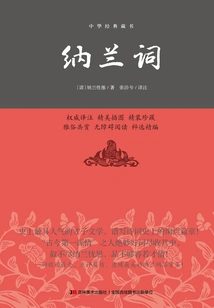
Nalan Ci (hardcover)
Literature纳兰词(精装)
G
"Nalan Ci" is a collection of Nalan Xingde's poems. The themes involve love, family affection, friendship, miscellaneous feelings, etc., And the scenery of Jiangnan beyond the Great Wall, ancient and modern times, are all included. The style of his poems is elegant, graceful, graceful and charming, which is quite reminiscent of the late masters of the Southern Tang Dynasty. It has a very special status and influence in the history of Chinese literature. This book carefully collects the ancient manuscripts of Nalan Xingde's "Nalan Ci", combines the original text, word translation, comments and appreciation, annotations and doubts, supplemented by sincere original paintings, and uses pictures to explain the text. It is beautiful and true, and offers readers the beauty and charm of Chinese classical poetry written by a talented man of the previous generation.
"Nalan Ci" is a collection of Nalan Xingde's poems. The themes involve love, family affection, friendship, miscellaneous feelings, etc., And the scenery of Jiangnan beyond the Great Wall, ancient and modern times, are all included. The style of his poems is elegant, graceful, graceful and charming, which is quite reminiscent of the late masters of the Southern Tang Dynasty. It has a very special status and influence in the history of Chinese literature. This book carefully collects the ancient manuscripts of Nalan Xingde's "Nalan Ci", combines the original text, word translation, comments and appreciation, annotations and doubts, supplemented by sincere original paintings, and uses pictures to explain the text. It is beautiful and true, and offers readers the beauty and charm of Chinese classical poetry written by a talented man of the previous generation.
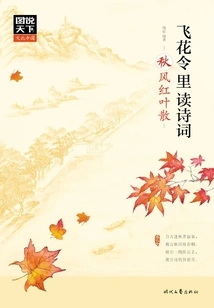
图说天下·文化中国:飞花令里读诗词·秋
Wanru
In February 2017, the "Chinese Poetry Conference", a large-scale cultural studio quiz competition program created by CCTV, attracted widespread attention from all walks of life. This program with the theme of "appreciating Chinese poetry, searching for cultural genes, and appreciating the beauty of life" not only triggered a viewing frenzy, but also awakened the general public's awareness of poetry. The so-called "Feihua Ling" was originally a kind of drinking order in ancient China that was used to drink alcohol for fun. The word "Feihua" comes from the sentence "Flowers are flying everywhere in the spring city" in the poem "Cold Food" by Han Hong, a poet of the Tang Dynasty. This order was born in the Western Zhou Dynasty and matured in the Sui and Tang Dynasties. Belongs to Yaling. Poems and lyrics are preferred when flying flowers. Songs can also be used, but the sentences chosen generally do not exceed 9 words. Generally speaking, when executing an order, the poem must not only contain the corresponding keyword, but also has strict requirements on where the keyword appears in the poem.
In February 2017, the "Chinese Poetry Conference", a large-scale cultural studio quiz competition program created by CCTV, attracted widespread attention from all walks of life. This program with the theme of "appreciating Chinese poetry, searching for cultural genes, and appreciating the beauty of life" not only triggered a viewing frenzy, but also awakened the general public's awareness of poetry. The so-called "Feihua Ling" was originally a kind of drinking order in ancient China that was used to drink alcohol for fun. The word "Feihua" comes from the sentence "Flowers are flying everywhere in the spring city" in the poem "Cold Food" by Han Hong, a poet of the Tang Dynasty. This order was born in the Western Zhou Dynasty and matured in the Sui and Tang Dynasties. Belongs to Yaling. Poems and lyrics are preferred when flying flowers. Songs can also be used, but the sentences chosen generally do not exceed 9 words. Generally speaking, when executing an order, the poem must not only contain the corresponding keyword, but also has strict requirements on where the keyword appears in the poem.
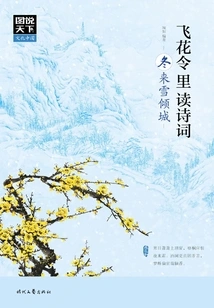
图说天下·文化中国:飞花令里读诗词·冬
Wanru
In February 2017, the "Chinese Poetry Conference", a large-scale cultural studio quiz competition program created by CCTV, attracted widespread attention from all walks of life. This program with the theme of "appreciating Chinese poetry, searching for cultural genes, and appreciating the beauty of life" not only triggered a viewing frenzy, but also awakened the general public's awareness of poetry. The so-called "Feihua Ling" was originally a kind of drinking order in ancient China that was used to drink alcohol for fun. The word "Feihua" comes from the sentence "Flowers are flying everywhere in the spring city" in the poem "Cold Food" by Han Hong, a poet of the Tang Dynasty. This order was born in the Western Zhou Dynasty and matured in the Sui and Tang Dynasties. Belongs to Yaling. Poems and lyrics are preferred when flying flowers, and music can also be used, but the sentences chosen generally do not exceed 10 words. Generally speaking, when executing an order, the poem must not only contain the corresponding keyword, but also has strict requirements on where the keyword appears in the poem.
In February 2017, the "Chinese Poetry Conference", a large-scale cultural studio quiz competition program created by CCTV, attracted widespread attention from all walks of life. This program with the theme of "appreciating Chinese poetry, searching for cultural genes, and appreciating the beauty of life" not only triggered a viewing frenzy, but also awakened the general public's awareness of poetry. The so-called "Feihua Ling" was originally a kind of drinking order in ancient China that was used to drink alcohol for fun. The word "Feihua" comes from the sentence "Flowers are flying everywhere in the spring city" in the poem "Cold Food" by Han Hong, a poet of the Tang Dynasty. This order was born in the Western Zhou Dynasty and matured in the Sui and Tang Dynasties. Belongs to Yaling. Poems and lyrics are preferred when flying flowers, and music can also be used, but the sentences chosen generally do not exceed 10 words. Generally speaking, when executing an order, the poem must not only contain the corresponding keyword, but also has strict requirements on where the keyword appears in the poem.
图说天下·文化中国:飞花令里读诗词·春
Wanru
In February 2017, the "Chinese Poetry Conference", a large-scale cultural studio quiz competition program created by CCTV, attracted widespread attention from all walks of life. This program with the theme of "appreciating Chinese poetry, searching for cultural genes, and appreciating the beauty of life" not only triggered a viewing frenzy, but also awakened the general public's awareness of poetry. The so-called "Feihua Ling" was originally a kind of drinking order in ancient China that was used to drink alcohol for fun. The word "Feihua" comes from the sentence "Flowers are flying everywhere in the spring city" in the poem "Cold Food" by Han Hong, a poet of the Tang Dynasty. This order was born in the Western Zhou Dynasty and matured in the Sui and Tang Dynasties. Belongs to Yaling. Poems and lyrics are preferred when flying flowers. Songs can also be used, but the sentences chosen generally do not exceed 7 words. Generally speaking, when executing an order, the poem must not only contain the corresponding keyword, but also has strict requirements on where the keyword appears in the poem.
In February 2017, the "Chinese Poetry Conference", a large-scale cultural studio quiz competition program created by CCTV, attracted widespread attention from all walks of life. This program with the theme of "appreciating Chinese poetry, searching for cultural genes, and appreciating the beauty of life" not only triggered a viewing frenzy, but also awakened the general public's awareness of poetry. The so-called "Feihua Ling" was originally a kind of drinking order in ancient China that was used to drink alcohol for fun. The word "Feihua" comes from the sentence "Flowers are flying everywhere in the spring city" in the poem "Cold Food" by Han Hong, a poet of the Tang Dynasty. This order was born in the Western Zhou Dynasty and matured in the Sui and Tang Dynasties. Belongs to Yaling. Poems and lyrics are preferred when flying flowers. Songs can also be used, but the sentences chosen generally do not exceed 7 words. Generally speaking, when executing an order, the poem must not only contain the corresponding keyword, but also has strict requirements on where the keyword appears in the poem.
图说天下·文化中国:飞花令里读诗词·夏
Wanru
In February 2017, the "Chinese Poetry Conference", a large-scale cultural studio quiz competition program created by CCTV, attracted widespread attention from all walks of life. This program with the theme of "appreciating Chinese poetry, searching for cultural genes, and appreciating the beauty of life" not only triggered a viewing frenzy, but also awakened the general public's awareness of poetry. The so-called "Feihua Ling" was originally a kind of drinking order in ancient China that was used to drink alcohol for fun. The word "Feihua" comes from the sentence "Flowers are flying everywhere in the spring city" in the poem "Cold Food" by Han Hong, a poet of the Tang Dynasty. This order was born in the Western Zhou Dynasty and matured in the Sui and Tang Dynasties. Belongs to Yaling. Poems and lyrics are preferred when flying flowers, and music can also be used, but the sentences chosen generally do not exceed 8 words. Generally speaking, when executing an order, the poem must not only contain the corresponding keyword, but also has strict requirements on where the keyword appears in the poem.
In February 2017, the "Chinese Poetry Conference", a large-scale cultural studio quiz competition program created by CCTV, attracted widespread attention from all walks of life. This program with the theme of "appreciating Chinese poetry, searching for cultural genes, and appreciating the beauty of life" not only triggered a viewing frenzy, but also awakened the general public's awareness of poetry. The so-called "Feihua Ling" was originally a kind of drinking order in ancient China that was used to drink alcohol for fun. The word "Feihua" comes from the sentence "Flowers are flying everywhere in the spring city" in the poem "Cold Food" by Han Hong, a poet of the Tang Dynasty. This order was born in the Western Zhou Dynasty and matured in the Sui and Tang Dynasties. Belongs to Yaling. Poems and lyrics are preferred when flying flowers, and music can also be used, but the sentences chosen generally do not exceed 8 words. Generally speaking, when executing an order, the poem must not only contain the corresponding keyword, but also has strict requirements on where the keyword appears in the poem.
中国传世诗词100名篇
Yuan Zifeng
"Poetry expresses aspirations, words express feelings." Poems, as exotic flowers in the garden of Chinese literature, have been sung and chanted by people, and have influenced the mentality of generations of Chinese people. Throughout the development process of Chinese poetry, starting with the "Book of Songs", the main theme and creation of Chinese poetry were laid. Since then, the "Chu Ci" of the Warring States Period, the five-character poems of the Han Dynasty, the poetry of the Tang Dynasty, and the lyrics of the Song Dynasty have all become immortal monuments in the history of Chinese literature. In order to truly and comprehensively introduce the charm of Chinese poetry to the broad readership, we have planned and compiled "100 Chinese Poems. This book selects the best works of Chinese poetry over the past thousands of years and selects 100 works by 62 poets. Each work has been interpreted in terms of content. These interpretations include four major sections: "Talk Poet (Poet Writer)", "Analysis of Doubts", "Cooking Wine to Discuss Poems" and "Poetry (Poets) Stories", which provide a comprehensive and detailed explanation of the creative background, literary value and artistic achievements of each poem, striving to allow readers to understand these poems. To gain a more comprehensive and in-depth understanding of the poem. In order to enhance readability, broaden readers' horizons, and improve reading interest, a large number of poetic images and artistic conception pictures are inserted according to the content of the poem, and the pictures are concisely explained. The combination of text and pictures complements each other, hoping to open up a new way for a new interpretation of Chinese poetry. There is a proverb in the West. : There are a thousand Hamlets in the eyes of a thousand people, and the interpretation of poetry is also a matter of opinion. This is an undeniable fact. Although "100 Famous Poems" is not the most authoritative work, its content and exposition method are enough to lead the trend and open up a new realm of reading and appreciation of Chinese poetry. Readers may wish to savor it according to their own standards and needs and understand the "beauty" of Chinese poetry. As for shortcomings and omissions, we hope that the readers will give them the most sincere criticism and correction, so that we can experience the infinite charm of Chinese poetry together!
"Poetry expresses aspirations, words express feelings." Poems, as exotic flowers in the garden of Chinese literature, have been sung and chanted by people, and have influenced the mentality of generations of Chinese people. Throughout the development process of Chinese poetry, starting with the "Book of Songs", the main theme and creation of Chinese poetry were laid. Since then, the "Chu Ci" of the Warring States Period, the five-character poems of the Han Dynasty, the poetry of the Tang Dynasty, and the lyrics of the Song Dynasty have all become immortal monuments in the history of Chinese literature. In order to truly and comprehensively introduce the charm of Chinese poetry to the broad readership, we have planned and compiled "100 Chinese Poems. This book selects the best works of Chinese poetry over the past thousands of years and selects 100 works by 62 poets. Each work has been interpreted in terms of content. These interpretations include four major sections: "Talk Poet (Poet Writer)", "Analysis of Doubts", "Cooking Wine to Discuss Poems" and "Poetry (Poets) Stories", which provide a comprehensive and detailed explanation of the creative background, literary value and artistic achievements of each poem, striving to allow readers to understand these poems. To gain a more comprehensive and in-depth understanding of the poem. In order to enhance readability, broaden readers' horizons, and improve reading interest, a large number of poetic images and artistic conception pictures are inserted according to the content of the poem, and the pictures are concisely explained. The combination of text and pictures complements each other, hoping to open up a new way for a new interpretation of Chinese poetry. There is a proverb in the West. : There are a thousand Hamlets in the eyes of a thousand people, and the interpretation of poetry is also a matter of opinion. This is an undeniable fact. Although "100 Famous Poems" is not the most authoritative work, its content and exposition method are enough to lead the trend and open up a new realm of reading and appreciation of Chinese poetry. Readers may wish to savor it according to their own standards and needs and understand the "beauty" of Chinese poetry. As for shortcomings and omissions, we hope that the readers will give them the most sincere criticism and correction, so that we can experience the infinite charm of Chinese poetry together!
从孩儿诗到百子图
Yangzhishui
After adulthood, I always miss my childhood that is gone forever. However, among the Chinese classical literature, it is the least expressive of this type of emotion. The fifty-fifty rhyme of "Children's Poems" written by Lu Lu of the Tang Dynasty is close to the sound of empty valleys and feet, which is particularly cherished. What's even more interesting is that the children's games in the arts and crafts of the same period are almost consistent with it. The liveliness, nature and health of the pictures of babies playing are also a breath of fresh air in the atmosphere of the Tang Dynasty, and they are integrated into the customs of the two Song Dynasties and permeate throughout.
After adulthood, I always miss my childhood that is gone forever. However, among the Chinese classical literature, it is the least expressive of this type of emotion. The fifty-fifty rhyme of "Children's Poems" written by Lu Lu of the Tang Dynasty is close to the sound of empty valleys and feet, which is particularly cherished. What's even more interesting is that the children's games in the arts and crafts of the same period are almost consistent with it. The liveliness, nature and health of the pictures of babies playing are also a breath of fresh air in the atmosphere of the Tang Dynasty, and they are integrated into the customs of the two Song Dynasties and permeate throughout.
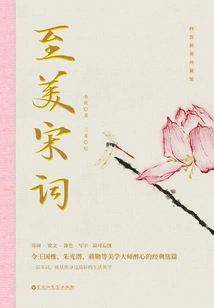
The Most Beautiful Song Lyrics
Literature至美宋词
Written By Sunny And Painted By Sanguai
Song Ci is the best life aesthetics in the world! The most beautiful Song lyrics that touch people's hearts are either passionate and unrestrained, or graceful and tender. They are full of the warmth of humanity and also carry the beauty that makes people move. The state of mind of the Chinese people is also reflected in many Song poems. This book selects 40 masterpieces of Song poetry that are true, pure, and dreamlike, and disassembles these masterpieces with Jin Xin's skillful hand, presenting in detail the subtle and beautiful meaning of the most beautiful Song poetry, allowing people to directly reach the source of life aesthetics in the blooming flowers of Song poetry.
Song Ci is the best life aesthetics in the world! The most beautiful Song lyrics that touch people's hearts are either passionate and unrestrained, or graceful and tender. They are full of the warmth of humanity and also carry the beauty that makes people move. The state of mind of the Chinese people is also reflected in many Song poems. This book selects 40 masterpieces of Song poetry that are true, pure, and dreamlike, and disassembles these masterpieces with Jin Xin's skillful hand, presenting in detail the subtle and beautiful meaning of the most beautiful Song poetry, allowing people to directly reach the source of life aesthetics in the blooming flowers of Song poetry.
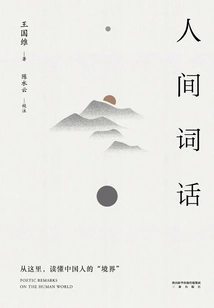
Human Words
Literature人间词话
Wang Guowei
"Human Words" is a Chinese aesthetic classic that has been circulated for a long time. It is a golden key to unlock the soul. From here, you can understand the "realm" of the Chinese people and the beauty of poetry that has been passed down for thousands of years. As the most influential poetry theory work since the late Qing Dynasty, "Human Words" is Wang Guowei's review of old Chinese literature with a new perspective after receiving the baptism of Western aesthetic ideas. Among them, "realm theory" is the most important ideological core and context of the book. It is Wang Guowei's unique critical theory formed under the influence of multiple ideas, such as Chinese and Western, new and old, and embodies the innovation of traditional words. It is in line with traditional Chinese poetry, has a literary, historical and philosophical perspective, integrates Chinese and Western aesthetics, and has uniqueness that transcends the times; it is an eternally circulated and self-contained classic of Chinese aesthetics. This edition of "Human Words" is based on the photocopy of Wang Guowei's manuscripts in the National Library's special collection. It is edited and proofread based on the 1926 Pu She edition, the "Journal of Chinese Culture" and the Erxuan edition. It is also read by Chen Shuiyun, a professor of the Chinese Department of Wuhan University.
"Human Words" is a Chinese aesthetic classic that has been circulated for a long time. It is a golden key to unlock the soul. From here, you can understand the "realm" of the Chinese people and the beauty of poetry that has been passed down for thousands of years. As the most influential poetry theory work since the late Qing Dynasty, "Human Words" is Wang Guowei's review of old Chinese literature with a new perspective after receiving the baptism of Western aesthetic ideas. Among them, "realm theory" is the most important ideological core and context of the book. It is Wang Guowei's unique critical theory formed under the influence of multiple ideas, such as Chinese and Western, new and old, and embodies the innovation of traditional words. It is in line with traditional Chinese poetry, has a literary, historical and philosophical perspective, integrates Chinese and Western aesthetics, and has uniqueness that transcends the times; it is an eternally circulated and self-contained classic of Chinese aesthetics. This edition of "Human Words" is based on the photocopy of Wang Guowei's manuscripts in the National Library's special collection. It is edited and proofread based on the 1926 Pu She edition, the "Journal of Chinese Culture" and the Erxuan edition. It is also read by Chen Shuiyun, a professor of the Chinese Department of Wuhan University.
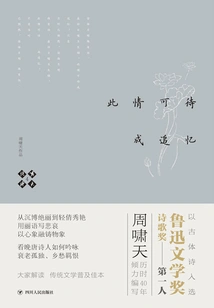
啸天说诗四:此情可待成追忆
Zhou Xiaotian
Among the various genres of classical literature, "poetry" is a genre that is very short in length, concise in language, and has excellent technical content. Therefore, it is recognized as a genre that is difficult to understand and appreciate. Mr. Zhou Xiaotian, winner of the Lu Prize and chief writer of the "Dictionary of Appreciation of Tang Poetry", accepted the invitation of our publisher to compile and publish the articles on appreciation of classical poetry that he has carefully written over the years. This book is one of them. Mr. Zhou Xiaotian has a profound research on classical poetry, and his appreciation experience can be said to be precious. Such a wonderful collection of appreciation of classical poetry will definitely resonate with the majority of readers, and it is inevitable that it will be passed down to future generations! From the beauty of Shen Bo to the elegance of Qingqian, use beautiful language to write about sadness, and use mental images to blend objects. See how the poets of the late Tang Dynasty sang about aging, loneliness, nostalgia and hatred.
Among the various genres of classical literature, "poetry" is a genre that is very short in length, concise in language, and has excellent technical content. Therefore, it is recognized as a genre that is difficult to understand and appreciate. Mr. Zhou Xiaotian, winner of the Lu Prize and chief writer of the "Dictionary of Appreciation of Tang Poetry", accepted the invitation of our publisher to compile and publish the articles on appreciation of classical poetry that he has carefully written over the years. This book is one of them. Mr. Zhou Xiaotian has a profound research on classical poetry, and his appreciation experience can be said to be precious. Such a wonderful collection of appreciation of classical poetry will definitely resonate with the majority of readers, and it is inevitable that it will be passed down to future generations! From the beauty of Shen Bo to the elegance of Qingqian, use beautiful language to write about sadness, and use mental images to blend objects. See how the poets of the late Tang Dynasty sang about aging, loneliness, nostalgia and hatred.
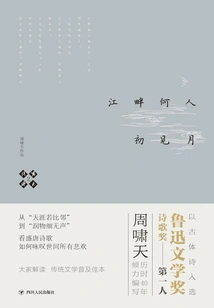
啸天说诗二:江畔何人初见月
Zhou Xiaotian
Among the various genres of classical literature, "poetry" is a genre that is very short in length, concise in language, and has excellent technical content. Therefore, it is recognized as a genre that is difficult to understand and appreciate. Mr. Zhou Xiaotian, winner of the Lu Prize and chief writer of the "Dictionary of Appreciation of Tang Poetry", accepted the invitation of our publisher to compile and publish the articles on appreciation of classical poetry that he has carefully written over the years. This book is one of them. Mr. Zhou Xiaotian has a profound research on classical poetry, and his appreciation experience can be said to be precious. Such a wonderful collection of appreciation of classical poetry will definitely resonate with the majority of readers, and it is inevitable that it will be passed down to future generations!
Among the various genres of classical literature, "poetry" is a genre that is very short in length, concise in language, and has excellent technical content. Therefore, it is recognized as a genre that is difficult to understand and appreciate. Mr. Zhou Xiaotian, winner of the Lu Prize and chief writer of the "Dictionary of Appreciation of Tang Poetry", accepted the invitation of our publisher to compile and publish the articles on appreciation of classical poetry that he has carefully written over the years. This book is one of them. Mr. Zhou Xiaotian has a profound research on classical poetry, and his appreciation experience can be said to be precious. Such a wonderful collection of appreciation of classical poetry will definitely resonate with the majority of readers, and it is inevitable that it will be passed down to future generations!
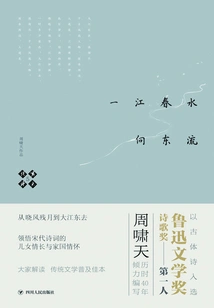
啸天说诗五:一江春水向东流
Zhou Xiaotian
This book is the fifth in the "Xiao Tian Poems" series. This book mainly appreciates the masterpieces of poets from the Tang, Five Dynasties and Song Dynasties. Li Yu, Su Dongpo, Li Qingzhao, Yan Shu, Yang Wanli... Whether they are poets and poets recognized for their great achievements, or poems that have been selected into various collections countless times, this book shows a different beauty one by one. The author Zhou Xiaotian is a professor at the School of Liberal Arts of Sichuan University. He has been devoted to classical literature for a long time and has won the "Lu Xun Literature Award" Poetry Award. With a broad education and an eye for discovering beauty, the author selects very representative poets and their works from the vast sea of poets and poems in the Tang Dynasty, and introduces classical beauty into modern life. Zhou Xiaotian's explanation is simple and easy to understand, and he quotes from classics. The appreciation of poetry in this article is well-written and unique.
This book is the fifth in the "Xiao Tian Poems" series. This book mainly appreciates the masterpieces of poets from the Tang, Five Dynasties and Song Dynasties. Li Yu, Su Dongpo, Li Qingzhao, Yan Shu, Yang Wanli... Whether they are poets and poets recognized for their great achievements, or poems that have been selected into various collections countless times, this book shows a different beauty one by one. The author Zhou Xiaotian is a professor at the School of Liberal Arts of Sichuan University. He has been devoted to classical literature for a long time and has won the "Lu Xun Literature Award" Poetry Award. With a broad education and an eye for discovering beauty, the author selects very representative poets and their works from the vast sea of poets and poems in the Tang Dynasty, and introduces classical beauty into modern life. Zhou Xiaotian's explanation is simple and easy to understand, and he quotes from classics. The appreciation of poetry in this article is well-written and unique.
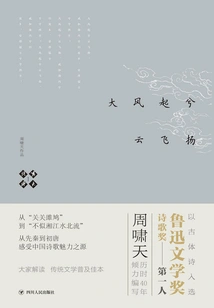
啸天说诗一:大风起兮云飞扬
Zhou Xiaotian
Among the various genres of classical literature, "poetry" is a genre that is very short in length, concise in language, and has excellent technical content. Therefore, it is recognized as a genre that is difficult to understand and appreciate. Mr. Zhou Xiaotian, the winner of the Lu Xun Literature Award and the main writer of the "Dictionary of Appreciation of Tang Poetry", accepted the invitation of our publisher to compile and publish the articles on appreciation of classical poetry that he has carefully written over the years. This book is one of them. Mr. Zhou Xiaotian has a profound research on classical poetry, and his appreciation experience can be said to be precious. Such a wonderful collection of appreciation of classical poetry will definitely resonate with the majority of readers, and it is inevitable that it will be passed down to future generations!
Among the various genres of classical literature, "poetry" is a genre that is very short in length, concise in language, and has excellent technical content. Therefore, it is recognized as a genre that is difficult to understand and appreciate. Mr. Zhou Xiaotian, the winner of the Lu Xun Literature Award and the main writer of the "Dictionary of Appreciation of Tang Poetry", accepted the invitation of our publisher to compile and publish the articles on appreciation of classical poetry that he has carefully written over the years. This book is one of them. Mr. Zhou Xiaotian has a profound research on classical poetry, and his appreciation experience can be said to be precious. Such a wonderful collection of appreciation of classical poetry will definitely resonate with the majority of readers, and it is inevitable that it will be passed down to future generations!
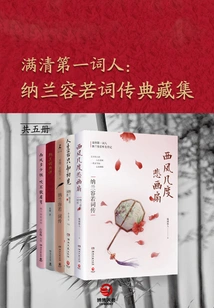
纳兰容若词传典藏集(共5册)
Suiyuan Sanren Shen Shengyun Su Ying Mao Xiaowen Bai Luomei
He was born into a wealthy family. He was the son of Nalan Mingzhu, a powerful official in the Qing Dynasty. He was Kangxi's imperial bodyguard and the most talented person in the Qing Dynasty. He was called "Master Nalan" by future generations, and his "Drinking Water Ci" was sung by every family. However, every family is competing to sing Nalan's lyrics. How many people know about Nalan's thoughts? In his short life of thirty-one years, due to the loss of his lover and frustration in life, he wrote more than 300 fresh, refined and sentimental poems with tears in his eyes. He wrote all the sentimentality of love and the shortcomings of life, thus touching countless people and being praised by later generations.
He was born into a wealthy family. He was the son of Nalan Mingzhu, a powerful official in the Qing Dynasty. He was Kangxi's imperial bodyguard and the most talented person in the Qing Dynasty. He was called "Master Nalan" by future generations, and his "Drinking Water Ci" was sung by every family. However, every family is competing to sing Nalan's lyrics. How many people know about Nalan's thoughts? In his short life of thirty-one years, due to the loss of his lover and frustration in life, he wrote more than 300 fresh, refined and sentimental poems with tears in his eyes. He wrote all the sentimentality of love and the shortcomings of life, thus touching countless people and being praised by later generations.
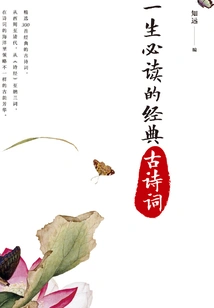
一生必读的经典古诗词
Zhiyuan
Ancient poetry is the treasure of Chinese culture, the vital cultural essence, and the pride and love of the Chinese nation. With concise language and beautiful rhythm, they condense what thousands of people have seen, thought, understood, heard, felt and sighed. They travel through the time and space of history, allowing us today to communicate with the ancients and appreciate the sorrows and joys, pains and joys in the long history. Intensive reading of ancient poetry is a cleansing of one's soul and a re-examination of one's life. Those sincere words are full of our inexhaustible sparks of thought, and they are still the source of strength for us to move forward today. "Classic Ancient Poems Must-Read in a Lifetime" selects 300 classic ancient poems, each of which can be regarded as the essence of poetry that cannot be missed. It allows readers to read from the Western Zhou Dynasty to the Qing Dynasty, from the Book of Songs to Nalan Ci in one book, and appreciate the different ancient charms and beauty in the ocean of poetry.
Ancient poetry is the treasure of Chinese culture, the vital cultural essence, and the pride and love of the Chinese nation. With concise language and beautiful rhythm, they condense what thousands of people have seen, thought, understood, heard, felt and sighed. They travel through the time and space of history, allowing us today to communicate with the ancients and appreciate the sorrows and joys, pains and joys in the long history. Intensive reading of ancient poetry is a cleansing of one's soul and a re-examination of one's life. Those sincere words are full of our inexhaustible sparks of thought, and they are still the source of strength for us to move forward today. "Classic Ancient Poems Must-Read in a Lifetime" selects 300 classic ancient poems, each of which can be regarded as the essence of poetry that cannot be missed. It allows readers to read from the Western Zhou Dynasty to the Qing Dynasty, from the Book of Songs to Nalan Ci in one book, and appreciate the different ancient charms and beauty in the ocean of poetry.
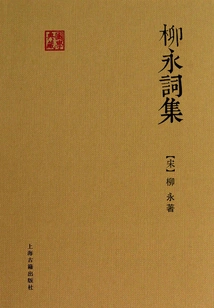
Liu Yong's Ci Collection
Literature柳永词集
Liu Yong
Liu Yong was a poet who carried out comprehensive innovation in Song poetry in the early Northern Song Dynasty. He devoted his whole life to writing lyrics and created a large number of slow lyrics and long tunes. He also made many innovations in expression techniques, image combinations, and theme development. Liu Ci mostly expressed the sentiments of citizens, especially the living conditions and inner world of prostitutes and singers, so it was widely spread. Therefore, it is said that "anywhere with well water, one can sing Liu Ci". Liu Yongyou's "Collection of Music" has been handed down to the world, and later poets such as Su Shi, Huang Tingjian, Qin Guan, and Zhou Bangyan were all influenced by it. This book contains all of Liu Yong's works and later generations' comments, and has an introduction written by Xie Taofang, making it easier for readers to understand Liu Yong and appreciate Liu's poems.
Liu Yong was a poet who carried out comprehensive innovation in Song poetry in the early Northern Song Dynasty. He devoted his whole life to writing lyrics and created a large number of slow lyrics and long tunes. He also made many innovations in expression techniques, image combinations, and theme development. Liu Ci mostly expressed the sentiments of citizens, especially the living conditions and inner world of prostitutes and singers, so it was widely spread. Therefore, it is said that "anywhere with well water, one can sing Liu Ci". Liu Yongyou's "Collection of Music" has been handed down to the world, and later poets such as Su Shi, Huang Tingjian, Qin Guan, and Zhou Bangyan were all influenced by it. This book contains all of Liu Yong's works and later generations' comments, and has an introduction written by Xie Taofang, making it easier for readers to understand Liu Yong and appreciate Liu's poems.
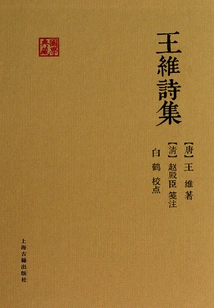
Wang Wei's Poetry Collection
Literature王维诗集
(tang Dynasty) Wang Wei (qing Dynasty) Zhao Diancheng's Notes, Baihe, Meng Bai's Proofreading
Wang Wei was a famous poet in the prosperous Tang Dynasty. Su Shi praised him for "tasting Mojie's poems, and there are paintings in the poems; observing Mojie's paintings, there are poems in the paintings." He was especially successful in landscape poetry, and together with Meng Haoran, he was called "Wang Meng". In his later years, he had no intention of pursuing an official career and dedicated himself to worshiping Buddhism, so later generations called him the "Poetry Buddha". He is the author of "The Collection of Wang Youcheng" and has 400 poems. This "Collected Poems of Wang Wei" is annotated with notes written by Zhao Dian of the Qing Dynasty.
Wang Wei was a famous poet in the prosperous Tang Dynasty. Su Shi praised him for "tasting Mojie's poems, and there are paintings in the poems; observing Mojie's paintings, there are poems in the paintings." He was especially successful in landscape poetry, and together with Meng Haoran, he was called "Wang Meng". In his later years, he had no intention of pursuing an official career and dedicated himself to worshiping Buddhism, so later generations called him the "Poetry Buddha". He is the author of "The Collection of Wang Youcheng" and has 400 poems. This "Collected Poems of Wang Wei" is annotated with notes written by Zhao Dian of the Qing Dynasty.
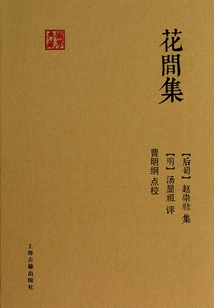
Huajianji
Literature花间集
(later Shu) Zhao Chongzuo (ming Dynasty) Tang Xianzu Commented And Cao Minggang Reviewed
"Huajian Ji" is the first comprehensive collection of Ci in the history of Chinese Ci, edited by Zhao Chongzuo of the Later Shu Dynasty, and includes the representative works of 18 poets of the Huajian Ci School, including Wen Tingyun and Wei Zhuang. Tang Xianzu's comments on "Huajian Ci" have always been controversial, but the comments are quite original. It is based on the overprinted copy of the late Ming Dynasty in the Jiangxi Provincial Library. Traditional Chinese characters are arranged vertically, retaining the original style of the review book.
"Huajian Ji" is the first comprehensive collection of Ci in the history of Chinese Ci, edited by Zhao Chongzuo of the Later Shu Dynasty, and includes the representative works of 18 poets of the Huajian Ci School, including Wen Tingyun and Wei Zhuang. Tang Xianzu's comments on "Huajian Ci" have always been controversial, but the comments are quite original. It is based on the overprinted copy of the late Ming Dynasty in the Jiangxi Provincial Library. Traditional Chinese characters are arranged vertically, retaining the original style of the review book.
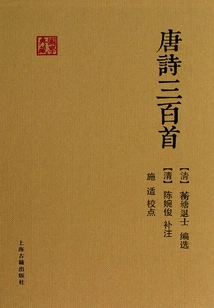
Three Hundred Tang Poems
Literature唐诗三百首
(qing Dynasty) Compilation And Selection Of Hengtang Retired Scholars (qing Dynasty) Chen Wanjun's Supplementary Notes Shi Shi's School Point
"Three Hundred Tang Poems" is a popular reading compiled and selected by retired scholars from Hengtang in the Qing Dynasty. It contains 77 poems, a total of 311 poems. It has always been said: "If you are familiar with 300 Tang poems, you will be able to recite them even if you don't know how to recite them." The most concise and influential of the annotations is the "Supplementary Notes on 300 Tang Poems" by the talented woman Chen Wanjun, who "can accurately assess and quote".
"Three Hundred Tang Poems" is a popular reading compiled and selected by retired scholars from Hengtang in the Qing Dynasty. It contains 77 poems, a total of 311 poems. It has always been said: "If you are familiar with 300 Tang poems, you will be able to recite them even if you don't know how to recite them." The most concise and influential of the annotations is the "Supplementary Notes on 300 Tang Poems" by the talented woman Chen Wanjun, who "can accurately assess and quote".
Popular Chinese Ci Fu (part 2)
Literature脍炙人口的中国词赋(下)
Compiled By Lin Zhiman And Xiao Feng
China is a huge country with a splendid civilization history of five thousand years and full of vitality and vitality. The Chinese nation has long been standing in the east of the world, succeeding one another for a hundred generations. The famous historian of science Bernard once said: "China has been one of the great centers of human civilization and science for many centuries." In the long history of the Chinese nation, it has created countless miracles of civilization.
China is a huge country with a splendid civilization history of five thousand years and full of vitality and vitality. The Chinese nation has long been standing in the east of the world, succeeding one another for a hundred generations. The famous historian of science Bernard once said: "China has been one of the great centers of human civilization and science for many centuries." In the long history of the Chinese nation, it has created countless miracles of civilization.
Popular Chinese Ci Fu (part 1)
Literature脍炙人口的中国词赋(上)
Compiled By Lin Zhiman And Xiao Feng
China is a huge country with a splendid civilization history of five thousand years and full of vitality and vitality. The Chinese nation has long been standing in the east of the world, succeeding one another for a hundred generations. The famous historian of science Bernard once said: "China has been one of the great centers of human civilization and science for many centuries." In the long history of the Chinese nation, it has created countless miracles of civilization.
China is a huge country with a splendid civilization history of five thousand years and full of vitality and vitality. The Chinese nation has long been standing in the east of the world, succeeding one another for a hundred generations. The famous historian of science Bernard once said: "China has been one of the great centers of human civilization and science for many centuries." In the long history of the Chinese nation, it has created countless miracles of civilization.
Three Hundred Tang Poems
Literature唐诗三百首
Hengtang Retirees
This book was compiled and selected by retired scholars from Hengtang in the Qing Dynasty. It is an anthology of Tang poetry that has great influence and is widely circulated. The poems selected in this book are arranged according to poetry styles, including five-character ancient poetry, seven-character ancient poetry, five-character rhythmic poetry, seven-character rhythmic poetry, five-character quatrains, seven-character quatrains, Yuefu poetry, etc. The selected works are representative and include classic poems by important poets of the Tang Dynasty such as Li Bai, Du Fu, Bai Juyi, Wang Wei, Wang Changling and others. These poems are either impassioned, sad or melancholy, and they range widely in scope and are very popular. In addition to elaborating on the theme of the poem, the article also includes annotations to facilitate the understanding and reading of readers, and at the same time provides a reference for future readers to study ancient poetry culture.
This book was compiled and selected by retired scholars from Hengtang in the Qing Dynasty. It is an anthology of Tang poetry that has great influence and is widely circulated. The poems selected in this book are arranged according to poetry styles, including five-character ancient poetry, seven-character ancient poetry, five-character rhythmic poetry, seven-character rhythmic poetry, five-character quatrains, seven-character quatrains, Yuefu poetry, etc. The selected works are representative and include classic poems by important poets of the Tang Dynasty such as Li Bai, Du Fu, Bai Juyi, Wang Wei, Wang Changling and others. These poems are either impassioned, sad or melancholy, and they range widely in scope and are very popular. In addition to elaborating on the theme of the poem, the article also includes annotations to facilitate the understanding and reading of readers, and at the same time provides a reference for future readers to study ancient poetry culture.
Songs of Chu
Literature楚辞
Qu Yuan
This book is a collection of romantic poetry and erotic articles in my country. Mainly based on Qu Yuan's works, the other pieces also inherit the form of Qu Yuan's Fu, with unrestrained emotions and unique imagination. It uses the literary styles and dialect rhymes of the Chu region to describe the mountains, rivers, people, and historical customs of the Chu region. It has a strong regional cultural flavor, hence the name "Songs of Chu." This book includes annotations and translations, paragraph by paragraph, and strives for literal translation, maintaining the original nature of the poetry. Each poem is preceded by a title explanation summarizing the main theme of the poem. "Chu Ci", as the source of my country's positive romantic poetry creation, is a collection of poems that has a profound impact on Chinese literature after "The Book of Songs".
This book is a collection of romantic poetry and erotic articles in my country. Mainly based on Qu Yuan's works, the other pieces also inherit the form of Qu Yuan's Fu, with unrestrained emotions and unique imagination. It uses the literary styles and dialect rhymes of the Chu region to describe the mountains, rivers, people, and historical customs of the Chu region. It has a strong regional cultural flavor, hence the name "Songs of Chu." This book includes annotations and translations, paragraph by paragraph, and strives for literal translation, maintaining the original nature of the poetry. Each poem is preceded by a title explanation summarizing the main theme of the poem. "Chu Ci", as the source of my country's positive romantic poetry creation, is a collection of poems that has a profound impact on Chinese literature after "The Book of Songs".
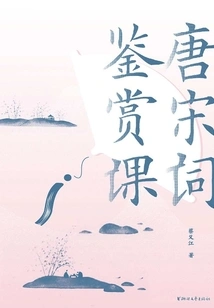
唐宋词鉴赏课
Cai Yijiang
This book is a representative work on the appreciation of Tang and Song poetry by Cai Yijiang, a well-known scholar of Tang and Song literature and a master of poetry. This book is represented by 55 well-known poets from the Tang, Five Dynasties and Song Dynasties, including Wen Tingyun, Wei Zhuang, Feng Yansi, Li Jing, Li Yu, Yan Shu, Ouyang Xiu, Liu Yong, Su Shi, Qin Guan, Zhou Bangyan, Xin Qiji, Jiang Kui, Wu Wenying, Wang Yisun, etc., In the form of 157 short and concise appreciation lessons. , Provides comprehensive annotations, translations and appreciation explanations of 157 famous poems from the Tang and Song Dynasties. Through delicate taste and analysis of the poems, it accurately reproduces the poets' interest in the art of life and their inner world in the Tang and Song Dynasties, leading readers to appreciate the beauty of humanities in the gentle era. The author of this book, Cai Yijiang, is based on his famous work "A Complete Interpretation of Three Hundred Song Ci Poems". He selects the appreciation content of 123 Song Ci poems and integrates it with the newly created appreciation content of 34 Tang and Five Dynasty poems. In the form of a word-for-word appreciation course, he leads readers to easily appreciate the beauty of life of literati in the Tang and Song Dynasties.
This book is a representative work on the appreciation of Tang and Song poetry by Cai Yijiang, a well-known scholar of Tang and Song literature and a master of poetry. This book is represented by 55 well-known poets from the Tang, Five Dynasties and Song Dynasties, including Wen Tingyun, Wei Zhuang, Feng Yansi, Li Jing, Li Yu, Yan Shu, Ouyang Xiu, Liu Yong, Su Shi, Qin Guan, Zhou Bangyan, Xin Qiji, Jiang Kui, Wu Wenying, Wang Yisun, etc., In the form of 157 short and concise appreciation lessons. , Provides comprehensive annotations, translations and appreciation explanations of 157 famous poems from the Tang and Song Dynasties. Through delicate taste and analysis of the poems, it accurately reproduces the poets' interest in the art of life and their inner world in the Tang and Song Dynasties, leading readers to appreciate the beauty of humanities in the gentle era. The author of this book, Cai Yijiang, is based on his famous work "A Complete Interpretation of Three Hundred Song Ci Poems". He selects the appreciation content of 123 Song Ci poems and integrates it with the newly created appreciation content of 34 Tang and Five Dynasty poems. In the form of a word-for-word appreciation course, he leads readers to easily appreciate the beauty of life of literati in the Tang and Song Dynasties.
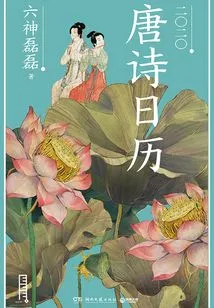
Tang Poetry Calendar·2020
Literature唐诗日历·2020
Six Gods Leilei
"Tang Poetry Calendar 2020" is compiled by Liushen Leilei, a well-known self-media person and best-selling author, who selected 366 Tang poems. The author carefully interprets these Tang poems from a modern perspective, allowing you to easily understand the story behind each poem, understand the philosophy of life, and feel the beauty of poetry.
"Tang Poetry Calendar 2020" is compiled by Liushen Leilei, a well-known self-media person and best-selling author, who selected 366 Tang poems. The author carefully interprets these Tang poems from a modern perspective, allowing you to easily understand the story behind each poem, understand the philosophy of life, and feel the beauty of poetry.
诗词写作常识(诗词中国普及读物)
Qian Zhixi Liu Qinghai
The book "Common Sense of Poetry Writing" was co-authored by Professor Qian Zhixi from the Department of Chinese at Peking University and Professor Liu Qinghai from Shanghai University. This book answers common questions in poetry creation in simple and easy-to-understand terms. In addition to introducing metrical knowledge, it also analyzes in detail unavoidable topics in poetry creation such as rules, word formation, antithesis, and sustenance, guiding beginners to create works that are both spiritual and physical.
The book "Common Sense of Poetry Writing" was co-authored by Professor Qian Zhixi from the Department of Chinese at Peking University and Professor Liu Qinghai from Shanghai University. This book answers common questions in poetry creation in simple and easy-to-understand terms. In addition to introducing metrical knowledge, it also analyzes in detail unavoidable topics in poetry creation such as rules, word formation, antithesis, and sustenance, guiding beginners to create works that are both spiritual and physical.
Collection of Tang Changru's Poems
Literature唐长孺诗词集
Wang Su's Notes
This book contains sixty-five poems by Mr. Tang Changru, as well as three couplets, one inscription, four introductions to translated works, and two classical Chinese prose pieces. Also included are twenty frames of precious plates. Mr. Wang Su, a disciple of Mr. Tang, followed Jiang Tianshu in organizing the stories of Chen Yinke's poems. He collected and compiled them for many years. He also used the pen of a historian to make detailed annotations on the skills and famous objects involved in the poems. He adopted the form of a chronology and arranged the poems by year. In the frozen country "The Life and Academic Chronology of Mr. Tang Changru" focuses on Mr. Tang Changru's academic work and creates a unique world. It outlines the artist's life as a master and presents to readers a Mr. Tang Changru who has unique talents in addition to historiography. He is also a poet, a translator and a historian. How great it is to repay teacher's kindness!
This book contains sixty-five poems by Mr. Tang Changru, as well as three couplets, one inscription, four introductions to translated works, and two classical Chinese prose pieces. Also included are twenty frames of precious plates. Mr. Wang Su, a disciple of Mr. Tang, followed Jiang Tianshu in organizing the stories of Chen Yinke's poems. He collected and compiled them for many years. He also used the pen of a historian to make detailed annotations on the skills and famous objects involved in the poems. He adopted the form of a chronology and arranged the poems by year. In the frozen country "The Life and Academic Chronology of Mr. Tang Changru" focuses on Mr. Tang Changru's academic work and creates a unique world. It outlines the artist's life as a master and presents to readers a Mr. Tang Changru who has unique talents in addition to historiography. He is also a poet, a translator and a historian. How great it is to repay teacher's kindness!
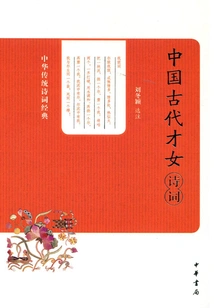
中国古代才女诗词(中华传统诗词经典)
Selected Notes By Liu Dongying
It is a collection of masterpieces of poetry by talented women from all over the ages. The pen is full of inspiration and condenses the witty comments of intelligent scholars. A total of 100 poems by 68 talented women from all over China are collected into a volume. The selected authors range from the pre-Qin Dynasty to the Qing Dynasty, and include all social strata, including queens, palace maids, celebrities, singers, laborers, etc. Her poems may express sadness and anger, resist and shout, or chant and sing. They have unique expression characteristics and highlight the talents of Chinese women and the social reality at that time. The collection of poems by talented women is not based on whether the person has a monograph, but in the spirit of preserving people through poetry, selected poems with vitality, and annotated, analyzed, and appreciated each piece.
It is a collection of masterpieces of poetry by talented women from all over the ages. The pen is full of inspiration and condenses the witty comments of intelligent scholars. A total of 100 poems by 68 talented women from all over China are collected into a volume. The selected authors range from the pre-Qin Dynasty to the Qing Dynasty, and include all social strata, including queens, palace maids, celebrities, singers, laborers, etc. Her poems may express sadness and anger, resist and shout, or chant and sing. They have unique expression characteristics and highlight the talents of Chinese women and the social reality at that time. The collection of poems by talented women is not based on whether the person has a monograph, but in the spirit of preserving people through poetry, selected poems with vitality, and annotated, analyzed, and appreciated each piece.
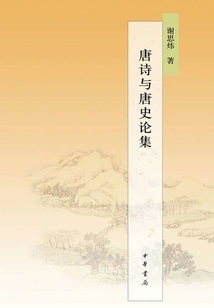
唐诗与唐史论集
Xie Siwei
Xie Siwei is a professor in the Chinese Department of Tsinghua University. He is the author of "Zen Buddhism and Chinese Literature" (China Social Sciences Press, 1993), "A Comprehensive Review of Bai Juyi's Collected Works" (China Social Sciences Press, 1996), "Collection of Poetics of the Tang and Song Dynasties" (Commercial Press, 2003), "Collation and Annotation of Bai Juyi's Poems" (Zhonghua Book Company, 2006), "College and Annotation of Bai Juyi's Collected Works" (Zhonghua Book Company, 2011), etc. "Tang Poetry and Tang History" contains the author's research papers related to Tang Dynasty poetry and Tang Dynasty history in the past ten years. While completing the proofreading and annotation of the collected works of Du Fu and Bai Juyi, two important poets of the Tang Dynasty, the author launched an investigation around a number of difficult issues. The paper involves the poetic form, poetic language, and poetic thought of the works of Du Fu, Bai Juyi and others, the investigation of certain historical events involved in poetry or poets' activities, the revelation of some key clues, and the textual research of documents.
Xie Siwei is a professor in the Chinese Department of Tsinghua University. He is the author of "Zen Buddhism and Chinese Literature" (China Social Sciences Press, 1993), "A Comprehensive Review of Bai Juyi's Collected Works" (China Social Sciences Press, 1996), "Collection of Poetics of the Tang and Song Dynasties" (Commercial Press, 2003), "Collation and Annotation of Bai Juyi's Poems" (Zhonghua Book Company, 2006), "College and Annotation of Bai Juyi's Collected Works" (Zhonghua Book Company, 2011), etc. "Tang Poetry and Tang History" contains the author's research papers related to Tang Dynasty poetry and Tang Dynasty history in the past ten years. While completing the proofreading and annotation of the collected works of Du Fu and Bai Juyi, two important poets of the Tang Dynasty, the author launched an investigation around a number of difficult issues. The paper involves the poetic form, poetic language, and poetic thought of the works of Du Fu, Bai Juyi and others, the investigation of certain historical events involved in poetry or poets' activities, the revelation of some key clues, and the textual research of documents.
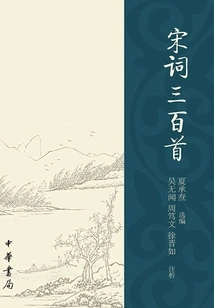
宋词三百首:夏承焘选评
Selected And Edited By Xia Chengtao, Xu Jinru, Wu Wuwen, And Zhou Duwen's Annotation
This book is a newly-selected "Three Hundred Song Ci Poems" by Mr. The earliest "Three Hundred Song Ci Poems" was selected by Zhu Zumou, a master of Ci poetry in the late Qing Dynasty. Since Zhu Zumou's choice of lyrics focuses on his personal appreciation of style and cannot reflect the overall picture and diverse artistic styles of Song poetry, it is more suitable as a model for creators to imitate, rather than as a popular reading book for ordinary Song poetry lovers. During his lifetime, Mr. Xia Chengtao guided Ms. Wu Wuwen and Mr. Zhou Duwen to newly select the chapters of "Three Hundred Song Poems". Ms. Wu Wuwen added reviews and annotations to some of the works, and Professor Zhou Duwen and Dr. Xu Jinru jointly completed the annotation and analysis of the entire book. The selection of words in this book is not biased in two ways: bold and graceful, and basically reflects the various styles of poetry in the two Song Dynasties. The annotation and analysis all start from understanding the meaning of the word, so every time I see it, I will be alert.
This book is a newly-selected "Three Hundred Song Ci Poems" by Mr. The earliest "Three Hundred Song Ci Poems" was selected by Zhu Zumou, a master of Ci poetry in the late Qing Dynasty. Since Zhu Zumou's choice of lyrics focuses on his personal appreciation of style and cannot reflect the overall picture and diverse artistic styles of Song poetry, it is more suitable as a model for creators to imitate, rather than as a popular reading book for ordinary Song poetry lovers. During his lifetime, Mr. Xia Chengtao guided Ms. Wu Wuwen and Mr. Zhou Duwen to newly select the chapters of "Three Hundred Song Poems". Ms. Wu Wuwen added reviews and annotations to some of the works, and Professor Zhou Duwen and Dr. Xu Jinru jointly completed the annotation and analysis of the entire book. The selection of words in this book is not biased in two ways: bold and graceful, and basically reflects the various styles of poetry in the two Song Dynasties. The annotation and analysis all start from understanding the meaning of the word, so every time I see it, I will be alert.
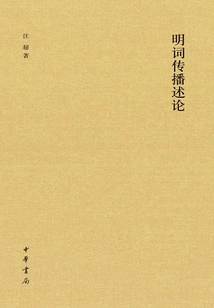
明词传播述论
Wang Chao
Wang Chao's "Review of the Propagation of Ming Ci" discusses the spread of Ming Ci in the Ming Dynasty, and uses this to reveal the spread methods, distribution characteristics, and acceptance rules of Ming Ci, enrich the content of the literary history of specific genres, and complete the narrative of the development chain of Ci history. During the research process, based on literature, on the basis of traditional literature collection and interpretation, the intersecting perspective of literature and communication was used to observe the research object. The whole book has a linear structure with various elements of literary communication activities as nodes. It includes both a macroscopic examination of the overall communication of Mingci and a microscopic discussion of special phenomena. In terms of content, in addition to the introduction and conclusion, the nine chapters of the full text can be roughly divided into three parts: The first part (chapters one and two) generally outlines the conditions and background of the spread of literature in the Ming Dynasty, and examines the spread of Ming poetry in the overall situation of Ming Dynasty literature. The second part (chapters 3 to 7) introduces the main ways of spreading Mingci and their communication effects. The third part (Chapter 8 and 9) is an investigation of the special phenomenon of Mingci communication. In short, "Research on the Communication of Ming Ci" re-understands the characteristics and value of Ming Ci through the investigation of the spread of Ming Ci. It believes that Ming Ci inherits and develops the communication methods of previous generations of Ci.
Wang Chao's "Review of the Propagation of Ming Ci" discusses the spread of Ming Ci in the Ming Dynasty, and uses this to reveal the spread methods, distribution characteristics, and acceptance rules of Ming Ci, enrich the content of the literary history of specific genres, and complete the narrative of the development chain of Ci history. During the research process, based on literature, on the basis of traditional literature collection and interpretation, the intersecting perspective of literature and communication was used to observe the research object. The whole book has a linear structure with various elements of literary communication activities as nodes. It includes both a macroscopic examination of the overall communication of Mingci and a microscopic discussion of special phenomena. In terms of content, in addition to the introduction and conclusion, the nine chapters of the full text can be roughly divided into three parts: The first part (chapters one and two) generally outlines the conditions and background of the spread of literature in the Ming Dynasty, and examines the spread of Ming poetry in the overall situation of Ming Dynasty literature. The second part (chapters 3 to 7) introduces the main ways of spreading Mingci and their communication effects. The third part (Chapter 8 and 9) is an investigation of the special phenomenon of Mingci communication. In short, "Research on the Communication of Ming Ci" re-understands the characteristics and value of Ming Ci through the investigation of the spread of Ming Ci. It believes that Ming Ci inherits and develops the communication methods of previous generations of Ci.
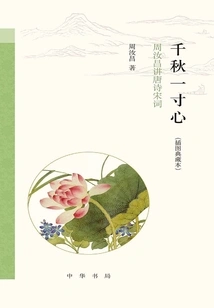
千秋一寸心:周汝昌讲唐诗宋词(插图典藏本)
Zhou Ruchang
This book is a famous work explaining Tang poetry and Song lyrics written by Mr. Zhou Ruchang. The selected poetry works do not follow the common "literary history model", but are completely based on "individual appreciation" as the starting point, taking into account the general reader's acceptance level, interest and the difficulty of the work itself. The author's intention is to guide readers to discover and appreciate the beauty of classical poetry, focusing on the deep appreciation of emotion and writing style. This is a book that is both "fascinating" and "getting better".
This book is a famous work explaining Tang poetry and Song lyrics written by Mr. Zhou Ruchang. The selected poetry works do not follow the common "literary history model", but are completely based on "individual appreciation" as the starting point, taking into account the general reader's acceptance level, interest and the difficulty of the work itself. The author's intention is to guide readers to discover and appreciate the beauty of classical poetry, focusing on the deep appreciation of emotion and writing style. This is a book that is both "fascinating" and "getting better".
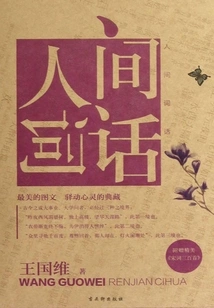
Human Words
Literature人间词话
Wang Guowei
"Human Words" is the masterpiece of the famous scholar Wang Guowei and a landmark work in Chinese classical literary criticism. Its content and viewpoints are novel and self-contained, especially the theory of three realms proposed in the book, which has attracted the attention of scholars at home and abroad. "Human Poetry" can be called an epoch-making work in the history of the development of Chinese poetry and poetry.
"Human Words" is the masterpiece of the famous scholar Wang Guowei and a landmark work in Chinese classical literary criticism. Its content and viewpoints are novel and self-contained, especially the theory of three realms proposed in the book, which has attracted the attention of scholars at home and abroad. "Human Poetry" can be called an epoch-making work in the history of the development of Chinese poetry and poetry.
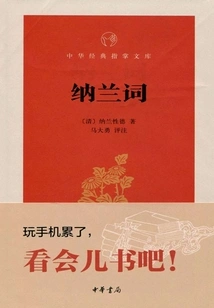
纳兰词(中华经典指掌文库)
(qing Dynasty) Commentary By Nalan Xingde And Ma Dayong
"Nalan Ci" is a record of the life emotions of Nalan Xingde, a famous poet in the Qing Dynasty. It was originally named "Side Hat", later named "Drinking Water", and is now collectively known as "Nalan Ci", with about 349 poems in existence. "If life is only like the first time we met", "Hard work is the most pity for the moon in the sky", "Mountains are a journey, water is a journey" and other phrases are popular among people. His poems have a sense of sadness and permanence, which is a legacy of the Southern Tang Dynasty. His poems mourning the death of poets were rated by Wang Guowei as "only one person since the Northern Song Dynasty".
"Nalan Ci" is a record of the life emotions of Nalan Xingde, a famous poet in the Qing Dynasty. It was originally named "Side Hat", later named "Drinking Water", and is now collectively known as "Nalan Ci", with about 349 poems in existence. "If life is only like the first time we met", "Hard work is the most pity for the moon in the sky", "Mountains are a journey, water is a journey" and other phrases are popular among people. His poems have a sense of sadness and permanence, which is a legacy of the Southern Tang Dynasty. His poems mourning the death of poets were rated by Wang Guowei as "only one person since the Northern Song Dynasty".
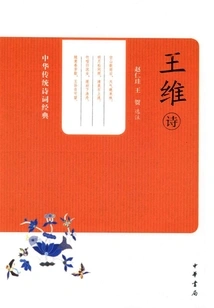
王维诗(中华传统诗词经典)
Selected Notes By Wang He And Zhao Rengui
Wang Wei was a famous poet and painter in the Tang Dynasty, known as the "Poetry Buddha". Important poems include "Lovesickness", "Mountain Dwelling in Autumn Twilight", etc. This book is one of the "Classics of Traditional Chinese Poetry". Select Wang Wei's representative poems, annotate the original text with phonetic notes, and supplement it with analytical text. There are introductory comments by famous writers at the front of the book. It is a popular cultural reading with certain academic taste.
Wang Wei was a famous poet and painter in the Tang Dynasty, known as the "Poetry Buddha". Important poems include "Lovesickness", "Mountain Dwelling in Autumn Twilight", etc. This book is one of the "Classics of Traditional Chinese Poetry". Select Wang Wei's representative poems, annotate the original text with phonetic notes, and supplement it with analytical text. There are introductory comments by famous writers at the front of the book. It is a popular cultural reading with certain academic taste.
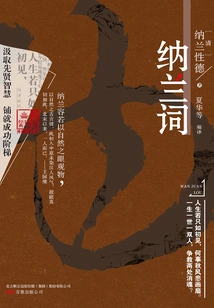
Nalan Ci
Literature纳兰词
(qing Dynasty) Written By Nalan Xingde, Compiled By Xia Hua Et Al.
Nalan Xingde (also known as Rongruo) left a large number of masterpieces for future generations. Liang Qichao said that he was "the number one scholar in the early Qing Dynasty". Wang Guowei, a master of Chinese studies, even praised him as "the only one since the Northern Song Dynasty". The style and content of Nalan Xingde's lyrics have the following characteristics: (1) True feelings. His lyrics are full of strong emotions and can easily arouse strong resonance among readers. (2) Nature is completely the natural expression of emotion, as Wang Guowei said, "Observe things with the eyes of nature and write emotions with the pen of nature." (3) Reminiscing, Nalan is used to immersing himself in reminiscing about the past and living in his own world. (4) Sadness is as beautiful as words, and the sadness contained in them makes it difficult to read. Three hundred years later, when we read it, we still feel desolate and our hearts are deeply touched.
Nalan Xingde (also known as Rongruo) left a large number of masterpieces for future generations. Liang Qichao said that he was "the number one scholar in the early Qing Dynasty". Wang Guowei, a master of Chinese studies, even praised him as "the only one since the Northern Song Dynasty". The style and content of Nalan Xingde's lyrics have the following characteristics: (1) True feelings. His lyrics are full of strong emotions and can easily arouse strong resonance among readers. (2) Nature is completely the natural expression of emotion, as Wang Guowei said, "Observe things with the eyes of nature and write emotions with the pen of nature." (3) Reminiscing, Nalan is used to immersing himself in reminiscing about the past and living in his own world. (4) Sadness is as beautiful as words, and the sadness contained in them makes it difficult to read. Three hundred years later, when we read it, we still feel desolate and our hearts are deeply touched.
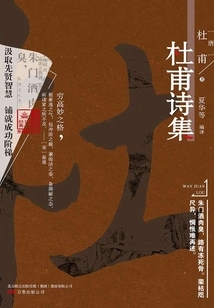
Du Fu's Poems
Literature杜甫诗集
(tang Dynasty) Written By Du Fu And Compiled By Xia Hua Et Al.
Du Fu's collection of poems was "collected in sixty volumes" earlier, but it was lost at that time. In the second year of Baoyuan of the Northern Song Dynasty (1039), Wang Zhu compiled 1,405 articles into 18 volumes, titled "Collection of Du Gongbu". Qian Qianyi compiled "Annotations to Du Gongbu Collection". Yang Lun said: "Since the Six Dynasties, many Yuefu titles have imitated plagiarism, which is disgusting. Zimei came out and was alone because of what he felt at the time. He pitied the country's difficulties at the top and the people's poverty at the bottom. He set up the title at will, completely breaking away from the stereotypes of his predecessors." We have compiled Du Fu's main representative poems into this book to present the essence of Du Fu's poems to readers.
Du Fu's collection of poems was "collected in sixty volumes" earlier, but it was lost at that time. In the second year of Baoyuan of the Northern Song Dynasty (1039), Wang Zhu compiled 1,405 articles into 18 volumes, titled "Collection of Du Gongbu". Qian Qianyi compiled "Annotations to Du Gongbu Collection". Yang Lun said: "Since the Six Dynasties, many Yuefu titles have imitated plagiarism, which is disgusting. Zimei came out and was alone because of what he felt at the time. He pitied the country's difficulties at the top and the people's poverty at the bottom. He set up the title at will, completely breaking away from the stereotypes of his predecessors." We have compiled Du Fu's main representative poems into this book to present the essence of Du Fu's poems to readers.
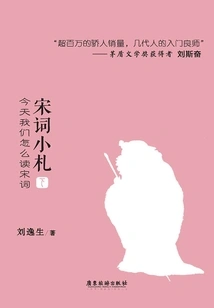
宋词小札 今天我们怎么读宋词(下)
Liu Yisheng
"Song Ci Xiaozha" is a rare introductory book on Song Ci. Through the analysis of the exquisite Song poetry, the book broadens the subjective understanding of the ancients' pursuit of profound music, corrects the fallacies in the poetry circles of the past dynasties, and presents the exquisite world of Song poetry from a unique perspective. Since its first publication in 1981, it has been continuously reprinted and reprinted, and is very popular among readers.
"Song Ci Xiaozha" is a rare introductory book on Song Ci. Through the analysis of the exquisite Song poetry, the book broadens the subjective understanding of the ancients' pursuit of profound music, corrects the fallacies in the poetry circles of the past dynasties, and presents the exquisite world of Song poetry from a unique perspective. Since its first publication in 1981, it has been continuously reprinted and reprinted, and is very popular among readers.
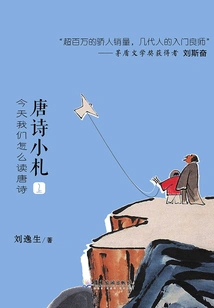
唐诗小札 今天我们怎么读唐诗(上)
Liu Yisheng
"Tang Poetry Xiaozha" is a groundbreaking introductory book on Tang poetry. Using vernacular to meet classics, using classics to interpret wisdom, using wisdom to gain insight into life, and using life to illuminate human nature, the essence of Tang poetry has been revealed, leaving endless aftertaste after reading it and making you want to stop. This book was published in 1961 and became popular all over the country. It has remained popular for decades and has influenced several generations of people's understanding of Chinese classical poetry.
"Tang Poetry Xiaozha" is a groundbreaking introductory book on Tang poetry. Using vernacular to meet classics, using classics to interpret wisdom, using wisdom to gain insight into life, and using life to illuminate human nature, the essence of Tang poetry has been revealed, leaving endless aftertaste after reading it and making you want to stop. This book was published in 1961 and became popular all over the country. It has remained popular for decades and has influenced several generations of people's understanding of Chinese classical poetry.
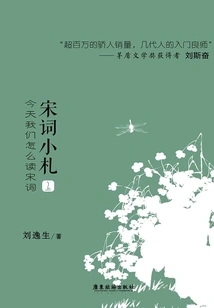
宋词小札 今天我们怎么读宋词(上)
Liu Yisheng
"Song Ci Xiaozha" is a rare introductory book on Song Ci. Through the analysis of the exquisite Song poetry, the book broadens the subjective understanding of the ancients' pursuit of profound music, corrects the fallacies in the poetry circles of the past dynasties, and presents the exquisite world of Song poetry from a unique perspective. Since its first publication in 1981, it has been continuously reprinted and reprinted, and is very popular among readers.
"Song Ci Xiaozha" is a rare introductory book on Song Ci. Through the analysis of the exquisite Song poetry, the book broadens the subjective understanding of the ancients' pursuit of profound music, corrects the fallacies in the poetry circles of the past dynasties, and presents the exquisite world of Song poetry from a unique perspective. Since its first publication in 1981, it has been continuously reprinted and reprinted, and is very popular among readers.
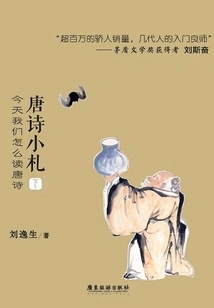
唐诗小札 今天我们怎么读唐诗(下)
Liu Yisheng
"Tang Poetry Xiaozha" is a groundbreaking introductory book on Tang poetry. Using vernacular to meet classics, using classics to interpret wisdom, using wisdom to gain insight into life, and using life to illuminate human nature, the essence of Tang poetry has been revealed, leaving endless aftertaste after reading it and making you want to stop. This book was published in 1961 and became popular all over the country. It has remained popular for decades and has influenced several generations of people's understanding of Chinese classical poetry.
"Tang Poetry Xiaozha" is a groundbreaking introductory book on Tang poetry. Using vernacular to meet classics, using classics to interpret wisdom, using wisdom to gain insight into life, and using life to illuminate human nature, the essence of Tang poetry has been revealed, leaving endless aftertaste after reading it and making you want to stop. This book was published in 1961 and became popular all over the country. It has remained popular for decades and has influenced several generations of people's understanding of Chinese classical poetry.
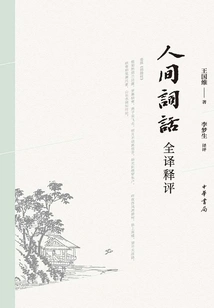
人间词话全译释评
Written By Wang Guowei And Translated And Commented By Li Mengsheng
This book is Mr. Wang Guowei's classic work. It caused a shock in the academic world when it was first published, and was generally welcomed by readers. It is called the golden key to spiritual enlightenment and is a must-read in the field of Chinese classical poetry and aesthetics. The famous "realm theory" was formally proposed in this book. This publication takes the finalized and deleted manuscripts of "Ren Jian Ci Hua" as upper and lower volumes, with a total of 114 articles, showing the overall picture of "Ren Jian Ci Hua". Professor Li Mengsheng, a senior scholar and publisher, was specially invited to come up with a new title for each poem, make a translation and analysis, and list the poems quoted in fragments from the original text in full, add annotations and appreciation tips, and introduce allusions to echo the original text. Through accurate translations and annotations, and extensive citations and analysis, readers can obtain richer information and better understand and appreciate "The Words of the World".
This book is Mr. Wang Guowei's classic work. It caused a shock in the academic world when it was first published, and was generally welcomed by readers. It is called the golden key to spiritual enlightenment and is a must-read in the field of Chinese classical poetry and aesthetics. The famous "realm theory" was formally proposed in this book. This publication takes the finalized and deleted manuscripts of "Ren Jian Ci Hua" as upper and lower volumes, with a total of 114 articles, showing the overall picture of "Ren Jian Ci Hua". Professor Li Mengsheng, a senior scholar and publisher, was specially invited to come up with a new title for each poem, make a translation and analysis, and list the poems quoted in fragments from the original text in full, add annotations and appreciation tips, and introduce allusions to echo the original text. Through accurate translations and annotations, and extensive citations and analysis, readers can obtain richer information and better understand and appreciate "The Words of the World".
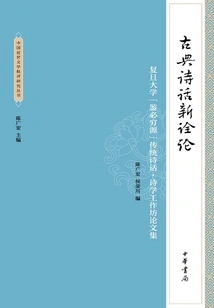
古典诗话新诠论:复旦大学“鉴必穷源”传统诗话(诗学工作坊论文集)
Chen Guanghong Hou Rongchuan
This book is edited by Professor Chen Guanghong, director of the Institute of Ancient Books Collation at Fudan University and chief expert of the National Social Science Fund's major project "New Edition of Ming Dynasty Poetry". It contains a total of 19 papers and collects the cutting-edge results of Chinese poetics and poetry research at home and abroad. The authors include senior scholars who have been immersed in this field for decades, such as Zuo Dongling, Zhang Bowei, Zhang Yinpeng, Jiang Yin, Sun Xiaoli, etc.; There are also young scholars who have emerged in recent years, such as Bian Dongbo of Nanjing University, Ye Ye of Zhejiang University, Wei Hongyuan of Lanzhou University, Liu Yi of Shanghai University, etc.; There are also first-class scholars from Japan, South Korea, and Taiwan, China. They conducted intensive and in-depth discussions on topics such as the definition of poetic talk and its documentary style, the circulation and variation of poetic talk documents in East Asia, the reconstruction of modern poetics, and new approaches to the study of poetic talk.
This book is edited by Professor Chen Guanghong, director of the Institute of Ancient Books Collation at Fudan University and chief expert of the National Social Science Fund's major project "New Edition of Ming Dynasty Poetry". It contains a total of 19 papers and collects the cutting-edge results of Chinese poetics and poetry research at home and abroad. The authors include senior scholars who have been immersed in this field for decades, such as Zuo Dongling, Zhang Bowei, Zhang Yinpeng, Jiang Yin, Sun Xiaoli, etc.; There are also young scholars who have emerged in recent years, such as Bian Dongbo of Nanjing University, Ye Ye of Zhejiang University, Wei Hongyuan of Lanzhou University, Liu Yi of Shanghai University, etc.; There are also first-class scholars from Japan, South Korea, and Taiwan, China. They conducted intensive and in-depth discussions on topics such as the definition of poetic talk and its documentary style, the circulation and variation of poetic talk documents in East Asia, the reconstruction of modern poetics, and new approaches to the study of poetic talk.
杜诗杂说全编(精)
Cao Mufan
Mr. Cao Mufan studied famous scholars for Du Fu, and his poems about Du Fu were profound and grand, focusing on the integration of "principles, textual research, and rhetoric". Whether it is Du Fu's Confucianism or his "depressed and frustrated" artistic style, he has an in-depth and unique understanding and interpretation. This book is a joint publication of the author's two works, "Miscellaneous Comments on Du Poems" and "The Continuation of Miscellaneous Comments on Du Poems". The former is mainly some of his reading notes in 1962; the latter focuses on the experiences and results of Du Fu's research in the 1980s, reflecting his attempts and efforts to "introduce Western modern rhetoric into the study of Tang and Song poetry, and introduce Western phenomenology or Heidegger's 'existentialism' thought into the study." In addition, five articles on the study of Du Fu in the author's later years are included as appendices to reflect his superior grasp of the position and influence of Du Fu's poems in the entire history of Chinese literature.
Mr. Cao Mufan studied famous scholars for Du Fu, and his poems about Du Fu were profound and grand, focusing on the integration of "principles, textual research, and rhetoric". Whether it is Du Fu's Confucianism or his "depressed and frustrated" artistic style, he has an in-depth and unique understanding and interpretation. This book is a joint publication of the author's two works, "Miscellaneous Comments on Du Poems" and "The Continuation of Miscellaneous Comments on Du Poems". The former is mainly some of his reading notes in 1962; the latter focuses on the experiences and results of Du Fu's research in the 1980s, reflecting his attempts and efforts to "introduce Western modern rhetoric into the study of Tang and Song poetry, and introduce Western phenomenology or Heidegger's 'existentialism' thought into the study." In addition, five articles on the study of Du Fu in the author's later years are included as appendices to reflect his superior grasp of the position and influence of Du Fu's poems in the entire history of Chinese literature.
骚赋楚韵:楚辞精选集
Xu Songhua
"Chu Ci" is my country's first collection of romantic poetry and erotic articles. The whole book is mainly based on Qu Yuan's works, and the other chapters also inherit the form of Qu Yuan's Fu. It uses literary styles, dialect pronunciation, local customs, etc. Of the Chu region, and has a strong local flavor, hence the name "Songs of Chu". "Songs of Chu" pioneered Chinese romantic literary poetry and is a collection of poems that has the most profound impact on Chinese literature after "The Book of Songs".
"Chu Ci" is my country's first collection of romantic poetry and erotic articles. The whole book is mainly based on Qu Yuan's works, and the other chapters also inherit the form of Qu Yuan's Fu. It uses literary styles, dialect pronunciation, local customs, etc. Of the Chu region, and has a strong local flavor, hence the name "Songs of Chu". "Songs of Chu" pioneered Chinese romantic literary poetry and is a collection of poems that has the most profound impact on Chinese literature after "The Book of Songs".
Memorize Ancient Poems with Dad
Literature和爸爸一起背古诗
Compiled By Youba
"Reciting Ancient Poems with Dad" selects 100 classic ancient poems, most of which are must-learn ancient poems in primary and secondary school Chinese books. Based on the poet's life story, creative background and artistic conception of ancient poetry, this book takes "letting children grow up with poetry and distance" as the main line. It creates 100 poetry stories, as if you can travel through thousands of years with your eyes closed, and have a language and spiritual communication with the ancients, so that readers can not only "recite it easily" but also "understand it easily", thereby better understanding the connotation of ancient poetry. By scanning the QR code of each poem in the book "Listen and see the classics", readers can hear the national first-level announcer - Youba explaining each ancient poem to you. With his deep and warm baritone, paired with Chinese classical music, the rhythm and artistic conception of the ancient poems will naturally blend into their hearts, allowing the feelings and wisdom of the ancients to nourish the soul.
"Reciting Ancient Poems with Dad" selects 100 classic ancient poems, most of which are must-learn ancient poems in primary and secondary school Chinese books. Based on the poet's life story, creative background and artistic conception of ancient poetry, this book takes "letting children grow up with poetry and distance" as the main line. It creates 100 poetry stories, as if you can travel through thousands of years with your eyes closed, and have a language and spiritual communication with the ancients, so that readers can not only "recite it easily" but also "understand it easily", thereby better understanding the connotation of ancient poetry. By scanning the QR code of each poem in the book "Listen and see the classics", readers can hear the national first-level announcer - Youba explaining each ancient poem to you. With his deep and warm baritone, paired with Chinese classical music, the rhythm and artistic conception of the ancient poems will naturally blend into their hearts, allowing the feelings and wisdom of the ancients to nourish the soul.
藏在故事里的必读古诗词·千古至情篇
Li Jian
An interesting and easy-to-read poetry introductory book. Reunite with the elegant poetry in the story, cultivate children's aesthetics in classic recitation, and lay a lifelong foundation of Chinese studies with Tang poetry and Song lyrics. This is a classic extracurricular reading of poetry for teenagers. It compiles ancient legends, anecdotes of historical and cultural celebrities, etc., Allowing young readers to understand and master common allusions in poetry and experience the rich emotions and long-lasting thoughts contained in poetry works. There are not only literary appreciation and analysis, but also touching storylines, as well as the ups and downs of the poet's own fate, joys, sorrows, and sorrows...
An interesting and easy-to-read poetry introductory book. Reunite with the elegant poetry in the story, cultivate children's aesthetics in classic recitation, and lay a lifelong foundation of Chinese studies with Tang poetry and Song lyrics. This is a classic extracurricular reading of poetry for teenagers. It compiles ancient legends, anecdotes of historical and cultural celebrities, etc., Allowing young readers to understand and master common allusions in poetry and experience the rich emotions and long-lasting thoughts contained in poetry works. There are not only literary appreciation and analysis, but also touching storylines, as well as the ups and downs of the poet's own fate, joys, sorrows, and sorrows...
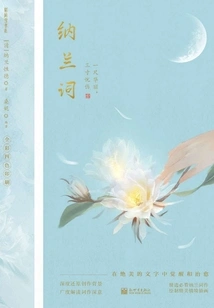
纳兰词:一尺华丽,三寸忧伤
G
Extreme wisdom will be hurt, and a word of truth cannot satisfy Nalan's thoughts; deep love will not last long, and a lifetime of character will be incomplete, just like talent. "If life were just like the first time we met, why would the autumn wind be so sad as to draw a fan?" - Nalan Xingde's words are clear, graceful and unique. The handed down "Nalan Ci" enjoyed a high reputation in society at that time and was highly praised by literati. People at the time said, "Every family is competing to sing "Drinking Water Ci". How many people know about Nalan's thoughts?" This shows the great influence of his Ci. Wang Guowei commented on him in "Human Words": "He sees things with natural eyes and expresses emotions with natural tongue, so he can really do this. Since the Northern Song Dynasty, there is only one person."
Extreme wisdom will be hurt, and a word of truth cannot satisfy Nalan's thoughts; deep love will not last long, and a lifetime of character will be incomplete, just like talent. "If life were just like the first time we met, why would the autumn wind be so sad as to draw a fan?" - Nalan Xingde's words are clear, graceful and unique. The handed down "Nalan Ci" enjoyed a high reputation in society at that time and was highly praised by literati. People at the time said, "Every family is competing to sing "Drinking Water Ci". How many people know about Nalan's thoughts?" This shows the great influence of his Ci. Wang Guowei commented on him in "Human Words": "He sees things with natural eyes and expresses emotions with natural tongue, so he can really do this. Since the Northern Song Dynasty, there is only one person."
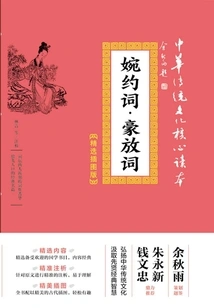
Graceful Ci·bold Ci
Literature婉约词·豪放词
Annotation By Lin Yin Et Al.
As a literary form, poetry sprouted in the Southern Dynasties, rose in the Sui and Tang Dynasties, and entered its heyday in the Song Dynasty. Generally speaking, Ci can be divided into two major schools: graceful and bold. Wanyue Ci is a kind of rhyme poem that is sung with music. Its representatives include Wen Tingyun, Liu Yong, Li Qingzhao, Zhou Bangyan, Yan Shu, Qin Guan, etc. The euphemistic words describe the scene with great detail, the words are gorgeous, and the lyricism is euphemistic and implicit. It moves people with emotion, wins with beauty, and expresses all the joys and sorrows, joys and sorrows in the world. Haofang Ci has a broad vision and magnificent momentum. It mostly writes about the rise and fall of the country and the survival of the nation. It expresses directly from the heart in terms of emotional expression and is full of heroic passion, which shocks and moves people. Most of its authors are patriots, heroes, and benevolent people. They are active and promising, pay attention to social reality, and worry about the country and the people. Representative figures include Su Shi, Xin Qiji, Lu You, etc. This book selects the outstanding works of poets from different periods, brings together the essence of the two major Ci schools, and shows the overall style of the two major Ci schools. It can cultivate readers' aesthetic taste and allow readers to appreciate the beauty of Ci as a literary form.
As a literary form, poetry sprouted in the Southern Dynasties, rose in the Sui and Tang Dynasties, and entered its heyday in the Song Dynasty. Generally speaking, Ci can be divided into two major schools: graceful and bold. Wanyue Ci is a kind of rhyme poem that is sung with music. Its representatives include Wen Tingyun, Liu Yong, Li Qingzhao, Zhou Bangyan, Yan Shu, Qin Guan, etc. The euphemistic words describe the scene with great detail, the words are gorgeous, and the lyricism is euphemistic and implicit. It moves people with emotion, wins with beauty, and expresses all the joys and sorrows, joys and sorrows in the world. Haofang Ci has a broad vision and magnificent momentum. It mostly writes about the rise and fall of the country and the survival of the nation. It expresses directly from the heart in terms of emotional expression and is full of heroic passion, which shocks and moves people. Most of its authors are patriots, heroes, and benevolent people. They are active and promising, pay attention to social reality, and worry about the country and the people. Representative figures include Su Shi, Xin Qiji, Lu You, etc. This book selects the outstanding works of poets from different periods, brings together the essence of the two major Ci schools, and shows the overall style of the two major Ci schools. It can cultivate readers' aesthetic taste and allow readers to appreciate the beauty of Ci as a literary form.