Library
Browse and search books
895 novels found
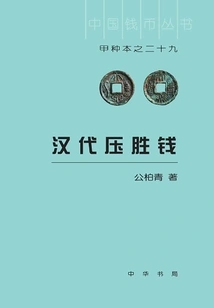
汉代压胜钱:中国钱币丛书甲种本
Gong Baiqing
Yashengqian is a kind of coin used by the people to pray for good luck and ward off evil spirits. The so-called "suppression and victory" means to suppress the evil spirits and achieve victory. At present, most scholars believe that Yashengqian originated in the Han Dynasty. The author of this book, Gong Baiqing, has devoted himself to the collection and research of Yasheng Qian in the Han Dynasty for many years, and this book is a concentrated expression of his achievements. Previous research on Yashengqian in the Han Dynasty mainly focused on chronological research, authenticity identification, etc., And was a study of the ontology of numismatics; while this book treats Yashengqian as a material cultural product, examining the social concepts it carries and the cultural traditions it reflects, from a cultural perspective, and is an extension of coins. This is the main idea of this book. In the Han Dynasty, winning money was the basis for the emergence and development of winning money in later generations. Understanding the cultural connotation of winning money in the Han Dynasty is of great significance to the study of winning money. Therefore, this book chooses the winning money of the Han Dynasty as the object of study, and discusses it from many aspects such as auspicious patterns and the cultural beliefs reflected in them. The combination of pictures and text reveals the spiritual connotation of winning money over money in the Han Dynasty. The round shape of the round and perforated square shape of the Yasheng Qian reflects the ancient people's idea of a round sky and a square earth. On the limited body of money, the ancients cast colorful abstract patterns and textures of the universe and heaven and earth. The main part of this book is an analysis of these mysterious patterns and textures. For example, the star inscriptions on the Winning Money appear to be some messy dots at first glance, but after the author's analysis one by one, the constellations represented by each group of astrological inscriptions are clear at a glance, and the worship of the star god contained in them is also clear. The small money-beating body contains rich connotations. The analysis in this book has been rarely discussed by some predecessors and is a completely original point of view. This book makes a pioneering exploration into the inner world of the Han people through winning money.
Yashengqian is a kind of coin used by the people to pray for good luck and ward off evil spirits. The so-called "suppression and victory" means to suppress the evil spirits and achieve victory. At present, most scholars believe that Yashengqian originated in the Han Dynasty. The author of this book, Gong Baiqing, has devoted himself to the collection and research of Yasheng Qian in the Han Dynasty for many years, and this book is a concentrated expression of his achievements. Previous research on Yashengqian in the Han Dynasty mainly focused on chronological research, authenticity identification, etc., And was a study of the ontology of numismatics; while this book treats Yashengqian as a material cultural product, examining the social concepts it carries and the cultural traditions it reflects, from a cultural perspective, and is an extension of coins. This is the main idea of this book. In the Han Dynasty, winning money was the basis for the emergence and development of winning money in later generations. Understanding the cultural connotation of winning money in the Han Dynasty is of great significance to the study of winning money. Therefore, this book chooses the winning money of the Han Dynasty as the object of study, and discusses it from many aspects such as auspicious patterns and the cultural beliefs reflected in them. The combination of pictures and text reveals the spiritual connotation of winning money over money in the Han Dynasty. The round shape of the round and perforated square shape of the Yasheng Qian reflects the ancient people's idea of a round sky and a square earth. On the limited body of money, the ancients cast colorful abstract patterns and textures of the universe and heaven and earth. The main part of this book is an analysis of these mysterious patterns and textures. For example, the star inscriptions on the Winning Money appear to be some messy dots at first glance, but after the author's analysis one by one, the constellations represented by each group of astrological inscriptions are clear at a glance, and the worship of the star god contained in them is also clear. The small money-beating body contains rich connotations. The analysis in this book has been rarely discussed by some predecessors and is a completely original point of view. This book makes a pioneering exploration into the inner world of the Han people through winning money.
清代云南释奠礼乐研究:以大理、临安及丽江地区为例
Hongjiang
This book outlines in detail the historical inheritance of Shidian ritual music in Yunnan during the Qing Dynasty. On this basis, taking the inheritance status of Shidian ritual music in Dali, Lin'an and Lijiang areas in the Qing Dynasty as an example, the evolution and integration of Confucian ritual music represented by Shidian ritual music in the Qing Dynasty and Yunnan traditional music culture are analyzed.
This book outlines in detail the historical inheritance of Shidian ritual music in Yunnan during the Qing Dynasty. On this basis, taking the inheritance status of Shidian ritual music in Dali, Lin'an and Lijiang areas in the Qing Dynasty as an example, the evolution and integration of Confucian ritual music represented by Shidian ritual music in the Qing Dynasty and Yunnan traditional music culture are analyzed.
中国现代军事制度研究:以中华民国军事制度为主线的考察(1924—1949)(全二册)
Tian Xuan
This book is a historical treatise that systematically analyzes the military system of the Republic of China. The historical materials are rich and detailed, and most of them are disclosed for the first time. It reasonably integrates general research and topical research, with well-argued arguments and complete structure. It breaks through some traditional conclusions that have been followed for a long time in the field of history. Many insights and conclusions are of innovative significance. Guided by the basic theories of Marxism and drawing on the outstanding achievements of contemporary humanities and social sciences, we conduct interdisciplinary and all-round research on the military system, establish categories horizontally, write history vertically, and build a framework and system for the history of the military system of the Republic of China. The theoretical summary and experience summary in the book are of great enlightenment for the construction of contemporary institutions.
This book is a historical treatise that systematically analyzes the military system of the Republic of China. The historical materials are rich and detailed, and most of them are disclosed for the first time. It reasonably integrates general research and topical research, with well-argued arguments and complete structure. It breaks through some traditional conclusions that have been followed for a long time in the field of history. Many insights and conclusions are of innovative significance. Guided by the basic theories of Marxism and drawing on the outstanding achievements of contemporary humanities and social sciences, we conduct interdisciplinary and all-round research on the military system, establish categories horizontally, write history vertically, and build a framework and system for the history of the military system of the Republic of China. The theoretical summary and experience summary in the book are of great enlightenment for the construction of contemporary institutions.
清代巴县婚姻档案研究
Zhang Xiaoxia
This book focuses on the marriage archives of Ba County, Sichuan during the Qing Dynasty, and comprehensively and systematically displays many aspects of marriage, such as regular marriage, child adoption marriage, annulment and regretful marriage, etc. Not only that, but also carefully classified, researched and reflected on certain specific forms of marriage, such as child marriage. The woman's living conditions in her husband's family were discussed in terms of abuse by her husband's family, retirement by her husband's family, and discord with her husband's family. The reasons for the lawsuit were also discussed in depth with the magistrate's judgment. The essence of marriage is a social relationship. Those who enter the marriage market choose spouse resources based on their own conditions and family background to complete the marriage match. This batch of marriage archives in Ba County vividly reflect the intricate relationships between husband and wife, mother-in-law and daughter-in-law, in-laws, biological parents and adoptive parents, married daughters and their natal families, and neighbors and relatives. They have a strong local flavor and are the first-hand historical materials for studying marriage and family relationships in Ba County during the Qing Dynasty.
This book focuses on the marriage archives of Ba County, Sichuan during the Qing Dynasty, and comprehensively and systematically displays many aspects of marriage, such as regular marriage, child adoption marriage, annulment and regretful marriage, etc. Not only that, but also carefully classified, researched and reflected on certain specific forms of marriage, such as child marriage. The woman's living conditions in her husband's family were discussed in terms of abuse by her husband's family, retirement by her husband's family, and discord with her husband's family. The reasons for the lawsuit were also discussed in depth with the magistrate's judgment. The essence of marriage is a social relationship. Those who enter the marriage market choose spouse resources based on their own conditions and family background to complete the marriage match. This batch of marriage archives in Ba County vividly reflect the intricate relationships between husband and wife, mother-in-law and daughter-in-law, in-laws, biological parents and adoptive parents, married daughters and their natal families, and neighbors and relatives. They have a strong local flavor and are the first-hand historical materials for studying marriage and family relationships in Ba County during the Qing Dynasty.
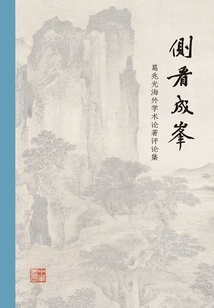
Looking at the Peak from the Side: a Collection of Reviews of Ge Zhaoguang's Overseas Academic Works
History侧看成峰:葛兆光海外学术论著评论集
Ge Zhaoguang
Mr. Ge Zhaoguang is a generalist with broad academic vision and thorough academic vision. While tirelessly conducting research on local academic issues, he always looks overseas. Through extensive cross-domain dialogue, he deeply participates in the most cutting-edge academic debates, seeking new voices and introducing new knowledge, thereby enriching the perspective of observing Chinese issues. "Looking at the Peak from the Side: A Collection of Commentaries on Ge Zhaoguang's Overseas Academic Works" is the embodiment of his long-term efforts and achievements. In this book, Mr. Ge Zhaoguang adheres to the four research perspectives that he has always insisted on "standing on the extension of the study of modern China issues", that is, "shortening of time, expanding space, increasing historical materials, and complex issues", especially from the perspective of "complicated issues" that governs the overall situation. From the compilation of the history of imperial China such as Bu Zhengmin, By Yu Yingshi's new interpretive framework for the intellectual history of the Song Dynasty, he conducted in-depth comments and dialogues on topics such as the modern Japanese Sinologists' investigation of China's periphery and the biologist Locke's in-depth investigation of the Naxi culture in the southwestern frontier, showing a strong sense of pre-current, a clear sense of truth-seeking, and a conscious sense of understanding. This book comprehensively presents Mr. Ge Zhaoguang's observations and thoughts on overseas academic works.
Mr. Ge Zhaoguang is a generalist with broad academic vision and thorough academic vision. While tirelessly conducting research on local academic issues, he always looks overseas. Through extensive cross-domain dialogue, he deeply participates in the most cutting-edge academic debates, seeking new voices and introducing new knowledge, thereby enriching the perspective of observing Chinese issues. "Looking at the Peak from the Side: A Collection of Commentaries on Ge Zhaoguang's Overseas Academic Works" is the embodiment of his long-term efforts and achievements. In this book, Mr. Ge Zhaoguang adheres to the four research perspectives that he has always insisted on "standing on the extension of the study of modern China issues", that is, "shortening of time, expanding space, increasing historical materials, and complex issues", especially from the perspective of "complicated issues" that governs the overall situation. From the compilation of the history of imperial China such as Bu Zhengmin, By Yu Yingshi's new interpretive framework for the intellectual history of the Song Dynasty, he conducted in-depth comments and dialogues on topics such as the modern Japanese Sinologists' investigation of China's periphery and the biologist Locke's in-depth investigation of the Naxi culture in the southwestern frontier, showing a strong sense of pre-current, a clear sense of truth-seeking, and a conscious sense of understanding. This book comprehensively presents Mr. Ge Zhaoguang's observations and thoughts on overseas academic works.
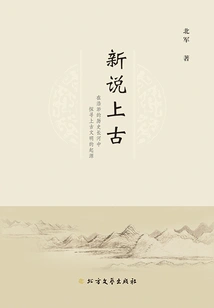
New Talk About Antiquity
History新说上古
Northern Army
China has a long history, and the Chinese civilization is the only one among the ancient civilizations in the world that has developed continuously without interruption to this day. Counting from the time of Huangdi Ji Xuanyuan, it has a history of more than 5,000 years. The so-called ancient history refers to human history before written records. In China, it generally refers to the history before the Shang and Zhou dynasties. Since there are no reliable written records, even the later supplementary documents often convey fallacies, making future generations' understanding of ancient human history very vague or even wrong. Therefore, in the context of the rejuvenation of the Chinese nation, pursuing the true origin of the Chinese nation and exploring where we come from will help inspire the self-confidence of the Chinese people and the cohesion of the nation, and help us examine the existential meaning of human races and individual lives from a higher perspective.
China has a long history, and the Chinese civilization is the only one among the ancient civilizations in the world that has developed continuously without interruption to this day. Counting from the time of Huangdi Ji Xuanyuan, it has a history of more than 5,000 years. The so-called ancient history refers to human history before written records. In China, it generally refers to the history before the Shang and Zhou dynasties. Since there are no reliable written records, even the later supplementary documents often convey fallacies, making future generations' understanding of ancient human history very vague or even wrong. Therefore, in the context of the rejuvenation of the Chinese nation, pursuing the true origin of the Chinese nation and exploring where we come from will help inspire the self-confidence of the Chinese people and the cohesion of the nation, and help us examine the existential meaning of human races and individual lives from a higher perspective.
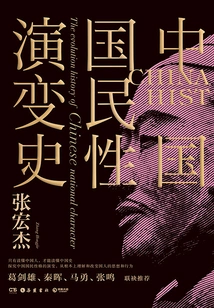
中国国民性演变史
Zhang Hongjie
This book aims to explore the evolution of Chinese national character. The author believes that national character is not static. From the Spring and Autumn Period to the Tang and Song Dynasties, and then to the Ming and Qing Dynasties, the character of the Chinese people is like a waterfall, flowing down and getting worse. It is the backward system that has caused the bad nature of the Chinese people. From the dual perspectives of space and time, this book can be said to be an alternative general history of China, and it also seeks a real way out for China's future transformation and development.
This book aims to explore the evolution of Chinese national character. The author believes that national character is not static. From the Spring and Autumn Period to the Tang and Song Dynasties, and then to the Ming and Qing Dynasties, the character of the Chinese people is like a waterfall, flowing down and getting worse. It is the backward system that has caused the bad nature of the Chinese people. From the dual perspectives of space and time, this book can be said to be an alternative general history of China, and it also seeks a real way out for China's future transformation and development.
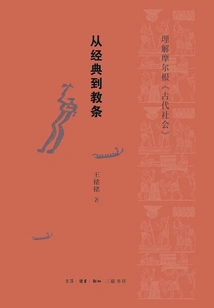
从经典到教条:理解摩尔根《古代社会》原名《裂缝间的桥》
Wang Mingming
In Chinese anthropology, the name Morgan may have been misunderstood as a Chinese name because of its lofty historical status (of course, this is purely a description). In the process of this cross-cultural misunderstanding, Morgan and many social theories without Chinese characteristics deduced from Morgan's theory had the opportunity to call themselves "indigenous social theories." Therefore, to this day, some scholars still use the understanding they gained from Morgan to classify the understanding others gained from other theories as "foreign accents", deliberately inducing people to forget that Morgan himself was an American. This paradoxical phenomenon reminds people of the need to restore Morgan's Western perspective and comment on this name alongside other Western anthropological thinkers. And only by doing this can we truly re-establish Morgan's banner among Chinese intellectuals.
In Chinese anthropology, the name Morgan may have been misunderstood as a Chinese name because of its lofty historical status (of course, this is purely a description). In the process of this cross-cultural misunderstanding, Morgan and many social theories without Chinese characteristics deduced from Morgan's theory had the opportunity to call themselves "indigenous social theories." Therefore, to this day, some scholars still use the understanding they gained from Morgan to classify the understanding others gained from other theories as "foreign accents", deliberately inducing people to forget that Morgan himself was an American. This paradoxical phenomenon reminds people of the need to restore Morgan's Western perspective and comment on this name alongside other Western anthropological thinkers. And only by doing this can we truly re-establish Morgan's banner among Chinese intellectuals.
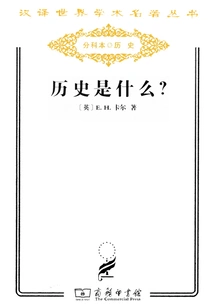
历史是什么?(汉译世界学术名著丛书)
(english) Edward Hollett Carr
This book is a world-renowned masterpiece of historical theory by the famous British historian Carr. In the book, the author analyzes "history" from all aspects, quotes from a wide range of sources, outlines and leads, and puts forward the famous proposition that "history is a constant dialogue with reality."
This book is a world-renowned masterpiece of historical theory by the famous British historian Carr. In the book, the author analyzes "history" from all aspects, quotes from a wide range of sources, outlines and leads, and puts forward the famous proposition that "history is a constant dialogue with reality."
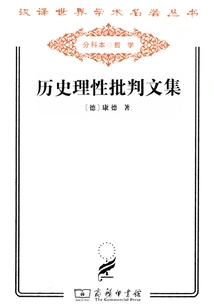
历史理性批判文集(汉译世界学术名著丛书)
H
This book contains 8 papers written by Kant between 1784 and 1797 (from 60 to 73 years old), including all of Kant's major works on historical philosophy and political philosophy. Germany at the end of the 18th century was still a divided and backward country compared to the advanced Western countries of the same period. Although capitalist production relations were developing, they still suffered from the severe constraints of the feudal system. This determines the special weakness of the German middle class. While Britain and France were taking revolutionary action to overthrow the feudal system, Germany was still taking only theoretical forms. Therefore, when discussing the German classical philosophy founded by Kant, the classic writer pointed out: "At the same time as the political revolution occurred in France, a philosophical revolution occurred in Germany. This revolution was started by Kant."
This book contains 8 papers written by Kant between 1784 and 1797 (from 60 to 73 years old), including all of Kant's major works on historical philosophy and political philosophy. Germany at the end of the 18th century was still a divided and backward country compared to the advanced Western countries of the same period. Although capitalist production relations were developing, they still suffered from the severe constraints of the feudal system. This determines the special weakness of the German middle class. While Britain and France were taking revolutionary action to overthrow the feudal system, Germany was still taking only theoretical forms. Therefore, when discussing the German classical philosophy founded by Kant, the classic writer pointed out: "At the same time as the political revolution occurred in France, a philosophical revolution occurred in Germany. This revolution was started by Kant."
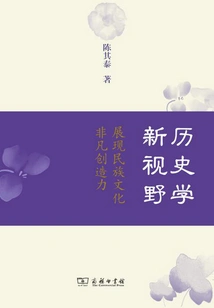
历史学新视野:展现民族文化非凡创造力
Chen Qitai
This book has twelve chapters in total, discussing many important issues related to the development of Chinese historiography: elucidation of the achievements of famous historical works such as "Historical Records" and "Shitong", tracking and analysis of changes in academic ideological trends, textual research and analysis of important historical facts, and academic debates on certain current commentaries. The academic purposes throughout the book are: to conduct research from top to bottom and grasp the key points in the history of history; to elucidate the profound content of historical masterpieces and the superb compilation methods; to deeply explore and promote the great creativity of national culture contained in historical masterpieces. The whole book reflects the author's new vision of examining the evolution path of Chinese historiography with "historical inheritance and the spirit of the Chinese nation" as the main line.
This book has twelve chapters in total, discussing many important issues related to the development of Chinese historiography: elucidation of the achievements of famous historical works such as "Historical Records" and "Shitong", tracking and analysis of changes in academic ideological trends, textual research and analysis of important historical facts, and academic debates on certain current commentaries. The academic purposes throughout the book are: to conduct research from top to bottom and grasp the key points in the history of history; to elucidate the profound content of historical masterpieces and the superb compilation methods; to deeply explore and promote the great creativity of national culture contained in historical masterpieces. The whole book reflects the author's new vision of examining the evolution path of Chinese historiography with "historical inheritance and the spirit of the Chinese nation" as the main line.
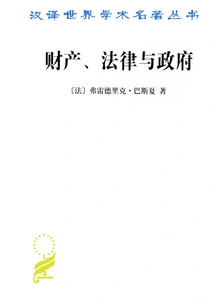
财产、法律与政府(汉译世界学术名著丛书)
(france) Frédéric Bastiat
Frédéric Bastiat was a French economist in the mid-19th century. Joseph Schumpeter once called him "the greatest economic journalist of all time." He adhered to the basic principles of the free market and severely criticized various attempts to restrict the operation of the free market. This anthology of "World Academic Masterpieces in Chinese Translation: Property, Law and Government" is written for the general public and clearly explains the most important principles of political economy in easy-to-understand language. Hayek once commented on this book, his famous "What is Visible and What is Invisible in Political Economy": No one has ever clearly revealed the key difficulties of rational economic policy in such a simple sentence. I would also like to add that it also provides a decisive argument for economic freedom.
Frédéric Bastiat was a French economist in the mid-19th century. Joseph Schumpeter once called him "the greatest economic journalist of all time." He adhered to the basic principles of the free market and severely criticized various attempts to restrict the operation of the free market. This anthology of "World Academic Masterpieces in Chinese Translation: Property, Law and Government" is written for the general public and clearly explains the most important principles of political economy in easy-to-understand language. Hayek once commented on this book, his famous "What is Visible and What is Invisible in Political Economy": No one has ever clearly revealed the key difficulties of rational economic policy in such a simple sentence. I would also like to add that it also provides a decisive argument for economic freedom.
I
作为思想和行动的历史(汉译世界学术名著丛书)
(italian) Benedetto Croce
Croce reordered and edited the series of papers according to internal logical connections, combined with the special historical conditions of the 1920s and 1930s, to deepen and improve his historical views and historiographic theories. The book is divided into eight parts: history as thought and action; historicism and its history; history without historical problems; historical certainty and authenticity; history and politics; history and morality; prospects of history; and conclusion. Croce denies the transcendental necessity and causal necessity of historical philosophy, but affirms the logical necessity of history. Croce analyzes the characteristics of historical writings. The philosophical theoretical thoughts and historical theoretical thoughts presented by the author in the book still have important enlightenment on the history of world thought and philosophy...
Croce reordered and edited the series of papers according to internal logical connections, combined with the special historical conditions of the 1920s and 1930s, to deepen and improve his historical views and historiographic theories. The book is divided into eight parts: history as thought and action; historicism and its history; history without historical problems; historical certainty and authenticity; history and politics; history and morality; prospects of history; and conclusion. Croce denies the transcendental necessity and causal necessity of historical philosophy, but affirms the logical necessity of history. Croce analyzes the characteristics of historical writings. The philosophical theoretical thoughts and historical theoretical thoughts presented by the author in the book still have important enlightenment on the history of world thought and philosophy...
元代吐蕃地方行政体制研究
Zhang Yun
The Yuan Dynasty was an important stage in the historical development of the Tibetan people. Tibet ended more than four hundred years of melee and division, and was officially brought under the direct administrative jurisdiction of the central dynasty, becoming an integral part of China's administrative territory in the Yuan Dynasty. This book focuses on the administrative system issues that governed Tubo in the Yuan Dynasty. It systematically and in-depth discusses the three forces that restrict local administrative affairs in Tubo: the status and role of King Chuzhen, Emperor Shi and King Bailan, and examines the institutions under their jurisdiction one by one. It corrected some mistakes of predecessors, or questioned the old theory, and established a new theory, so that related issues could be explained comprehensively, and a new way was opened up for the study of the local political history of Tubo in the Yuan Dynasty.
The Yuan Dynasty was an important stage in the historical development of the Tibetan people. Tibet ended more than four hundred years of melee and division, and was officially brought under the direct administrative jurisdiction of the central dynasty, becoming an integral part of China's administrative territory in the Yuan Dynasty. This book focuses on the administrative system issues that governed Tubo in the Yuan Dynasty. It systematically and in-depth discusses the three forces that restrict local administrative affairs in Tubo: the status and role of King Chuzhen, Emperor Shi and King Bailan, and examines the institutions under their jurisdiction one by one. It corrected some mistakes of predecessors, or questioned the old theory, and established a new theory, so that related issues could be explained comprehensively, and a new way was opened up for the study of the local political history of Tubo in the Yuan Dynasty.
漕运时代北运河治理与变迁
Chen Xibo
The North Canal is the natural river in the northernmost section of the Beijing-Hangzhou Grand Canal. It was once an important canal channel in history. This book conducts an in-depth study of the management and changes of the North Canal during the water transportation period, discusses the management methods adopted by the Jin, Yuan, Ming and Qing dynasties to ensure water transportation, sorts out the course changes of the North Canal, focuses on restoring the location of the North Canal during the Jin and Yuan Dynasties, and systematically analyzes the management methods and river course changes of the North Canal during the Ming and Qing Dynasties. Finally, from a macro perspective, the spatial characteristics of the North Canal's river management and the era and evolution process of river management in the past dynasties were analyzed, and the relationship between river management and changes and canal water transportation was clarified.
The North Canal is the natural river in the northernmost section of the Beijing-Hangzhou Grand Canal. It was once an important canal channel in history. This book conducts an in-depth study of the management and changes of the North Canal during the water transportation period, discusses the management methods adopted by the Jin, Yuan, Ming and Qing dynasties to ensure water transportation, sorts out the course changes of the North Canal, focuses on restoring the location of the North Canal during the Jin and Yuan Dynasties, and systematically analyzes the management methods and river course changes of the North Canal during the Ming and Qing Dynasties. Finally, from a macro perspective, the spatial characteristics of the North Canal's river management and the era and evolution process of river management in the past dynasties were analyzed, and the relationship between river management and changes and canal water transportation was clarified.
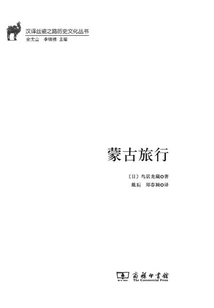
Mongolia Travel
History蒙古旅行
(japan) Torii Ryuzo
"Travel in Mongolia" was written under the guidance of Mr. Torii Ryuzo, and covers the area from the Xing'an Mountains between the eastern and western Gobi Deserts to the Xilamulun River Basin, from Khalkha in Outer Mongolia to the north and to the Chifeng area of Inner Mongolia in the south. According to Torii Ryuzo's own preface, the results of the investigation include physical anthropological data of the population on the way, records of language, collection of slang, nursery rhymes, etc., And archaeological investigation of ruins and relics. Among them, the archaeological survey includes stone arrowheads, stone axes and other relics of the Hongshan Culture in the Xilamulun River and Yingjin River basins, as well as Khitan relics in Xianbei, Wuwan, and Zhongjing and Shangjing (Qingcheng) of the Liao Kingdom. This is a relatively long trip, and the years have tempered the hard work at that time. Let's take a look at a dusty record.
"Travel in Mongolia" was written under the guidance of Mr. Torii Ryuzo, and covers the area from the Xing'an Mountains between the eastern and western Gobi Deserts to the Xilamulun River Basin, from Khalkha in Outer Mongolia to the north and to the Chifeng area of Inner Mongolia in the south. According to Torii Ryuzo's own preface, the results of the investigation include physical anthropological data of the population on the way, records of language, collection of slang, nursery rhymes, etc., And archaeological investigation of ruins and relics. Among them, the archaeological survey includes stone arrowheads, stone axes and other relics of the Hongshan Culture in the Xilamulun River and Yingjin River basins, as well as Khitan relics in Xianbei, Wuwan, and Zhongjing and Shangjing (Qingcheng) of the Liao Kingdom. This is a relatively long trip, and the years have tempered the hard work at that time. Let's take a look at a dusty record.
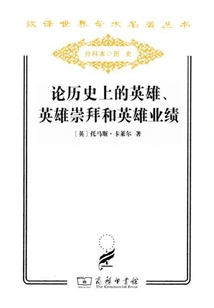
论历史上的英雄、英雄崇拜和英雄业绩(汉译世界学术名著丛书)
O
Introduction to "On Heroes, Hero Worship and Heroic Deeds in History": Thomas Carlyle was a giant in the British literary world in the 19th century. In our country's theoretical works, he is a representative figure of the criticized idealist heroic view of history. In that era when all schools of thought were in darkness and all flowers were withering, people adopted a critical attitude towards him, and few of his works were translated and published. People know very little about his life and thoughts, and their criticism of his wrong ideas cannot be profound. For this reason, the following is a brief introduction and explanation of Carlyle's life story.
Introduction to "On Heroes, Hero Worship and Heroic Deeds in History": Thomas Carlyle was a giant in the British literary world in the 19th century. In our country's theoretical works, he is a representative figure of the criticized idealist heroic view of history. In that era when all schools of thought were in darkness and all flowers were withering, people adopted a critical attitude towards him, and few of his works were translated and published. People know very little about his life and thoughts, and their criticism of his wrong ideas cannot be profound. For this reason, the following is a brief introduction and explanation of Carlyle's life story.
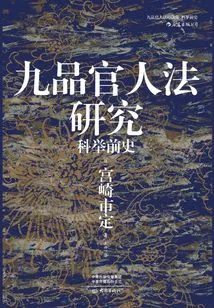
K
HistoryK
K
This book is Miyazaki's representative work. By collecting examples scattered in historical records and biographies, Miyazaki Shisei strives to find the correspondence between rural grades and official grades, breaks through the traditional research model, and accurately describes the development and evolution of the Nine-grade Officials Law, a system of official selection that ran through the Wei, Jin, Southern and Northern Dynasties, and down to the Sui and Tang Dynasties, over more than 300 years, and used this as a line It integrates the official selection system, the official position system and the aristocratic system of the Wei, Jin, Southern and Northern Dynasties, and profoundly reveals the political system of the Wei, Jin, Southern and Northern Dynasties and the ups and downs of the medieval aristocracy. It opens up a new situation for the study of the medieval electoral system, and can even be said to have drawn a watershed for the research at that time. After the book was published, it received critical acclaim from the academic community and won Japan's highest academic award, the "Bachelor's Academy Award". It has become a must-read classic for studying the history of China's Wei, Jin, Southern and Northern Dynasties, Sui and Tang Dynasties.
This book is Miyazaki's representative work. By collecting examples scattered in historical records and biographies, Miyazaki Shisei strives to find the correspondence between rural grades and official grades, breaks through the traditional research model, and accurately describes the development and evolution of the Nine-grade Officials Law, a system of official selection that ran through the Wei, Jin, Southern and Northern Dynasties, and down to the Sui and Tang Dynasties, over more than 300 years, and used this as a line It integrates the official selection system, the official position system and the aristocratic system of the Wei, Jin, Southern and Northern Dynasties, and profoundly reveals the political system of the Wei, Jin, Southern and Northern Dynasties and the ups and downs of the medieval aristocracy. It opens up a new situation for the study of the medieval electoral system, and can even be said to have drawn a watershed for the research at that time. After the book was published, it received critical acclaim from the academic community and won Japan's highest academic award, the "Bachelor's Academy Award". It has become a must-read classic for studying the history of China's Wei, Jin, Southern and Northern Dynasties, Sui and Tang Dynasties.
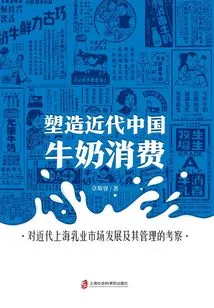
塑造近代中国牛奶消费:对近代上海乳业市场发展及其管理的考察
Zhang Sirui
The development of the dairy industry is becoming more and more attractive nowadays, and related research is also increasing day by day. However, the existing studies are mostly discussed from the perspective of animal husbandry economics and lack the analysis of dairy hygiene system. Or in terms of time period, it focuses on the development of the industry after the 1980s, but lacks understanding of the development in modern times. In view of the important position of dairy market management in the development of the dairy industry, especially the evolution of the system from the late Qing Dynasty to before 1949 still has certain reference value and inspiration for today's dairy industry management.
The development of the dairy industry is becoming more and more attractive nowadays, and related research is also increasing day by day. However, the existing studies are mostly discussed from the perspective of animal husbandry economics and lack the analysis of dairy hygiene system. Or in terms of time period, it focuses on the development of the industry after the 1980s, but lacks understanding of the development in modern times. In view of the important position of dairy market management in the development of the dairy industry, especially the evolution of the system from the late Qing Dynasty to before 1949 still has certain reference value and inspiration for today's dairy industry management.
国际汉学研究通讯(第十七期)
Peking University International Sinologist Training Base
"International Sinology Research Newsletter" is a comprehensive academic collection edited by the International Sinologist Training Base of Peking University. It is an academic platform for communication between Chinese and foreign scholars. It focuses on introducing the research trends of the international sinology community in the field of traditional Chinese humanities, and collects recent research results in related majors, covering Chinese literature, literature, history, archaeology, art, Sino-Western exchanges and other fields. It is divided into several parts: Sinology Forum, Literature World, Sinology Figures, Reviews of Works, Research Overview, and Base Chronicles. The chairman of the editorial board is Professor Rong Xinjiang of the Department of History of Peking University. The members come from many universities and academic institutions in China, the United States, the United Kingdom, and Japan. The chief editor is Professor Liu Yucai of the Department of Chinese Language and Literature of Peking University. The authors are mostly first-line scholars at home and abroad. Included articles include Kojiro Yoshikawa's "Explanation of Calibration Materials of the Classics and Literature Laboratory of the Institute of Oriental Culture", Ma Xiaohe's "New Examination of Yijiao in Zhenjiang and Quanzhou in the Yuan Dynasty", "Minutes of the International Sinology Lecture Series (2018.01-2018.06)", Etc.
"International Sinology Research Newsletter" is a comprehensive academic collection edited by the International Sinologist Training Base of Peking University. It is an academic platform for communication between Chinese and foreign scholars. It focuses on introducing the research trends of the international sinology community in the field of traditional Chinese humanities, and collects recent research results in related majors, covering Chinese literature, literature, history, archaeology, art, Sino-Western exchanges and other fields. It is divided into several parts: Sinology Forum, Literature World, Sinology Figures, Reviews of Works, Research Overview, and Base Chronicles. The chairman of the editorial board is Professor Rong Xinjiang of the Department of History of Peking University. The members come from many universities and academic institutions in China, the United States, the United Kingdom, and Japan. The chief editor is Professor Liu Yucai of the Department of Chinese Language and Literature of Peking University. The authors are mostly first-line scholars at home and abroad. Included articles include Kojiro Yoshikawa's "Explanation of Calibration Materials of the Classics and Literature Laboratory of the Institute of Oriental Culture", Ma Xiaohe's "New Examination of Yijiao in Zhenjiang and Quanzhou in the Yuan Dynasty", "Minutes of the International Sinology Lecture Series (2018.01-2018.06)", Etc.
公众史学研究入门
Li Na
This book mainly introduces the basic framework and research history of public history, aiming to provide introductory guidance for readers who are interested in engaging in or understanding public history research, and also provides theoretical and practical guidance for the establishment and development of public history in China. First, it outlines the basic theories and methods of public history; second, it outlines a concise history of this discipline. As a new branch of history, public history has different development paths and models in different countries, but the main research is still concentrated in English-speaking countries. This book will sort out and review the origin, development, and academic history of public history in major English-speaking countries (the United States, the United Kingdom, Australia, and Canada); then, it will discuss important topics and key issues in this discipline. Public history is a historical school that emerged in the United States since the 1960s and 1970s. It has now developed into a new field of contemporary American historical research. It refers to historians using the training skills and research results of academic history, with the help of methods from other disciplines, to serve various fields of real society related to history, including government departments, companies, news media, historical sites, museums and other institutions. Public history is oriented to social needs, and the goal of its subject education is to cultivate historians who are adaptable to practical operations.
This book mainly introduces the basic framework and research history of public history, aiming to provide introductory guidance for readers who are interested in engaging in or understanding public history research, and also provides theoretical and practical guidance for the establishment and development of public history in China. First, it outlines the basic theories and methods of public history; second, it outlines a concise history of this discipline. As a new branch of history, public history has different development paths and models in different countries, but the main research is still concentrated in English-speaking countries. This book will sort out and review the origin, development, and academic history of public history in major English-speaking countries (the United States, the United Kingdom, Australia, and Canada); then, it will discuss important topics and key issues in this discipline. Public history is a historical school that emerged in the United States since the 1960s and 1970s. It has now developed into a new field of contemporary American historical research. It refers to historians using the training skills and research results of academic history, with the help of methods from other disciplines, to serve various fields of real society related to history, including government departments, companies, news media, historical sites, museums and other institutions. Public history is oriented to social needs, and the goal of its subject education is to cultivate historians who are adaptable to practical operations.
清代基层组织与乡村社会管理:以四川南部县为个案的考察
Gou Deyi
"Grassroots Organizations and Rural Social Management in the Qing Dynasty - A Case Study of Southern Sichuan County" uses the "Southern County Government Archives of the Qing Dynasty" as documentary support, supplemented by canonical documents, official mottos, local chronicles, etc., And conducts a systematic study on the reasons for the establishment of various grassroots organizations, such as Baojia, Lijia, Lipai, Xiangyue, and Tuanlian, as well as the selection and appointment of officials. From this, we can see how various grassroots organizations in Southern County manage rural society. This book has important reference value in promoting in-depth research on the rural system in the Qing Dynasty.
"Grassroots Organizations and Rural Social Management in the Qing Dynasty - A Case Study of Southern Sichuan County" uses the "Southern County Government Archives of the Qing Dynasty" as documentary support, supplemented by canonical documents, official mottos, local chronicles, etc., And conducts a systematic study on the reasons for the establishment of various grassroots organizations, such as Baojia, Lijia, Lipai, Xiangyue, and Tuanlian, as well as the selection and appointment of officials. From this, we can see how various grassroots organizations in Southern County manage rural society. This book has important reference value in promoting in-depth research on the rural system in the Qing Dynasty.
名门望族与中古社会:以太原王氏为中心
Wang Hongjun
The study of large clans in medieval times is an important proposition in the social, political and cultural history of medieval times. It has always been an important topic in history, cultural anthropology and sociology. The Wang family in Taiyuan in the Middle Ages was one of the famous and famous families at that time, and it was consistent with the entire Middle Ages. This book is a late-stage project funded by the National Social Science Fund. It focuses on the Wang family of Taiyuan and examines it within the context of the entire medieval society. It focuses on the comprehensive study of the Wang family of Taiyuan and the politics, economy, culture, religious beliefs, customs and habits of medieval society, with special emphasis on the discussion of its cultural characteristics and advantages. Examining the origins and revising the genealogy, through detailed analysis and case studies of the family's officialdom, marriage, beliefs, family traditions, education status, family economy and other aspects, it gives a detailed discussion of its development process in the past millennium and its interactive relationship with the changes in medieval society, and then thinks about the status and role of the aristocratic family in medieval history.
The study of large clans in medieval times is an important proposition in the social, political and cultural history of medieval times. It has always been an important topic in history, cultural anthropology and sociology. The Wang family in Taiyuan in the Middle Ages was one of the famous and famous families at that time, and it was consistent with the entire Middle Ages. This book is a late-stage project funded by the National Social Science Fund. It focuses on the Wang family of Taiyuan and examines it within the context of the entire medieval society. It focuses on the comprehensive study of the Wang family of Taiyuan and the politics, economy, culture, religious beliefs, customs and habits of medieval society, with special emphasis on the discussion of its cultural characteristics and advantages. Examining the origins and revising the genealogy, through detailed analysis and case studies of the family's officialdom, marriage, beliefs, family traditions, education status, family economy and other aspects, it gives a detailed discussion of its development process in the past millennium and its interactive relationship with the changes in medieval society, and then thinks about the status and role of the aristocratic family in medieval history.
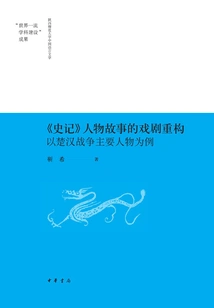
《史记》人物故事的戏剧重构:以楚汉战争主要人物为例
Jin Hope
This book selects five typical characters, Xiang Yu, Liu Bang, Xiao He, Zhang Liang, and Han Xin, who have been reconstructed many times in the dramas of the Yuan, Ming and Qing Dynasties, for research, and analyzes them from three aspects: the reasons for the reconstruction of the characters in the Chu-Han War, the reconstruction process of the characters in the Chu-Han War and its influencing factors, and the significance of the reconstruction of the dramas of the Yuan, Ming and Qing Dynasties to "Historical Records" and Chinese literature.
This book selects five typical characters, Xiang Yu, Liu Bang, Xiao He, Zhang Liang, and Han Xin, who have been reconstructed many times in the dramas of the Yuan, Ming and Qing Dynasties, for research, and analyzes them from three aspects: the reasons for the reconstruction of the characters in the Chu-Han War, the reconstruction process of the characters in the Chu-Han War and its influencing factors, and the significance of the reconstruction of the dramas of the Yuan, Ming and Qing Dynasties to "Historical Records" and Chinese literature.
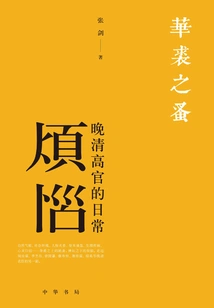
华裘之蚤:晚清高官的日常烦恼
Zhang Jian
This book is a popular and interesting historical booklet written by the author based on extensive research on historical materials of the late Qing Dynasty. It mainly describes the daily troubles of high-ranking officials in the late Qing Dynasty, including the natural climate, social environment, interpersonal relationships, daily necessities, physical diseases, and even spiritual destiny. It shows the other side of famous officials in the late Qing Dynasty such as He Rulin, Ji Zhichang, Zeng Guofan, Lu Chuanlin, and Shao Ying. Explains the profound things in a simple way and is very interesting.
This book is a popular and interesting historical booklet written by the author based on extensive research on historical materials of the late Qing Dynasty. It mainly describes the daily troubles of high-ranking officials in the late Qing Dynasty, including the natural climate, social environment, interpersonal relationships, daily necessities, physical diseases, and even spiritual destiny. It shows the other side of famous officials in the late Qing Dynasty such as He Rulin, Ji Zhichang, Zeng Guofan, Lu Chuanlin, and Shao Ying. Explains the profound things in a simple way and is very interesting.
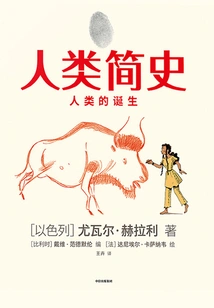
人类简史:人类的诞生(知识漫画)
(israel) Yuval Harari (belgium) David Van Der Meulen (france) Daniel Kasanave
"A Brief History of Humankind" is an intellectual comic adapted from the global bestseller "A Brief History of Humanity: From Animals to God". It was carefully created by author Professor Yuval Harari, together with the famous Belgian comic artist David van der Meulen and the famous French illustrator Danielle Casanave, which took two years. Ten years after the publication of "A Brief History of Humankind", Professor Yuval Harari once again looked back at human history in a new way using comic stories with new questions. This time Professor Harari enters the book and becomes a guide, traveling to real scenes in ancient history to observe how Homo sapiens survived as a humble animal in the beginning. Following Professor Yuval Harari on this wild journey of history, there are also a large group of comic characters - Neanderthals, primitive Bill, fictional doctors, mammoths, Detective Lopez, lawyer Adamski, etc. Why not join them for a ride on the wild train of history? The knowledge comic "A Brief History of Humanity" combines dramatic narrative, storyboard design and rich knowledge, with ingenious layout, exquisite painting style and strong sense of immersion in the scene. Recreate human evolution in the form of a real-life show, use contemporary art masterpieces to show the first encounter between Homo sapiens and Neanderthals, tell the story of the extinction of mammoths and saber-toothed tigers in the form of a detective movie, 6 early human species on card games, superheroes played by fictional doctors, etc., Allowing us to be immersed in the scene.
"A Brief History of Humankind" is an intellectual comic adapted from the global bestseller "A Brief History of Humanity: From Animals to God". It was carefully created by author Professor Yuval Harari, together with the famous Belgian comic artist David van der Meulen and the famous French illustrator Danielle Casanave, which took two years. Ten years after the publication of "A Brief History of Humankind", Professor Yuval Harari once again looked back at human history in a new way using comic stories with new questions. This time Professor Harari enters the book and becomes a guide, traveling to real scenes in ancient history to observe how Homo sapiens survived as a humble animal in the beginning. Following Professor Yuval Harari on this wild journey of history, there are also a large group of comic characters - Neanderthals, primitive Bill, fictional doctors, mammoths, Detective Lopez, lawyer Adamski, etc. Why not join them for a ride on the wild train of history? The knowledge comic "A Brief History of Humanity" combines dramatic narrative, storyboard design and rich knowledge, with ingenious layout, exquisite painting style and strong sense of immersion in the scene. Recreate human evolution in the form of a real-life show, use contemporary art masterpieces to show the first encounter between Homo sapiens and Neanderthals, tell the story of the extinction of mammoths and saber-toothed tigers in the form of a detective movie, 6 early human species on card games, superheroes played by fictional doctors, etc., Allowing us to be immersed in the scene.
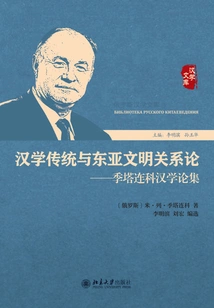
汉学传统与东亚文明关系论:季塔连科汉学论集
(russia) M. L. Titarenko
M. L. Titarenko, Doctor of Philosophy, academician of the Russian Academy of Sciences, meritorious scientific activist of the Russian Federation, director of the Far Eastern Institute of the Russian Academy of Sciences, and chairman of the Russia-China Friendship Association. He was born in 1934, graduated from the Philosophy Department of Moscow State University in 1956, and went to the Philosophy Department of Peking University for further study in 1957, where he studied under Feng Youlan. He is an expert on the history of Chinese philosophy, Chinese politics and practical issues, Russia and countries in the Asia-Pacific region, and Russia-China relations. He has written more than 200 books (articles), such as "China: Civilization and Reform", "The Tradition of Chinese Sociopolitics and Political Culture", "Peace, Security and Cooperation Issues in the Asia-Pacific and Far East Region", "Russia and East Asia: Issues in the Relationship between International and Civilizations", etc. This library includes abstracts of his works, which mainly translate and introduce his systematic views and articles on the influence of ancient Chinese philosophical tradition on contemporary Chinese culture.
M. L. Titarenko, Doctor of Philosophy, academician of the Russian Academy of Sciences, meritorious scientific activist of the Russian Federation, director of the Far Eastern Institute of the Russian Academy of Sciences, and chairman of the Russia-China Friendship Association. He was born in 1934, graduated from the Philosophy Department of Moscow State University in 1956, and went to the Philosophy Department of Peking University for further study in 1957, where he studied under Feng Youlan. He is an expert on the history of Chinese philosophy, Chinese politics and practical issues, Russia and countries in the Asia-Pacific region, and Russia-China relations. He has written more than 200 books (articles), such as "China: Civilization and Reform", "The Tradition of Chinese Sociopolitics and Political Culture", "Peace, Security and Cooperation Issues in the Asia-Pacific and Far East Region", "Russia and East Asia: Issues in the Relationship between International and Civilizations", etc. This library includes abstracts of his works, which mainly translate and introduce his systematic views and articles on the influence of ancient Chinese philosophical tradition on contemporary Chinese culture.
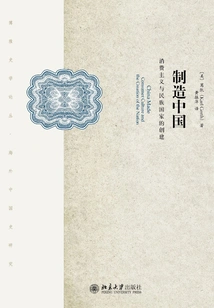
制造中国:消费文化与民族国家的创建
(us) Ge Kai
This book is part of the Harvard Press East Asian Studies Series. Starting from the huge impact of the influx of foreign consumer goods on traditional industries at the beginning of the 20th century, the author deeply analyzes the various phenomena and essence of the "domestic products movement" launched by all strata of society to solve the "foreign goods problem", thereby elucidating the historical reasons why two forces that had a major impact on the 20th century: consumerism and nationalism emerged in China in the form of successive promotions and were closely related. This book is a historical work that also involves economic and cultural research. It provides a novel perspective and idea for examining China's modern history and exploring the formation of China's modern nation-state. The specific discussion is clear and logical, and is accompanied by 50 related pictures. It has the rigor of an academic work and the clarity of a cultural research reader, making it suitable for a broad audience of readers. It was well received after being published by our publisher in 2007, and is being reprinted this time.
This book is part of the Harvard Press East Asian Studies Series. Starting from the huge impact of the influx of foreign consumer goods on traditional industries at the beginning of the 20th century, the author deeply analyzes the various phenomena and essence of the "domestic products movement" launched by all strata of society to solve the "foreign goods problem", thereby elucidating the historical reasons why two forces that had a major impact on the 20th century: consumerism and nationalism emerged in China in the form of successive promotions and were closely related. This book is a historical work that also involves economic and cultural research. It provides a novel perspective and idea for examining China's modern history and exploring the formation of China's modern nation-state. The specific discussion is clear and logical, and is accompanied by 50 related pictures. It has the rigor of an academic work and the clarity of a cultural research reader, making it suitable for a broad audience of readers. It was well received after being published by our publisher in 2007, and is being reprinted this time.
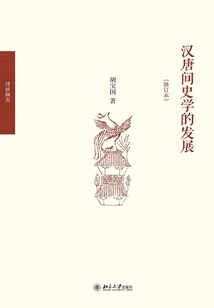
汉唐间史学的发展(修订本)
Hu Baoguo
This book does not comprehensively introduce the development of historiography during the Han and Tang Dynasties, but mainly discusses several issues closely related to the development of historiography, such as the relationship between historiography and Confucian classics, historiography and literature, historiography and regions, and social trends of thought, etc. In recent years, the author has realized that the study of the history of historiography cannot ignore the internal development logic of historiography. For this reprint, the author has added two articles in related fields. In addition, this book also particularly emphasizes the inconsistency in the time process between cultural history and dynastic political history. For example, the political end of the Warring States Period was in the Qin Dynasty, but the cultural end of the Warring States Period was in the Han Dynasty. The academic and cultural differences between the north and the south during the Northern and Southern Dynasties also existed until the early Tang Dynasty.
This book does not comprehensively introduce the development of historiography during the Han and Tang Dynasties, but mainly discusses several issues closely related to the development of historiography, such as the relationship between historiography and Confucian classics, historiography and literature, historiography and regions, and social trends of thought, etc. In recent years, the author has realized that the study of the history of historiography cannot ignore the internal development logic of historiography. For this reprint, the author has added two articles in related fields. In addition, this book also particularly emphasizes the inconsistency in the time process between cultural history and dynastic political history. For example, the political end of the Warring States Period was in the Qin Dynasty, but the cultural end of the Warring States Period was in the Han Dynasty. The academic and cultural differences between the north and the south during the Northern and Southern Dynasties also existed until the early Tang Dynasty.
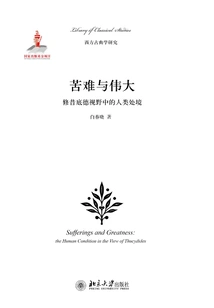
苦难与伟大:修昔底德视野中的人类处境
Bai Chunxiao
Through the analysis of the text of "The History of the Peloponnesian War", this book reveals that the ancient Greek historian's main criterion for judging greatness was suffering (Greek Pathos); it further interprets some of the most representative text fragments in Thucydides' narrative, and explores how the basic concept of "suffering and greatness" affects Thucydides' views on the historical situation of mankind and his writing.
Through the analysis of the text of "The History of the Peloponnesian War", this book reveals that the ancient Greek historian's main criterion for judging greatness was suffering (Greek Pathos); it further interprets some of the most representative text fragments in Thucydides' narrative, and explores how the basic concept of "suffering and greatness" affects Thucydides' views on the historical situation of mankind and his writing.
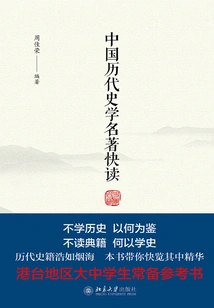
中国历代史学名著快读
Zhou Jiarong
Based on the six periods of Pre-Qin, Han, Wei, Jin, Southern and Northern Dynasties, Tang Dynasty, Song and Yuan, and Qing Dynasty, the book explains the important historical masterpieces of the past dynasties, including the "Four Histories", "Three Links" and historical reviews. In addition to describing the life of the compiler, the process of writing the book, the content and style, and historical evaluation, it also includes a variety of related classics, either as supplements or for comparison, in order to show the general appearance of ancient Chinese historiography in an orderly manner. The discussion content in this book strives to be as complex and concise as possible, while trying to refer to recent research results. Important items are illustrated with diagrams, and each chapter is annotated. Classic texts from historical books are also attached as reading materials. References are attached at the end of the book, which can serve as clues for readers to further read.
Based on the six periods of Pre-Qin, Han, Wei, Jin, Southern and Northern Dynasties, Tang Dynasty, Song and Yuan, and Qing Dynasty, the book explains the important historical masterpieces of the past dynasties, including the "Four Histories", "Three Links" and historical reviews. In addition to describing the life of the compiler, the process of writing the book, the content and style, and historical evaluation, it also includes a variety of related classics, either as supplements or for comparison, in order to show the general appearance of ancient Chinese historiography in an orderly manner. The discussion content in this book strives to be as complex and concise as possible, while trying to refer to recent research results. Important items are illustrated with diagrams, and each chapter is annotated. Classic texts from historical books are also attached as reading materials. References are attached at the end of the book, which can serve as clues for readers to further read.
二十世纪中国史学史论
Wang Xuedian Chen Feng
The 20th century is an extremely important period in the history of Chinese academics. It is a period of transformation from tradition to modernity. It is a period of mutual stimulation between Chinese and Western learning and unprecedented achievements. History, as the "explicit science" in Chinese academic circles, has undergone particularly dramatic changes. From the "new historical trend of thought" in the early 1990s to positivist historiography, Marxist historiography, and the New Chinese Studies in the 1990s, it can be described as one after another with twists and turns. Therefore, at the starting point of the new century, it is undoubtedly necessary to make an academic historical summary of the development of history in the past 100 years. At present, there have been some texts in the academic world that focus on introducing research achievements that reflect specific fields, specific departments, chronological periods, or special topics. However, there are still no collections that reflect and reflect the overall situation of historical research in the 20th century. It is always a pity that one misses the forest for the trees. This book just fills this gap. It contains 20th century macro-historical commentary articles by famous historians and famous scholars such as Qi Sihe, Zhou Yutong, Dai Yi, Yu Yingshi, Tang Degang, and Luo Zhitian. These articles either focus on the development process or highlight the awareness of issues, and systematically present the overview of the development of history over the past century. At the same time, they have extremely high historical value. Many of them are follow-up comments from the parties involved or those who experienced them. They are filled with the academic atmosphere of the time and are rare and true records.
The 20th century is an extremely important period in the history of Chinese academics. It is a period of transformation from tradition to modernity. It is a period of mutual stimulation between Chinese and Western learning and unprecedented achievements. History, as the "explicit science" in Chinese academic circles, has undergone particularly dramatic changes. From the "new historical trend of thought" in the early 1990s to positivist historiography, Marxist historiography, and the New Chinese Studies in the 1990s, it can be described as one after another with twists and turns. Therefore, at the starting point of the new century, it is undoubtedly necessary to make an academic historical summary of the development of history in the past 100 years. At present, there have been some texts in the academic world that focus on introducing research achievements that reflect specific fields, specific departments, chronological periods, or special topics. However, there are still no collections that reflect and reflect the overall situation of historical research in the 20th century. It is always a pity that one misses the forest for the trees. This book just fills this gap. It contains 20th century macro-historical commentary articles by famous historians and famous scholars such as Qi Sihe, Zhou Yutong, Dai Yi, Yu Yingshi, Tang Degang, and Luo Zhitian. These articles either focus on the development process or highlight the awareness of issues, and systematically present the overview of the development of history over the past century. At the same time, they have extremely high historical value. Many of them are follow-up comments from the parties involved or those who experienced them. They are filled with the academic atmosphere of the time and are rare and true records.
华夏边缘:历史记忆与族群认同
Wang Mingke
"The Edge of China" is a blockbuster study by the famous scholar Wang Mingke that discusses the ethnic identity and historical development of the Chinese nation. It provides a new way to answer "What is Chinese?" Wang Mingke believes that "when we draw a circle on a piece of paper, it is actually its 'edge' that makes it look like a circle." He regards "China" as the human ecology in long-term history, and the "edge of China" is not only an edge in time and geography, but also an edge in identity. In the specific resource competition and environmental allocation, in the collective memory shaping and amnesia selection, the formation, change, and maintenance of the Chinese edge can also explain the formation and change of the Chinese ethnic group and identity. "The Edge of China" is a classic work with theoretical paradigm significance and has been popular for many years. The first part of the book mainly states the theoretical framework and analytical methods of the book; the second part uses archaeological materials to explain the human ecological background of the formation of the boundaries of the Chinese ethnic groups; the third part elaborates on the important formation basis of the Chinese ethnic groups, that is, the origin legends and historical records of the Zhou people, and Through examples such as Jing Chu and Wu, it illustrates the back-and-forth between Chineseization and de-Chineseization of marginalized ethnic groups; the fourth part focuses on the re-creation of the Chinese edge in modern times, and analyzes the tension between individuals, ethnic groups and society in the process of identity establishment through microscopic examples from the ethnic survey process in the 1940s. Wang Mingke used theories and materials from various disciplines such as social anthropology theory, archaeological excavation reports, historical documents and historical materials, combined with his personal fieldwork experience among the Qiang people, to deeply explore the relationship between the resource environment and the marginality of ethnic groups, the mutual growth of historical memory and ethnic identity, the difference between individual and collective memory and identity, etc., In order to provide more reflection and new knowledge on the current national and ethnic identity issues.
"The Edge of China" is a blockbuster study by the famous scholar Wang Mingke that discusses the ethnic identity and historical development of the Chinese nation. It provides a new way to answer "What is Chinese?" Wang Mingke believes that "when we draw a circle on a piece of paper, it is actually its 'edge' that makes it look like a circle." He regards "China" as the human ecology in long-term history, and the "edge of China" is not only an edge in time and geography, but also an edge in identity. In the specific resource competition and environmental allocation, in the collective memory shaping and amnesia selection, the formation, change, and maintenance of the Chinese edge can also explain the formation and change of the Chinese ethnic group and identity. "The Edge of China" is a classic work with theoretical paradigm significance and has been popular for many years. The first part of the book mainly states the theoretical framework and analytical methods of the book; the second part uses archaeological materials to explain the human ecological background of the formation of the boundaries of the Chinese ethnic groups; the third part elaborates on the important formation basis of the Chinese ethnic groups, that is, the origin legends and historical records of the Zhou people, and Through examples such as Jing Chu and Wu, it illustrates the back-and-forth between Chineseization and de-Chineseization of marginalized ethnic groups; the fourth part focuses on the re-creation of the Chinese edge in modern times, and analyzes the tension between individuals, ethnic groups and society in the process of identity establishment through microscopic examples from the ethnic survey process in the 1940s. Wang Mingke used theories and materials from various disciplines such as social anthropology theory, archaeological excavation reports, historical documents and historical materials, combined with his personal fieldwork experience among the Qiang people, to deeply explore the relationship between the resource environment and the marginality of ethnic groups, the mutual growth of historical memory and ethnic identity, the difference between individual and collective memory and identity, etc., In order to provide more reflection and new knowledge on the current national and ethnic identity issues.
记忆中的历史:从个人经历到公共演示
(germany) Jan & Aleida Assmanns
The focus of this book is more ethnographic. In addition to personal historical experiences in generations, families, and city images, the research objects also include public historical debates, especially in 2006 and 2007, and a wide variety of commodities in the booming historical market.
The focus of this book is more ethnographic. In addition to personal historical experiences in generations, families, and city images, the research objects also include public historical debates, especially in 2006 and 2007, and a wide variety of commodities in the booming historical market.
史学之史 倚京探津:廊坊师范学院史学史研究与教学论集
Editor-in-chief Shi Peilei
The title of the book "The History of Historiography relies on Beijing and Tianjin: A collection of historical research and teaching of Langfang Normal University's history" is drafted as "The History of Historiography relies on Beijing and Tianjin", and a subtitle is added to clarify the background. "The history of historiography" is the history of historiography, and its literal meaning has rich connotations. In short, the history of history is vertically separated from the overall history, and has a relatively independent and systematic special history, which can be summarized and reviewed above history, and becomes the knowledge basis for historical theoretical research. The original meaning of the word "" is a high hill or a tall building. "Yijing" can be directly interpreted as leaning on a tall place; the word "jin" means a ferry, which is extended to a breakthrough for exploring new knowledge and exploring new territories. "Exploring Jin" means seeking the way forward and seeking academic growth. Of course, Beijing and Tianjin are obviously the abbreviations of Beijing and Tianjin. The two meanings combined together vividly show the academic situation of the history major of Langfang Normal University, which is that it is not far from the academic centers of history in Beijing and Tianjin. This is one of the superior conditions for the foundation and construction of the history major of our school. In the future, with the support of leading departments at all levels, it is necessary to contact more regions and more units to learn from experience and promote cooperation. The purpose of "taking advantage of" the academic center is to shine brightly as soon as possible and become another highlight of this major.
The title of the book "The History of Historiography relies on Beijing and Tianjin: A collection of historical research and teaching of Langfang Normal University's history" is drafted as "The History of Historiography relies on Beijing and Tianjin", and a subtitle is added to clarify the background. "The history of historiography" is the history of historiography, and its literal meaning has rich connotations. In short, the history of history is vertically separated from the overall history, and has a relatively independent and systematic special history, which can be summarized and reviewed above history, and becomes the knowledge basis for historical theoretical research. The original meaning of the word "" is a high hill or a tall building. "Yijing" can be directly interpreted as leaning on a tall place; the word "jin" means a ferry, which is extended to a breakthrough for exploring new knowledge and exploring new territories. "Exploring Jin" means seeking the way forward and seeking academic growth. Of course, Beijing and Tianjin are obviously the abbreviations of Beijing and Tianjin. The two meanings combined together vividly show the academic situation of the history major of Langfang Normal University, which is that it is not far from the academic centers of history in Beijing and Tianjin. This is one of the superior conditions for the foundation and construction of the history major of our school. In the future, with the support of leading departments at all levels, it is necessary to contact more regions and more units to learn from experience and promote cooperation. The purpose of "taking advantage of" the academic center is to shine brightly as soon as possible and become another highlight of this major.
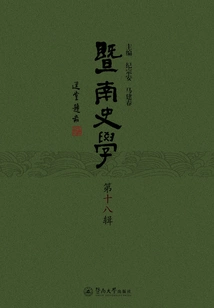
暨南史学(第十八辑)
Ji Zongan Ma Jianchun
This book contains 18 articles, covering politics, economy, culture, foreign exchanges and other aspects from the Qin to the Qing Dynasty and modern times. It includes special research on the "Guanpu" activities in the Song and Yuan Dynasties, the works of Chaozhou literati in the Ming Dynasty, and the gentry class in modern Hunan. It also has historical research and research on the thirteen-line Panzhai sale contract in the archives of Cambridge University. The book is rich in literature and materials, has a broad academic vision, and has a high academic standard.
This book contains 18 articles, covering politics, economy, culture, foreign exchanges and other aspects from the Qin to the Qing Dynasty and modern times. It includes special research on the "Guanpu" activities in the Song and Yuan Dynasties, the works of Chaozhou literati in the Ming Dynasty, and the gentry class in modern Hunan. It also has historical research and research on the thirteen-line Panzhai sale contract in the archives of Cambridge University. The book is rich in literature and materials, has a broad academic vision, and has a high academic standard.
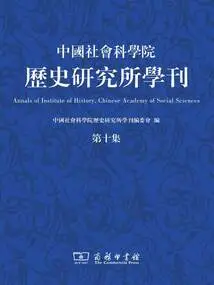
中国社会科学院历史研究所学刊(第十集)
Editorial Board Of The Journal Of The Institute Of History, Chinese Academy Of Social Sciences
"Journal of the Institute of History, Chinese Academy of Social Sciences" is an academic journal of the Institute of History, Chinese Academy of Social Sciences. The papers collected are all the research results of researchers from the Institute of History, Chinese Academy of Social Sciences. They are a concentrated reflection of the research level of the researchers of the Institute of History and have outstanding academic significance. This collection includes "Land Ownership and Community in Ancient China", "A Study of Embroidery in the Pre-Qin and Han Dynasties", "A Study of Han Fei's "Cunhan" Deeds", "Study on Qin Dongmen", "Vegetable Records of the Han Dynasty", "Royal Power and Sangha Power in the Jin and Song Dynasties - Centered on the Controversy of Shamans Who Disrespect the King", "Sun Chuo's Theory of Confucianism and Buddhism", "Dunhuang Documents "Zhang Huai Shen Stele" and its back. "Re-editing and Supplementary Notes on Poems", "A Compilation and Research of Translations and Translations of Zhongshu Province in the Tang Dynasty", "Tracing the Origin of Medieval Mourning Ceremonies", "Also Talking about the Alliance of Chanyuan", "Translation and Annotation of the Sea Route Part of "Marco Polo's Travels" (1)", "Preliminary Research on the "Map of Zhejiang" in the Collection of the Library of Congress", "A Study of Kongtong Mountain, a Taoist Holy Land", 14 academic papers, covering various fields of ancient Chinese history research.
"Journal of the Institute of History, Chinese Academy of Social Sciences" is an academic journal of the Institute of History, Chinese Academy of Social Sciences. The papers collected are all the research results of researchers from the Institute of History, Chinese Academy of Social Sciences. They are a concentrated reflection of the research level of the researchers of the Institute of History and have outstanding academic significance. This collection includes "Land Ownership and Community in Ancient China", "A Study of Embroidery in the Pre-Qin and Han Dynasties", "A Study of Han Fei's "Cunhan" Deeds", "Study on Qin Dongmen", "Vegetable Records of the Han Dynasty", "Royal Power and Sangha Power in the Jin and Song Dynasties - Centered on the Controversy of Shamans Who Disrespect the King", "Sun Chuo's Theory of Confucianism and Buddhism", "Dunhuang Documents "Zhang Huai Shen Stele" and its back. "Re-editing and Supplementary Notes on Poems", "A Compilation and Research of Translations and Translations of Zhongshu Province in the Tang Dynasty", "Tracing the Origin of Medieval Mourning Ceremonies", "Also Talking about the Alliance of Chanyuan", "Translation and Annotation of the Sea Route Part of "Marco Polo's Travels" (1)", "Preliminary Research on the "Map of Zhejiang" in the Collection of the Library of Congress", "A Study of Kongtong Mountain, a Taoist Holy Land", 14 academic papers, covering various fields of ancient Chinese history research.
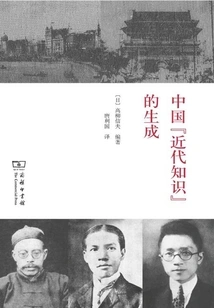
中国近代知识的生成
(japan) Nobuo Takayanagi
This book is a collection of the results of the 2005-2006 research project of the Institute of Oriental Culture at Gakushuin University in Japan, "The Understanding of 'China' by Modern Chinese Intellectuals." This book is different from the study of new methodologies in the history of modern Chinese thought, but is dedicated to the basic research of each text. The main content analyzes the status of the academic research of Zhu Guangqian, Gu Hongming, Hu Shi, Liang Qichao, Song Pingzi, Zhao Zhengping, Zhang Junmai and others in the development of modern Chinese intellectual history, as well as their need to both adapt to and change the environment in a given environment, and their contribution and influence on the ideological trends of modern Chinese society under the influence of multiple gravity.
This book is a collection of the results of the 2005-2006 research project of the Institute of Oriental Culture at Gakushuin University in Japan, "The Understanding of 'China' by Modern Chinese Intellectuals." This book is different from the study of new methodologies in the history of modern Chinese thought, but is dedicated to the basic research of each text. The main content analyzes the status of the academic research of Zhu Guangqian, Gu Hongming, Hu Shi, Liang Qichao, Song Pingzi, Zhao Zhengping, Zhang Junmai and others in the development of modern Chinese intellectual history, as well as their need to both adapt to and change the environment in a given environment, and their contribution and influence on the ideological trends of modern Chinese society under the influence of multiple gravity.
章太炎、刘师培、梁启超清学史著述之研究
Li Fan
During the Qing Dynasty and the Republic of China, Chinese scholars faced the opportunity of academic evolution and attached great importance to summarizing the scholarship of the Qing Dynasty, thus making academic history, especially the history of Qing studies, a prominent study. Among the scholars who studied the history of Qing studies at that time, Zhang Taiyan, Liu Shipei, and Liang Qichao were the most outstanding representatives, setting a model in this field. Their opinions, such as their views on the origin and development stage of Qing studies, their views on the divisions of textual criticism schools, the common orientation of praising Anhui and suppressing Wu, emphasizing the "scientific" nature of textual criticism, and regarding Dai Zhen as an "anti-Confucian thinker", etc., All had a great impact on later generations and standardized the relevant research of later generations. The writing of this book is based on these factors. While systematically exploring the historical writings of Qing studies by Zhang, Qi, and Liang as a whole, it is supplemented by case studies.
During the Qing Dynasty and the Republic of China, Chinese scholars faced the opportunity of academic evolution and attached great importance to summarizing the scholarship of the Qing Dynasty, thus making academic history, especially the history of Qing studies, a prominent study. Among the scholars who studied the history of Qing studies at that time, Zhang Taiyan, Liu Shipei, and Liang Qichao were the most outstanding representatives, setting a model in this field. Their opinions, such as their views on the origin and development stage of Qing studies, their views on the divisions of textual criticism schools, the common orientation of praising Anhui and suppressing Wu, emphasizing the "scientific" nature of textual criticism, and regarding Dai Zhen as an "anti-Confucian thinker", etc., All had a great impact on later generations and standardized the relevant research of later generations. The writing of this book is based on these factors. While systematically exploring the historical writings of Qing studies by Zhang, Qi, and Liang as a whole, it is supplemented by case studies.
历史编纂与民族精神
Chen Qitai
Mr. Chen Qitai was taught by Mr. Liu Jie, a disciple of Chen Yinke, and Mr. Bai Shouyi, a master historian. He mainly worked in the fields of pre-Qin and Han history, Qing Dynasty and modern academic history, and 20th century Chinese history. "Chen Qitai Historiography" is the culmination of more than thirty years of diligent scholarship. "Chen Qitai's Collection of Historiography" has a total of nine volumes and about 3 million words, including "Meditations on Academic History", "History and Chinese Cultural Tradition", "History Compilation and National Spirit", "History and National Spirit", "General Theory of Gongyang Studies in the Spring and Autumn Period of Qing Dynasty", "The Course of Modern Chinese Historiography", "Rebuilding the Monument - Ban Gu and "Hanshu"", "Critical Biography of Liang Qichao" and "Critical Biography of Fan Wenlan's Academic Thoughts". The whole book has important academic value, and contains many insights and major innovations. "Collection of Chen Qitai's Historiography" is a response to the needs of the times. Mr. Chen Qitai's works increase our understanding of the rich connotations of China's excellent cultural traditions by more accurately evaluating the achievements of outstanding historians and historical works, and help us gain a deeper understanding of the centripetal force, cohesion and great creativity of Chinese culture. Mr. Chen Qitai is full of enthusiasm, and his pure heart for the nation and country can be seen in every line. This kind of family and country sentiment is the legacy of the traditional Chinese spirit of outstanding scholars.
Mr. Chen Qitai was taught by Mr. Liu Jie, a disciple of Chen Yinke, and Mr. Bai Shouyi, a master historian. He mainly worked in the fields of pre-Qin and Han history, Qing Dynasty and modern academic history, and 20th century Chinese history. "Chen Qitai Historiography" is the culmination of more than thirty years of diligent scholarship. "Chen Qitai's Collection of Historiography" has a total of nine volumes and about 3 million words, including "Meditations on Academic History", "History and Chinese Cultural Tradition", "History Compilation and National Spirit", "History and National Spirit", "General Theory of Gongyang Studies in the Spring and Autumn Period of Qing Dynasty", "The Course of Modern Chinese Historiography", "Rebuilding the Monument - Ban Gu and "Hanshu"", "Critical Biography of Liang Qichao" and "Critical Biography of Fan Wenlan's Academic Thoughts". The whole book has important academic value, and contains many insights and major innovations. "Collection of Chen Qitai's Historiography" is a response to the needs of the times. Mr. Chen Qitai's works increase our understanding of the rich connotations of China's excellent cultural traditions by more accurately evaluating the achievements of outstanding historians and historical works, and help us gain a deeper understanding of the centripetal force, cohesion and great creativity of Chinese culture. Mr. Chen Qitai is full of enthusiasm, and his pure heart for the nation and country can be seen in every line. This kind of family and country sentiment is the legacy of the traditional Chinese spirit of outstanding scholars.
学术史沉思录
Chen Qitai
Mr. Chen Qitai was taught by Mr. Liu Jie, a disciple of Chen Yinke, and Mr. Bai Shouyi, a master historian. He mainly worked in the fields of pre-Qin and Han history, Qing Dynasty and modern academic history, and 20th century Chinese history. "Chen Qitai Historiography" is the culmination of more than thirty years of diligent scholarship. "Chen Qitai's Collection of Historiography" has a total of nine volumes and about 3 million words, including "Meditations on Academic History", "History and Chinese Cultural Tradition", "History Compilation and National Spirit", "History and National Spirit", "General Theory of Gongyang Studies in the Spring and Autumn Period of Qing Dynasty", "The Course of Modern Chinese Historiography", "Rebuilding the Monument - Ban Gu and Hanshu", "Critical Biography of Liang Qichao" and "Critical Biography of Fan Wenlan's Academic Thoughts". The whole book has important academic value, and contains many insights and major innovations. "Collection of Chen Qitai's Historiography" is a response to the needs of the times. Mr. Chen Qitai's works increase our understanding of the rich connotations of China's excellent cultural traditions by more accurately evaluating the achievements of outstanding historians and historical works, and help us gain a deeper understanding of the centripetal force, cohesion and great creativity of Chinese culture. Mr. Chen Qitai is full of enthusiasm, and his pure heart for the nation and country can be seen in every line. This kind of family and country sentiment is the legacy of the traditional Chinese spirit of outstanding scholars.
Mr. Chen Qitai was taught by Mr. Liu Jie, a disciple of Chen Yinke, and Mr. Bai Shouyi, a master historian. He mainly worked in the fields of pre-Qin and Han history, Qing Dynasty and modern academic history, and 20th century Chinese history. "Chen Qitai Historiography" is the culmination of more than thirty years of diligent scholarship. "Chen Qitai's Collection of Historiography" has a total of nine volumes and about 3 million words, including "Meditations on Academic History", "History and Chinese Cultural Tradition", "History Compilation and National Spirit", "History and National Spirit", "General Theory of Gongyang Studies in the Spring and Autumn Period of Qing Dynasty", "The Course of Modern Chinese Historiography", "Rebuilding the Monument - Ban Gu and Hanshu", "Critical Biography of Liang Qichao" and "Critical Biography of Fan Wenlan's Academic Thoughts". The whole book has important academic value, and contains many insights and major innovations. "Collection of Chen Qitai's Historiography" is a response to the needs of the times. Mr. Chen Qitai's works increase our understanding of the rich connotations of China's excellent cultural traditions by more accurately evaluating the achievements of outstanding historians and historical works, and help us gain a deeper understanding of the centripetal force, cohesion and great creativity of Chinese culture. Mr. Chen Qitai is full of enthusiasm, and his pure heart for the nation and country can be seen in every line. This kind of family and country sentiment is the legacy of the traditional Chinese spirit of outstanding scholars.
History and National Spirit
History史学与民族精神
Chen Qitai
Mr. Chen Qitai was taught by Mr. Liu Jie, a disciple of Chen Yinke, and Mr. Bai Shouyi, a master historian. He mainly worked in the fields of pre-Qin and Han history, Qing Dynasty and modern academic history, and 20th century Chinese history. "Chen Qitai Historiography" is the culmination of more than thirty years of diligent scholarship. "Chen Qitai's Collection of Historiography" has a total of nine volumes and about 3 million words, including "Meditations on Academic History", "History and Chinese Cultural Tradition", "History Compilation and National Spirit", "History and National Spirit", "General Theory of Gongyang Studies in the Spring and Autumn Period of Qing Dynasty", "The Course of Modern Chinese Historiography", "Rebuilding the Monument - Ban Gu and "Hanshu"", "Critical Biography of Liang Qichao" and "Critical Biography of Fan Wenlan's Academic Thoughts". The whole book has important academic value, and contains many insights and major innovations. "Collection of Chen Qitai's Historiography" is a response to the needs of the times. Mr. Chen Qitai's works increase our understanding of the rich connotations of China's excellent cultural traditions by more accurately evaluating the achievements of outstanding historians and historical works, and help us gain a deeper understanding of the centripetal force, cohesion and great creativity of Chinese culture. Mr. Chen Qitai is full of enthusiasm, and his pure heart for the nation and country can be seen in every line. This kind of family and country sentiment is the legacy of the traditional Chinese spirit of outstanding scholars.
Mr. Chen Qitai was taught by Mr. Liu Jie, a disciple of Chen Yinke, and Mr. Bai Shouyi, a master historian. He mainly worked in the fields of pre-Qin and Han history, Qing Dynasty and modern academic history, and 20th century Chinese history. "Chen Qitai Historiography" is the culmination of more than thirty years of diligent scholarship. "Chen Qitai's Collection of Historiography" has a total of nine volumes and about 3 million words, including "Meditations on Academic History", "History and Chinese Cultural Tradition", "History Compilation and National Spirit", "History and National Spirit", "General Theory of Gongyang Studies in the Spring and Autumn Period of Qing Dynasty", "The Course of Modern Chinese Historiography", "Rebuilding the Monument - Ban Gu and "Hanshu"", "Critical Biography of Liang Qichao" and "Critical Biography of Fan Wenlan's Academic Thoughts". The whole book has important academic value, and contains many insights and major innovations. "Collection of Chen Qitai's Historiography" is a response to the needs of the times. Mr. Chen Qitai's works increase our understanding of the rich connotations of China's excellent cultural traditions by more accurately evaluating the achievements of outstanding historians and historical works, and help us gain a deeper understanding of the centripetal force, cohesion and great creativity of Chinese culture. Mr. Chen Qitai is full of enthusiasm, and his pure heart for the nation and country can be seen in every line. This kind of family and country sentiment is the legacy of the traditional Chinese spirit of outstanding scholars.
史学与中国文化传统
Chen Qitai
Mr. Chen Qitai was taught by Mr. Liu Jie, a disciple of Chen Yinke, and Mr. Bai Shouyi, a master historian. He mainly worked in the fields of pre-Qin and Han history, Qing Dynasty and modern academic history, and 20th century Chinese history. "Chen Qitai Historiography" is the culmination of more than thirty years of diligent scholarship. "Chen Qitai's Collection of Historiography" has a total of nine volumes and about 3 million words, including "Meditations on Academic History", "History and Chinese Cultural Tradition", "History Compilation and National Spirit", "History and National Spirit", "General Theory of Gongyang Studies in the Spring and Autumn Period of Qing Dynasty", "The Course of Modern Chinese Historiography", "Rebuilding the Monument - Ban Gu and "Hanshu"", "Critical Biography of Liang Qichao" and "Critical Biography of Fan Wenlan's Academic Thoughts". The whole book has important academic value, and contains many insights and major innovations. "Collection of Chen Qitai's Historiography" is a response to the needs of the times. Mr. Chen Qitai's works increase our understanding of the rich connotations of China's excellent cultural traditions by more accurately evaluating the achievements of outstanding historians and historical works, and help us gain a deeper understanding of the centripetal force, cohesion and great creativity of Chinese culture. Mr. Chen Qitai is full of enthusiasm, and his pure heart for the nation and country can be seen in every line. This kind of family and country sentiment is the legacy of the traditional Chinese spirit of outstanding scholars.
Mr. Chen Qitai was taught by Mr. Liu Jie, a disciple of Chen Yinke, and Mr. Bai Shouyi, a master historian. He mainly worked in the fields of pre-Qin and Han history, Qing Dynasty and modern academic history, and 20th century Chinese history. "Chen Qitai Historiography" is the culmination of more than thirty years of diligent scholarship. "Chen Qitai's Collection of Historiography" has a total of nine volumes and about 3 million words, including "Meditations on Academic History", "History and Chinese Cultural Tradition", "History Compilation and National Spirit", "History and National Spirit", "General Theory of Gongyang Studies in the Spring and Autumn Period of Qing Dynasty", "The Course of Modern Chinese Historiography", "Rebuilding the Monument - Ban Gu and "Hanshu"", "Critical Biography of Liang Qichao" and "Critical Biography of Fan Wenlan's Academic Thoughts". The whole book has important academic value, and contains many insights and major innovations. "Collection of Chen Qitai's Historiography" is a response to the needs of the times. Mr. Chen Qitai's works increase our understanding of the rich connotations of China's excellent cultural traditions by more accurately evaluating the achievements of outstanding historians and historical works, and help us gain a deeper understanding of the centripetal force, cohesion and great creativity of Chinese culture. Mr. Chen Qitai is full of enthusiasm, and his pure heart for the nation and country can be seen in every line. This kind of family and country sentiment is the legacy of the traditional Chinese spirit of outstanding scholars.
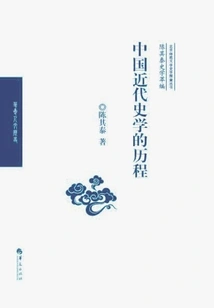
中国近代史学的历程
Chen Qitai
Mr. Chen Qitai was taught by Mr. Liu Jie, a disciple of Chen Yinke, and Mr. Bai Shouyi, a master historian. He mainly worked in the fields of pre-Qin and Han history, Qing Dynasty and modern academic history, and 20th century Chinese history. "Chen Qitai Historiography" is the culmination of more than thirty years of diligent scholarship. "Chen Qitai's Collection of Historiography" has a total of nine volumes and about 3 million words, including "Meditations on Academic History", "History and Chinese Cultural Tradition", "History Compilation and National Spirit", "History and National Spirit", "General Theory of Gongyang Studies in the Spring and Autumn Period of Qing Dynasty", "The Course of Modern Chinese Historiography", "Rebuilding the Monument - Ban Gu and Hanshu", "Critical Biography of Liang Qichao" and "Critical Biography of Fan Wenlan's Academic Thoughts". The whole book has important academic value, and contains many insights and major innovations. "Collection of Chen Qitai's Historiography" is a response to the needs of the times. Mr. Chen Qitai's works increase our understanding of the rich connotations of China's excellent cultural traditions by more accurately evaluating the achievements of outstanding historians and historical works, and help us gain a deeper understanding of the centripetal force, cohesion and great creativity of Chinese culture. Mr. Chen Qitai is full of enthusiasm, and his pure heart for the nation and country can be seen in every line. This kind of family and country sentiment is the legacy of the traditional Chinese spirit of outstanding scholars.
Mr. Chen Qitai was taught by Mr. Liu Jie, a disciple of Chen Yinke, and Mr. Bai Shouyi, a master historian. He mainly worked in the fields of pre-Qin and Han history, Qing Dynasty and modern academic history, and 20th century Chinese history. "Chen Qitai Historiography" is the culmination of more than thirty years of diligent scholarship. "Chen Qitai's Collection of Historiography" has a total of nine volumes and about 3 million words, including "Meditations on Academic History", "History and Chinese Cultural Tradition", "History Compilation and National Spirit", "History and National Spirit", "General Theory of Gongyang Studies in the Spring and Autumn Period of Qing Dynasty", "The Course of Modern Chinese Historiography", "Rebuilding the Monument - Ban Gu and Hanshu", "Critical Biography of Liang Qichao" and "Critical Biography of Fan Wenlan's Academic Thoughts". The whole book has important academic value, and contains many insights and major innovations. "Collection of Chen Qitai's Historiography" is a response to the needs of the times. Mr. Chen Qitai's works increase our understanding of the rich connotations of China's excellent cultural traditions by more accurately evaluating the achievements of outstanding historians and historical works, and help us gain a deeper understanding of the centripetal force, cohesion and great creativity of Chinese culture. Mr. Chen Qitai is full of enthusiasm, and his pure heart for the nation and country can be seen in every line. This kind of family and country sentiment is the legacy of the traditional Chinese spirit of outstanding scholars.
史潮与学风(天下文丛)
Li Bozhong
A scholar's research cannot be separated from the era in which he lives. The influence of the times on scholars' scholarship mainly reflects two aspects: one is academic trends, and the other is academic atmosphere. This book is titled "Historical Trends and Academic Styles" not only because they are the main elements of the academic environment, but also because they are of special significance in today's China. The author selected 18 relevant articles, speeches and interviews published in the past ten years to form this collection, which is divided into two parts: "Historical Trends" and "Study Style". Each part has three groups of articles, each discussing a topic; the "Study Style Part" has an appendix on what kind of talents universities should cultivate. When these articles were published together, only a few changes were made. I hope readers will adopt the attitude of "each takes what he needs" and get something useful for him/her. If it can help readers in their scholarship (especially history), then the purpose of this book will be achieved.
A scholar's research cannot be separated from the era in which he lives. The influence of the times on scholars' scholarship mainly reflects two aspects: one is academic trends, and the other is academic atmosphere. This book is titled "Historical Trends and Academic Styles" not only because they are the main elements of the academic environment, but also because they are of special significance in today's China. The author selected 18 relevant articles, speeches and interviews published in the past ten years to form this collection, which is divided into two parts: "Historical Trends" and "Study Style". Each part has three groups of articles, each discussing a topic; the "Study Style Part" has an appendix on what kind of talents universities should cultivate. When these articles were published together, only a few changes were made. I hope readers will adopt the attitude of "each takes what he needs" and get something useful for him/her. If it can help readers in their scholarship (especially history), then the purpose of this book will be achieved.
当代美国史学研究
Xu Xiaohu
This book examines contemporary American historiography from the post-World War II period to the end of the 20th century against the social background on which it relies. Taking various problems encountered in the development of contemporary American historiography and the countermeasures proposed by American historians as the theme, it analyzes them from three aspects: history, historians, and historical organizations. Carefully studying the problems encountered by American historiography after the war and the countermeasures proposed by "authoritative" figures in American historiography have important academic value and reference significance for understanding the evolution of contemporary American historiography and promoting the development of our country's historiography.
This book examines contemporary American historiography from the post-World War II period to the end of the 20th century against the social background on which it relies. Taking various problems encountered in the development of contemporary American historiography and the countermeasures proposed by American historians as the theme, it analyzes them from three aspects: history, historians, and historical organizations. Carefully studying the problems encountered by American historiography after the war and the countermeasures proposed by "authoritative" figures in American historiography have important academic value and reference significance for understanding the evolution of contemporary American historiography and promoting the development of our country's historiography.
司马迁与《史记》研究年鉴
Ding Deke Ling Chaodong Dang Dayen
The compilation of "Sima Qian and "Historical Records" Research Yearbook" began at the end of 2004. After the 2004 volume of "Annals" was published in August 2005, it received unanimous praise from the historical records research community. After that, one volume was published every year to sort out and summarize the results of the previous year's "Historical Records" research. The 2013 volume of the "Yearbook" basically maintains the column framework and editing style of the previous volumes, and makes additions and innovations on this basis. The proportion of original content has been increased, and researchers have been organized to write chapters such as a review of Sima Qian's research, a review of historical records, and a review of research on "Huozhi Biography" in the past ten years. It has also added introductions to academic conferences over the years, a catalog index of research works from 1949 to 2004, and added an addendum to the catalog of papers from 1994 to 2013. The book contains 300,000 words in 16 pages, integrating tools, information and knowledge. It is divided into seven parts: research review, archaeological discovery and research, edition compilation and research, abstracts of works and papers, academic organizations and experts, and index of papers and works.
The compilation of "Sima Qian and "Historical Records" Research Yearbook" began at the end of 2004. After the 2004 volume of "Annals" was published in August 2005, it received unanimous praise from the historical records research community. After that, one volume was published every year to sort out and summarize the results of the previous year's "Historical Records" research. The 2013 volume of the "Yearbook" basically maintains the column framework and editing style of the previous volumes, and makes additions and innovations on this basis. The proportion of original content has been increased, and researchers have been organized to write chapters such as a review of Sima Qian's research, a review of historical records, and a review of research on "Huozhi Biography" in the past ten years. It has also added introductions to academic conferences over the years, a catalog index of research works from 1949 to 2004, and added an addendum to the catalog of papers from 1994 to 2013. The book contains 300,000 words in 16 pages, integrating tools, information and knowledge. It is divided into seven parts: research review, archaeological discovery and research, edition compilation and research, abstracts of works and papers, academic organizations and experts, and index of papers and works.
西方儿童史(下卷)
(italian) Aigler Becci (french) Dominique Giulia
"History of Western Children" is a treatise with the theme of children's research. It is divided into two volumes in chronological order. The first volume starts from ancient times to the 17th century, and the second volume starts from the 18th century to the present. On the one hand, the book forms a complete framework of children's history from the perspective of society's different definitions and treatment of children in different periods, changes in age divisions, social roles of children of different genders or different ages, children's etiquette, family environment, learning plans, activity venues, etc.; On the other hand, in the form of a detailed and well-argued thematic history, the book studies issues such as modern abandoned children, migrant children, and disabled children, deepening thinking on important themes in Western children's history.
"History of Western Children" is a treatise with the theme of children's research. It is divided into two volumes in chronological order. The first volume starts from ancient times to the 17th century, and the second volume starts from the 18th century to the present. On the one hand, the book forms a complete framework of children's history from the perspective of society's different definitions and treatment of children in different periods, changes in age divisions, social roles of children of different genders or different ages, children's etiquette, family environment, learning plans, activity venues, etc.; On the other hand, in the form of a detailed and well-argued thematic history, the book studies issues such as modern abandoned children, migrant children, and disabled children, deepening thinking on important themes in Western children's history.