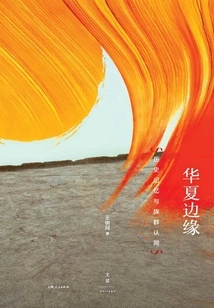
The Edge of China: Historical Memory and Ethnic Identity
by Wang Mingke
About This Novel
"The Edge of China" is a blockbuster study by the famous scholar Wang Mingke that discusses the ethnic identity and historical development of the Chinese nation. It provides a new way to answer "What is Chinese?" Wang Mingke believes that "when we draw a circle on a piece of paper, it is actually its 'edge' that makes it look like a circle." He regards "China" as the human ecology in long-term history, and the "edge of China" is not only an edge in time and geography, but also an edge in identity. In the specific resource competition and environmental allocation, in the collective memory shaping and amnesia selection, the formation, change, and maintenance of the Chinese edge can also explain the formation and change of the Chinese ethnic group and identity. "The Edge of China" is a classic work with theoretical paradigm significance and has been popular for many years. The first part of the book mainly states the theoretical framework and analytical methods of the book; the second part uses archaeological materials to explain the human ecological background of the formation of the boundaries of the Chinese ethnic groups; the third part elaborates on the important formation basis of the Chinese ethnic groups, that is, the origin legends and historical records of the Zhou people, and Through examples such as Jing Chu and Wu, it illustrates the back-and-forth between Chineseization and de-Chineseization of marginalized ethnic groups; the fourth part focuses on the re-creation of the Chinese edge in modern times, and analyzes the tension between individuals, ethnic groups and society in the process of identity establishment through microscopic examples from the ethnic survey process in the 1940s. Wang Mingke used theories and materials from various disciplines such as social anthropology theory, archaeological excavation reports, historical documents and historical materials, combined with his personal fieldwork experience among the Qiang people, to deeply explore the relationship between the resource environment and the marginality of ethnic groups, the mutual growth of historical memory and ethnic identity, the difference between individual and collective memory and identity, etc., In order to provide more reflection and new knowledge on the current national and ethnic identity issues.
Official Sources
What Readers Think
Rating
Community(0)
Rating
Community(0)
