Library
Browse and search books
4,115 novels found
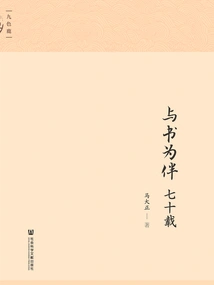
Living with Books for Seventy Years
Literature与书为伴七十载
Ma Dazheng
This book is divided into two categories: leisure reading and professional reading. It tells the story of my seventy-year reading career. The book is divided into "Reading Chapter", "Book Searching Chapter", "Writing Chapter" and "Book Giving Chapter", and also has a "Reminiscence Chapter" to commemorate the fourteen teachers and friends who have passed away, including the author's mentors and teachers, close friends and partners in academic cooperation, and two college classmates who were close friends. They were both mentors and collaborators of the author's academic career. This book is a completely personalized academic recollection, but the author is not an alternative intellectual isolated from society after all. Whether consciously or unconsciously, actively or passively, the author's memories of searching for dreams in a sea of books can reflect the changes of the seventy-year era from one side, as well as the direct or indirect impact of the changes in the author's personal life experience on his reading career. The author's memories and thoughts about his reading career, in which he narrates his experiences and discusses his insights, are not only a review of his own life, but also a reference for those who are interested!
This book is divided into two categories: leisure reading and professional reading. It tells the story of my seventy-year reading career. The book is divided into "Reading Chapter", "Book Searching Chapter", "Writing Chapter" and "Book Giving Chapter", and also has a "Reminiscence Chapter" to commemorate the fourteen teachers and friends who have passed away, including the author's mentors and teachers, close friends and partners in academic cooperation, and two college classmates who were close friends. They were both mentors and collaborators of the author's academic career. This book is a completely personalized academic recollection, but the author is not an alternative intellectual isolated from society after all. Whether consciously or unconsciously, actively or passively, the author's memories of searching for dreams in a sea of books can reflect the changes of the seventy-year era from one side, as well as the direct or indirect impact of the changes in the author's personal life experience on his reading career. The author's memories and thoughts about his reading career, in which he narrates his experiences and discusses his insights, are not only a review of his own life, but also a reference for those who are interested!
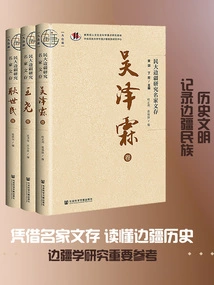
民大边疆研究名家文存(全3卷)
Yuan Jian Editor-in-chief Ding Hong
"Wu Zelin Volume": Wu Zelin (1898-1990), a famous ethnologist, anthropologist, museologist, and former professor at Minzu University of China. After the founding of the People's Republic of China, he conducted ethnological fieldwork in minority areas in southwest China many times. This volume contains nearly 300,000 words of his classic works. The main contents include an introduction to the theoretical methods of anthropology, sociology, and psychology in Western academic circles in the first half of the 20th century, understanding of historical cultural relics and ethnomuseology of ethnic minorities, field surveys of the Miao and Yi people in Guizhou, and research on the trends in world population development and changes from the 19th to the 20th century. "Wang Yao Volume": Wang Yao (1928-2015), a world-famous Tibetologist. He once served as a visiting professor at the University of Vienna in Austria, the University of Bonn in Germany, the University of Toronto in Canada, and a professor at the Tibet College of the University of China for Nationalities. This volume selects about 300,000 words from his classic works. The main contents include research on the phonetics of medieval Tibetan language, ancient Tibetan inscriptions in Xixia and Tibet, textual research on Buddhist scriptures, medieval Tibetan drama culture, Tibetan poetry, etc. The level of many papers has been recognized by the World Tibetology Research Institute. "Geng Shimin Volume": Geng Shimin (1929-2012), a world-renowned expert in Central Asian studies and Western Regions studies. The first generation of ethnic philologist in New China and the first person in China to study the ancient Turkic language. He received the Internationally Renowned Scholar Award from the Humboldt Foundation in Germany and the PLAC Gold Medal, the highest award in the Altai academic community in the world. This volume selects more than 300,000 words from his classic works, mainly focusing on the use of Dunhuang documents to study the linguistics of the Western Regions (Uighur and Turkic), inscriptions, translation of medieval Buddhist scriptures, epic legends, and geographical appraisal. Many of his papers have reached the world's top level and are admired by Turkic scholars around the world.
"Wu Zelin Volume": Wu Zelin (1898-1990), a famous ethnologist, anthropologist, museologist, and former professor at Minzu University of China. After the founding of the People's Republic of China, he conducted ethnological fieldwork in minority areas in southwest China many times. This volume contains nearly 300,000 words of his classic works. The main contents include an introduction to the theoretical methods of anthropology, sociology, and psychology in Western academic circles in the first half of the 20th century, understanding of historical cultural relics and ethnomuseology of ethnic minorities, field surveys of the Miao and Yi people in Guizhou, and research on the trends in world population development and changes from the 19th to the 20th century. "Wang Yao Volume": Wang Yao (1928-2015), a world-famous Tibetologist. He once served as a visiting professor at the University of Vienna in Austria, the University of Bonn in Germany, the University of Toronto in Canada, and a professor at the Tibet College of the University of China for Nationalities. This volume selects about 300,000 words from his classic works. The main contents include research on the phonetics of medieval Tibetan language, ancient Tibetan inscriptions in Xixia and Tibet, textual research on Buddhist scriptures, medieval Tibetan drama culture, Tibetan poetry, etc. The level of many papers has been recognized by the World Tibetology Research Institute. "Geng Shimin Volume": Geng Shimin (1929-2012), a world-renowned expert in Central Asian studies and Western Regions studies. The first generation of ethnic philologist in New China and the first person in China to study the ancient Turkic language. He received the Internationally Renowned Scholar Award from the Humboldt Foundation in Germany and the PLAC Gold Medal, the highest award in the Altai academic community in the world. This volume selects more than 300,000 words from his classic works, mainly focusing on the use of Dunhuang documents to study the linguistics of the Western Regions (Uighur and Turkic), inscriptions, translation of medieval Buddhist scriptures, epic legends, and geographical appraisal. Many of his papers have reached the world's top level and are admired by Turkic scholars around the world.
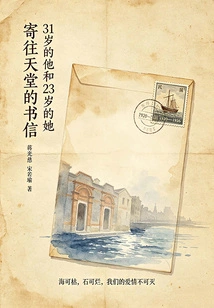
31岁的他和23岁的她:寄往天堂的书信
Jiang Guangci Song Ruoyu
"The sea can dry up, the stone can break, but my love for you will never die." This is a testimony of love that spans a hundred years. Jiang Guangci, a pioneer of modern Chinese revolutionary literature, met his lover Song Ruoyu during the May Fourth Movement. The 96 letters record a deep love that has been affected by the times but remains unswerving. One of them is a revolutionary poet, and the other is a like-minded new woman; they use their pen and ink to fight against distance, and use their faith to protect love. However, fate was cruel. Just one month after her wedding, Song Ruoyu suffered from a recurrence of lung disease and soon passed away at the age of 23. Five years later, 31-year-old Jiang Guangci also died of lung disease. Their story leaves to future generations an immortal legend about love and loss, revolution and ideals. This book was first published in 1927 and contains all extant letters, not a word changed, presented in their original form. This is a true slice of the love outlook of Chinese intellectuals in the early 20th century, and it is also the longest love letter a person wrote in the rest of his life.
"The sea can dry up, the stone can break, but my love for you will never die." This is a testimony of love that spans a hundred years. Jiang Guangci, a pioneer of modern Chinese revolutionary literature, met his lover Song Ruoyu during the May Fourth Movement. The 96 letters record a deep love that has been affected by the times but remains unswerving. One of them is a revolutionary poet, and the other is a like-minded new woman; they use their pen and ink to fight against distance, and use their faith to protect love. However, fate was cruel. Just one month after her wedding, Song Ruoyu suffered from a recurrence of lung disease and soon passed away at the age of 23. Five years later, 31-year-old Jiang Guangci also died of lung disease. Their story leaves to future generations an immortal legend about love and loss, revolution and ideals. This book was first published in 1927 and contains all extant letters, not a word changed, presented in their original form. This is a true slice of the love outlook of Chinese intellectuals in the early 20th century, and it is also the longest love letter a person wrote in the rest of his life.
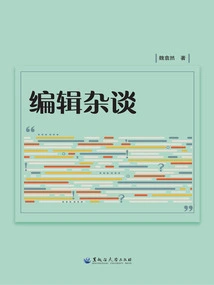
Editor's Talk
Literature编辑杂谈
Wei Xiran
The content of this book is mainly the immature insights and thoughts of the author who have been engaged in publishing work for more than ten years. It is divided into three parts: insights on publishing, theoretical exploration and book reviews. The Publishing Insights section explores the author's preliminary thoughts and understanding of the development of the publishing industry, talent and quality management. The Theoretical Exploration section provides a superficial analysis and discussion of the technical problems encountered in the author's editing work. The Book Review section is the author's simple insights and evaluations after reading the book.
The content of this book is mainly the immature insights and thoughts of the author who have been engaged in publishing work for more than ten years. It is divided into three parts: insights on publishing, theoretical exploration and book reviews. The Publishing Insights section explores the author's preliminary thoughts and understanding of the development of the publishing industry, talent and quality management. The Theoretical Exploration section provides a superficial analysis and discussion of the technical problems encountered in the author's editing work. The Book Review section is the author's simple insights and evaluations after reading the book.
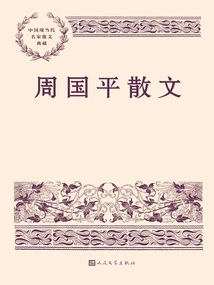
Zhou Guoping's Prose (A Collection of Prose by Famous Modern and Contemporary Chinese Writers)
Literature周国平散文(中国现当代名家散文典藏)
Zhou Guoping
This book is a newly edited and selected version of "Zhou Guoping's Prose", with an introduction written by Zhou Guoping's wife Guo Hong. Zhou Guoping is a researcher at the Institute of Philosophy, Chinese Academy of Social Sciences, and a writer widely read and familiar to the public. He is the author of the academic monograph "Nietzsche: At the Turning Point of the Century", essay collections "Watching Distance", "Time and Temperament", documentary works "Niu Niu: A Father's Notes", "Knock", etc. Zhou Guoping is a contemporary writer who is good at philosophy and has always been a best-selling author in the current book market. This book is an indispensable item in the series. This book has both pictures and text, and the chapters are selected from Zhou Guoping's various works, etc., Which reflects Zhou Guoping's thoughts and writing style, allowing readers to understand the world and life.
This book is a newly edited and selected version of "Zhou Guoping's Prose", with an introduction written by Zhou Guoping's wife Guo Hong. Zhou Guoping is a researcher at the Institute of Philosophy, Chinese Academy of Social Sciences, and a writer widely read and familiar to the public. He is the author of the academic monograph "Nietzsche: At the Turning Point of the Century", essay collections "Watching Distance", "Time and Temperament", documentary works "Niu Niu: A Father's Notes", "Knock", etc. Zhou Guoping is a contemporary writer who is good at philosophy and has always been a best-selling author in the current book market. This book is an indispensable item in the series. This book has both pictures and text, and the chapters are selected from Zhou Guoping's various works, etc., Which reflects Zhou Guoping's thoughts and writing style, allowing readers to understand the world and life.
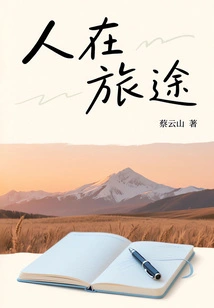
People on a Journey
Literature人在旅途
Cai Yunshan
"Man on the Journey" is an interactive electronic publication. It is a prose documentary written by Mr. Cai Yunshan, a 63-year-old local writer in Xinjiang, based on what he saw and heard from childhood to old age in Jimsar County, Xinjiang. The book describes the Cai family's arrival from Wuwei, Gansu, to the Beiting Protectorate, their fathers' entrepreneurship, their own studies, work, and life, their daughter's study abroad, the correspondence exchanges between father and daughter, the author's classmates who grew up together, and the unfortunate deaths of his colleagues, etc. The content of the two chapters, "Essays in Beiting" and "Man on a Journey", both carry the fragrance of earth; in the book "Man on a Journey", which is half poem and half essay, one can hear the sound of carriages rolling over the Gobi desert. They have become the sunshine above the heads of poor children; every sapling planted by the author in the Green Jiayuan Cooperative has swayed to the same posture as when it took root and grew.
"Man on the Journey" is an interactive electronic publication. It is a prose documentary written by Mr. Cai Yunshan, a 63-year-old local writer in Xinjiang, based on what he saw and heard from childhood to old age in Jimsar County, Xinjiang. The book describes the Cai family's arrival from Wuwei, Gansu, to the Beiting Protectorate, their fathers' entrepreneurship, their own studies, work, and life, their daughter's study abroad, the correspondence exchanges between father and daughter, the author's classmates who grew up together, and the unfortunate deaths of his colleagues, etc. The content of the two chapters, "Essays in Beiting" and "Man on a Journey", both carry the fragrance of earth; in the book "Man on a Journey", which is half poem and half essay, one can hear the sound of carriages rolling over the Gobi desert. They have become the sunshine above the heads of poor children; every sapling planted by the author in the Green Jiayuan Cooperative has swayed to the same posture as when it took root and grew.
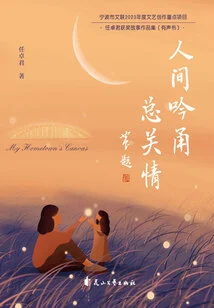
Yin Yong in the World is Full of Love
Literature人间吟甬总关情
Ren Zhuojun
This book is a collection of essays and novels that Teacher Ren Zhuojun has won national, provincial and municipal awards in the past fifteen years, including four novels, eight essays, and two online articles. Since the word count for the competition was limited at that time, the length was mostly limited to two to three thousand words. The author relies on his solid knowledge in Chinese and English and his bilingual writing to reflect all aspects of people's lives over the past 40 years of reform and opening up, paying special attention to the inner world of urban women growing up under the guidance of the Zhejiang spirit in the new era, which is distinctively contemporary and innovative. The writing is fresh and smooth, catchy and humorous. In the fifteen years of literary creation, Teacher Ren Zhuojun has been contributing his intellectual wisdom and language talent through bilingualism, and has achieved rich results. Teacher Ren Zhuojun went deep into the campus and told the people's own Chinese stories based on the people's production and life she was familiar with. She paid attention to reality, faced the present directly, and wrote about the people's struggles, joys, sorrows and joys. Her works convey the Chinese people's yearning for a better life, write the voices of the people around them, and promote the simplest but most sincere Chinese spirit.
This book is a collection of essays and novels that Teacher Ren Zhuojun has won national, provincial and municipal awards in the past fifteen years, including four novels, eight essays, and two online articles. Since the word count for the competition was limited at that time, the length was mostly limited to two to three thousand words. The author relies on his solid knowledge in Chinese and English and his bilingual writing to reflect all aspects of people's lives over the past 40 years of reform and opening up, paying special attention to the inner world of urban women growing up under the guidance of the Zhejiang spirit in the new era, which is distinctively contemporary and innovative. The writing is fresh and smooth, catchy and humorous. In the fifteen years of literary creation, Teacher Ren Zhuojun has been contributing his intellectual wisdom and language talent through bilingualism, and has achieved rich results. Teacher Ren Zhuojun went deep into the campus and told the people's own Chinese stories based on the people's production and life she was familiar with. She paid attention to reality, faced the present directly, and wrote about the people's struggles, joys, sorrows and joys. Her works convey the Chinese people's yearning for a better life, write the voices of the people around them, and promote the simplest but most sincere Chinese spirit.
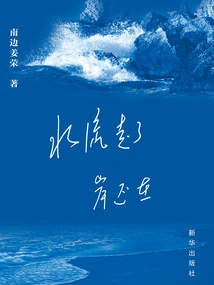
水流走了,岸还在
South Jiang Rong
This book is a collection of essays by the author. The main contents include: in the first part, I have never been able to describe the Hong Kong Bridge well; in the second part, I was really fascinated by the eyes of my comrades; in the third part, the old stories of the shoe city in the Red Capital were like the Mogao Grottoes; in the fourth part, a lonely tree, etc. Many contents of the book manuscript have been publicly published in "Poetry Magazine" and other publications. This time it is published publicly by Jina and has reached the publishing level.
This book is a collection of essays by the author. The main contents include: in the first part, I have never been able to describe the Hong Kong Bridge well; in the second part, I was really fascinated by the eyes of my comrades; in the third part, the old stories of the shoe city in the Red Capital were like the Mogao Grottoes; in the fourth part, a lonely tree, etc. Many contents of the book manuscript have been publicly published in "Poetry Magazine" and other publications. This time it is published publicly by Jina and has reached the publishing level.
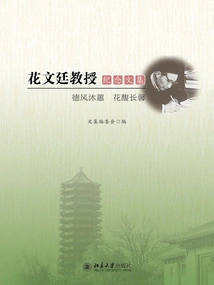
花文廷教授纪念文集
Editor Of The Anthology Editorial Board
This book is a collection of commemorative essays organized and compiled in memory of Professor Hua Wenting of the School of Chemistry and Molecular Engineering of Peking University, a famous organic chemist in my country.
This book is a collection of commemorative essays organized and compiled in memory of Professor Hua Wenting of the School of Chemistry and Molecular Engineering of Peking University, a famous organic chemist in my country.
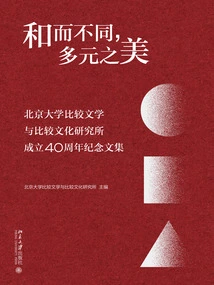
和而不同,多元之美:北京大学比较文学与比较文化研究所成立40周年纪念文集
Chief Editor, Institute Of Comparative Literature And Comparative Culture, Peking University
In 1985, the Ministry of Education of the People's Republic of China approved the establishment of the "Institute of Comparative Literature of Peking University", which was renamed "Institute of Comparative Literature and Comparative Culture of Peking University" in 1994. This is the 40th anniversary of the establishment of this first comparative literature research institution in China after the reform and opening up. This book is a special edition to celebrate the 40th anniversary of the establishment of the Institute of Comparative Literature and Comparative Culture at Peking University.
In 1985, the Ministry of Education of the People's Republic of China approved the establishment of the "Institute of Comparative Literature of Peking University", which was renamed "Institute of Comparative Literature and Comparative Culture of Peking University" in 1994. This is the 40th anniversary of the establishment of this first comparative literature research institution in China after the reform and opening up. This book is a special edition to celebrate the 40th anniversary of the establishment of the Institute of Comparative Literature and Comparative Culture at Peking University.
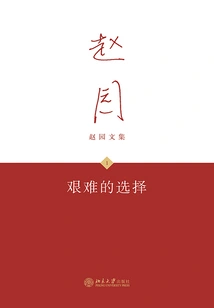
艰难的选择(赵园文集1)
Zhao Yuan
The author of this book examines the image and psychology of intellectuals in the novels of the May Fourth Movement, before and after the Great Revolution, and in the 1930s and 1940s. It is not limited to the description of literary phenomena, but attempts to explore the spiritual journey of modern Chinese intellectuals, focusing on questioning the profound social and historical reasons behind literary phenomena, so it is ideologically profound.
The author of this book examines the image and psychology of intellectuals in the novels of the May Fourth Movement, before and after the Great Revolution, and in the 1930s and 1940s. It is not limited to the description of literary phenomena, but attempts to explore the spiritual journey of modern Chinese intellectuals, focusing on questioning the profound social and historical reasons behind literary phenomena, so it is ideologically profound.
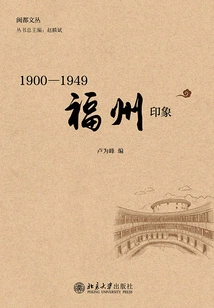
Impressions of Fuzhou from 1900 to 1949
Literature1900—1949福州印象
Compiled By Lu Weifeng
"Impressions of Fuzhou from 1900 to 1949" contains 44 essays by more than 20 famous writers, including Yu Dafu, Ye Shengtao, Shi Zhecun, Cao Juren, Xu Qinwen, etc., Describing the impressions of Fuzhou from the early 20th century to the eve of the founding of New China from different angles. The article recalls many beautiful things, such as deep houses in winding lanes, small bridges and flowing water, delicious food and art, clear ponds and green banyan trees, as well as the fertile fields in Pingchou around the ancient city, the ancient temples in Qingshan, and the treasures of the mountains and seas.
"Impressions of Fuzhou from 1900 to 1949" contains 44 essays by more than 20 famous writers, including Yu Dafu, Ye Shengtao, Shi Zhecun, Cao Juren, Xu Qinwen, etc., Describing the impressions of Fuzhou from the early 20th century to the eve of the founding of New China from different angles. The article recalls many beautiful things, such as deep houses in winding lanes, small bridges and flowing water, delicious food and art, clear ponds and green banyan trees, as well as the fertile fields in Pingchou around the ancient city, the ancient temples in Qingshan, and the treasures of the mountains and seas.
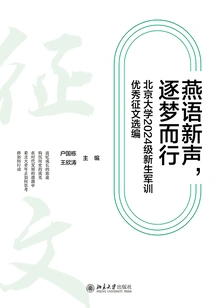
燕语新声,逐梦而行:北京大学2024级新生军训优秀征文选编
Hu Guodong Editor-in-chief Wang Xintao
This book selects and collects more than 100 outstanding essays from Peking University freshmen. The authors of the essay call come from various departments. During the freshmen education period, they focused on the theme of "building national defense with courage and forging ahead to rejuvenate youth". They thought deeply, explored in detail, integrated their own experiences, and wrote true feelings.
This book selects and collects more than 100 outstanding essays from Peking University freshmen. The authors of the essay call come from various departments. During the freshmen education period, they focused on the theme of "building national defense with courage and forging ahead to rejuvenate youth". They thought deeply, explored in detail, integrated their own experiences, and wrote true feelings.
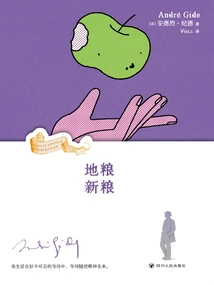
Ground Grain·new Grain
Literature地粮·新粮
(france) André Gide
This book is a classic collection of essays by Andre Gide, winner of the Nobel Prize for Literature and the enlightener of the modern free spirit. It completely contains two important masterpieces, "Grain of the Earth" and "New Grain". Gide challenged the boring dogma with a very tense writing style, and issued the awakening words of "experience rather than think". He called on people to break free from the prisons of concepts and the past, shift from abstract philosophy to concrete senses - let the caress of the wind and the coolness of the water become the food to reshape themselves, and regain their pure perception of the world. "I hate consistency more than inconsistency." Gide's declaration reminds everyone that the true meaning of life does not lie in endless trade-offs, but in unreserved experience.
This book is a classic collection of essays by Andre Gide, winner of the Nobel Prize for Literature and the enlightener of the modern free spirit. It completely contains two important masterpieces, "Grain of the Earth" and "New Grain". Gide challenged the boring dogma with a very tense writing style, and issued the awakening words of "experience rather than think". He called on people to break free from the prisons of concepts and the past, shift from abstract philosophy to concrete senses - let the caress of the wind and the coolness of the water become the food to reshape themselves, and regain their pure perception of the world. "I hate consistency more than inconsistency." Gide's declaration reminds everyone that the true meaning of life does not lie in endless trade-offs, but in unreserved experience.
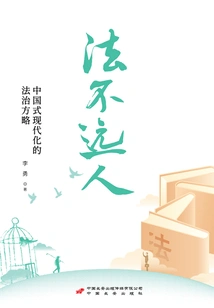
法不远人:中国式现代化的法治方略
Li Yong
This book is divided into six chapters and consists of more than 60 articles, covering the worldview and methodology of "life in the sea", improving the level of legalization of social governance, using the rule of law to stimulate the innovation vitality of subjects and the driving force of social development, exchanges and mutual learning between legal civilizations, and the constitutional guarantee of Chinese-style modernization. , Peer with Classics of Rule of Law Culture, etc., It expounds the role and influence of the rule of law in multiple dimensions of society, discusses the real problems that need to be faced and solved in the process of Chinese modernization, allows readers to see the changes and progress of the rule of law in China, and lights up the light of the rule of law in the hearts of readers.
This book is divided into six chapters and consists of more than 60 articles, covering the worldview and methodology of "life in the sea", improving the level of legalization of social governance, using the rule of law to stimulate the innovation vitality of subjects and the driving force of social development, exchanges and mutual learning between legal civilizations, and the constitutional guarantee of Chinese-style modernization. , Peer with Classics of Rule of Law Culture, etc., It expounds the role and influence of the rule of law in multiple dimensions of society, discusses the real problems that need to be faced and solved in the process of Chinese modernization, allows readers to see the changes and progress of the rule of law in China, and lights up the light of the rule of law in the hearts of readers.
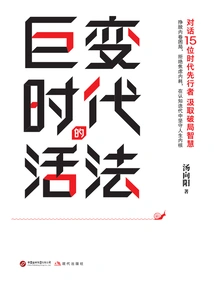
How to Live in an Era of Great Change
Literature巨变时代的活法
Tang Xiangyang
This book is a collection of dialogues and philosophical essays by fifteen outstanding contemporary figures. In an era of great changes characterized by the ebbing tide of globalization, technological disruption, and diverse values, how do individuals move forward? This book focuses on contemporary scholars, artists, and entrepreneurs, exploring their choices and breakthroughs in professional pursuits and self-realization. Literary professor Liang Yong'an analyzed young people's anxiety about work and love, believing that "resources are everywhere, but you have to learn to think and choose"; scholar Liu Qing faced the dilemma of modern people and discussed how to find "self" in confusion; law professor Luo Xiang suggested "building real links with real people around you"; historian Xu Zhuoyun believed that "you must have a vision, beyond what you have never seen", and scholar Fan Jinshi interpreted "a lifetime The ultimate purity of "One Thing" tells how to achieve the sustainable preservation of the cultural relics of the Mogao Grottoes; Wei Qing, CTO and Chief Technology Officer of Microsoft (China), an entrepreneur, summarizes from actual combat, proposes evaluation standards for the practicality of AI technology, and further thinks about whether humans can "preserve the Earth's planet"... This book is a masterpiece with both ideological depth and narrative tension. It thinks about various issues of the times and provides enlightenment based on personal experience and the forefront of the times.
This book is a collection of dialogues and philosophical essays by fifteen outstanding contemporary figures. In an era of great changes characterized by the ebbing tide of globalization, technological disruption, and diverse values, how do individuals move forward? This book focuses on contemporary scholars, artists, and entrepreneurs, exploring their choices and breakthroughs in professional pursuits and self-realization. Literary professor Liang Yong'an analyzed young people's anxiety about work and love, believing that "resources are everywhere, but you have to learn to think and choose"; scholar Liu Qing faced the dilemma of modern people and discussed how to find "self" in confusion; law professor Luo Xiang suggested "building real links with real people around you"; historian Xu Zhuoyun believed that "you must have a vision, beyond what you have never seen", and scholar Fan Jinshi interpreted "a lifetime The ultimate purity of "One Thing" tells how to achieve the sustainable preservation of the cultural relics of the Mogao Grottoes; Wei Qing, CTO and Chief Technology Officer of Microsoft (China), an entrepreneur, summarizes from actual combat, proposes evaluation standards for the practicality of AI technology, and further thinks about whether humans can "preserve the Earth's planet"... This book is a masterpiece with both ideological depth and narrative tension. It thinks about various issues of the times and provides enlightenment based on personal experience and the forefront of the times.
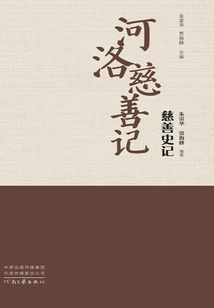
He Luo Charity Records
Literature河洛慈善记
Zhu Leihua Editor-in-chief Jia Haixiu
"Heluo Charity" focuses on charitable figures and charitable stories in Chinese history, such as the Yellow Emperor who followed the four seasons to benefit all things, Dayu who pioneered national charity, Shang Tang who "opened the net", Ji Zi who was kind and virtuous, and Feng Xuan who burned coupons to buy justice for Lord Mengchang... It is a vivid and interesting interpretation of charity culture.
"Heluo Charity" focuses on charitable figures and charitable stories in Chinese history, such as the Yellow Emperor who followed the four seasons to benefit all things, Dayu who pioneered national charity, Shang Tang who "opened the net", Ji Zi who was kind and virtuous, and Feng Xuan who burned coupons to buy justice for Lord Mengchang... It is a vivid and interesting interpretation of charity culture.
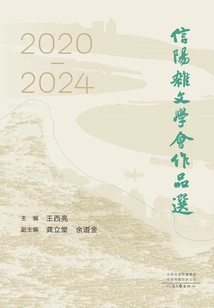
信阳杂文学会作品选
Editor-in-chief Wang Xiliang
This book brings together 123 works by 47 authors from Xinyang. These 47 authors are basically members of provincial-level and above writers associations or various societies. Therefore, these works, in a certain sense, can be regarded as the masterpieces of Xinyang essay writers in recent years.
This book brings together 123 works by 47 authors from Xinyang. These 47 authors are basically members of provincial-level and above writers associations or various societies. Therefore, these works, in a certain sense, can be regarded as the masterpieces of Xinyang essay writers in recent years.
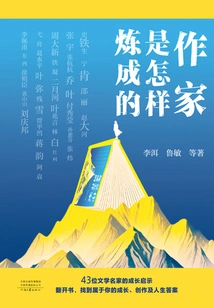
How a Writer is Made
Literature作家是怎样炼成的
Li Er Lu Min Et Al.
This book is written by Qiao Ye, Fu Xiuying, Shi Tiesheng, Ning Ken, Shao Li, Zhao Dahe, Sun Huifen, Zhang Yu, Zhang Kangkang, Zong Pu, Chen Yan, Lu Min, Zhang Wei, Zhou Daxin, Jiang Zilong, Guan Renshan, Tiening, Zhou Xuanpu, Luo Yijun, Er Yuehe, Liang Xiaosheng, Li Er, Lin Bai, Ye Zhaoyan, Qiao Dianyun, Hong Ke, Zhao Dahe, Yi Zhou, Li Peifu, Zong Pu, Ge Shuiping, Xu Yigua, Lu Xin, Ye Mi, Can Xue, Han Shishan, Jia Pingwa, Jiang Yun, A Yuan, Zhao Lanzhen, Ai Wei, Dongxi, Xu Zechen, Qiu Shanshan, Liu Qingbang and other nearly fifty influential writers in the Chinese contemporary literary world co-created. They are winners of important domestic literary awards such as the Mao Dun Literature Award, the Lu Xun Literature Award, and the Lao She Literature Award. Their works form the core part of the history of contemporary Chinese literary reading. In this book, they reveal their original literary intentions and life insights in a sincere way for the first time.
This book is written by Qiao Ye, Fu Xiuying, Shi Tiesheng, Ning Ken, Shao Li, Zhao Dahe, Sun Huifen, Zhang Yu, Zhang Kangkang, Zong Pu, Chen Yan, Lu Min, Zhang Wei, Zhou Daxin, Jiang Zilong, Guan Renshan, Tiening, Zhou Xuanpu, Luo Yijun, Er Yuehe, Liang Xiaosheng, Li Er, Lin Bai, Ye Zhaoyan, Qiao Dianyun, Hong Ke, Zhao Dahe, Yi Zhou, Li Peifu, Zong Pu, Ge Shuiping, Xu Yigua, Lu Xin, Ye Mi, Can Xue, Han Shishan, Jia Pingwa, Jiang Yun, A Yuan, Zhao Lanzhen, Ai Wei, Dongxi, Xu Zechen, Qiu Shanshan, Liu Qingbang and other nearly fifty influential writers in the Chinese contemporary literary world co-created. They are winners of important domestic literary awards such as the Mao Dun Literature Award, the Lu Xun Literature Award, and the Lao She Literature Award. Their works form the core part of the history of contemporary Chinese literary reading. In this book, they reveal their original literary intentions and life insights in a sincere way for the first time.
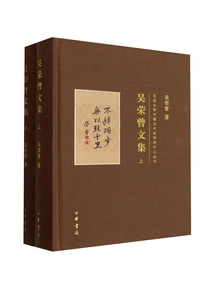
吴荣曾文集(全二册)
Wu Rongzeng
Wu Rong once intensively studied the history of the pre-Qin and Han Dynasties, and also focused on the history of epigraphy, stone, bamboo and wood slips, and coins. This collection includes almost all of his writings throughout his life, covering various aspects such as institutions, feudal states, ethnic groups, geography, social economy, and ghost and god beliefs. It also includes articles on his studies and interactions with academic circles. It also collects his entries for the "Encyclopedia of China" and "Dictionary of Chinese History".
Wu Rong once intensively studied the history of the pre-Qin and Han Dynasties, and also focused on the history of epigraphy, stone, bamboo and wood slips, and coins. This collection includes almost all of his writings throughout his life, covering various aspects such as institutions, feudal states, ethnic groups, geography, social economy, and ghost and god beliefs. It also includes articles on his studies and interactions with academic circles. It also collects his entries for the "Encyclopedia of China" and "Dictionary of Chinese History".
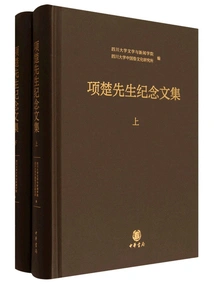
项楚先生纪念文集(全二册)
Editors: School Of Literature And Journalism, Sichuan University
On February 4, 2025, Mr. Xiang Chu, a famous Dunhuang scholar, linguist, philologist, literary historian and Buddhist scholar, and an outstanding professor at Sichuan University, passed away. In order to express their remembrance of Mr. Xiang Chu, the School of Literature and Journalism of Sichuan University and the Institute of Chinese Popular Culture of Sichuan University decided to edit and publish the "Collected Works in Commemoration of Mr. Xiang Chu". The collection is divided into two parts. The first part mainly collects the commemorative words of Mr. Xiang's relatives, friends and comrades, as well as the students' memories and commemorative articles of studying, seeking advice and living with him, to express deep remembrance; the second part mainly collects representative academic papers of Xiang Men's disciples, to pay tribute to Mr. Xiang and carry on the past and future.
On February 4, 2025, Mr. Xiang Chu, a famous Dunhuang scholar, linguist, philologist, literary historian and Buddhist scholar, and an outstanding professor at Sichuan University, passed away. In order to express their remembrance of Mr. Xiang Chu, the School of Literature and Journalism of Sichuan University and the Institute of Chinese Popular Culture of Sichuan University decided to edit and publish the "Collected Works in Commemoration of Mr. Xiang Chu". The collection is divided into two parts. The first part mainly collects the commemorative words of Mr. Xiang's relatives, friends and comrades, as well as the students' memories and commemorative articles of studying, seeking advice and living with him, to express deep remembrance; the second part mainly collects representative academic papers of Xiang Men's disciples, to pay tribute to Mr. Xiang and carry on the past and future.
项楚先生纪念文集(上)
Editors: School Of Literature And Journalism, Sichuan University
On February 4, 2025, Mr. Xiang Chu, a famous Dunhuang scholar, linguist, philologist, literary historian and Buddhist scholar, and an outstanding professor at Sichuan University, passed away. In order to express their remembrance of Mr. Xiang Chu, the School of Literature and Journalism of Sichuan University and the Institute of Chinese Popular Culture of Sichuan University decided to edit and publish the "Collected Works in Commemoration of Mr. Xiang Chu". The collection is divided into two parts. The first part mainly collects the commemorative words of Mr. Xiang's relatives, friends and comrades, as well as the students' memories and commemorative articles of studying, seeking advice and living with him, to express deep remembrance; the second part mainly collects representative academic papers of Xiang Men's disciples, to pay tribute to Mr. Xiang and carry on the past and future.
On February 4, 2025, Mr. Xiang Chu, a famous Dunhuang scholar, linguist, philologist, literary historian and Buddhist scholar, and an outstanding professor at Sichuan University, passed away. In order to express their remembrance of Mr. Xiang Chu, the School of Literature and Journalism of Sichuan University and the Institute of Chinese Popular Culture of Sichuan University decided to edit and publish the "Collected Works in Commemoration of Mr. Xiang Chu". The collection is divided into two parts. The first part mainly collects the commemorative words of Mr. Xiang's relatives, friends and comrades, as well as the students' memories and commemorative articles of studying, seeking advice and living with him, to express deep remembrance; the second part mainly collects representative academic papers of Xiang Men's disciples, to pay tribute to Mr. Xiang and carry on the past and future.
项楚学术文集外编
Written By Xiang Chu And Compiled By Yin Fu
This book is divided into two parts: academic and creative. The academic edition includes 20 articles written by Mr. Xiang Chu in his early years, including essays, poetry appreciation, and recent speeches and lectures, reflecting his initial exploration on the academic path, as well as his work in academic research, organization, and popularization. The creative section contains 8 poems, novels, and scripts written by Mr. Xiang Chu in his early years, which are full of romance, ideal spirit and innocent feelings. These works are of great significance for a comprehensive understanding of Mr. Xiang Chu's life experience and academic career.
This book is divided into two parts: academic and creative. The academic edition includes 20 articles written by Mr. Xiang Chu in his early years, including essays, poetry appreciation, and recent speeches and lectures, reflecting his initial exploration on the academic path, as well as his work in academic research, organization, and popularization. The creative section contains 8 poems, novels, and scripts written by Mr. Xiang Chu in his early years, which are full of romance, ideal spirit and innocent feelings. These works are of great significance for a comprehensive understanding of Mr. Xiang Chu's life experience and academic career.
Collected Works of Wu Rongzeng (Part 1)
Literature吴荣曾文集(上)
Wu Rongzeng
Wu Rong once intensively studied the history of the pre-Qin and Han Dynasties, and also focused on the history of epigraphy, stone, bamboo and wood slips, and coins. This collection includes almost all of his writings throughout his life, covering various aspects such as institutions, feudal states, ethnic groups, geography, social economy, and ghost and god beliefs. It also includes articles on his studies and interactions with academic circles. It also collects his entries for the "Encyclopedia of China" and "Dictionary of Chinese History".
Wu Rong once intensively studied the history of the pre-Qin and Han Dynasties, and also focused on the history of epigraphy, stone, bamboo and wood slips, and coins. This collection includes almost all of his writings throughout his life, covering various aspects such as institutions, feudal states, ethnic groups, geography, social economy, and ghost and god beliefs. It also includes articles on his studies and interactions with academic circles. It also collects his entries for the "Encyclopedia of China" and "Dictionary of Chinese History".
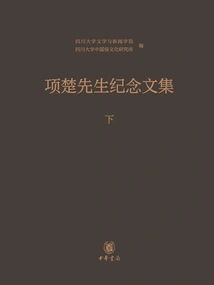
项楚先生纪念文集(下)
Editors: School Of Literature And Journalism, Sichuan University
On February 4, 2025, Mr. Xiang Chu, a famous Dunhuang scholar, linguist, philologist, literary historian and Buddhist scholar, and an outstanding professor at Sichuan University, passed away. In order to express their remembrance of Mr. Xiang Chu, the School of Literature and Journalism of Sichuan University and the Institute of Chinese Popular Culture of Sichuan University decided to edit and publish the "Collected Works in Commemoration of Mr. Xiang Chu". The collection is divided into two parts. The first part mainly collects the commemorative words of Mr. Xiang's relatives, friends and comrades, as well as the students' memories and commemorative articles of studying, seeking advice and living with him, to express deep remembrance; the second part mainly collects representative academic papers of Xiang Men's disciples, to pay tribute to Mr. Xiang and carry on the past and future.
On February 4, 2025, Mr. Xiang Chu, a famous Dunhuang scholar, linguist, philologist, literary historian and Buddhist scholar, and an outstanding professor at Sichuan University, passed away. In order to express their remembrance of Mr. Xiang Chu, the School of Literature and Journalism of Sichuan University and the Institute of Chinese Popular Culture of Sichuan University decided to edit and publish the "Collected Works in Commemoration of Mr. Xiang Chu". The collection is divided into two parts. The first part mainly collects the commemorative words of Mr. Xiang's relatives, friends and comrades, as well as the students' memories and commemorative articles of studying, seeking advice and living with him, to express deep remembrance; the second part mainly collects representative academic papers of Xiang Men's disciples, to pay tribute to Mr. Xiang and carry on the past and future.
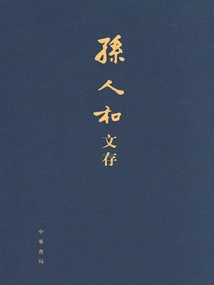
Sun Ren and Wen Cun
Literature孙人和文存
Sunhe
Sunhe (1894-1966), courtesy name Shucheng, was born in Yancheng, Jiangsu. Philologist and lyricist. He studied law at Peking University at an early age and worked at China University, Fu Jen University, Jinan University, etc. After graduation. After the founding of New China, he served as a librarian of the Central Research Institute of Literature and History and a member of the first national ancient books collection and publishing planning group. "Sun Renhe Wen Cun" contains a variety of extant works by Mr. Sun, including "Zuo He Man Lu", "Study Praise Lu", "Lun Heng Ju Zheng", "Lu Shi Chun Qi Ju Zheng", "Mo Zi Ju Zheng", "Han Feizi Ju Zheng", "Characters' Aspirations" "Zheng", "Bao Puzi's Correction", "Three Kingdoms Identification", "Ning Yuzhai's Reading Chronicle" and other monographs and textual research, preface and postscript articles, as well as two "General Theory of Ci" and "Ci Zhen", and also compiled Mr. Sun's poems, lyrics and music works. This book is preceded by a preface written by Mr. Ye Jiaying, and at the end of the book is attached an article by Mr. Liu Yeqiu "Remembering Mr. Sun Shucheng".
Sunhe (1894-1966), courtesy name Shucheng, was born in Yancheng, Jiangsu. Philologist and lyricist. He studied law at Peking University at an early age and worked at China University, Fu Jen University, Jinan University, etc. After graduation. After the founding of New China, he served as a librarian of the Central Research Institute of Literature and History and a member of the first national ancient books collection and publishing planning group. "Sun Renhe Wen Cun" contains a variety of extant works by Mr. Sun, including "Zuo He Man Lu", "Study Praise Lu", "Lun Heng Ju Zheng", "Lu Shi Chun Qi Ju Zheng", "Mo Zi Ju Zheng", "Han Feizi Ju Zheng", "Characters' Aspirations" "Zheng", "Bao Puzi's Correction", "Three Kingdoms Identification", "Ning Yuzhai's Reading Chronicle" and other monographs and textual research, preface and postscript articles, as well as two "General Theory of Ci" and "Ci Zhen", and also compiled Mr. Sun's poems, lyrics and music works. This book is preceded by a preface written by Mr. Ye Jiaying, and at the end of the book is attached an article by Mr. Liu Yeqiu "Remembering Mr. Sun Shucheng".
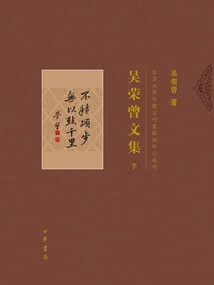
Collected Works of Wu Rongzeng (Part 2)
Literature吴荣曾文集(下)
Wu Rongzeng
Wu Rong once intensively studied the history of the pre-Qin and Han Dynasties, and also focused on the history of epigraphy, stone, bamboo and wood slips, and coins. This collection includes almost all of his writings throughout his life, covering various aspects such as institutions, feudal states, ethnic groups, geography, social economy, and ghost and god beliefs. It also includes articles on his studies and interactions with academic circles. It also collects his entries for the "Encyclopedia of China" and "Dictionary of Chinese History".
Wu Rong once intensively studied the history of the pre-Qin and Han Dynasties, and also focused on the history of epigraphy, stone, bamboo and wood slips, and coins. This collection includes almost all of his writings throughout his life, covering various aspects such as institutions, feudal states, ethnic groups, geography, social economy, and ghost and god beliefs. It also includes articles on his studies and interactions with academic circles. It also collects his entries for the "Encyclopedia of China" and "Dictionary of Chinese History".
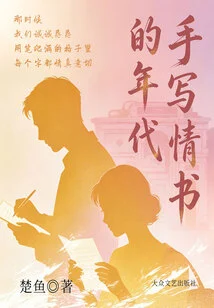
The Age of Handwritten Love Letters
Literature手写情书的年代
Chuyu
The days in the past were dull, but the taste was long-lasting. Everyone spoke sincerely and sincerely. In the past, the carriages and horses were very slow, and the letters were far away. In the grid filled with pens, every word was sincere. Writer Chu Yu's book "The Age of Handwritten Love Letters" uses novels, essays, and poems to bring us into that time when although we were not rich in material and entertainment, we were rich in spirit. At that time, a love letter was something that men and women in love looked forward to! At that time, literature, friends, lovers, family, nostalgia, tomorrow... These are such heart-warming or passionate words! Reminiscing about the passing years is not to say a sad farewell to our past, our youth, and our love. Instead, think of it as the spiritual energy that will give us the courage to move forward in our future lives. This book, like fine wine or tea, needs you to savor it slowly. Maybe you will get the answer to your life from it.
The days in the past were dull, but the taste was long-lasting. Everyone spoke sincerely and sincerely. In the past, the carriages and horses were very slow, and the letters were far away. In the grid filled with pens, every word was sincere. Writer Chu Yu's book "The Age of Handwritten Love Letters" uses novels, essays, and poems to bring us into that time when although we were not rich in material and entertainment, we were rich in spirit. At that time, a love letter was something that men and women in love looked forward to! At that time, literature, friends, lovers, family, nostalgia, tomorrow... These are such heart-warming or passionate words! Reminiscing about the passing years is not to say a sad farewell to our past, our youth, and our love. Instead, think of it as the spiritual energy that will give us the courage to move forward in our future lives. This book, like fine wine or tea, needs you to savor it slowly. Maybe you will get the answer to your life from it.
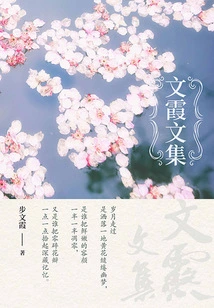
Collected Works of Wen Xia
Literature文霞文集
Bu Wenxia
Beautiful lives only come once. In the eyes of others, they may have no value. For me, I don't think about the question of whether they are valuable or not. I want to live a life that only comes once and live a beautiful life! Live truly freely!
Beautiful lives only come once. In the eyes of others, they may have no value. For me, I don't think about the question of whether they are valuable or not. I want to live a life that only comes once and live a beautiful life! Live truly freely!
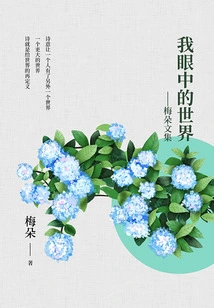
我眼中的世界:梅朵文集
Meadow
This is a selection of the essays, poems and aphorisms I have published since 2000. I use the method of studying things to gain knowledge, and strive to show a unique perspective in my works, full of poetry and philosophical thinking, so that readers can join me on the road to becoming a saint, discover the secrets of life and nature with a discerning eye, and then have a sunny life and live an interesting person. All the works in this collection are based on understanding. Therefore, from the beginning of writing, I have been selflessly enjoying another beautiful world I created, and I deeply believe that I am a happy person who explores the secrets of life and nature. I hope that those who have the chance to read it will have a happy heart like me.
This is a selection of the essays, poems and aphorisms I have published since 2000. I use the method of studying things to gain knowledge, and strive to show a unique perspective in my works, full of poetry and philosophical thinking, so that readers can join me on the road to becoming a saint, discover the secrets of life and nature with a discerning eye, and then have a sunny life and live an interesting person. All the works in this collection are based on understanding. Therefore, from the beginning of writing, I have been selflessly enjoying another beautiful world I created, and I deeply believe that I am a happy person who explores the secrets of life and nature. I hope that those who have the chance to read it will have a happy heart like me.
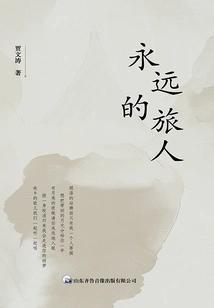
Eternal Traveler
Literature永远的旅人
Jia Wentao
This book is a collection of poems and prose, which is the accumulation of the author's many years of creation. The content includes the perception of life, observation of nature, and thoughts on history and society. The author focuses on expressing sincere emotions and deep insights. Poems and essays use scenery to express emotions and objects to convey meaning, and they are good at using descriptions of scenery and environment to heighten the atmosphere and psychology. The author uses the perspective and language of a man in science and engineering to ignite the spark of thought and inner romance, and also examines and thinks about history and the universe. The author insists on writing poems in the language of poetry, and strives to express emotions and touch people's hearts with beautiful and delicate strokes. He insists on expressing grand ambitions and heroic poems, and insists on the positive energy of poetry creation.
This book is a collection of poems and prose, which is the accumulation of the author's many years of creation. The content includes the perception of life, observation of nature, and thoughts on history and society. The author focuses on expressing sincere emotions and deep insights. Poems and essays use scenery to express emotions and objects to convey meaning, and they are good at using descriptions of scenery and environment to heighten the atmosphere and psychology. The author uses the perspective and language of a man in science and engineering to ignite the spark of thought and inner romance, and also examines and thinks about history and the universe. The author insists on writing poems in the language of poetry, and strives to express emotions and touch people's hearts with beautiful and delicate strokes. He insists on expressing grand ambitions and heroic poems, and insists on the positive energy of poetry creation.
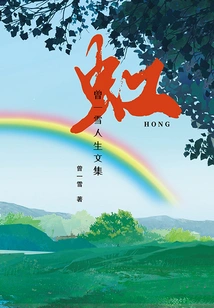
虹:曾一雪人生文集
Zeng Yixue
This is the author's experience of working in education for most of his life. It is now organized into two parts: essays and novels. The first part talks about personal practice and experience. Teenage friends from the back: How to behave? How to grow? Talked about some personal knowledge.
This is the author's experience of working in education for most of his life. It is now organized into two parts: essays and novels. The first part talks about personal practice and experience. Teenage friends from the back: How to behave? How to grow? Talked about some personal knowledge.
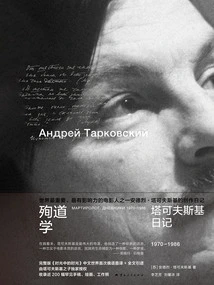
Martyrology: Tarkovsky's Diary 1970-1986
Literature殉道学:塔可夫斯基日记1970—1986
(soviet) Andrei Tarkovsky
"Martyrology: Tarkovsky's Diary 1970-1986" is the diary and notes of Andrei Tarkovsky, a famous Soviet director and one of the most important and influential artists in the history of film. The book contains texts, drawings and photographs copied from the Florentine archives, as well as the entire private collection of the Andrei Tarkovsky Institute in Italy. These diaries clearly show the social and artistic landscape of the time, recording Tarkovsky's philosophical thinking, reading notes, painting creations, as well as his experience in building houses in the village and decorating apartments in Rome. In addition, the book describes his film creation plans in detail, including even unfilmed film scenes. In his diary, Tarkovsky described unforgettable dreams and discussed the current situation of society and the future of art. His words provide another key, opening up for us a unique universe full of apocalyptic images, symbols and metaphors in Tarkovsky's film world, revealing the life trajectory of this great director who was repeatedly torn between the reality of life and his artistic ideals. The most critical contemporary filmmaker uses words as a prism to collage a spiritual self-portrait bursting with infinite creativity and wisdom. This is also a precious gift that Tarkovs spent his entire life dedicating to all movie fans.
"Martyrology: Tarkovsky's Diary 1970-1986" is the diary and notes of Andrei Tarkovsky, a famous Soviet director and one of the most important and influential artists in the history of film. The book contains texts, drawings and photographs copied from the Florentine archives, as well as the entire private collection of the Andrei Tarkovsky Institute in Italy. These diaries clearly show the social and artistic landscape of the time, recording Tarkovsky's philosophical thinking, reading notes, painting creations, as well as his experience in building houses in the village and decorating apartments in Rome. In addition, the book describes his film creation plans in detail, including even unfilmed film scenes. In his diary, Tarkovsky described unforgettable dreams and discussed the current situation of society and the future of art. His words provide another key, opening up for us a unique universe full of apocalyptic images, symbols and metaphors in Tarkovsky's film world, revealing the life trajectory of this great director who was repeatedly torn between the reality of life and his artistic ideals. The most critical contemporary filmmaker uses words as a prism to collage a spiritual self-portrait bursting with infinite creativity and wisdom. This is also a precious gift that Tarkovs spent his entire life dedicating to all movie fans.
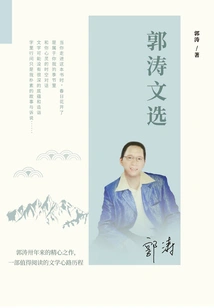
Selected Works of Guo Tao
Literature郭涛文选
Guo Tao
As a test of the author's writing over the past thirty years, this book has many feelings about worldly affairs, family relationships, humanities, etc., From which the author's inner and spiritual joys and sorrows can be felt, and it also reflects the author's interpretation of human nature and emotions. At the same time, several works also reveal the author's relatively rich emotional expressions and tears. I hope that readers and friends can empathize with the difficulty of survival, as well as the love and admiration for outstanding predecessors in the world.
As a test of the author's writing over the past thirty years, this book has many feelings about worldly affairs, family relationships, humanities, etc., From which the author's inner and spiritual joys and sorrows can be felt, and it also reflects the author's interpretation of human nature and emotions. At the same time, several works also reveal the author's relatively rich emotional expressions and tears. I hope that readers and friends can empathize with the difficulty of survival, as well as the love and admiration for outstanding predecessors in the world.
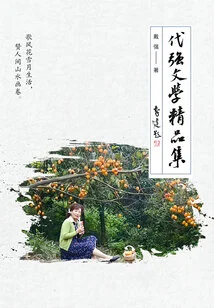
代强文学精品集
Dai Qiang
The collection of Dai Qiang's literary masterpieces is a pure literary book. There are three volumes of content, namely novels, essays, and poetry. The works are all "refined" articles recently created by the author on "Meipian". The works are like the author himself, simple and wise, warm and pleasant, joyful, simple and fragrant, supple and kind, deeply affectionate, sincere friendship, heart-warming nostalgia, and praised endlessly. This book is like a string of locust flowers, which is a folk feature. It can be said to be the green lotus of the Jianghuai River, the clear spring of the Huaihai Sea, the colorful clouds of East China, and the flying rainbow of the world. The author is earthy in nature and has a tofu heart. He sings about life in the wind, flowers, snow and moon, and praises the landscape of the world. He is a poor and upright person who denounces evil and ugliness and promotes truth, goodness and beauty. The world is big when the book is small, the ambition is high and the mind is broad. I only hope that my love will moisten the hearts of readers, that they can be read, enjoyed and passed on! I hope readers will find it beneficial! I only hope that the teacher will correct me!
The collection of Dai Qiang's literary masterpieces is a pure literary book. There are three volumes of content, namely novels, essays, and poetry. The works are all "refined" articles recently created by the author on "Meipian". The works are like the author himself, simple and wise, warm and pleasant, joyful, simple and fragrant, supple and kind, deeply affectionate, sincere friendship, heart-warming nostalgia, and praised endlessly. This book is like a string of locust flowers, which is a folk feature. It can be said to be the green lotus of the Jianghuai River, the clear spring of the Huaihai Sea, the colorful clouds of East China, and the flying rainbow of the world. The author is earthy in nature and has a tofu heart. He sings about life in the wind, flowers, snow and moon, and praises the landscape of the world. He is a poor and upright person who denounces evil and ugliness and promotes truth, goodness and beauty. The world is big when the book is small, the ambition is high and the mind is broad. I only hope that my love will moisten the hearts of readers, that they can be read, enjoyed and passed on! I hope readers will find it beneficial! I only hope that the teacher will correct me!
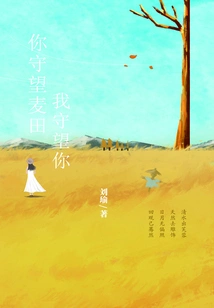
You Watch the Wheat Field, I Watch You
Literature你守望麦田,我守望你
Liu Yu
This book is a collection of short poems and essays, including works created from 2017 to the present. They are all based on people, scenes and events around him, and are inspired by his feelings. It especially records the author's changes in mood after facing the difficult situation of the death of a loved one. While lamenting the impermanence of life, he also hopes that people will cherish ordinary daily life. The language adheres to the principle of hibiscus emerging from clear water, and is natural without carvings. It is fresh, refined and eloquent.
This book is a collection of short poems and essays, including works created from 2017 to the present. They are all based on people, scenes and events around him, and are inspired by his feelings. It especially records the author's changes in mood after facing the difficult situation of the death of a loved one. While lamenting the impermanence of life, he also hopes that people will cherish ordinary daily life. The language adheres to the principle of hibiscus emerging from clear water, and is natural without carvings. It is fresh, refined and eloquent.
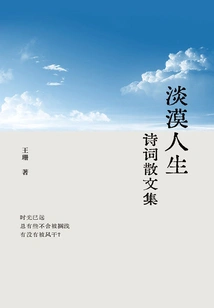
淡漠人生诗词散文集
Wang Shan
The Indifferent Life Poetry and Prose Collection is a collection of thirty modern poems and twelve essays selected by the author from poems written in the past thirty years. It records the depth of friendship between friends, the sweetness and bitterness of love, the helplessness and sadness of the beginning of the rift in marriage, and the love and longing for family. In particular, the poems and prose written by the author for her mother make people feel sad. The writing style of this book is sincere and natural, and the poems are like flowing clouds and flowing water, leaving people wanting more after reading it!
The Indifferent Life Poetry and Prose Collection is a collection of thirty modern poems and twelve essays selected by the author from poems written in the past thirty years. It records the depth of friendship between friends, the sweetness and bitterness of love, the helplessness and sadness of the beginning of the rift in marriage, and the love and longing for family. In particular, the poems and prose written by the author for her mother make people feel sad. The writing style of this book is sincere and natural, and the poems are like flowing clouds and flowing water, leaving people wanting more after reading it!
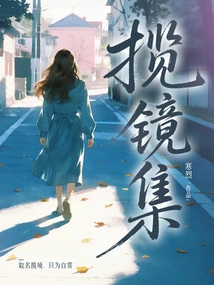
Collection of Mirrors
Literature揽镜集
Cold
[Exquisite + Prose + Healing + Growth] The article is more or less written. The content may not be optimal, but you can read it. Someone once asked why it was not published. Not that I haven't thought about it. I'm just too lazy to do it. Perhaps the name "Lanjing" was just for self-admiration. That's it for today. Whatever comes to mind, I will write later.
[Exquisite + Prose + Healing + Growth] The article is more or less written. The content may not be optimal, but you can read it. Someone once asked why it was not published. Not that I haven't thought about it. I'm just too lazy to do it. Perhaps the name "Lanjing" was just for self-admiration. That's it for today. Whatever comes to mind, I will write later.
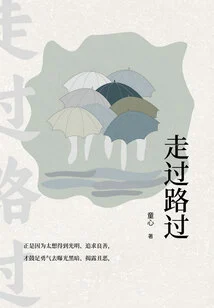
Passing By
Literature走过路过
Childlike Innocence
Mo Yan said: I have a prejudice. I believe that literary works can never be a tool for singing praises. I basically agree with this, especially since Mr. Mo Yan foreshadowed it in advance. It's just a personal bias. It is precisely because we want to gain light and pursue goodness so much that we have the courage to expose darkness and expose ugliness. This may be the original intention of some writers. Writing is an important tool for human communication, and it is also an important carrier for cultural dissemination and inheritance. Writing can break through the limitations of language in time and space, express current personal feelings and social phenomena, and spread and inherit them. When a society and its people are truly worthy of praise, I think Mr. Mo Yan's prejudices will change and he will not be stingy with his words. I sincerely yearn for the arrival of an era worthy of singing praises.
Mo Yan said: I have a prejudice. I believe that literary works can never be a tool for singing praises. I basically agree with this, especially since Mr. Mo Yan foreshadowed it in advance. It's just a personal bias. It is precisely because we want to gain light and pursue goodness so much that we have the courage to expose darkness and expose ugliness. This may be the original intention of some writers. Writing is an important tool for human communication, and it is also an important carrier for cultural dissemination and inheritance. Writing can break through the limitations of language in time and space, express current personal feelings and social phenomena, and spread and inherit them. When a society and its people are truly worthy of praise, I think Mr. Mo Yan's prejudices will change and he will not be stingy with his words. I sincerely yearn for the arrival of an era worthy of singing praises.
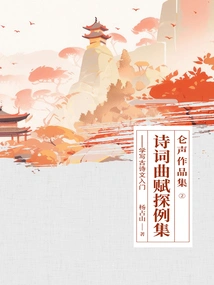
仑声作品集2:诗词曲赋探例集
Yang Zhanshan
Poetry, lyrics and music are the essence of ancient culture and ancient literature. These creations, expressions and descriptions are exquisite. Explore and explore examples to learn better. In the form of examples, this article summarizes the inherent laws of various literary styles so that people today can use them as reference tools when learning to write ancient poems. Since the author's level is not high, there must be many biased views and misunderstandings, and I hope readers can correct them. Of these four genres, poetry comes first, lyrics and music come last. From being demanding on the number of words, spacing between lines, and consistent rhyme and rhythm, later on, the word lines were irregular, and one article had multiple rhymes. Today, the world of free verse and vernacular prose is dominated. Poetry developed from the two-character short sentences of ancient ballads to the four-character style of the Western Zhou Dynasty and Spring and Autumn Period, and then to the Sao style of the Warring States Period - the seven and eight auspicious poems of "Chu Ci". Then in the Southern and Northern Dynasties, duality was used, and the "four tones", "eight diseases" and so on began to be standardized. In the Sui and Tang dynasties, rhythmic poetry was sung by both the elegant and the popular, with fixed specifications. Fu is a literary style that is close to "Chu Ci". It is said: "Those that are not scattered but connected are called Fu." There is a saying in ancient times that Fu comes from poetry. I think it is inappropriate. Poetry and Fu are two different things. Ci flourished in temples and flourished in the Song Dynasty. It is closely related to music and poetry, and absorbs elegant music. Qingle and Yanle. Fill in the lyrics according to the tones of the tones. In short, the diversity and interest of Ci are richer and more colorful than that of Qing Jiang, from the Song Dynasty to the early Yuan Dynasty. Moreover, dialects and folk music are more closely related than poetry, and can be enjoyed by all. Moreover, dialects and sounds from Goulanli Lane can be included in the music. Since there is no limit on the number of lining words, it is more interesting to sing. This article excludes the ancients. In addition to the famous works of the sages, I have some exercises among them.
Poetry, lyrics and music are the essence of ancient culture and ancient literature. These creations, expressions and descriptions are exquisite. Explore and explore examples to learn better. In the form of examples, this article summarizes the inherent laws of various literary styles so that people today can use them as reference tools when learning to write ancient poems. Since the author's level is not high, there must be many biased views and misunderstandings, and I hope readers can correct them. Of these four genres, poetry comes first, lyrics and music come last. From being demanding on the number of words, spacing between lines, and consistent rhyme and rhythm, later on, the word lines were irregular, and one article had multiple rhymes. Today, the world of free verse and vernacular prose is dominated. Poetry developed from the two-character short sentences of ancient ballads to the four-character style of the Western Zhou Dynasty and Spring and Autumn Period, and then to the Sao style of the Warring States Period - the seven and eight auspicious poems of "Chu Ci". Then in the Southern and Northern Dynasties, duality was used, and the "four tones", "eight diseases" and so on began to be standardized. In the Sui and Tang dynasties, rhythmic poetry was sung by both the elegant and the popular, with fixed specifications. Fu is a literary style that is close to "Chu Ci". It is said: "Those that are not scattered but connected are called Fu." There is a saying in ancient times that Fu comes from poetry. I think it is inappropriate. Poetry and Fu are two different things. Ci flourished in temples and flourished in the Song Dynasty. It is closely related to music and poetry, and absorbs elegant music. Qingle and Yanle. Fill in the lyrics according to the tones of the tones. In short, the diversity and interest of Ci are richer and more colorful than that of Qing Jiang, from the Song Dynasty to the early Yuan Dynasty. Moreover, dialects and folk music are more closely related than poetry, and can be enjoyed by all. Moreover, dialects and sounds from Goulanli Lane can be included in the music. Since there is no limit on the number of lining words, it is more interesting to sing. This article excludes the ancients. In addition to the famous works of the sages, I have some exercises among them.
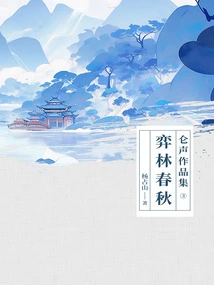
仑声作品集3:弈林春秋
Yang Zhanshan
Most of what is written in this book is the author's personal experience. It is said that the Spring and Autumn Period should be history. If it is the history of Go, the 1999 edition of the Chinese Go history published by China Statistics and co-authored by Cai Zhongmin, Zhao Zhiyun, Zheng Huaide, Shao Futang, Wang Kai, Chen Kezhong, Liu Shancheng, Yang Guanghui and others is authoritative. The writing team of this book spent ten years completing the first draft since it was established in 1986. This book writes about some key figures of Go, focusing on their contribution to the survival of Go, and also writes some unknown anecdotes about celebrities. This article also tells about my changes and emotions with them. Some of the poems and essays are my exercises, and I hope to develop and prosper together with Go. Why is the small town of Chengde such a prominent figure in it? This is not only because I am one of them, but more importantly, after China experienced the disastrous Cultural Revolution, I took the lead in withstanding the pressure and overcame many difficulties to hold several national competitions in succession, which can be said to have made a contribution. This article puts forward different opinions on the unanswered questions such as the origin of Go and hopes that the vast number of Go enthusiasts can explore it together. It mentions the origins of many historical figures, especially the great masters in poetry and poetry, and Go: "Without Go, there would be no Jinshi." Go is inseparable from culture.
Most of what is written in this book is the author's personal experience. It is said that the Spring and Autumn Period should be history. If it is the history of Go, the 1999 edition of the Chinese Go history published by China Statistics and co-authored by Cai Zhongmin, Zhao Zhiyun, Zheng Huaide, Shao Futang, Wang Kai, Chen Kezhong, Liu Shancheng, Yang Guanghui and others is authoritative. The writing team of this book spent ten years completing the first draft since it was established in 1986. This book writes about some key figures of Go, focusing on their contribution to the survival of Go, and also writes some unknown anecdotes about celebrities. This article also tells about my changes and emotions with them. Some of the poems and essays are my exercises, and I hope to develop and prosper together with Go. Why is the small town of Chengde such a prominent figure in it? This is not only because I am one of them, but more importantly, after China experienced the disastrous Cultural Revolution, I took the lead in withstanding the pressure and overcame many difficulties to hold several national competitions in succession, which can be said to have made a contribution. This article puts forward different opinions on the unanswered questions such as the origin of Go and hopes that the vast number of Go enthusiasts can explore it together. It mentions the origins of many historical figures, especially the great masters in poetry and poetry, and Go: "Without Go, there would be no Jinshi." Go is inseparable from culture.
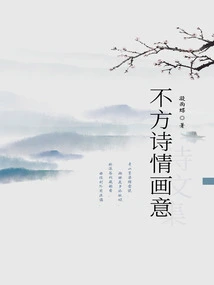
Not Poetic or Picturesque
Literature不方诗情画意
Ning Yudie
The green mountains are surrounded by black smoke and clouds, and the lake reflects the morning and evening, making it more enchanting. The fragrance of rice is hidden in the deep forests and valleys, and there are fishing songs outside the winding village.
The green mountains are surrounded by black smoke and clouds, and the lake reflects the morning and evening, making it more enchanting. The fragrance of rice is hidden in the deep forests and valleys, and there are fishing songs outside the winding village.
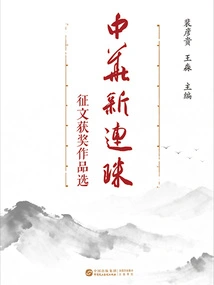
中华新连珠征文获奖作品选
Pei Yangui Editor-in-chief Wang Miao
As a unique literary style, Lianzhu sprouted in the Pre-Qin Dynasty, was named in the Western Han Dynasty, disappeared in the Republic of China, and has survived in the Chinese literary garden for more than two thousand years. In order to inherit and carry forward China's excellent traditional culture and continue the Chinese cultural context, Jiangsu Yancheng Logic Society and Yancheng Poetry Association jointly organized the "Four Openings of National Fate" prize-winning collection of Chinese new renju works. This book is a compilation of award-winning works selected from submissions from all over the country, including expert comments and some works written by calligraphers. This is the first collection of Lianzhu works since the founding of New China. It has important exploratory significance and demonstration effect on how traditional culture can be creatively transformed and developed innovatively.
As a unique literary style, Lianzhu sprouted in the Pre-Qin Dynasty, was named in the Western Han Dynasty, disappeared in the Republic of China, and has survived in the Chinese literary garden for more than two thousand years. In order to inherit and carry forward China's excellent traditional culture and continue the Chinese cultural context, Jiangsu Yancheng Logic Society and Yancheng Poetry Association jointly organized the "Four Openings of National Fate" prize-winning collection of Chinese new renju works. This book is a compilation of award-winning works selected from submissions from all over the country, including expert comments and some works written by calligraphers. This is the first collection of Lianzhu works since the founding of New China. It has important exploratory significance and demonstration effect on how traditional culture can be creatively transformed and developed innovatively.
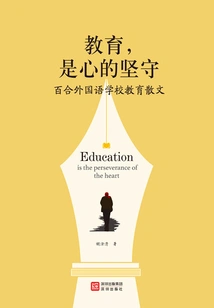
Education is the Perseverance of the Heart: Prose on Education at Baihe Foreign Language School
Literature教育,是心的坚守:百合外国语学校教育散文
Hu Tuqing
This book is presented in the form of a diary, recording education in the form of prose, and conveying the idea that "education is a prose": the form is scattered and the spirit is gathered together, and the forms of education are diverse, but the essence of cultivating morality and cultivating people is cohesive. This book records the true status of the education and teaching life of teachers and students at Shenzhen Baihe Foreign Language School, which spans nearly 2,000 days and nights, and involves beautiful scenes of teachers and students, teachers and parents, students and parents, teachers and teachers, and teachers and schools. As true, good and beautiful as education is, so true, good and beautiful are these essays. This book demonstrates the cross-field integration of literature and education, embodies the identity unity of the author and teacher. While recording education, it also records the beauty of education and literature. This is the connotation of educational prose and the original intention of educational prose.
This book is presented in the form of a diary, recording education in the form of prose, and conveying the idea that "education is a prose": the form is scattered and the spirit is gathered together, and the forms of education are diverse, but the essence of cultivating morality and cultivating people is cohesive. This book records the true status of the education and teaching life of teachers and students at Shenzhen Baihe Foreign Language School, which spans nearly 2,000 days and nights, and involves beautiful scenes of teachers and students, teachers and parents, students and parents, teachers and teachers, and teachers and schools. As true, good and beautiful as education is, so true, good and beautiful are these essays. This book demonstrates the cross-field integration of literature and education, embodies the identity unity of the author and teacher. While recording education, it also records the beauty of education and literature. This is the connotation of educational prose and the original intention of educational prose.
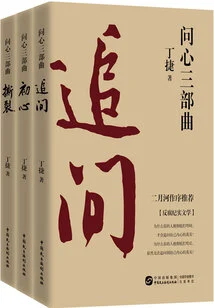
Asking the Heart Trilogy
Literature问心三部曲
Ding Jie
"Ask the Heart Trilogy" is a reprinted work. These three works use three different literary forms: documentary, speculative, and fictional to form the "Ask the Heart" trilogy series. The three works are complementary in content and logically linked. As a documentary literary work, "Questioning" not only has a strong storytelling quality, but also allows readers to deeply reflect on the temptation of the moment, the fragility of human nature, and the loss of original intentions through vivid descriptions and real cases. It is a psychological tracking of current people and a spiritual improvement reading for current people. The whole book "Primary Mind" consists of six chapters: "Acquisition, Questioning, Thinking, Enlightenment, Learning, and Practice". By analyzing social phenomena, writing about people's hearts, feelings, and human nature, looking at the current deviation and persistence of the original intention, and identifying the pathologies of the times and the lesions of the people's hearts, "Tear" creates an elite of the times and the backbone of society, who rises and falls in the tide of the times, has experienced failures and successes, and uses a flesh-and-blood case image to summarize the spiritual world of a generation of strivers. This book tells us that no matter how complex and changeable the world is, as long as we stick to our inner moral bottom line and face challenges bravely, nothing can really tear our souls apart.
"Ask the Heart Trilogy" is a reprinted work. These three works use three different literary forms: documentary, speculative, and fictional to form the "Ask the Heart" trilogy series. The three works are complementary in content and logically linked. As a documentary literary work, "Questioning" not only has a strong storytelling quality, but also allows readers to deeply reflect on the temptation of the moment, the fragility of human nature, and the loss of original intentions through vivid descriptions and real cases. It is a psychological tracking of current people and a spiritual improvement reading for current people. The whole book "Primary Mind" consists of six chapters: "Acquisition, Questioning, Thinking, Enlightenment, Learning, and Practice". By analyzing social phenomena, writing about people's hearts, feelings, and human nature, looking at the current deviation and persistence of the original intention, and identifying the pathologies of the times and the lesions of the people's hearts, "Tear" creates an elite of the times and the backbone of society, who rises and falls in the tide of the times, has experienced failures and successes, and uses a flesh-and-blood case image to summarize the spiritual world of a generation of strivers. This book tells us that no matter how complex and changeable the world is, as long as we stick to our inner moral bottom line and face challenges bravely, nothing can really tear our souls apart.
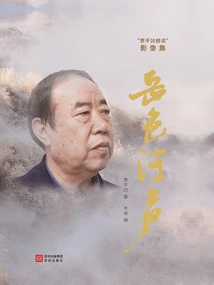
岳色河声:“贾平凹朗读”影像集
Jia Ping Is Concave, Edited By Munan
This book contains four important cultural essays by Jia Pingwa: "Postscript to "News", "Record of the Yellow River Shanxi-Shaanxi Grand Canyon", "Postscript to "Ancient Furnace"" and "Postscript to "Qin Opera". The book contains the author's description of the cultural landscape, reflections on local customs and personal thoughts, coupled with Munan's photography and a precious documentary directed by him and dubbed by Jia Pingwa in his hometown dialect, forming a multi-dimensional collection of cultural essays in the form of "text + picture + video".
This book contains four important cultural essays by Jia Pingwa: "Postscript to "News", "Record of the Yellow River Shanxi-Shaanxi Grand Canyon", "Postscript to "Ancient Furnace"" and "Postscript to "Qin Opera". The book contains the author's description of the cultural landscape, reflections on local customs and personal thoughts, coupled with Munan's photography and a precious documentary directed by him and dubbed by Jia Pingwa in his hometown dialect, forming a multi-dimensional collection of cultural essays in the form of "text + picture + video".
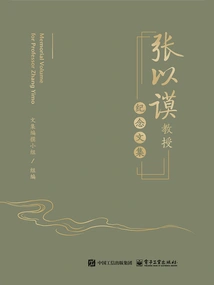
张以谟教授纪念文集
Anthology Editing Team
Professor Zhang Yimo is the founder of the optical engineering discipline of Tianjin University and the director of the Key Laboratory of Optoelectronic Information Technology of the Ministry of Education. He serves as the deputy leader of the Information Field Advisory Group of the 973 Project and a member of the Optoelectronics Expert Group of the 863 Project. He has won important honors such as the National Science Conference Award in 1978 and Fellow of the International Society of Optical Engineering in 1990. He was also rated as a young and middle-aged scientific and technological expert with outstanding contributions in the country. He was elected as a representative of the 14th National Congress of the Communist Party of China. He is a leading scholar in the field of applied optics in China. This commemorative collection presents a panoramic view of Mr.'S academic life and spiritual character. It compiles memorial articles from his relatives, friends, disciples and academic colleagues. It also sorts out Mr.'S academic achievements and educational practices in the field of optical engineering. It not only shows his founding of Tianjin University's optical instrument major and the development of industrial insights. It also records his teaching style of cultivating more than a hundred master's and doctoral talents over decades of teaching, comprehensively restores the lofty journey of this master of optics who devoted his life to the development of my country's optoelectronic technology and talent training, and retains precious spiritual wealth and academic reference for future students in the field of optics.
Professor Zhang Yimo is the founder of the optical engineering discipline of Tianjin University and the director of the Key Laboratory of Optoelectronic Information Technology of the Ministry of Education. He serves as the deputy leader of the Information Field Advisory Group of the 973 Project and a member of the Optoelectronics Expert Group of the 863 Project. He has won important honors such as the National Science Conference Award in 1978 and Fellow of the International Society of Optical Engineering in 1990. He was also rated as a young and middle-aged scientific and technological expert with outstanding contributions in the country. He was elected as a representative of the 14th National Congress of the Communist Party of China. He is a leading scholar in the field of applied optics in China. This commemorative collection presents a panoramic view of Mr.'S academic life and spiritual character. It compiles memorial articles from his relatives, friends, disciples and academic colleagues. It also sorts out Mr.'S academic achievements and educational practices in the field of optical engineering. It not only shows his founding of Tianjin University's optical instrument major and the development of industrial insights. It also records his teaching style of cultivating more than a hundred master's and doctoral talents over decades of teaching, comprehensively restores the lofty journey of this master of optics who devoted his life to the development of my country's optoelectronic technology and talent training, and retains precious spiritual wealth and academic reference for future students in the field of optics.
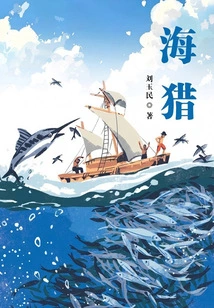
Sea hunting
Literature海猎
Liu Yumin
This book is a collection of unpublished short and medium-length stories and essays by Liu Yumin, the winner of the Mao Dun Literature Prize. It includes Liu Yumin's representative works published in recent years, such as "Sea Hunting", "Fountains Like Poems", and "Biography of Oriental Strange People". These works have been published in "October" and other publications, and represent the overall appearance of Liu Yumin's literary creation in recent years. The novella "Sea Hunting" with the same title describes the life of fishing and hunting at sea. It uses the process of Luyu 3037 and 3038 as clues to go out to sea to catch shrimps. Through the process of two fishing boats going out to sea to hunt, it describes the differences and conflicts in concepts and life styles between the two generations of captains, "Old Fu Jiang" and "Sea Lion", and intersperses the growth process of the two generations of fishing boat pilots.
This book is a collection of unpublished short and medium-length stories and essays by Liu Yumin, the winner of the Mao Dun Literature Prize. It includes Liu Yumin's representative works published in recent years, such as "Sea Hunting", "Fountains Like Poems", and "Biography of Oriental Strange People". These works have been published in "October" and other publications, and represent the overall appearance of Liu Yumin's literary creation in recent years. The novella "Sea Hunting" with the same title describes the life of fishing and hunting at sea. It uses the process of Luyu 3037 and 3038 as clues to go out to sea to catch shrimps. Through the process of two fishing boats going out to sea to hunt, it describes the differences and conflicts in concepts and life styles between the two generations of captains, "Old Fu Jiang" and "Sea Lion", and intersperses the growth process of the two generations of fishing boat pilots.
In the Reading Room of Hell
Literature在地狱阅览室里
I
This book collects newspaper columns, speeches and other non-fiction works written by Bolaño from 1976 to 2003. Based on the collection "In Wind, Frost, Rain and Snow" published by Alfaragua Publishing House in 2019, it also adds articles that are not included in this collection but exist in the collection "Between Parentheses" published by Anagrama Publishing House in 2004, as well as two non-fiction essays from the collection of short stories and essays "The Intolerable Gauchos", striving to collect all existing non-fiction works of Bolaño in one book. The book is divided into three parts: newspaper writing, lectures and speeches, and reading and re-reading, covering a wide range of topics. In it, Bolaño details the writers and works he likes or dislikes, and also records interactions with friends in real life, as well as interesting and strange things he encounters occasionally. In one or two pages, these people, things, and things can be vividly presented to readers. His real life trajectory, literary ideas and personal emotions are all in it.
This book collects newspaper columns, speeches and other non-fiction works written by Bolaño from 1976 to 2003. Based on the collection "In Wind, Frost, Rain and Snow" published by Alfaragua Publishing House in 2019, it also adds articles that are not included in this collection but exist in the collection "Between Parentheses" published by Anagrama Publishing House in 2004, as well as two non-fiction essays from the collection of short stories and essays "The Intolerable Gauchos", striving to collect all existing non-fiction works of Bolaño in one book. The book is divided into three parts: newspaper writing, lectures and speeches, and reading and re-reading, covering a wide range of topics. In it, Bolaño details the writers and works he likes or dislikes, and also records interactions with friends in real life, as well as interesting and strange things he encounters occasionally. In one or two pages, these people, things, and things can be vividly presented to readers. His real life trajectory, literary ideas and personal emotions are all in it.