Library
Browse and search books
13,360 novels found
Joy
Youth Fiction欢喜
I
All the best friends around him are willing to be ordinary, but Xiang Zhen is frightened by his mother's evil nature. His grandmother's last wish is that Xiang Zhen can live an extraordinary and outstanding life. In order to get ahead, she learned how to package herself and learned various guidelines to fight, but she found it difficult. After all, how could she calculate how to get ahead? Make a lot of money? Fight for infinite stars? Next to someone with a fortune? ......It will be all right. But in the end, she underwent plastic surgery and struggled, only to find that the most ideal life was to compromise with life. The words are sharp, to the point, the viewpoint is unique, and it is a school of its own. It is a rare good book.
All the best friends around him are willing to be ordinary, but Xiang Zhen is frightened by his mother's evil nature. His grandmother's last wish is that Xiang Zhen can live an extraordinary and outstanding life. In order to get ahead, she learned how to package herself and learned various guidelines to fight, but she found it difficult. After all, how could she calculate how to get ahead? Make a lot of money? Fight for infinite stars? Next to someone with a fortune? ......It will be all right. But in the end, she underwent plastic surgery and struggled, only to find that the most ideal life was to compromise with life. The words are sharp, to the point, the viewpoint is unique, and it is a school of its own. It is a rare good book.

I'm Just Afraid of Forgetting You
Youth Fiction我只是害怕忘记你
L
Have you ever loved such a person? Every breath you take feels like you exist for him. You are greedy for everything about him and long for his embrace, but you cannot love him. She drove him to the sea and forced him to say he loved her, otherwise they would both die. He looked at her coldly without saying a word, and she swore she would never love him again. But at a friend's party, two drunk people accidentally broke through the last line of defense. Moral sins, the betrayal of friends, and the resentment of her mother, none of these could stop her from loving him, but all her persistence collapsed instantly when she unexpectedly became pregnant and suddenly lost her sight. Another man's promise became her life-saving straw, but she suddenly disappeared, leaving him nowhere to be found. When we met again a few years later, he looked at her coldly in the small car and whispered: "You tried every possible means to leave me just to run away with your brother?" A desperate love escape cannot escape the judgment of fate. The only thing that can be free is the heart, which is an unforgettable memory.
Have you ever loved such a person? Every breath you take feels like you exist for him. You are greedy for everything about him and long for his embrace, but you cannot love him. She drove him to the sea and forced him to say he loved her, otherwise they would both die. He looked at her coldly without saying a word, and she swore she would never love him again. But at a friend's party, two drunk people accidentally broke through the last line of defense. Moral sins, the betrayal of friends, and the resentment of her mother, none of these could stop her from loving him, but all her persistence collapsed instantly when she unexpectedly became pregnant and suddenly lost her sight. Another man's promise became her life-saving straw, but she suddenly disappeared, leaving him nowhere to be found. When we met again a few years later, he looked at her coldly in the small car and whispered: "You tried every possible means to leave me just to run away with your brother?" A desperate love escape cannot escape the judgment of fate. The only thing that can be free is the heart, which is an unforgettable memory.

Best National Partner
Youth Fiction最佳国民拍档
J
The new romantic novel by the master of youthful love novels will touch your heart with delicate and gentle writing! You are my partner and my lover, I am only willing to leave my side to your protection! It comes with twelve additional extras, perfectly presenting this warm and exciting superstar stage for you! One is a senior female student who is burdened with the secret pain of her family and works hard to make money; the other is a handsome, arrogant, talented idol superstar who considers herself an orphan, and they become a contract couple because of a kiss. The two people measured each other's talents, confided each other's secrets, were surprised by each other's fate, understood each other's feelings, and finally came together... At the beginning of the story, she was his unfamiliar harmony girl; at the end of the story, she became his best music production partner and his favorite person.
The new romantic novel by the master of youthful love novels will touch your heart with delicate and gentle writing! You are my partner and my lover, I am only willing to leave my side to your protection! It comes with twelve additional extras, perfectly presenting this warm and exciting superstar stage for you! One is a senior female student who is burdened with the secret pain of her family and works hard to make money; the other is a handsome, arrogant, talented idol superstar who considers herself an orphan, and they become a contract couple because of a kiss. The two people measured each other's talents, confided each other's secrets, were surprised by each other's fate, understood each other's feelings, and finally came together... At the beginning of the story, she was his unfamiliar harmony girl; at the end of the story, she became his best music production partner and his favorite person.
P
Youth Fictionp
J
The great cross-border work of the ancient Chinese master [Xue Lingzhi]! The exclusive finale of the goddess Xiangsu and the demon king Dong Tianyun! The meaning is lingering, the heart is full of lovesickness, the fingers are slender, and the music in the heart is complicated. I have never loved someone so much in my life, and I have never given up forgetting or resenting him. Xiangsu was originally an ordinary gardenia tree in Lingze Mountain. After meeting Emperor Dong Tianyun, everything became different. The emperor gave her a drop of spiritual blood, and she transformed into the most beautiful goddess in Lingze Mountain and the most... Edible immortal attendant in the emperor's house. The only rule in the emperor's house is to worship the emperor! Xiangsu's crazy execution is exemplary. After the emperor took in Xiangsu, he only had one principle left - caring for the mentally retarded and protecting flowers and plants. The two fell in love for a long time, but this angered Chi Lin, who had always admired the emperor.
The great cross-border work of the ancient Chinese master [Xue Lingzhi]! The exclusive finale of the goddess Xiangsu and the demon king Dong Tianyun! The meaning is lingering, the heart is full of lovesickness, the fingers are slender, and the music in the heart is complicated. I have never loved someone so much in my life, and I have never given up forgetting or resenting him. Xiangsu was originally an ordinary gardenia tree in Lingze Mountain. After meeting Emperor Dong Tianyun, everything became different. The emperor gave her a drop of spiritual blood, and she transformed into the most beautiful goddess in Lingze Mountain and the most... Edible immortal attendant in the emperor's house. The only rule in the emperor's house is to worship the emperor! Xiangsu's crazy execution is exemplary. After the emperor took in Xiangsu, he only had one principle left - caring for the mentally retarded and protecting flowers and plants. The two fell in love for a long time, but this angered Chi Lin, who had always admired the emperor.
R
Youth Fictionr
J
He is a handsome and elegant psychiatrist who specializes in curing the lovelorn who have suicidal tendencies. She looks eccentric, lively and cheerful, but her behavior was extreme due to the unexpected death of her fiancé Wan Li on the eve of her wedding three years ago. They leaned on each other and slowly got closer. However, just when their love was strong, an accident happened suddenly, and she was faced with a difficult choice... All love in this world has to go through various tests. Fortunately, we still love each other. And all the scars in this world, even if they are unforgettable, will eventually be healed by love.
He is a handsome and elegant psychiatrist who specializes in curing the lovelorn who have suicidal tendencies. She looks eccentric, lively and cheerful, but her behavior was extreme due to the unexpected death of her fiancé Wan Li on the eve of her wedding three years ago. They leaned on each other and slowly got closer. However, just when their love was strong, an accident happened suddenly, and she was faced with a difficult choice... All love in this world has to go through various tests. Fortunately, we still love each other. And all the scars in this world, even if they are unforgettable, will eventually be healed by love.

Senior, Admit Your Defeat
Youth Fiction学长,认栽吧
L
In Tang Yuan's opinion, the school beauties are domineering, rich and cold-blooded. Who can tell her why Wei Mingxiu, the school beauties, are so down-to-earth? At first, he made a claim to her: "Your dog bit me, you have to treat me to a meal as compensation." Later, Tang Yuan asked him to borrow equipment to complete his homework, and he took advantage of this to blackmail: "You can borrow the equipment, but treat me to a meal." Later, Wei Mingxiu died for saving her. When she fell and got hurt, he said to her: "I haven't eaten yet. If I don't eat, the wound won't heal." Tang Yuan finally couldn't bear this shameless behavior and said: "Wei Mingxiu, why do I have any grudges with you? You don't even let me pay for my food?
In Tang Yuan's opinion, the school beauties are domineering, rich and cold-blooded. Who can tell her why Wei Mingxiu, the school beauties, are so down-to-earth? At first, he made a claim to her: "Your dog bit me, you have to treat me to a meal as compensation." Later, Tang Yuan asked him to borrow equipment to complete his homework, and he took advantage of this to blackmail: "You can borrow the equipment, but treat me to a meal." Later, Wei Mingxiu died for saving her. When she fell and got hurt, he said to her: "I haven't eaten yet. If I don't eat, the wound won't heal." Tang Yuan finally couldn't bear this shameless behavior and said: "Wei Mingxiu, why do I have any grudges with you? You don't even let me pay for my food?
Rose Morning
Youth Fiction玫瑰之晨
I
This year, her beloved brother died unexpectedly, her fiancé became someone else's groom, and the senior she had a crush on in middle school suddenly appeared ten years later. Her boss, strict teacher, and immediate boss were rumored to be the leading actors in her scandal. Shu Chang's originally peaceful life was suddenly stirred up into a turmoil. After the wave fades, Shu Chang realizes that forgetting someone requires time and effort; falling in love with someone requires heartbeat and courage.
This year, her beloved brother died unexpectedly, her fiancé became someone else's groom, and the senior she had a crush on in middle school suddenly appeared ten years later. Her boss, strict teacher, and immediate boss were rumored to be the leading actors in her scandal. Shu Chang's originally peaceful life was suddenly stirred up into a turmoil. After the wave fades, Shu Chang realizes that forgetting someone requires time and effort; falling in love with someone requires heartbeat and courage.
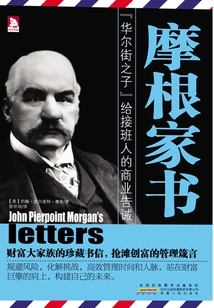
Morgan Family Letters
Literature摩根家书
N
"Letter from the Morgan Family" is a letter from John Pierpont, the founder of the Morgan family, an American wealth tycoon. Morgan's letter to his son, John Pierpont Jr., Is a private letter between father and son to exchange feelings and work. These letters are the treasures of the Morgan family. The letters "revealed the secrets of Morgan's power and wealth..."
"Letter from the Morgan Family" is a letter from John Pierpont, the founder of the Morgan family, an American wealth tycoon. Morgan's letter to his son, John Pierpont Jr., Is a private letter between father and son to exchange feelings and work. These letters are the treasures of the Morgan family. The letters "revealed the secrets of Morgan's power and wealth..."
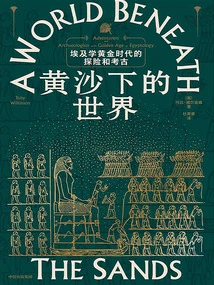
黄沙下的世界:埃及学黄金时代的探险和考古
O
The West's fascination with ancient Egypt can be traced back to ancient Greece, and the practice of collecting Egyptian artifacts was common as early as ancient Rome. Nothing is more exciting than digging for Pharaonic golden treasures in the yellow sands of Egypt. The artifacts of the Nile have been a source of imagination and inspiration for Westerners for centuries. On this basis, a real discipline - Egyptology - was gradually formed. The 19th century to the early 20th century was the heyday of Egyptology. This complex era witnessed all the great discoveries and prompted the recurring "Egyptian fever" in the West. This golden age of scholarship and adventure ended with two landmark events: Champollion's deciphering of hieroglyphics in 1822, and the discovery of Tutankhamun's tomb exactly 100 years later. The former provides the key to unlocking the mysteries of the Pharaonic civilization, prompting people to desperately go to Egypt to find more artifacts; the latter shows the prosperity and complexity of the Pharaonic civilization, sounding the death knell for the West's dominance in Egypt. "The World Beneath the Yellow Sand" by Cambridge Egyptian archaeologist Toby Wilkinson takes the timeline of the development of Egyptology as the main axis and provides a comprehensive restoration of the emergence of Egyptology and the exploration and archeology of the Golden Age. His combing of Egyptology helps us gradually see a real ancient Egyptian civilization - from a mysterious source of wisdom, to an alien within the framework of the Bible and classical literature, to a civilization that shares its glory with the ancient Roman Empire. "The World Under the Yellow Sand" not only records the grand expeditions and residual jealous competition and plunder carried out by the four countries of Britain, France, Germany and the United States to seize ancient Egyptian cultural relics, but also reflects how Egypt, which was invaded by European colonization, entered the modernization process in a bumpy way. The book tells the story of all kinds of people - unscrupulous antiquities dealers, explorers who challenge new things, archaeologists who devote themselves to learning, wily diplomats, Egyptian rulers obsessed with Europeanization, and the fascinating stories that happened to them. Their fascination with ancient Egyptian civilization has changed our understanding of the Nile Valley and its people, enhanced our understanding of the rich and colorful local history and culture, and also had a profound impact on Egypt. Regardless of their motivations and methods, their exploration and archeology, which lasted for more than a century, had an impact on the development of Egyptology to a certain extent and revealed to us a lost world that had been buried under the yellow sand for centuries.
The West's fascination with ancient Egypt can be traced back to ancient Greece, and the practice of collecting Egyptian artifacts was common as early as ancient Rome. Nothing is more exciting than digging for Pharaonic golden treasures in the yellow sands of Egypt. The artifacts of the Nile have been a source of imagination and inspiration for Westerners for centuries. On this basis, a real discipline - Egyptology - was gradually formed. The 19th century to the early 20th century was the heyday of Egyptology. This complex era witnessed all the great discoveries and prompted the recurring "Egyptian fever" in the West. This golden age of scholarship and adventure ended with two landmark events: Champollion's deciphering of hieroglyphics in 1822, and the discovery of Tutankhamun's tomb exactly 100 years later. The former provides the key to unlocking the mysteries of the Pharaonic civilization, prompting people to desperately go to Egypt to find more artifacts; the latter shows the prosperity and complexity of the Pharaonic civilization, sounding the death knell for the West's dominance in Egypt. "The World Beneath the Yellow Sand" by Cambridge Egyptian archaeologist Toby Wilkinson takes the timeline of the development of Egyptology as the main axis and provides a comprehensive restoration of the emergence of Egyptology and the exploration and archeology of the Golden Age. His combing of Egyptology helps us gradually see a real ancient Egyptian civilization - from a mysterious source of wisdom, to an alien within the framework of the Bible and classical literature, to a civilization that shares its glory with the ancient Roman Empire. "The World Under the Yellow Sand" not only records the grand expeditions and residual jealous competition and plunder carried out by the four countries of Britain, France, Germany and the United States to seize ancient Egyptian cultural relics, but also reflects how Egypt, which was invaded by European colonization, entered the modernization process in a bumpy way. The book tells the story of all kinds of people - unscrupulous antiquities dealers, explorers who challenge new things, archaeologists who devote themselves to learning, wily diplomats, Egyptian rulers obsessed with Europeanization, and the fascinating stories that happened to them. Their fascination with ancient Egyptian civilization has changed our understanding of the Nile Valley and its people, enhanced our understanding of the rich and colorful local history and culture, and also had a profound impact on Egypt. Regardless of their motivations and methods, their exploration and archeology, which lasted for more than a century, had an impact on the development of Egyptology to a certain extent and revealed to us a lost world that had been buried under the yellow sand for centuries.
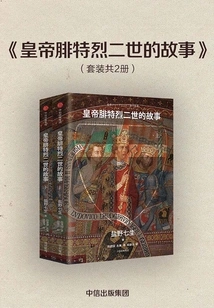
皇帝腓特烈二世的故事(全2册)
G
A real-life version of "Game of Thrones." The finale of Shiono Nansei's "Medieval Story". The survival rules of elites in troubled times. Wang Shi, Wang Wei, Yu Minhong, and Sima Ryotaro praised it. It is both a history of growth and a strategy for rising with both highlights and disadvantages. The first university, the first charter, the first man to peacefully liberate Jerusalem. Kidnapping, assassination, plague, conspiracy, betrayal, lovers, illegitimate children... Accompany them throughout their lives. Understand Frederick and understand the rules and boundaries of the circle. Frederick II, Emperor of the Holy Roman Empire, was a heterogeneous leader in the theocratic era of the Middle Ages in Europe. He was both devout and faithful, dared to love and hate, and was also a reformer with a creative spirit. He was proficient in Arabic, loved learning, loved falconry, valued law, was good at diplomacy, and had a particularly rich emotional life. He was a rare politician with outstanding personality in that era. Shiono Nansei tells the story of the growth of Frederick II in an interesting way, from being fierce and bloody to understanding the ways of the world. It can be said to be a "Game of Thrones" that actually happened in history.
A real-life version of "Game of Thrones." The finale of Shiono Nansei's "Medieval Story". The survival rules of elites in troubled times. Wang Shi, Wang Wei, Yu Minhong, and Sima Ryotaro praised it. It is both a history of growth and a strategy for rising with both highlights and disadvantages. The first university, the first charter, the first man to peacefully liberate Jerusalem. Kidnapping, assassination, plague, conspiracy, betrayal, lovers, illegitimate children... Accompany them throughout their lives. Understand Frederick and understand the rules and boundaries of the circle. Frederick II, Emperor of the Holy Roman Empire, was a heterogeneous leader in the theocratic era of the Middle Ages in Europe. He was both devout and faithful, dared to love and hate, and was also a reformer with a creative spirit. He was proficient in Arabic, loved learning, loved falconry, valued law, was good at diplomacy, and had a particularly rich emotional life. He was a rare politician with outstanding personality in that era. Shiono Nansei tells the story of the growth of Frederick II in an interesting way, from being fierce and bloody to understanding the ways of the world. It can be said to be a "Game of Thrones" that actually happened in history.
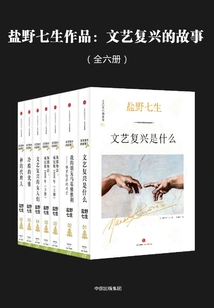
盐野七生作品:文艺复兴的故事(全六册)
G
The Renaissance story series includes six volumes: "What is the Renaissance", "My Friend Machiavelli", "Haidu Story: A Thousand Years in Venice (Part 1 and 2)", "Women of the Renaissance", "Elegant Coldness: The Life of Cesare Borgia", and "The Agent of God". The Renaissance was an explosion of desire to see, to know, to understand. Among the stories of the Renaissance, listen to Shiono Nansheng's stories about these Renaissance people.
The Renaissance story series includes six volumes: "What is the Renaissance", "My Friend Machiavelli", "Haidu Story: A Thousand Years in Venice (Part 1 and 2)", "Women of the Renaissance", "Elegant Coldness: The Life of Cesare Borgia", and "The Agent of God". The Renaissance was an explosion of desire to see, to know, to understand. Among the stories of the Renaissance, listen to Shiono Nansheng's stories about these Renaissance people.
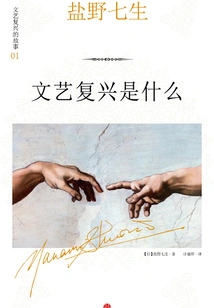
文艺复兴是什么(文艺复兴的故事01)
G
The Renaissance is an explosion of desire to see, want to know, and want to understand. In the form of a dialogue, this book describes the blooming flowers of the Renaissance through the author's virtual dialogue between two travelers wandering around the three cities of Florence, Rome, and Venice. It shows the charm of people who added glory to the era, such as Leonardo da Vinci, Frederick II, St. Francis, Cesare Borgia, etc. It passionately describes the 40-year Renaissance. It is undoubtedly the most exciting introductory book to understand this period of history.
The Renaissance is an explosion of desire to see, want to know, and want to understand. In the form of a dialogue, this book describes the blooming flowers of the Renaissance through the author's virtual dialogue between two travelers wandering around the three cities of Florence, Rome, and Venice. It shows the charm of people who added glory to the era, such as Leonardo da Vinci, Frederick II, St. Francis, Cesare Borgia, etc. It passionately describes the 40-year Renaissance. It is undoubtedly the most exciting introductory book to understand this period of history.
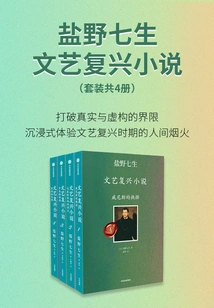
盐野七生·文艺复兴小说(套装共4册)
G
Renaissance is interesting to read like this! This is a novel, a history, and more like a movie. From Venice, Rome, to Florence, and back to Venice, follow the beautiful man Marco, penetrate every pore of the Renaissance era, and be a Renaissance man for a day! There is Greek specialty wine exuding the scent of pine, roasted guinea chicken served on a silver plate decorated with the coat of arms of the Medici family, Pecorino goat cheese, and snacks made of almond flour wrapped in cream that can be swallowed in one bite. There are also studios of artists in the center of Florence in the 16th century, major banks all over Europe, and a dazzling array of shops filled with foreign goods. You will pass by plainly dressed civilian women cooking Egyptian bean soup in a cauldron, and you will have a heated discussion about Machiavelli's prophecies with aristocrats wearing fine satin and lace. What's even more incredible is that you can also go to watch and "interrupt" Michelangelo's own creation of the Sistine Chapel's ceiling frescoes! Not only that, the love drama between a handsome man and an elegant geisha, the power struggle between ambitious young people, and the complex relationships between the great powers at that time are all presented in this "Renaissance Novel" series.
Renaissance is interesting to read like this! This is a novel, a history, and more like a movie. From Venice, Rome, to Florence, and back to Venice, follow the beautiful man Marco, penetrate every pore of the Renaissance era, and be a Renaissance man for a day! There is Greek specialty wine exuding the scent of pine, roasted guinea chicken served on a silver plate decorated with the coat of arms of the Medici family, Pecorino goat cheese, and snacks made of almond flour wrapped in cream that can be swallowed in one bite. There are also studios of artists in the center of Florence in the 16th century, major banks all over Europe, and a dazzling array of shops filled with foreign goods. You will pass by plainly dressed civilian women cooking Egyptian bean soup in a cauldron, and you will have a heated discussion about Machiavelli's prophecies with aristocrats wearing fine satin and lace. What's even more incredible is that you can also go to watch and "interrupt" Michelangelo's own creation of the Sistine Chapel's ceiling frescoes! Not only that, the love drama between a handsome man and an elegant geisha, the power struggle between ambitious young people, and the complex relationships between the great powers at that time are all presented in this "Renaissance Novel" series.
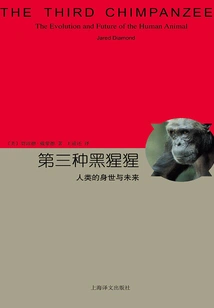
第三种黑猩猩:人类的身世与未来(睿文馆)
G
We are no strangers to humans, but how did humans evolve into what they are today? What are the key factors that make people human? I will discuss the rise and fall of humankind in five parts. The first part covers millions of years of human evolution, ending with the rise of agriculture 10,000 years ago. The second part discusses changes in the human life cycle. After focusing on the biological basis of our cultural expression, Part 3 goes on to discuss those cultural characteristics that we think make "humans different from animals." Part Four discusses one of them: our vendetta potential. Another dark characteristic of humanity: its ever-accelerating destruction of the environment. In Part Five, I will detail the history of human environmental mismanagement to expose that illusion. As humans emerged from the animal kingdom, our capacity for self-destruction accelerated. The problems we face do have their roots in animals. Those problems have followed us, growing with our increasing power and population, and are now expanding at an alarming rate. I would not have written this book if I had not felt an urgent crisis; I would not have written this book if I had believed that our destruction was sealed. In fact, what we lack is the necessary political will. I trace the history of the human species in this book to help gather that will.
We are no strangers to humans, but how did humans evolve into what they are today? What are the key factors that make people human? I will discuss the rise and fall of humankind in five parts. The first part covers millions of years of human evolution, ending with the rise of agriculture 10,000 years ago. The second part discusses changes in the human life cycle. After focusing on the biological basis of our cultural expression, Part 3 goes on to discuss those cultural characteristics that we think make "humans different from animals." Part Four discusses one of them: our vendetta potential. Another dark characteristic of humanity: its ever-accelerating destruction of the environment. In Part Five, I will detail the history of human environmental mismanagement to expose that illusion. As humans emerged from the animal kingdom, our capacity for self-destruction accelerated. The problems we face do have their roots in animals. Those problems have followed us, growing with our increasing power and population, and are now expanding at an alarming rate. I would not have written this book if I had not felt an urgent crisis; I would not have written this book if I had believed that our destruction was sealed. In fact, what we lack is the necessary political will. I trace the history of the human species in this book to help gather that will.
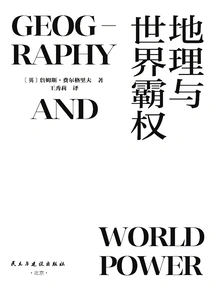
O
Historyo
P
"Geography and World Hegemony" is the career masterpiece of British geographer and geopolitics James Fairgriff. Using interdisciplinary perspectives such as geography, history, politics, and anthropology, the book traces the development of the world from ancient times to the early 20th century, subverting many of the social development questions that people are accustomed to. By introducing concepts such as "geographical conditions," "energy," and "dominance," it sorts out the context of world history with a systematic explanatory framework, provides us with a new thinking perspective for understanding human history, and presents a profound history of the development of human civilization.
"Geography and World Hegemony" is the career masterpiece of British geographer and geopolitics James Fairgriff. Using interdisciplinary perspectives such as geography, history, politics, and anthropology, the book traces the development of the world from ancient times to the early 20th century, subverting many of the social development questions that people are accustomed to. By introducing concepts such as "geographical conditions," "energy," and "dominance," it sorts out the context of world history with a systematic explanatory framework, provides us with a new thinking perspective for understanding human history, and presents a profound history of the development of human civilization.
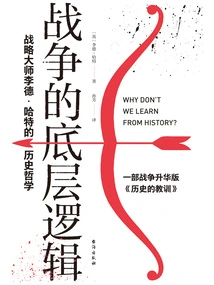
战争的底层逻辑:战略大师李德·哈特的历史哲学
H
This is a masterpiece in his later years with the master of history Liddell Hart. It highly summarizes the author's research results on the history of war and strategy theory, and refined his own philosophy of history with his lifelong efforts. From the macro perspective of a strategist, the author moves from history through the present to the future, exploring why humans make the same mistakes again and again in the fields of war, politics, and society, sounding a wake-up call for mankind. With the rigor and objectivity of a historian, combined with first-hand investigation data, the author provides a detailed and thorough analysis of the underlying logical issues why mankind has repeatedly fallen into the quagmire of war from the political system, social environment, public opinion, decision-making process and other aspects. The content of this book is short and concise, and the views are profound and sharp. It is worth reading and understanding again and again by readers of any era.
This is a masterpiece in his later years with the master of history Liddell Hart. It highly summarizes the author's research results on the history of war and strategy theory, and refined his own philosophy of history with his lifelong efforts. From the macro perspective of a strategist, the author moves from history through the present to the future, exploring why humans make the same mistakes again and again in the fields of war, politics, and society, sounding a wake-up call for mankind. With the rigor and objectivity of a historian, combined with first-hand investigation data, the author provides a detailed and thorough analysis of the underlying logical issues why mankind has repeatedly fallen into the quagmire of war from the political system, social environment, public opinion, decision-making process and other aspects. The content of this book is short and concise, and the views are profound and sharp. It is worth reading and understanding again and again by readers of any era.
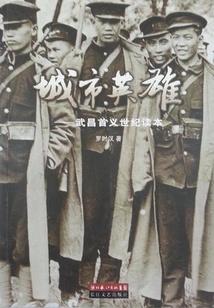
City hero
History城市英雄
R
This book expresses the first meaning of Wuchang from a unique perspective. The book is preceded and followed by prefaces written by the famous scholars Zhang Kaiyuan and Feng Tianyu and a postscript by the author himself. The main text consists of 18 chapters. The first five chapters summarize the historical status of Wuhan as a city and the social environment that brewed the Wuchang Shouyi; the middle nine chapters describe the establishment of the revolutionary organization in Hubei and the occurrence of the Wuchang Shouyi and Yangxia Defense War; the last four chapters review the significance and influence of Wuchang Shouyi, including the formation and development of Shouyi culture. The context is clear and the structure is reasonable.
This book expresses the first meaning of Wuchang from a unique perspective. The book is preceded and followed by prefaces written by the famous scholars Zhang Kaiyuan and Feng Tianyu and a postscript by the author himself. The main text consists of 18 chapters. The first five chapters summarize the historical status of Wuhan as a city and the social environment that brewed the Wuchang Shouyi; the middle nine chapters describe the establishment of the revolutionary organization in Hubei and the occurrence of the Wuchang Shouyi and Yangxia Defense War; the last four chapters review the significance and influence of Wuchang Shouyi, including the formation and development of Shouyi culture. The context is clear and the structure is reasonable.
Humanities Chengdu
History人文成都
L
Taking Chengdu in anecdotes and idioms as the starting point, it tells the stories of historical figures in Chengdu in two parts: "Enter Shu" and "Out of Shu". This book systematically sorts out the history and culture of Bashu, with Chengdu regional culture as a typical representative, and adds a talented literary imagination narrative based on the possession of detailed historical materials. It is both academic and literary readable, has great significance for the inheritance and innovation of Chinese culture, has high publication value, and has good social benefits.
Taking Chengdu in anecdotes and idioms as the starting point, it tells the stories of historical figures in Chengdu in two parts: "Enter Shu" and "Out of Shu". This book systematically sorts out the history and culture of Bashu, with Chengdu regional culture as a typical representative, and adds a talented literary imagination narrative based on the possession of detailed historical materials. It is both academic and literary readable, has great significance for the inheritance and innovation of Chinese culture, has high publication value, and has good social benefits.
西方古典学术史(第一卷)
Z
"History of Western Classical Scholarship" is the most important work of the British classical scholar John Edwin Sands. The book consists of three volumes. It comprehensively and systematically explains the development of classical scholarship from the 6th century BC to the 19th century BC. It details the development of Greek and Roman scholarship and involves literature, history, philosophy and other fields in various periods. It is especially good at philology, editions, etymology, and grammar. The writing is extremely detailed and profound, and can be regarded as a comprehensive record of the classical academic achievements of various eras in the past. The first volume of this book covers the period from about 600 BC to about 1350 AD. It mainly tells the occurrence and evolution of Greek and Latin scholarship, as well as the spread and evolution of Greek and Latin scholarship in the Byzantine period and the Western Middle Ages. The book first involves the study of Homer's epics, dramas and other poetic works, oratory and rhetoric, grammar and etymology, the Alexandrian school, the Stoic school, the Pergamon school, literary criticism in the first century of the empire, and Greek and Latin scholarship in late antiquity. It has a broad vision and covers many aspects. In the second half of the book, the author sets his sights on Constantinople, carefully organizing and in-depth elaborating on the inheritance, copying and collation of documents from ancient times to the Middle Ages, and carefully combing through Byzantine scholarship, 9th-century classics, early scholastics and their classic works, and textual research in the medieval period, making the academic development of the medieval period clear at a glance.
"History of Western Classical Scholarship" is the most important work of the British classical scholar John Edwin Sands. The book consists of three volumes. It comprehensively and systematically explains the development of classical scholarship from the 6th century BC to the 19th century BC. It details the development of Greek and Roman scholarship and involves literature, history, philosophy and other fields in various periods. It is especially good at philology, editions, etymology, and grammar. The writing is extremely detailed and profound, and can be regarded as a comprehensive record of the classical academic achievements of various eras in the past. The first volume of this book covers the period from about 600 BC to about 1350 AD. It mainly tells the occurrence and evolution of Greek and Latin scholarship, as well as the spread and evolution of Greek and Latin scholarship in the Byzantine period and the Western Middle Ages. The book first involves the study of Homer's epics, dramas and other poetic works, oratory and rhetoric, grammar and etymology, the Alexandrian school, the Stoic school, the Pergamon school, literary criticism in the first century of the empire, and Greek and Latin scholarship in late antiquity. It has a broad vision and covers many aspects. In the second half of the book, the author sets his sights on Constantinople, carefully organizing and in-depth elaborating on the inheritance, copying and collation of documents from ancient times to the Middle Ages, and carefully combing through Byzantine scholarship, 9th-century classics, early scholastics and their classic works, and textual research in the medieval period, making the academic development of the medieval period clear at a glance.
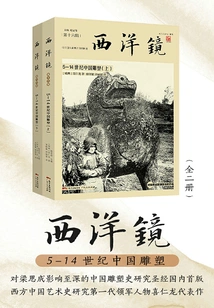
西洋镜:5-14世纪中国雕塑(全二册)
O
This book was first published in 1925. It is a masterpiece by happy Renlong, a giant in the study of Chinese art history in the West. It is still regarded by Western scholars as the "Bible" for studying ancient Chinese sculptures to this day. The text part mainly introduces the historical evolution of Chinese sculpture from the 5th to the 14th century, as well as the artistic characteristics and representative works of each period. The nearly one thousand pictures in the catalog are arranged according to time and province, which not only focus on the artistic characteristics of sculptures in different regions in the same period, but also present the evolution of styles in the same region in different periods. A considerable part of the Chinese cultural relics collected by these overseas museums, art galleries, antique dealers, and private collectors have disappeared, and some historical sites and cultural relic collections have suffered repeated disasters and have now disappeared from the world, which shows the preciousness of this book.
This book was first published in 1925. It is a masterpiece by happy Renlong, a giant in the study of Chinese art history in the West. It is still regarded by Western scholars as the "Bible" for studying ancient Chinese sculptures to this day. The text part mainly introduces the historical evolution of Chinese sculpture from the 5th to the 14th century, as well as the artistic characteristics and representative works of each period. The nearly one thousand pictures in the catalog are arranged according to time and province, which not only focus on the artistic characteristics of sculptures in different regions in the same period, but also present the evolution of styles in the same region in different periods. A considerable part of the Chinese cultural relics collected by these overseas museums, art galleries, antique dealers, and private collectors have disappeared, and some historical sites and cultural relic collections have suffered repeated disasters and have now disappeared from the world, which shows the preciousness of this book.
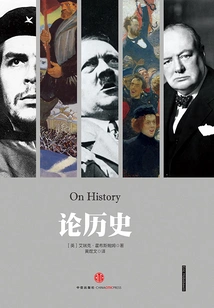
On History
History论历史
I
"On History" is an important work compiled by Eric Hobsbawm, one of the most important historians and thinkers in modern times, when he was 80 years old. After more than 50 years of academic training and life accumulation, Hobsbawm has integrated all his thoughts and perceptions of history into it, reflecting this world-class great man's lifelong concern for the past, present and future. In this book, he is concerned about the use and abuse of history in both social and political aspects, as well as the responsibility of historians; discusses the role of history on contemporary society, and the value of history to other disciplines (especially social disciplines); examines various historical trends and trends, and critically evaluates them; explores Discuss the relationship between Marx and contemporary historical trends; describe European history, subaltern history, the Russian Revolution, and global barbarism that undermined the development of civilization... Through the discussion in this book, Hobsbawm leads readers to think about the theory, practice, and development of history, as well as the relationship between history and the modern world.
"On History" is an important work compiled by Eric Hobsbawm, one of the most important historians and thinkers in modern times, when he was 80 years old. After more than 50 years of academic training and life accumulation, Hobsbawm has integrated all his thoughts and perceptions of history into it, reflecting this world-class great man's lifelong concern for the past, present and future. In this book, he is concerned about the use and abuse of history in both social and political aspects, as well as the responsibility of historians; discusses the role of history on contemporary society, and the value of history to other disciplines (especially social disciplines); examines various historical trends and trends, and critically evaluates them; explores Discuss the relationship between Marx and contemporary historical trends; describe European history, subaltern history, the Russian Revolution, and global barbarism that undermined the development of civilization... Through the discussion in this book, Hobsbawm leads readers to think about the theory, practice, and development of history, as well as the relationship between history and the modern world.
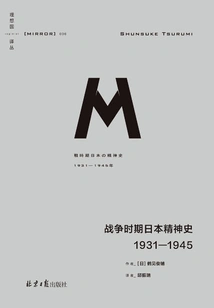
战争时期日本精神史:1931-1945
L
From the "September 18th Incident" in 1931 to the end of World War II in 1945, Japan used the name of "national system" to shroud the entire Japanese empire, including its colonies, under the control of a strong national ideology. It was extremely fanatical about war, the emperor, and the country, and further deepened its Greater Asiaticism and jade-breaking ideas. By examining the seclusion and inferiority complex of the Japanese, the ideological process of intellectuals, the coercive power of the state, and the relationship between the state and the people, Shunsuke Tsurumi incisively analyzes how Japan transformed from a country that became prosperous, strong, free and open in spirit during the Meiji period to a conservative, narrow-minded and aggressive country with rampant fascism. He went on to explain why Japanese intellectuals failed in their struggle, introspection, and resistance to nationalism, and how they succumbed and "turned" after being oppressed and became "accomplices" of militarism. Finally, when the country launched a war, they propagandized and justified militarism and supranationalism, leading Japan to a path of destruction.
From the "September 18th Incident" in 1931 to the end of World War II in 1945, Japan used the name of "national system" to shroud the entire Japanese empire, including its colonies, under the control of a strong national ideology. It was extremely fanatical about war, the emperor, and the country, and further deepened its Greater Asiaticism and jade-breaking ideas. By examining the seclusion and inferiority complex of the Japanese, the ideological process of intellectuals, the coercive power of the state, and the relationship between the state and the people, Shunsuke Tsurumi incisively analyzes how Japan transformed from a country that became prosperous, strong, free and open in spirit during the Meiji period to a conservative, narrow-minded and aggressive country with rampant fascism. He went on to explain why Japanese intellectuals failed in their struggle, introspection, and resistance to nationalism, and how they succumbed and "turned" after being oppressed and became "accomplices" of militarism. Finally, when the country launched a war, they propagandized and justified militarism and supranationalism, leading Japan to a path of destruction.
P
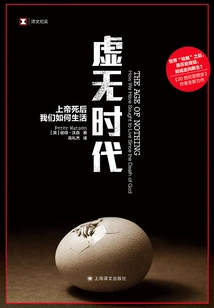
虚无时代:上帝死后我们如何生活(译文纪实)
J
How did Nietzsche's declaration of "the death of God" give birth to a postmodern, fragmented society? An intellectual book that breaks down professional barriers, a feast of ideas that refuses to be simplified. From the collapse of classical antiquity to the 21st century, the exploration journey of human intellectual adventurers over the past 130 years. Is it a spiritual regression, or a return to fanaticism? Where will mankind go when it stands at a historical divergence point? This is a captivating story of human exploration and creation, failure and success in an isolated world. As one of the most outstanding intellectual historians of our time, Peter Watson takes the ideological shock caused by Nietzsche at the turn of the century as the starting point and examines how this shock invaded all aspects of spiritual life, ranging from Dostoevsky, Jung, Husserl, and Ibsen to Picasso and Bob Dylan, from psychology, phenomenology, and theosophy. To Impressionism, Pop Art, Jazz, from Auschwitz, Hiroshima, the Great Purge to Woodstock, and "9·11". Connecting the dots, he uses elegant and precise strokes to unearth the orderly context behind seemingly unrelated phenomena, and draws an ideological map from the era of classical collapse to the bizarre postmodern era.
How did Nietzsche's declaration of "the death of God" give birth to a postmodern, fragmented society? An intellectual book that breaks down professional barriers, a feast of ideas that refuses to be simplified. From the collapse of classical antiquity to the 21st century, the exploration journey of human intellectual adventurers over the past 130 years. Is it a spiritual regression, or a return to fanaticism? Where will mankind go when it stands at a historical divergence point? This is a captivating story of human exploration and creation, failure and success in an isolated world. As one of the most outstanding intellectual historians of our time, Peter Watson takes the ideological shock caused by Nietzsche at the turn of the century as the starting point and examines how this shock invaded all aspects of spiritual life, ranging from Dostoevsky, Jung, Husserl, and Ibsen to Picasso and Bob Dylan, from psychology, phenomenology, and theosophy. To Impressionism, Pop Art, Jazz, from Auschwitz, Hiroshima, the Great Purge to Woodstock, and "9·11". Connecting the dots, he uses elegant and precise strokes to unearth the orderly context behind seemingly unrelated phenomena, and draws an ideological map from the era of classical collapse to the bizarre postmodern era.
Q
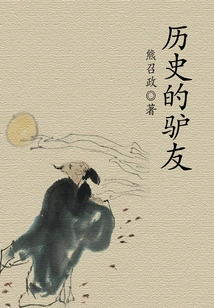
History Traveler
History历史的驴友
I
"Historical Friends" is a collection of historical essays by Mr. Xiong Zhaozheng. It contains more than 80 essays, divided into four volumes: Blessing China, The Power of Emperor Yan, Traveling Through the Green Mountains, People Are Not Old, and Green Mountains Still Remaining. The content includes a record of the new appearance since the founding of New China, a reminiscence of history and ancient people, a discussion of current culture, and a reflection on the relationship between man and nature. It reflects the author's progressive cultural pursuit, positive historical outlook, and responsible humanistic sentiments.
"Historical Friends" is a collection of historical essays by Mr. Xiong Zhaozheng. It contains more than 80 essays, divided into four volumes: Blessing China, The Power of Emperor Yan, Traveling Through the Green Mountains, People Are Not Old, and Green Mountains Still Remaining. The content includes a record of the new appearance since the founding of New China, a reminiscence of history and ancient people, a discussion of current culture, and a reflection on the relationship between man and nature. It reflects the author's progressive cultural pursuit, positive historical outlook, and responsible humanistic sentiments.
I
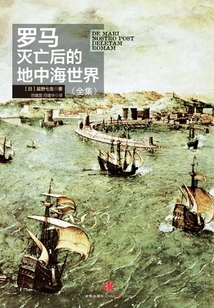
罗马灭亡后的地中海世界(全集)
G
In ancient times, the northern and southern sides of the Mediterranean belonged to the same civilization circle, which was the Roman world created by the Romans. The separation did not begin until after the 7th century. The Roman world perished when the Mediterranean ceased to be an inland sea, and when the Mediterranean ceased to be a thoroughfare connecting people and became a boundary sea that separated people. In the future, the Mediterranean Sea became such an ocean. There must be a Saracen Tower built on the top of the seaside cliff to notify people of the attack of Saracen pirates and let people flee. There were also ships full of Crusaders heading east sailing on the sea. When 1000 AD passed, the Italian maritime city-states of Pisa, Genoa and Venice were increasingly prospering in their trade with the Eastern Islamic world, and the Mediterranean gradually became a sea for trading ships to sail back and forth. Later, the Mediterranean Sea became the sea of the Renaissance era that held high the banner of the revival of ancient times and the revival of human rights. In 476 AD, after the fall of the Western Roman Empire, the Mediterranean entered an era of division among the powerful. "With a sword in his right hand and a Quran in his left hand", Saracen pirates who were good at plundering and kidnapping were wreaking havoc in the Mediterranean. The order of the Mediterranean was broken, and their barbaric behavior caused the people of the Mediterranean to suffer from plunder. Then the Ottoman Empire used the pirates in North Africa as a stepping stone to enter the Mediterranean and pressed hard on the Christian world. In contrast, Spain led by Carlos, who also served as Holy Roman Emperor in the Christian world, France led by Francis I, and the Republic of Venice, etc. The ideas and interests of different countries and leaders were intertwined, and the great powers fought against each other. In order to fight against the Islamic pirates, the military forces of Christendom gathered together...
In ancient times, the northern and southern sides of the Mediterranean belonged to the same civilization circle, which was the Roman world created by the Romans. The separation did not begin until after the 7th century. The Roman world perished when the Mediterranean ceased to be an inland sea, and when the Mediterranean ceased to be a thoroughfare connecting people and became a boundary sea that separated people. In the future, the Mediterranean Sea became such an ocean. There must be a Saracen Tower built on the top of the seaside cliff to notify people of the attack of Saracen pirates and let people flee. There were also ships full of Crusaders heading east sailing on the sea. When 1000 AD passed, the Italian maritime city-states of Pisa, Genoa and Venice were increasingly prospering in their trade with the Eastern Islamic world, and the Mediterranean gradually became a sea for trading ships to sail back and forth. Later, the Mediterranean Sea became the sea of the Renaissance era that held high the banner of the revival of ancient times and the revival of human rights. In 476 AD, after the fall of the Western Roman Empire, the Mediterranean entered an era of division among the powerful. "With a sword in his right hand and a Quran in his left hand", Saracen pirates who were good at plundering and kidnapping were wreaking havoc in the Mediterranean. The order of the Mediterranean was broken, and their barbaric behavior caused the people of the Mediterranean to suffer from plunder. Then the Ottoman Empire used the pirates in North Africa as a stepping stone to enter the Mediterranean and pressed hard on the Christian world. In contrast, Spain led by Carlos, who also served as Holy Roman Emperor in the Christian world, France led by Francis I, and the Republic of Venice, etc. The ideas and interests of different countries and leaders were intertwined, and the great powers fought against each other. In order to fight against the Islamic pirates, the military forces of Christendom gathered together...
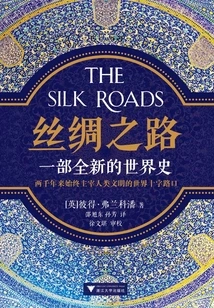
丝绸之路:一部全新的世界史
Q
A phenomenon-level bestseller that has shocked the world, a senior historian from Oxford University clarifies the past and present of the "Belt and Road Initiative" from the perspective of world history! It has topped the nonfiction bestseller list in more than 20 countries including the United Kingdom, the United States, Germany, Turkey, and India. It has received unanimous praise from celebrities in academic, political, and business circles at home and abroad. It was recommended twice for the first time by the People's Daily. From its inception, the Silk Road has always dominated the process of human civilization. The Silk Road made China's silk and civilization popular all over the world; Rome and Persia created their respective empires on the roadside; Buddhism, Christianity and Islam rose rapidly along the Silk Road and spread around the world, integrating the three thousand years of history of Jerusalem; Genghis Khan's Mongolian iron hoof went all the way to the west, bringing slaughter while promoting the integration of Eastern and Western civilizations; the British Empire created a glory that never sets by plundering the wealth on the Silk Road; Hitler pushed the world into the abyss of war and massacre for the resources on the Silk Road. To this day, refugees and the terrorist ISIS on the Silk Road are still a lingering nightmare for Europe and the United States. From Zhang Jian's passage through the Western Regions to the "One Belt, One Road" initiative, you will find in this all-encompassing epic that the Silk Road not only shaped the past of mankind, but will also dominate the future of the world.
A phenomenon-level bestseller that has shocked the world, a senior historian from Oxford University clarifies the past and present of the "Belt and Road Initiative" from the perspective of world history! It has topped the nonfiction bestseller list in more than 20 countries including the United Kingdom, the United States, Germany, Turkey, and India. It has received unanimous praise from celebrities in academic, political, and business circles at home and abroad. It was recommended twice for the first time by the People's Daily. From its inception, the Silk Road has always dominated the process of human civilization. The Silk Road made China's silk and civilization popular all over the world; Rome and Persia created their respective empires on the roadside; Buddhism, Christianity and Islam rose rapidly along the Silk Road and spread around the world, integrating the three thousand years of history of Jerusalem; Genghis Khan's Mongolian iron hoof went all the way to the west, bringing slaughter while promoting the integration of Eastern and Western civilizations; the British Empire created a glory that never sets by plundering the wealth on the Silk Road; Hitler pushed the world into the abyss of war and massacre for the resources on the Silk Road. To this day, refugees and the terrorist ISIS on the Silk Road are still a lingering nightmare for Europe and the United States. From Zhang Jian's passage through the Western Regions to the "One Belt, One Road" initiative, you will find in this all-encompassing epic that the Silk Road not only shaped the past of mankind, but will also dominate the future of the world.
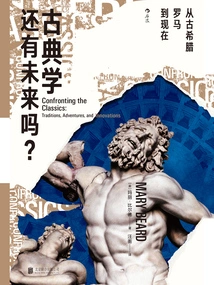
古典学还有未来吗?:从古希腊罗马到现在
I
The original title of this book is Confronting the Classics: Traditions, Adventures, and Innovations, which is literally translated as "Confronting the Classics: Traditions, Adventures and Innovations". The Chinese title comes from her preface "Does Classics Have a Future?" >>. The book includes 31 reviews of works on the study of ancient Greece and Rome. Author Mary Beard believes that although many people believe that classics is in decline, each generation of scholars has put forward its own new views on ancient Greece and Rome. She has always been concerned with these discussions and debates, and in this book she presents to us the academic tradition of classics and its recent reinterpretations and new theories. Throughout the book, she always claims that classics is not only about the ancient Greeks and Romans more than 2,000 years ago, but also about ourselves, as well as the generations of classical scholars, writers, artists, filmmakers, and politicians who quoted or even appropriated ancient Greek and Roman culture. We need to confront this subject head on and join the discussion. The subject remains a site of intense debate, rather than one that has settled and can be consigned to the dustbin.
The original title of this book is Confronting the Classics: Traditions, Adventures, and Innovations, which is literally translated as "Confronting the Classics: Traditions, Adventures and Innovations". The Chinese title comes from her preface "Does Classics Have a Future?" >>. The book includes 31 reviews of works on the study of ancient Greece and Rome. Author Mary Beard believes that although many people believe that classics is in decline, each generation of scholars has put forward its own new views on ancient Greece and Rome. She has always been concerned with these discussions and debates, and in this book she presents to us the academic tradition of classics and its recent reinterpretations and new theories. Throughout the book, she always claims that classics is not only about the ancient Greeks and Romans more than 2,000 years ago, but also about ourselves, as well as the generations of classical scholars, writers, artists, filmmakers, and politicians who quoted or even appropriated ancient Greek and Roman culture. We need to confront this subject head on and join the discussion. The subject remains a site of intense debate, rather than one that has settled and can be consigned to the dustbin.
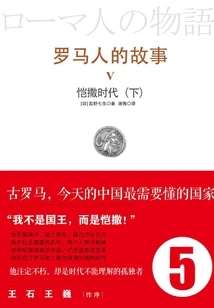
罗马人的故事5:恺撒时代(下)
H
In 49 BC, Caesar crossed the Rubicon River and quickly controlled the entire Italian peninsula within two months. He then attacked Marseilles, attacked Spain, and pacified the western Mediterranean. Then he moved to Macedonia and pursued Pompey. Finally, he completely surrendered the Senate faction headed by Pompey on the North African front and carried out comprehensive reforms to transform the Roman Empire. This volume fully demonstrates Caesar's rationality and keen political insight; from a modern perspective, it reinterprets the love and love relationship between Caesar and the Egyptian Queen Cleopatra and Cicero, and vividly depicts Caesar's story-telling life. Caesar's consistent spirit of tolerating the defeated was the most touching legacy in the history of Rome.
In 49 BC, Caesar crossed the Rubicon River and quickly controlled the entire Italian peninsula within two months. He then attacked Marseilles, attacked Spain, and pacified the western Mediterranean. Then he moved to Macedonia and pursued Pompey. Finally, he completely surrendered the Senate faction headed by Pompey on the North African front and carried out comprehensive reforms to transform the Roman Empire. This volume fully demonstrates Caesar's rationality and keen political insight; from a modern perspective, it reinterprets the love and love relationship between Caesar and the Egyptian Queen Cleopatra and Cicero, and vividly depicts Caesar's story-telling life. Caesar's consistent spirit of tolerating the defeated was the most touching legacy in the history of Rome.
P
HistoryP
H
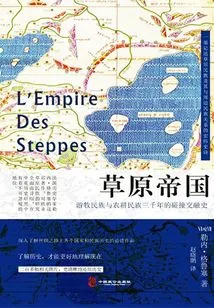
"Grassland Empire" not only records the magnificent history of the Xiongnu, Turks, Mongols and other grassland peoples, but also describes the bravery and talents of grassland people such as Attila, Genghis Khan, Timur and other children. They broke into developed historical and civilized areas, clashed with farming peoples, destroyed farming civilization, and gradually formed their own rich and diverse culture. Of course, there is also their impact on the entire world civilization, pattern, order and historical process.
"Grassland Empire" not only records the magnificent history of the Xiongnu, Turks, Mongols and other grassland peoples, but also describes the bravery and talents of grassland people such as Attila, Genghis Khan, Timur and other children. They broke into developed historical and civilized areas, clashed with farming peoples, destroyed farming civilization, and gradually formed their own rich and diverse culture. Of course, there is also their impact on the entire world civilization, pattern, order and historical process.
哲人与权臣:尼禄宫廷里的塞内加
Q
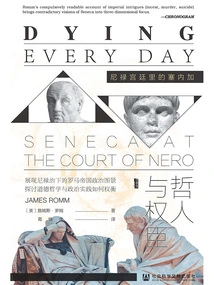
"The Philosopher and the Powerful Minister" is a book about Seneca's thoughts and life, especially focusing on how he weighed the moral conscience of the philosopher and the wealth and power of the powerful minister when he faced the constant threat of death during Nero's court. As Nero's teacher and advisor, the image Seneca left for future generations is fractured and polarized. This book attempts to unify Seneca's ideological works and political practice to bridge the gap between the two images of Seneca, and explore the core question: Did Seneca's role in Nero's regime arouse Nero's conscience and prevent the regime from getting worse, or did he collude with Nero and help him consolidate this evil regime?
"The Philosopher and the Powerful Minister" is a book about Seneca's thoughts and life, especially focusing on how he weighed the moral conscience of the philosopher and the wealth and power of the powerful minister when he faced the constant threat of death during Nero's court. As Nero's teacher and advisor, the image Seneca left for future generations is fractured and polarized. This book attempts to unify Seneca's ideological works and political practice to bridge the gap between the two images of Seneca, and explore the core question: Did Seneca's role in Nero's regime arouse Nero's conscience and prevent the regime from getting worse, or did he collude with Nero and help him consolidate this evil regime?
文明的历史:探索者
J
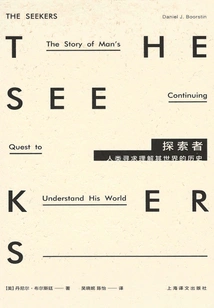
The famous literary historian Daniel Boorstin's epic masterpiece, a far-reaching trilogy of world history; it caused a sensation after being published in the United States, has been best-selling for more than 30 years, and has been translated into more than 20 languages; it is a perfect combination of history and popular science, with detailed and interesting content; it has changed humankind's understanding of the world more than we think. It is much simpler; "History of Civilization: Explorers" tells us the three major eras of exploration that Western culture has experienced: First, there are prophets and philosophers, such as Moses, Job, Socrates, Plato, Aristotle, and religious reformers, who have no hesitation in exploring redemption or truth from God or inner reason. This was followed by an age of shared exploration by people like Thucydides, Thomas More, Machiavelli and Voltaire, who pursued civilization in the spirit of freedom. Finally, there is the era of social science, where people are facing the future but seem to be dominated by history. Outstanding figures of this era include Marx, Spengler, Toynbee, Carlyle and Emerson, Malraux, Berglin and Einstein, etc. Their stories deeply attract people to move forward and continue to explore.
The famous literary historian Daniel Boorstin's epic masterpiece, a far-reaching trilogy of world history; it caused a sensation after being published in the United States, has been best-selling for more than 30 years, and has been translated into more than 20 languages; it is a perfect combination of history and popular science, with detailed and interesting content; it has changed humankind's understanding of the world more than we think. It is much simpler; "History of Civilization: Explorers" tells us the three major eras of exploration that Western culture has experienced: First, there are prophets and philosophers, such as Moses, Job, Socrates, Plato, Aristotle, and religious reformers, who have no hesitation in exploring redemption or truth from God or inner reason. This was followed by an age of shared exploration by people like Thucydides, Thomas More, Machiavelli and Voltaire, who pursued civilization in the spirit of freedom. Finally, there is the era of social science, where people are facing the future but seem to be dominated by history. Outstanding figures of this era include Marx, Spengler, Toynbee, Carlyle and Emerson, Malraux, Berglin and Einstein, etc. Their stories deeply attract people to move forward and continue to explore.
草原帝国:活着就为征服世界(套装共3册)
H
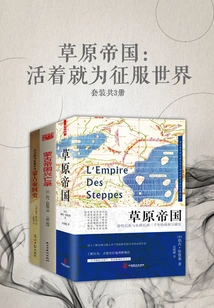
A magnificent epic describing the grassland peoples and their relations with surrounding peoples. A history of three thousand years of collision and integration between nomadic peoples and agricultural peoples. This set includes: "Steppe Empire", "The Rise and Fall of the Mongol Empire", and "Live to Conquer the World: A History of the Mongol Empire".
A magnificent epic describing the grassland peoples and their relations with surrounding peoples. A history of three thousand years of collision and integration between nomadic peoples and agricultural peoples. This set includes: "Steppe Empire", "The Rise and Fall of the Mongol Empire", and "Live to Conquer the World: A History of the Mongol Empire".
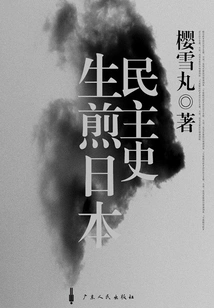
生煎日本民主史
I
Congressional politics ≠ clean politics. Based on historical facts, this book uses macro narrative and micro narrative as perspectives to show a huge picture of Japan's democratic development and reform since the Meiji Restoration. It allows you to appreciably and perceptibly appreciate the impact of the system and human nature, and eliminates previous misunderstandings of the history of Japanese democracy due to ignorance of the truth. It vividly and interestingly describes the democratic measures implemented by the Japanese government and the efforts of private individuals to maintain the democratic system. It can be said that this is a panoramic, seamless and transparent book that neither avoids nor exaggerates.
Congressional politics ≠ clean politics. Based on historical facts, this book uses macro narrative and micro narrative as perspectives to show a huge picture of Japan's democratic development and reform since the Meiji Restoration. It allows you to appreciably and perceptibly appreciate the impact of the system and human nature, and eliminates previous misunderstandings of the history of Japanese democracy due to ignorance of the truth. It vividly and interestingly describes the democratic measures implemented by the Japanese government and the efforts of private individuals to maintain the democratic system. It can be said that this is a panoramic, seamless and transparent book that neither avoids nor exaggerates.
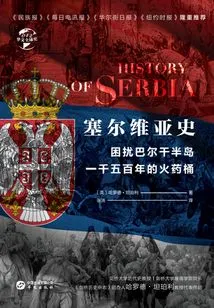
塞尔维亚史:困扰巴尔干半岛一千五百年的火药桶
O
"History of Serbia" tells the complicated history of Serbia that has plagued the Balkan Peninsula for fifteen hundred years. In the 6th century, when the southern Slavs attacked the Byzantine Empire from the south, how did they first ignite the Balkan powder keg? How to successively establish independent principalities such as Serbia and Slovenia. What is the relationship between the Ottoman Turkish Empire's northern conquest of the Balkans and the demise of the Serbian Empire? Why did the Battle of Kosovo determine the fate of the entire Balkan Peninsula? How did the Ottoman Empire rule Serbia? How did Serbia achieve independence through the National Revolt? How did the Russo-Turkish War and the signing of the Treaty of Berlin balance the interests of the great powers in the Balkans? How did the Macedonian Revolt and the decisive battle between the Balkan Alliance and the Ottoman Empire affect the historical trend of the Balkan Peninsula? Why is the author convinced that Serbia's strategic location determines that the powder keg of the Balkan Peninsula will be ignited again? This book will answer it in detail.
"History of Serbia" tells the complicated history of Serbia that has plagued the Balkan Peninsula for fifteen hundred years. In the 6th century, when the southern Slavs attacked the Byzantine Empire from the south, how did they first ignite the Balkan powder keg? How to successively establish independent principalities such as Serbia and Slovenia. What is the relationship between the Ottoman Turkish Empire's northern conquest of the Balkans and the demise of the Serbian Empire? Why did the Battle of Kosovo determine the fate of the entire Balkan Peninsula? How did the Ottoman Empire rule Serbia? How did Serbia achieve independence through the National Revolt? How did the Russo-Turkish War and the signing of the Treaty of Berlin balance the interests of the great powers in the Balkans? How did the Macedonian Revolt and the decisive battle between the Balkan Alliance and the Ottoman Empire affect the historical trend of the Balkan Peninsula? Why is the author convinced that Serbia's strategic location determines that the powder keg of the Balkan Peninsula will be ignited again? This book will answer it in detail.
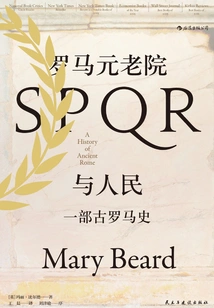
罗马元老院与人民:一部古罗马史
I
As a country that has experienced three political systems: monarchy, republic, and empire and has continued to exist for more than a thousand years, the history of ancient Rome has always attracted people's thinking and research. This book is a brand-new history of Rome written by a world-class classicist who has accumulated more than 50 years of work. The author chooses the "Senate and People of Rome" (SPQR), the political hub of Rome, as the starting point. He cleverly and profoundly begins with the incident of Cicero versus Catiline in 63 BC, and passionately tells the story of Rome to readers. The book not only explores how Rome grew from an insignificant village in central Italy to an empire spanning three continents, but also reveals how the Romans viewed themselves and their achievements. Throughout, the author describes various stages of Roman history from both an external and internal perspective. At the same time, the book is also permeated with strong realistic concerns. When the author discusses Rome's military expansion, democracy, immigration, religious conflicts, social mobility, citizenship, exploitation and other issues, we will always see the shadow of today's world, and thus understand why ancient Rome is still important to us. The book has a grand framework but is full of vivid details. Although it makes extensive use of the latest achievements in archaeology, numismatics, and inscriptions, it rarely uses professional terminology. The author tells the "other side" of many stories in a plain and humorous way, challenging traditional views and presenting readers with a vivid and charming Rome that still has many unsolved mysteries.
As a country that has experienced three political systems: monarchy, republic, and empire and has continued to exist for more than a thousand years, the history of ancient Rome has always attracted people's thinking and research. This book is a brand-new history of Rome written by a world-class classicist who has accumulated more than 50 years of work. The author chooses the "Senate and People of Rome" (SPQR), the political hub of Rome, as the starting point. He cleverly and profoundly begins with the incident of Cicero versus Catiline in 63 BC, and passionately tells the story of Rome to readers. The book not only explores how Rome grew from an insignificant village in central Italy to an empire spanning three continents, but also reveals how the Romans viewed themselves and their achievements. Throughout, the author describes various stages of Roman history from both an external and internal perspective. At the same time, the book is also permeated with strong realistic concerns. When the author discusses Rome's military expansion, democracy, immigration, religious conflicts, social mobility, citizenship, exploitation and other issues, we will always see the shadow of today's world, and thus understand why ancient Rome is still important to us. The book has a grand framework but is full of vivid details. Although it makes extensive use of the latest achievements in archaeology, numismatics, and inscriptions, it rarely uses professional terminology. The author tells the "other side" of many stories in a plain and humorous way, challenging traditional views and presenting readers with a vivid and charming Rome that still has many unsolved mysteries.
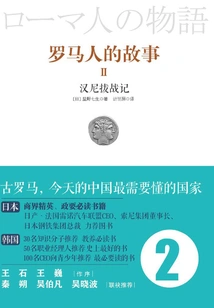
罗马人的故事2:汉尼拔战记
H
This volume takes war as its theme and describes the 130-year history of Rome's domination of the Mediterranean. From 218 BC to 202 BC, the world-famous general Hannibal led his army from Spain and led his elephant team across the Alps to attack the Italian mainland. The war lasted for 16 years, and the two sides fought eight rounds of battles, which were indistinguishable. For 16 years, Hannibal kept Rome stretched and without peace. In the end, Xiapi defeated the famous general Hannibal. The thrilling war scenes and the wonderful plot of reversal of victory are thought-provoking. War people reflect the way the class thinks and behaves. Why did the Greeks with superior knowledge and the Carthaginians with strong military power eventually lose to the Romans?
This volume takes war as its theme and describes the 130-year history of Rome's domination of the Mediterranean. From 218 BC to 202 BC, the world-famous general Hannibal led his army from Spain and led his elephant team across the Alps to attack the Italian mainland. The war lasted for 16 years, and the two sides fought eight rounds of battles, which were indistinguishable. For 16 years, Hannibal kept Rome stretched and without peace. In the end, Xiapi defeated the famous general Hannibal. The thrilling war scenes and the wonderful plot of reversal of victory are thought-provoking. War people reflect the way the class thinks and behaves. Why did the Greeks with superior knowledge and the Carthaginians with strong military power eventually lose to the Romans?
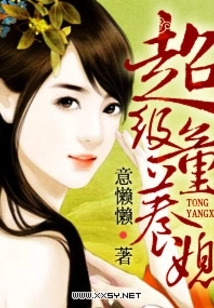
Super Child Bride
Ancient Romance超级童养媳
A
Written at the beginning of the volume: This article is one-to-one. A curtain of dreams, an instant rebirth. Hua Xian was originally an ordinary person among all living beings in the world. Unexpectedly, in her previous life, she was as ordinary as dust, but she actually responded to the sad saying that the heart is as high as the sky and the life is as thin as paper. Due to the right time, place and people, she was reincarnated as the ninth lady of a flower family in another world. Due to the prediction made by the Taoist priest of the Fang family, Hua Yan and his two centuries-old family members were bound together before they were born. They got married in a grand ceremony on the full moon after their birth, and they became friends with the Qin and Jin families. Living is a kind of practice, Hua Xian thought, maybe this is the positive result she obtained after 29 years of practice, the cycle of cause and effect, no matter life or death. Death and rebirth are just normal changes in time and space. She wanted to have a different rebirth. In this life, I will only be an idler, a lazy person, a layman, a parasite, a second generation ancestor, a landlord... Scene one: Hua Xian is full moon, and the wedding will be held the next day. Before his face could even turn red, Hua Xian suddenly felt a warm, wet and soft feeling on his mouth, with a faint smell of blood. "Hey, grandma, look at the little lady's mouth drooling, let me wipe it for her." Yan Zijun realized it later and carefully explained to his mother. Mother Yan couldn't help but smile. "Son, I know you use your mouth because your hands are dirty." "Hey, grandma is so smart." Scene two: Catch the week. Hua Xian was surrounded by a bunch of messy gadgets. She stood up and shook her head in a serious manner. He stretched out his hand, grabbed a writing brush, and stuffed it into the jacket on his chest. Everyone shook their heads. It is virtue for a woman to have no talent. He reached out again, grabbed a handful of colorful silk threads, and stuffed them in again. Everyone was relieved, as expected, women love red makeup. He reached out three times and carefully stuffed a small piece of gold into his right sleeve. Everyone lamented that this woman must be greedy for money. About to reach out again, someone thrust a miniature wooden guzheng into his hand. She stared at it and stuffed it into her little husband's arms. Turning around, another small jade chessboard suddenly appeared in his little hand. With the beautiful jade in hand, after much thought, she finally clumsily hung it on the belt of her nephew Yan Yan, who was two months older than her. Before anyone could react, Hua Xian rushed to her side and stood up. She hastily stuffed a small spear into her left sleeve. After that, Hua Xian turned around gracefully, took small steps, climbed into bed on his own, and fell asleep. Everyone fell. Scene three: The younger generations of the Yan family are lined up, the fifth, sixth, seventh, eighth, eleventh and twelfth. I just heard a gong sound, "Boom..." Eight-year-old Xiao Hua held the gong in his hand and shouted, "Okay, everyone, stand still, stand still. I am going to announce the rules of the competition now..." "The top three are all honored to be my honorary coaches, and each of them teaches me a special skill. There are also prizes: the first place winner will be rewarded with a gown from the Xianer brother and sister series. The second place winner will be rewarded with a Xianer sachet. The third place winner will be rewarded with a peach blossom handkerchief for Xianer."
Written at the beginning of the volume: This article is one-to-one. A curtain of dreams, an instant rebirth. Hua Xian was originally an ordinary person among all living beings in the world. Unexpectedly, in her previous life, she was as ordinary as dust, but she actually responded to the sad saying that the heart is as high as the sky and the life is as thin as paper. Due to the right time, place and people, she was reincarnated as the ninth lady of a flower family in another world. Due to the prediction made by the Taoist priest of the Fang family, Hua Yan and his two centuries-old family members were bound together before they were born. They got married in a grand ceremony on the full moon after their birth, and they became friends with the Qin and Jin families. Living is a kind of practice, Hua Xian thought, maybe this is the positive result she obtained after 29 years of practice, the cycle of cause and effect, no matter life or death. Death and rebirth are just normal changes in time and space. She wanted to have a different rebirth. In this life, I will only be an idler, a lazy person, a layman, a parasite, a second generation ancestor, a landlord... Scene one: Hua Xian is full moon, and the wedding will be held the next day. Before his face could even turn red, Hua Xian suddenly felt a warm, wet and soft feeling on his mouth, with a faint smell of blood. "Hey, grandma, look at the little lady's mouth drooling, let me wipe it for her." Yan Zijun realized it later and carefully explained to his mother. Mother Yan couldn't help but smile. "Son, I know you use your mouth because your hands are dirty." "Hey, grandma is so smart." Scene two: Catch the week. Hua Xian was surrounded by a bunch of messy gadgets. She stood up and shook her head in a serious manner. He stretched out his hand, grabbed a writing brush, and stuffed it into the jacket on his chest. Everyone shook their heads. It is virtue for a woman to have no talent. He reached out again, grabbed a handful of colorful silk threads, and stuffed them in again. Everyone was relieved, as expected, women love red makeup. He reached out three times and carefully stuffed a small piece of gold into his right sleeve. Everyone lamented that this woman must be greedy for money. About to reach out again, someone thrust a miniature wooden guzheng into his hand. She stared at it and stuffed it into her little husband's arms. Turning around, another small jade chessboard suddenly appeared in his little hand. With the beautiful jade in hand, after much thought, she finally clumsily hung it on the belt of her nephew Yan Yan, who was two months older than her. Before anyone could react, Hua Xian rushed to her side and stood up. She hastily stuffed a small spear into her left sleeve. After that, Hua Xian turned around gracefully, took small steps, climbed into bed on his own, and fell asleep. Everyone fell. Scene three: The younger generations of the Yan family are lined up, the fifth, sixth, seventh, eighth, eleventh and twelfth. I just heard a gong sound, "Boom..." Eight-year-old Xiao Hua held the gong in his hand and shouted, "Okay, everyone, stand still, stand still. I am going to announce the rules of the competition now..." "The top three are all honored to be my honorary coaches, and each of them teaches me a special skill. There are also prizes: the first place winner will be rewarded with a gown from the Xianer brother and sister series. The second place winner will be rewarded with a Xianer sachet. The third place winner will be rewarded with a peach blossom handkerchief for Xianer."
茶经(国学大书院)
P
The classic inheritance of tea culture and the quality interpretation of new life "The Classic of Tea" is the world's first tea monograph. The content includes ten chapters including the origin of tea, tea-making utensils, tea picking and processing, tea-making methods, tea affairs of the past dynasties, and the origin of tea. It provides a detailed introduction to the development and evolution of my country's ancient tea industry, which is of great historical value. The "Continued Tea Classic" is also a completely independent classic work. This book collects a lot of tea information after the Tang Dynasty and conducts a textual research. The "Sikuquanshu General Catalog" calls this book "a complete supplement one by one, which is quite practical and complicated to cite." The two works are collectively called the "Tea Classic", which basically covers the Chinese people's understanding of tea and the evolution of tea ceremony before the Tang Dynasty and the Qing Dynasty. It is a good summary and summary of tea culture. It is a classic of Chinese studies worth reading!
The classic inheritance of tea culture and the quality interpretation of new life "The Classic of Tea" is the world's first tea monograph. The content includes ten chapters including the origin of tea, tea-making utensils, tea picking and processing, tea-making methods, tea affairs of the past dynasties, and the origin of tea. It provides a detailed introduction to the development and evolution of my country's ancient tea industry, which is of great historical value. The "Continued Tea Classic" is also a completely independent classic work. This book collects a lot of tea information after the Tang Dynasty and conducts a textual research. The "Sikuquanshu General Catalog" calls this book "a complete supplement one by one, which is quite practical and complicated to cite." The two works are collectively called the "Tea Classic", which basically covers the Chinese people's understanding of tea and the evolution of tea ceremony before the Tang Dynasty and the Qing Dynasty. It is a good summary and summary of tea culture. It is a classic of Chinese studies worth reading!
Fifty Years in China
History在华五十年
M
"Fifty Years in China" by Leighton Stuart records China's most turbulent history in modern times, with detailed descriptions and analyzes of historical figures such as Mao Zedong and Chiang Kai-shek. Looking at that period of history from today's perspective will give you a different kind of experience.
"Fifty Years in China" by Leighton Stuart records China's most turbulent history in modern times, with detailed descriptions and analyzes of historical figures such as Mao Zedong and Chiang Kai-shek. Looking at that period of history from today's perspective will give you a different kind of experience.
这里曾经是汉朝6
I
"This Was Once the Han Dynasty" is a set of popular historical books that comprehensively interprets the history of the Han Dynasty. It panoramically reproduces the rise and decline of the first prosperous dynasty in ancient China. This book is the sixth in the series. It starts from Queen Ma's struggle to enter the palace and ends with the massacre of warlord Dong Zhuo at the end of the Eastern Han Dynasty to vent his anger. During the Eastern Han Dynasty, after Liu Xiu and Liu Zhuang's father and son, one generation was worse than the other. Because the royal family's heirs were incompetent, their relatives took the opportunity to seize power. In order to fight against their relatives, the royal family began to reuse eunuchs. Faced with this situation, the scholar-bureaucrats who had monopolized the voice and administrative power of the Han Dynasty for many years took up their swords and mounted their horses, uniting with their relatives to fight the eunuchs. In this unprecedented and inextricable struggle between political forces, the Eastern Han Dynasty collapsed like a giant mountain that had been hollowed out from within...
"This Was Once the Han Dynasty" is a set of popular historical books that comprehensively interprets the history of the Han Dynasty. It panoramically reproduces the rise and decline of the first prosperous dynasty in ancient China. This book is the sixth in the series. It starts from Queen Ma's struggle to enter the palace and ends with the massacre of warlord Dong Zhuo at the end of the Eastern Han Dynasty to vent his anger. During the Eastern Han Dynasty, after Liu Xiu and Liu Zhuang's father and son, one generation was worse than the other. Because the royal family's heirs were incompetent, their relatives took the opportunity to seize power. In order to fight against their relatives, the royal family began to reuse eunuchs. Faced with this situation, the scholar-bureaucrats who had monopolized the voice and administrative power of the Han Dynasty for many years took up their swords and mounted their horses, uniting with their relatives to fight the eunuchs. In this unprecedented and inextricable struggle between political forces, the Eastern Han Dynasty collapsed like a giant mountain that had been hollowed out from within...
这里曾经是汉朝2
I
This book is the second part of the series. It starts from Liu Bang's execution of Peng Yue and ends with the death of Dou Ying, the two great relatives of the Han Dynasty, and Tian Fu. After Liu Bang's collapse, Lu Pheasant took advantage of the situation and rose up to support the Lu family's relatives, endangering the Liu family's world. At this critical moment, the counselor Lu Jia proposed a plan to the powerful minister Chen Ping, and joined forces with the general Zhou Bo to prepare for the opportunity. Sure enough, as soon as Lu Pheasant died, the officials of the Han Dynasty and the Liu family princes joined forces to kill Lu. In this chaotic power struggle, Liu Heng, the acting king of Shourou, became the biggest winner. An old era has ended, and a so-called prosperous era, the "Government of Wenjing", is rising amid bloody battles.
This book is the second part of the series. It starts from Liu Bang's execution of Peng Yue and ends with the death of Dou Ying, the two great relatives of the Han Dynasty, and Tian Fu. After Liu Bang's collapse, Lu Pheasant took advantage of the situation and rose up to support the Lu family's relatives, endangering the Liu family's world. At this critical moment, the counselor Lu Jia proposed a plan to the powerful minister Chen Ping, and joined forces with the general Zhou Bo to prepare for the opportunity. Sure enough, as soon as Lu Pheasant died, the officials of the Han Dynasty and the Liu family princes joined forces to kill Lu. In this chaotic power struggle, Liu Heng, the acting king of Shourou, became the biggest winner. An old era has ended, and a so-called prosperous era, the "Government of Wenjing", is rising amid bloody battles.
这里曾经是汉朝3
I
This book is the third part of the series. The book starts from Sima Xiangru's debut in chaos and ends with Huo Guang eradicating the "treacherous party" and taking power. After Liu Che came to the throne, he was ambitious to eliminate the previous situation of the Han Dynasty being weak and beaten, and deliberately cultivated a generation of iron army of the Han Dynasty to fight against the Xiongnu. Wei Qing and Huo Qubing came out of nowhere, sweeping the desert, arrogant among the heroes, and shocking the world. Unfortunately, Huo Qubing died young, the witchcraft turmoil in the harem resurfaced, Wei Zifu fell out of favor, and Prince Liu Ju's position was in jeopardy. A bloody power struggle was inevitably staged again.
This book is the third part of the series. The book starts from Sima Xiangru's debut in chaos and ends with Huo Guang eradicating the "treacherous party" and taking power. After Liu Che came to the throne, he was ambitious to eliminate the previous situation of the Han Dynasty being weak and beaten, and deliberately cultivated a generation of iron army of the Han Dynasty to fight against the Xiongnu. Wei Qing and Huo Qubing came out of nowhere, sweeping the desert, arrogant among the heroes, and shocking the world. Unfortunately, Huo Qubing died young, the witchcraft turmoil in the harem resurfaced, Wei Zifu fell out of favor, and Prince Liu Ju's position was in jeopardy. A bloody power struggle was inevitably staged again.
这里曾经是汉朝5
I
This book is the fifth in the series. It starts from Wang Mang's seizure of power and ends with Ban Chao and others in the Eastern Han Dynasty conquering the Western Regions. Wang Mang accumulated decades of skill and finally succeeded in usurping power and establishing a new dynasty. However, as soon as this emperor, the most famous Confucian academic master and idealist in history, came to the throne, he set off a fanatical retroism and pushed the country into the abyss. The world was in an uproar, complaints were everywhere, and voices of rebellion were endless. Liu Xiu, a descendant of the Liu clan who made a living in farming, also joined the torrent of regaining the Han Dynasty to pursue his bloody dream.
This book is the fifth in the series. It starts from Wang Mang's seizure of power and ends with Ban Chao and others in the Eastern Han Dynasty conquering the Western Regions. Wang Mang accumulated decades of skill and finally succeeded in usurping power and establishing a new dynasty. However, as soon as this emperor, the most famous Confucian academic master and idealist in history, came to the throne, he set off a fanatical retroism and pushed the country into the abyss. The world was in an uproar, complaints were everywhere, and voices of rebellion were endless. Liu Xiu, a descendant of the Liu clan who made a living in farming, also joined the torrent of regaining the Han Dynasty to pursue his bloody dream.
Pavilion Master, Madam is Here
Ancient Romance阁主,夫人来了
B
Surname Lan, first name: Qingyan. Occupation: High-tech medical researcher... However, during a self-challenge, he was infected by toxins. He died of his proud medical skills and caught up with the last train of modern people who want to commit suicide. Reborn with her own job, she became the darling of the Lan family, one of the four major martial arts families in the martial arts world, and the treasure of her family. Rumor has it that anyone who has seen her medical skills is
Surname Lan, first name: Qingyan. Occupation: High-tech medical researcher... However, during a self-challenge, he was infected by toxins. He died of his proud medical skills and caught up with the last train of modern people who want to commit suicide. Reborn with her own job, she became the darling of the Lan family, one of the four major martial arts families in the martial arts world, and the treasure of her family. Rumor has it that anyone who has seen her medical skills is
惊天恸地(世界大空难秘闻)
J
Among various human activities, funerals and cemeteries are the purest, and can best enable people to take off their armor in the battle of fame and fortune, thus making their limited life peaceful and calm. "Readers of "Shocking Grief: Secrets of the World's Biggest Air Crash" have also gained such spiritual refinement after reading... "Shocking Grief: Secrets of the World's Greatest Air Crash" restores 15 famous air crashes in the history of world air crashes, reveals the stories behind the air crashes, and narrates tips for self-evasion in air crashes.
Among various human activities, funerals and cemeteries are the purest, and can best enable people to take off their armor in the battle of fame and fortune, thus making their limited life peaceful and calm. "Readers of "Shocking Grief: Secrets of the World's Biggest Air Crash" have also gained such spiritual refinement after reading... "Shocking Grief: Secrets of the World's Greatest Air Crash" restores 15 famous air crashes in the history of world air crashes, reveals the stories behind the air crashes, and narrates tips for self-evasion in air crashes.

Anonymous Time Machine
Youth Fiction匿名时光机
J
Ou Ruozi, who has been called "Little Conan" since high school, fell in love with Duan Liuchuan, the son of the eldest school director, on the first day she entered Yunshang College. A sudden theft occurred in the school. Duan Liuchuan volunteered to investigate the truth and asked Ou Ruozi to assist in the investigation. After Duan Liuchuan promised her three conditions, Ou Ruozi agreed to help. With the help of Ou Ruozi, the theft incident was successfully solved. However, things were not as simple as imagined. After the theft incident, a series of incidents occurred, and they were all related to a person named "Z". Ou Ruozi and Duan Liuchuan want to find this person, but every time there is a little clue... Can Ou Ruozi find out the person who really manipulated the incident? What changes will happen to the relationship between her and Duan Liuchuan?
Ou Ruozi, who has been called "Little Conan" since high school, fell in love with Duan Liuchuan, the son of the eldest school director, on the first day she entered Yunshang College. A sudden theft occurred in the school. Duan Liuchuan volunteered to investigate the truth and asked Ou Ruozi to assist in the investigation. After Duan Liuchuan promised her three conditions, Ou Ruozi agreed to help. With the help of Ou Ruozi, the theft incident was successfully solved. However, things were not as simple as imagined. After the theft incident, a series of incidents occurred, and they were all related to a person named "Z". Ou Ruozi and Duan Liuchuan want to find this person, but every time there is a little clue... Can Ou Ruozi find out the person who really manipulated the incident? What changes will happen to the relationship between her and Duan Liuchuan?