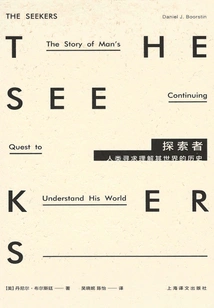
History of Civilization: Explorers
by J
About This Novel
The famous literary historian Daniel Boorstin's epic masterpiece, a far-reaching trilogy of world history; it caused a sensation after being published in the United States, has been best-selling for more than 30 years, and has been translated into more than 20 languages; it is a perfect combination of history and popular science, with detailed and interesting content; it has changed humankind's understanding of the world more than we think. It is much simpler; "History of Civilization: Explorers" tells us the three major eras of exploration that Western culture has experienced: First, there are prophets and philosophers, such as Moses, Job, Socrates, Plato, Aristotle, and religious reformers, who have no hesitation in exploring redemption or truth from God or inner reason. This was followed by an age of shared exploration by people like Thucydides, Thomas More, Machiavelli and Voltaire, who pursued civilization in the spirit of freedom. Finally, there is the era of social science, where people are facing the future but seem to be dominated by history. Outstanding figures of this era include Marx, Spengler, Toynbee, Carlyle and Emerson, Malraux, Berglin and Einstein, etc. Their stories deeply attract people to move forward and continue to explore.
Official Sources
What Readers Think
Rating
Community(0)
Official(1)Scraped 1mo ago
The History of Civilization Part 2: The Explorers Will Not Disappoint
Continuing the exciting content of the first part (The Discoverers), this book selects representative Western figures in more depth, covering psychology, politics, literature, art, society, law, religion, physics, philosophy and other broad fields. It describes in chronological order the profound impact of these cross-era figures on the world at that time and later. In addition to strengthening the life stories of the familiar characters, there are also many important individuals who have never been understood: some people were born well, some struggled in a difficult life, and even suffered mental hardships, and finally emerged from the cocoon to create great personal works. In this long history, people feel the inheritance and importance of civilization, and also deeply feel the greatness of humility. As Einstein said before his death: If only I could understand a little more mathematics. Grateful.
Rating
Community(0)
Official(1)Scraped 1mo ago
The History of Civilization Part 2: The Explorers Will Not Disappoint
Continuing the exciting content of the first part (The Discoverers), this book selects representative Western figures in more depth, covering psychology, politics, literature, art, society, law, religion, physics, philosophy and other broad fields. It describes in chronological order the profound impact of these cross-era figures on the world at that time and later. In addition to strengthening the life stories of the familiar characters, there are also many important individuals who have never been understood: some people were born well, some struggled in a difficult life, and even suffered mental hardships, and finally emerged from the cocoon to create great personal works. In this long history, people feel the inheritance and importance of civilization, and also deeply feel the greatness of humility. As Einstein said before his death: If only I could understand a little more mathematics. Grateful.