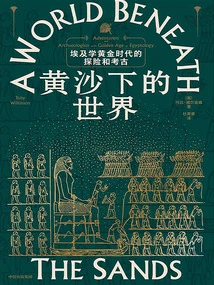
A World Beneath the Yellow Sand: Exploration and Archeology in the Golden Age of Egyptology
by O
About This Novel
The West's fascination with ancient Egypt can be traced back to ancient Greece, and the practice of collecting Egyptian artifacts was common as early as ancient Rome. Nothing is more exciting than digging for Pharaonic golden treasures in the yellow sands of Egypt. The artifacts of the Nile have been a source of imagination and inspiration for Westerners for centuries. On this basis, a real discipline - Egyptology - was gradually formed. The 19th century to the early 20th century was the heyday of Egyptology. This complex era witnessed all the great discoveries and prompted the recurring "Egyptian fever" in the West. This golden age of scholarship and adventure ended with two landmark events: Champollion's deciphering of hieroglyphics in 1822, and the discovery of Tutankhamun's tomb exactly 100 years later. The former provides the key to unlocking the mysteries of the Pharaonic civilization, prompting people to desperately go to Egypt to find more artifacts; the latter shows the prosperity and complexity of the Pharaonic civilization, sounding the death knell for the West's dominance in Egypt. "The World Beneath the Yellow Sand" by Cambridge Egyptian archaeologist Toby Wilkinson takes the timeline of the development of Egyptology as the main axis and provides a comprehensive restoration of the emergence of Egyptology and the exploration and archeology of the Golden Age. His combing of Egyptology helps us gradually see a real ancient Egyptian civilization - from a mysterious source of wisdom, to an alien within the framework of the Bible and classical literature, to a civilization that shares its glory with the ancient Roman Empire. "The World Under the Yellow Sand" not only records the grand expeditions and residual jealous competition and plunder carried out by the four countries of Britain, France, Germany and the United States to seize ancient Egyptian cultural relics, but also reflects how Egypt, which was invaded by European colonization, entered the modernization process in a bumpy way. The book tells the story of all kinds of people - unscrupulous antiquities dealers, explorers who challenge new things, archaeologists who devote themselves to learning, wily diplomats, Egyptian rulers obsessed with Europeanization, and the fascinating stories that happened to them. Their fascination with ancient Egyptian civilization has changed our understanding of the Nile Valley and its people, enhanced our understanding of the rich and colorful local history and culture, and also had a profound impact on Egypt. Regardless of their motivations and methods, their exploration and archeology, which lasted for more than a century, had an impact on the development of Egyptology to a certain extent and revealed to us a lost world that had been buried under the yellow sand for centuries.
Official Sources
What Readers Think
Rating
Community(0)
Rating
Community(0)