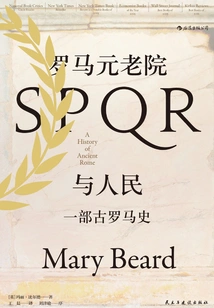
The Roman Senate and the People: a History of Ancient Rome
by I
About This Novel
As a country that has experienced three political systems: monarchy, republic, and empire and has continued to exist for more than a thousand years, the history of ancient Rome has always attracted people's thinking and research. This book is a brand-new history of Rome written by a world-class classicist who has accumulated more than 50 years of work. The author chooses the "Senate and People of Rome" (SPQR), the political hub of Rome, as the starting point. He cleverly and profoundly begins with the incident of Cicero versus Catiline in 63 BC, and passionately tells the story of Rome to readers. The book not only explores how Rome grew from an insignificant village in central Italy to an empire spanning three continents, but also reveals how the Romans viewed themselves and their achievements. Throughout, the author describes various stages of Roman history from both an external and internal perspective. At the same time, the book is also permeated with strong realistic concerns. When the author discusses Rome's military expansion, democracy, immigration, religious conflicts, social mobility, citizenship, exploitation and other issues, we will always see the shadow of today's world, and thus understand why ancient Rome is still important to us. The book has a grand framework but is full of vivid details. Although it makes extensive use of the latest achievements in archaeology, numismatics, and inscriptions, it rarely uses professional terminology. The author tells the "other side" of many stories in a plain and humorous way, challenging traditional views and presenting readers with a vivid and charming Rome that still has many unsolved mysteries.
Official Sources
What Readers Think
Rating
Community(0)
Official(4)Scraped 1mo ago
Ancient Rome experienced the jurisdiction of three different systems and formed many civilizations. Finally, they merged together to form Roman history and changed people's lives.
The history of ancient Rome can be traced back to the beginning of city-states. Maritime civilization, a small country with few people, prosperous commerce, and developed handicrafts are all characteristics of ancient Rome.
As we all know, even though thousands of years have passed since the Roman era, it still has a profound impact on our current lives in all aspects.
The Roman Empire had a complex parallel state of centralization and democracy for a long time. This was due to the fact that on the basis of the slave economy, the senators and nobles were able to continuously control a large amount of resources and at the same time develop a system of citizenship rights. After years of accumulation, an extremely stable privileged class and ruling foundation were formed. As the territory of the Roman Empire grew, the operation of the empire would become more and more complex and difficult. In ancient times, centralization of power was bound to occur when hard conditions such as transportation and communication were not up to standard. This will give people the feeling that centralization and democracy go hand in hand. On the one hand, they can neutralize each other's shortcomings, but at the same time, they also cause political instability.
Rating
Community(0)
Official(4)Scraped 1mo ago
Ancient Rome experienced the jurisdiction of three different systems and formed many civilizations. Finally, they merged together to form Roman history and changed people's lives.
The history of ancient Rome can be traced back to the beginning of city-states. Maritime civilization, a small country with few people, prosperous commerce, and developed handicrafts are all characteristics of ancient Rome.
As we all know, even though thousands of years have passed since the Roman era, it still has a profound impact on our current lives in all aspects.
The Roman Empire had a complex parallel state of centralization and democracy for a long time. This was due to the fact that on the basis of the slave economy, the senators and nobles were able to continuously control a large amount of resources and at the same time develop a system of citizenship rights. After years of accumulation, an extremely stable privileged class and ruling foundation were formed. As the territory of the Roman Empire grew, the operation of the empire would become more and more complex and difficult. In ancient times, centralization of power was bound to occur when hard conditions such as transportation and communication were not up to standard. This will give people the feeling that centralization and democracy go hand in hand. On the one hand, they can neutralize each other's shortcomings, but at the same time, they also cause political instability.