


Stats
Tags
Honours
Synopsis
More by this author
 After Reading the File a Hundred Times, He Turned Black.
 A Collection of Short Stories About Imagination
 A Fairy-Tale Secret Love Story
 Selene in His Heart
 Six Treasures in One Pregnancy: the Whole World of Cultivation Is Pregnant with My Child
 The Days When You and Your Husband Hurt Each Other
 What Should I Do If the System Wants Me to Conquer the Enemy's Male Partner [Chuishu]
 Heartbeat of Spring
 Senior Brother Penetrates into My Color Dream
 Happy Spring Is Coming
 [Predator] One Article □□
 Can a Cannon Fodder Licking a Dog Also Make Mary Sue a Heartthrob?
In booklists 143
Explore more →


Great Historical Romance and Xianxia
Happy endings only. Some have fanworks, and some have unusual kinks.



Yandere, Untouchable Ice Queens, Going Mad for Love, BG
Yandere, dark and brooding, aloof beauties going crazy for love, pseudo-incest, women forcing men, women imprisoning men, women deceiving men, transmigrate into a book and win over the target, nonhumans


Romance
I get hooked on romance novels every now and then... Rereads and stories I'm following lately.




BG Cultivation, Fantasy, and Martial Arts
These are the three genres I love... but they also contain an absolutely lethal dose of misogynistic, dark, toxic men crawling all over the place... There may even be landmines everywhere, so just curse them out.


The Things That Really Hit My Kinks Back Then
Click to unlock the skills [twisting], [crawling], [rolling around], and [howling]. Argh, I can't submit a five-star rating anymore!


Xianxia
Cultivation and immortal cultivation


So Good They Eat Their Words/Cold Beauty/Pursuing the Wife
BG


Don't Miss These as You Pass By
Books I bought in full over the years. A bit of everything, though mostly sweet stories.


My Personal Top 100 Romance Novels
I just love picking up trash????


Romance Novels I've Tried and Loved
Every book comes with a detailed (sort of) summary, so pick whatever suits you (?). Everything here is strictly one-on-one romance.


Romance (BG)
This ?? symbol means there's smut. Just some BG stories I like.


Goddesses
I'll do my best to read all of my goddess's works... Jingtao reads the print editions, hehe.


Memorable, Dark and Brooding Men
This list collects all kinds of gloomy, obsessive men. Unforgettable, and endlessly enjoyable to revisit.



Good Reads I Love (2)
For various reasons, these didn't quite make it to my unconditional-love favorites, but they're still good (I actually wanted to give every one of them five stars, but JJ won't let me!).
Heartwarming Reads to Save for Later
Stories that crossed your path over the years. Hope to meet you again this cozy winter, with a stockpile of books to read.


Keeping Me Alive
A very eclectic mix

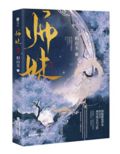


A Personal List of Historical Romance Novels
My tastes: I like stories that are a little bittersweet but not tragic, the kind that make your heart ache for a moment. I love aloof beauties, yanderes, lovesick male leads, and face-slapping.


Hey, Underclassman, Want Some Dog-Blood Drama?
Forced possession, groveling redemption, melodrama, old-school angst, triggering tropes, stand-ins, white moonlights, unrequited devotion, and so on. Everyone else hates you, but I have unusual tastes. For personal use. Omnivorous. No trigger warnings, and I don’t avoid authors based on gossip.



Straight-Up Male Lead, BG
I lean toward aloof beauties, gentlemen, and elites, with the flavor of good looks combined with obsessive, dark, and controlling traits

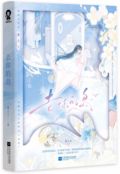
My Reading List [BG]
All my favorites! I’m a huge fan of Shu Ning and Fu Hua. I like well-written books, and most of the ones on this list are one-on-one romances. My baseline is that the female lead has no prior sexual experience, but the male lead can. My tastes can be a little questionable.

Delicious Top-Pov Stories
Beautiful stories I've reread 280 times


Strong Female Leads Leveling Up + High-Intensity BG Romance
A ten-year bookworm, updating slowly.


Cool-Headed, Unbothered Heroines Vs. Love-Struck, Yandere Heroes
A cool, pure-hearted heroine with a steady core, and a love-struck hero who goes off the rails. An intense push and pull between avoidant and anxious attachment styles, with sweetness and angst intertwined.


Romance
All kinds of genres
Reader comments 19
Google Translate
I love this book so much that it's a pity that no one has written a long review for it. After reading several books by Shu Ning, I found that the writing style is simple and sincere. This is something I admire very much. They are all simple words and sentences, but they are very readable. It takes no brainer but the characters and plots stand up; the emotional lines are described delicately (I really like the interaction between Forsythia and Xiaoling, very cute); the opening and closing of large scenes are smooth and powerful (the plot of splitting the Qingtian bottle is very exciting) These are not what I want to focus on. In my opinion, this book has a very high intention. The following is a small paper I wrote with the help of DS. From personal ascension to collective liberation: interpretation of the "people's view of history" in Xianxia novels 1. Core findings: the "progressive turn" of Xianxia novels What touches me most about this work is not its emotional lines, but the people's stance that is faintly revealed in it. Together, they tell a story about how "ordinary people" overturned "false myths" and broke down structural inequality. This reminds me of Marx and Mao's thoughts on class oppression and people's liberation. During the reading process, I strongly felt that these two books are quietly completing a transcendence of the traditional fairy tale narrative - from "personal ascension" to "collective liberation", from "the strong is respected" to questioning the unequal structure. 2. The structure of inequality: the oppression mechanism in the world of cultivating immortals The world constructed by this novel is, on the surface, a standard fairy tale setting, but underneath there is a subtle metaphor of class oppression hidden underneath. The core unequal device in this world is the Sky-Tipping Vase. It is not an ordinary magic weapon, but the "heart" of the entire oppressive structure. The aristocratic families in the upper world seize the spiritual energy of heaven and earth through the Qingtian Bottle and monopolize the cultivation resources, while the monks and mortals in the lower world can only struggle in the thin leftover. What's even more frightening is that this monopoly is packaged as "the way of heaven" - as if spiritual energy should be distributed this way, as if the poverty of the poor is natural. The lower-level monks practice hard and regard ascending to the upper world as their highest ideal; while the descendants of the "immortals" in the upper world are born as Celestial Dragons who understand the wisdom of Su and can turn clouds and rain with just a raise of their hands. This does not require cultivation or hard work, it only requires blood. This is the most typical manifestation of class oppression: the upper class monopolizes almost all resources, and makes this inequality appear "as it should be" through ideological packaging ("the way of heaven" and "the difference between immortals and mortals"). Their descendants inherited this privilege, forming a hereditary class barrier. In the novel, Xiao Lingbo's tragedy, Chen Chifeng's struggle, and Li Langhuan's fate are all victims of this oppressive structure. Their stories are not accidents of personal fate but inevitable consequences of structural violence. 3. Class Struggle: Ordinary People's Awakening and Resistance The protagonist of this novel is a representative of "ordinary people" - Xia Lianqiao is an ordinary girl who came from time-to-time. She is not a "daughter of destiny", has no "bloodline awakening", and does not have "noble help", she is just an ordinary person. The novel emphasizes the importance of human beings through Hao Cang's words. Those superior gods are human beings not gods. As long as you are upright, down-to-earth, and have a noble spirit, you are worthy of praise. Gods are not noble, humans or monsters are not inferior, and all living beings are equal. Xia Lianqiao's Resistance: Split the Tiantian Vase Xia Lianqiao's "cultivation" was not based on the traditional logic of "ascension" from the beginning. What she cultivates is not the "ruthless Tao", she cultivates "emotion" - the most common and most "human" power to deconstruct the nihilistic "Tao". When she finally split open the Sky Pitch, what she split was not a magic weapon, but the core device of the entire oppressive order. Spiritual energy returns to heaven and earth, and the "distinction between immortality and mortals" collapses - this is not just personal revenge, it is the end of structural inequality. This is the core expression of the "people's view of history" - not writing history as a biography of a hero, but as a story of how ordinary people struggled, resisted, and ultimately changed history amid structural oppression. 4. Breaking the pretense: unmasking the upper class This novel spends a lot of pen and ink to expose the "pretense" carefully created by the upper class. The Emperor of Heaven is a monk who ascended from another world. The so-called "Dao of Heaven" is a lie they made up in order to monopolize spiritual energy. Infighting within the immortal sect, strife among the aristocratic families, and the "five declines of heaven and man" of the Emperor of Heaven - all of this tears apart the perfect mask of the "immortal", revealing the naked struggle for power and calculation of interests underneath. This is the sharpest point of class analysis: the ideology of the ruling class is always packaged as "natural", "legitimate" and "the way it should be". The first step in resistance is to tear off this pretense and let the oppressed see the truth. 5. From personal ascension to collective liberation: redefining "monasticism" The most revolutionary core of these two books is that they transform "monasticism" from "personal ascension" to "world transformation." The "ascension framework" of the traditional Xianxia is essentially the ultimate expression of individualism - the protagonist becomes stronger through practice, defeats the enemy, breaks through the realm, and finally "ascends" to a higher world. In this world, "Tao" is resources, "cultivation" is capital, and "ascension" is class jump. The strong get stronger and the weak deserve to be crushed. This is actually a version of social Darwinism. But this book quietly dismantles this framework. The first book told the truth through Hao Cang's mouth: the so-called "immortals" are just a group of thieves who stole spiritual energy. And when Xia Lianqiao split the Qingtian bottle, what she did was not "ascension", but "descend" - letting what should belong to everyone return to everyone's hands. This is exactly what the book emphasizes: "The Immortal Way cherishes lives, but there are no immeasurable people" - the end of cultivating the Tao is not to "go up" yourself, but to enable more people to "come up". This is not an ascent of individualism, it is a liberation of collectivism. Why are gods called gods? What exactly is practicing cultivation? It mentions that "cultivating the Tao requires cultivating virtue" and "immortality is precious, but there is no way to measure people." In traditional Xianxia, these are often just slogans or even ignored. But in these books, "virtue" has been redefined - it is not a vassal of personal cultivation, not the mercy of the "strong", but responsibility to the world, care for others, and insistence on fairness. Those novels that only care about the improvement of cultivation and "how many people are defeated" are essentially packaging social Darwinism into fairy tales. They tell readers: This world is dominated by the jungle, and you can only become stronger as hard as you can, otherwise you deserve to be crushed. But this book tells readers: This is not the case. Inequality in this world can be changed. Those who monopolize resources can be overthrown. Ordinary people can also stand up and become the subjects of history. 6. Conclusion: The "People's Turn" of Xianxia Narrative This book allowed me to see a possibility: Xianxia novels can be more than just "upgrade and defeat monsters" and "the strong are respected", they can also carry more profound social thinking. It is not about standing high from the perspective of the Celestial Dragons, and it is not about writing history as a biography of a hero, but about how ordinary people struggled, resisted, and ultimately changed history amid structural oppression. The questions they ask are precisely those that many current novels avoid: · Why can only a few people "ascend"? · Where does the "strong" of "strong" come from? · What are the stories of those who are suppressed at the bottom and treated like ants? Where does their power come from? These questions are exactly the nutrients we can draw from Marx and Mao Zedong. They make us realize: when looking at the world, we have to ask - who is standing on top and who is kneeling below? Who is making the rules and who is being run over by the rules? Traditional fairy tales make people want to climb up, but this book makes people want to read down. The former is the ascent of individualism, and the latter is the liberation of collectivism. This is indeed "progress". It is not only an improvement in fairy tale novels, but also an improvement in the way we look at the world. Cultivation is not about escaping from sentient beings, but about returning to them. Becoming an immortal is not about ascending to heaven, but making the earth more worth looking forward to.
The teacher, character setting, plot, love, some group portraits, cultivating immortals, all are dancing on my XP. It's so good and so good. I finished reading [Spreading Flowers] this morning and finished Spreading Flowers. I hope the author will continue to work hard. The last book I read was yours. It was an ancient bloody and cruel article. It was also invincibly good. I like it so much. Confession to the author.
I really, really, really like this story. Ling Shouyi Xia Forsythia 99 is really well written.
I really like this book, especially the fairy love story between a boy and a girl. Xiao Ling is a clingy little meow, and Forsythia is a sincere little barker with big eyes [Rainbow Fart]
二刷了,以前用一个号买过一次,现在新号又卖了一次,真的很喜欢连翘和凌守夷这对小情侣,热血仙侠,真的很喜欢少年少女之间的青□□情,啊啊啊啊啊啊啊啊啊真的太美妙了
No, just let the story end successfully. Why put an IF line that looks like BE [heartbroken]
When will the teacher publish a new article? [Crying] [Crying] [Crying] These old articles are all over the top [Crying] [Crying] [Crying]
[Orange candy] Got it [Orange candy] Got it [Purple candy] kswl [Purple candy] kswl
[Orange candy] Got it [Orange candy] Got it [Purple candy] kswl [Purple candy] kswl
[Orange candy] Got it [Purple candy] kswl ends with flowers