Fanqie library
Browse
- Titles
- 1.6k
Every Fanqie book we index, searchable by title, author or tag.
-
 No Increase or Decrease in Menstruation
This work "Neither Increase nor Decrease Sutra" is written by an anonymous author
—Reads7.6Score—Shelves
No Increase or Decrease in Menstruation
This work "Neither Increase nor Decrease Sutra" is written by an anonymous author
—Reads7.6Score—Shelves
-
 Kangjilu
This work "Kang Ji Lu" was written by Lu Zengyu
—Reads8.0Score—Shelves
Kangjilu
This work "Kang Ji Lu" was written by Lu Zengyu
—Reads8.0Score—Shelves
-
 Sleep Addiction
Chinese traditional cultural thoughts have a long history and are highly original, original and literary. The early ideological forms were very distinctive, with extensive and profound contents such as religious theology, Chinese medicine classics, ancient military art, Confucianism, Taoism, Buddhism and hundreds of schools of thought, Feng Shui metaphysics, Twenty-Four Histories, customs and geography, etc. This series of "Original Books on Classic Chinese Studies and Essence Culture" retains t
—Reads8.1Score—Shelves
Sleep Addiction
Chinese traditional cultural thoughts have a long history and are highly original, original and literary. The early ideological forms were very distinctive, with extensive and profound contents such as religious theology, Chinese medicine classics, ancient military art, Confucianism, Taoism, Buddhism and hundreds of schools of thought, Feng Shui metaphysics, Twenty-Four Histories, customs and geography, etc. This series of "Original Books on Classic Chinese Studies and Essence Culture" retains t
—Reads8.1Score—Shelves
-
 Xueyiji
A collection of poems and essays. Written by Liu Xi in the Northern Song Dynasty. Eight volumes. He was born in Dongguang (now part of Hebei Province), with the courtesy name Si Li and his Zhai name Xueyi. Beloved son. He became a Jinshi in the second year of Yuanfeng. He once knew Pengze, Guancheng and Qishui. At the end of Zhenghe, he died in the imperial court. There is a twenty-volume collection, which was not handed down for a long time. The Qing people compiled it from the "Yongle Dadian"
—Reads7.6Score—Shelves
Xueyiji
A collection of poems and essays. Written by Liu Xi in the Northern Song Dynasty. Eight volumes. He was born in Dongguang (now part of Hebei Province), with the courtesy name Si Li and his Zhai name Xueyi. Beloved son. He became a Jinshi in the second year of Yuanfeng. He once knew Pengze, Guancheng and Qishui. At the end of Zhenghe, he died in the imperial court. There is a twenty-volume collection, which was not handed down for a long time. The Qing people compiled it from the "Yongle Dadian"
—Reads7.6Score—Shelves
-
 Easy Example
This work "Yi Li" is written by Hui Dong
—Reads7.8Score—Shelves
Easy Example
This work "Yi Li" is written by Hui Dong
—Reads7.8Score—Shelves
-
 Kaido Sutra
"Haidao Jing" is a practical manual on navigation compiled by an unknown author in the Yuan Dynasty. It was written around the time when water transportation and maritime transportation between the north and the south were flourishing. The book focuses on recording the voyage from the south of the Yangtze River to Zhigu via sea route, with detailed notes on the islands, shoals, reefs, water depth and tides along the way. It was an important guide for boatmen and water transport officials at that
—Reads8.0Score—Shelves
Kaido Sutra
"Haidao Jing" is a practical manual on navigation compiled by an unknown author in the Yuan Dynasty. It was written around the time when water transportation and maritime transportation between the north and the south were flourishing. The book focuses on recording the voyage from the south of the Yangtze River to Zhigu via sea route, with detailed notes on the islands, shoals, reefs, water depth and tides along the way. It was an important guide for boatmen and water transport officials at that
—Reads8.0Score—Shelves
-
 Ziwu Liuzhu Acupuncture Meridian
"Ziwu Liuzhu Acupuncture Classic" is a book published by Shanghai College of Traditional Chinese Medicine Press in 1986. The author is Yan Mingguang. Ziwu Liuzhu Acupuncture Meridian is a work on acupuncture. Three volumes.
—Reads8.5Score—Shelves
Ziwu Liuzhu Acupuncture Meridian
"Ziwu Liuzhu Acupuncture Classic" is a book published by Shanghai College of Traditional Chinese Medicine Press in 1986. The author is Yan Mingguang. Ziwu Liuzhu Acupuncture Meridian is a work on acupuncture. Three volumes.
—Reads8.5Score—Shelves
-
 Acupuncture Encyclopedia
Ancient Chinese medicine books are a shining pearl in the treasure house of Chinese medicine. They have high guiding significance and practical value, and have made significant contributions and far-reaching influences on the development of medicine in later generations.
—Reads8.9Score—Shelves
Acupuncture Encyclopedia
Ancient Chinese medicine books are a shining pearl in the treasure house of Chinese medicine. They have high guiding significance and practical value, and have made significant contributions and far-reaching influences on the development of medicine in later generations.
—Reads8.9Score—Shelves
-
 Lujiji
This work "Lu Ji Ji" is written by Lu Ji
—Reads7.8Score—Shelves
Lujiji
This work "Lu Ji Ji" is written by Lu Ji
—Reads7.8Score—Shelves
-
 Xu's Pen Essence
Notes from the Ming Dynasty. 8 Volumes. Written by Xu Huobo. Today there is a printed edition from the Chongzhen period of the Ming Dynasty, preceded by prefaces by Shao Jiechun and Huang Juzhong. The whole book is divided into 38 categories. There is also a copy of Sikuquanshu, titled "Bi Jing", with no order at the beginning and the whole book is divided into five categories. The arrangement of the two versions is different, and the "Sikuquanshu" is probably based on the manuscript. The "Bilin
—Reads7.6Score—Shelves
Xu's Pen Essence
Notes from the Ming Dynasty. 8 Volumes. Written by Xu Huobo. Today there is a printed edition from the Chongzhen period of the Ming Dynasty, preceded by prefaces by Shao Jiechun and Huang Juzhong. The whole book is divided into 38 categories. There is also a copy of Sikuquanshu, titled "Bi Jing", with no order at the beginning and the whole book is divided into five categories. The arrangement of the two versions is different, and the "Sikuquanshu" is probably based on the manuscript. The "Bilin
—Reads7.6Score—Shelves
-
 Collection of Cai Zhonglang
Collection of poetry. Written by Cai Yong (132-192) of the Eastern Han Dynasty. The original collection has been lost. The current versions are all compiled by later generations. 6 Volumes, written by Cai Yong of Han Dynasty. This collection can be found in the Sikuquanshu. "Sui Zhi" contains 12 volumes of the collection, and notes that Liang has 20 volumes. It seems that the collection was not complete by the Sui Dynasty. "Old Tang Chronicles" still contains 20 volumes. When an official documen
—Reads7.7Score—Shelves
Collection of Cai Zhonglang
Collection of poetry. Written by Cai Yong (132-192) of the Eastern Han Dynasty. The original collection has been lost. The current versions are all compiled by later generations. 6 Volumes, written by Cai Yong of Han Dynasty. This collection can be found in the Sikuquanshu. "Sui Zhi" contains 12 volumes of the collection, and notes that Liang has 20 volumes. It seems that the collection was not complete by the Sui Dynasty. "Old Tang Chronicles" still contains 20 volumes. When an official documen
—Reads7.7Score—Shelves
-
 The Five Phases of Gold and Jade Are Similar and in Harmony with Each Other
Ancient Chinese literary works, with various artistic expression techniques, are colorful, magnificent and brilliant pictures of Chinese classical literature.
—Reads8.0Score—Shelves
The Five Phases of Gold and Jade Are Similar and in Harmony with Each Other
Ancient Chinese literary works, with various artistic expression techniques, are colorful, magnificent and brilliant pictures of Chinese classical literature.
—Reads8.0Score—Shelves
-
 Wei Boyang's Seven Returns of Dansha Jue
. The original title is Huang Tongjun. Crazy solution. The "Chongwen General Catalog" and "Tongzhi·Yiwenlue" of the Song Dynasty both recorded a volume of "Qihui Lingsha Song", which was written by Wei Boyang of the Han Dynasty and annotated by Huang Jun. This book immediately. Make an appointment during the Sui and Tang Dynasties. Chen Shaowei of the Tang Dynasty wrote "Seven Returns to Lingsha Lun", which has roughly the same content as this book. One ro
—Reads7.9Score—Shelves
Wei Boyang's Seven Returns of Dansha Jue
Wei Boyang's Seven Returns of Dansha Jue. The original title is Huang Tongjun. Crazy solution. The "Chongwen General Catalog" and "Tongzhi·Yiwenlue" of the Song Dynasty both recorded a volume of "Qihui Lingsha Song", which was written by Wei Boyang of the Han Dynasty and annotated by Huang Jun. This book immediately. Make an appointment during the Sui and Tang Dynasties. Chen Shaowei of the Tang Dynasty wrote "Seven Returns to Lingsha Lun", which has roughly the same content as this book. One ro
—Reads7.9Score—Shelves
-
 Qi Men's Purpose Returns
"The Pursuit of Qi Men" was written by Zhu Haowen of Beixing Kingdom in the late Qing Dynasty and is a classic of Qi Men. The examples and methods in this book are not detailed in each book. There are also seventy-two rounds of Taigong's "The Military Fulfillment of Divine Talisman Sutra", and a thousand and eighty rounds are replayed. According to the solar terms, the doors and wheel palaces are set, and the flying stars determine the game. With this, scholars can start lessons at any time, and
—Reads8.6Score—Shelves
Qi Men's Purpose Returns
"The Pursuit of Qi Men" was written by Zhu Haowen of Beixing Kingdom in the late Qing Dynasty and is a classic of Qi Men. The examples and methods in this book are not detailed in each book. There are also seventy-two rounds of Taigong's "The Military Fulfillment of Divine Talisman Sutra", and a thousand and eighty rounds are replayed. According to the solar terms, the doors and wheel palaces are set, and the flying stars determine the game. With this, scholars can start lessons at any time, and
—Reads8.6Score—Shelves
-
 Qi Yuan Zhenren Talks About the True Spirit Talisman Sutra
The ritual of thanksgiving at the Altar of Subduing Demons, the Seven-Yuan Sutra of Huoluo written by Beidi, the secret of the Seven-Yuan Zhenjue to ward off epidemics, the Seven-Yuan Xuanji Sutra of Summoning Demons, the Yuanshi Sutra of Du Fengdu
—Reads7.9Score—Shelves
Qi Yuan Zhenren Talks About the True Spirit Talisman Sutra
The ritual of thanksgiving at the Altar of Subduing Demons, the Seven-Yuan Sutra of Huoluo written by Beidi, the secret of the Seven-Yuan Zhenjue to ward off epidemics, the Seven-Yuan Xuanji Sutra of Summoning Demons, the Yuanshi Sutra of Du Fengdu
—Reads7.9Score—Shelves
-
 Taishang Cave Xuan Ling Bao's "Three Paints and Five Sufferings" - a Wonderful Sutra for Eradicating Life and Death
Dharma classics.
—Reads8.0Score—Shelves
Taishang Cave Xuan Ling Bao's "Three Paints and Five Sufferings" - a Wonderful Sutra for Eradicating Life and Death
Dharma classics.
—Reads8.0Score—Shelves
-
 The Buddhist Dharma Vehicle Determinants Sutra
So I heard. Bhagavan for a moment. In the Gion Vihara of Savatthi State. Together with the great monks, there are 1,250 people. There was a bhikkhu. It is called deep and brave. Beautiful sound. Be good at asking questions. Good things after junior high school. Benefit from others. Able to practice the holy life. Pure and complete. Salute and join hands. In front of me, I spoke to the Buddha. World Honored One. Tathagata passed away in Sarnath. The meaning of the Dharma vehicle is determined. Th
—Reads8.5Score—Shelves
The Buddhist Dharma Vehicle Determinants Sutra
So I heard. Bhagavan for a moment. In the Gion Vihara of Savatthi State. Together with the great monks, there are 1,250 people. There was a bhikkhu. It is called deep and brave. Beautiful sound. Be good at asking questions. Good things after junior high school. Benefit from others. Able to practice the holy life. Pure and complete. Salute and join hands. In front of me, I spoke to the Buddha. World Honored One. Tathagata passed away in Sarnath. The meaning of the Dharma vehicle is determined. Th
—Reads8.5Score—Shelves
-
 Buddha's Unification Theory
"Buddha Tongji", fifty-four volumes (the current edition is missing volumes nineteen and twenty-two), compiled by Shi Zhiqing of the Song Dynasty. Zhiqing was named Dashi, a monk from the Tiantai sect, who lived in Fuquan Temple and Yuebo Mountain in East Lake in Siming (now Yin County, Zhejiang Province). In addition to this book, there are six volumes of "Dharma Realm Saints, Ordinary Shui Lu Sheng Hui Xiu Zhai Rituals", which are still extant today.
—Reads8.1Score—Shelves
Buddha's Unification Theory
"Buddha Tongji", fifty-four volumes (the current edition is missing volumes nineteen and twenty-two), compiled by Shi Zhiqing of the Song Dynasty. Zhiqing was named Dashi, a monk from the Tiantai sect, who lived in Fuquan Temple and Yuebo Mountain in East Lake in Siming (now Yin County, Zhejiang Province). In addition to this book, there are six volumes of "Dharma Realm Saints, Ordinary Shui Lu Sheng Hui Xiu Zhai Rituals", which are still extant today.
—Reads8.1Score—Shelves
-
 Guiguzi Tianmui Lingwen
. Author unknown. Volume Two. Original source: Method Class of Dongshen Department of "Orthodox Taoist Canon".
—Reads8.1Score—Shelves
Guiguzi Tianmui Lingwen
Guiguzi Tianmui Lingwen. Author unknown. Volume Two. Original source: Method Class of Dongshen Department of "Orthodox Taoist Canon".
—Reads8.1Score—Shelves
-
 Dunjia Talisman Ying Jing
This work "Dunjia Fuying Jing" is written by Yang Weide
—Reads8.3Score—Shelves
Dunjia Talisman Ying Jing
This work "Dunjia Fuying Jing" is written by Yang Weide
—Reads8.3Score—Shelves
-
 Four Symbols
Chinese classics on Chinese traditional culture, which is the essence of traditional Chinese culture, has a great influence on China's politics, economy, military and other aspects. It plays an important role in inheriting civilization, enhancing national cohesion and rejuvenating the Chinese nation.
—Reads8.4Score—Shelves
Four Symbols
Chinese classics on Chinese traditional culture, which is the essence of traditional Chinese culture, has a great influence on China's politics, economy, military and other aspects. It plays an important role in inheriting civilization, enhancing national cohesion and rejuvenating the Chinese nation.
—Reads8.4Score—Shelves
-
 Taishang Haoyuan Jing
Original source: "Orthodox Taoist Canon" Dongshenbu text genre.
—Reads8.1Score—Shelves
Taishang Haoyuan Jing
Original source: "Orthodox Taoist Canon" Dongshenbu text genre.
—Reads8.1Score—Shelves
-
 Health Tips
Ancient Chinese medicine books are a shining pearl in the treasure house of Chinese medicine. They have high guiding significance and practical value, and have made significant contributions and far-reaching influences on the development of medicine in later generations.
—Reads8.3Score—Shelves
Health Tips
Ancient Chinese medicine books are a shining pearl in the treasure house of Chinese medicine. They have high guiding significance and practical value, and have made significant contributions and far-reaching influences on the development of medicine in later generations.
—Reads8.3Score—Shelves
-
 Taishang Laojun's Health Tips
Taishang Laojun's health-preserving secrets. The title is Hua Tuo and he was awarded the title of Wu Pu in Guangling. One roll. Original source: Method Class of Dongshen Department of "Orthodox Taoist Canon".
—Reads8.1Score—Shelves
Taishang Laojun's Health Tips
Taishang Laojun's health-preserving secrets. The title is Hua Tuo and he was awarded the title of Wu Pu in Guangling. One roll. Original source: Method Class of Dongshen Department of "Orthodox Taoist Canon".
—Reads8.1Score—Shelves
-
 Taishang's Theory of Keeping True to One's Health
, From the Method Class of the Dongshen Department of "Orthodox Taoist Canon"
—Reads7.9Score—Shelves
Taishang's Theory of Keeping True to One's Health
, From the Method Class of the Dongshen Department of "Orthodox Taoist Canon"
—Reads7.9Score—Shelves
-
 Seventeen Kinds of Taoist Books from Ji Yizi
—Reads8.4Score—Shelves
Seventeen Kinds of Taoist Books from Ji Yizi
Seventeen Kinds of Taoist Books from Ji Yizi
—Reads8.4Score—Shelves
-
 Taishang Cave Xuan Lingbao Wisdom Body Contemplation Sutra
Chinese classical religious classics are shining classics and outstanding works in the treasure house of Chinese traditional culture. They are expressed in various forms and reflect the glorious picture of Chinese classical literary works.
—Reads7.9Score—Shelves
Taishang Cave Xuan Lingbao Wisdom Body Contemplation Sutra
Chinese classical religious classics are shining classics and outstanding works in the treasure house of Chinese traditional culture. They are expressed in various forms and reflect the glorious picture of Chinese classical literary works.
—Reads7.9Score—Shelves
-
 Taishang Cave Xuanlingbao Wisdom and Determination Tongweijing
Taishang Cave Xuan Lingbao Wisdom Determination Tongwei Sutra. Also known as "Siwei Dingzhi Jing". The author is ominous and probably came from the Eastern Jin Dynasty. It is one of the ancient "Lingbao Sutra". Original source: "Orthodox Taoist Canon" Dongxuanbu text genre.
—Reads7.9Score—Shelves
Taishang Cave Xuanlingbao Wisdom and Determination Tongweijing
Taishang Cave Xuan Lingbao Wisdom Determination Tongwei Sutra. Also known as "Siwei Dingzhi Jing". The author is ominous and probably came from the Eastern Jin Dynasty. It is one of the ancient "Lingbao Sutra". Original source: "Orthodox Taoist Canon" Dongxuanbu text genre.
—Reads7.9Score—Shelves
-
 A Song of Fetal Breath
Original source: Method Class of Dongshen Department of "Orthodox Taoist Canon".
—Reads8.0Score—Shelves
A Song of Fetal Breath
Original source: Method Class of Dongshen Department of "Orthodox Taoist Canon".
—Reads8.0Score—Shelves
-
 Shangqing Sutra on Essentials for Self-Cultivation
Shangqing Sutra on Essential Matters of Self-cultivation. The author is unknown, probably from the Northern and Southern Dynasties or the Sui and Tang Dynasties. Excerpts from "Lingshu Ziwen" and other Shangqing Sutra practice tips. One roll. Original source: the first part of "Orthodox Taoist Canon".
—Reads8.1Score—Shelves
Shangqing Sutra on Essentials for Self-Cultivation
Shangqing Sutra on Essential Matters of Self-cultivation. The author is unknown, probably from the Northern and Southern Dynasties or the Sui and Tang Dynasties. Excerpts from "Lingshu Ziwen" and other Shangqing Sutra practice tips. One roll. Original source: the first part of "Orthodox Taoist Canon".
—Reads8.1Score—Shelves
-
 Dongzhen Taishang's Sutra on the Beginning of Green Buds
Dongxuan Lingbao Taoist Mirror Method. Author unknown. Approximately from the Southern and Northern Dynasties or Sui and Tang Dynasties. The instructions for cultivating the mirror are similar to those in "Shang Qing Ming Jian Yao Jing" and "Shang Qing Ming Jian Zhen Jing". One roll. Original source: the first part of "Orthodox Taoist Canon".
—Reads8.1Score—Shelves
Dongzhen Taishang's Sutra on the Beginning of Green Buds
Dongxuan Lingbao Taoist Mirror Method. Author unknown. Approximately from the Southern and Northern Dynasties or Sui and Tang Dynasties. The instructions for cultivating the mirror are similar to those in "Shang Qing Ming Jian Yao Jing" and "Shang Qing Ming Jian Zhen Jing". One roll. Original source: the first part of "Orthodox Taoist Canon".
—Reads8.1Score—Shelves
-
 Dong Zhen Taishang Su Ling Dong Yuan Da You Miao Sutra
Name of the sutra: Dongzhen Taishang Suling Dongyuan Dayou Miaosutra. It is called "Great Sutra" for short. The author is unknown, probably dating from the southern period of the Eastern Jin Dynasty. It is one of the "Three Wonderful Texts" of the early Shangqing Sect. One roll. Original source: the first part of "Orthodox Taoist Canon".
—Reads8.1Score—Shelves
Dong Zhen Taishang Su Ling Dong Yuan Da You Miao Sutra
Name of the sutra: Dongzhen Taishang Suling Dongyuan Dayou Miaosutra. It is called "Great Sutra" for short. The author is unknown, probably dating from the southern period of the Eastern Jin Dynasty. It is one of the "Three Wonderful Texts" of the early Shangqing Sect. One roll. Original source: the first part of "Orthodox Taoist Canon".
—Reads8.1Score—Shelves
-
 Lingbao Jiuyou's Mysterious Chapter of Raising the Corpse to Save the Dead in the Long Night
Lingbao Jiuyou's mysterious chapter of raising corpses to save death during the long night. Author unknown. It contains twenty-six songs of Lingbaozhai rites. One roll. Original source: "Orthodox Taoist Canon" Praise Category of Dongxuan Department.
—Reads7.8Score—Shelves
Lingbao Jiuyou's Mysterious Chapter of Raising the Corpse to Save the Dead in the Long Night
Lingbao Jiuyou's mysterious chapter of raising corpses to save death during the long night. Author unknown. It contains twenty-six songs of Lingbaozhai rites. One roll. Original source: "Orthodox Taoist Canon" Praise Category of Dongxuan Department.
—Reads7.8Score—Shelves
-
 Lotus Samadhi Sutra
Lotus Samadhi Repentance Ceremony
—Reads7.9Score—Shelves
Lotus Samadhi Sutra
Lotus Samadhi Repentance Ceremony
—Reads7.9Score—Shelves
-
 Buddha Speaks Amitabha Sutra
"Buddha Speaks of Amitabha Sutra", one of the Mahayana Buddhist classics, is respected by the Pure Land Sect and is listed as one of the Three Pure Land Sutras. Translated by Master Yao Qin Tripitaka Kumarajiva. This sutra is one of the very few in the Buddhist scriptures that was not asked by the Buddha's disciples, but was spoken by the Buddha himself without asking any questions. In the first half of this sutra, the various solemnities of the Western Paradise and the origin and significance o
—Reads9.3Score—Shelves
Buddha Speaks Amitabha Sutra
"Buddha Speaks of Amitabha Sutra", one of the Mahayana Buddhist classics, is respected by the Pure Land Sect and is listed as one of the Three Pure Land Sutras. Translated by Master Yao Qin Tripitaka Kumarajiva. This sutra is one of the very few in the Buddhist scriptures that was not asked by the Buddha's disciples, but was spoken by the Buddha himself without asking any questions. In the first half of this sutra, the various solemnities of the Western Paradise and the origin and significance o
—Reads9.3Score—Shelves
-
 Vajra Dharani Sutra
So I heard. For a while, Pojia Po. Live in Jinzhuangyan Cave, a wonderful settlement in the snow-capped mountains. Together with the Maha Bhikkhu monks, their number reaches one thousand. At that time the Blessed One was wearing robes and holding an alms bowl. Enter the Miaose settlement and generally beg for food. Return to this place for dinner. Jiejia sat down and kept his mind still. At that time, the World-Honored One entered into the Samadhi of the Equality of All Dharmas. Entering samadhi
—Reads7.8Score—Shelves
Vajra Dharani Sutra
So I heard. For a while, Pojia Po. Live in Jinzhuangyan Cave, a wonderful settlement in the snow-capped mountains. Together with the Maha Bhikkhu monks, their number reaches one thousand. At that time the Blessed One was wearing robes and holding an alms bowl. Enter the Miaose settlement and generally beg for food. Return to this place for dinner. Jiejia sat down and kept his mind still. At that time, the World-Honored One entered into the Samadhi of the Equality of All Dharmas. Entering samadhi
—Reads7.8Score—Shelves
-
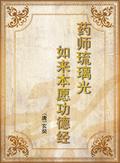 Medicine Master Glazed Light Tathagata's Original Vows and Merit Sutra
The Medicine Master Glazed Light Tathagata's Original Vows and Merits Sutra is referred to as the Medicine Master Sutra. There are three translations in total, namely: 1. "The Sutra of the Original Vows and Merits of the Medicine Master Glazed Light Tathagata", one volume, translated by Xuanzang, a Buddhist master of the Tang Dynasty; 2. "The Sutra of the Original Vows of the Medicine Master Tathagata Spoken by the Buddha", one volume, translated by Tripitaka Bodhidharmagupta in the Sui Dynasty;
—Reads9.4Score—Shelves
Medicine Master Glazed Light Tathagata's Original Vows and Merit Sutra
The Medicine Master Glazed Light Tathagata's Original Vows and Merits Sutra is referred to as the Medicine Master Sutra. There are three translations in total, namely: 1. "The Sutra of the Original Vows and Merits of the Medicine Master Glazed Light Tathagata", one volume, translated by Xuanzang, a Buddhist master of the Tang Dynasty; 2. "The Sutra of the Original Vows of the Medicine Master Tathagata Spoken by the Buddha", one volume, translated by Tripitaka Bodhidharmagupta in the Sui Dynasty;
—Reads9.4Score—Shelves
-
 The Buddha Said the Infinite Life Sutra
Buddhist scriptures. The full name is "The Buddha Speaks of Infinite Life Sutra". Volume 2, translated by Cao Wei and Kang Sengkai. One of the Three Pure Land Sutras. This sutra talks about Amitabha Buddha's cultivation in the cause ground, the fruitful results of his attainment of Buddhahood, his magnificent land, and his acceptance of all living beings who recite the Buddha's name in the ten directions to be reborn in that land. There are twelve translations of this sutra, five are preserved,
—Reads9.4Score—Shelves
The Buddha Said the Infinite Life Sutra
Buddhist scriptures. The full name is "The Buddha Speaks of Infinite Life Sutra". Volume 2, translated by Cao Wei and Kang Sengkai. One of the Three Pure Land Sutras. This sutra talks about Amitabha Buddha's cultivation in the cause ground, the fruitful results of his attainment of Buddhahood, his magnificent land, and his acceptance of all living beings who recite the Buddha's name in the ten directions to be reborn in that land. There are twelve translations of this sutra, five are preserved,
—Reads9.4Score—Shelves
-
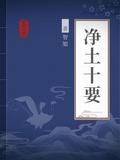 Ten Essentials of Pure Land
The ten volumes of the book are divided into "Ten Essentials": the first essential is "Essential Interpretation of Amitabha" by Ou Yi in the Ming Dynasty; the second essential is "Repentance and Vows of Rebirth in the Pure Land" and "Two Doors of Practicing Vows to Resolve Doubts" in Zunshi of the Song Dynasty; the third essential is "The Gate of the First Heart Samadhi of Contemplating the Infinite Life Sutra" and the "Ritual of Practical Vows for Accepting and Upholding the Sutras of Amitabha"
—Reads8.7Score—Shelves
Ten Essentials of Pure Land
The ten volumes of the book are divided into "Ten Essentials": the first essential is "Essential Interpretation of Amitabha" by Ou Yi in the Ming Dynasty; the second essential is "Repentance and Vows of Rebirth in the Pure Land" and "Two Doors of Practicing Vows to Resolve Doubts" in Zunshi of the Song Dynasty; the third essential is "The Gate of the First Heart Samadhi of Contemplating the Infinite Life Sutra" and the "Ritual of Practical Vows for Accepting and Upholding the Sutras of Amitabha"
—Reads8.7Score—Shelves
-
 Da Fang Guang Yuan Jie Sutra Yoshitsune
So I heard. For a while, Pojia Po. Enter into the Great Light Storehouse of supernatural power. Samadhi is being felt. Everything is Tathagata. Abbot Guangyan. This is the place where all sentient beings have pure enlightenment. The body and mind are at peace. Equality. Perfection in all directions. Be obedient. In the realm of non-duality. All pure lands appear. Together with the great Bodhisattva Mahasattva one hundred thousand people. His name is Manjushri Bodhisattva. Samantabhadra Bodhisatt
—Reads9.4Score—Shelves
Da Fang Guang Yuan Jie Sutra Yoshitsune
So I heard. For a while, Pojia Po. Enter into the Great Light Storehouse of supernatural power. Samadhi is being felt. Everything is Tathagata. Abbot Guangyan. This is the place where all sentient beings have pure enlightenment. The body and mind are at peace. Equality. Perfection in all directions. Be obedient. In the realm of non-duality. All pure lands appear. Together with the great Bodhisattva Mahasattva one hundred thousand people. His name is Manjushri Bodhisattva. Samantabhadra Bodhisatt
—Reads9.4Score—Shelves
-
 Wonderful Dharma Lotus Samadhi Secret Samaya Sutra
—Reads8.2Score—Shelves
Wonderful Dharma Lotus Samadhi Secret Samaya Sutra
Wonderful Dharma Lotus Samadhi Secret Samaya Sutra
—Reads8.2Score—Shelves
-
 Amitabha Samadhi Collection of Dharani Sutras for the Ninth Stage of Rebirth
Then Vairocana Tathagata came. At the great monastery at Mahasamadhi Gate. Together with the great monks there are eighty-nine thousand people. All are great Arhats. Wisdom and kindness are enough to accomplish anything. Its name is Avalokitesvara Bodhisattva with Divine Power, Wisdom and Discernment, and Mahasthamaprapta Bodhisattva. The Bodhisattva of Divine Power, the King of Freedom, the Bodhisattva of Pure Light and Immaculate Dharani. Great Power Bodhisattva, Great Ornament Bodhisattva. Bo
—Reads7.9Score—Shelves
Amitabha Samadhi Collection of Dharani Sutras for the Ninth Stage of Rebirth
Then Vairocana Tathagata came. At the great monastery at Mahasamadhi Gate. Together with the great monks there are eighty-nine thousand people. All are great Arhats. Wisdom and kindness are enough to accomplish anything. Its name is Avalokitesvara Bodhisattva with Divine Power, Wisdom and Discernment, and Mahasthamaprapta Bodhisattva. The Bodhisattva of Divine Power, the King of Freedom, the Bodhisattva of Pure Light and Immaculate Dharani. Great Power Bodhisattva, Great Ornament Bodhisattva. Bo
—Reads7.9Score—Shelves
-
 Zen Master Huangboshan Duanji Teaches the Essentials of the Dharma
Zen master Huangboshan Duanji taught the essentials of the Dharma.
—Reads9.4Score—Shelves
Zen Master Huangboshan Duanji Teaches the Essentials of the Dharma
Zen master Huangboshan Duanji taught the essentials of the Dharma.
—Reads9.4Score—Shelves
-
 Dongxuan Lingbao Real Person's Practice Algorithm to Prolong Life and Benefit from Longevity
Dongxuan Lingbao real person practices the algorithm of longevity and benefit. The author is unknown, probably from the Tang and Song Dynasties. Plagiarized from "Shangqing Sutra of Essential Matters of Self-cultivation" and talked about health-preserving magic. One roll. Original source: the first part of "Zhengtong Tao Zang".
—Reads8.0Score—Shelves
Dongxuan Lingbao Real Person's Practice Algorithm to Prolong Life and Benefit from Longevity
Dongxuan Lingbao real person practices the algorithm of longevity and benefit. The author is unknown, probably from the Tang and Song Dynasties. Plagiarized from "Shangqing Sutra of Essential Matters of Self-cultivation" and talked about health-preserving magic. One roll. Original source: the first part of "Zhengtong Tao Zang".
—Reads8.0Score—Shelves
-
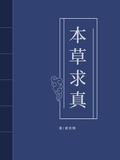 Materia Medica Seeking Truth
"Materia Medica Seeking Truth", an ancient Chinese pharmaceutical work. A total of ten volumes. Huang Gongxiu was compiled in (1769 AD, the 34th year of Qianlong's reign in the Qing Dynasty). The characteristics of this book are as the author said in the book's introduction: "When Yu Shang discusses the properties of medicine, he always pursues them from a practical point of view. He does not ignore the past to belittle the present, and does not favor the present to discard the past. He only see
—Reads8.8Score—Shelves
Materia Medica Seeking Truth
"Materia Medica Seeking Truth", an ancient Chinese pharmaceutical work. A total of ten volumes. Huang Gongxiu was compiled in (1769 AD, the 34th year of Qianlong's reign in the Qing Dynasty). The characteristics of this book are as the author said in the book's introduction: "When Yu Shang discusses the properties of medicine, he always pursues them from a practical point of view. He does not ignore the past to belittle the present, and does not favor the present to discard the past. He only see
—Reads8.8Score—Shelves
-
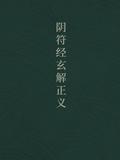 Yin Fu Jing Mysterious Interpretation of Justice
Min Yide believed that although the "Xuanjie of Yinfu Jing" written by Fan Yizhong was called Xuanjie, the principles contained in it were not correct and could be seriously misleading, so he wrote "Xuanjie Zhengyi of Yinfu Jing" to elaborate on the original meaning of "Yinfu Jing" to correct its errors. "Yin Fu Jing" is an important classic in Chinese traditional culture. Its content includes discussions on the relationship between heaven and earth, all things and humans. Historically, there ha
—Reads8.3Score—Shelves
Yin Fu Jing Mysterious Interpretation of Justice
Min Yide believed that although the "Xuanjie of Yinfu Jing" written by Fan Yizhong was called Xuanjie, the principles contained in it were not correct and could be seriously misleading, so he wrote "Xuanjie Zhengyi of Yinfu Jing" to elaborate on the original meaning of "Yinfu Jing" to correct its errors. "Yin Fu Jing" is an important classic in Chinese traditional culture. Its content includes discussions on the relationship between heaven and earth, all things and humans. Historically, there ha
—Reads8.3Score—Shelves
-
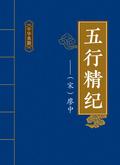 The Five Elements
It is a masterpiece of fortune-telling theory in the Southern Song Dynasty. Its characteristics are: "gathering the theories of dozens of schools, analyzing each chapter and sentence, testing the pros and cons, and evaluating the depth." Wherever heaven, earth, and people are tangible, they are numbered, and the numbers are limited to the five elements. Therefore, those who are good at divination can predict and predict, and there are people who live among them, and there are obvious things that
—Reads8.6Score—Shelves
The Five Elements
It is a masterpiece of fortune-telling theory in the Southern Song Dynasty. Its characteristics are: "gathering the theories of dozens of schools, analyzing each chapter and sentence, testing the pros and cons, and evaluating the depth." Wherever heaven, earth, and people are tangible, they are numbered, and the numbers are limited to the five elements. Therefore, those who are good at divination can predict and predict, and there are people who live among them, and there are obvious things that
—Reads8.6Score—Shelves
-
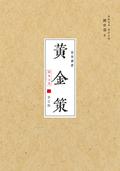 Golden Policy
"Golden Policy" is said to have been written by Liu Bowen, the founding minister of the Ming Dynasty. It is a masterpiece of the Huozhulin hexagram method and can be called a classic for studying the six-yao line. It is written in Fu style. The opening chapter "Zong Duan Qian Jin Fu" explains the basic principles and judgment criteria of the six Yao lines, and then discusses more than 30 common divination themes in life, such as travel, seeking wealth, marriage, etc. The book is rich in referenc
—Reads9.3Score—Shelves
Golden Policy
"Golden Policy" is said to have been written by Liu Bowen, the founding minister of the Ming Dynasty. It is a masterpiece of the Huozhulin hexagram method and can be called a classic for studying the six-yao line. It is written in Fu style. The opening chapter "Zong Duan Qian Jin Fu" explains the basic principles and judgment criteria of the six Yao lines, and then discusses more than 30 common divination themes in life, such as travel, seeking wealth, marriage, etc. The book is rich in referenc
—Reads9.3Score—Shelves
-
 Taishangdong Zhenxianmen Sutra
. The author is unknown, probably from the Tang Dynasty. I asked Yuanshi Tianzun to tell me the names of the spiritual statues of Tianzun from all directions. It is similar to the Dunhuang version of "Tai Shang Cave Xuan Ling Bao Tian Zun Ming" and "Lao Tzu's Ten Directions Statue Ming Sutra". One roll. Original source: "Orthodox Taoist Canon" Dongzhenbu text genre.
—Reads7.8Score—Shelves
Taishangdong Zhenxianmen Sutra
Taishangdong Zhenxianmen Sutra. The author is unknown, probably from the Tang Dynasty. I asked Yuanshi Tianzun to tell me the names of the spiritual statues of Tianzun from all directions. It is similar to the Dunhuang version of "Tai Shang Cave Xuan Ling Bao Tian Zun Ming" and "Lao Tzu's Ten Directions Statue Ming Sutra". One roll. Original source: "Orthodox Taoist Canon" Dongzhenbu text genre.
—Reads7.8Score—Shelves
-
 Taiqing Yuanji Zhi Miao Shen Zhu Jade Sutra
One roll. It is not attributed to the author, but it must be from the late Tang Dynasty and Five Dynasties period. Original source: Method Class of Dongshen Department of "Orthodox Taoist Canon".
—Reads8.0Score—Shelves
Taiqing Yuanji Zhi Miao Shen Zhu Jade Sutra
One roll. It is not attributed to the author, but it must be from the late Tang Dynasty and Five Dynasties period. Original source: Method Class of Dongshen Department of "Orthodox Taoist Canon".
—Reads8.0Score—Shelves