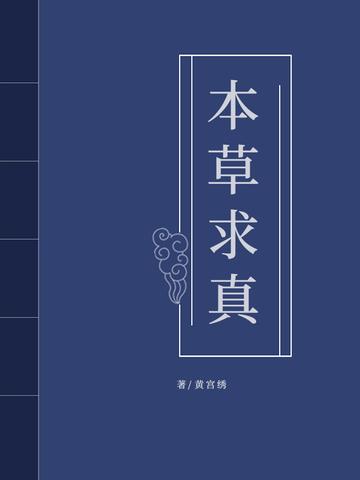
"Materia Medica Seeking Truth", an ancient Chinese pharmaceutical work. A total of ten volumes. Huang Gongxiu was compiled in (1769 AD, the 34th year of Qianlong's reign in the Qing Dynasty). The characteristics of this book are as the author said in the book's introduction: "When Yu Shang discusses the properties of medicine, he always pursues them from a practical point of view. He does not ignore the past to belittle the present, and does not favor the present to discard the past. He only seeks the principles and symptoms of the disease, and the medicine and the disease." This realistic spirit is very valuable.
Reader comments
This is an ancient Han pharmacological work. The original book is divided into ten volumes, including the upper, middle and lower parts. Among them, the first volume mainly introduces some common animal and plant medicinal materials, the middle volume introduces some precious Chinese herbal medicines, and the second volume introduces some rare and precious medicinal materials. This book has important reference value for scholars and enthusiasts who study Chinese herbal medicine, traditional Chinese medicine, and related fields. It also provides valuable pharmacological information and clinical experience for future generations of medical scientists. It is regarded as a classic of traditional Chinese pharmacology and is of great significance to the protection and inheritance of traditional Chinese medicine culture.
Huang Gongxiu, a court physician during the Qianlong period, was one of the top ten famous doctors in Jiangxi history. He was rigorous in his studies and pursued practicality. He treated many patients with difficult and difficult diseases with great results throughout his life. He was the imperial physician during the Qianlong period, and he carefully studied various medical monographs, secret recipes, and prescriptions collected by the palace. It does not ignore the past and ignore the present, nor ignore the past in favor of the present. It only seeks the principles and symptoms of diseases, and the medicines and diseases. Although he studied pulse science intensively, he still advocated the combination of the four diagnosis methods and opposed the diagnosis of disease by pulse alone.
The more one reason is understood, the more it is understood. Is there any such thing as a miscellaneous drug? It's just a virtual reality. Cold and heat are different. Then there may be internal stagnation that does not go away and causes the spread of corpses and ghosts. If the external knot does not disperse, it may become a carbuncle or ulcer. There is a difference between reality and reality in insects. Distinguishing between cold and heat. And poison also has external and internal differences. The difference between rising and falling. This insect must be killed. And the reason why poison must be cured is. As for medication. Especially the smell must be scrutinized. Compatible with human body's Qi and blood. What is suitable is valuable. If the hard work is intense. No need to scrutinize. Misfortune will surely follow.
I especially like its classification of tonics, such as fire-tonifying, water-nourishing, kidney-warming, middle-warming, and tonic, which gave me a deeper understanding of traditional Chinese medicine. This reminds me of the "Huangdi Neijing". They are both classics of traditional Chinese medicine and both focus on the overall balance of the human body. I think this book is also very helpful for our daily health care!
This is an ancient Han pharmacological work. The original book is divided into ten volumes, including the upper, middle and lower parts. Among them, the first volume mainly introduces some common animal and plant medicinal materials, the middle volume introduces some precious Chinese herbal medicines, and the second volume introduces some rare and precious medicinal materials. This book has important reference value for scholars and enthusiasts who study Chinese herbal medicine, traditional Chinese medicine, and related fields. It also provides valuable pharmacological information and clinical experience for future generations of medical scientists. It is regarded as a classic of traditional Chinese pharmacology and is of great significance to the protection and inheritance of traditional Chinese medicine culture.
Huang Gongxiu, a court physician during the Qianlong period, was one of the top ten famous doctors in Jiangxi history. He was rigorous in his studies and pursued practicality. He treated many patients with difficult and difficult diseases with great results throughout his life. He was the imperial physician during the Qianlong period, and he carefully studied various medical monographs, secret recipes, and prescriptions collected by the palace. It does not ignore the past and ignore the present, nor ignore the past in favor of the present. It only seeks the principles and symptoms of diseases, and the medicines and diseases. Although he studied pulse science intensively, he still advocated the combination of the four diagnosis methods and opposed the diagnosis of disease by pulse alone.
The more one reason is understood, the more it is understood. Is there any such thing as a miscellaneous drug? It's just a virtual reality. Cold and heat are different. Then there may be internal stagnation that does not go away and causes the spread of corpses and ghosts. If the external knot does not disperse, it may become a carbuncle or ulcer. There is a difference between reality and reality in insects. Distinguishing between cold and heat. And poison also has external and internal differences. The difference between rising and falling. This insect must be killed. And the reason why poison must be cured is. As for medication. Especially the smell must be scrutinized. Compatible with human body's Qi and blood. What is suitable is valuable. If the hard work is intense. No need to scrutinize. Misfortune will surely follow.
I especially like its classification of tonics, such as fire-tonifying, water-nourishing, kidney-warming, middle-warming, and tonic, which gave me a deeper understanding of traditional Chinese medicine. This reminds me of the "Huangdi Neijing". They are both classics of traditional Chinese medicine and both focus on the overall balance of the human body. I think this book is also very helpful for our daily health care!