Fanqie library
Browse
- Titles
- 1.4k
Every Fanqie book we index, searchable by title, author or tag.
-
 Records of the Ministers Who Were Martyred in the Victory of the Imperial Dynasty
This work "Records of the Martyred Officials of the Sheng Dynasty" is written by an unknown author.
—Reads8.0Score—Shelves
Records of the Ministers Who Were Martyred in the Victory of the Imperial Dynasty
This work "Records of the Martyred Officials of the Sheng Dynasty" is written by an unknown author.
—Reads8.0Score—Shelves
-
 Soldiers Must Look to the South of the Yangtze River (Free Public Edition Book)
Ancient divination book. Among them are five hundred poems "Wang Jiangnan". It is divided into twenty-six categories such as astrology, dream divination, Liuren divination, and Yanyan divination.
—Reads8.6Score—Shelves
Soldiers Must Look to the South of the Yangtze River (Free Public Edition Book)
Ancient divination book. Among them are five hundred poems "Wang Jiangnan". It is divided into twenty-six categories such as astrology, dream divination, Liuren divination, and Yanyan divination.
—Reads8.6Score—Shelves
-
 The Complete Book of Xiao Chuang You Ji (Collection Reading Edition)
"Xiao Chuang You Ji" is a popular book on Confucianism and Taoism, and "Zuigutang Jiansao", twelve volumes, is a short essay on Han aphorisms and aphorisms, which was greatly influenced by Lu Zu's school of thought. The whole book begins with awakening and ends with enlightenment. Although it is mixed in the dust, it has a high view of the outside world. In its criticism of the world's trend, it reveals the coldness of a philosopher. Its aphorisms are exquisite, short and exquisite, prompting pe
—Reads9.2Score—Shelves
The Complete Book of Xiao Chuang You Ji (Collection Reading Edition)
"Xiao Chuang You Ji" is a popular book on Confucianism and Taoism, and "Zuigutang Jiansao", twelve volumes, is a short essay on Han aphorisms and aphorisms, which was greatly influenced by Lu Zu's school of thought. The whole book begins with awakening and ends with enlightenment. Although it is mixed in the dust, it has a high view of the outside world. In its criticism of the world's trend, it reveals the coldness of a philosopher. Its aphorisms are exquisite, short and exquisite, prompting pe
—Reads9.2Score—Shelves
-
 Full Translation of Cai Gen Tan in Vernacular
Hong Yingming, the author of "Cai Gen Tan Vernacular Translation", was born in the Ming Dynasty. His courtesy name is Zicheng, his nickname is Huan Chujeng, and his place of origin is unknown. There are two works handed down from generation to generation, "Lai Gen Tan" and "The Strange Traces of Immortals and Buddhas". In his early years, he was keen on official career and fame, and in his later years, he retired to the mountains and forests. During the Wanli period of the Ming Dynasty, he lived
—Reads9.4Score—Shelves
Full Translation of Cai Gen Tan in Vernacular
Hong Yingming, the author of "Cai Gen Tan Vernacular Translation", was born in the Ming Dynasty. His courtesy name is Zicheng, his nickname is Huan Chujeng, and his place of origin is unknown. There are two works handed down from generation to generation, "Lai Gen Tan" and "The Strange Traces of Immortals and Buddhas". In his early years, he was keen on official career and fame, and in his later years, he retired to the mountains and forests. During the Wanli period of the Ming Dynasty, he lived
—Reads9.4Score—Shelves
-
 Summary of the General Catalog of Sikuquanshu
This work "Summary of the General Catalog of Sikuquanshu" is written by Ji Yun.
—Reads8.4Score—Shelves
Summary of the General Catalog of Sikuquanshu
This work "Summary of the General Catalog of Sikuquanshu" is written by Ji Yun.
—Reads8.4Score—Shelves
-
 Sun Tzu's Art of War, Learn and Apply It
"Sun Tzu's Art of War" is one of my country's sacred military classics that enjoys global reputation. It is known as "the most wonderful book in the world" and is a cultural treasure that the Chinese nation is proud of. It has been nearly 2,500 years since it was written. It was introduced to Japan in the 8th century and Europe in the 18th century. It has been translated into more than 30 languages and is widely circulated around the world. At present, there are many versions of "Sun Tzu's Ar
—Reads8.9Score—Shelves
Sun Tzu's Art of War, Learn and Apply It
"Sun Tzu's Art of War" is one of my country's sacred military classics that enjoys global reputation. It is known as "the most wonderful book in the world" and is a cultural treasure that the Chinese nation is proud of. It has been nearly 2,500 years since it was written. It was introduced to Japan in the 8th century and Europe in the 18th century. It has been translated into more than 30 languages and is widely circulated around the world. At present, there are many versions of "Sun Tzu's Ar
—Reads8.9Score—Shelves
-
 Thirty-Six Stratagems and Wise Business
Shopping malls are like battlefields, and competition is war. In today's world full of opportunities and challenges, fierce competition, complex relationships, and survival of the fittest, everyone desires a successful career, a happy family, and a smooth life. But if you want to gain a place for yourself in business, shopping malls, family and society, and then become invincible, it will not work without a set of superb philosophy and strategies. Thirty-Six Strategies is based on the ancient th
—Reads9.4Score—Shelves
Thirty-Six Stratagems and Wise Business
Shopping malls are like battlefields, and competition is war. In today's world full of opportunities and challenges, fierce competition, complex relationships, and survival of the fittest, everyone desires a successful career, a happy family, and a smooth life. But if you want to gain a place for yourself in business, shopping malls, family and society, and then become invincible, it will not work without a set of superb philosophy and strategies. Thirty-Six Strategies is based on the ancient th
—Reads9.4Score—Shelves
-
 Decoction of Materia Medica
"Tangye Materia Medica", 3 volumes, a book on materia medica, written by Wang Haogu in the Yuan Dynasty from 1238 to 1248, and supplemented with some information in the 17th year of the Yuan Dynasty (1280). Wang Haogu regarded materia medica and decoctions (jingfang) as his true teachings, so he wrote this book. The first volume is a general introduction to medicinal properties, and the middle and lower volumes record 242 kinds of medicines.
—Reads9.2Score—Shelves
Decoction of Materia Medica
"Tangye Materia Medica", 3 volumes, a book on materia medica, written by Wang Haogu in the Yuan Dynasty from 1238 to 1248, and supplemented with some information in the 17th year of the Yuan Dynasty (1280). Wang Haogu regarded materia medica and decoctions (jingfang) as his true teachings, so he wrote this book. The first volume is a general introduction to medicinal properties, and the middle and lower volumes record 242 kinds of medicines.
—Reads9.2Score—Shelves
-
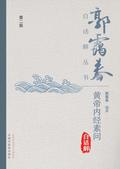 Huang Di Nei Jing Su Wen Interpretation in Vernacular (Second Edition)
"The Vernacular Interpretation of Huangdi Neijing Suwen" is one of the "Vernacular Interpretations of Traditional Chinese Medicine" series. "Yellow Emperor's Internal Classic Su Wen" ("Su Wen" for short) is one of the oldest theoretical works of traditional Chinese medicine and has always been valued by doctors. Due to the long history of the book, it has been copied and reprinted many times, and the text and connotation are ancient and mysterious, which has brought many difficulties to the stud
—Reads9.1Score—Shelves
Huang Di Nei Jing Su Wen Interpretation in Vernacular (Second Edition)
"The Vernacular Interpretation of Huangdi Neijing Suwen" is one of the "Vernacular Interpretations of Traditional Chinese Medicine" series. "Yellow Emperor's Internal Classic Su Wen" ("Su Wen" for short) is one of the oldest theoretical works of traditional Chinese medicine and has always been valued by doctors. Due to the long history of the book, it has been copied and reprinted many times, and the text and connotation are ancient and mysterious, which has brought many difficulties to the stud
—Reads9.1Score—Shelves
-
 An Internal Biography of Zhongnan Mountain's Zuting Immortal
"Inner Biography of the Zuting Immortals of Zhongnan Mountain", compiled by Li Daoqian, a Taoist from the Yuan Dynasty. "Zhongnanshan Shuo Jing Tai's Immortal Steles of All Dynasties" was compiled by Zhu Xiangxian, a Taoist of the Yuan Dynasty. The Zhongnan Mountain Pavilion is the former residence of Yin Xi, so it is called the Ancestral Courtyard. It is a record of the past dynasties that Yuliuju is the viewer. It was compiled by Dao Qian, both from Jin and Yuan Dynasties. Xiangxian compiled i
—Reads8.4Score—Shelves
An Internal Biography of Zhongnan Mountain's Zuting Immortal
"Inner Biography of the Zuting Immortals of Zhongnan Mountain", compiled by Li Daoqian, a Taoist from the Yuan Dynasty. "Zhongnanshan Shuo Jing Tai's Immortal Steles of All Dynasties" was compiled by Zhu Xiangxian, a Taoist of the Yuan Dynasty. The Zhongnan Mountain Pavilion is the former residence of Yin Xi, so it is called the Ancestral Courtyard. It is a record of the past dynasties that Yuliuju is the viewer. It was compiled by Dao Qian, both from Jin and Yuan Dynasties. Xiangxian compiled i
—Reads8.4Score—Shelves
-
 Wine List
One volume of "Wine Book", written by Dou Ping of the Song Dynasty. Ping Ziye, a native of Wenshang. Chao Gongwu's "Studying Records" contains four volumes of "New Tang Book Yin Xun". Before Wu Zhen and Sun Fu, he should have been a person of Renzong's time. Gongwu said that he was knowledgeable and profound, and he was also a man who loved the ancient times. The other version has a person named Dou Ge, but the details of his name show that it was taken from Lu Ming's poem, and it was also writt
—Reads8.6Score—Shelves
Wine List
One volume of "Wine Book", written by Dou Ping of the Song Dynasty. Ping Ziye, a native of Wenshang. Chao Gongwu's "Studying Records" contains four volumes of "New Tang Book Yin Xun". Before Wu Zhen and Sun Fu, he should have been a person of Renzong's time. Gongwu said that he was knowledgeable and profound, and he was also a man who loved the ancient times. The other version has a person named Dou Ge, but the details of his name show that it was taken from Lu Ming's poem, and it was also writt
—Reads8.6Score—Shelves
-
 Thousand Character Translation Notes
"The Thousand-Character Classic" is the oldest, longest-used, and most influential ancient children's enlightenment book that has been completely preserved so far. Because "The Thousand Character Classic" covers astronomy, geography, nature, society, history and other aspects of knowledge, it is the best book for enlightenment and education of children, and it is also a vivid and excellent encyclopedia. The Thousand Character Classic has been circulated for more than 1,400 years, which shows tha
—Reads8.7Score—Shelves
Thousand Character Translation Notes
"The Thousand-Character Classic" is the oldest, longest-used, and most influential ancient children's enlightenment book that has been completely preserved so far. Because "The Thousand Character Classic" covers astronomy, geography, nature, society, history and other aspects of knowledge, it is the best book for enlightenment and education of children, and it is also a vivid and excellent encyclopedia. The Thousand Character Classic has been circulated for more than 1,400 years, which shows tha
—Reads8.7Score—Shelves
-
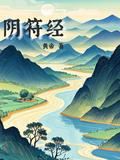 Yin Fu Jing
"Yin Fu Jing", also known as "Yin Fu Jing of Huangdi" or "Xuanyuan Huangdi Yin Fu Jing", is one of the classic works of Taoism. The book is short but profound. It starts with "The way to observe the sky, and the journey to the sky is complete." It mainly talks about the natural laws of the universe and the way of human cultivation. The book contains many aspects of wisdom on self-cultivation, governing the country, and military strategies. It aims to teach people how to conform to nature, contro
—Reads8.6Score—Shelves
Yin Fu Jing
"Yin Fu Jing", also known as "Yin Fu Jing of Huangdi" or "Xuanyuan Huangdi Yin Fu Jing", is one of the classic works of Taoism. The book is short but profound. It starts with "The way to observe the sky, and the journey to the sky is complete." It mainly talks about the natural laws of the universe and the way of human cultivation. The book contains many aspects of wisdom on self-cultivation, governing the country, and military strategies. It aims to teach people how to conform to nature, contro
—Reads8.6Score—Shelves
-
 Buddhist Names and Interpretations
[In February 1937, this book was first published and distributed by Peking University] [Popular work by Xiong Shili, a modern philosopher, thinker, and master of Chinese studies] A work explaining the Buddhist terminology of consciousness-only Dharma and Phantasm, "Buddhist Names and Phrases" takes the names and phases of Buddhism as items and the overall order of Buddhism as the program. It expounds the system of Mahayana Buddhism from the perspective of consciousness-only theory, explores the
—Reads8.7Score—Shelves
Buddhist Names and Interpretations
[In February 1937, this book was first published and distributed by Peking University] [Popular work by Xiong Shili, a modern philosopher, thinker, and master of Chinese studies] A work explaining the Buddhist terminology of consciousness-only Dharma and Phantasm, "Buddhist Names and Phrases" takes the names and phases of Buddhism as items and the overall order of Buddhism as the program. It expounds the system of Mahayana Buddhism from the perspective of consciousness-only theory, explores the
—Reads8.7Score—Shelves
-
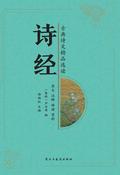 Book of Songs
Sinology is the study of China, which is based on the mother tongue Chinese and expresses the spiritual values and attitudes of the Chinese nation. It is conducive to gathering the cultural centripetal force of the Chinese nation and conducive to the great unity of the Chinese nation. It is the torch of life for the descendants of Yan and Huang. We must pass it on from generation to generation and carry it forward forever. The excellent traditional Chinese culture has great wisdom in thought,
—Reads8.9Score—Shelves
Book of Songs
Sinology is the study of China, which is based on the mother tongue Chinese and expresses the spiritual values and attitudes of the Chinese nation. It is conducive to gathering the cultural centripetal force of the Chinese nation and conducive to the great unity of the Chinese nation. It is the torch of life for the descendants of Yan and Huang. We must pass it on from generation to generation and carry it forward forever. The excellent traditional Chinese culture has great wisdom in thought,
—Reads8.9Score—Shelves
-
 Imitation Guide Book (Free Public Edition Book)
In the third year of Shunzhi (1646), the Qing army entered Jiangxi and Ji'an fell. Fan Kangsheng followed the governor Wan Yuanji to retreat to Zaokou and entered Ganzhou. Wan Yuanji mobilized Ming troops from all over the city and soldiers and civilians in the city to stand firm and repel the Qing troops. Shaozong was in Fujian and could not send troops to rescue him, so he was only named Zhongyi Mansion. Later, the Qing army broke through the city. Wan Yuanji, Yang Tinglin and others died in t
—Reads—Score—Shelves
Imitation Guide Book (Free Public Edition Book)
In the third year of Shunzhi (1646), the Qing army entered Jiangxi and Ji'an fell. Fan Kangsheng followed the governor Wan Yuanji to retreat to Zaokou and entered Ganzhou. Wan Yuanji mobilized Ming troops from all over the city and soldiers and civilians in the city to stand firm and repel the Qing troops. Shaozong was in Fujian and could not send troops to rescue him, so he was only named Zhongyi Mansion. Later, the Qing army broke through the city. Wan Yuanji, Yang Tinglin and others died in t
—Reads—Score—Shelves
-
 Essentials of Danxi's Treatment
"The Essentials of Danxi's Treatment", originally titled "Zhu Danxi Shu", was edited and compiled by his disciples and private scholars. Corrected and reengraved by Gaobin (Shuyuan) of Ming Dynasty. This book has a total of 8 volumes, covering 154 types of internal, external, women's and children's diseases. The explanation of the cause, syndrome and treatment is concise, the text is subtle and profound, and many cases are not yet understood by previous sages. It can be regarded as a masterpiece
—Reads8.4Score—Shelves
Essentials of Danxi's Treatment
"The Essentials of Danxi's Treatment", originally titled "Zhu Danxi Shu", was edited and compiled by his disciples and private scholars. Corrected and reengraved by Gaobin (Shuyuan) of Ming Dynasty. This book has a total of 8 volumes, covering 154 types of internal, external, women's and children's diseases. The explanation of the cause, syndrome and treatment is concise, the text is subtle and profound, and many cases are not yet understood by previous sages. It can be regarded as a masterpiece
—Reads8.4Score—Shelves
-
 Chronicles of the Later Zhou Dynasty (Free Public Edition Book)
It mainly records the history of the Later Zhou Dynasty during the Five Dynasties and Ten Kingdoms period, including the reforms and military actions during the establishment of the Later Zhou Dynasty by Guo Wei and the reign of Chai Rong. Chai Rong's reforms played an important role in promoting the economic and military development of the Later Zhou Dynasty. The development of the Later Zhou Dynasty laid the foundation for the unification of the Northern Song Dynasty. This part of the content
—Reads8.7Score—Shelves
Chronicles of the Later Zhou Dynasty (Free Public Edition Book)
It mainly records the history of the Later Zhou Dynasty during the Five Dynasties and Ten Kingdoms period, including the reforms and military actions during the establishment of the Later Zhou Dynasty by Guo Wei and the reign of Chai Rong. Chai Rong's reforms played an important role in promoting the economic and military development of the Later Zhou Dynasty. The development of the Later Zhou Dynasty laid the foundation for the unification of the Northern Song Dynasty. This part of the content
—Reads8.7Score—Shelves
-
 Book of Changes
The Book of Changes talks about human plans, not divine plans or ghost plans. The whole work is always permeated with the idea that human factors play a decisive role. It is believed that people's moral cultivation and subjective efforts can turn disaster into good luck and promote changes in things. I believe in the role of human resources in transforming the environment and promoting the transformation of things. Some people think that the "Book of Changes" is a book about fortune-telling and
—Reads8.4Score—Shelves
Book of Changes
The Book of Changes talks about human plans, not divine plans or ghost plans. The whole work is always permeated with the idea that human factors play a decisive role. It is believed that people's moral cultivation and subjective efforts can turn disaster into good luck and promote changes in things. I believe in the role of human resources in transforming the environment and promoting the transformation of things. Some people think that the "Book of Changes" is a book about fortune-telling and
—Reads8.4Score—Shelves
-
 Insights from the Book of Changes
The "Book of Changes" seems unfathomable, but in fact, the "Book of Changes" is derived from reality, and it must also be able to guide reality. The Book of Changes is an exploration of the mysteries of the universe, a summary of the philosophy of life, and a summary of the relationship between heaven, earth, and man. If a thousand people read the "Book of Changes", they will have a thousand different interpretations, but they will also get a thousand different gains.
—Reads9.4Score—Shelves
Insights from the Book of Changes
The "Book of Changes" seems unfathomable, but in fact, the "Book of Changes" is derived from reality, and it must also be able to guide reality. The Book of Changes is an exploration of the mysteries of the universe, a summary of the philosophy of life, and a summary of the relationship between heaven, earth, and man. If a thousand people read the "Book of Changes", they will have a thousand different interpretations, but they will also get a thousand different gains.
—Reads9.4Score—Shelves
-
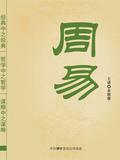 Zhouyi
"The Book of Changes" occupies an extremely important position in the history of Chinese culture. Confucianism respects it as "the first of the group of scriptures", and Taoism respects it as "one of the three mysteries". Its esoteric philosophy and image-number schema of exploring the hidden and mysterious universe are also unique in the history of world culture. From the Book of Changes, philosophers can see dialectical thinking, historians can see the rise and fall of history, politicians can
—Reads8.6Score—Shelves
Zhouyi
"The Book of Changes" occupies an extremely important position in the history of Chinese culture. Confucianism respects it as "the first of the group of scriptures", and Taoism respects it as "one of the three mysteries". Its esoteric philosophy and image-number schema of exploring the hidden and mysterious universe are also unique in the history of world culture. From the Book of Changes, philosophers can see dialectical thinking, historians can see the rise and fall of history, politicians can
—Reads8.6Score—Shelves
-
 Wang Guowei: Miscellaneous Notes on Dongshan
[Chinese Studies Master Wang Guowei's Classical Works on Chinese Studies] "Dongshan Miscellaneous Notes" mainly tells about the etiquette, architecture and cultural heritage of ancient China. By describing the ancient etiquette system, architecture and cultural heritage, it shows the rich diversity of social life and cultural heritage in ancient China, as well as the historical significance and cultural value behind these cultures and etiquette.
—Reads8.3Score—Shelves
Wang Guowei: Miscellaneous Notes on Dongshan
[Chinese Studies Master Wang Guowei's Classical Works on Chinese Studies] "Dongshan Miscellaneous Notes" mainly tells about the etiquette, architecture and cultural heritage of ancient China. By describing the ancient etiquette system, architecture and cultural heritage, it shows the rich diversity of social life and cultural heritage in ancient China, as well as the historical significance and cultural value behind these cultures and etiquette.
—Reads8.3Score—Shelves
-
 Zhengmeng
"Zhengmeng", also known as "Zhang Zizhengmeng", Zhang Zai is one of the five sons of the Northern Song Dynasty and an unavoidable figure in the history of Neo-Confucianism in the Song and Ming Dynasties. Most of his works have been lost. Fortunately, "Zheng Meng", as his most important work, has been preserved, which is a blessing to future generations. It was written in the ninth year of Xining (1076). "Meng" is the name of a hexagram in the "Book of Changes". The hexagram contains the phrase "
—Reads9.4Score—Shelves
Zhengmeng
"Zhengmeng", also known as "Zhang Zizhengmeng", Zhang Zai is one of the five sons of the Northern Song Dynasty and an unavoidable figure in the history of Neo-Confucianism in the Song and Ming Dynasties. Most of his works have been lost. Fortunately, "Zheng Meng", as his most important work, has been preserved, which is a blessing to future generations. It was written in the ninth year of Xining (1076). "Meng" is the name of a hexagram in the "Book of Changes". The hexagram contains the phrase "
—Reads9.4Score—Shelves
-
 Book of the Northern Qi Dynasty
"Book of Northern Qi" was written by Li Baiyao, a historian of the Tang Dynasty. It is a chronological history with a total of 50 volumes, 8 volumes of chronicles, and 42 volumes of biographies. It records the beginning about ten years before the split of the Northern Wei Dynasty, followed by the split of the Northern Wei Dynasty, the founding of the Eastern Wei Dynasty, the replacement of the Eastern Wei Dynasty by the Northern Qi Dynasty, and the end of the Northern Qi Dynasty. It covers about
—Reads8.9Score—Shelves
Book of the Northern Qi Dynasty
"Book of Northern Qi" was written by Li Baiyao, a historian of the Tang Dynasty. It is a chronological history with a total of 50 volumes, 8 volumes of chronicles, and 42 volumes of biographies. It records the beginning about ten years before the split of the Northern Wei Dynasty, followed by the split of the Northern Wei Dynasty, the founding of the Eastern Wei Dynasty, the replacement of the Eastern Wei Dynasty by the Northern Qi Dynasty, and the end of the Northern Qi Dynasty. It covers about
—Reads8.9Score—Shelves
-
 Return to Origin (Free Public Edition Book)
An important classic of the Southern Taoist sect of the Song Dynasty, it explains the basic principles of inner alchemy cultivation and the cultivation method of "double cultivation of life and life".
—Reads8.5Score—Shelves
Return to Origin (Free Public Edition Book)
An important classic of the Southern Taoist sect of the Song Dynasty, it explains the basic principles of inner alchemy cultivation and the cultivation method of "double cultivation of life and life".
—Reads8.5Score—Shelves
-
 Western Ascension Meridian
The Western Sheng Jing is a Taoist classic. Its full name is "The Western Sheng Jing of Laozi" and it is one of the five works of Laozi. "Taoist Teachings" says: "Yin Sheng received only five volumes including "Daode", "Miaozhen", and "Xisheng"." According to the Southern Song Dynasty Zhao Xibi's "Mr. Zhaode's Reading Notes", this sutra was compiled by Yin happy, the order of Hangu Pass, according to Laozi. This sutra was first recorded and later written down. It is an important classic of early
—Reads8.5Score—Shelves
Western Ascension Meridian
The Western Sheng Jing is a Taoist classic. Its full name is "The Western Sheng Jing of Laozi" and it is one of the five works of Laozi. "Taoist Teachings" says: "Yin Sheng received only five volumes including "Daode", "Miaozhen", and "Xisheng"." According to the Southern Song Dynasty Zhao Xibi's "Mr. Zhaode's Reading Notes", this sutra was compiled by Yin happy, the order of Hangu Pass, according to Laozi. This sutra was first recorded and later written down. It is an important classic of early
—Reads8.5Score—Shelves
-
 A Study on the Eight Extraordinary Meridians
"A Study of the Eight Extraordinary Meridians", a special book on meridians. One roll. Written by Li Shizhen of Ming Dynasty. Published in 1578. This book discusses the Eight Extraordinary Meridians, examines relevant literature from past dynasties, systematically summarizes and organizes the circulation and disease of each Extraordinary Meridian, and puts forward the author's personal opinions. It is an important work on the study of the Eight Extraordinary Meridians. There are now Qing Dynasty
—Reads9.2Score—Shelves
A Study on the Eight Extraordinary Meridians
"A Study of the Eight Extraordinary Meridians", a special book on meridians. One roll. Written by Li Shizhen of Ming Dynasty. Published in 1578. This book discusses the Eight Extraordinary Meridians, examines relevant literature from past dynasties, systematically summarizes and organizes the circulation and disease of each Extraordinary Meridian, and puts forward the author's personal opinions. It is an important work on the study of the Eight Extraordinary Meridians. There are now Qing Dynasty
—Reads9.2Score—Shelves
-
 Ge Zhi Yu Lun
"Ge Zhi Yu Lun" is a collection of Zhu's medical treatises, with 1 volume and a total of 42 medical treatises. The content is quite extensive, and the order of the chapters is irregular. It has the charm of essays. If we do not stick to the order of the original book and classify it according to the content of the discussion, it can be roughly divided into: those on rejuvenation, such as "Eating and Drinking, Lust and Desire", "On Elderly Care", etc.; Those on physiology and pathology, such as "
—Reads8.8Score—Shelves
Ge Zhi Yu Lun
"Ge Zhi Yu Lun" is a collection of Zhu's medical treatises, with 1 volume and a total of 42 medical treatises. The content is quite extensive, and the order of the chapters is irregular. It has the charm of essays. If we do not stick to the order of the original book and classify it according to the content of the discussion, it can be roughly divided into: those on rejuvenation, such as "Eating and Drinking, Lust and Desire", "On Elderly Care", etc.; Those on physiology and pathology, such as "
—Reads8.8Score—Shelves
-
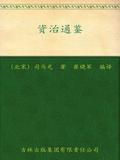 Zizhi Tongjian
This book covers the epitome of China's 1362 years of history, culture, politics, economy, and characters. It is a historical masterpiece that is sufficient to understand China's political operations and power games. It is also a history book that ancient emperors can use to govern in light of the past. The thousand-year history of such a huge country is condensed into three million words. It is very difficult to understand it clearly. Only in this way can we truly have a deep understanding of t
—Reads9.3Score—Shelves
Zizhi Tongjian
This book covers the epitome of China's 1362 years of history, culture, politics, economy, and characters. It is a historical masterpiece that is sufficient to understand China's political operations and power games. It is also a history book that ancient emperors can use to govern in light of the past. The thousand-year history of such a huge country is condensed into three million words. It is very difficult to understand it clearly. Only in this way can we truly have a deep understanding of t
—Reads9.3Score—Shelves
-
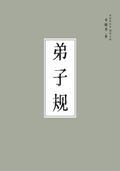 Disciple Rules
"Disciples' Regulations" is a Confucian enlightenment classic with only more than a thousand words. In the form of three characters, one sentence, two sentences and one rhyme, it comprehensively explains the etiquette and norms that disciples should have at home, going out, dealing with others, and studying. It has concise language and profound meaning. It is a must-read for educating children and developing good moral character.
—Reads9.3Score—Shelves
Disciple Rules
"Disciples' Regulations" is a Confucian enlightenment classic with only more than a thousand words. In the form of three characters, one sentence, two sentences and one rhyme, it comprehensively explains the etiquette and norms that disciples should have at home, going out, dealing with others, and studying. It has concise language and profound meaning. It is a must-read for educating children and developing good moral character.
—Reads9.3Score—Shelves
-
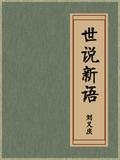 Shishuoxinyu
"Shishuoxinyu" is a representative work of "note novels" during the Wei, Jin, Southern and Northern Dynasties in China. It mainly records the words, deeds, anecdotes and anecdotes of the gentry class as well as the situation of the ruling class at that time. The book contains a total of 36 chapters and 1,000 items, covering politics, economy, society, literature, thought and many other aspects. Therefore, it is also an important material for studying the history of this period. It not only truly
—Reads9.4Score—Shelves
Shishuoxinyu
"Shishuoxinyu" is a representative work of "note novels" during the Wei, Jin, Southern and Northern Dynasties in China. It mainly records the words, deeds, anecdotes and anecdotes of the gentry class as well as the situation of the ruling class at that time. The book contains a total of 36 chapters and 1,000 items, covering politics, economy, society, literature, thought and many other aspects. Therefore, it is also an important material for studying the history of this period. It not only truly
—Reads9.4Score—Shelves
-
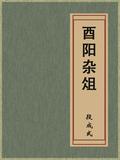 Youyang Zazu (Free Public Edition Book)
This book records certain folklore stories for the first time, and they are the earliest basis for studying certain types of legends. The "Summary of the General Catalog of Sikuquanshu" believes that it specializes in "weird and unfounded talk, absurd and nonsensical things". In addition to recording a lot of natural science knowledge and customs, it also records some alchemy content.
—Reads9.2Score—Shelves
Youyang Zazu (Free Public Edition Book)
This book records certain folklore stories for the first time, and they are the earliest basis for studying certain types of legends. The "Summary of the General Catalog of Sikuquanshu" believes that it specializes in "weird and unfounded talk, absurd and nonsensical things". In addition to recording a lot of natural science knowledge and customs, it also records some alchemy content.
—Reads9.2Score—Shelves
-
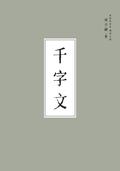 Thousand-Character Essay
"The Thousand Character Classic" was compiled by Xingsi of Liang Zhou in the Southern Dynasty. The full text consists of a thousand non-repeated Chinese characters, four characters per sentence, and the sentences rhyme. The content covers astronomy, nature, self-cultivation, history, etc. This children's enlightenment book has simple sentences, is easy to recite and remember, and has far-reaching influence. It is an important work in the history of ancient Chinese education.
—Reads9.2Score—Shelves
Thousand-Character Essay
"The Thousand Character Classic" was compiled by Xingsi of Liang Zhou in the Southern Dynasty. The full text consists of a thousand non-repeated Chinese characters, four characters per sentence, and the sentences rhyme. The content covers astronomy, nature, self-cultivation, history, etc. This children's enlightenment book has simple sentences, is easy to recite and remember, and has far-reaching influence. It is an important work in the history of ancient Chinese education.
—Reads9.2Score—Shelves
-
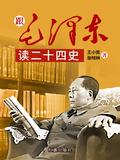 Read the Twenty-Four Histories with Mao Zedong
"Twenty-Four Histories" is a voluminous Chinese historical classic. It begins with the "Historical Records" written by Sima Qian of the Western Han Dynasty and has been carefully compiled by famous historians from all dynasties over more than 2,000 years. It is a collection of biographical history books, with a total of 3,259 volumes and about 40 million words. It describes the politics, economy, culture, astronomy, geography and other aspects of the Chinese nation for more than 4,000 years from
—Reads8.4Score—Shelves
Read the Twenty-Four Histories with Mao Zedong
"Twenty-Four Histories" is a voluminous Chinese historical classic. It begins with the "Historical Records" written by Sima Qian of the Western Han Dynasty and has been carefully compiled by famous historians from all dynasties over more than 2,000 years. It is a collection of biographical history books, with a total of 3,259 volumes and about 40 million words. It describes the politics, economy, culture, astronomy, geography and other aspects of the Chinese nation for more than 4,000 years from
—Reads8.4Score—Shelves
-
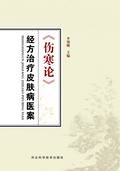 "Treatise on Febrile Diseases" Classical Prescriptions for Treating Skin Diseases
This book divides the prescriptions used to treat skin diseases in Treatise on Febrile Diseases into seven chapters according to the "Six Meridians Syndrome Differentiation": Taiyang Disease, Yangming Disease, Shaoyang Disease, Taiyin Disease, Shaoyin Disease, Jueyin Disease, and Cholera Disease. Each prescription is described in detail from the original text of Treatise on Febrile Diseases, prescription explanation and clinical application, and the symptoms, syndrome types, syndrome differentia
—Reads9.3Score—Shelves
"Treatise on Febrile Diseases" Classical Prescriptions for Treating Skin Diseases
This book divides the prescriptions used to treat skin diseases in Treatise on Febrile Diseases into seven chapters according to the "Six Meridians Syndrome Differentiation": Taiyang Disease, Yangming Disease, Shaoyang Disease, Taiyin Disease, Shaoyin Disease, Jueyin Disease, and Cholera Disease. Each prescription is described in detail from the original text of Treatise on Febrile Diseases, prescription explanation and clinical application, and the symptoms, syndrome types, syndrome differentia
—Reads9.3Score—Shelves
-
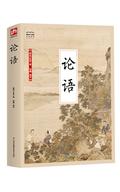 The Analects of Confucius (National Academy of Chinese Studies)
The Analects of Confucius records the words and deeds of Confucius and his disciples in the form of quotations. It is the origin of Chinese Confucian culture and is respected as the standard by the Confucian school. Since the Western Han Dynasty, Confucius' theory expressed in the Analects has been rapidly spread, and its influence has spread across various fields such as politics, economy, thought, culture, education, ethics and morality, and has become a major symbol of traditional Chinese cul
—Reads9.4Score—Shelves
The Analects of Confucius (National Academy of Chinese Studies)
The Analects of Confucius records the words and deeds of Confucius and his disciples in the form of quotations. It is the origin of Chinese Confucian culture and is respected as the standard by the Confucian school. Since the Western Han Dynasty, Confucius' theory expressed in the Analects has been rapidly spread, and its influence has spread across various fields such as politics, economy, thought, culture, education, ethics and morality, and has become a major symbol of traditional Chinese cul
—Reads9.4Score—Shelves
-
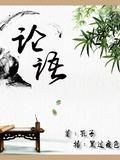 The Analects of Confucius
"The Analects of Confucius" is a collection of quotations from Confucius and his disciples. It was compiled by Confucius's disciples and his disciples and was written in the early Warring States period.
—Reads8.4Score—Shelves
The Analects of Confucius
"The Analects of Confucius" is a collection of quotations from Confucius and his disciples. It was compiled by Confucius's disciples and his disciples and was written in the early Warring States period.
—Reads8.4Score—Shelves
-
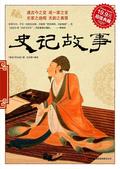 Historical Stories (Super Value Collection)
"Historical Records" was written by Sima Qian, a famous historian and writer during the Western Han Dynasty. It records the historical changes of more than 3,000 years from Xuanyuan to the Taichu reign of Emperor Wu of the Han Dynasty. It is large in scale and has a complete system. It involves philosophy, politics, economics, literature, aesthetics, astronomy, geography and even medical divination. It covers almost all the contents of social activities in various historical periods. It can be c
—Reads9.3Score—Shelves
Historical Stories (Super Value Collection)
"Historical Records" was written by Sima Qian, a famous historian and writer during the Western Han Dynasty. It records the historical changes of more than 3,000 years from Xuanyuan to the Taichu reign of Emperor Wu of the Han Dynasty. It is large in scale and has a complete system. It involves philosophy, politics, economics, literature, aesthetics, astronomy, geography and even medical divination. It covers almost all the contents of social activities in various historical periods. It can be c
—Reads9.3Score—Shelves
-
 Urging Officials (Free Public Edition Book)
The Feng Shui classics of the Song Dynasty use the sand and water of dragon caves to discuss geographical good and bad luck, and focus on the relationship between the location of the Yangzhai and the official fortune.
—Reads8.6Score—Shelves
Urging Officials (Free Public Edition Book)
The Feng Shui classics of the Song Dynasty use the sand and water of dragon caves to discuss geographical good and bad luck, and focus on the relationship between the location of the Yangzhai and the official fortune.
—Reads8.6Score—Shelves
-
 Six Types of Han Officials (Free Public Edition Book)
10 Volumes. Edited and edited by Sun Xingyan, a native of the Qing Dynasty. It includes 1 volume of "Han Guan", written by Wang Long of the Eastern Han Dynasty; 1 volume of "Han Guan Jiexe", annotated by Hu Guang of the Eastern Han Dynasty; 2 volumes of "Han Guan Jiu Yi" (also known as "Han Guan Jiu Yi"), written by Wei Hong of the Eastern Han Dynasty; 2 volumes of "Han Guan Yi", Written by Ying Shao of the Eastern Han Dynasty; "Selection of Ceremonies for the Ceremony of Officials of the Han Dy
—Reads8.6Score—Shelves
Six Types of Han Officials (Free Public Edition Book)
10 Volumes. Edited and edited by Sun Xingyan, a native of the Qing Dynasty. It includes 1 volume of "Han Guan", written by Wang Long of the Eastern Han Dynasty; 1 volume of "Han Guan Jiexe", annotated by Hu Guang of the Eastern Han Dynasty; 2 volumes of "Han Guan Jiu Yi" (also known as "Han Guan Jiu Yi"), written by Wei Hong of the Eastern Han Dynasty; 2 volumes of "Han Guan Yi", Written by Ying Shao of the Eastern Han Dynasty; "Selection of Ceremonies for the Ceremony of Officials of the Han Dy
—Reads8.6Score—Shelves
-
 Ancient Pulse Method Secretly Taught by Alchemy Doctors (Free Public Edition Book)
Books on religious philosophy. The Origin of Dividing Meridians and Waiting for Pulses There is a big difference between the ancient method of dividing and waiting for pulses and the current method of using Cunkou to cut pulses alone. Meridian division not only has many advantages, but is also well-founded in the theory of traditional Chinese medicine. Wang Shuhe's "Mai Jing" and Gao Yangsheng's "Mai Jue" are two earlier monographs on pulse science in my country. Prior to this, records about pul
—Reads8.6Score—Shelves
Ancient Pulse Method Secretly Taught by Alchemy Doctors (Free Public Edition Book)
Books on religious philosophy. The Origin of Dividing Meridians and Waiting for Pulses There is a big difference between the ancient method of dividing and waiting for pulses and the current method of using Cunkou to cut pulses alone. Meridian division not only has many advantages, but is also well-founded in the theory of traditional Chinese medicine. Wang Shuhe's "Mai Jing" and Gao Yangsheng's "Mai Jue" are two earlier monographs on pulse science in my country. Prior to this, records about pul
—Reads8.6Score—Shelves
-
 A Brief Introduction to Zhouyi (Free Public Edition Book)
Eight volumes, written by Chen Menglei of the Qing Dynasty. The book was written in the Jiashu Year of Kangxi (1694). Written by Chen Menglei (1650-1741) of the Qing Dynasty. Chen Menglei's courtesy name is Zezhen, and his later nickname is Songhe Laoren. A native of Min County, Fujian Province. Shunzhi Ji Chou became a Jinshi. From official to Hanlin, he edited and edited. In the 21st year of Kangxi's reign (1682), he was banished to Shangyang Fort in Shenyang. More than 18 years later, he was
—Reads8.6Score—Shelves
A Brief Introduction to Zhouyi (Free Public Edition Book)
Eight volumes, written by Chen Menglei of the Qing Dynasty. The book was written in the Jiashu Year of Kangxi (1694). Written by Chen Menglei (1650-1741) of the Qing Dynasty. Chen Menglei's courtesy name is Zezhen, and his later nickname is Songhe Laoren. A native of Min County, Fujian Province. Shunzhi Ji Chou became a Jinshi. From official to Hanlin, he edited and edited. In the 21st year of Kangxi's reign (1682), he was banished to Shangyang Fort in Shenyang. More than 18 years later, he was
—Reads8.6Score—Shelves
-
 Materia Medica Mengquan (Free Public Edition Book)
An introductory book that introduces the properties, taste, and efficacy of medicines in the form of verses.
—Reads8.7Score—Shelves
Materia Medica Mengquan (Free Public Edition Book)
An introductory book that introduces the properties, taste, and efficacy of medicines in the form of verses.
—Reads8.7Score—Shelves
-
 Complete Book of Changes
This work "The Complete Book of Changes" is written by Hu Guang
—Reads8.2Score—Shelves
Complete Book of Changes
This work "The Complete Book of Changes" is written by Hu Guang
—Reads8.2Score—Shelves
-
 Complete Collection of Books and Biographies
This work "Collection of Biography" is written by Hu Guang
—Reads7.9Score—Shelves
Complete Collection of Books and Biographies
This work "Collection of Biography" is written by Hu Guang
—Reads7.9Score—Shelves
-
 Complete Poems
This work "The Complete Collection of Poems" was written by Hu Guang, Ming Dynasty. The "Collection of Poems" is a cultural relic of the Ming Dynasty and is now in the Nanjing Museum.
—Reads7.7Score—Shelves
Complete Poems
This work "The Complete Collection of Poems" was written by Hu Guang, Ming Dynasty. The "Collection of Poems" is a cultural relic of the Ming Dynasty and is now in the Nanjing Museum.
—Reads7.7Score—Shelves
-
 Encyclopedia of Sexual Theory
"The Encyclopedia of Xingli" is a compilation of Song Confucian Xingli theories compiled by Hu Guang and others at the order of Chengzu in the 13th year of Yongle. "Xingli" comes from "Xingli Ziyi" written by Chen Chun, a disciple of Zhu Xi. Seventy volumes in total. There are 120 miscellaneous copies of Song Confucianism. The first twenty-six volumes are compiled into nine volumes, including "Tai Chi Illustrations", "Tong Shu", "Xi Ming", "Zheng Meng", "Huang Ji Jing Shi", "Yixue Enlightenment"
—Reads9.2Score—Shelves
Encyclopedia of Sexual Theory
"The Encyclopedia of Xingli" is a compilation of Song Confucian Xingli theories compiled by Hu Guang and others at the order of Chengzu in the 13th year of Yongle. "Xingli" comes from "Xingli Ziyi" written by Chen Chun, a disciple of Zhu Xi. Seventy volumes in total. There are 120 miscellaneous copies of Song Confucianism. The first twenty-six volumes are compiled into nine volumes, including "Tai Chi Illustrations", "Tong Shu", "Xi Ming", "Zheng Meng", "Huang Ji Jing Shi", "Yixue Enlightenment"
—Reads9.2Score—Shelves
-
 Ask and Identify Records
Vernacular version of "Wenbianlu": a classic of Confucian speculation on names and appearances in the Ming Dynasty "Wenbianlu" written by Gao Gong is an important Confucian treatise in the middle and late Ming Dynasty. The vernacular version makes the classic speculation easily accessible to readers. As an important political official during the Jiajing and Longqing years, Gao Gong examined Confucian classics from a pragmatic perspective and put forward many unique "questions and interpretations
—Reads7.9Score—Shelves
Ask and Identify Records
Vernacular version of "Wenbianlu": a classic of Confucian speculation on names and appearances in the Ming Dynasty "Wenbianlu" written by Gao Gong is an important Confucian treatise in the middle and late Ming Dynasty. The vernacular version makes the classic speculation easily accessible to readers. As an important political official during the Jiajing and Longqing years, Gao Gong examined Confucian classics from a pragmatic perspective and put forward many unique "questions and interpretations
—Reads7.9Score—Shelves
-
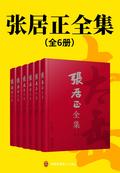 The Complete Works of Zhang Juzheng (Six Volumes in Total)
"The Complete Works of Zhang Juzheng" contains a total of 6 kinds of Zhang Juzheng's writings, 2 kinds of doubtful works signed by Zhang Juzheng in the appendix, and an appendix of selected materials of Zhang Juzheng. This publication has carried out new punctuation and collation, and classified it according to the classics and history subsets. For the first time, almost all the existing texts of Zhang Juzheng have been compiled and compiled. It is of great value to the study of Zhang Juzheng hi
—Reads8.9Score—Shelves
The Complete Works of Zhang Juzheng (Six Volumes in Total)
"The Complete Works of Zhang Juzheng" contains a total of 6 kinds of Zhang Juzheng's writings, 2 kinds of doubtful works signed by Zhang Juzheng in the appendix, and an appendix of selected materials of Zhang Juzheng. This publication has carried out new punctuation and collation, and classified it according to the classics and history subsets. For the first time, almost all the existing texts of Zhang Juzheng have been compiled and compiled. It is of great value to the study of Zhang Juzheng hi
—Reads8.9Score—Shelves
-
 Complete Calendar Book
This work "Calendar Complete Book" is written by Mei Wending
—Reads8.2Score—Shelves
Complete Calendar Book
This work "Calendar Complete Book" is written by Mei Wending
—Reads8.2Score—Shelves