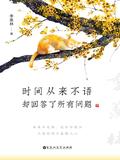
"Xiao Chuang You Ji" is a popular book on Confucianism and Taoism, and "Zuigutang Jiansao", twelve volumes, is a short essay on Han aphorisms and aphorisms, which was greatly influenced by Lu Zu's school of thought. The whole book begins with awakening and ends with enlightenment. Although it is mixed in the dust, it has a high view of the outside world. In its criticism of the world's trend, it reveals the coldness of a philosopher. Its aphorisms are exquisite, short and exquisite, prompting people to be vigilant and beneficial to the mind. Since its publication, it has spread like wildfire and attracted the attention of readers again and again. Its cultural charm is becoming more and more recognized by readers.
Reader comments
This book was recommended by a friend. After reading it, I thought it was very good. This book is a proverb or aphorism that expresses profound philosophy in concise language. It is a record of fragments of spiritual enlightenment and life reflection at any time. It is short in length, mostly in three or two sentences, with multiple couplets, antiphons, rhymes, and parallel sentences. The structure is between poetry, parallel prose, and prose. It combines rhyme and prose, making it a poetic prose. I like the philosophy of life in the book very much. These simple life experiences seem to cleanse my soul. Life should be lived indifferently and wisely.
As its title suggests, this book is the author's introspection from the window of his life for decades. Life is full of unpredictable joys and sorrows, as well as honors and disgrace. This book contains many inspirational words that go against the current. More importantly, it also contains more cautionary words to guard against mistakes when you are proud. It is suitable to read this book with a pot of good tea, and then slowly appreciate the profound wisdom hidden between the lines, which will benefit you a lot. There are many sentences in the book that I like very much, and it is very suitable to excerpt them in a separate notebook, and then take them out and read them from time to time.
The hermits who cultivate their body and mind are not really cowardly, but because they are indifferent to fame and wealth, and are willing to retreat to the mountains and forests to realize their own extraordinary life interests. Such elegant words and style make us believe that we can pursue the life we want without being influenced by other people's ideas. We can learn from the ancients' moral integrity and courage to forge ahead, but we can only explore, understand and explore the meaning of life by ourselves.
Use the scenery to nourish your emotions, and use your heart to nourish your nature. The ancients benefited from the principles of mind when they galloped among the mountains and rivers. This book translates the wisdom words of these ancients into vernacular and annotates difficult words. The translated content can be said to be relatively smooth and consistent with the original text. At the same time, you can also see some of the author's personal opinions. The words of many of these literati can make individuals broad-minded and help cultivate their sentiments. The detached mentality of picking chrysanthemums under the eastern fence and leisurely seeing the southern mountains is vividly displayed on the page. And it is not only spiritual comfort, but also has unique insights into legal principles in reality. The height of the temple and the distance of the rivers and lakes are all involved.
This book resonates with me very much. It is like a wise man chatting with you and sharing the wisdom of life. The content in the book is not only profound, but also helps people find inner peace in their impetuous life. Just like what is said in the book, "Indifferent to fame and fortune, happy in the mountains and forests", it made me understand the true meaning of life. Moreover, the annotations and interpretations are also very detailed, making it easier for me to understand those profound sentences. All in all, this is a book worth reading again and again.
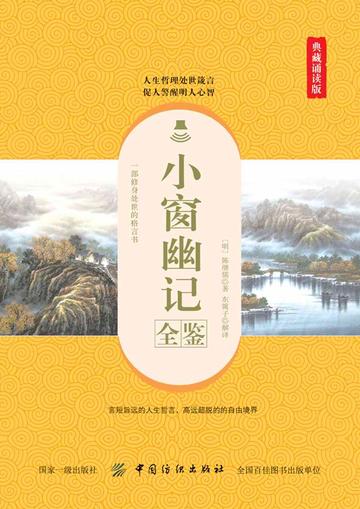





This book was recommended by a friend. After reading it, I thought it was very good. This book is a proverb or aphorism that expresses profound philosophy in concise language. It is a record of fragments of spiritual enlightenment and life reflection at any time. It is short in length, mostly in three or two sentences, with multiple couplets, antiphons, rhymes, and parallel sentences. The structure is between poetry, parallel prose, and prose. It combines rhyme and prose, making it a poetic prose. I like the philosophy of life in the book very much. These simple life experiences seem to cleanse my soul. Life should be lived indifferently and wisely.
As its title suggests, this book is the author's introspection from the window of his life for decades. Life is full of unpredictable joys and sorrows, as well as honors and disgrace. This book contains many inspirational words that go against the current. More importantly, it also contains more cautionary words to guard against mistakes when you are proud. It is suitable to read this book with a pot of good tea, and then slowly appreciate the profound wisdom hidden between the lines, which will benefit you a lot. There are many sentences in the book that I like very much, and it is very suitable to excerpt them in a separate notebook, and then take them out and read them from time to time.
The hermits who cultivate their body and mind are not really cowardly, but because they are indifferent to fame and wealth, and are willing to retreat to the mountains and forests to realize their own extraordinary life interests. Such elegant words and style make us believe that we can pursue the life we want without being influenced by other people's ideas. We can learn from the ancients' moral integrity and courage to forge ahead, but we can only explore, understand and explore the meaning of life by ourselves.
Use the scenery to nourish your emotions, and use your heart to nourish your nature. The ancients benefited from the principles of mind when they galloped among the mountains and rivers. This book translates the wisdom words of these ancients into vernacular and annotates difficult words. The translated content can be said to be relatively smooth and consistent with the original text. At the same time, you can also see some of the author's personal opinions. The words of many of these literati can make individuals broad-minded and help cultivate their sentiments. The detached mentality of picking chrysanthemums under the eastern fence and leisurely seeing the southern mountains is vividly displayed on the page. And it is not only spiritual comfort, but also has unique insights into legal principles in reality. The height of the temple and the distance of the rivers and lakes are all involved.
This book resonates with me very much. It is like a wise man chatting with you and sharing the wisdom of life. The content in the book is not only profound, but also helps people find inner peace in their impetuous life. Just like what is said in the book, "Indifferent to fame and fortune, happy in the mountains and forests", it made me understand the true meaning of life. Moreover, the annotations and interpretations are also very detailed, making it easier for me to understand those profound sentences. All in all, this is a book worth reading again and again.