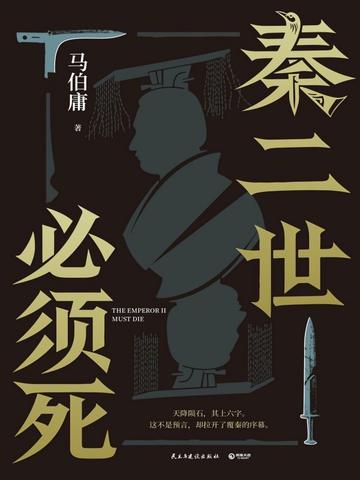
The Second Qin Emperor Must Die
秦二世必须死
- Status
- Completed
- Length
- 445k Words
- Genre
- Historical
- Subgenre
- Unknown
- Updated
- 2mo ago
- Source
- Fanqie
Stats
31Chapters
23.6kReads
9.5Score
5.4kShelves
5.1kListens
108.5kReads · all time
Tags
Synopsis
More by this author
 The Great Doctor: Sunrise
 The Great Doctor: Dawn
 Ma Boyong’s Hilarious Brief History of China
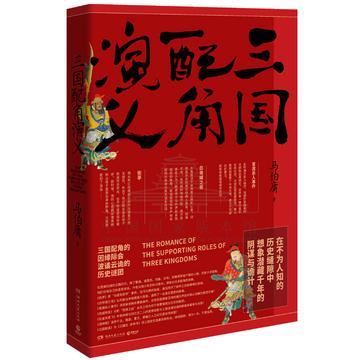 The Romance of the Three Kingdoms' Supporting Cast
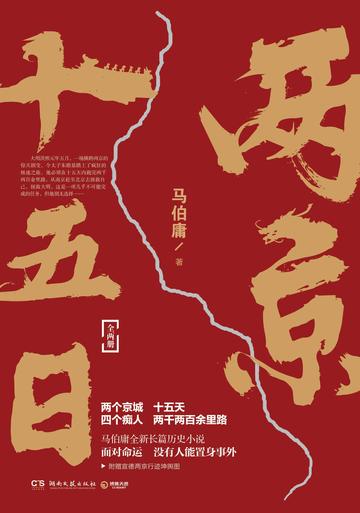 Fifteen Days in the Two Capitals
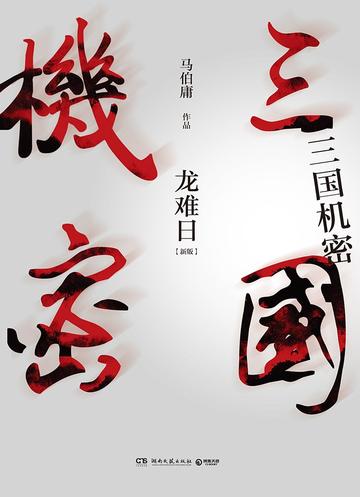 The Secret of the Three Kingdoms
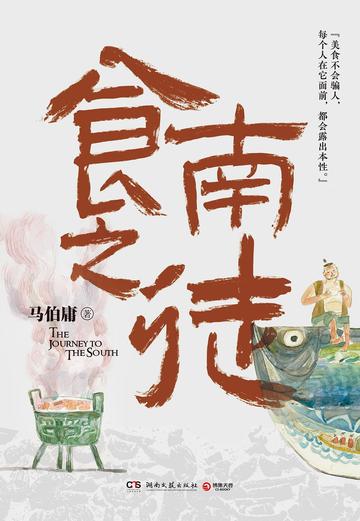 The Southern Gourmet
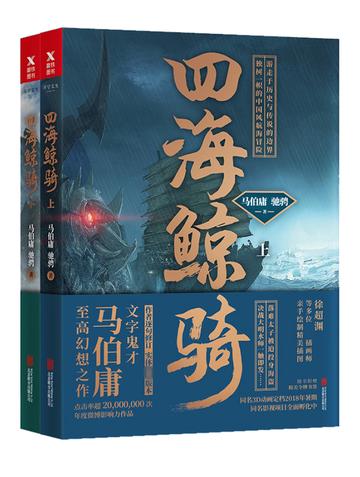 Whale Riders of the Four Seas
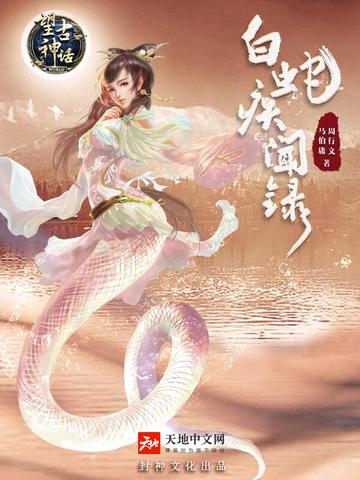 Ancient Mythology: The White Snake Incident Files
In booklists 8
Looking for a Perfect 10! Your Personal Top Pick! One Book Only
Looking for books similar to *The Tenth Day*. Any genre is welcome. My good subjects, hurry up and recommend something!
453Books4.5MViews8hUpdated
Looking for Books Tomato Novel Bought from Other Platforms
Are there any books whose publishing rights were bought back by Tomato?
577Books1.3MViews10hUpdated
Rated 9.7: The Last Taoist, Complete in Seven Volumes
Looking for something similar to The Last Taoist (Complete in Seven Volumes).
230Books2.7MViews10hUpdated
The True History of China
Looking for books similar to Five Thousand Years of Chinese History. Not fictional historical novels, but real events backed by evidence.
445Books26.7MViews16hUpdated
Rated 9.9, Insanely, Insanely Good
Looking for stories similar to *Transmigrate Thirty Years into the Sixties*. All kinds of stories.
999Books40.4MViews1dUpdated
Why Not Read the Classics?
Recommend some good books with meaning, impact, and beautiful writing.
896Books59.8MViews2dUpdated
Any Books That Are Good for Helping You Fall Asleep?
Any genre is fine. Just keep the premise simple and make it relaxing enough to fall asleep to.
521Books674kViews3dUpdated
Classics!!! Great Works from China and Abroad!!!
995Books94.9MViews4dUpdated
Reader comments 78
Google Translate
Reading "Qin II Must Die", the author reconstructs the process while respecting the ending. In the group portrait strategy map from Zhang Cang's perspective, historical figures such as Xu Fu, Lao Ai, and Fu Su have been interestingly reset, which is both dramatic and interesting. The design of the protagonist group deliberately collecting stamps from the descendants of the Six Nations is also very ingenious. It is another level of fun for those who are familiar with history, and readers who are not familiar with it can also take the opportunity to understand the general direction. However, the pace is a little slow, and compared to the previous game, I personally feel that there are some changes in style. My biggest feeling after reading "Qin II Must Die" is that the author reconstructed the process while respecting the ending. Some historical materials have large discrepancies, but the overall trend does not completely deviate from the historical trajectory. It is a historical novel with obvious artistic processing, rather than a historical lecture. The novel takes Zhang Cang, the censor of the Qin Dynasty, as the protagonist, and constructs a group portrait strategy map. The fictional character relationships and settings not only subvert historical common sense, but also give the story more narrative space. The protagonist Zhang Cang is more like the author's spokesperson: he is a witness and comprehender of the collapse of the Qin Dynasty from the inside out, from root to leaf, and his wisdom and insight far exceed others. He loved health care and eventually lived to become the prime minister during the Liu Bang period. This setting is consistent with official history. The character relationship design in the book clearly has the color of "a mash-up of historical figures", with the following interesting settings: Xu Fu became an old friend of Qin Shihuang, Lao Ai was reshaped into a Mohist giant, and Fu Su fell in love with Li He, the daughter of the famous Zhao general Li Mu, just to echo the allusion of "Fu Su in the mountains" in "The Book of Songs: Zheng Feng". Even the encounter between Yu Ji and Xiang Yu is included in the narrative, which seems to add a footnote to the first meeting of these famous tragic couples in history. The protagonist group also has a deliberate philatelic color: it is deliberately assembled from the descendants of the Six Kingdoms: Xu Fu (Qi), Yishui (Yan), Xiang Tang (Chu), Zhang Cang (Wei), Zhang Liang (Han), Li He (Zhao). There is drama and interest, but this sense of patchwork also weakens the weight of history itself. The feeling of procrastination is an obvious shortcoming of this book. The plot of assassinating Qin II repeatedly failed, and new people were repeatedly brought into the group in an attempt to create tension, but expectations were constantly lowered. In the end, it is still up to the protagonist to turn the tide and barely close the gap in history. After all, Qin II did die here, and the author must return to that fixed end point within the fictional framework. The fog of history is too thick, and the truth has long been elusive. The author created this novel with ups and downs of plot only with subjective emotions. It can be used as a reference, but should not be taken as a historical fact. It is a fun read for those who are familiar with history; readers who are not familiar with the historical context can also use this to understand the general direction. However, compared with the previous work, the author's level seems to have declined, with more traces of commercialization and less original vigor.
Very pretty! I have read most of Ma Boyong's books, and they are worth reading twice or three times. There is a delicacy in "The Eaters of the South" - wolfberry sauce, and it is also in this book. I seem to know the taste of wolfberry sauce [laughs]
It's beautiful, exciting, and has a sense of history. It's neither a joke nor a reenactment of historical facts. Not boring history!
I've been reading Prince Ma's books recently, and there seems to be some slight connection between the character traits (for example, Zhang Cang in the book and Tang Meng in "The Southern Eaters") or historical backgrounds in some of the books, and I can't help but think about it, and even imagine who should be more suitable to play the role if it is adapted into a TV series (this is what I'm thinking [smirking]). I like to read Prince Ma's books. Although they are not historical records (in fact, historical records are quite boring and not easy to read), the general framework is always well-documented, as is the background of the characters and the general historical trend. From a certain perspective, it is another time to learn and understand again.
People with different personalities and different psychological action portrayals can match people in real life. From time to time, through story narration, we write about the problems in the development of the times. Big figures in history also have to face the problems encountered by small figures. Technique, potential, way. Solving problems step by step is the key to understanding and solving problems.
The plot of this book is full of ups and downs, and I was attracted to read it without any effort. The most important thing is that this book is so humorous and brings a lot of happiness to my life. It feels like the storyline of the whole book revolves around Tao, and Tao is explained very clearly. Tao, potential, technique. Tao tends to trend, and trend tends to technique. When you have the Tao, your goals will naturally come true. Using Tao, he killed Qin II and saved Yi Shui. I feel that Tao is the most critical and important thing. Tao is to find the rules and follow the rules. The Tao of this book is interests. Everyone achieves the same goal because of their own interests. Tao is suitable for doing anything, but in actual situations, it is difficult to do so.
This is the first time I have read an article about the Qin Dynasty that is not about saving Qin Shihuang or Fu Su. The angle is relatively new. It is quite interesting that a group of people came together for various reasons just to kill Qin II! A very good group portrait, and a bit suspenseful. Each person has a distinct personality. Everyone's purpose and experience are different, but they reach the same goal by different paths!
Many years ago, I read Prince Ma's masterpiece "The Middle Game of the Antique Game" by Ma Boyong, and since then I have included Prince Ma's works in my must-read list. Prince Ma's works have exciting plots, quotations from classics, vivid characterizations, and complete motivations. They can cleverly penetrate historical events, making it difficult to distinguish between true and false, and they can also use the past to discuss the present. It is very enjoyable. Although some of the plots are slightly flawed, there are also many flaws in Jin Yong's work. The flaws are not hidden, and it is worth appreciating and highly recommended.
Prince Ma's books are still wonderful
Ma Boyong, the ghost horse spirit, is as wonderful as ever. Prince Ma used his wild imagination to construct wonderful stories. I don't know what everyone's impression of Xu Fu is, but in this book, the author subverts my understanding and connects him with Zhang Cang and Zhang Liang with silk threads to perform a wonderful play for us. What is responsibility? What is common people? After reading this book we will have more understanding.