


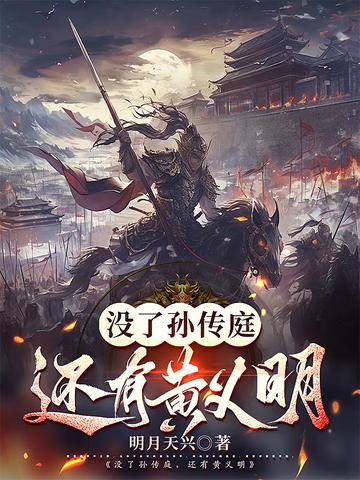
With Sun Chuanying Gone, There’s Still Huang Yiming
没了孙传庭,还有黄义明
- Status
- Completed
- Length
- 1.2M Words
- Genre
- Historical
- Subgenre
- Historical & Ancient
- Updated
- 1y ago
- Source
- Fanqie
Stats
Tags
Synopsis
More by this author
In booklists 58
Explore more →


Looking for New Books to Swap Reviews On
I want to read books like *Six Paths Martial Saint*. Let’s review each other’s new books, fellow readers! One person gives you five stars, but what about a thousand? Come on over!
Alternate History, Political Scheming, and Struggles for Supremacy!
Traditional historical fiction. No System, no transmigration, and no plagiarizing ancient poetry!




Why Are You Still Writing When Your Book Is Flopping?
Looking for a book like I Transmigrated into a Book with My Cat and Went on a Rampage, While My Cat Went on a Rampage Too. My book is doing so badly that I've completely lost the motivation to update, even though the completion rate was really high early on! A struggling little author's daily heartbreak. Let's help each other out and share what puts readers off.
Recommend Some Worthwhile Ming Dynasty Novels
I’ve read several books about the Ming Dynasty. Overall, they had excellent prose, deep historical knowledge, and well-crafted characters. But a few seem to share the same flaws: too much exposition and overly contrived schemes. Any good recommendations?
Top-Rated Novels Set in the Ming Dynasty
No System-based stories.

A Wild Historical Novel: Can’t Make It in Ming China? Just Head to Australia!
Looking for books similar to *I Was Reincarnated in the Ming Dynasty, and Built a Nation in Australia*. 🌊 In a nutshell: A history whiz is reincarnated as a Ming prince, lays low and builds his strength, then ends up founding a country in Australia! The protagonist is smart, develops cautiously, and explores a fresh setting. The whole story is about getting things done.
The Pinnacle of Historical Fiction
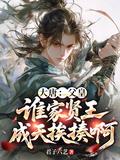
Looking for books similar to *Tang Dynasty: Defying the Imperial Decree Is the Only Way to Get Stronger*. This book makes me cry every time I read it. I've read it five or six times, and I still cry. I just can't believe anything else is better. It's the strongest historical novel in my book! An 8.9 rating is way too low. I'd give it a 9.
Looking for High-Quality Alternate-History Novels
For example, the Qin and Tang dynasties.
High-IQ Historical Alternate-World Novels Without a System, Tang, Song, or Ming Are All Fine
Any High-Quality Historical War Novels Like Shao Song?
Looking for High-Quality Historical Fiction!
I Can't Believe Historical Fiction Writers Can Be This Good
A fact-based educational book written using sources from official history, but not boring!




Political Intrigue, Powerful Connections, and a Satisfying Read
I'm looking for books like The Young Master of the Capital Goes Out to Gain Experience, and All of Handong Goes Crazy.

New Authors Reviewing One Another’s Work
Looking for books like Twin Stars in Ancient Times. It's good, I love it! New authors, let's review each other's books. Tell me when you've read mine, and I'll read yours too.
Ming Dynasty, Ming Dynasty, Ming Dynasty! Rated 9.2 or Higher!!! Nothing Below That! Don't You Dare Be Blind!
Looking for books like *The Ming Dynasty’s Blind Eldest Grandson: Old Zhu Spoils Me Rotten*.

Looking for Novels So Funny They'll Make You Puke and Cry
No Dali, please. I've already finished it.
Looking for Historical Fiction with Smart Characters
The protagonist and the emperor are brothers, and the protagonist wields immense power. Everyday comedy.

Recommend Me High-Quality Ming Dynasty Novels. Nothing Illogical, Please.
Looking for books similar to Reborn as Zhu Biao: Building a Peak Ming Dynasty! I've read quite a few novels about the Ming Dynasty, and I'm getting more and more into them. I'm in a reading slump, so please recommend some great ones.
Any Novels About Transmigrating to the Ming Dynasty?
I've run out of novels to read.
The Ming, Song, and Tang Dynasties
Are there really no stories about the Liao, Jin, Yuan-Mongol, Dali, and Tubo? Is it because there aren't enough sources or historical records? Did we all have different textbooks in our nine years of compulsory education? Do I have to look up local gazetteers?
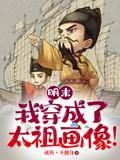
Any Novels Where the Protagonist Transmigrates to the Late Ming Dynasty and Helps the Chongzhen Emperor?
Good Novels About the Ming Dynasty
Novels about the Ming dynasty are so damn good.
Pure Ancient Military Fiction, Alternate History, No Harem, No Fantasy
Preferably something centered on schemes and strategy. The longer, the better.
The Glorious Might of Great Ming, the Sun and Moon, the Mountains and Rivers Forever! Bring Me Some Books!
Reader comments 50
Google Translate
Chongzhen in history was a very capable person. If Wei Zhongxian and Tianqi hadn't done so much harm, Chongzhen might not have been able to survive with his ability. How to save the Ming Dynasty There were many objective reasons for the demise of the Ming Dynasty, such as natural disasters, financial collapse, slavery, land annexation, refugee armies, corruption, party strife and many other reasons. However, an objective summary of the root causes can be summarized into one, namely, the food problem. How the three parties solve the food problem in the late Ming Dynasty has already determined the winner of the three parties. The main problem causing the reduction in grain production was the natural disasters that ran through the Chongzhen Dynasty, because no matter how the land was annexed, the huge land needed to be cultivated by the people, which only made the exploitation of the lower class people more serious. In the face of natural disasters, food production is reduced, and it is a matter of life and death for the people to eat without food. Throughout history, the scale and duration of natural disasters in the Chongzhen Dynasty are rare. During the 17th year of Chongzhen's reign, except for the seventh year of Chongzhen's reign, all other years suffered from varying degrees of drought, affecting 13 provinces (districts) in the north and south. The main areas with drought and lack of rain were in North China, Hebei, Henan, Shanxi, Shaanxi, and Shandong. These areas had been drought for more than five years in a row. Henan Province, where the center of the drought area is located, had been in drought for seven consecutive years, with the most severe drought in 1640. In the early stage of drought, there was a pattern of drought in the north and floods in the south, and the drought area expanded to the east and south year by year. The Great Wilderness of Chongzhen can be glimpsed through Feng Xiaogang's -1942. (The Great Famine in Henan in 1942 only lasted for one year, causing 30 million people to starve to death. The Chongzhen Drought affected 13 provinces in the north and south. Throughout the Chongzhen Dynasty, many regions experienced droughts for 5-7 years in a row. What kind of human tragedy was that?) The above is only the severe drought, and the accompanying locust plagues and epidemics will not be described again. You can check the information yourself for details. Chongzhen: Faced with such a huge food gap, no matter who stood in Chongzhen's position, he could not solve it through normal means. Even if Chongzhen could solve the objective fact of annexing land and dividing land and people, it would not be able to solve the objective fact of natural disasters, let alone how Chongzhen could take action against the noble gentry and vassal kings when he could not even guarantee his own basic life safety (this conclusion can be referred to the death of the fifth prince of Chongzhen in the case of Wu Qinghou). Faced with the eager gaze of the slaves outside the pass and the numerous refugees within the pass, Chongzhen needed to maintain a large army. After experiencing the collapse of finances and natural disasters after Wei Zhongxian's chaos, since Chongzhen could not attack the noble gentry, he could only suffer the suffering of the people. Then it further oppresses the people and creates more refugees, thus creating a further cycle. Li Zicheng: Although Li Zicheng put forward the slogan of "equalizing land and eliminating taxes" during the natural disaster, from an objective fact point of view, the time and location of Li Zicheng's rise coincided with the disaster area, which did not meet the basic conditions for planting. However, Li Zicheng was superior to Chongzhen. As the leader of the peasant army, he could plunder everywhere. Although it could not solve the fundamental problem, it gave the refugees a glimmer of hope. Therefore, when facing Chongzhen, he can be defeated in a pinch. But after Chongzhen was eliminated, the burden on Chongzhen's shoulders was transferred to him. When faced with an establishment that has stronger combat power, a more complete organizational structure, and does not treat the people as human slaves, it will be powerless to resist. Not to mention that at this time, Jiannu was accompanied by Guan Ningjun, a vicious dog who was eager to prove his worth to his new owner. Jiannu: From the Nurhaci period, the killing of grain-free people and plundering everywhere greatly reduced the food pressure of the Qing Dynasty, to the conquest of North Korea after Huang Taiji came to power, and the massacre after Dorgon entered the customs. Although the methods were cruel and violent, the reduced population and plundering methods objectively alleviated the food pressure of the Manchus. In my opinion, it was never ability and political wisdom that limited Chongzhen, because he fully demonstrated his ability and political wisdom when he solved Wei Zhongxian. In the great famine at the end of the Ming Dynasty, etiquette, justice, integrity and morality were not important at all. The first need was to survive. Whoever was more ruthless and who could make those who followed him gain more was destined to win. Chongzhen's strong sense of responsibility destined him to have no choice in this dead end. In my opinion, the only way for the Ming Dynasty to survive was for Chongzhen to enfeoff the kings and generals to the north as soon as he came to the throne, allow them to have autonomy, and go south with trusted officials, northern scholars, and troops that he could mobilize. In this way, Chongzhen can temporarily get rid of the bad assets in the north, avoid the two elements of slave construction and refugee armies, and at the same time minimize the impact of natural disasters. At this time, the problems he needs to face will be greatly reduced. Chongzhen can concentrate on sorting out the three things of court affairs, finance, and military training. For the officials and scholars who followed Chongzhen to the south, the new environment in the south will also encourage them to unite more closely around Chongzhen to protect their own interests. When Chongzhen has strong soldiers and horses, he can imitate Emperor Hongwu in his Northern Expedition. At worst, half of the south can be preserved and the old affairs of the Southern Song Dynasty restored. Of course, Chongzhen did not have our God's perspective. Standing in the first year of Chongzhen, he would not have known about the great famine that would follow throughout Chongzhen's dynasty. Even if he knew that with his strong sense of responsibility, he would probably fight to the death, and he would not necessarily give up the north until he was completely defeated.
It is basically consistent with history, and important historical events are all stated. It is not a mindless and cool article that starts with AK suddenly. 1644 Is already 30 years later. According to history, there should be no white soldiers at this time. Qin Liangyu is 70 years old, and her brother or nephew is 50+60. It is best to come back after thousands of miles to save the country.
Although the author resurrected Qin Liangyu's son, you wrote many real historical details that other authors didn't know about in the story. I've caught up with the author, come on. It's very exciting. The author wrote about the real Zhu Youjian and those various ministers. I like it.
Continue to help him, who is hardworking and thrifty, govern the world. The Yongwei Camp was Chongzhen's personal military camp, but Chongzhen didn't have much money and food. Even though Cao Huachun, the leader of the Dongchang, trained him to be loyal and powerful, it was not enough to put out fires everywhere.
Real, new perspective, not exaggerated, a rare good book
It's very good. As far as I'm concerned, it's a very good book. The characters are also very detailed. The reason why Major General Huang (forgot his name) is able to fight is also written in detail. At a young age, his face is as sandy as stone and his hands are calloused. He must have practiced martial arts diligently and was able to defend the enemy well.
Great writing! The protagonist has a distinctive personality and is loyal and courageous! It's exciting to watch!
Read thousands of novels and appreciate all kinds of styles in books This book is still good. I hope the author will work hard. Quality is better than quantity. Zhu Youjian is one of my favorite characters. Anyway, he has the shadow of many people. He tried hard but still failed to achieve his goal. After all, a king who was diligent in political affairs lost his country and finally forced his wife to kill his son. It is still disappointing... I also hope the author will work hard to change Chongzhen's fate in the book...
Ok It just felt a bit dragged out, but the overall description was pretty good. Although it was a bit dragged out, it covered everything else. Overall it's pretty good, keep up the good work. Author, I am optimistic about you [love][love][love][you savor][sending heart]
Nice. The battle is well written, and the progress and end of the war does not end in just one or two pages. What's more, it's a war to defend the capital. The characterization is also well written. My personal feeling is that the protagonist's mentality from modern times to the late Ming Dynasty has not been let go. Still, it seems a bit inconsistent to not let go of the modern living habits. At least it's better than many novels written in the late Ming Dynasty.