


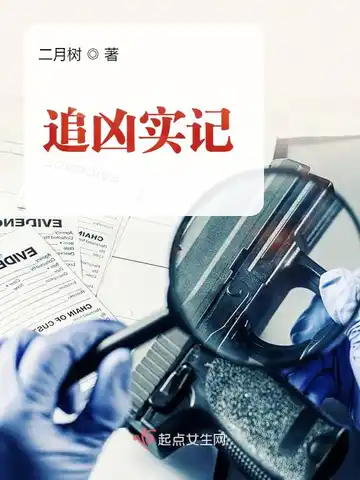
True Story of Chasing a Murderer
追凶实记
- Status
- Completed
- Length
- 570k Words
- Genre
- Strange Events
- Subgenre
- Detective Fiction
- Updated
- 2y ago
- Source
- Qimao
Stats
All-time: Popularity, Must-read votes.
260Chapters
90kPopularity
1kReaders
3.5kMust-read votes
9.6Score
1.1kRatings
Tags
Synopsis
More by this author
Readers also read
 Usurping Destiny
 After Being Targeted by a Ghost, I Turned into a Demon
 There Is a Witchy Wife at Home
 Diary of Mourning
 Old Stories of Burglary
 God's Son-In-Law
 Super Fortune Teller
 Paranormal Events at the Crematorium
 Miscellaneous Talks on Folk Esoteric Arts
 The Monster Trader
 I Am a Laboratory Animal Keeper
 Strange People of the Republic of China
 Coffin Fragrance Beauty
 The Missy's Qimen Feng Shui Master
 Records of the Spirit Patrol
 Evil Gate
 Heavenly General Qilin Divine Appearance
 How Come I Am Invincible When My Live Broadcast Is Mediocre?
 Bone Color and Fragrance
 Midnight Watchman
Reader comments 30
Google Translate
None of the cases are particularly complicated, but the focus is on the step-by-step process of logical reasoning and unraveling, and the imagination of restoring the crime scene. The characters have their own characteristics, and there are many hilarious things about them. I quite like watching them.
One of the best criminal investigation films I have seen recently. It has rigorous logic and clear thinking. I don't understand why the score is so low. I hope the author will make a sequel.
No nonsense, clear logic, beautiful!
The characters are vivid and interesting, and the reasoning is clever. It's a great work. It's very similar to the style of another great teacher, Chang Shuxin. It's worth watching. I highly recommend it.
This book is very different from many criminal investigation novels in terms of crime solving methods, emotional descriptions, social observations, etc. 1. A different mode of solving crimes: a confrontation of ideas away from the scene This book breaks the rules in that the protagonist rarely visits the scene of the first crime. The process of solving the case does not rely on visual inspection of the scene, but piece together clues through other people's narratives, police interview transcripts, and chats with people around the victim. This setting is novel and attractive. With a cup of tea, a pack of cigarettes and an office, the protagonist starts thinking in this space. Making assumptions from the obtained information and then rigorously verifying them, this case-solving model demonstrates the protagonist's super logical thinking and reasoning ability, and also gives the story a different rhythm, allowing readers to follow the protagonist through the maze of information and feel the charm of the collision of ideas. 2. Delicate outline of human nature: true presentation of emotions and psychology The author's description of the characters' psychological activities and emotional exchanges in the book is superb. It does not deliberately create too many group CP plots, but depicts the emotional issues in the lives of police officers in a pragmatic manner. These emotional clues are interspersed with the tense process of solving the case, making the characters more three-dimensional and vivid. Readers can see their emotional fluctuations when facing work pressure and their subtle relationships with family and colleagues, making the story no longer just a simple narrative of solving a case, but full of human warmth and realism, as if these characters are living around us. 3. Deep social insight: tracing the roots of growth from cases The book uses the characters' mouths many times to mention the underlying impact of childhood psychological changes and adolescent rebellion on the occurrence of the case. This perspective is very in-depth, closely connecting the case with the character's growth experience, and guiding readers to think about the impact of family, education, growth environment and other factors on a person. Whether you are a parent or a child, you can get inspiration from it and explore how to achieve harmonious coexistence and common growth between parents and children. This book goes beyond the scope of ordinary criminal investigation novels and has certain social significance and educational value. Although this book has many strengths, it also has some shortcomings. In order to highlight the protagonist's personal abilities, the description of the unit and police station equipment in the book is too simple, and the jealousy among peers and the mediocrity of colleagues are over-amplified, which to a certain extent affects the reality of the story. In addition, the author's description of officialdom presents a contradictory state of familiarity and unfamiliarity. For example, the plot setting of a second-generation official becoming a criminal police officer has reasonable considerations, but some of the plots make people feel a bit outrageous. After all, in real situations, if a second-generation official does not have strong abilities, outstanding talents, and enthusiasm for criminal investigation, it is very likely that he will not choose the career path of a criminal police officer. This book is unique in the field of criminal investigation novels with its unique way of solving crimes, delicate emotional descriptions and in-depth exploration of social issues. Although there are some shortcomings, the flaws cannot be concealed. I personally think it is a work worth reading, which can trigger our thinking about human nature, society, family and many other aspects.
It is a book that is relatively true, neither empty nor nonsense, and has the feel of a novel. It is not heavy either, and the author actually writes very well. It's not a bit better than those so-called crime-solving themes that are fantasy, frivolous and arrogant. I don't understand why those books are so widely read.
It's good to watch, especially when the case is stripped of its cocoons, but when highlighting the protagonist, don't confuse those members of the expert task force and those who have become criminal investigation supervisors like him and are responsible for provincial and municipal criminal investigations. Especially the villa case, it is really good to confuse people.
It's more realistic and logically rigorous. The only problem is that the author's writing is not ups and downs enough, and it falls into the category of "it's tasteless to eat, but it's a pity to throw away".
The plot is relatively close to reality and the characters are vivid. The writing is natural and smooth, with a strong sense of substitution. .
Why isn't there a second part? I like the emotional drama very much.