 RT
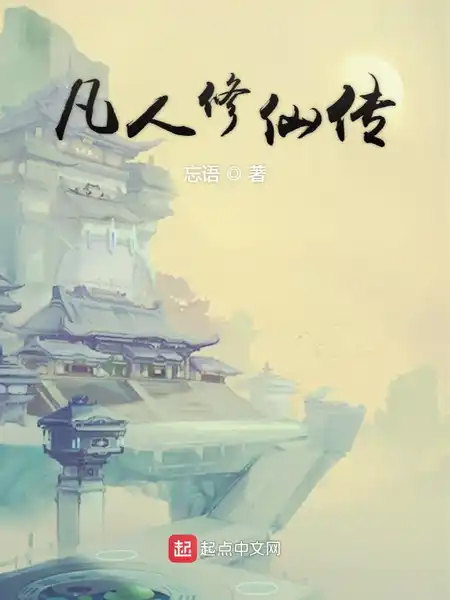
A Record of a Mortal's Journey to Immortality (The Original Novel Behind the Screen Adaptation of the Same Name Starring Yang Yang and Jin Chen)
凡人修仙传(杨洋、金晨主演同名影视原著)
- Status
- Completed
- Length
- 7.5M Words
- Subgenre
- Classical Xianxia
- Updated
- 2y ago
- Source
- Qimao

Also on Zongheng
Synopsis
Stats
HistoryAll-time: Popularity, Must-read votes.
2.6kChapters
22.7MPopularity
399kReaders
1.4MMust-read votes
9.4Score
129.4kRatings
Honours
- 4Most Searched (Monthly) · Male · #2 in Hot-Blooded
- 5Completed (All-time) · Male · #4 in Hot-Blooded
- 5Most Searched · Male · #3 in Hot-Blooded
- 7Trending · Male · #6 in Hot-Blooded
- 7Trending (Monthly) · Male · #6 in Hot-Blooded
- 7Must-Read · Male · #5 in Hot-Blooded
- 11Votes (Monthly) · Male · #8 in Hot-Blooded
- 13Votes · Male · #9 in Hot-Blooded
More by this author

More like this
 I’m Just a Commoner, Yet I Sign-In for the Nine Suns Divine Skill
 A True Record of Cultivation
 Even I, the Lantern-Bearer, Have Ambitions
 Lord of the Firmament
 RT
The Han Family's Path to Immortality
 Five Years to Live? Immortal Cultivation Simulator, Start!
 Tang Clan
 RT
The Immortal's Path of the Purple Mansion
 Chronicles of the Heavenly Search
 I Can Track Anything
 The Eight Wonders of Shaolin
 Seeing Sun Wukong from the Start
 Shattering the Immortal River
 Peerless Immortal Venerable
 Immortality: Hiding at a Post Station, I Become Invincible After Ten Thousand Years
 Journey to the West: This Demon Isn’t Right
 After the Female Emperor Dumped Me, My Saintly Identity Was Exposed
 The Nine Transformations of the True Spirit
 The Mastermind Behind Journey to the West
 RT
Abyss of Immortality
 Battle Through the Heavens
 RT
Sword of Coming
 Renegade Immortal
 The Grave Robbers' Chronicles
 The Sacred Ruins
 RT
Perfect World
 Against the Gods
 Tales of Herding Gods
 Spare Me, Great Lord!
 Intrepid Blade’s Path in the Snow
 Martial Universe
 The Great Ruler
 RT
Invincible Destiny
 RT
The Great Desolation Heaven-Devouring Art
 The First Sequence
 Douluo Dalu II: The Unrivaled Tang Sect
 I Have a Sword
 Joy of Life
 The Origin of All Things
 The King of Myriad Forms
Reader comments 50
Google Translate
Li Feiyu, who commits murder and arson, is revered by thousands as the Heavenly Venerable Han. The book "A Record of a Mortal's Journey to Immortality" truly taught me what it means to be a "mortal" and what it means to cultivate immortality... ˇ.°♡°.ˇˇ.°♡°.ˇˇ.°♡°.ˇˇ.°♡°.ˇˇ.°♡°.ˇ I initially read it through a recommendation from someone who said the anime adaptation of "A Record of a Mortal's Journey to Immortality" was particularly good. Later, when I was really looking for something to read, I found the original novel and finished it in over a month. At my peak, I could read over 800 hours a day because it was written in a truly unique way, unlike any other cultivation novel I had ever read before. That's why I was so captivated by it! Unlike most of the current trend of fast-paced, exciting novels, this book has a relatively calm plot overall, and the pace might not be as fast. Nowadays, many authors write novels that create conflicts very frequently in order to quickly attract readers, keeping the reader in a constant state of excitement, which can easily become tasteless over time. The protagonist of this book, Han Li, is unique in cultivation novels. He is ruthless, cunning, and devious, showing little sentimentality on the path of cultivation. However, as a mortal cultivator seeking advancement, such a realistic approach is essential for success. Han Li's aptitude is lacking, preventing him from creating his own divine skills from the start. He must gradually acquire resources and experience through his schemes and tricks. This is the reality of the cultivation world, which resonates with our own lives. The novel contains very little emotional description. In that environment, there's no time for sentimentality or romantic love. It's normal for people to betray friends, family, and partners to prolong their lives. Han Li's actions and expressions indirectly depict his psychological changes. He isn't truly devoid of emotion; he simply buries it deep within, for the path of cultivation is ruthless. Han Li, courtesy name Lao Mo, also known as Han Paopao (Han the Runner) From becoming the "Number One Swordsman in Tiannan" From the Human Realm Chapter of A Record of a Mortal's Journey to Immortality: The Rise of the Wind in the Han Li ascended to the Immortal Realm tens of thousands of years later. He secretly carved the words "Number One Swordsman of Tiannan" on the stone of the sword-testing formation. Han Li kept thinking back to the past and reminiscing about it. From a boy born in a remote village all the way From a Nascent Soul cultivator in the mortal realm to Han Tianzun in the spirit realm, and finally to the supreme being in the immortal realm. Feeling sentimental about the passage of time Even if one has lived for tens of thousands of years I have always been striving to improve my level of understanding. He still occasionally thinks about his long and arduous path of cultivation. The cultivation world is incredibly cruel, and in such an environment, every step of the protagonist's growth is heartening. Whether in the mortal realm, the spirit realm, or the immortal realm, Han Li is always seeking opportunities amidst danger. Because of his exceptional ability to escape, he's jokingly called "Han the Runner." This plot device doesn't feel tragic; instead, it feels realistic. Cultivation is, after all, a legendary pursuit, defying the heavens. Without experiencing hardship, how can one see the rainbow? Therefore, the author's portrayal of Han Li makes everyone truly feel the difficulty of cultivation. The achievements gained through such trials and tribulations are all the more gratifying for readers, allowing them to even experience the heartfelt joy of Han Li's each advancement in cultivation. This is one of the great charms of *A Record of a Mortal's Journey to Immortality*. "A Record of a Mortal's Journey to Immortality"—this is just a plain name, as ordinary as the protagonist's appearance. It lacks the thrilling, epic battles of recent years, and it doesn't employ any of the eye-catching, unconventional approaches used to attract seasoned readers. The story begins just as its name suggests, without earth-shattering events or dazzling prose; everything unfolds gently and steadily. It's not only Wang Yu's legendary work, but it also cemented his status as a literary giant. Writing a book requires immense perseverance, enduring the bitterness and loneliness of initial obscurity, but Wang Yu persevered. The signing of this book is legendary, and it pioneered the "mortal cultivation" genre, truly deserving its place among the top ten masterpieces! Highly recommended! 👍🏻👍🏻👍🏻🌸🌸🌸
As its title suggests, "A Record of a Mortal's Journey to Immortality" begins with a simple and ordinary story. The story unfolds gently, without deliberately romanticized sentimentality or meticulously crafted plots. There are no unexpected twists or lingering echoes; everything is utterly ordinary. It's as if the simple-minded Han Li from the book once stood beside you, perhaps even eliciting a smile. Yet, he is so ordinary, so humble, that there's no need to deliberately remember him; simply forget him at will. Han Li is someone who won't act without self-interest; in a sense, one could call him selfish, ruthless, and cold-hearted. However, in a cultivation world where there are only enemies and no friends, defying the heavens means stepping on the corpses of others, or else becoming a stumbling block, crushed to pieces. The worldview of mortals is selfish and self-serving—of course, this is only within the realm of mortal narratives. As a minor character, Han Li constantly struggles for survival. In Huangfeng Valley, after ten years of dormancy, his brilliance first appeared in the war between good and evil, annihilating those of equal rank and displaying his domineering aura for the first time. However, he soon became a pawn of his sect, cannon fodder used to lure the enemy... Forced to leave, he departed for distant lands, bidding farewell to his beloved, embarking alone on the lonely path of immortality. Amidst chaos and constant warfare in the starry sea, his unwavering pursuit of the Dao remained constant. It wasn't that Han Li didn't want to be simple; it was that the world was too complex. As the story's name suggests, Han Li, in both appearance and personality, resembles an ordinary person around us. What makes him extraordinary might be his luck as the protagonist and his perseverance and dedication to the Great Dao. When weak, he is cautious in his words and actions; when strong, he is domineering and unrestrained. He doesn't meddle in others' affairs, and he is good at analysis and summarization. Some might find Han Li sometimes cold-hearted and somewhat selfish, but this is precisely the normal psychological state of an ordinary person. Being a hero is certainly dashing, but a small figure struggling in the mortal world resonates more deeply. Although his growth had an element of luck, his cautiousness, single-mindedness, and unwavering will were the reasons he ultimately achieved the Great Dao. The novel even possesses a certain human touch, weaving emotions such as family, love, and friendship into various plot points, perfectly showcasing the protagonist Han Li's clear-cut personality of love and hate. His step-by-step growth in cultivation is also captivating; through numerous fortuitous encounters, he persistently cultivates and grows from an ordinary village boy into a Foundation Establishment cultivator, Golden Core cultivator, Nascent Soul cultivator, Deity Transformation cultivator, Void Refinement cultivator, Body Integration cultivator, Mahayana cultivator, and finally, an immortal. Each stage of growth is fraught with danger but also full of surprises, and each time he manages to escape peril, demonstrating his resourcefulness. Furthermore, the other important characters surrounding Han Li's cultivation journey, including Nangong Wan and Fairy Yinyue, are equally fascinating and anticipated. Human emotions are not the main theme; everything is presented lightly. Rather than saying there's a female protagonist in this mortal world, it's more accurate to say that cultivation is the only focus. In this world, the path to immortality is the sole objective. Countless cultivators spend their entire lives pursuing that unattainable, elusive sliver of eternal life. Many see this as a lifelong quest for faith, but in reality, many can only dedicate their lives to it, never truly possessing it. Now, the veil of the Immortal Realm has been lifted, but none of that matters anymore. The Immortal Realm is merely a stage, belonging to Han Li, but even more so to mortals. The story of mortals will eventually come to an end. Let's not dwell on the years of heartache; let's not dwell on the loneliness of waiting for updates; let's not dwell on how much we've grown, whether we've been hurt; let's not dwell on whether our youth was wasted; let's not dwell on whether our past love blossomed into marriage… Even if we forget, even if we become strangers, at least on this accidental yet inevitable stage of mortal life, all the mortal fans and the joys and sorrows of the past years have journeyed together. Cultivation is only about the survival of the fittest; there is no logic to it. Sometimes, what a cultivator enjoys throughout their entire life is not as perfect as what a mortal experiences in their lifetime. He left home at 10, established his foundation at 25, formed his core at 126, condensed his nascent soul at 217, transformed into a deity at 885, refined his emptiness at 1420, merged with the body at 1656, achieved Mahayana at 2400, and ascended to the Northern Cold Immortal Realm as a Celestial Venerable at 11190. Time flies, youth fades quickly. Only the Dao of Heaven remains constant. From the spring breeze of the South to the cold winter of Mulan, the sword's edge slices through the sky, ascending to the Immortal Realm!
Everyone says Li Feiyu is a murderer and arsonist, while Han Tianzun is revered by thousands. Firstly, since he's revered, there must be a reason for that respect. His repeated use of the alias Li Feiyu shows he can't forget him, and since Li Feiyu has been dead for many years, it wouldn't have any impact; it's more like a form of remembrance. Everyone says the protagonist is ruthless. Initially, he diligently practiced the Everlasting Spring Skill day and night so that Doctor Mo would give him more money to send home to supplement his family's income. He was a complete stranger to Li Feiyu, yet he saved him when he fell ill, and was almost killed in return. Does good deeds really bring good fortune? Therefore, Han Li became cautious. Later, he saved Yuan Yao, helped Zi Ling, and slaughtered the entire Fu family to keep his promise to Qi Yunxiao and Xin Ruyin. He treated Bai Guo'er's illness, saved Wen Siyue, the daughter of an old friend… How could he be ruthless? Don't say his saving people was a transaction; he could have easily killed and robbed, but he didn't. What's wrong with being ruthless to enemies and indifferent to strangers? Being good to one's own people is enough. Ordinary people simply safeguard their own happiness, help those who deserve help, live with a clear conscience, and follow their own path.
Now I know why this book has such a high rating; the negative review system wouldn't approve it. They're joking. I couldn't finish this book after only two hundred chapters. The protagonist's plot armor was too overpowered, and the storyline was all self-contradictory. For example, the protagonist was refining pills. He had no lineage or systematic training, only the basic knowledge of medicine preparation common to mortals. The first pill he refined was a Foundation Establishment Pill, which he easily made. Isn't that absurd? And yet, people aren't allowed to give it a bad review.
Nice
Look at me, I've read over two hundred chapters and it's all so bland and uneventful. The protagonist is constantly on drugs, without any outstanding abilities, yet he improves faster than most geniuses. At the very least, he should have some unconventional skill, or maybe he'd be strong in physical training. Without any special talents, how can anyone keep reading? Is this 9.6 Rating a glitch in the network system? Or…?
Han Li, the protagonist of "A Record of a Mortal's Journey to Immortality," faces immense pressure as he strives to climb the ranks, much like the oppression of reality. Fortunately, he encounters the Little Green Bottle, which brings him numerous conveniences. However, Han Li is constantly accused of having a pseudo-spiritual root, yet he can only persevere step by step. Each successful step is a slap in the face to those who doubt him. Cultivation is inherently defying the heavens; without trials and tribulations, how can a sapling grow into a towering tree? From the very beginning of his cultivation journey, he is no longer a mortal, doing things he doesn't want to do and becoming someone he doesn't want to be. Reading this book taught me a lot. We should cherish the people around us. I'd like to share a comment I saw earlier: "A mortal's duty is to protect their own happiness, help those who deserve help, be true to themselves, and walk their own path." I also recommend watching the "A Record of a Mortal's Journey to Immortality" animation; the production quality is truly excellent! 👍
I couldn't bear to read any further after chapter 453. The wording is truly awful. I had barely managed to get through the earlier chapters, but this was unbearable. The author becomes incredibly insensitive around women, and there's just too much of that forced bitter smile. If you can't use the right words, don't force it! This book is over a decade old; I don't know why it was considered a masterpiece back then. I just didn't understand a thing. Take the cultivation levels, for example. Foundation Establishment—what's that like? What does Foundation Establishment even mean? Advancement is just about all sorts of difficulties, but I don't understand why. Golden Core—he emerged from seclusion—what kind of Golden Core is that? Describe it! The cultivation levels feel like a mere decoration; using numbers like 1, 2, 3, 4, 5, 6, 7, 8 wouldn't be out of place at all. I didn't read this book when it was first written; I didn't like such a bland plot then. Now that I can't find anything else to read, I thought I'd just make do, but no, I can't read it at all. It's over four hundred chapters now—I haven't calculated it precisely, but the author must be in their seventies or eighties. The descriptions of their character are terrible. Phrases like "shocked," "heart tightened," and "pale face" appear multiple times in a single chapter. What kind of language is that? Moreover, knowing full well that the other party is unreliable and that he's plotting against him, he still uses the other party's things and then inexplicably escapes. He's truly the protagonist. If he makes one mistake, he'll die eight hundred times over. Yet, he still writes about being cautious and careful. It's laughable.
Having finished watching "Human Realm," the plot was quite exciting. However, something felt off about the content. The protagonist was extremely selfish, ruthless, and cold-hearted. Aside from pursuing the so-called path to immortality, he showed no affection for family, friends, or love. Although he had so-called Daoist partners, there was absolutely no love between them; it was like a marriage with only a certificate. Relationships were based solely on calculation; friends would turn into enemies for the sake of profit. Parents and relatives? Although the protagonist was incredibly powerful, if I were his parent, I would say even having a piece of barbecued pork would be better than having a son like that.
I decided to read this book because many people say it's good. Overall impression: so-so First, on the positive side, the story has a grand structure, exciting battle descriptions, a coherent storyline, and truly portrays the helplessness of a person from the bottom of society, with very little filler. Then there's the downside: the protagonist's character is somewhat polarized, exhibiting both extremes of being vindictive and seeking revenge; he lacks a sense of humanity, seemingly only interested in pursuing immortality. Especially when he sees his younger sister getting married, even if it's a long journey, shouldn't he have told his parents? Has his higher level of existence made him indifferent? Actually, no. When facing the female lead, he acts like a resentful man, which feels incredibly incongruous. In conclusion, given the immense social pressures of our time, I wouldn't recommend reading this book. Of course, students might find it a good opportunity to experience the hardships of those at the bottom of society.