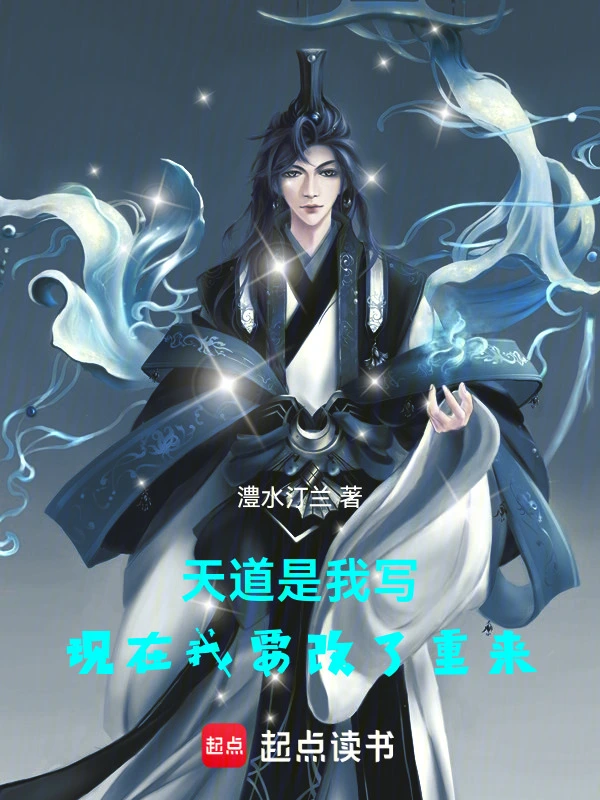
I Wrote the Way of Heaven, Now I Have to Change It and Start Over
天道是我写,现在我要改了重来
- Status
- Ongoing
- Length
- 193k Words
- Genre
- Eastern Fantasy
- Audience
- Male
- Subgenre
- Otherworld Continent
- Updated
- 1d ago
- Source
- Qidian
Stats
0Monthly votes
5.3kRecommends
0Fans
58Chapters
Honours
Synopsis
Reader comments
Readers also read
 I Just Collected a Corpse, Why Did I Become a Demon?
 Immortal Martial Arts Began with the Great Sui War God
 I Just Traveled Through Time and Became a Superman. Do You Think This Is the World of Immortality?
 Heaven Devouring Holy Demon
 On My First Day at the Police Station, I Ate Imported Candy from a Police Beauty.
 Qiankun Spectrum
 Gou Cultivates Immortality and Attains Fruition in Two Realms
 What Should I Do If I Ascend to the Wrong World?
 My Girlfriend Cheated on Her and Got Pregnant, and I Ran Away Nine Months Later
 Handbook of Human Anomalies
 I Asked You to Find a Bodyguard. What the Hell Are You from the Motherland?
 Great Power Heavy Industry Starts from Red Star Shipyard
 New World Under the Blood Moon
 Family Love, Where Has It All Gone?
 It's the Husband and Wife Who Are Noisy and Can't Break Up.
 The Milky Way Is an Egg
 If I Don't Go to Sichuan for a Long Time, I Will Rebel.
 Single Women Living Together
 Twin Observers: Report on the Collapse of the Law of Nine Realms
Just fix it at a certain point, 🌹
Good looking, please read "Chen Shang Sword Journey"!
Added to bookshelf
Breaking a sense of presence in "Pleiades Star Official's Story of Catching Monsters", "The Hidden Treasures of Ten Thousand Ghosts" and "Chen Shang Sword Journey"
After reading Chapter 23, what do you think this setting implies?
The first time Lin Du wrote a new rule, the first crack appeared on the charcoal strip - extending half an inch upward from the tip of the pen. Ming Changge wrote in the comments that "the number of times it can be used is about twelve or three times." What do you think this setting implies? Will the charcoal strip break at the end of the book? There is another detail that makes me think about it again and again: the gravel Amu put down glowed with very faint fluorescence in the night. It's not that it glows by itself, but that it's been illuminated by the spirit stone veins in the mine for a long time, and the surface is stained with light. Side by side with the spiritual stone that suppresses "come back tomorrow". One is a system product and the other is a mine product. Which one do you prefer? The newly written rules consume Lin Du's spiritual consciousness rather than his merits - the physical body in the foundation-building stage cannot withstand the spiritual consciousness in the ascension stage. This hidden line points to the reveal of his identity in Volume 6. Did you guess it?
How should Lin Du respond and how should he demonstrate the rules to survive the crisis?
At the moment when the three Shenzong documents arrive at the same time, which one do you think is the most deadly? Did the Taixu Sect disclose the identity of Liu Rushi's supervisor as a pressure tool, or did the Wuji Sect use system markers to lock Yun Zhongjun at the entrance of the mine as a hostage, or did the Tianquan Sect suspend and review Wen Ruyu, the only one who dared to accept the complaint from the handyman? Liu Rushi placed the miner's lamp next to the wooden pillar and said, "From now on, I am a member of the Yunbian Sect" - this was the only sentence she used from a lurker to openly taking sides. The scar on Yun Zhongjun's cheekbones was still glowing, but he didn't leave. Both of them were abandoned by their own divine sect, but they both chose to stay. Do you think they stayed because they trusted Lin Du, or because they didn't trust their own sect? Lin Du said to Ming Changge at the end of the chapter: "It's not a reply - it's a hearing." How do you think he will "demonstrate"?
How do you think Xu Sangen felt when he said that the investigation had grown legs?
The witness protection rule is like the first domino - once it falls, the entire chain of tracing the truth about the mining accident starts automatically. Zhou Heng's corruption records for the past three years were dragged out one by one, and the Wuji Sect's log management authority was audited and traced back to the source. How do you think Xu Sangen felt when he said, "The investigation has gained a lot of legs"? There is another detail: the mine disaster record was modified three times. The first two times were under the Wuji Sect's authority. The third time was Zhou Heng's attempt to tie the mine disaster and the allocator change as cause and effect. If the third modification is successful, the overwriting of the mine share will be automatically rolled back by the system. Does this detail give you chills down your back? The last team heading to the sixth floor of the mine - Lin Du, Xu Sangeng, Ming Changge, Zhao Laoqi, Amu, Liu Rushi, Yun Zhongjun - did you notice that Yun Zhongjun was marked and warned by the system when he left the mine entrance?
Do you remember who designed the supplemental record layer?
The timestamps don't match—the most damning piece of evidence in the book comes from an auditor who has been calculating accounts for twenty years. He dialed the abacus for six hours and calculated that the third modified operation path did not exist in the standard interface of the system log module. Instead, it reversely pollutes the formal log by supplementing the record layer. Do you remember who designed the supplemental record layer? It's Xuanhe - it was left to the sect's deacons eighty years ago to manually fill in the files. Now it is used by Zhou Heng to create perjury. The most shocking thing was that Ming Changge dug out one of the five patches that had been torn off eighty years ago—her father, the last emperor, had passed it on to her before the system collapsed. She has torn it apart for eighty years, and now she is making up for it. At this moment she is not only Princess Yongning, she is the last witness of the old era. Leng Yue comes at the end of the chapter. Her footsteps stopped the sound of abacus in the audit room. Do you think she came here to kill people, or to see the audit report?
Not all killers are bad
Leng Yue pressed her hand on the edge of the alchemy furnace, and even though she had blisters on her palm, she didn't even flinch - what was she feeling? Are you feeling the temperature of the alchemy furnace, or are you feeling the fact of "pain" itself? Shen Danqing said that "the system's computing power is limited" - if the computing power is full, the "absolute obedience" mark in Leng Yue's body cannot be activated. This is the first time in the book that the possibility of "disobedience" is given from a technical level. What do you think is the difference between this setting and "relying on willpower to break free from restrictions" in traditional immortality novels? Leng Yue finally said, "It's not because of the audit report, it's because of her data" - was she looking for a reason for herself not to draw her sword? When she walked out of the alchemy room with the Foundation Establishment Pill in her sleeve, her steps were different from when she came in - did you notice?
Do you think Leng Yue is the sixth person?
Five people placed five tools side by side on the stone platform-charcoal strips, red pens, abacus, experimental data, and hammers. Which one do you think is the heaviest? Ming Changge's division of labor table lists everyone on an independent front - instead of one person leading five people, the five people fight independently. How is this team structure different from the "protagonist group" in traditional immortality novels? Zhao Laoqi hardly spoke during the whole process, and in the end he only said, "I will ring the bell, and you will change it." Is this kind of "silent support" common in the online articles you have read? And Leng Yue - she is not in the ruins, but her twelve-hour countdown weighs on everyone's heart. Do you think she is the sixth person?
Regarding Chapter 11, I see it this way
A piece of red paper was pasted on the notice board, and a spiritual stone was pressed on the engraving - the low-level servants protected the changed rules in the simplest way. Do you think this kind of "resistance without rebellion" is more powerful than the counterattack of traditional immortality writing? The inner disciple who was picking his nails changed to picking the hilt of his sword. Did you notice when he started picking the hilt of his sword? Apprentice Zhao Laoqi rang the bell independently for the first time. He was not strong enough but the rhythm was right - were you touched by this detail?
What's so cool about Chapter 12?
The three elders each have their own positions - Elder Sun was in charge of the mine but said "I don't care" at the critical moment. Was he moved by the spirit stone or suppressed by the silence of the handyman? Zhao Laoqi walked into the council hall for the first time in 40 years. Which one do you think is heavier, the muffled sound of the hammer hitting the ground or the sound of the elders debating? Elder Qian said, "First there is overwriting, then there is announcement" - when did she start checking? When Chen Xuanshu asked, "Who decided the system?", How long was the silence in the meeting hall?
After reading Chapter 13, what do you think?
From "Don't move" to "Yes" - Xuanhe's forty-year seal was broken with one word. Do you think he was convinced because of Lin Du's overwriting, or because he saw that Ming Changge was still alive? The book in the wooden box from 1980, with charcoal strips and red pen words side by side - whose words touch you more? The moment Xuanhe opened the window and felt the morning light, have you imagined what he saw with his right eye?
The identities of Ming Changge and Lin Du were revealed, but Zhou Heng didn't know...
Zhou Heng had to wait three breaths to open the door, had to spin in circles to adjust the data, and couldn't even pick up a spiritual stone pressed on the engraving - the moment you saw his fingertips trembling, did you feel relieved or did you feel pity for him? "I never lit it before" and "I light it now because someone needs to see it" - who is Liu Rushi talking about? Zhou Heng asked Liu Ru, "Where is Lin Du?" And she replied, "There is no such person." How many meanings does this sentence have?
He is the one with no record, he was randomly selected when the system crashed
Zhou Heng was not promoted by anyone - he was randomly selected by the system crash. The same collapse caused Ming Changge to be deleted more than 7,000 times, and Zhou Hengbai was given ten years of privileges. How does this symmetry make you feel? Lin Du said, "It's not that people without records don't exist, it's because the system forgot to remember them." Can you now tell the difference between Zhou Heng's empty fields, Ming Changge's empty fields, and Zhao Laoqi's "not recorded"? Ming Changge proposed the concept of "collapse legacy" - if the legitimacy of the Eternal Parliament is based on a BUG, should all its rules be re-examined?
Good looking, please read "Chen Shang Sword Journey"!
What do you think witness Amu should say?
When Ming Changge signed "People in the Mine" on the safety zone patch, did you think of the old miner in Chapter 8 who made a muffled sound but made no sound? He spent his whole life pounding stones, and finally the hammer fell beside him without even leaving his name. Amu put the gravel he knocked into his arms and attached the testimony to Xu Sangen's audit report - now his name was on this patch. Not his real name, but "the man in the mine". Do you think this is more powerful than a real name? There are also Xu Sangen's abacus beads. Three of them have fallen apart and they have to continue to be pulled out. Lin Du explained that Changge's patch No. 003 "Witness protection" should be confirmed by Amu – what do you think Amu would say?
Did you notice this detail in Chapter 25?
When Amu stretched out three fingers and announced, "The old miner has a number," "The stone has been amputated," and "The testimony will be submitted to the audit office," do you think Zhou Heng understood it? He stood on the stone steps and paused with his hand on the surface of the token - just like he did at the door of the Assembly Hall three days ago. But this time he didn't pull out the token. Was he scared, or had he finally realized that the token was useless? What touched me the most was that after Amu finished speaking, he turned around and left - he was not here to ask for an apology, but to declare the truth. Three of his fingers were wrapped in linen, and the wounds hurt when he made a fist, but he still did so. What do you think he was thinking when he made his fist? And Zhou Heng was locked in the dormitory in the end, and the rhythm of knocking on the window sill was the same as the bell outside the window - did you notice this detail?
Good morning!
Thank you all for your support.
There will be red envelopes, only for those who really follow my work every day
Starting from today, I will only send out red envelopes once or twice a week, specifically to those who really care about my works. Distribution time is between 7 and 8 o'clock. Thank you for your support.
How can trapped people continue to speak out?
This is the subject of Chapter 15. Zhao Laoqi smashed the wall with his fist in the dungeon, and his apprentice Atie sensed the resonance in front of the bell frame - how is this tacit understanding between master and apprentice across the mountain mountain conveyed? How many times did Liu Rushi strike the wick at the wind outlet to light the wick - do you think she was renewing the lamp, or something else? Three sounds resonate in the same vein - knuckle, fire sickle, and hammer. What do you think they represent? When Elder Zheng finally asked, "Did the bell ring?", What did he actually want to ask?
How about shaping the character arc of The Last Princess in this way?
The flow chart Ming Changge drew eighty years ago finally came in handy - she was thirty years old at the time, and when she was sitting in a side hall of the palace drawing these logical branches, did she know when the person she was waiting for would come? Lin Du left a blank space after "writer" and the backdoor left by Xuanhe when he designed this interface - this is a relay spanning eighty years between three generations of engineers. Do you think the solution of "letting the system open the prison door by itself" is better than Lin Du's direct overwriting of the prison door's permissions? Zhou Heng said at the entrance of the mine, "You are writing something on the replenishing record layer again" - he already knew who his opponent was, but why didn't he pull out the token?
The role of bell ringer Zhao Laoqi cannot be underestimated
The dungeon iron door was opened by the system itself - it was not Lin Du who overwritten the prison door rules, but the system discovered its own loopholes during the audit and corrected itself. This is different from all previous overwrites. What do you think this means? Zhao Laoqi's action of folding old cloths before he was released from prison was exactly the same as the way he folded cloths after cleaning the hammer every day - did you notice in which chapter did this detail first appear? Amu pressed his heart with a finger wrapped in linen, and Zhao Laoqi nodded - two people who had lost something, said hello in the lightest way. This silent tribute is more important than any words.