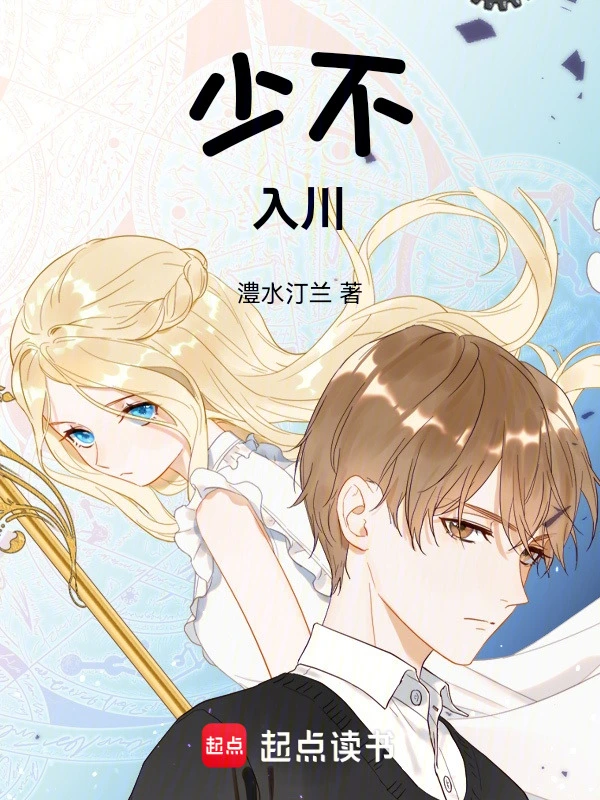
If I Don't Go to Sichuan for a Long Time, I Will Rebel.
少不入川,我逆反
- Status
- Completed
- Length
- 317k Words
- Genre
- Real Life
- Audience
- Female
- Subgenre
- Family & Feelings
- Updated
- 2mo ago
- Source
- Qidian
Stats
0Monthly votes
328Recommends
0Fans
103Chapters
Synopsis
Reader comments
Readers also read
 Qingyi Mianmian
 Love Is Like Sugar and Marriage Is Like Water
 Wild Tangerine
 Star Village
 Game Invasion: Wanted List 1 She Is Such a Good Person
 The System Forces Me to Be a Villain, and the Male Protagonists Kneel Down and Beg Me Not to Leave.
 Jin Rougui
 The Eldest Daughter-In-Law Is Not Delicate and Soft, and the Noble Husband Breaks the Guard and Hugs Her and Cries!
 My Left Hand Is a Foodie
 See the Trick! My Crime-Solving Partner Is Non-Human
 Your Highness, It Is Important to Investigate the Case
 Wasteland: the Three-Star Pile of Full-Level Cubs Is Super Fierce
 New World Under the Blood Moon
 Family Love, Where Has It All Gone?
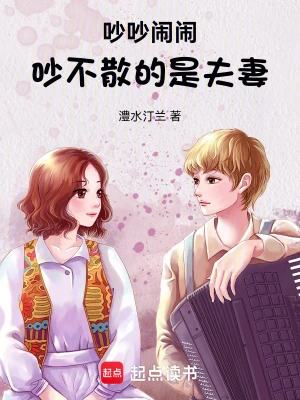 It's the Husband and Wife Who Are Noisy and Can't Break Up.
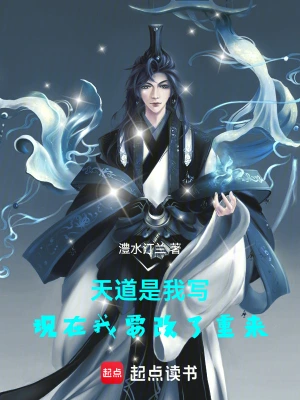 I Wrote the Way of Heaven, Now I Have to Change It and Start Over
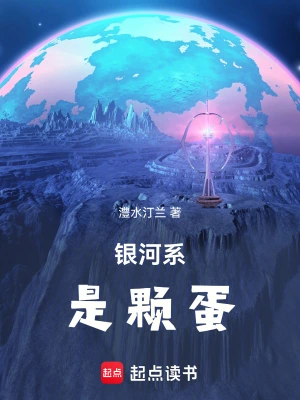 The Milky Way Is an Egg
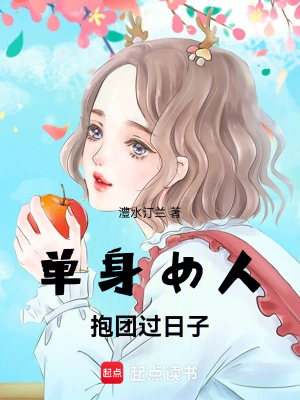 Single Women Living Together
 Twin Observers: Report on the Collapse of the Law of Nine Realms
I really want someone to help me
It's really difficult for one person to create on a platform in this era when everything requires a team to focus on operations! I really want someone to help me. Among relatives and friends, those who have time are in no mood; those who do not have time are busy pursuing life and pursuing a future.
Between career and hobby
I've been coding my whole life. What used to be a career is now a hobby. In July 1988, after graduating from college, I entered an office and started coding. He has worked as a news officer, news section chief, and director of the news center (deputy department actual duty). He has been engaged in news work for fifteen years. News, communications, essays, and reportage are often published in newspapers and periodicals at or above the provincial level, and he has also won the second prize for the National Ethnic Minority Unity and Progress Essay Competition. I wandered between the three major genres of journalism, literature and official documents, and wrote a lot of leadership speeches, summer articles, and investigative reports. As a math major, I am familiar with the three major literary genres, so I am very proud. Later, when I became a leader, I never asked others to ghostwrite my speeches. Therefore, literary advancement was wasted. After I started writing at Qidian, I always felt that what I wrote was no worse than others, so why couldn't I sign a contract? Often angry and no longer updated. Looking back, this is an impulsive and childish disease, which is very bad! Have to change. Here, I deeply apologize to the editors and readers. Reflecting carefully, the works released in the past are still unsatisfactory in terms of character creation, plot rhythm control, language temperature adjustment, etc. After hard work, the currently released works "Young Bu Entering Sichuan" and "A Noisy Life" have been greatly improved and improved. The flavor of the era, the rustic flavor of fireworks has begun to fill up, the characters and language have warmth, and the character arcs have also stood up. I hope Baozi and the ladies like it!
Good looking, please read "Chen Shang Sword Journey"!
Completed! I am moved by the creative results
This place of peace of mind is my hometown - reading "The Young Master Enters Sichuan" Tagawa came out from Xiangxi at the age of seventeen, with a piece of bacon in his basket. This is the beginning of "The Young Man Enters Sichuan" and the seed of this book. A piece of bacon traveled from Mengdong River to Fuhe River, from Anie's stove to the stove of Chuanxiang Pavilion. It has been traveling for more than thirty years and it is still going. Reading this book feels like squatting by the stove all afternoon. The flames licked the bottom of the pot, the lamp nests were rolled up piece by piece, and the fragrance of wood ginger seeds floated over. You are not in a hurry, and neither is the book. It was told slowly and slowly, about Tian Chuan sleeping huddled in a sack in the bridge hole, about Cripple Wang using chalk to draw circles on the bamboo chair to occupy his seat, about Master Liao saying "it's harder to close in than to let go", and about Chun Xiu adding another wing to the mother butterfly that Anie hadn't finished embroidering. Nothing earth-shattering. Demolitions, earthquakes, birth, old age, illness and death, weddings and funerals are all just a matter of living. But the author wrote about these days solidly, like bricks on the stove, which were laid one by one. It took more than 30 years to build the Sichuan and Hunan Pavilion. The most impressive thing is those objects. Pebbles with missing corners, yellowed formula books, copper keys, piggy banks, and iron boxes. Everything has been touched for decades, making it shiny and warm. They are not props, they are days themselves. When people are gone, things are still there; when things are there, people are still there. "You will never go back to Sichuan if you are young." The book says it's not that you can't go back, but you have found it. Tian Chuan found the stove, Chunxiu found the other wing, and Tian Sishu found the unsharpened pencil. This place of peace of mind is my hometown. After I put the book down after reading, I seemed to smell the aroma from the kitchen.
I can persist so much that I almost miss it every time 😐
After reading the first chapter of "The Young Man Enters Sichuan", I smelled the smell of bacon
These days, there are fewer and fewer novels that can give people a sense of taste. "The Young Man Enters Sichuan" is an exception. The first chapter, "Coming out of the Mountain", starts from the Diaojiaolou in Baojing, western Hunan. Mother was smoking the last piece of bacon, and her left eye almost touched the fire. The cold smoke of tea seed husks and rice bran penetrated into the meat day by day for thirty-seven days. When I read this paragraph, I really smelled it - not the smell described in words, but the smell in my memory. During the Chinese New Year when I was a child, my grandmother would smoke bacon in the kitchen, and the smoke from the cypress branches would choke my eyes. I stood at the door of the kitchen, and my grandma said, "Go farther away, the smoke will smoke your eyes." I didn't leave. I haven't smelled that cigarette smell since. In the novel, the mother was smoked for thirty-seven days, not forty-nine days. Because my son is about to leave the mountain and cannot wait for consummation. Thirty-seven days is not a full number. It's not full, so there is concern. My mother wrapped the bacon five layers in oil paper and tied it into a tic-tac-shape with hemp rope until her nose almost touched the meat before tying the knot. After reading this, my heart skipped a beat. I think of my grandma. Her eyesight was also bad. When she inserted the needle, the eye of the needle came close to the tip of her nose and her hands were shaking. This is the great thing about "Shao Bu Ru Sichuan". It doesn't say "the mother couldn't bear to leave her son." It says that the mother smoked the bacon for twelve days, tied the hemp rope with her nose pressed against the meat, and pricked her finger seven times while embroidering the Miao embroidered handkerchief, leaving seven drops of blood on the back of the handkerchief. It's all about actions, details, and taste. When the white description is drawn to the extreme, the emotion becomes more intense. Seventeen-year-old Tian Chuan squeezed onto the green leather train carrying bacon and a Miao embroidered handkerchief. Old Liu, who was sitting across from him, taught him: "When you arrive in Chengdu, don't say that you are from Xiangxi. If you say that you are from Hunan, Hunan will have a better reputation." Why? Because "Xiangxi has a bad reputation outside, saying that bandits come out of Xiangxi." Tagawa didn't answer. He remembered that the old man in the village said that there were indeed bandits in Baojing during the Republic of China. But that's hungry. Who wants to be a bandit unless he is hungry enough to chew tree bark? In one sentence, all the hundreds of years of suffering in western Hunan were written down. Not sensational, not accusation, just statement. Statements are the most powerful. North Railway Station, a bowl of gaiwan tea for five cents. Tagawa was stunned for a moment, do you still want more money for tea? Tea in western Hunan can be picked casually from the mountains and brewed casually on the stove. I have never heard that tea costs money. One detail, two worlds. Xiangxi is a society of acquaintances, while Chengdu is becoming a business society. Tagawa's confusion was the first spark of the collision between two civilizations. After interrogation by the patrol, Tagawa escaped and spent the night in the Jiuyan Bridge Cave - I will not go into details about these plots and leave them to the readers to see for themselves. Let me just say one thing: when writing about the bottom, it is easy to write "miserable". But "The Young Man Enters Sichuan" is not about tragedy, it is about resilience. Hay is spread in the bridge hole, and there is a brick stove in the corner. There is cold ashes in the stove - someone has lived there. The words "Zhang, 1982, Hungry" are engraved on the bridge pier. Three words, a person's life. The author did not make Tagawa cry, nor did he make the readers cry. Just let Tian Chuan stick the Miao embroidered handkerchief to his chest, listen to the gurgling sound of the Fu River, and think of the roar of the Mengdong River. Then the first chapter came to an abrupt end with the sound of footsteps coming from outside the bridge. After reading the first chapter, the first thing I did was not to continue reading. I put down my phone and called my mother. She studied in Guizhou, next door to western Hunan, and I studied in Chengdu, and later settled in Chengdu. The call came through and she said she was smoking bacon. I said you should avoid smoking for a few days, as the smoke will hurt your eyes. She said yes. I didn't realize until I hung up the phone that I was "infected" by her. Tagawa's Agnie smoked bacon hurts my eyes, so I thought my mother's smoked bacon would hurt my eyes too. That's what a good novel is, it will spread out from the page and into your life. This novel achieves three things in its writing style. First, the senses are fully opened. Taste, smell, touch, hearing, vision, all mobilized. After reading the first chapter, I remembered the crimson color of the bacon, the spiciness of the baked rice, the earthy smell of the Fu River, and the smoldering fire of the coal stove. Second, the imagery is dense. Thirty-seven days of bacon, Miao embroidered veil with seven drops of blood, seventeen stone steps, and Lighthouse brand soap heads. Every image is a hook, tempting the reader to read further. Third, it is accurate out of context. The end of each chapter stops at the "must turn down" position. Chapter 1 stopped at Tianchuan and walked into the bridge tunnel, Chapter 2 stopped at walking towards the Qingshi Bridge, and Chapter 3 stopped at Liu Yufen pushing the door. This is craftsmanship. But what really made me decide to pursue it was the warmth of this novel. It writes at the bottom, not looking down. Write about suffering, not sell it. Write about women without symbolizing them. Mother, Zhou Suhua, Liu Yufen, each woman has her own craftsmanship and bones. My mother went blind embroidering Miao embroidery, Zhou Suhua broke her hand embroidering Shu embroidery, and Liu Yufen continued to embroider. Craftsmanship is passed from woman to woman, like fire. Writing about men is not grand either. Tagawa's toughness comes not from shouting, but from carrying vegetable bags. Lame Wang's kindness was not expressed in words, but in the form of a bowl of vegetarian pepper noodles. Old Man Ma has lived in the bridge cave for eleven years and said, "There is no point in thinking about it, the river will not flow back." One sentence is more powerful than any accusation. One final word. A good novel can be smelled. "Shao Bu Enters Sichuan" smells like the cold smoke of tea seed shells and rice bran, like the fishy smell of Fuhe River water, like the bean paste of twice-cooked pork, and like the scent of soap locust on the back of Liu Yufen's hand. But the strongest smell is that piece of bacon that has been smoked for thirty-seven days - it has not been completed for forty-nine days. But who in this world has a perfect life? Thirty-seven days is enough. The remaining twelve days are just thoughts. Thoughts last longer than perfection. This review did not write a plot summary, analyze the character arcs, or dismantle the structure. Because readers will read those things themselves. I only wrote about my true feelings after reading the first chapter: I smelled the smell of bacon, and I missed my mother. If you have also left your hometown, if you also have a piece of "thirty-seven days of bacon" - after reading the first chapter, you will understand.
Creation has a long way to go
Today, the creation of the last chapter of Volume 2, Reunion, has been completed, and the plot of Anie coming to Chengdu has completed a closed loop. Looking back, this story is quite interesting. After all, the homework before creation was quite solid. The next step is to start the creation of Juan Sanchuiyanqi. Let's talk about how Tian Chuan took root in Chengdu and opened the Sichuan and Hunan Museum, and the story of getting married and having children was passed down.
The temptation of three thousand yuan
The temptation of three thousand yuan is like a lamp under a tin shed, which makes people unable to open their eyes. The shirts in Pixian County are printed with Shanghai's trademarks, and genuine and fake ones are mixed in, depending on your taste. Chen Dongsheng said he didn't want to spend his whole life cutting meat, so he took off his apron and walked towards the lotus pond. Wang Laizi stood at the door smoking, the red light of his cigarette flickering on and off like a lamp in a lotus pond. The water in the Fu River is still flowing.