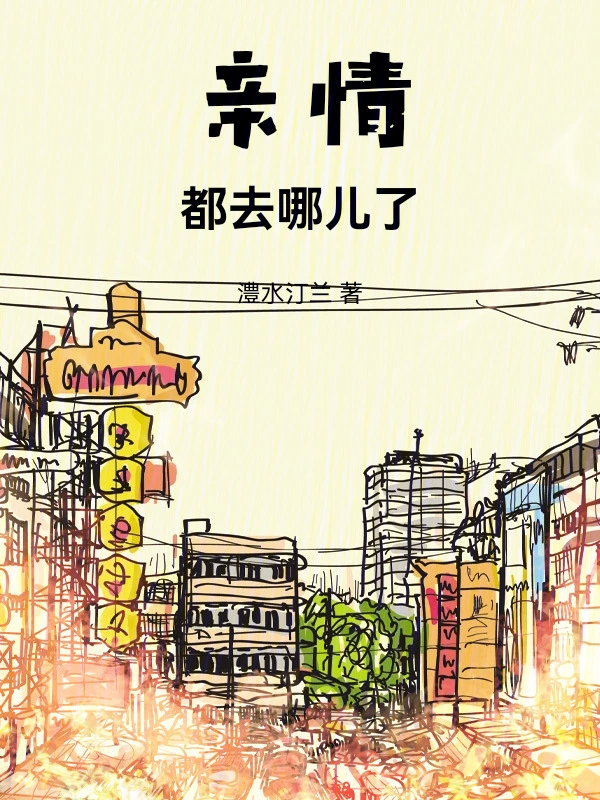
Family Love, Where Has It All Gone?
亲情,都去哪儿了
- Status
- Ongoing
- Length
- 314k Words
- Genre
- Real Life
- Audience
- Female
- Subgenre
- Family & Feelings
- Updated
- 9h ago
- Source
- Qidian
Stats
0Monthly votes
420Recommends
0Fans
90Chapters
Synopsis
Reader comments
Readers also read
 Have Something to Look After in Old Age
 Medical Journey Is with You
 Food and Love Are the Only Things You Can't Live up To
 Me and My Lonely Angel
 Beast Control Starts from Zero Points
 Zheng Loves a Person with One Heart
 Abandoned Wives Are at Ease
 Quickly Wear It: I Just Want to Farm
 Northern Song Life Consultant
 Fight Between Famous Girls
 Houfu
Houfu
 Abandoned Wife's Beautiful Era
 New World Under the Blood Moon
 It's the Husband and Wife Who Are Noisy and Can't Break Up.
 I Wrote the Way of Heaven, Now I Have to Change It and Start Over
 The Milky Way Is an Egg
 If I Don't Go to Sichuan for a Long Time, I Will Rebel.
 Single Women Living Together
 Twin Observers: Report on the Collapse of the Law of Nine Realms
Why did I write "Where Have All the Family Love Gone"?
The flavor of the year has faded, the family ties have diminished, and filial piety has disappeared—behind these complaints lies the structural pain of an era. It's not that any generation has suddenly turned bad, it's that this warm and affectionate system that has been running for thousands of years has been crushed by the new social gears. Let's peel it off layer by layer and take a look. The first level: space tearing From the countryside to the city, geographical distance has become a hard barrier to family ties for the first time. In the past few generations, people lived in the same courtyard, ate from the same pot, and performed filial piety as a daily routine. What now? The sons and daughters are scattered across the country, up north, across the country, and even across the ocean. A phone call once a month is called "frequent contact", and a trip home during the Chinese New Year is called "I have tried my best." It's not that we don't want to fulfill our filial piety, it's that this filial piety model based on "living together" simply cannot operate in the new spatial structure. So the children invented alternatives: sending money, buying wheelchairs, and installing cameras. They outsource their family affection to express delivery and money transfer. This is not indifference, it is the only solution they can think of from thousands of miles away. The second level: time squeeze Our generation lives in a system governed by the logic of efficiency. Working overtime, attending meetings, catching up on projects, and even not getting enough sleep, how can I have the energy to accompany you? So "being in a meeting" became the most legitimate reason to hang up on my parents, and "too busy" became a universal excuse for not going home. The colonization of family life by efficient work has turned family love into a "low priority" thing - always important, never urgent, always at the end of the to-do list. The third level: value rupture In traditional society, experience is wealth and the elderly are authority. What now? Algorithms are iterating, knowledge is exploding, and my parents' experience of farming, working, and living frugally suddenly no longer works in this era of scan-code payment and AI dialogue. The elderly have become "digital refugees" and their children have become "guides to the new world." The power relationship is completely reversed. This kind of pressure from cultural feedback makes children feel impatient and makes parents feel ashamed. So the old man can either live like an isolated island or please his children in exchange for the sense of security of not being abandoned. Level 4: Market Substitution In the past, "raising children" was a kind of retirement investment. Nowadays, the market has stripped away the functions of pensions one by one, including pensions, pension insurance, nursing homes, and intelligent robots. Filial piety has changed from "just a necessity" to "the icing on the cake". In the past, if you were not filial, the elderly would really starve to death; if you are not filial now, the elderly will be empty-hearted at best. Material support has been taken over by the market, but spiritual support has not kept up. As a result, an absurd situation has arisen - the children send back imported wheelchairs, but what the elderly want is to have a meal together. The fifth level: the wave of individualization Modern people pursue the realization of personal value, the freedom of marriage, and the pursuit of an unfettered life. The word "filial piety" naturally sounds like kidnapping and control to the ears of young people. This is not someone who has forgotten his roots, but an inevitable price of the "individualization" process in modern society - the focus of loyalty has shifted from family to self, and the expression of emotions has changed from companionship to transfer. --- So, what this novel is really about is not how unfilial children are or how pitiful their parents are. What it writes about is the silence, forbearance and final awakening of a generation when it was crushed by the giant wheel of history. The three mothers in the book finally made a decisive turn after "recognizing" their situation - donating houses, throwing robots, and burning stubs. It's not anger, it's clarity. They finally understood: raising a son is not for him to look back, but for the version of himself who tried his best back then. This sigh is the most painful footnote of this era.
Chapter 52, I wrote a little sad
This chapter is the "full rupture" of Volume Three. The last rubber band of the iron box was broken, and Xin Youzi didn't buy any more - she gave up on holding it together. Qin Yulan received the call, and Xin Youzi said, "Let me prepare." After listening, Qin Yulan turned the radio off and on, and on and off. She knew what it meant. The old people in Tongzilou left one by one, and now it was Qin Geng's turn to read. Hao Guiying remitted the last sum of money to her fourth brother, with the same four words as the postscript: Sister will not come back. Niu Wangzai started to cough - it was no ordinary cough, it was the sound of something being pulled out from deep in the lungs. All the cracks come together in this chapter: physical, familial, memory. At the end, everyone is awake in their own darkness, and the voices they have listened to for decades have all disappeared. The tube building was demolished, and the bricks turned into soil under the bluestone slabs.
Good looking, please read "Chen Shang Sword Journey"!