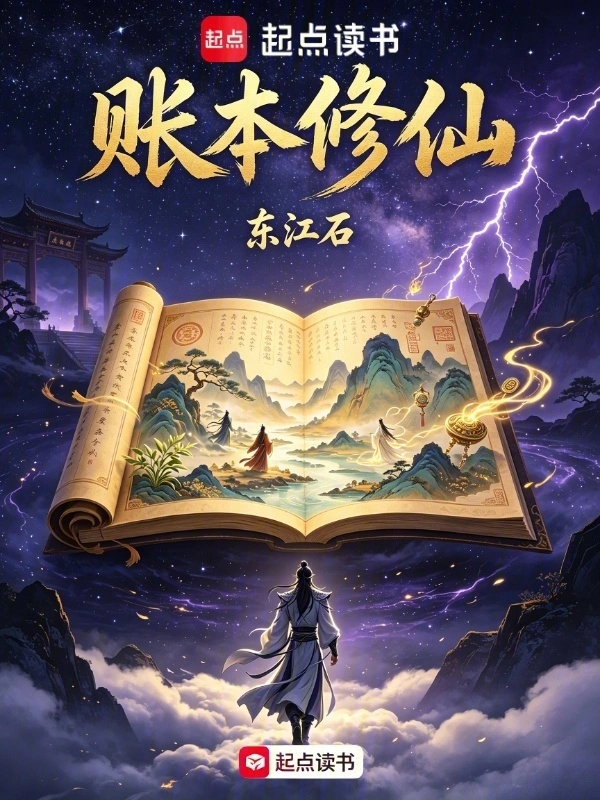
Ledger Cultivation of Immortality's Heavenly Assets Are Insolvent
账本修仙之天道资不抵债
- Status
- Ongoing
- Length
- 101k Words
- Genre
- Eastern Fantasy
- Audience
- Male
- Subgenre
- Eastern Xuanhuan
- Updated
- 1mo ago
- Source
- Qidian
Stats
0Monthly votes
1Recommends
0Fans
30Chapters
Synopsis
Reader comments
Readers also read
 I Just Traveled Through Time and Became a Superman. Do You Think This Is the World of Immortality?
 Immortal Martial Arts Began with the Great Sui War God
 I Just Collected a Corpse, Why Did I Become a Demon?
 My Magical Career Is Infinitely Improved
 Criminal Investigation Notes 2: Buried Corpse in Songhu
 Night Without Borders
 How Can You Become an Immortal If You Don't Have Money?
 The Black Witch's Journey to Another World
 Douluo Laid the Foundation, Waves in the Sky
 Corpse Hunter
 Green Hills
 Xuanjian Immortal Clan
Highlights: Spiritual energy is not scarce, it is wasted. An engineer's ledger of cultivating immortality
What kind of book is this? Other fairy tales: The protagonist fell off a cliff and picked up a secret book. This book: The protagonist fell into a mine, took out his account book and started recording data. The core setting can be explained in one sentence: Chen Jin, an operation and maintenance engineer who graduated from the Second College of Machinery, was diagnosed as a waste of five spirit roots after traveling through time, and was sent to the firewood yard to chop firewood. But he has a strange ability - he can directly see the flow of spiritual energy with his eyes. What others see is the fairy spirit. What he saw was: the concentration of spiritual energy in the core disciple area was thirty times that of Chai Yuan, the spiritual energy in the practice field was drained out four hours a day, and the residual spiritual energy from the formations decades ago was still seeping out of the soil in the vegetable field behind the kitchen. The first thing he saw was: spiritual energy was not scarce, but wasted. So he did something that no immortal cultivator had ever done - he took out his account book and started keeping accounts. What he records is not income and expenses. What he remembered was: how inefficient the spiritual energy distribution of Hengxiao Sect was, how much second-hand spiritual energy was wasted by each monk during cultivation, and whether the high-concentration spiritual energy accumulated in abandoned underground mines for decades could be recycled. Others rely on talent to cultivate immortality. His cultivation of immortality relies on auditing. One day when he placed the blame on Tiandao, he discovered the ultimate secret of the world - Tiandao may have been insolvent. This is the story of a migrant worker who uses a ledger to think and cultivate immortality. The old operation and maintenance hand over the account book to the new readers: come in and take a look, it's not a loss. (The book review area is open for discussion. If you have any questions about the distribution of spiritual energy, please leave a message. The author will reply to every comment.)
The protagonist's auditing talent, do you think this setting can last until the later stages?
To be honest, I started this post because I have thought about this issue myself. Chen Jin's golden finger is "can see the flow of spiritual energy". It's not a combat cheat, it's not a practice acceleration cheat - it's an information cheat. Things he can see include: The difference in spiritual energy concentration in each area of Hengxiao Sect The proportion of "second-hand spiritual energy" that escapes during monks' cultivation The high-concentration spiritual energy accumulated in underground abandoned mines for decades Essentially, his ability is the embodiment of an audit tool. After reading the first two chapters, I personally think that the advantages of this setting are: Strong sense of puzzle solving Unique growth path It has a basic relationship with the later plot. I will talk about this later, no spoilers. But I'm also thinking - will this kind of information-based cheat become "the protagonist's cheating depends entirely on the data provided by the author"? Will it become weaker in the later stages? What do you think? Can this "auditing talent" last until the later stages? Come to the comment area to chat about your views. (The author of the excellent comments will reply to the discussion and give a recommendation ticket for this book after careful analysis)