


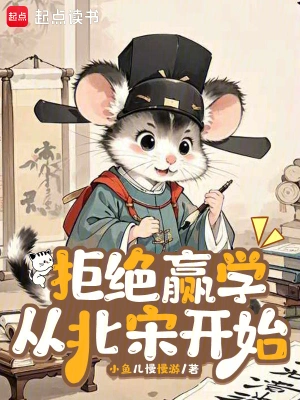
Rejecting Victory Theory, Starting in the Northern Song
拒绝赢学从北宋开始
- Status
- Completed
- Length
- 700k Words
- Genre
- Historical
- Subgenre
- Song-Yuan-Ming Dynasties
- Updated
- 2mo ago
- Source
- Qidian
Stats
203Chapters
0Votes
3.1kRecs
8.5kFans
Tags
Synopsis
More by this author
Readers also read
 Daming: Asking for the Throne at the Beginning, Lao Zhule Went Crazy
 A Guide to Building Civilization in a Primitive Tribe
 In the Ming Dynasty, the Days When the Cows and Horses Turned Over
 My Only Method: I Will Add More Points to Become Stronger at the End of Ming Dynasty
 What Do You Mean the Streamer Really Is Shirona?
 Why Are Northern Song Civil Officials So Awful?
 Let the Tang Dynasty Soar
 Late Ming: I Pose as a Descendant of the Jianwen Emperor
 Born to Be an Immortal Seed, Starting to Grow Spirit Plants in a Demonic Sect
 Revealing My Identity, I Become Deputy Emperor of Shu-Han
 I Lay Flat for Three Years, Then Was Forced to Save the Han Dynasty
 Zhu Di: Are My Advisors from the Future?
 Nanyang, 1931: From Piglet Laborer to Crime Lord
 For Reform, I Face Death Without Fear
 1937: Nanyang Crime Lord
Reader comments 24
Google Translate
Public knowledge writers are most afraid of falling into the trap of preaching
Taking Taiping Year as an example, Feng Dao and Sang Weihan's lines at the beginning were very shocking, and the audience was full of praise. But towards the end of the show, the screenwriter created a Sima Fu. His lines sounded good at first, but the part where he pleads for Wang Quanbin's death and remonstrated was a complete failure, and he fell into complete preaching. The Little Red Book is full of weird articles about Sima Fu. The author should be careful not to die for the sake of admonition.
What mistakes are easy to make in historical novels❓
Before the Ming Dynasty, the emperor was not called "Emperor". In the Song Dynasty, he was mostly called "Guanjia", and in other dynasties, he was often called "Your Majesty". In the Ming Dynasty, the emperor was occasionally called "Emperor", and in most cases he was called "Your Majesty". After Kangxi of the Qing Dynasty, people began to be generally called "Emperor". Princes and princes call themselves: Princes in the pre-Qin and Han Dynasties can be called "Gu", and a few can be called "Ignores". After the Wei, Jin, Southern and Northern Dynasties, the title of "Ignores" gradually became exclusive to the emperor, and princes, princes and princes can only be called "Gu" or "I". Song, Yuan and Ming called themselves "I" or "I". Before the Qing Dynasty, princes and princes rarely called themselves "this king". Starting from the Kangxi year of the Qing Dynasty, princes generally called themselves "this king". In ancient times, women called themselves: "nujia" was a modest name for women after the Song Dynasty. Women in the Han and Tang Dynasties more often called themselves "concubine", and noble women could call themselves "I" and "I". Before the mid-Ming Dynasty, most dynasties used copper coins for daily transactions, with very little gold and silver. It was only in the mid-to-late Ming Dynasty that silver became the mainstream currency. -In the late Ming Dynasty, "meeting votes/deposit checks" appeared among the people. There were no unified rules. Most of them were deposits and withdrawals/exchange receipts from acquaintances or local circulation, and were not legal currency. In the early years of Daoguang in the Qing Dynasty (1823): Rishengchang Bank was established, and private banks began to issue standardized banknotes, focusing on cross-regional exchange. They were only circulated in Shanxi merchant trade circles and major commercial ports, and were not yet popular. In the third year of Xianfeng in the Qing Dynasty (1853): the official issued the Ministry of Revenue official banknotes (official banknotes), which were forced to circulate nationwide. At the same time, the network of private banknotes expanded to the whole country, and official and private banknotes ran parallel. The use of banknotes entered an explosive period and became the "starting point of popularization." High-leg tables and chairs only completely replaced the low tables for sitting on the floor in the Song Dynasty. During the Han and Tang dynasties, people knelt and sat on the tables to eat and discuss matters. The furniture was mainly low tables and couches. The memorial system was only established during the Kangxi period of the Qing Dynasty. Officials in the Tang and Song Dynasties used "memorials", "tables" and "statements" when submitting memorials, while in the Ming Dynasty they used "memorials" and "memorials". There is no such thing as "memo" or "zhezi". In ancient formal occasions, the hand-over gesture was performed with the left hand outside and the right hand inside. The right hand outside was a special "unlucky gift" for funerals. "Better greetings" is a unique etiquette of the Qing Dynasty. It was mostly used by subordinates to superiors and juniors to elders. During the Tang and Song dynasties, people often performed cross-hand salutes and bows to greet greetings when they met, and there was no such thing as "sending greetings". Before the Yuan Dynasty, subordinate officials rarely called superior officials "adult". In some dynasties, subordinates called eunuchs "adult", and in some dynasties, they called their parents and elders "adult". Beginning in the Yuan Dynasty, lower-level officials would occasionally call officials of second-rank and above "sir". From the middle and late Ming Dynasty, only officials of third-rank and above would be called "sir" by their subordinates. Officials with lower ranks could not be called "sir". However, in the late Ming Dynasty, there began to appear a few cases where officials above the fourth rank were called "adult". Before the mid-Qing Dynasty, following the rules of the Ming Dynasty, only officials of third rank or above would be called "adult". Starting from the mid-Qing Dynasty, calling officials "adult" gradually became common for lower-level officials. Attention! ! ! What is mentioned above is that lower-level officials refer to higher-level officials. No matter which dynasty, it is absolutely impossible for higher-level officials to call lower-level officials "sir". Some novels even write about emperors or nobles calling other officials "sir". This is simply contrary to Tiangang! ! ! Finally, let's talk about the problem of civilians calling officials Before the middle and late Qing Dynasty, civilians in various dynasties and generations called officials differently, and most of them called them "officials" and "masters". From the middle to late Qing Dynasty, civilians also called officials "adult". {"NickName":"Supervision and Restriction","UserId":406440657}
Author, I came up with a weird idea to dissuade you.
In the Taiping years, Feng Dao stood at the palace gate and spoke uprightly to stop the Khitan soldiers who wanted to enter the palace to plunder. This part is very heroic. This time the protagonist is a military commander. Have you ever thought about designing a similar scene? For example, when Emperor Zhenzong of the Song Dynasty welcomes superstitious things such as the Book of Heaven, the protagonist stands at the city gate or other high platform with political significance to stop the emperor. Isn't it interesting to think about it this way? But the lines have to be profound and can be spoken in such a way that the civil and military officials of the dynasty will be convinced by them. Otherwise, it will be like painting a tiger instead of a dog.
What a nonsense! One issue of the magazine printed 230,000 copies and sold out. The order is for an additional one million points. The second issue needs to be printed with 2 million copies! ? In its heyday, Jump Weekly printed 6 million copies, relying on modern technology/logistics/dispersion in multiple locations. A magazine printed in the Northern Song Dynasty only sold 10 copies of two million copies per issue? ! Why don't you go to heaven? 😡
Looks so tired
If you want people to follow you, you have to win something. If you gain something, then someone will listen to you and do things. If you follow you, you will lose and lose every day. Everyone is not a masochist, so they can do whatever they do with you. And it's so tiring to watch. The author writes novels and tells stories for everyone to read, but he's here to promote them.
Author, can you give the protagonist a bit of a heroic spirit?
Recently, I watched Guo Wei's commentary video. A blogger said that he was Guo Daxia, and suddenly an inspiration came to my mind. Since ancient times, brotherhood has been valued in the military, and rangers are the most loyal. Emperors who were born as knight-errants include Liu Bang, Guo Wei, and Liu Bei. When you write about the protagonist gaining military morale, you might as well add some knight-errant spirit to the protagonist, so that the character's personality can be fuller and different from Wang Xiaoxian.
Author, I found an idea about passing down the jade seal of the country and discussing the transmission of learning.
When Shi Chonggui surrendered to Daliao, he gave his jade seal to Daliao. In the middle of Song and Liao Dynasties, there was a debate about who owned the jade seal and who was the orthodox one. Later, Zhezong of the Song Dynasty found a jade seal from the people to start a public opinion war with Daliao. You can have a good discussion about this matter.
The author's views on historical knowledge can only be reduced to background, not the main course. Only when the struggle of the characters (people and self, people and people, and groups, people and times, groups and groups) shows dramatic and emotional value, will anyone watch it
Since Goldfinger is a death wish, why is it that most of the text is about the protagonist being caught up in a political struggle and unable to accomplish anything? What the death wish stream is about is that the protagonist is not afraid of death and does things. Although he cannot die, good things continue to happen.
Zhenzong risked his life to follow the example of Emperor Qin in granting Zen to Mount Tai, which shows that Qin Shihuang had a good reputation in the Song Dynasty. It also shows that he felt humiliated in his heart, so he wanted to cover it up like crazy.