


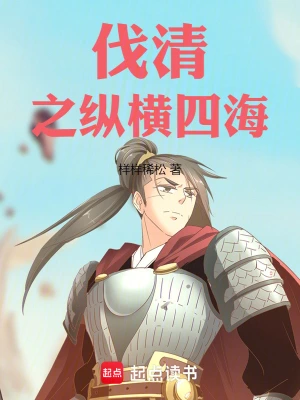
Conquering the Qing: Ruling the Four Seas
伐清之纵横四海
- Status
- Completed
- Length
- 917k Words
- Genre
- Historical
- Subgenre
- Song-Yuan-Ming Dynasties
- Updated
- 18d ago
- Source
- Qidian
Stats
376Chapters
1Votes
5.8kRecs
3.5kFans
Tags
Synopsis
More by this author
Readers also read
 A Literary Master in Ancient Greece
 Germany: 1914
 Seizing the Direct Descendant in the Red Mansion
 Great Ming: His Father Is Useless, So He Must Summon the Founding Emperor
 Simultaneous Transmigration: Is Everyone Starting Out in Prison?
 Transmigrating to 1570: The Rise of South America
 Opposing the Qing: Starting by Abducting Shi Dakai!
 A Dual Status Panel Descends into the Abyss, and the Assassin's Potion Is Right at the Entrance
 The Black Witch's Journey to Another World
 The Winds of 1898: Building a Warlord Empire in the Nanyang
 Late Ming: I Foresee the Future
 1912: Starting in Southeast Asia
 I'm Really Not the Third Prince Zhu
 Defying Heaven, Changing the Ming Dynasty
 Legends of the Southern Song Heroes
 Wanli: I Became a Tyrant
 Don't Call Me the Carpenter Emperor
 The Unreliable Southern Song
 I Really Am a Great Foolish Emperor
Reader comments 23
Google Translate
It should be called Kang Mazi!
Kang Xiaosan doesn't sound good! It should be Kang Mazi!
What mistakes are easy to make in historical novels❓
Before the Ming Dynasty, the emperor was not called "Emperor". In the Song Dynasty, he was mostly called "Guanjia", and in other dynasties, he was called "Your Majesty". In the Ming Dynasty, the emperor was occasionally called "Emperor", and in most cases he was called "Your Majesty". After Kangxi of the Qing Dynasty, people began to be generally called "Emperor". Princes and princes call themselves: Princes in the pre-Qin and Han Dynasties can be called "Gu", and a few can be called "Ignores". After the Wei, Jin, Southern and Northern Dynasties, the title of "Ignores" gradually became exclusive to the emperor, and princes, princes and princes can only be called "Gu" or "I". Song, Yuan and Ming called themselves "I" or "I". Before the Qing Dynasty, princes and princes rarely called themselves "this king". Starting from the Kangxi year of the Qing Dynasty, princes generally called themselves "this king". In ancient times, women called themselves: "nujia" was a modest name for women after the Song Dynasty. Women in the Han and Tang Dynasties more often called themselves "concubine", and noble women could call themselves "I" and "I". Before the mid-Ming Dynasty, most dynasties used copper coins for daily transactions, with very little gold and silver. It was only in the mid-to-late Ming Dynasty that silver became the mainstream currency. In the late Ming Dynasty, "meeting votes/deposit checks" appeared among the people. There were no unified rules. Most of them were deposits and withdrawals/exchange receipts from acquaintances or local circulation, and were not legal currency. In the early years of Daoguang in the Qing Dynasty (1823): Rishengchang Bank was established, and private banks began to issue standardized banknotes, focusing on cross-regional exchange. They were only circulated in Shanxi merchant trade circles and major commercial ports, and were not yet popular. In the third year of Xianfeng in the Qing Dynasty (1853): the official issued the Ministry of Revenue official banknotes (official banknotes), which were forced to circulate nationwide. At the same time, the network of private banknotes expanded to the whole country, and official and private banknotes ran parallel. The use of banknotes entered an explosive period and became the "starting point of popularization." High-leg tables and chairs only completely replaced the low tables for sitting on the floor in the Song Dynasty. During the Han and Tang dynasties, people knelt and sat on the tables to eat and discuss matters. The furniture was mainly low tables and couches. The memorial system was only established during the Kangxi period of the Qing Dynasty. Officials in the Tang and Song Dynasties used "memorials", "tables" and "statements" when submitting memorials, while in the Ming Dynasty they used "memorials" and "memorials". There is no such thing as "memo" or "zhezi". In ancient formal occasions, the hand-over gesture was performed with the left hand outside and the right hand inside. The right hand outside was a special "unlucky gift" for funerals. "Better greetings" is a unique etiquette of the Qing Dynasty. It was mostly used by subordinates to superiors and juniors to elders. During the Tang and Song dynasties, people often performed cross-hand salutes and bows to greet greetings when they met, and there was no such thing as "sending greetings". {"NickName":"Restriction and Supervision","UserId":417773267} Before the Yuan Dynasty, subordinate officials rarely called superior officials "adult". In some dynasties, subordinates called eunuchs "adult", and in some dynasties, they called their parents and elders "adult". Beginning in the Yuan Dynasty, lower-level officials would occasionally call officials of second-rank and above "sir". From the middle and late Ming Dynasty, only officials of third-rank and above would be called "sir" by their subordinates. Officials with lower ranks could not be called "sir". However, in the late Ming Dynasty, there began to appear a few cases where officials above the fourth rank were called "adult". Before the mid-Qing Dynasty, following the rules of the Ming Dynasty, only officials of third rank or above would be called "adult". Starting from the mid-Qing Dynasty, calling officials "adult" gradually became common for lower-level officials. Attention! ! ! What is mentioned above is that lower-level officials refer to higher-level officials. No matter which dynasty, it is absolutely impossible for higher-level officials to call lower-level officials "sir". Some novels even write about emperors or nobles calling other officials "sir". This is simply contrary to Tiangang! ! ! Finally, let's talk about the problem of civilians calling officials Before the middle and late Qing Dynasty, civilians in various dynasties and generations called officials differently, and most of them called them "officials" and "masters". From the middle to late Qing Dynasty, civilians also called officials "adult".
How to cure malaria?
The main reason why the Mekong Delta has not been developed is malaria. The Mekong Delta suffers from tropical malaria, with a five-year mortality rate of less than 50%.
The historical view of the Hong and Qing dynasties can be arranged
It's not the same as the scholar's rebellion in ten years. It was too prepared and it ended badly.
There are too many loopholes in soul-traveling historical novels. A modern person who accidentally travels to a certain dynasty can remember so many details in history (even better than a history expert). China has thousands of years of history, and it is impossible for historical experts to remember every detail of a certain period of history in just a few years. Unless he is a historical expert who specializes in a certain period of history, does the protagonist of Soul Transmutation happen to be a historical expert who specializes in a certain period of history? Don't say that the protagonist was a lover of historical novels before time travel. Don't be ridiculous. Historical details are not something that historical novels can cover, it's not the same thing at all! Even if the protagonist happens to be an expert specializing in the history of a certain period. If you travel to ancient times, what can you do? This involves another big loophole in historical fiction. The protagonist can draw drawings of various machines and weapons, understand metallurgy and metal processing, chemical industry, and improve agricultural tools. In fact, these loopholes are easy to solve. Since the protagonist's soul has traveled to ancient times, it proves that ghosts do exist. Then write that when the protagonist goes to sleep at night, his soul leaves his body and returns to modern times. If he doesn't understand something, he can look up information in modern times. This solves various loopholes in soul-traveling historical novels. {"NickName":"Restriction and Supervision","UserId":417773267}
I haven't read enough. What other books do you recommend about Kangqingwen?
Can you change the name of your protagonist? It sounds so awkward to read.
After such a long time, I finally caught up with a first 🤭🤭
Support The ocean is difficult to write and needs to be more realistic