


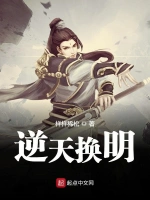
Defying Heaven, Changing the Ming Dynasty
逆天换明
- Status
- Completed
- Length
- 2.5M Words
- Genre
- Historical
- Subgenre
- Song-Yuan-Ming Dynasties
- Updated
- 3y ago
- Source
- Qidian
Stats
679Chapters
0Votes
25.8kRecs
25.3kFans
Tags
Synopsis
More by this author
In booklists 3
Meticulously Researched History
Books with solid logic and immersive stories
57Books542Follows2yUpdated
Books Worth Reading, According to a 20-Year Veteran Reader
Reliable urban novels about being reborn
12Books16Follows3yUpdated
The Complete Library
Featuring all kinds of great books. I'll also refer to lists and articles by experts like Aier Tiankong and Chiji. Since slots are limited, I'll try to avoid hugely popular, phenomenon-level hits unless there's really something worth mentioning.
30Books135Follows4yUpdated
Readers also read
 Daming: Asking for the Throne at the Beginning, Lao Zhule Went Crazy
 A Guide to Building Civilization in a Primitive Tribe
 My Father Is Wen Tianxiang, and We Win the Battle of Yashan from the Start
 My Only Method: I Will Add More Points to Become Stronger at the End of Ming Dynasty
 Slaughtering My Way Through the Marvel Universe: Starting with The Boys
 The Prosperous Longwan Era
 Reversing the Ming Dynasty, 1644
 The Road Less Traveled
 The World of the Extreme Path: Tempering My Body Through Terror
 Transmigrated to the Ming Dynasty to Become a Tyrant
 Late Ming: I Foresee the Future
 I Am the Carpenter Emperor
 Conquering the Qing: Ruling the Four Seas
 I'm Really Not the Third Prince Zhu
 Legends of the Southern Song Heroes
 Wanli: I Became a Tyrant
 Don't Call Me the Carpenter Emperor
 The Unreliable Southern Song
 I Really Am a Great Foolish Emperor
Reader comments 37
Google Translate
Another system article! The starting point is only the system text! Can you please not mark it in the introduction?
The writing is okay, but the inexplicable forced addition of a Japanese girl romance is too bloody... The most annoying thing is that the historical and military text is constantly stuffed with romance plots, which is distracting.
One person series: The Ming Dynasty resists the Qing Dynasty 😍. After several years, I suddenly remembered that one person's Anti-Japanese 2 is a rare masterpiece, so I found the author to look for new books. Come on!
After looking at it, the protagonist has a space, but he doesn't know how to use it at all. For a normal person, if he travels to that point and still has a space, wouldn't the first task be to figure it out and then use it? This protagonist is not biased. Possibly poor brain development.
Three taboos in historical novels: the protagonist is invincible and pretentious, has a system, and the high-level characters are simple-minded.
Without a system, you are nothing in ancient times. You thought you were in a dream! At which stop should others pay a verbal visit? People are very complicated. People will not agree with you just by saying a few polite words. Instead of giving some small favors, others have to work hard for you, otherwise there won't be so many job-hopping and rebellions. I, the 985 graduate students, all feel like rubbish, and I think the students at Tsinghua and Peking University should be the same. Without a system, who knows how modern tools are made, how can they remember the ratio of gunpowder, even the most stupid people can't do it, I'm telling you! Those who engage in large-scale scientific research always look up books and write formulas at the same time. Even some common integral formulas sometimes have to be looked up in books. Of course you are awesome, take what I said above as FP.
Traveling through the Ming Dynasty and developing in Taiwan first, climbing the tree is the right way. Being an assassin is a disease, and the loss will be too great if you die.
I saw someone complaining about the system. I want to say that there are many historical masters who do not cheat. What are you doing here? If you don't want to watch it, just leave! Originally, few people who write history cheats are good at writing. Do we need to put all books into a unified format to be satisfied? I still think the golden finger is too small!
The more you write, the better. If you ignore the bad point of the heroine's broken arm, at least it's a good book.
In the past, we imposed strict controls and launched a planned economy after the founding of the Ming Dynasty. Superficially, the reason was that Zhu Yuanzhang was just such a person. However, very serious research over the years has shown that in fact, the biggest problem faced by the founding of the Ming Dynasty was lack of money. Yes, there was no currency. Where did the currency go? They were taken to Central Asia for business by the Yuan Dynasty people. Didn't the Yuan Dynasty people always bring a group of semu people with them wherever they went? The Yuan Dynasty even canceled the imperial examination and allowed semu people to serve as imperial officials. The semu people are Central Asian Muslims. What they are best at is doing business and buying them up. They sold the silver in China to Central Asia, which led to insufficient currency in the late Yuan Dynasty. Paper money was issued for everything. Paper money had no purchasing power at all. The people suffered from horrific inflation. Soon the world was in rebellion, and the Mongols returned to the grasslands to herd sheep. The Yuan Dynasty died, but the problem of lack of money was passed to the Ming Dynasty. The Ming Dynasty had no money, so it had to engage in a planned economy. The planned economy did not need currency, and the "nothing was allowed to enter the sea" was actually to prevent the remaining silver from flowing out. In fact, except for the Yuan Dynasty, foreign trade in other dynasties generally did not use currency trade. For example, in the Song Dynasty, tea was exchanged for horses. The "Ancient Tea Horse Road" that everyone heard of was done in this area. Zheng He's voyages to the West also involved barter. Heavy metal currencies are inherently deflationary, which means that there are less and less in the market, and eventually the entire market runs out of money. The same goes for the rise of Hou Jin. In the past, Nurhachi was said to be awesome. He accumulated strength in his early years, found the right opportunity to raise troops, and through his outstanding martial arts, he finally took over the Central Plains. In fact, a core question has been ignored: Where did he get the money? In the past, this issue did not need to be studied, because traditional history was all about the happy life of emperors and generals, until everyone realized that they had overlooked a "grey rhinoceros". "Gray rhino" is the kind of obvious thing that everyone did not notice. Everyone can understand that the Jurchens fought better than the Ming Dynasty's frontier army, but they can't understand why the Jurchens were equipped more powerfully than the Ming Dynasty's frontier army? Not to mention the armor and weapons were more advanced than those of the Ming Dynasty, but later he was dragging cannons around. This is incredible. It feels like one day when you find that Wang Ergou in the village next to you was extremely poor yesterday, and suddenly drives a Rolls-Royce today. Your first reaction is definitely not that Wang Ergou can build this thing, but that he got it from others, stole it, and there is no reason why he does not need to pay attention to it. How did they get these things? Yes, I bought it. Where to buy it? Shanxi. Where did the money come from? Earned from doing business with North Korea. Where does North Korea get its money? American silver flows in. One more thing, at that time, the Manchus often caught Haidongqing and Silly Roe Deer to exchange silver with North Korea. Haidongqing was just like this, and it was so beautiful: After Spain discovered a huge amount of silver in the Americas in the 16th century, half of it was taken back to Spain. Spain used the money to build an invincible fleet, cannons, and a large Spanish square formation on land to fight the Dutch, the Germans, the British, and the Muslims. . . . The other half was taken to the Philippines, and then the money was divided into two groups, one was smuggled from the southeastern coast of China into the Ming Dynasty, and the other was smuggled from North Korea into the northeast. The Northeastern people, that is, the Jurchens, used the silver to do business with Shanxi caravans, trading salt and iron. The Spanish drove the Indians to dig out the silver mines of Podosi while chewing coca leaves. The whole process was accompanied by blood and death. No matter where the money went, it would cause wars and disputes. In this process, Europe was fighting each other while completing capitalist accumulation and entering the era of industrialization. This is why Marx said that when capital comes to the world, every pore is bleeding with blood and filth. If this sentence is purely from the perspective of financial history, there is no problem at all. The same happened when the silver came to the southeastern coast of China, triggering pirate rebellions in southern China and the Houjin rebellion in the northeast. There is a question that needs explanation. How did the Shanxi people resell supplies to the Jurchens? There is Mongolia in the middle! ? It's not complicated. If you know that their trade later developed to the point where they directly put Chinese supplies on camels and transported them all the way to Moscow, yes, Moscow, Russia, with a journey of tens of thousands of kilometers, you would know that selling supplies to the Jurchens is a piece of cake, only 600 to 700 kilometers away. Shanxi smugglers will say that there is no pressure. As we mentioned before, the main function of the Great Wall and the border fortress is to "block trade." After the Mongols of the Yuan Dynasty returned to Mongolia, they were sanctioned by the Ming Dynasty for trade. They were blocked for only more than ten years until they lost their pots. Their weapons and sewing needles were all inherited from their ancestors. However, in the late Ming Dynasty, the Great Wall and border fortresses were riddled with holes and had long since lost their function of blocking trade. There were loopholes everywhere, which made it difficult for Shanxi people to stop them. Due to the unremitting efforts of Shanxi merchants to fund the Qing Dynasty and their great contributions, the eight most outstanding merchant groups in Shanxi after the founding of the Qing Dynasty were named the "Eight Imperial Merchants" and obtained various strange business licenses, such as the trading rights of Suifenhe and Ili, and even early The futures banking business and the finance-related business of the Qing Dynasty's suppression of the Taiping Rebellion were all handled by Shanxi people. During the Kangxi, Qianlong, and Yong dynasties' conquest of Junggar, and Zuo Zongtang's conquest of Xinjiang, supplies were also transported by Shanxi merchants. It is a bit like the U. S. Military now entrusting third-party transportation companies to deliver supplies to overseas battlefields. Shanxi people are a bit like Muslins. They all started out in trade. They would have shown great potential in the new era, but unfortunately they discovered massive resources. Shanxi had coal and Muslins had oil. Their trading instincts were corrupted by the huge wealth. The Ming Dynasty made two attempts on the ocean. The first was Zheng He's voyage to the West. The government organized an unprecedented scale of maritime business. In the end, it was because there was nothing on the ocean at that time. Europe was extremely poor at that time. Even if they went to Europe, it would only deepen the Ming Dynasty's impression that only China was civilized. The voyage to the West was unprofitable and eventually stopped. Moreover, maritime trade is not something you can just do if you want. According to Peng Mulan's research, Zheng He's next voyage to the West was often able to cut down all the trees around the national shipyard in Yangzhou. Later, the British also ran into this trouble. They developed maritime trade so much that all the trees in the UK were cut down. There were no trees to build ships, so they had to go to America to build ships, and supported a white-eyed wolf in America, which later became the United States. The second attempt at a highly organized approach to the ocean was spontaneous and very similar to the British model. At that time, the British also organized private pirate groups. For example, the famous Drake was a privateer and an armed caravan himself. After the war between Britain and Spain, he became a British admiral. This is how Britain developed its modern maritime business.