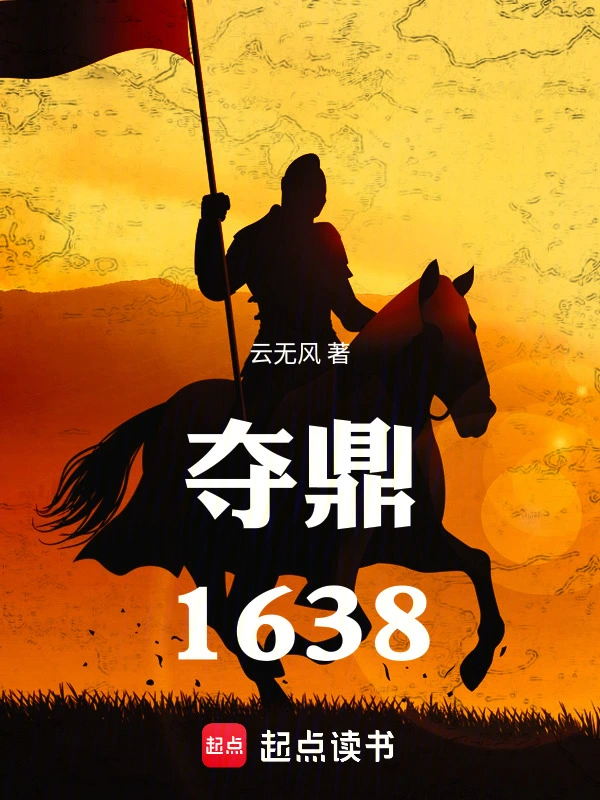
Winning the Ding: 1638
夺鼎:1638
- Status
- Completed
- Length
- 5.3M Words
- Genre
- Historical
- Audience
- Male
- Subgenre
- Alternate History
- Updated
- 4d ago
- Source
- Qidian
Stats
165Monthly votes
14.9kRecommends
32.7kFans
873Chapters
Tags
Synopsis
Reader comments
In booklists 2



History, Urban Shu Huang Miscellaneous Notes
I think I have some understanding of urban literature and historical literature, and the recommended books will also have characteristics that I think can be recommended. I am not afraid of being toxic, but I am afraid that they have no characteristics. When evaluating a book, it's not about finding faults, it's about balance, whether the advantages or disadvantages make up the majority. I will recommend books that I personally think have a large proportion of merits. Of course, every reader has
26Books49Follows1moUpdated

Online IQ, Reasonable Logic, Normal Outlook on Life
Both historical and fantasy novels have normal outlooks and online IQs.
34Books23Follows1yUpdated
Readers also read
 Red Mansion: Start Escaping and Farming from the Equipment Bar
 Fu Ming 1627
 After Lying in Bed for Three Years, He Was Forced to Help the Han Dynasty
 Northern Qi, Sage Khan
 Siheyuan: Start by Picking up Attributes
 Late Jin Dynasty: from Two-Legged Sheep to Human Emperor
 Taiping Heavenly Kingdom 1854
 Beastmaster: I Can See the Evolutionary Path
 Immortal Who Seizes the Body
 1848 Qing Dynasty Charcoal Burner
 Sun and Moon: Yongli 1656
 Entrepreneurship in the Late Tang Dynasty
 Daming Yuanfu
Indeed, at the end of the Ming Dynasty, you could either directly travel and become Emperor Nanming or Emperor Chongzhen, or you could simply rebel, in the name of Ming or Qing, but in fact you were still rebelling, and it was acceptable to fight for the world. To put it bluntly, those who wrote other historical novels as assistants were basically the ones being assisted. The person himself is so popular that even if the protagonist helps him, the readers will not feel humiliated or even feel proud to be involved. At the end of the Ming Dynasty, there were basically no such characters. Maybe those who really liked the Qing Dynasty might assist Huang Taiji, but the problem is that Huang Taiji did not live long after entering the customs.
Why couldn't the Ming army defeat the Qing army?
This is a very confusing topic. To be precise, it should be that in small and medium-sized battles (less than ten thousand people), the Ming and Qing sides were good at winning. In battles of more than ten thousand people, especially those that require the coordination of multiple theaters, the Ming army basically has no chance of winning. Why is this so?
In my personal opinion, Confucianism is a parasite. One dynasty eats it up and replaces it with another. Anyway, they have nothing to lose. What about the royal family, martial arts, and the glory and wealth that you should enjoy? 😁😁😁😁 Those are the people who are selfish and benefit themselves at the expense of others. The governance system does not function as well as them. They rely on history to manage the place and do not allow the descendants of government officials to participate in scientific examinations 😁😁😁
Like a book from more than ten years ago, from chapter title to content
A small comment. Regarding Li Zicheng and Zhang Xianzhong, there are too many plots written. There is no need to write too much about how they internally decided how to attack the city.
There were no good people in the late Ming Dynasty, Southern Ming Dynasty, and early Qing Dynasty. They were all beasts in human skins, except for Guizhou. No matter what moral etiquette or sage theory, regardless of its low morals, it is comparable to the Wuhu period and the Five Dynasties Rebellion. When a military leader kills a person, he draws his sword quickly, and when a gentry kills someone, he shows off his justice? . There are many diodes online now. History must be viewed dialectically. During this period of history, when comparing the Ming and Qing dynasties, no one is much better than the other. Compared with killing people, no one kills less than the other. Do you remember the three massacres in Jiading, the ten days in Yangzhou (the southern massacre in the Qing Dynasty), the massacre in the Central Plains, the refugees in Jingxiang, and the slave rebellion in Jiangnan (the northern massacre in the Ming Dynasty). Of course, I am speaking from the perspective of the head of Guizhou. If anyone wants to speak from the perspective of a gentry, please go away. In the period of peace, the gentry enjoyed themselves and emptied the foundation of the country. In times of trouble, refugees take responsibility and make accusations loudly. Sadly said: What does the country have to do with me? The so-called common man is responsible for the rise and fall of a country. How ridiculous it is to the refugees in this world! Sad? Die? This is shit! He sighed and said: Just begging for a living!
Zuo Mengeng's strategic layout for the whole country is too bad. You know that in history, the Qing army will inevitably attack the Shun army, and the Shun army is not an opponent at all. You have to send messengers to inform the Shun army that the Qing army will attack. This way the Shun army will be prepared. The end result is that both sides will lose. With the Qing army's combat power, the Shun army will still fail, but the Qing army will also suffer heavy losses, which will be beneficial to you in the future against the Qing army!
I always feel like I'm exerting myself a little too hard.
I feel that the more I write, the better, but there are still many hidden dangers in governance. For example, the failure to collect taxes in the late Ming Dynasty was because the gentry class group did not pay taxes. How could the gentry group pay taxes? The second is that Zuo Menggeng did not have children yet, which was a huge long-term hidden danger to the regime at that time and might lead to the disintegration of the regime in the future. It is recommended to marry more women, especially the eight beauties of Qinhuai in the late Ming Dynasty, such as Gu Hengbo, Kou Baimen, and Dong Xiaowan, who were not yet married at that time.
It's too naive to still think about saving Shandong. Zuo Zhen won't get any benefits. Now he should be thinking about getting Anhui, Huaiyang and other places. This is a mature politician, not like the Holy Mother! Historically, Zuo Menggeng wanted to occupy Nanjing, establish a puppet emperor, and establish a new dynasty.
The Zuo Army is such a powerful force, leading an army to the north. How many people want to curry favor with you? How many flattering people bribe huge amounts of money and sacrifice women just for a few resources or to make progress. In reality, I have seen that for a few resources, you have to live and die. Why are there no people in Nanjing, Yangzhou, and Huai'an who fawn over you?
It would be nice if the protagonist could come earlier, plan the situation in advance, and when the time comes, just kill indiscriminately, overthrow the old regime, and establish a new era.
There was also Dashun between the Ming and Qing Dynasties, don't forget him
Tens of thousands of people logged in in one night. How dare you imagine? How many people landed on the first day of the Normandy invasion, and it was still during the day
The paradoxes of the alternating era of hot and cold weapons are excerpted from "The Second Dynasty of the Late Ming Dynasty"
Now that firearms are on the rise, firearms will be the main force in killing enemies in the future. The more firearms there are, the fewer spearmen and sword and shield men there are to cover them. This also means that the cavalry will be vigorously developed for a long time. And it must be the traditional charging cavalry. And it is not the mounted archer cavalry, nor the musketeer revolving cavalry that emerged in Europe at this time. Rather, it is a pure cavalry charge. Firearms are so efficient in killing people. This forces everyone to choose this way. The best way to deal with cavalry is cavalry. In this era of alternating hot and cold weapons, it is the most difficult era and the most challenging era for generals. The dawn of a new era has emerged. The era of firearms is bound to come. However, the darkness before dawn is the darkest. Polish charging cavalry, Ottoman hot and cold mixed troops, and even Persian armored cavalry can still blast those troops that use pure firearms at this time. Including the servants of the Ming Dynasty, the old camp of the Chuang Army, and the Bagara of the Donglu, most of the firearms troops who can still fight are not recognized by the mother. Before the problems of flint guns and bayonets, fire rate and cost are solved, there will be only matchlock guns in the era of alternation of hot and cold weapons, and the logic of raising troops will be different. The flint gun is equipped with a bayonet and can be used to pull cannon fodder. Disaster victims are perfect manpower. In this era of alternating hot and cold weapons, ordinary people without three to five years of off-the-job training cannot defeat those professional samurai servants. For ordinary generals and officer corps, the command ability, pure flintlock, bayonet, is actually lower than the requirements in the alternating era of hot and cold, and can be copied. Famous generals and geniuses are the same in every era. In the era of alternation between hot and cold, if the dawn never breaks, then, to a certain extent, the correct solution is to use the military household soldiers of Ming Taizu, or even the Eight Banners soldiers of Donglu, or to regress to the Tang Dynasty soldiers. It can even be said that at this time, the small aristocrats who have returned to cold weapons, the off-the-job soldiers who brought their own land and tenants, and the tens of thousands of armed aristocratic soldiers like Mulan will be more capable in field battles than the pure firearms soldiers who are just hobbling. But now that the light before dawn has been seen, the travelers have no choice but to go on. Now, a single pure infantry battalion must coordinate musketeers, spearmen, and heavy infantry. You need to train spearmen, you need to train musketeers, you need to train heavy armored infantry, none of them can be missing. There is only one marching shooting. In order to solve the problems of the size of the matchlock gap, the burning of gunpowder on the soldiers due to open flames, and misplaced shooting during the march, people who died due to gunpowder being ignited by the matchlock during training had to be in their fifties or sixties to figure out the best gap and alternate drum beats. These are just filler lines. What is more needed is an elite field force with cold weapons to protect these premature babies in the new era through the most difficult first years of life. Cavalry is needed. Heavy armored soldiers are needed. Requires martial arts melee combatants. Without these, any radical army reformed into a phalanx system with six rows of deep arquebusiers and a firearm ratio of 70% to 80%... The field battle will be defeated. In fact, if we talk about the unit that most resembles the Agricultural Corps at this time, it is actually the Eastern Tatars. Heavy artillery, heavy armored infantry, heavy armored cavalry... These are all things that only a powerful farming empire can afford, but instead they were created by a group of fishermen and hunters. But the uprising troops of the farming people turned into nomadic regiments. Very black and helpless. Donglu is now attacking cities like Jinan and Kaifeng, and has summarized a complete set of experience in infantry and artillery coordination. After completing preparations such as trenching and blockade, a city like Kaifeng has enough heavy artillery. After the siege, the siege officially begins, and it usually takes three or four days to capture it. The city wall is very thick and cannot be blown down. But why bombard the city wall? If Donglu comes to attack, they will finish digging trenches to blockade them. The first step is to forcibly requisition the people, coats, etc., Weave wicker baskets, fill them with earth, and build forts. The wicker basket is filled with soil and can well buffer the shelling from the opposite side. The second step is to set up artillery positions and select a point on the battlements of the city wall, assuming it to be point B. The city wall cannot be blown open, but the battlements are very thin, and soldiers need the protection of the battlements on the city wall. Donglu will choose to gather heavy artillery, bombard point B, destroy the battlements, forcing the defenders to lose their foothold and disperse to both sides. At this time, select point A fifty feet away to the left, and select point C fifty feet away to the right. Destroy all the battlements from A to C so that the defenders cannot have cover on the city wall. The third step is to assemble heavy artillery and bombard point B. Block A and C. It is not necessary to blast open the city wall, but to break the bricks of the city wall into pieces so that the rammed earth inside breaks up and slides down, forming a sloping earth slope on the city wall instead of a vertical city wall. The artillery provides cover, the musketeers approach and shoot to suppress it, and the heavy armored infantry rushes to capture point B and ascend the city. End. From Songshan to Yangzhou and then to Guangzhou, the routine is almost the same: the artillery bombards the infantry and rushes forward. But now, the invading army is like a nomadic army. It lacks heavy armor, heavy cavalry, and heavy artillery. There is little that can be done against a big city like Kaifeng. In the age of firearms, nomadism could not defeat farming. Take the Battle of Tongguan as an example, which truly determined the fate of surrender and the rise of Tartars. Before the heavy artillery arrived, the Chuang army and Donglu stared at each other's camp, neither of them able to chew it down. After the heavy artillery arrived, the barracks of the intruders could no longer hold up, and a gap was quickly opened. No. 11 Blasted the gap. Under such circumstances, the Shun army was still able to use heavy armor against heavy armor, cavalry against cavalry, and counterattack with 300 heavy cavalry to block the gap. So much so that Nikan, Geng Zhongming, Shang Shan and others had to counteract the attack of the three hundred cavalry. At the same time, the Shunjun infantry can still flank and attack behind to cover the retreat of the main force. In the confrontation with cold weapons and heavy armor, the Chuang army relied on counterattacks to stabilize the situation. The Donglu did not pass the Shun army's camp until the next day. At that time, the main force of the Shun Army had already retreated in an organized manner without any great losses. This also corroborates the performance of the previous battle at Shanhaiguan where Guan Ning's army was basically defeated in one day. But because of this, it left a psychological shadow on Li Zicheng: if he defended the city, he would not be able to defend it under the heavy Tatar artillery. He wanted to fight mobile warfare, but sadly found that even the mobile march, which he was best at, could not outrun the Tatars. The next day Ma Shiyao wanted to learn from Meng Da, and the reason was the same as the reason why he assumed Kaifeng: as soon as the heavy artillery arrived, Tongguan could not hold it at all, and as soon as the field camp outside retreated, Ma Shiyao had no choice but to surrender if he wanted to succeed. Not just the Chuang army, even the Western army, Zhang Xianzhong was shot by an arrow and bled. Before the blood dried up, he commanded the troops to counterattack and defend, but still did not let the Donglu take advantage of the chaos to break into the camp. He did not bleed out until the situation was stabilized and died. The quality of its subordinate troops is very good. The heavy infantry and cavalry of the Chuang army will not be bad. Moreover, there were many generals in the Chuang Army who could command heavy infantry, heavy cavalry and other cold weapons. Li Dingguo was capable of fighting in the Western Army, but he could not defeat He Zhen, the Chuang Army. He Zhen was not the most capable fighter in the Chuang Camp. That's why Zuo Liangyu would chase Zhang Xianzhong and try his best not to fight Li Zicheng. He would run and slip away when he could. The problem is that times have changed. At first glance, it sounds like a scene from a fairy tale. The Nascent Soul's powerful nails and hair fall off into the mortal world and become magical weapons for practitioners. It seems that a 33-fold Kofilin cannon found on a shipwreck in Western Europe has greatly changed the shape of warfare, offensive and defensive models, and city defense systems in East Asia. Actually not. The overall cultivation levels of both sides are similar, but their ideas are different. Actually, this is another [because advanced, therefore backward], which is contrary to the Tao. Because the handmade textile industry is too advanced, the mechanical textile industry lags behind. Because the steam engine is too advanced, the internal combustion engine is lagging behind. Because the internal combustion engine is too advanced, the electric era lags behind. Because the technology for building city walls was too advanced, the ultra-thick model of rammed earth walls was adopted hundreds of years before the bastion era. Therefore, heavy artillery must fall behind. Because it was useless in the early days, it was not the stone masonry wall in Western Europe. As for the Nanjing City Wall built by Emperor Hongwu to a high height, with bricks wrapped in rammed earth, and a layer of rammed earth tens of meters behind, it would be useless if you asked Urban to bomb it until it exploded. If the main threat is nomads, how about building four oxen to pull heavy artillery that can travel ten miles a day to build wool felt tents? Or build a 130-pound Weiyuan cannon that can be carried on horseback for marching? The stone fortress greatly stimulated the development of high-pressure heavy artillery technology. Rammed earth walls and the threat of unarmored nomads will lead the development of firearms in the direction of low-pressure spray guns. High-caliber heavy artillery in front of rammed earth walls and nomads is completely inferior to using small-caliber spray killing mode. It is impossible to focus on this aspect in terms of technology. There may even be another way, which is easier and faster to develop in the early stage. When these two routes intersect at a certain threshold, a gap inevitably appears. Just like at a certain moment, the rolling steam train finally surpassed the carriage that could only flatter before.
The protagonist is proclaimed emperor, Zuo Yuliang even pursues the posthumous title of emperor, and some of his evil deeds are glorified.
Without further ado, I wish the new book a great sale and a huge sales volume!
The Daxi Army was able to fight back and forth with the Qing Army after just a few years of farming in Yunnan. This was because it relied on tens of thousands of troops who fought in the north and south, capable senior officials, and an environment that was not conducive to the Eight Banners. The protagonist only had such a team for 6 years in 1644. And we must also consider that when the Qing army is fighting with you from the front, Sun Ke hopes that they will go to Yunnan to develop, and when they have the strength, will they go out of Yunnan to occupy the surrounding areas? What the protagonist has to do is to find a suitable place that is good for defense and can provide stable resources. The Jiangnan area is definitely not suitable. They will still vote when the Qing army comes, and they will not pay taxes if you defeat them. The non-plain areas of Henan close to Hubei, the Hubei area, and the mountains of Zhejiang can be buffered by mountainous areas, and further back is the southwest area. It can be deployed in the Sichuan area, but its own strength is limited and it is impossible to be too dispersed. There can only be one main direction. After determining the stronghold, it is a step-by-step control. Scholars, Tong Sheng and others are recruited as grassroots officials. Veterans and disabled soldiers try to know Braille as much as possible and then arrange to control the grassroots force. They also need to continuously recruit troops according to training, fight bandits and weak peasant armies, and fight with strong peasant armies or Qing troops to improve their combat effectiveness step by step. It is difficult to really defeat the Qing army if you can stand firm. If you really have a clear advantage, can the peasant army and other Nanming armies watch you crush them? The protagonist should also get married and have children as soon as possible. He can let his son do many things in the future. It will be decades before the protagonist can really reach the north.
I'm going to ask the author a question
The protagonist plans to enter Henan during the great changes at the end of the 13th year of Chongzhen. He plans to wait until the Nanming Dynasty before choosing an independent side. This is a very serious route issue. If you choose the former, you will basically be replicating the path of Li Zicheng. However, this path is not impossible. Travelers have the vision of later generations and should be able to handle it better than Li Zicheng. As for the latter one, we can only watch the Manchus enter the customs. If possible, I personally choose the former. After all, if the Manchus can be blocked from the customs, who would be willing to put him in the customs?
How is this book? Hundreds of chapters and one hundred comments?
After winning the battle and returning to Nanjing, major reforms began. At this time, the Jiangnan gentry controlled 90% of the country's wealth and land, but only paid 10% of the tax. Four liters in one should be implemented to enjoy the cool weather. Of course, a threshold should be set for those with titles. For example, no tax should be paid on land below 1,000 acres, and tax should be paid on land above 1,000 acres.
Overall, it's a rare masterpiece.
It's just that my ears are a bit useless when listening to books. It would be great if a real-life audio book comes out one day.
I want to write 3 million words? Or a book from 2025? The others are not there yet. There are so many words, hundreds of thousands of words. Why is it so remote? I just found it, I have to try it to taste 😄
The author is great, write, write quickly for me
Hidden danger
The internal affairs of Da Chu are not small, especially the ethnic issues. The foundation is big, but there are also many foreign races. Emperor Zuo wants to be Li Shimin, but don't forget that Li Shimin has raised the technological and military capabilities of the foreign races to a very high level, leaving hidden dangers for the Anshi Rebellion. The author is still too leftist, dreaming of unity, not integrating the foreign races from all directions into the Han nationality and Han culture, and not moving the Han people to the real border. There will be great chaos in the future. The Chu sky has thousands of miles of territory, and there will be chaos within three generations. Overseas expansion should be launched, and at the same time, the areas under control should be given preferential treatment to Han people, so that foreign ethnic groups can actively integrate into the main ethnic group.
How many words are left to finish?
Author
Do all the novels you open have multiple female protagonists?
The story and logic are all online. Highly recommended by Qidian veteran bookworms
The story and logic are all online. Nowadays, the level of history book authors is getting higher and higher.
The skill of the author can be seen in the first chapter of some books. The writing style in the first chapter of this book is really eye-catching. It is no wonder that I have been digging through the garbage dumps in the historical district for so long. Recently, the historical district has almost become a garbage shelter. It really stinks.
Can you add a character? I can name it.
I want to add my name, but my long-cherished wish has been fulfilled. Can the author do it?