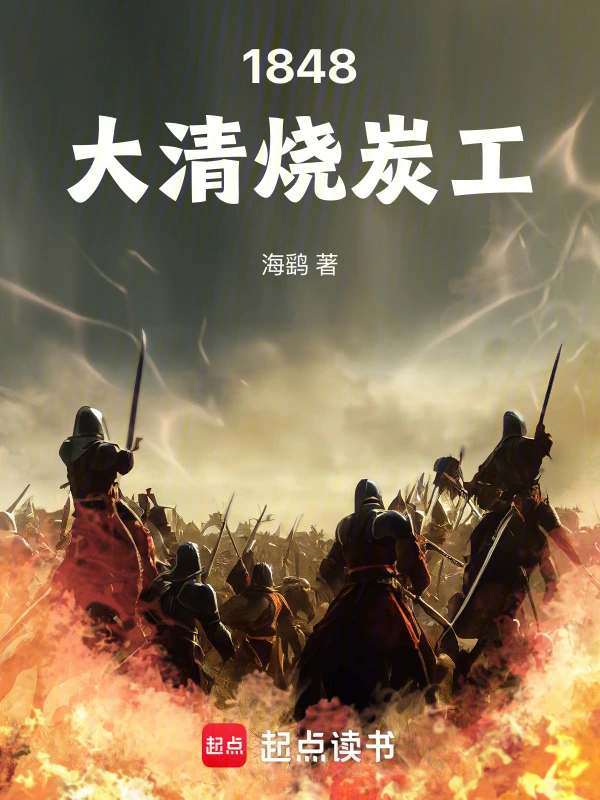
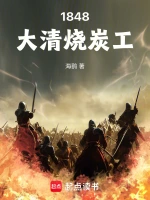
1848 Qing Dynasty Charcoal Burner
1848大清烧炭工
- Status
- Ongoing
- Length
- 2.9M Words
- Genre
- Historical
- Audience
- Male
- Subgenre
- Qing & Republican Era
- Updated
- 1d ago
- Source
- Qidian
Stats
Tags
Honours
Synopsis
Reader comments
In booklists 5

Historical Time Travel Novels of the Tang, Song, Yuan, Ming and Qing Dynasties
Historical novels that travel through the Tang, Song, Yuan, Ming and Qing dynasties
Book Relief Station!
The books in this list have been carefully selected, and many of them contain the author's life experiences. I don't like short stories. I read novels mainly to enrich my own experiences and see different worlds. Urban and historical novels test the author's life experience. Without rich experience, it is difficult to write flavorful novels! I have read hundreds of novels, and my future has been ruined by them. Now I have no desire or desire anymore! I also have unique insights into novels! Than

Recommended by a Fifteen-Year Old Bookworm
Can't go wrong with the recommendation
A List of Books for Dawdling (Including History, Fan Fiction, and Fairy Tales)
I really haven't seen any good books recently. After all, many books on the book list are being updated (the books on the book list are basically read and put up one after another). I will read some of the inventory first and then look for new books. Because I have basically read them all, they have a strong personal touch ~ and my tastes are always changing, so the book list is still very confusing🤔 I hope you can bear with me (although maybe not many people read my book list) Thank you for th



My Starting Point Private Collection
There are no trending searches here, just treasures that I have read word by word and truly loved. Each book is carefully selected and prepared for you who also love stories. May we meet here and share a wonderful journey. This book list is a serialized book, and the completed book@complete book list
Readers also read
 Northern Qi, Sage Khan
 Gou Served as Sima Under Dong Zhuo
 Red Mansion: Start Escaping and Farming from the Equipment Bar
 After Lying in Bed for Three Years, He Was Forced to Help the Han Dynasty
 Everyone Is Responsible
 Taiping Heavenly Kingdom 1854
 I Am a Great Power
 Ming Black Sail
 Looking North to the Country
 Entrepreneurship in the Late Tang Dynasty
 The Wind Rises in North America 1625
 The Wind Rises 1898: Becoming a Warlord from Nanyang
There are still three years left, I'm so anxious, why do I have to go to the God Worshiping Meeting? The leaders of the Taiping Heavenly Kingdom don't have much. Hong Xiuquan, Yang Xiuqing, what they did in Tianjing is unspeakable, and the good situation is all lost.
Jumping to watch
Looking at the latest chapter, the author's operation is simply abstract. The protagonist has not completely unified Hubei and Hunan, and does not even have a navy. He just wants to immigrate to the west coast of North America and compete with the old United States for territory. Damn it, I'm numb! The euphemistic name is to ease the domestic contradiction between man and land. I was literally poisoned. There are also magical readers who gave the author an analysis: A few million immigrants can be immigrated in a year, and tens of millions can be immigrated in a few years. With an organization with protagonists, the immigrants can establish a country on the west coast of North America! What a special sleeping dragon and phoenix chick!
Writing historical time travel novels after the 18th century should change the world's demographic structure, otherwise it would be meaningless. The whole world should undergo population structure adjustment in the style of vacating cages and replacing birds. Exchange the populations of the Korean Peninsula, Japanese Islands, Indochina Peninsula, and Nanyang Islands with each other, and then immigrate Chinese to these places respectively, so that Chinese people account for more than 50%, and other systems of the population each account for about 10%. Ten million Chinese immigrants occupied the Indus and Ganges plains. In more than 200 years, the population of China will be more than 400 million. Immigrate 5 million Chinese people to occupy the black soil belt of the Eastern European plains. In more than 200 years, there will be more than 200 million Chinese people. Immigrate 5 million Chinese people to the Central Valley and coastal areas of western North America. In more than 200 years, there will be more than 200 million Chinese people, and an independent Chinese country in North America will be established. Immigrated 2 million Chinese people to the southeastern plains and Pampas of South America. Two million Chinese immigrants occupied Dhofar, Oman and the highlands of Yemen, the most fertile areas in the Arabian Peninsula.
Anyway, I think it is far-fetched to clear the land in 4 cities with tens of thousands of soldiers. Even if the land is cleared, it is not enough to compromise with the small landowners, and the pace is deliberately slowed down. The only place that really cleared the land was Jiangxia, and it was because the Taiping Heavenly Kingdom had taken everyone away, which meant that the protagonist didn't do anything to divide the money.
It would be unwise to break up with Britain and France now
At that time, Britain and France were strong. Author, you are only a small political power. You are so tough with Britain and France, and you still show your trump cards. You do not sincerely recognize all the unequal treaties signed by Britain and France with the Manchus. You are also facing counterattacks from the armed forces of the Han landlords and the Manchus. The more you win, the more you occupy. The more territory you have, the more the British and French are afraid of you being in power. For their own benefit, they will provide guns, cannons, money, and arm the Qing. After the Hunan Army has obtained the equipment, its combat effectiveness is no longer weak. When it is weak, treaties can be negotiated and compromises can be made. Britain and France can allow them to build shopping malls, build consulates, and garrison troops in Wuhan. Yes, but the number of people needs to be discussed. They can bring you merchants when they come, and merchants can bring you what you need. It is unrealistic for you to rely on the United States to get what you need. Britain and France have an entrance to the sea, but the United States cannot enter the Yangtze River. And after you occupy coastal cities like this, how will you be attacked by their navy? , Even if you don't develop for ten years, you won't be able to develop a decent navy. It's useless to rely on forts alone, and you can't build forts everywhere. Moreover, you have to trade with the West. In the world system at that time, you couldn't get around Britain and France. Doing this now is just a temporary pleasure, and you are not a mature politician.
The strategy is in a mess. They don't even control the South. They just want to reach out to North America. It's inexplicable.
The Taiping Army took the leading role in the south of the Yangtze River and directly occupied Annan, Guangdong and Guangxi. It happened that they were in front of them and resisted a wave of Qing troops. It took more than ten years to develop elite troops. After all, the late Qing Dynasty still relied on foreign guns, cannons and ships. Guangxi had soldiers, Guangdong had money, and Annan had food.
The author is extremely tolerant of coating, which makes me sick.
1. As the title says, what are Jianggou, Zhanggou, Xianggou and other high-end coatings? Most of these coatings died decently. Let alone these things, I think Lin should be killed. 2. The development of the plot is always suppressed, and the development of the protagonist is limited by the lack of scholars who manage the team and do not want to be polluted. Military control can use you to separatize the entire south. When you have the strength to change the world, you will find that every scholar is the loyal talent you need. You only need an efficient system. 3. I see that your heart is about to jump out of your chest if you want to accept Shisanxing. You seem to have a sneaky and tolerant attitude toward Baoyi. The big landowners and rich people will ask you to use their skins to free up resources for the meritorious deeds of the group below you, okay? It would be nice to include the one written by the shopkeeper. Do you want to include thirteen lines? Nausea
Finished reading Chapter 400
I have finished reading 400 chapters. Overall, it is a very good novel. It is a smooth read and all the choices are relatively reasonable. Except for the initial strategy, which is a bit lagging, the author has also changed it. Compared with the surface L4 author, 300 comments, it feels like it is beyond my expectations. Maybe the author is slow to update, and the protagonist's development is relatively stable, which leads to a slow pace and it seems a bit watery. If I read through chapter 400 directly, I feel that it is okay, but I will have to learn more 😁. A small suggestion is to post more maps of the protagonist's sphere of influence and battles, especially in the early stages and after the occupation of Wuchang. I feel that the author should have his own map. Many distances and so on feel like they are real. For this kind of farming development and military battles, it will look much better to have a matching map.
I don't know who started the bad thing. In the past, the most Qing Dynasty stories in the past were all about destroying the Qing Dynasty and starting a world war in one or two hundred chapters. But now it's so good that even seven or eight hundred chapters can't destroy a single Qing Dynasty. I don't know if they all learned it from that author.
I thought I found a good book, but fortunately I read the comment section. Two million words haven't unified China yet? It's too procrastinating. It's time to unify China long ago. Then it's time to play with Europe + Southeast Asia. Then write another 2 million words. The author is not strong enough.
Completely unable to grasp the key points, it is a mess without any strategy It does not write about going south to Guangdong and Guangxi, it does not write about marching westward to Yunnan, Guizhou and Sichuan, it does not write about the construction of the internal political system, it does not write about the cement factory or Japan that cannot be conquered by eight poles.
It took so long to write about Guangzhou, but how many years will it take to unify the whole country? The global struggle for hegemony will be written for a few more years🤔🤔🤔
Wuchang vigorously develops trade with foreign countries. This is not very realistic. It does not describe the attitudes of Hong and Yang of the Taiping Rebellion at all. Will they allow these goods to pass downstream? Do you need to collect taxes? Will you withhold these things privately? They had already been robbed by the Taiping Army downstream. Historically, Hong and Yang opposed the development of trade with them and only bought some arms. If you do this, you are basically the protagonist!
You are so cool. You are a small warlord who just occupied Hubei and Hunan. Why are you talking about France and Japan every day? You have just developed to grab land and exports to the sea. You have stopped subscribing for half a month. Let's see how long you will continue to be cool.
The Jurchens are really servile. After being conquered by the Aisin Gioro Buryat people, they gave you the humiliating title of "slaves". You still regard this insulting title as a treasure. The Wanyan Jurchens of the Jin Dynasty called their Jurchen compatriots "beloved people", and nobles were called "officials". Why, you Jurchens now regard thieves as your fathers and Buryats as your ancestors!
I have read the last five chapters, and they are all a mess. How can I put it? Comment on, the first 300 chapters of this book are really well written. 300 to 400 sheets is fine, but when it reaches 500 sheets, it will be all water. What could have been expressed in a few simple sentences with just one signature had to be 4,000 to 5,000 words. I even wonder if the author used AI to expand writing. AI expansion has a characteristic, that is, a few simple sentences and a paragraph of content can write a long article. But if you take a closer look, it doesn't feel like it. The water is nothing special anyway.
What I like most about this book
1. The logic is reasonable, and it is a cool article, but it is not mindless. Unlike some novels, which have reached Singapore within a few years of development, beating the British and French to pieces 2. The protagonist is a staunch revolutionary who will never tolerate the Manchus. Stay, I like this the most. I don't want to think about some novels. Oh, I'll go. The protagonist, Holy Mother Heart, thinks it's not good to kill the Manchus and bannermen, so they let them go. There are also some novels where the royalists are secretly developing for the Manchu officials in name, but in fact they are the dogs of the Manchus🐶. 3. The protagonist's development strategy is extremely correct. He bases himself on Wuchang, moves steadily, conquers Hunan and Guangdong, and establishes equal diplomatic relations with the United States and France. Business is also a joint venture. Unlike some novels, he goes to Guangdong and Zhejiang to become a comprador, and follows Chiang Kai-shek's example, relying on gentry and merchants to make a fortune. They provide money, and the protagonist is an official. 4. The protagonist's civil service team is extremely well-constructed. He will never directly let the Manchu captives and surrendered officials become officials. Only good ones will be used, and there will be an inspection period. Take it step by step. No matter what official you were before, you have to start from a young age. The protagonist would rather be short-term than blindly expand the territory. The officers only use good literati and those trained by themselves, unlike some novels, "Oh, let me go", where the Manchu officials surrender and directly make them high-ranking officials, euphemistically known as showing their magnanimity. Some novels use a large number of Manchu officials for the protagonist. The protagonist promotes new learning, and oh, they all stand up to oppose it, and the protagonist has to kill people to shock him. 5. The protagonist is decisive in killing, not sloppy, and knows who is the enemy or friend. Unlike some novels, the protagonist has to look at the face of the landlords and businessmen when they want to divide the land in their own territory. They invite the protagonist to dinner, and the protagonist has to give face to the other party's maid.
The author's strategic plan is simply a mess. It has not even been fully integrated within the Taiping Heavenly Kingdom. He also spends so much space considering intervening in foreign affairs. The world has not yet been unified. What is the use of doing these things? Do you plan to let Manqing in the book take a breath and delay it for a longer time? Can you continue to make money with hydrology?
The rhythm is hopelessly messed up In the early stage, I didn't write about marching into Guangdong, Guangxi, Yunnan, Guizhou, and Sichuan, and about Japan, the United States, and France. Now let's start writing. Then I started to grind on things that were mentioned in a few sentences in Thirteen Lines. It's endless. How does Thirteen Lines negotiate with foreigners? What does it have to do with the main plot? Also, at this stage, the protagonist's business has just started, and even the separatist regime has not been formed. The advantage is still with the Manchu and Qing Dynasties. As time goes by, the weapons, equipment and organization of the Manchu and Qing Dynasties will definitely improve. Time is not actually with the protagonist. If you continue to work hard and do not expand the territory to establish an absolute strategic advantage, and the weapons, equipment and organization of the Manchu and Qing Dynasties improve, what will you do? Also, the transformation of the establishment and establishment into a modern model is too fast and too simple, and the political structure and grassroots construction are completely lacking.
I feel that there is a shortcoming in the middle of this book, which is that it does not distinguish between priorities and priorities.
When the number of words reaches about 1 million, I feel that the article cannot grasp the key points. It is not that establishing various trades with foreign powers, intrigues with foreign forces, and bringing Japan into the sphere of influence should not be written, but the main contradiction now is that it is currently in the early and middle stages of anti-Qing Dynasty (as of now, the Qing court still controls Although the protagonist's army has various advantages in training, organization, and equipment, its power is less than two provinces). The main part of the article should be devoted to expanding the territorial scope, and a small part should be written about basic industry, the establishment of institutional framework, and the changing of the masses' customs. Nowadays, it is more appropriate to write large-scale descriptions of foreign trade and the like after the protagonist controls at least half of the country. In short, the main contradiction at this stage is that after establishing an army that is relatively backward in organization, equipment, and training, the Qing government should quickly expand its territory and influence when it has less than two provinces. Instead of going to Japan to engage in trouble and trade with the great powers. I haven't subscribed to the recent articles, so I'm waiting for the next one.
It's too watery, and it gets waterier the further you go. Let me give you an example. I received a letter from a relative. What follows is not about what the letter says, but a chapter and a half that revolves around the background and origin of the letter, the background of the person involved in the letter, interspersed with a lot of other random and irrelevant nonsense. Then the readers almost forgot about this letter. Well, it appeared after a chapter and a half, and it was explained in two or three sentences. This letter was also a trivial matter. Really, I don't recommend subscribing. I spent about 100 yuan, and the 500 and 400 chapters are just water. You might as well write more about the difference between the lives of ordinary people, the lives of soldiers in the Qing Dynasty, and the lives of the protagonists. Or your achievements in domestic and foreign affairs, or the reactions of various classes under the Qing rule, etc. I have written 600 chapters, but I have not seen such descriptions. They are all water. It's really outrageous.
As text
The writing gets worse, the writing gets worse, the writing becomes more repetitive, and as others have said, South China has basically fallen and has an independent and separatist regime like the protagonist (it is actually already a country)! The Qing Dynasty cannot even defeat a few thousand foreigners. Even if you look down on the protagonist, the protagonist still has hundreds of thousands of troops with hot weapons. Why do you think you can defeat them by going south? Not to mention the other kings, holy shit, shouldn't the top priority of the Manchu Qing Dynasty now be to quickly transfer the center and prepare to return to the three eastern provinces! Also, the book written by the author follows history and will not be significantly changed. I would like to ask, in the current situation, the northerners are all stupid. The powerful people see that the Qing Dynasty is in ruins, so they still remain obedient people? Do you really think that the people in the north who are being exploited are very honest? In your book, the Manchus and the Qing Dynasty have been losing battles, and the north has not responded at all. It has already turned against them.
I stopped reading when I saw Chapter 493. The routine of just raising troops is still being written. It's completely in the water. The same routine. I didn't read it later. I know whether there are dozens of chapters in Guangdong, dozens of chapters in Guangxi, and then Guizhou, Yunnan, Sichuan, Jiangxi, Zhejiang, Fujian, all the way up. Brother, after you capture Changsha, you directly attack the army, and then leave the new soldiers to guard Chuxiang. There are also the Dongwang and Yiwang who are dissatisfied allies. If you directly raise troops to Beijing, who can stop you? What can I use to stop you? How many people can block you? I can't stop you at all. Okay, Li Zicheng moved into Beijing three months after he finished the Ming Dynasty's last mobile combat force. Could you be slower than him? It's still the same thing as when you first came out of the mountain. Fight in one city. You don't want to trick me into subscribing more. Sorry, I won't watch anymore.
I found that neither the Qing Dynasty nor the whole world would be shocked or frightened in this book.
So far, the protagonist has captured all four provinces of Hunan, Hubei, Guangdong, and Jiangxi, half of Guangxi, and Henan has occupied Nanyang, the gateway. There is a granary in the world and a gateway to the outside world. At this time, the Manchu and Qing court does not care about it. Not to mention that the other Taiping kings have occupied most of Jiangsu, most of Anhui, and half of Zhejiang. Basically, all the most precious land in the world has been lost. How can the Manchu and Qing court still hold on at this time?
Indeed, it should have entered the stage of spreading the word. The Manchu slave chiefs were watching in the capital one by one, and they were helpless. Only the Eight Banners armed forces were kicked to death.
The Manchu Qing Dynasty basically existed in name only, and only Shandong, Zhili, Shanxi, and Henan provinces remained.
The remaining territory of the Qing Dynasty looks large, but only a little is actually useful. Jiangxi, Fujian, and Zhejiang have lost contact with Beijing. Jiangxi is surrounded by enemies on three sides, and part of it is still occupied. Fujian needs to be on guard against the protagonist, Zhejiang has Feng Yunshan. Yungui and Sichuan belong to the protagonist. Shaanxi, Gansu, and Ningxia had already mobilized a lot of troops, but there were no more available. Moreover, the northwest was not stable and poor. The Northeast's population and economy were also very low at this time, and it was impossible to help the Manchus too much. In fact, only Shandong, Zhili, Henan, and most of Shanxi were left in the Qing Dynasty, and the troops in Henan could not move because they had to guard against the protagonist army in Nanyang.
The book is very good, but the update is too slow. It is best to update it twice. To be more precise, this is the number one book lover.
It's too temperamental. I'll make up for it chapter by chapter. What else is there to say? I'll give you the monthly pass.
Chapter 400, the general sphere of influence of Peng Gang's tribe
Homemade, Yichang and Lizhou forgot whether they were occupied or not