


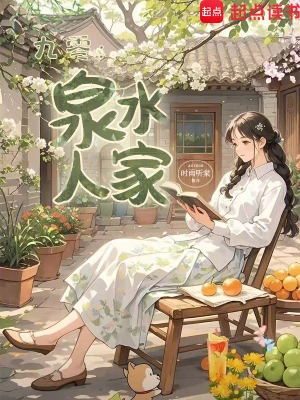
The Springwater Family in the 1990S
九零:泉水人家
- Status
- Completed
- Length
- 1.0M Words
- Genre
- Modern Romance
- Subgenre
- Urban Life
- Updated
- 7mo ago
- Source
- Qidian
Stats
305Chapters
0Votes
124.8kRecs
628.6kFans
Tags
Synopsis
More by this author
In booklists 1

Readers also read
 Reborn as a Down-and-Out Country Bride
 Spiritual Qi Revival: My Plants Can Transform
 The Princess Consort Returns to the Modern World
 Reborn: A Rural Family's Comeback Plan
 Reborn in the 1980S: My Younger Husband Won't Leave Me Alone
 A Good-for-Nothing Cultivator Contracts an Ancestral Dragon from the Start
 Lu Fengshi
 After Receiving Texts from the Future, Becoming a Hundred-Billionaire Makes Perfect Sense
 After Seeing the On-Screen Comments, the White Lotus Junior Sister Leaves the Whole Sect in Tears
 Defying the Rain
 As Prices Plummet Worldwide, I Return and Help My Whole Family Thrive!
 The Villainous Female Is Trapped in a Beast World Harem
 Reborn, the Darling Refuses to Play Small, and the Chaste Crown Prince Can’t Stop Spoiling Her
Reader comments 50
Google Translate
Beautiful view of South Taihang Highway 1
The Taihang Mountain self-driving journey passes through Shanxi and Henan provinces. The scenery is picturesque and worth seeing
The dream of the city of springs inside and outside the book: a real-life pilgrimage to Jinan for fans of "Ninety Springs"
As a loyal reader of "Nine Zero Spring Water Family", when I stepped into Jinan on October 31, 2025, I felt that I was not traveling, but traveling into the chapters of the novel. 1. Spring water: from "the lifeline in words" to "the rushing heartbeat before your eyes" In the novel, the spring water in front of the protagonist's house is the "biological clock" for carrying water in the morning and the "background sound" for enjoying the coolness in the evening. When I saw the three streams of water in Baotu Spring churning vigorously (Picture 1, Picture 4), and the head of the Black Tiger Spring spraying beads and splashing jade (Picture 1), I realized that the author's "spring water is the pulse of Jinan" was by no means an exaggeration - the force of the splashing water was the energy with which the old Jinan people lived! Even the inconspicuous small spring eye in the alley (Picture 3, Picture 10), the green algae and swimming fish floating on the water are exactly the same as the scene in the novel where "the protagonist squats by the spring watching the fish and thinking about his thoughts". It seems that the character in the book can be seen walking out of the corner in the next second. 2. Streets and alleys: from "the fireworks stage in the chapter" to "the real studio at your feet" The bluestone roads and gray brick old houses in the novel are the stages where the protagonists get into trouble, grow up, and chat. Walking on Qushuiting Street (Pictures 7 and 8), I always feel that my next step will step on the "footprints left by the protagonist and his friends when chasing" in the novel; aren't those old walls covered with red, yellow and green vines (Picture 2) the "grandma's courtyard wall" in the book? There are also the liveliness of Furong Street (Picture 6), the mottled marks on the old buildings, and even the pony graffiti in front of the teahouse (Picture 7), all of which look like the author wrote based on real scenes - this is not a fictional street, it is clearly a "real scene" of the scene in the novel! 3. People: From "character portraits in the book" to "mirror of life before our eyes" The neighbors in the novel include the nagging Aunt Zhang and Uncle Li who can cook spring water banquets. In real life, on the streets of Jinan, old people doing morning exercises (picture 6), women washing clothes by the water, and even young people riding bicycles all have the same look as the characters in the book - the calmness and enthusiasm infiltrated by the spring water, which makes people want to go up and ask: "Do you also know XX in the book?" As a reader of "Nine Zero Spring Water People", a trip to Jinan is not "seeing the scenery", but "looking for Easter eggs". Every spring, every street, every passerby is a "plot foreshadowing" laid by the author, waiting for us book fans to unlock it one by one. It can only be said that the author Shi Yu Tingtang must have made tea with spring water in Jinan to write such a vivid "Nine Zero Spring Water Family".
It may not be the fastest-paced sweet pet article, but it is the most "flavorful" type - the coolness of the moat water, the wheat aroma of the pot cake, the redness of the pomegranate flowers, and the wind of the courtyard are all engraved into the reader's memory along with the text. _ If you miss the purity of the 1990s and want to see love that is "not sweet for the sake of sweetness"; if you love the fireworks of urban life and want to meet a heroine in a novel who is "as real as the girl next door", then "Ninety-Nine: Spring Water Family" is worth reading. It tells us in the simplest way: the best affection is always hidden in time, hidden in the persistence of "I have gone through five years of ups and downs, just to hold your hand again."
The beautiful scenery of South Taihang Highway 1 (3)
One word, beauty
The beautiful scenery of South Taihang Highway 1 (2)
At the junction of Shanxi and Henan, Hongni Waterfall, Xiaohukou Waterfall, and Slate Town are all free attractions and beautiful
Spring people's childhood memories
I once wrote about the past in the south of the city, and there was always an inexplicable tranquility in my heart, untainted by dust. Old stories in the south of the city, flowers falling after picking up the pen, stories about the small town, who is dreaming about? , I grew up in Quancheng. I still remember swimming in Wangfu Pond (Zhuoying Spring) when I was a child. When I was a child, it was like "every house had whitewashed walls and every house had hanging poplar trees." Wangfu Pond (Zhuoying Spring) is connected to Furong Street to the north and Qushuiting Street to the south. Qushuiting Street is connected to the South Gate of Daming Lake to the south. Baihuazhou and Pearl Spring Group are nearby. Wangfu Pond is also adjacent to the Jinan Fuxue Confucian Temple. Most of the streets are paved with bluestone slabs, and are lined with old courtyard houses. Spring water flows through the alleys, and weeping willows gently brush the river banks, which perfectly presents the characteristics of the spring city of "clear spring stone flowing upstream". Willows are shady, lotus flowers are in full bloom, and the winding path leads to a secluded place where you can play in the water. The lotus rhymes in Canglang are fragrant, and the breeze blows in Zhugang. It is in response to the scenery of Jinan, a spring city, with "lotus flowers on four sides and willows on three sides, one city with mountains and half a city with lakes". ,, Spring is born in Jinan and spring is prosperous in Jinan. People in Quancheng love to drink spring water. For Quancheng people, the most important thing in the morning is to "get spring water". In the morning, a bunch of people ride bicycles and carry empty buckets to "get spring water". When I was a child, I often got up early in the morning to go to Heihu Spring with my family to fetch water and go home to make tea soup or sweet foam and eat it with fried spinach (in the 1990s, people in Jinan usually ate sweet foam and fried spinach for breakfast. Sweet foam was originally called "Tianmo'er", which is corn paste porridge added to it. Order vermicelli, vegetables, peanuts, tofu and the like. Later, people refined it into "sweet foam" based on its homophonic pronunciation. Youxuan is crispy on the outside, tender on the inside, and fragrant with green onions. Because it is shaped like a spiral and has an oily and golden surface, it is named Youxuan.) When it gets hot in the summer, I go to Wangfu Pond (Zhuoying Spring) to swim and play in the water and have water fights with my friends. Sometimes I go to Baihuazhou or Daming Lake to find lotus pods. But because I swim in the water, my family often takes me home to have a meal of fried pork with bamboo poles! Quanshengcheng, the author starts from the old courtyard of Quancheng, and tells a story about a Quanshui family from the heroine falling into the moat and rescuing people, which brought me back to the Quancheng of my childhood unknowingly. It makes me miss the scene of my childhood stepping on the bluestone with my bare feet and having fun in the spring water in the courtyard of the courtyard.
Siheyuan in old Jinan
I think of the courtyard houses in Jinan back then. It was a place where spring water flowed into the house for a comfortable life, with clear springs and rocks flowing up, and the smell of fireworks in the world
The novel depicts the urban life and Quancheng culture of old Jinan in a delicate way, from the morning market fireworks in the moat to the filial piety of the parents in the courtyard, from the documentary shooting of Quanshui people to Shandong express books, stand-up comedy and other folk elements, everything is filled with strong local characteristics and the flavor of the times. Lin Xiyu's growth line is particularly prominent. She grew from an orphaned girl to an independent and self-reliant woman. She not only changed her destiny through the college entrance examination, but also showed tenacity and wisdom in documentary shooting, and finally realized her self-worth in career and love. Gu Bin's family background and family conflicts add tension to the story. His transformation from a rebellious boy to a mature entrepreneur echoes Lin Xiyu's growth. The characters in the book are vivid and vivid, whether it is the grandma who speaks out for justice, the honest and simple uncle, or the shrewd and sophisticated neighbors, they are all vividly portrayed, showing the life of ordinary families in the 1990s. Through the delicate description of family, friendship, and love, the author explores social issues such as intergenerational conflicts and class differences, and at the same time conveys an optimistic and courageous attitude towards life.
From Hero to Candidate: Comment on the Dramatic Tension and Character Arcs in the Second Chapter of "Nine Zero: Spring Water Family" The success of the opening chapter of a novel lies in the fact that it builds a stable gravitational field that firmly attracts the reader; and the second chapter that follows determines whether this gravitational field can continue to strengthen and even form an inextricable narrative vortex. The second chapter of "Fountain People", "Television Reporter", perfectly inherits the momentum of the first chapter and completes a subtle narrative turn: it throws a heroic feat derived from instinct into a secular context full of rules and reality. Through a sudden school conflict, it greatly deepens the character creation, expands the social dimension of the story, and lays multiple foreshadowings for future plot development. 1. The drama of scene switching: the "embarrassment" of the hero and the "coldness" of the rules The end of the first chapter is fixed on the scene of the hero rescuing people by the river. According to the conventional thinking, the next step may be to accept praise or a direct interview with the media. However, the author chose a scene with a strong sense of contrast and real life - the entrance to the college entrance examination room. This scene change is a stroke of genius. · The gap from high-profile to daily life: Lin Xiyu had just come from the moral high ground of sacrificing herself to save others. She still carried the water of the moat and the aura of a hero, but she was instantly blocked by a cold school gate and an unkind invigilator. This rapid change of identity scenes creates strong dramatic tension. She is no longer the savior in the spotlight, but just an ordinary, anxious examinee who is about to be late. This kind of embarrassing situation of "hero in distress" is far more likely to arouse readers' empathy and concern than letting her directly accept the praise. · The collision of two value systems: The school gate is a very symbolic symbol here. It represents rules, order and an important pass in life (the college entrance examination). The invigilator is the enforcer of this set of rules. His categorical refusal of "being disheveled is even more displeasing" and "cannot go in" represents the cold and unshakable side of the real world. As a result, a heroic narrative of "rescuing people" and a rule narrative of "punctuality" collide head-on at this moment. Lin Xiyu's "anxiety" and the teacher's "displeasure" are the manifestations of the temporary inability to reconcile these two values. This collision makes the story go beyond simple good people and good deeds, and touches on deeper social issues: When individual good deeds conflict with collective rules, how should we weigh them? Can an individual's heroic act become a privilege that exceeds the rules? The author does not give simple answers, but throws questions to the readers through this conflict, adding to the speculative color of the story. 2. Deepening of the character: from "action hero" to "three-dimensional mortal" In the first chapter, we got to know Lin Xiyu's "bravery" through action; and in the second chapter, through her situation, reaction and interaction, we saw a richer side of her character, and the character image thus changed from flat to three-dimensional. · Her anxiety and clumsy excuse: "Teacher, let me in, I didn't mean to be late... I saved two people in the river on the way here." This defense is full of childishness and truthfulness of students. Instead of being arrogant, she tried to convince with facts, and even in desperation, told a truth that sounded "outrageous" to the teacher. This shows her instinctive reaction when facing authority as a student, and also hints at her inexperienced and inarticulate side, making her heroic behavior more pure-her saving people is not for any reward, so that she seems so feeble when she needs "self-proof". · Her stress reaction and "cuteness": When faced with the sudden camera lens, her reaction was "Oh, I'll go... She was so shocked that she trembled again and reflexively jumped two meters away." This detail is extremely brilliant. It uses language that is full of cyber sense but still true to depict the panic and cuteness of an ordinary girl when she suddenly becomes the center of attention. This is in sharp contrast to her calm and bravery in rescuing people in the water, making the image of Lin Xiyu instantly full of flesh and blood. She is not a symbolic hero, but a young girl with flesh and blood, who is afraid of the camera and makes exaggerated reactions. · Her politeness and gratitude: Even in the midst of her own anxiety, when faced with the reporter who came to her rescue, her first reaction was still "thank you." This stroke may seem insignificant, but it well preserves the character's kindness and gives all her actions the unity of character. 3. The wonderful use of functional roles: the narrative role of the invigilator and reporters Although the several supporting characters in this chapter are not much mentioned, they all assume important narrative functions and have distinctive images. · Invigilator: A slight arc from "villain" to "mortal". The teacher's initial image is rigid and inhumane, almost appearing as Lin Xiyu's "opposite". However, the author does not characterize him. When the TV reporter revealed his identity, his "tone softened obviously" and he "straightened his back" in front of the camera and opened the school gate with righteous words. This transformation is extremely real. It reveals that the teacher is not malicious but loyal to his duties; at the same time, he cannot ignore the pressure of public opinion and the authority of facts brought by the media. His transformation not only confirmed the authenticity of the rescue incident, but also reflected the public's trust and awe in the authoritative media (TV). ·TV reporter: As a "rescuer" and "witness". The reporter's appearance is a key turning point in the plot. They are not only Lin Xiyu's "timely rain", but also assume multiple functions: 1. Plot promoter: They use irrefutable video evidence to instantly resolve the deadlock and promote plot development. 2. Recorder of the times: The setting of "Jinan TV Station Quanshui Renjia Program Group" is full of regional characteristics and media characteristics of the 1990s, which enhances the reality of the story. 3. Humor adjuster: The female reporter's joking "It's almost time to catch Nezha's Hot Wheels" and the cameraman's amused laughter injected a touch of lightness and humor into the tense narrative atmosphere and adjusted the rhythm. 4. Those who foreshadowed the future: Their cameras recorded not only the fact of rescuing people, but also Lin Xiyu's "horrifying little expression". This lays the groundwork for potential chain reactions that follow-up reports may trigger, whether in schools, families, or wider society. 4. The authenticity of details and the vitality of language This chapter continues the high level of the first chapter in the description of details and the use of language, and has made some progress. · Realistic sense of details: "Hold the handlebars and push the bicycle out of the door crack", "Reflexively bounce out two meters away", "The cameraman carrying the camera"... These actions and scene descriptions are very specific and visual, as if scenes are flashing before the reader's eyes. ·Vividness of language: The narrative language maintains fluency and calmness. What's more worth mentioning is that the author began to skillfully incorporate language that is more personal and life-like. For example, Lin Xiyu's inner "little heart trembles" and the reporter's metaphor of "Nezha's Hot Wheels" all make the text more vivid and down-to-earth while maintaining its literary nature. 5. Chapter significance and future prospects in connection with the previous chapter To sum up, the chapter "TV Reporter" is an almost perfect transition chapter. It succeeded in: · Taking over the life-saving incident in Chapter 1 and giving a reasonable "follow-up". · It deepens the image of the protagonist and makes him grow from a brave symbol to a three-dimensional, lovely "person" with weaknesses. · Introducing a new force (media) and expanding the social stage of the story. · A wealth of suspense is laid: How will the material shot by the reporter be reported? What impact will the report have on Lin Xiyu's college entrance examination and life? Will her story with the rescued mother and son continue? How will she behave in the examination room? All this makes readers full of expectations for the subsequent story. Lin Xiyu's life has obviously deviated from its original peaceful track because of this rescue operation. What she climbed over was not only the guardrail of the moat, but also the boundary of her ordinary life. The world behind the boundary is waiting for the author to reveal it to us one by one. This chapter proves that a good story requires not only a grand opening, but also subsequent chapters that can cleverly transform and upgrade the energy of the opening. The second chapter of "Spring Water Family" undoubtedly achieves this.
Some emotions under the changing times
As a key node in China's transformation from a planned economy to a market economy, the 1990s carries special cultural significance. "Ninety: Spring Water Family" keenly captures the social texture of this historical transition period. The book contains not only the last afterglow of the food stamp system before it is about to withdraw from the stage of history, but also the restlessness of the self-employed economy that is beginning to emerge; not only the remaining planned economy thinking in the work unit compound, but also the impact on values brought by the wave of overseas business. This mixture of old and new constituted the unique cultural temperament of the 1990s. The author does not simply romanticize that era into a utopia, but honestly shows the pain and confusion of the transition period - when the traditional value system begins to loosen, and when interpersonal relationships are gradually penetrated by profit calculations, people are both excited about the arrival of new opportunities, but also fearful about the disintegration of the old order. This complex emotional resonance is the key to the work transcending the surface of nostalgia and touching the essence of the times.