


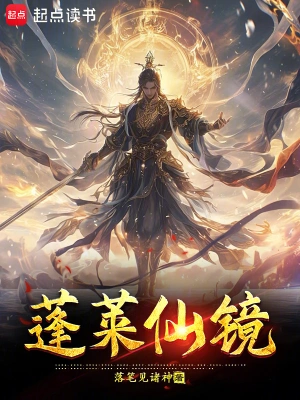
Penglai Immortal Mirror
蓬莱仙镜
- Status
- Ongoing
- Length
- 1.3M Words
- Genre
- Xianxia Romance
- Subgenre
- Classical Xianxia
- Updated
- 1d ago
- Source
- Qidian
Stats
546Chapters
35Votes
90.7kRecs
77.7kFans
Tags
Synopsis
More by this author
In booklists 1


Readers also read
 Everyone Ascended to Immortality, but I Missed the Ride
 Reborn to Cultivate Immortality as Cannon Fodder
 Painting Spring Breeze
 A Cannon-Fodder She-Demon in Journey to the West
 A Good-for-Nothing Cultivator Contracts an Ancestral Dragon from the Start
 Wasteland: The Three-Star Sanxingdui Toddler Is Overpowered
 Lu Fengshi
 Reborn in the 1980S: My Younger Husband Won't Leave Me Alone
 Midas Touch
 After Seeing the On-Screen Comments, the White Lotus Junior Sister Leaves the Whole Sect in Tears
 After Receiving Texts from the Future, Becoming a Hundred-Billionaire Makes Perfect Sense
 Defying the Rain
Reader comments 43
Google Translate
666
Qidian. Com's number one war criminal in July, is it said that men's posts have already begun to attack women's posts?
Reading review of "Penglai Immortal Mirror":
The first 53 chapters of this book have an amazing ability to persuade them to quit. The first three chapters can basically persuade 40% of readers to quit. Many readers were so poisoned by the protagonist Li Yuanqing's early heart of the Holy Mother that they could not continue to read the part about the world of cultivating immortals, plus some explanatory tapes about meeting the gods after writing. He has a typical literary youth style, and he has been criticized for it. In this case, there are only two kinds of people who can persist in reading "Penglai Immortal Mirror": either they are persevering history buffs, or they are attracted by some exaggerated plots in the first chapter, so here is a reading guide. First of all, some comments said that the plot in the early stage was dull and the pit was dug too deep. In fact, the dull plot is not the poisonous point. The pit is dug without filling the preface and the follow-up. A book that is so awesome when it first comes out often cannot last for three hundred chapters. Writing out the gradual growth of the protagonist and writing it well will test the author's level. The author of "Seeing the Gods" should be a growth-oriented and talented author. His ambitions are great. Compared with traditional writing, "The Legend of Mortal Cultivation of Immortality" by Xian, and "The Lord of Mysteries" by Cthulhu + Victoria. The most eye-catching thing about "Penglai Immortal Mirror" is its multi-layered worldview structure that is nested and mirrored with each other. It follows a huge system of Eastern Cultivation of Immortality + Western Fantasy + Historical Reality. The first world is history. The teahouse chat at the beginning, child labor in the weaving mill, official corruption, and the court game between Yu Qian and Liu Haoran are like a picture of "The Ming Dynasty 1566". This is not a simple background board, but the "spiritual origin" of the entire novel. It sets a tone: how power alienates people and how the system swallows up ideals. The second level of the world is about cultivating immortals. The three-chain surveillance of the Immortal Sword Sect, the infighting among the elders over the spoils, and the bloody battles in the Shura Field of Chu-Han City. How can this be about cultivating immortals? It is clearly a metaphor for the bloody combination of feudal patriarchal system and early capitalism. Immortal cultivators are no longer detached immortals, but ruthless capitalists in the battle for resources. The third world is faith. The discrimination of the demon hunters in Saint Luo Kingdom, the seven tests of the Knights of Mercy, the satire of the Pope on April Fool's Day in Luo Kingdom, and the bloody and tearful accusations of indulgences with clear price tags. These plots directly point to the corruption and class oppression of the Western medieval church, and form a wonderful echo with the Ming Dynasty. If there are new volumes in the future, the fourth layer of the world will continue to be added. These three worlds are not separated, but are connected into a whole through the adventures of the teleportation circle Li Yuanqing, and ultimately point to a theme: No matter which world you are in, the bottom layer is the price, and the combination of power and capital is the eternal background. And the writing style of "Seeing the Gods" is sophisticated and restrained, and is especially good at conveying information with details: for example, Liu Haoran's psychological description when he received the ham and gold, which vividly portrays the ambivalence of the intellectuals who were first involved in corruption, and the details of Jian Hu Bu Shi's pruning of Thuja bonsai before his death. There is great emotional tension in the calmness. These places show that the author has a clear understanding of how to write. The character creation aspect of "Seeing the Gods": The protagonist Li Yuanqing is an untimely sober person. This is a rare type of protagonist in online novels in recent years. Although he has a golden finger, he does not rely on the system or the time-travel bonus. His growth is painful and passive. From the benevolence, justice, etiquette, wisdom and trust taught by his grandfather, to the narrow escape from death after being miscalculated, to the unwavering sword pot of his master to protect him, every upgrade of his comes with a huge price. His kindness is not the Virgin Mary, but his stubbornness to do it despite knowing that it cannot be done, and this is precisely the most touching thing about him. Of course, returning to the previous poisonous point, in fact, the power struggle in the court line in the first volume of "The Past of the Ming Dynasty" is extremely exciting, and it can even be said that it is not inferior to being a stand-alone book. But starting from the second volume, this line is almost completely abandoned, which will make readers who are familiar with the first volume feel like they are chasing the wrong drama. If the author can explain the theme of the Chaotang line clearly in the future, it will be better to at least let the readers understand the intention of writing this way. So, what does this novel want to say? I think the core answer is: know it's impossible and do it! Grandfather Li Huaiqi knew that he would be demoted, but still opened a warehouse to stock up on food; Master Jianhu did not move, knowing that he would die, but still used the blood sacrifice pyrotechnic to protect Li Yuanqing; Knight Bethern knew that he was no match for the Dragon King, but still stood in front of his daughter, and finally evolved into a mercy knight before his death; Li Yuanqing knew that he could not go back to the Ming Dynasty, but he still refused to give up again and again... These moments of "knowing that you can't do something but doing it" constitute the most touching background of this novel. Conclusion: A masterpiece worth reading "Penglai Immortal Mirror" is not suitable for the following readers: readers who pursue a sense of pleasure every second, and readers who cannot accept the protagonist's long-term aggrievedness. But it is highly recommended to the following readers: readers who like "Sword Comes"-style philosophical texts, readers who are interested in the collision of Eastern and Western religions, history, and culture, readers who hope to see ideological aspects in online articles, readers who can accept tragedy and appreciate the spirit of "knowing that something cannot be done, but doing it". Finally, I would like to conclude by borrowing a sentence from the novel: "Yu thought that there were drowned people in the world, so he drowned himself; Ji thought that there were hungry people in the world, so he starved himself." In this era of entertainment to death, there are still people who are willing to use millions of words to write about the death and rebirth of idealism. This in itself is a thing worthy of respect.
I declare that the protagonist Li Yuanqing is really the most decisive in the Qidian novel (actually on the contrary, the protagonist Li Yuanqing is really miserable and never wants to kill innocent people indiscriminately.)
Help, Li Yuanqing's situation in this book made me scratch my head, and I suspected that the author was deliberately torturing the protagonist.
Although Su Xiaoshuang deceived him, if he revealed the affair between Su Xiaoshuang and Mr. Hu, then everyone would know that he was tricked, but that would personally shatter his obsession with being a "gentleman" who cannot speak ill of others behind their backs, which would be equivalent to exchanging his own grievances for sympathy; if he didn't say anything, readers across the platform would label him a scumbag, but he had kept the bottom line of "not being a villain" in his heart. So in this most subtle dilemma of human nature, how do you choose between moral and self-consistent dilemmas? Should you directly reveal the truth about Miss Su and Mr. Hu, or should you remain silent and resist the scapegoat, being candid and honest?
Thanks for editing the big protagonist picture
Li Yuanqing
Damn, let me take care of it
The Nordic gods have been guarding against foreign enemies such as Hela and Jormungandr for a lifetime and did nothing to them. In the end, it was not Ragnarok in the prophecy that finally shattered their mythological system, but the Vikings' own leader Olaf II? In order to promote the Catholic faith, he destroyed the statues of Odin Thor in towns and cities, and was later canonized as Saint Olaf, a Catholic saint? In other words, the Vikings themselves directly promoted the foundation of Asgard's faith from within?
Excellent story control ability! The novels I have read before were either about Eastern immortality, or pure Western fantasy such as "The Lord of Mysteries", "The Coiling Dragon" and "Let the Witch Go", but this work can seamlessly blend Eastern and Western elements. Especially because of the integration of religious background stories in this Western fantasy, the accuracy of the control is even better than that of many authors who are deeply involved in Western fantasy, and it is even more refined in the depiction of Eastern intrigues. The court politics and the rise and fall of the family are nested in layers. It is more sophisticated than many old works focusing on Eastern themes. What's particularly rare is that this novel is always based on Eastern culture, and Western elements are just the icing on the cake. This creative layout with clear priorities must be highly praised! I hope you will continue to work hard and look forward to the subsequent majestic plot!
Already rewarded 150,000 points. Come on.
Little fat dog
Little Fat Dog
How dare you buy so much without a platinum contract 😡