


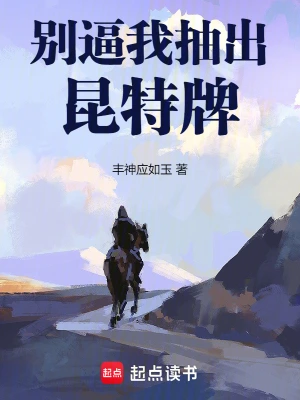
Don't Make Me Draw My Gwent Cards
别逼我抽出昆特牌
- Status
- Ongoing
- Length
- 1.9M Words
- Genre
- Western Fantasy
- Subgenre
- Sword & Sorcery
- Updated
- 2d ago
- Source
- Qidian
Stats
436Chapters
144Votes
22.4kRecs
73kFans
Tags
Honours
Synopsis
More by this author
Readers also read
 Why Is This Knight's Holy Light Red?
 The Sword Saint Begins by Mastering Specialties
 With Full Charm, He Was Won by the Countess That Night
 Adventurer: Seriously Dependent on Dragons
 The Adventurers Have Arrived
 A Monk's Journey Through a Fantasy World
 The Priest Is Ferocious
 I Have a Quest Log
 Being a Sorcerer Isn't Easy, So Don't Be Picky About Magic
 Living in a World of Swords and Magic
 An Odd-World Merchant, Starting with a Curse
 I Have a Die of Fate
Reader comments 40
Google Translate
Discuss what I personally think are the current problems with this book.
After reading the dragon-slaying plot in the latest chapter (Chapter 253~255), I feel that the hierarchy of this book is a bit unbalanced and not as rigorous as before. Problem 1: Imbalance of the level system The protagonist starts out as a knight squire who has inspired several bloodline nodes. After a large number of chapters and experience in life-and-death battles, he activates his bloodline in the plot of hunting the poisonous mist dragon, and uses his bloodline ability [Riptide] to shoot a fatal arrow, establishing the victory of that fierce battle (Chapter 88). Later, I spent a lot of time learning magic knowledge from Lao Shitou, and used the energy to analyze magic one after another with the same energy as sprinting for the college entrance examination before traveling through time. Only then was I promoted to sect mage during the episode where my cousin was kidnapped (Chapter 174). Then he deliberately suppressed the source of his power for half a month, and was promoted to the second-level Bronze Helmet Knight in the episode where Sylvia inspired her bloodline (Chapter 232). Finally in Chapter 253, Marlowe drank the Moon Power Potion + the full set of enhancements from the Animal Musician, and his strength directly soared to the third level Ginza Knight. After activating the [Riptide] ability, his strength was able to soar to the fifth level Ginza Knight. In Chapter 237, the second-level Bronze Helmet Knight (median bloodline) + the first-level gate mage + the body of a demon hunter + bloodline transformation, the power of a full-strength hammer is equal to the ceiling of the fifth-level Ginza Knight. It is undeniable that the author's writing style is indeed excellent, but the boundary with the power of the hierarchical system is too blurred. If you look back, you will find that many places cannot withstand scrutiny. Now that I have carefully considered the previous plot, I just want to make a complaint: Is Ginza Knight the villain of the third block? The threshold of power boundaries is so loose that individuals can come and go at will. The protagonist has not yet been promoted to Ginza Knight, but the Ginza Knight's skills have been completed. The world view of this book is not the kind of peaceful and casual daily novel. The hierarchy system is a very important logical cornerstone in the plot. The plug-ins of becoming a demon hunter and holding a Gwent card album only provide two more routes to strengthen strength than the natives of this world. Being invincible at the same level is very reasonable, but it is nonsense to increase the strength by being able to cross large levels at will. (Using the metaphor of the level system of fantasy novels, it is equivalent to the protagonist on the second level of the Qi training stage. After his cultivation is increased through elixirs and secret techniques, he can reach the completion of the foundation building stage) Question 2: The protagonist's level is suppressed so much that when the plot reaches its climax, the difference between the protagonist's level and the level of the boss at the end of the level is too large, causing the level system imbalance problem of Problem 1 (Chapter 253). As a fantasy novel, the protagonist's strength growth is an important part of the plot. Warm daily scenes should be placed after the battle plot to relieve the tension and excitement brought by the battle plot to the readers. The author can appropriately increase the proportion of one party in the plot according to his own comfort zone. However, the daily segments of this book account for at least 70 to 80%. As a price, Marlowe's own strength has hardly improved as the plot progresses, but the boss at the end of the level will still arrive as the plot progresses. To be honest, although the author's writing style is very good, I still feel that the plot of the green dragon leading the monsters to invade human territory, and the final plot of Marlow slaying the dragon is very, very abrupt. The feeling was like a sunny morning. Marlow stretched out comfortably on the bed, opened the door to go out and bask in the sun, only to find a green dragon blocking the door of his house. As soon as he saw Marlow, he came with a Mamba Iron Elbow, and then Marlow turned on the Wind Spirit Moon Shadow with his backhand and killed the green dragon with one blow. The Green Dragon is at least as good as the Ginza Knight, and I remember it was mentioned in the article, because the dragon has a very high race value, and at the same level, its actual combat power is two levels stronger than other races. In my imagination, the green dragon led the monsters to invade the human territory. It should have been severely injured by the combined fire of the three noble families of Green Bay City, and then retreated injured. Finally, it was tracked to the lair by the sickle-tailed dragon controlled by Marlowe, and then taken away with the finishing blow of Azul's thunderbolt. The three noble families in Green Bay City repelled the green dragon and received reputational benefits. Marlowe secretly killed the dragon and received material benefits (although monsters killed by Azul's lightning technique have a penalty of reduced loot drops) If you want to write about Marlowe's dragon slaying scene, Marlowe's level must be at least the ninth level Bronze Helmet Knight. He is only one step away from the Ginza Knight. Drinking the power of the moon After the Torrent Potion, he briefly crossed the major ranks to reach the level of the first-level Ginza Knight. Then the Animal Musician increased Marlowe's attribute values based on the first-level Ginza Knight, and finally reached the level of the third-level Ginza Knight. Finally, Marlowe activated the bloodline ability [Riptide], and his source power briefly reached the level of the fifth-level Ginza Knight. It is more reasonable to then cooperate with [Infallible Spear] and other Gwent cards to kill the green dragon. Moreover, the life-and-death fight with the green dragon may even be an opportunity for Marlowe to be promoted to the Ginza Knight. In order to use the pressure of the life-and-death fight with the green dragon to break through the level bottleneck, Marlowe will never use Azul's lightning technique to 'cheat' until the critical moment of life and death. Question 3: As the protagonist, Marlowe has a big problem. He has no sense of urgency in improving his own strength, and his sense of security and confidence come almost entirely from the Gwent card album. After Marlowe became a knight and a wizard, he was almost in a state of half-lying and half-fishing, beating his cousin when he had nothing to do. In the ocean of magical knowledge, the only few actual battles were of a sparring nature. It was no longer like stimulating the blood of knights, honing his practical skills and stimulating the growth of strength in life-and-death fights. I think the Adventurer's Guild should occupy a very important position in the plot. Between the plots of killing the black-scaled snake and the green dragon, there should actually be several plots in which Marlow accepts the commission to defeat the monsters, and then upgrades in the process of defeating the monsters (starting a demon-hunting journey with your dog and Gwent card). Because Marlowe did not have a sufficient foundation of strength, many subsequent plots were handled very far-fetched. As a cautious protagonist, after Marlowe has taken care of the security of his family (hiring bronze-helmeted knights to guard him, transferring some elite soldiers from Baron Kelar, subduing Kingsley, and installing the Gwent [Portal] space anchor at home), he should take precautions and improve his strength (risk resistance) before encountering emergencies. In the scene where Sylvia wants to inspire her bloodline and become a knight, Marlowe should actually take her out to practice instead of being beaten at home to inspire her bloodline. Marlowe has Gwent, so he should be more relaxed. After careful consideration, I feel that the author has castrated at least two to three hundred chapters of the protagonist's strength growth before fighting the two end bosses of the black scale snake and the green dragon. Finally, I sincerely offer some suggestions to the author. Suggestion 1: Polish the level system of this book. The essence of suppressing combat power is not to make the protagonist's growth slow like a snail, but to clearly define the power gap between each large level and small level. Suggestion 2: Open two single chapters in the column related to the work. One single chapter introduces how many smaller ranks there are under the big rank of the Bronze Helmet Knight, and how many small ranks there are under the big rank of the Ginza Knight. What are the qualitative differences between the two ranks. In another single chapter, let's write about how many Gwent cards the protagonist Marlow currently has in his hand. Calculated into this world's level system, the strength of the summoned creatures of each Gwent card is equivalent to several levels of Bronze Helmet Knights or several levels of Ginza Knights. Suggestion 3: Use vertical comparisons with caution and make good use of horizontal comparisons I found that there are many plots in the previous plots that show a significant increase in strength. Such plots with a significant increase in strength will make the hierarchy of this book very loose. For plots that require the use of potions and equipment to enhance one's own strength, the span of strength increase should be appropriately controlled. For example, the strength of an 8th to 9th level Bronze Helmet Knight can reach the level of a 1st to 2nd level Ginza Knight after the strength is enhanced by potions or equipment. A level 1 to level 2 Ginza Knight can reach levels of level 5 to 6 through potions or equipment. This does not mean that plots that increase strength through external forces cannot be written, but the span of strength growth must be properly controlled and not so abnormal. The second-level Bronze Helmet Knight turns into a third-level Ginza Knight in the blink of an eye. You might as well just open the Wind Spirit Moon Shadow. Making good use of horizontal comparison is to use the extraordinary person of the same level without wearing equipment as a reference object after putting on equipment. For example, after putting on a piece of armor, it is said that the armor's defensive power is almost the best at the same level. Only the attacks of high-level bloodlines that specialize in attack power can cause wear and tear to this armor. Other extraordinary people of the same level, whether they are high-level bloodlines or mid-level bloodlines, will not lose durability when their attacks hit this armor. Such a horizontal comparison will not damage the hierarchy of this book. Isn't it much better than a vertical description like "After putting on this armor, the wearer's strength will skyrocket to several levels of Ginza Knights?" Suggestion 4: Let go of the suppression of the protagonist's level and arrange more plots for the protagonist's strength growth. Actually, I think the author's ability in this aspect really needs to be improved. Before defeating the end boss, some plots should be arranged for the protagonist to upgrade, so that the protagonist's level is as close as possible to the end boss. This is a very basic operation. Although some routines are cliché, they contain the golden principle of writing, so they can last forever. Suggestion 5: The protagonist's plug-in is used to become invincible at the same level + to kill powerful enemies across smaller levels. Nowadays, Marlowe relies too much on Gwent and has neglected the improvement of his own strength to a large extent. The plug-in that was originally used as seasoning turned into a lethal amount of MSG, which actually changed the flavor of this story. I think Gwent should be an extension of the protagonist's arm. For example, when monsters are attacking a city, relatively weak summoned creatures can be arranged to cooperate with friendly forces to support the front line. These summoned creatures that are not afraid of death can do many dangerous tasks and avoid the casualties of their own teammates to a great extent. Stronger cards can support the protagonist in defeating the boss at the end of the level. I think this is the proper use of Gwent. The growth and experience of the protagonist are the essence of the story. I like to see Marlowe use his own power to solve most problems. The existence of Gwent cards is to assist Marlowe, allowing him to handle one thing more thoroughly and do it more perfectly. The current plot is a bit overwhelming. The protagonist Marlowe has become a real-time strategy game player with a flat body and a weak body. This is not called the protagonist, this is just a self-propelled humanoid stand for the Gwent album (´థ౪థ)σ Suggestion 6: Open a free single chapter with a simple "woof" sentence. It is difficult to change the previous content. Open a free single chapter to correct the current combat power of the characters and balance the level system. I have always found it strange that the Ginza Knights, as a high rank, are constantly surpassed by the Bronze Helmet Knights below. The author should polish the level system.
Comparable to Helena
Just watch, I will take the blame for posting pictures!
Everything else is good, but don't use some plot details to write sensational stories. It would be better for a 30-year-old soul who is too sensational to just say that he has forgotten his age before time travel, and there is no sense of violation.
Brother, I always felt something was weird after reading it at the end. I thought about it for a moment and figured it out. I have discussed the characters and behaviors you wrote. The protagonist you wrote is in his 30s, but his style of dealing with things is definitely not 30. It is too fake. Will you feel like a family member to a stranger you have never met? There is something else in the article There are several. At the age of 30, you will only feel gratitude towards strangers instead of family affection. You may even stay away from them at all times. You are afraid that others will find out that you are different from your predecessor. Within a few days of reincarnation, you will treat others as family members. No matter how good they are to you, they are also good to your predecessor. I know they will think that you have completed your predecessor. Last wish, but more people will think that you are seizing the body. The protagonist is as if he has never been in society. He has a feeling of bringing school life into society, just like a college student thinking about the scenes of himself going out into society and talking and communicating with others. He takes things for granted everywhere, and his conversations with women are too romantic. After the romance, I still want to talk about sex, but all I see is the boredom of young people. I would like to ask, do you not have a girlfriend, or are you pursuing someone? As someone who has been there, I tell you that going straight to the point is always better than being fancy. If you can't do it alone, just change someone else. In the end, you are the one who gets hurt.
Very high threshold
The threshold for this novel is so high, you actually need to be literate 😏
The novel seems to be a bit niche, and it may be a bit difficult for those who don't like Western fantasy or don't understand the Witcher series, but it is still quite creative and has a sense of anticipation for what cards are drawn. When I liked playing Honor of Kings two years ago, I was wondering if anyone would write a novel like this. The male protagonist travels to a world of immortality or fantasy. The golden finger is to extract the skills of the Hero of Honor every few months or when certain conditions are met. Unfortunately, I haven't seen it. The King has passed its peak period.
The protagonist is very childish, which was originally a good thing and suited this story, but the author doesn't know why. He repeatedly emphasized that the protagonist is in his 30s, and the advantage of childishness turned into a disadvantage.
It was originally written normally, and the character was just right, but if I had to add an advanced age buff, the character would become awkward.
The pace is a little faster. I'm not talking about the plot, but about Gwent and the training system. Now the protagonist's Gwent cards have come out at all levels, but they are very weak and can beat ordinary people, but they are powerless every time they encounter extraordinary beings; there is also a training system, which has 180,000 words of magic. In addition to the original small flame, he has learned a rope spell, and has not even entered the magic system. The knight has never practiced at all except the original first node.
Okay. How about a game of Gwent? (≧▽≦)
Are you playing cards (≧▽≦) Saonian
My evaluation is that it belongs to children's educational literature as a whole. The writing, stories and characters reveal an innocent sense of morality.