


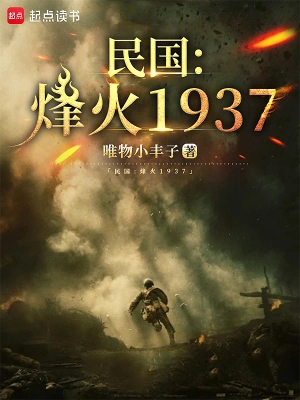
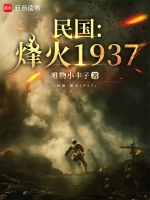
Republican Era: Flames of War, 1937
民国:烽火1937
- Status
- Ongoing
- Length
- 4.4M Words
- Genre
- Military
- Subgenre
- War of Resistance
- Updated
- 1d ago
- Source
- Qidian
Stats
Tags
Honours
Synopsis
More by this author
In booklists 10

Qidian Reading List
Poetry and books are a pleasure in quiet moments, and the scenery outside is lovely when the rain comes. Here you'll find the best books of all kinds on Qidian, and a list-maker who never tires of recommending good reads.
Writing Is King
Collecting stories with good writing. Stories with fresh plots get priority. I also love stories with wild premises, so feel free to recommend books.

I Was Once a Guest Beneath Luoyang's Blossoms
I put this list together in my spare time to recommend some good books I've read. Fellow readers, feel free to suggest more. As a rule, I don't recommend books under 500,000 words. I won't start a story that's too short, since waiting is the most painful part. I'm pretty selective. I'll definitely check out anything you recommend, but whether it makes the list depends on its quality. After all, I haven't even added my own books to the list _(눈_눈」∠)_ Lastly, I read both male- and female-oriented
A Little of Everything
A personal corner for someone who reads all kinds of fan fiction

An Interesting Reading List
Books I’ve read whose prose, style, and creativity I really enjoy. This list is just my personal taste.

A Reading Diet for an Endangered Veteran Reader
My personal favorites: historical fiction, science fiction, urban rebirth, unconventional themes, and fan fiction.
Qidian Reading List
A reading list
My Reading History
A shelf of solid reads and better

My Reading List
I list the books I've read and enjoyed.
History, Modern Life, Games, and Fantasy; Laughs, Passion, Grit, and Humanity
2017.07.25: 2,000 followers. My selection criteria: 1. The views on life and human nature align with mine; 2. The writing flows well, and the characters are vivid and distinctive; 3. The book once set the trend; 4. It has earned mainstream recognition, such as strong print sales or a film or TV adaptation. Of course, most important of all, it has to be my kind of book. Sometimes a book suddenly disappears, reminding me that in the end, I'm just an insignificant speck.
Readers also read
 1950: Starting with the Seventh Reinforcement Company
 1958: Serving the Nation Through Aviation
 Espionage: This Agent Is a Little Improper
 Starting Out as an American Military Contractor
 Simultaneous Transmigration: Is Everyone Starting Out in Prison?
 My Years in the Northeast Anti-Japanese United Army
 Republican Era: Ace Pilot
 A Great Industrial Nation, Starting with a Fake Student Abroad
 A Dual Status Panel Descends into the Abyss, and the Assassin's Potion Is Right at the Entrance
 A Nobody in the Far East
 War of Resistance: Starting with the Battle of Changde
 War of Resistance: Restoring the Nation
 Pacifying the Han
Reader comments 61
Google Translate
The author's quality far exceeded my expectations
I thought it was another anti-Japanese anti-Japanese article from the military channel, but I didn't expect it to be so well written. The various xxx stories about bright swords really left me with a psychological shadow.
Looking at it from the back, it's good. It depicts a scene where a unit in the national military system has to live and die constantly. The frontal battlefield is so cruel, and it is necessary. Without the flesh and blood of two million casualties, there would be no chance of guerrilla warfare, and no chance of receiving the treatment of the Wuchang. The war of resistance is really difficult. There are command aspects, technical aspects, weapons and tactical literacy, and many aspects of morale. Why can hundreds of thousands of people come and go when fighting head-on, but once they retreat, many are hunted down and killed?
I have read a lot of novels about the Republic of China and the Anti-Japanese War. This one can be called a masterpiece of "Born to Death" in the online literary world. The author knows where the red line is and will not run away to Shaanxi just writing about it. We all also know that the ending will be there, one day in 1945. Now I just want to see how the author arranges for the protagonist to make a reasonable exit. The last attack is hit by the last bullet. If the arrangement is reasonable, this is simply a perfect ending. This is a military simulation novel full of desire for survival.
It's very normal for this kind of book to be sealed. The hat of historical nihilism is just right
I just watched it, why is the main character called this name? Bamboo Ishiki, 🐷shi, also looks a bit like a Japanese name.
Let's talk about Chiang Kai-shek. He liked to read the family letters of Zeng Wenzhenggong, who was Zeng Guofan. Ministers of the late Qing Dynasty liked to write letters to their families, containing some words of admonition and some great and upright words, and then let people spread them out to gain fame. Chiang Kai-shek liked this kind of thing, which shows the level and character of this person.
The book is a good book, the writing is online, and it describes the Republic of China before and after the All-out Anti-Japanese War very well. But (I also hate this word), as a native, Pig's Foot is unsystematic (in fact, I don't like it either), and he is still a small staff member of the Guo Army. How can he change the situation and save the world? I think it's hard for the author to be imaginative. After all, the Sino-Japanese War at that time was a war between a backward agricultural country and an industrial country. The gap between China and Japan is all-round, but in the final analysis it is the gap between productivity. If the industrial capabilities of China and Japan are similar, I think it is impossible for the small book to occupy most of China in more than a year at the beginning of the war. So I read this book with a very tangled mood. On the one hand, it is a good book, but on the other hand, I feel that it is difficult to write new ideas, because no matter how powerful a pig's trotter is, can it be more powerful than a once-in-five-hundred-year genius like a teacher?
There are too many debuffs in the national government and it is impossible to play without cheating!
The big warlords in the country are piggybacking on the smaller warlords, and the big domestic factions are piggybacking on the smaller factions. Although Japan is an industrial country, it is also a poor imperialist country. Japan also needs to have both land and sea. Leaving the eastern region, without the support of maritime railways and roads, the combat effectiveness and equipment of the Japanese army are not large enough to ignore the numerical advantage. However, after the 412 Qing Dynasty, the grassroots organizations of GM Dang no longer had the ability to mobilize. To be fair, if some idiot hadn't lost the fortress and the government had no time to prepare, Wuhan could still be defended. Japan would have been unable to defeat it in the later stage. If it had not gone south to seize the colonies of Britain, France and the United States, Japan would not have been able to mobilize all the resources.
Spark
The writing is quite good. I read Jinling Thirteen Hairpins the night before yesterday, and suddenly I wanted to read books about the Anti-Japanese War. All the old books have been sealed, and it is rare to see one that is still being written. The better books about this kind of subject are spy wars, and there are very few books about large army operations. Don't be afraid, I will order them all to support you.
Seeing the author describing the battles of large corps reminded me of a book I read many years ago
I once read a book called "Speculators of the Republic of China" in which the protagonist is named Zhuang Jihua. The author also wrote about the anti-Japanese war by describing the great battlefields, but the author wrote at the time when enrollment in Huangpu was just established. He entered the first phase of Huangpu, fought in the Northern Expedition, and had good relations with people from both the Kuomintang and the Communist Party. He later presided over the construction of Sichuan, and at the same time, he served as the commander of some theaters during the war. The writing is really good. There are political struggles, farm construction, and spy wars. The author also uses large corps to fight to present readers with a magnificent and tragic anti-Japanese scene. That book was written very early, about 10 years ago, but I think it was well written, so much so that I can still remember some details in the book.