


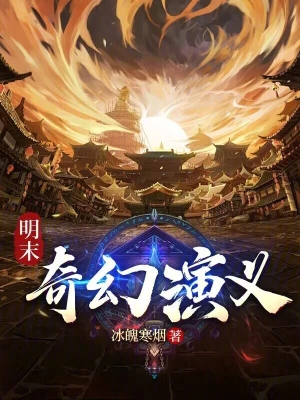
A Fantasy Epic of the Late Ming
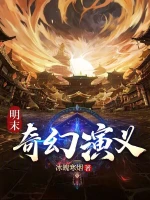
明末奇幻演义
- Status
- Completed
- Length
- 781k Words
- Genre
- Historical
- Subgenre
- Song-Yuan-Ming Dynasties
- Updated
- 1y ago
- Source
- Qidian
Stats
Tags
Synopsis
In booklists 30
Explore more →

New Sprouts Recommended
Reviews and recommendations for recent new releases
Daily Novel Picks
A daily selection of novels. Click in for a surprise
Books With Great Plots
Good books await discovery. Please bookmark this list
Heartwarming Qidian Reads
Fans of anime and manga themes, don’t miss this

Great Reads From Yuewen
Collecting unmissable good books from the Qidian platform
Recommended Reads
The novels we followed together back then
Handpicked Great Reads!
I’ve been reading for many years. Here are some good books worth recommending
Hot and Highly Rated Reads
Frequently updated. If you’re looking for good books, please bookmark this list
Great Reads With God-Tier Potential
I’ve been on Qidian for many years. Here are some personally selected good books

A Solid, Thoughtful Reading List
Logic-focused readers, please enter. Personally selected, quality guaranteed
New Buds to Watch
Regular recommendations of enjoyable new books
Books That Stole My Heart
So, so, so, so, so, so good

Books I Love
Updated every day
Books I Like
Really love these
Good Books for Everyday Reading
Good books I've picked up over time

Great Books, Great Books
Really good

Frequently Updated Reading List
Sharing good books
Unforgettable Great Reads
Always searching, never stopping
Highly Recommended Reads
Please bookmark this list and take a look
Stories With Distinctive Styles
Bookmark this if you like it
Promising New Buds
I like web novels and love original fiction
A Thoughtful Reading List
Click in and take a look. Please bookmark this list
Classic Great Reads
Good books I’ve read over the years
New Releases Collection
Recommendations of good books in all kinds of genres
Readers also read
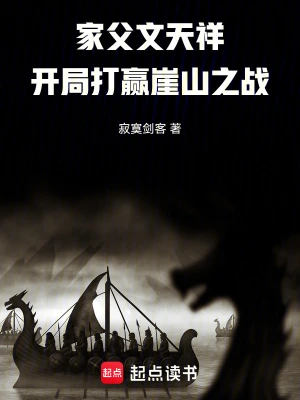 My Father Is Wen Tianxiang, and We Win the Battle of Yashan from the Start
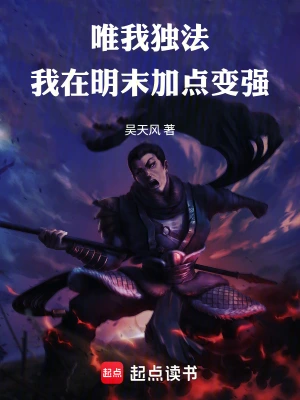 My Only Method: I Will Add More Points to Become Stronger at the End of Ming Dynasty
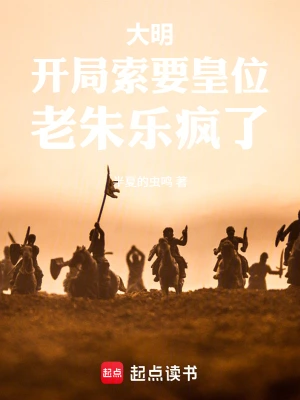 Daming: Asking for the Throne at the Beginning, Lao Zhule Went Crazy
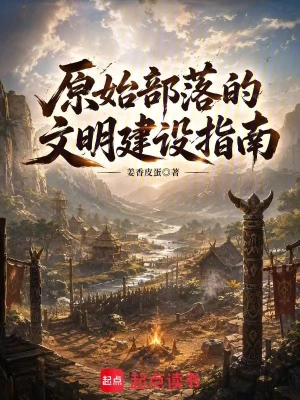 A Guide to Building Civilization in a Primitive Tribe
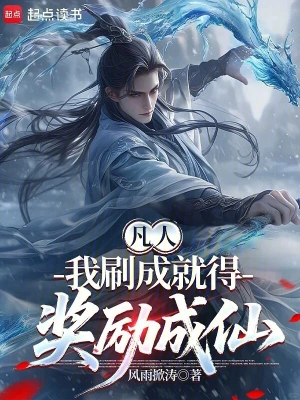 A Record of a Mortal's Journey to Immortality: I Earn Immortality by Grinding Achievements for Rewards
 Divine Peak
 1978, Midsummer in Chengdu
 Lord Evolution
 A Record of a Mortal's Journey to Immortality: Choosing Hextech in the Chaotic Star Sea
 Dragon Fang Soldier
 Dungeon: This Evil Spirit Cares Only About Power
 Summoner, Please Use the Italian Cannon
Reader comments 37
Google Translate
Starting from Entering the Banshu Fantasy Land (Chapter 40)
The level of this book is beyond the reach of most online articles. This (Banshu Fantasy Chapter) may be the best unlimited streaming copy in history? Because I feel that no infinite flow dungeon has such complex and exciting multi-party game operations.
There are a lot of elements. In the historical theme, there are Eastern fairy tales, Western magic elements, and possibly technology. Being so complex will test the author's writing skills. The plot logic must be logically arranged, and it also requires imagination. I can only say that it is quite bold.
I don't quite understand, what is Japanese fantasy? Does anyone know?
Jin Guang's Pili puppet show? This is very nonsensical and messy.
Enjoyable elements
This is much better than most articles nowadays
When I saw the surname Yun, I thought it was Jie Yu 2.
Dragon gun rush rush
Due to working hours, I was not the first person to subscribe, but I was the first person to tip after it was put on the shelves.
This is the first time I have seen this kind of theme in Magic Ming Dynasty.
It seems like no one has written about it yet. I've read a few and the writing is pretty good.
Identity changes in Liaodong in the late Ming Dynasty
The definition of Liaodong people in the Ming Dynasty is an important issue involving social identity and political identity. As mentioned in the introduction, there are currently two main views on the definition of "Liaodong people" in academic circles: one believes that it refers to Han people living in the Liaodong area, and the other believes that it is not limited to Han people. Among them, Situ Lin's concept is the most worthy of reference. She believes that Liaodong people refer to social groups that share the Liaodong regional culture and have a high degree of mutual recognition. The above concepts show that there was a social identity among Liaodong people in the Ming Dynasty that was bound by local identity. So when and how did this social identity form? What changes did the meaning of Liaodong people change in the historical context of the transition between Ming and Qing Dynasties? In the process of shaping local identity in Liaodong, the health institute system is a very important factor. The guard system not only condensed the inland officers and soldiers who settled in Liaodong, local powerful armed forces, new armies, newly recruited gang members, and subordinate ethnic minorities into a relatively stable social group, but also closely linked this social group with the Liaodong capital as a geographical unit. The formation of local identity in Liaodong is also related to the fact that the Ming Dynasty adopted a relatively fair policy towards the surrendered local powerful and minority leaders in the process of implementing the guard system. In Liaodong society, official-registered households and military-registered households are more important social differences than new immigrants and aborigines, and Chinese ethnic groups and northern ethnic groups. This is undoubtedly a favorable factor in forming local identity. From the early Ming Dynasty to the middle of the Ming Dynasty, the people of Liaodong gradually formed a distinctive frontier military society and a martial and resolute social culture under the integration of the guard system. In the process of long-term exchanges, these historical actors from all over the world have formed intertwined social networks through blood, marriage, fellow villagers, superiors and subordinates, robes, classmates, friends, neighbors and other relationships. These different social networks are related to each other through marriage, worshiping common gods, and sharing local knowledge and historical memories of local societies. As time went by, the people living in Dusi, Liaodong, interacted with the Han people in the inland society, the Mongols and Jurchens in the northeast Jisi Guards Station, and the Koreans east of the Yalu River. The differences between the Liaodong people and the surrounding people gradually strengthened, thus forming a social identity tied to the region where they lived together. In the middle of the Ming Dynasty, He Qin, a famous Neo-Confucian scholar in Liaodong, Han Xi, the commander-in-chief of Liaodong, and others all used Dongren as the self-proclaimed name of Liaodong people. A more striking example is Cheng Qichong's "Report of the Three Cities": "The people of Liao called out: 'We are the Duke of Wei, we are the great unity. We must protect the greatness, and we, the people from the east, can repay the public?'" It can be seen that Cheng Qichong, a foreigner who was exiled to Liaodong, called people from Liaodong Liao people, while the people from Liaodong called themselves "people from the east." The "dong" in the so-called "wodongren" refers to the east of Liaodong. The expression "wodongren" shows that by the middle of the Ming Dynasty, a relatively common sense of group identity had been formed among the people of Liaodong. It is worth noting that the people of Liaodong call themselves Dongren instead of Liao people, which means to avoid being associated with the Liao established by the Khitan people. During the turn of the Ming and Qing Dynasties, a large number of people from Liaodong who fled the war fled to the mainland. In traditional societies, wariness and hostility toward outsiders are common social emotions. The sudden arrival of a large number of Liaodong people who were good at riding and shooting, strong and resolute, naturally caused a strong impact and potential threat to the inland society. Any conflict of interest or excess on both sides will increase mutual hatred and conflict. As a result, Liaodong refugees were strongly rejected by mainland society. During the conflict between the two sides, some Huhua customs of the Liaodong people were deliberately amplified by the mainland society. As a result, Liaodong people are "more like barbarians", "sexually identical to barbarians", and "the world regards Liao people as the real Manchus", etc. Have become the mainstream views in mainland society. At the same time, Liaodong people such as Tong Yangxing, Li Yongfang, and Sun Degong successively surrendered to the Jin Dynasty, which also made the inland society increasingly suspicious of and anti-Liaoning. After the Wuqiao Mutiny, the massacre in Dengzhou City was the culmination of ten years of resentment between Liaodong people and mainland society. The rejection and hatred of the Liaodong people in the mainland society eventually evolved into treating the Liaodong people as aliens who are not our own race. Even Sun Chengzong, who advocated "defending Liao with Liao", also called on beware of "Liao generals and Liao soldiers, who will form clans and gradually become extremely powerful." Chen Renxi, a man of the time, also expressed a view similar to that in Jiangtong's "Lun on Migration to the Rong" of the Western Jin Dynasty: "All Liao people who live in the provinces must leave the customs" to "clear the interior." Correspondingly, some Liaodong people who were incorporated into the Eight Banners of the Han Army after the surrender to the Qing Dynasty took the initiative to adopt the strategy of Manchuization. Bao Chengxian, Zu Zerun and others all married and had children in Shengjing after they surrendered. When assuming office, they gave priority to sons born in Shengjing and used this to construct a new banner pedigree. At the same time, the Wu family who was incorporated into Zhenghong Banner reconstructed their ancestral genealogy. For example, his fourth generation ancestor Wu Dagui was originally a garrison in Qinghe, Liaodong in the Ming Dynasty, but was built as a manchurian red flag, and his name was also changed to Dakui, which is rich in Manchurian colors. In short, the group identity of Liaodong people changed significantly during the Ming and Qing Dynasties, that is, from a local identity associated with the capital of Liaodong to a group identity between Manchu and Han. This change in identity is closely related to the political choice of a large number of Liaodong people to surrender to the Qing Dynasty. In a sense, the identity changes of Liaodong people during the Ming and Qing Dynasties reveal the complexity of social group identity in border areas, and also provide a vivid example for reflection on the "Chinese edge" theory proposed by Wang Mingke.
Fantasy interpretation and writing style
😎😎😎