


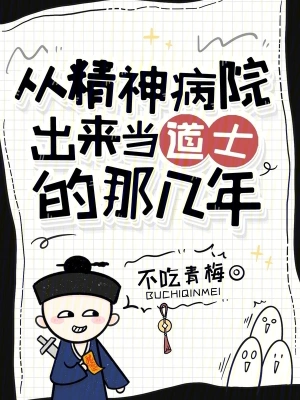
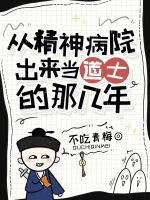
Those Years After I Left the Mental Hospital to Become a Taoist
从精神病院出来当道士的那几年
- Status
- Ongoing
- Length
- 404k Words
- Genre
- Urban
- Subgenre
- Superpowers
- Updated
- 1y ago
- Source
- Qidian
Stats
166Chapters
0Votes
4kRecs
15kFans
Tags
Synopsis
In booklists 2

Readers also read
 Hong Kong Tycoon: 1963
 In the Americas, From Security Guard to Call of Duty
 There’s a Door in My Warehouse
 I’m a Cop, Why’d You Give Me an Esports System?
 Simultaneous Transmigration: Is Everyone Starting Out in Prison?
 Kindling Fire Toward the Sun
 The Tumor Sword Immortal
 A Great Industrial Nation, Starting with a Fake Student Abroad
 A Dual Status Panel Descends into the Abyss, and the Assassin's Potion Is Right at the Entrance
 A Ghost in the House
 Can You Seriously Not Read?
 No Taboos
Reader comments 22
Google Translate
I saw all the positive reviews in the comment section, but I don't know if the reviews are being controlled. First, first of all, this novel is very wonderfully written, and the extremely rare first-person perspective makes the storyline more thrilling. There is no doubt that this is true. Two, secondly, the dual perspective of schizophrenia makes the adventure more unpredictable. The intertwining of two lines, one main and one auxiliary, makes people endlessly memorable Third, the first person of the oral narration, the writing style is clean and neat, moderately funny and humorous, and the viewing experience is excellent. Four: Complaints 1. The background of the protagonist is a young man who has just been discharged from the hospital. He has no abilities. After seeing the strange power, how dare you go down to the underground river to fight for 3 million? Euphemistically called "poverty is more terrifying", do you want to die? 2. He calls himself a "fake Taoist priest" who has no ability. At every critical moment, he [just remembers] something that just happens to save his life. Pretending to be a pig for readers? 3. There was no deposit for the two work. The female protagonist said that she could pay in advance and leave, but insisted on staying to trigger new plots and new dangers 4. The female protagonist was stripped of her clothes by the villain, so she rushed to deal with it without fear of death. The male Taoist cut you off, and you ran away without looking back 5. In conclusion, in order to advance the plot, the male protagonist pushed himself into danger again and again, and each time was a high blood pressure operation to reduce intelligence. You know you are a "fake Taoist priest", but why are you so ordinary yet so confident and brave? The plot and story are indeed well written, but the plot twists and turns are very blunt and witty.
Psychotic protagonist + traditional supernatural =?
It's been a long time since I've read a first-person tomb robbing adventure novel. I still remember the last time I read this kind of novel, it was ten years ago when I read "Tomb Raiders Notes" and "Ghost Blowing the Lamp". I have to say that it is really courageous to write a first-person novel at the current starting point. After all, many readers are used to seeing third-person novels and may not be able to react at the first time. And writing about supernatural beings in the current environment is even more of a crime. As we all know, Qidian's "supernatural" category has long been merged into suspense, and hundreds of thousands of novels were killed in one fell swoop. But if you think about it carefully, some stories really need to be written from the first-person perspective and in the style of a supernatural story. If it were changed to the third person and the usual limited time, eye-opening flow and other techniques used by Qidian would be used, it would make people feel uncomfortable. This book can be said to be "right". It cuts from the ghost exorcism plot in the village with a rich rustic atmosphere to the adventure under Wutong Mountain, peeling away the confusion layer by layer. It feels a bit like reading the book "The Strange News of the Polling Bureau" before, and I was inadvertently involved in the center of the whirlpool. The author's writing style is very good. The first-person writing is not embarrassing, and even has a self-deprecating sense of humor. From time to time, there are witticisms such as "Only normal people are aliens", which allows people to be involved in the story and at the same time stop and think about it. The author is very familiar with horror elements such as underwater bugs and extra people. It has both the mysterious adventure style of "Tomb Robbers" and the traditional supernatural horror atmosphere. The transition of memories in the mental hospital and the underground palace, encountering old friends from the hospital again, and various hallucinations that are both true and false really add a suspenseful atmosphere to the novel. It can be said that this book is very carefully written and satisfies the various appetites of suspense and supernatural readers, with something to watch from every angle. Based on the old themes, the author has made some appropriate innovations. The protagonist is mentally ill, which is not uncommon in Qidian novels in recent years. However, the protagonist written by the author has a different flavor. He is said to be sick, but in fact he is sober and seeing ghosts; he is said to be not sick, but he has actually come out of a mental hospital. (The author's description of the mental hospital environment and patients makes me feel that the author has really gone there to collect stories/is it just a collection of stories?) This switching and sense of detachment between mental illness and normal people gives the writing a unique style, which may be called "cynicism"? The "I" in the article is very informal. I want to wear the nurse's colorful underwear, pretend to be a zombie and steal the female patient's sanitary napkin. I am nervous one second, but not formal the next second, making the whole article full of a kind of ironic black humor while being thrilling. There seems to be important clues hidden in the humor. The first chapter of the opening chapter tells about the paranoia of patient Xiao Liu, who dreams of a tree full of corpses. It is difficult not to suspect that this scene will appear near the end. Maybe it is the legendary "Bronze Sacred Tree"? As a real person, Qi Shu appears in the underground palace. Is there another conspiracy or is it the protagonist's hallucination? After seeing the latest chapter, I can't guess the follow-up plot at all. On the one hand, I suspect that it may continue the "encountering hallucinations in the underground palace" of the tomb robbing novels. On the other hand, I feel that the author may find another way and follow the suspense flow of psychotic delusions. Or maybe the author has more ideas and will combine the two to design a more exciting development? Traditional supernatural beings have been in decline for a long time, and the supernatural ecology of Qidian has been destroyed for a long time. I very much hope that the author's book will achieve good results and open up the situation for the already stagnant supernatural sector.
Wishes, curses, and green jade cicada—the world view and plot speculation of the work
This is a world full of mystery. The main scenes so far include Menglan Village and its surrounding caves, Wutong Mountain and Chongzi Mountain. These places hide various mysterious creatures, such as Bai Te, Mandrill, Nanpo, Cockscomb Snake, etc. They all have strange abilities and habits. If there is a setting that surprises me, it is the intertwining characteristics of yin and yang in the underground cave of Menglan Village. The spatial structure is relatively disordered and there are unusual physical phenomena. The phenomenon of yin and yang in the cave allows the tomb owner to use some means to keep half of the tomb in the yang world and half in the underworld, causing people who enter the cave to experience hallucinations and spatial disorientation. There is an ancient culture of curses and wish-making in Menglan Village. Hundreds of years ago, people in Anyang County ventured into underground caves to make sacrifices in order to fulfill their wishes. This wish-making behavior brought a series of bad consequences, such as population extinction, distortion of human nature, etc. At the same time, the author also mentioned the "Happy Heart Store Bodhisattva" (I have never seen this concept, and I have not searched for it. Maybe it is the author's original creation?) It grows from the ground and can fulfill people's wishes, but the price of making wishes is huge. It also involves some mysterious families, such as He Zizhou, Jiang Gu Yang, Chu Ma Su, Feng Shui Qi, Chaotian Nie, Nan Mao Jiang and other Yin and Yang families. They have a strong pursuit of treasures such as Qing Jade Cicada. In addition, the Gong family, as a family in the antique business, is inextricably linked to Tianshui Temple. They hold the secret of Chongzi Mountain and are willing to cooperate with the protagonist Wu Ci to excavate the tomb of Chongzi Mountain. The clue throughout the entire text is that the "Green Jade Cicada" is indeed a treasure. Not only can it confuse Yin and Yang, it can also remove the filth caused by being selected to walk in space, thus extending the user's life. There should be some magical effects that will be mentioned later. About the protagonist, Wu Ci, a dabbler Taoist priest who walks on earth in the ancient underground palace, is faced with the dilemma of a short lifespan, so he needs to find the Jade Cicada to extend his lifespan. This mission drives him to continue to be involved in various mysterious incidents and deal with various mysterious creatures and forces. The cooperation between Wu Ci and the Gong family is an important development direction of the plot. The Gong family has the map of Chongzi Mountain and has been waiting for Wu Ci for many years. There are definitely many unknown secrets hidden behind this. Maybe their true colors will be revealed later, and they want to use Wu Ci to achieve their own goals. The Ancient Yao Underground Palace is a place full of mysteries. It is said that there are precious treasures such as the Jade Cicada hidden inside. Of course, there is no telling whether they are not inside, and there must be a lot of dangerous creatures and strange things inside. It depends on how the author writes it. The curse of Menglan Village is also a very important clue in the novel. It is related to the wish-making culture hundreds of years ago and the Xixinzang Bodhisattva. Huang Wen's appearance and her bizarre experience reveal the terrible consequences of this curse. Wu Ci definitely needs to unravel the curse in Menglan Village to find the real answer. About the treasure of Chongzi Mountain, it is said that it contains huge wealth. Although it cooperates with the Gong family, there are many forces paying attention to it. Fierce competition is inevitable. It depends on how the protagonist benefits from it. Then... Speculations about the subsequent plot—— Wu Ci decided to cooperate with Gong Qing to go to Chongzi Mountain, and they began to prepare the materials and personnel needed for the expedition. In this process, you should encounter various accidents and obstacles, such as the covetousness of other forces, weather changes, etc. Chongzi Mountain definitely has its uniqueness. Maybe there are some mysterious phenomena, various colors, strange sounds, etc. There should also be some strange creatures, such as... Towering ancient trees? Of course, there must be some that are quite aggressive. The internal structure of the tomb must be very complicated, but after all, Wu Ci also has some abilities, and with the help of the Gong family, it is not too difficult to reach the core area where the treasure is located. As for the treasures, in addition to some precious cultural relics, gold and silver jewelry, there may be some magic instruments, and of course there may be some relatively powerful evil spirits guarding them. During the exploration process, Wu Ci will definitely slowly reveal his mysterious powers. These powers may be related to the existence in the ancient underground palace, and may attract new enemies from some mysterious forces. ——The above are some of my analysis and guesses based on the current plot. So, look forward to the follow-up content
Trapped between square inches, a circular circle.
The full text has a total of 6,700 words There is no cp direction, it is more about the exploration and deconstruction of the characters Please do not have any professional reference for this article Everyone is welcome to make up stories, thank you for reading, and I look forward to your feedback Let's turn the flower rope together.
The huge mouth of the abyss swallows eggs in the middle of the night, why is it so hard to hide?
As we all know, our Golden Flower has a hobby - swallowing eggs raw. With such unique conditions, it can't eat anything else... Ahem, I only discovered Golden Flower's unknown hobby in the last two times! Do you still remember what Jin Hua said to the male protagonist for the first time, "I don't have that much time to talk to you. I have to pay back the snake body I borrowed to speak..." Is the snake at this time Jin Hua or an ordinary cockscomb? Who borrowed the snake body? See below. "'By the way, since you haven't learned any Taoism, how can you see ghosts?' The cockscomb snake circled in a strange posture and stared at me blankly." Wu Ci was backlashed by Taoism because of his half-evil identity, but the use of Taoism when rescuing Yang Chunting in the Wutong Mountain underwater cave had been backlashed. I speculate that it should be the Cockscomb Snake in the underground palace at this time. He was surprised to find that the protagonist had strange bones and extraordinary talents, so he chose him to walk on earth. And in almost all the dungeons, Jinhua is a weakling and conscientious. How can he be so comfortable in the ancient underground palace, and even look like a mysterious and expert image? I think it is precisely because Jinhua is part of the great evil spirit that he is so familiar with the underground palace. In addition, the protagonist did not suffer any fatal injuries in the underground palace, which is also the result of his intention. In the attic of the underground palace, it is known that grandpa once worked for the government there and monitored a certain experimental subject. Regarding this experiment, the officials should have reached some kind of consensus with the evil spirits of the Wutong Mountain Underground Palace. It is possible to evacuate the entire underground palace and build a fake underground palace to stay. Such a large project should be difficult for other forces besides the official to accomplish. And it is impossible for all this not to alarm the evil spirit in the underground palace, so is he also one of the participants, and he got to know grandpa through this, so he knows something about grandpa. If Jinhua is really Red Owl, why does the protagonist want to find Qingyu Chan? I speculate that Red Owl's Jade Cicada is gone. The officials took it away when they moved the real underground palace, and left him a replacement of the Jade Cicada. The fake is not as useful as the real thing, and the consequence is that the soul of Wutong Mountain cannot be led to the underworld. He himself needs a new jade cicada and the male protagonist also needs a green jade cicada, so he uses some means to become a golden flower and search for the green jade cicada with the male protagonist. In the fog of Chongzi Mountain, since walking in the world is a setting used by evil spirits to "eyes beget eyes, flesh begets flesh", it can be explained that Jinhua can see what Wu Ci is afraid of. In summary, someone who swallowed eggs raw in the middle of the night concealed the true identity of the male protagonist - the Cockscomb Snake Golden Flower who was separated from Red Owl and independent of him. Ahem, seeing this - yes, I am a clickbait! The above is pure nonsense. If you are slapped in the face in the future, I hope all book friends will be gentle. ˃ ˄ ˂̥̥
The cicada of the green jade cicada is a cicada that does not know the snow
Starting from Wu Ci's line, it's like a dream. The first-person perspective makes it difficult for readers to distinguish between fiction and reality. Similarly, the first-person perspective also restricts readers from unfolding God's perspective. All plots are explored by the author controlling a mentally ill person - I call it a game of chess played in winter. As usual, this is a brand new board game. The author first creates the core character Wu Ci, a mental patient who has been in a hospital for 7 years and enters the society. He represents the pure explosion of newborns extruded from the birth canal. Wu Ci's early focus was on the decaying scenery of Taoist temples, several pornographic films left behind by his grandfather, dynamic descriptions of living women, and the recklessness of risking one's life for money - this is his instinctive concern. With the core characters, there are social relationships, so that chess pieces can be created to unfold everything. In the middle and later stages, there are social bonds. Jinhua is a companion who walks side by side. Grandpa is the inspiration on the line of life and death. Qi Shu is very important. Her existence allows Wu Ci to undergo a round of upgrading. This is not only the first female character to appear and have a role, she also attacks Wu Ci as the first line of defense for mental illness: illusion and reality. I dare say that starting from the chapter of Qi Shu, readers will compare it with a certain book to start a discussion. In fact, there is a very important difference here: Wu Ci was discharged from the hospital from the first chapter, which means that the character has the buff premise of ending treatment and stabilizing his condition. This is real, grandpa is real, and Taoism is also real. Let's not discuss how the author will turn things around in the future. To be honest, the return rate of Dr. Wang is so high that I would be happy to see him transform into a green jade cicada in the future. You can even say that this is mixed with the truth of the author's misleading. But the other one is a mixture of truth and fiction. It can be understood as a whimsical adventure RPG story of a delusional patient who has not been discharged from the hospital. As mentioned at the beginning - this book is a brand new chess game, so it is reasonable for readers to be cautious as a second player. Furthermore, the title of the book clearly states that Wu Ci came out of the mental hospital to become a Taoist priest. Wu Ci can't put on a restraint belt and shout urgently like a law, spitting blood from the tip of his tongue at Dr. Wang. That would be quite humorous. Talking back to the illusion and reality of mental illness, you cannot say that you are wrong to a mentally ill person who screams that he is sick and sees his body burning. There is no fire, it is your delusion. Unless he could clearly realize this himself, Qi Shu helped Wu Ci realize the "fake". From the time she secretly hid the bronze money, from the time she said she was rich, she went out to eat steamed buns, ride bicycles, fly on planes, and live in a big manor. Wu Ci even said to Qi Shu that he should be a new Qi Shu when he gets out of here, until he asked Jinhua, he said please, save her, this is Qi Shu, this is Qi Shu, I can go and kill the one in the mental hospital, I will go right away. Now Wu Ci understands the fantasy, and readers can see a pure Wu Ci. We have to understand: people's choices are particularly complicated, but I think for Wu Ci, this is not just a companion who accompanies you through the line of life and death, but also a bridge for you. For ordinary people, even if the clay man has gone through all this with you, you have to go home and make offerings in the end. There is no discussion here about whether feelings arose, but it is true that Qi Shu played an important role in promoting the relationship. From here, we have a core character, social relationships, a venue, and conflict. But these alone are not enough. Without it, the whole game will be boring. Such a thing is called "uncertainty". The author gave it a new name - Qingyu Chan. It is a combination of chaos and even uncertainty. Literati said that cicadas do not know snow and regard it as a seasonal product. From a scientific point of view: It is called a "nymph" that lurks underground for about 10 years and sustains life by sucking the juice from plant roots. The "nymph" undergoes 5-6 transformations and emerges as an "adult". At the end of June, it emerges from the ground and climbs into the tree to begin its 80-day life on the ground. Life extension is not permanent, and life is not longevity. How long will it last? Two years? Two seasons? Two months? According to the summer birth and winter death, Wu Ci bears the curse of the Möbius strip; and according to the setting of walking on earth, Wu Ci has 80 days of social life, and for the remaining ten years, will he live as Wu Ci? Or will it turn into an ancient underground palace where evil spirits are dormant under Wutong Mountain? Like the experimenter? In other words, Qing Jade Chan and Wu Ci have the same characteristics - chaos, purity, and explosive plunder. Are the two originally one and the same? Let me leave a small question mark here.
Wu Ci
Golden Flower
It's been 10 years and I still can't stand the first person narrative
This book is really good to read, but the score is probably not particularly good. I just ordered it all and it made it into the top 100 book friends. After all, this is a new author. I hope you readers will read it and find it really interesting. I really don't want the author to run away because of poor grades. Summary Qingmei must be popular🔥🔥🔥