



Becoming the First Emperor at the End of the Mythic Spring and Autumn Period
从神话春秋末年开始成始皇帝
- Status
- Completed
- Length
- 77k Words
- Genre
- Eastern Fantasy
- Subgenre
- Xuanhuan
- Updated
- 2y ago
- Source
- Qidian
Stats
39Chapters
0Votes
674Recs
33Fans
Tags
Synopsis
More by this author


Readers also read
 Everyone Practices Evil Arts, So Why Are You Bathed in Divine Light?
 Supreme Talent: Speedrunning the Myriad Worlds
 I Can See the Progress Bar
 Fate Is Set!
 Starting Again with The Great Dao Contends
 Immortal Martial Arts Began with the Great Sui War God
 Daily Opportunity: Create a Clan of Dragon Immortals from Snake Catchers
 Lord: A Copy of Water Margin from the Start
 Dao Lord of the Spirit Treasure
 The Supreme Golden Palace
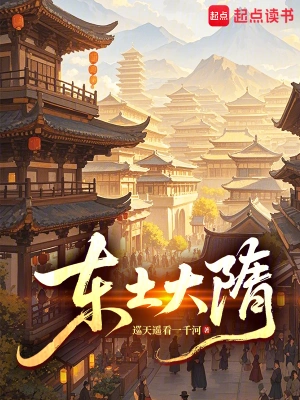 The Great Sui of the Eastern Lands
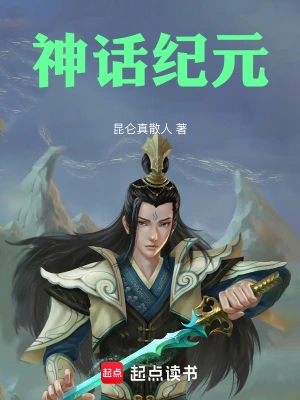 The Mythic Era!
 I Transmigrated into a Martial Saint
 Investiture of the Gods: From Minor Lord to the Ziwei Great Emperor
 After Ten Thousand Years, the Golden Finger Awakens
Reader comments 19
Google Translate
Marquis was the most important level among the nobility in the Zhou Dynasty. The status of duke was slightly higher, but the power and strength were not as good as that of marquis. The person who guards one side and defends the territory against the enemy is called a marquis. The marquis is actually a position held by the military and political power. The princes of the Zhou Dynasty all had their own war zones in charge Qi and Lu guarded the Dadong region, specializing in suppressing the Dongyi forces and maintaining the stability of the Dadong region. The Jin State guarded the Hedong area, attacked the Shanxi Rongdi, and prevented the Rongdi forces from going south to invade Wang Ji and control the Fen River Valley. The two countries of Yan (Yan) and Xing guarded Hebei to resist the forces of the Rong and Di from the north, preventing the Rong and Di from crossing the Yellow River. At that time, the mouth of the Yellow River was farther north than it is now. Weiguo is the second line of defense. Wei is also responsible for maintaining stability in the Central Plains. It was initially responsible for suppressing the Yin people. Weiguo's fiefdom is Shang Wangji. Sui Guo guarded the Suizao Corridor to prevent southern forces from entering the Nanyang Basin and threatening Zhou Luoyi. At the same time, he controlled the Jindao Tin Trade, with the Great Copper Mountain to the south, which was the economic lifeline of the Zhou Dynasty, and Sui's bronze smelting technology was quite advanced. Sui is also the leader of the southern country. Ying Guo is the royal family's second line of defense just behind Sui Guo. Chen Cai guarded the Huai River area, monitored the Song State, and was also responsible for resisting Huai Yi. Chen Cai Song was the first line of defense against Huai Yi. It can be said that none of the princes in the Zhou Dynasty were redundant. The Zhou Dynasty did not raise idle princes. Each prince was a regional magistrate, and even had the right to recruit surrounding vassal states. He was much more chic than a duke. Most of the first and second-rate forces who survived in the Spring and Autumn Period were marquis
The State of Chen is a marquis state, so it should be called Marquis of Chen. The term "Guo Gong" appeared during the Southern and Northern Dynasties. It was initially referred to as the County Duke, and later the County Duke was added as the Duke of the State. In the pre-Qin period, there was no such term as the Duke of the State. Instead, a certain Duke was directly called a certain Duke, such as Duke of Zhou, Duke of Zhao, and Duke of Song.
The title Emperor of Zhou actually appeared and became widely circulated after the Warring States Period. The unearthed inscriptions generally refer to him as the king. In Zuo Zhuan, he calls him the king of heaven. The title emperor should have evolved from the king of heaven.
This is the surname of my ancestor. Emperor Shun - Gui Chen - Chen Guo was destroyed. When the Qi Dynasty entered, the fields were changed. The fields were divided among the grandsons. When the Qi Dynasty was destroyed, the fields were further divided into first, second, third, fourth and fifth.
Isn't this the same as "Apotheosis of the Gods, from the Lord of Xiaoyi to the Emperor Ziwei"
Is this scholar-bureaucrat a doctor or a scholar? Scholars and officials are two levels in themselves, but I don't understand them together.
In the Zhou Dynasty, there were relatively few princes with the surname Gui. In addition to Chen, there were also Sui and Pu. The same seems to be true for Yongguo, Yong is after Rongcheng
Among the vassal states of the Zhou Dynasty Duke: Song, Guo, Yu, Zhao, Zhou, (the Song Dynasty is the princes after the king, and the other ministers of the Zhou Dynasty are all princes within the territory. Generally, those who serve as ministers can be called dukes) The princes Counts: Qi, Wei, Lu, Ji, Xing, Cai, Han, Ying, Jin Sui, Yan (Yan), Qi, Ji, Chen, Shen, Xi, Bao, E, etc. (Only the more famous ones are listed) Counts: Qin, Cao, Teng, Xue, Mao, Gao, Gong, Dai, Ge, Zhou, Zhu, Sui, Cheng, Bi, Rong, Dongguo, Xin, Yi, Yan, Guo, Yi, Hu, Dao, Lu, Shen, Nanshen, Xian, Gu, Deng, Xie, Jiang, Fan, Ji, Xu, Mao, Zhu, Huo, Jia, Geng, Xun , Yuan, Wei, Rui, Jiao, Li, Ba, Ran, Pu, Qian, Yong, Ba, Yun (only part of them are listed) Viscount: Chu, Ju, Zhuanyu, Zhu, Biyang, Xu Baron: Xu, Lirong, Dali, Su
If a high official is considered a high official and a scholar-official is considered a high official, then the level of scholar is no longer there. During the Zhou Dynasty, the ranks of the officials of various princes and states were different. The level of the official was divided into lower officials, middle officials, and upper officials. In some countries, the superior officials were also the senior officials. The state of Jin seems to be like this Some countries have Shang Qing, Zhong Qing, and Xia Qing. The Qing is above the officials. For example, in the state of Qi, the state's top minister was the second minister, and Guan Zhong was the lower minister. Qing sometimes also calls doctor, but scholars generally don't. In terms of scholars, they are divided into corporal, sergeant, and staff sergeant, which are lower than doctors and higher than compatriots.
I hope the author can write a good book about being cut off. I feel like the scenes at the beginning were too grand and the author didn't grasp it. And the most important thing is Sister Yu😍😍