


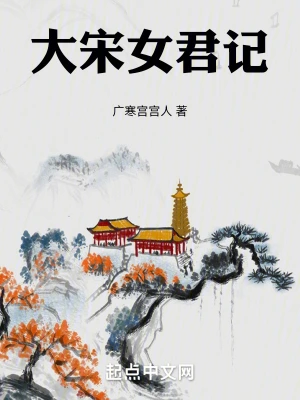
Chronicles of the Song Dynasty Empress
大宋女君记
- Status
- Ongoing
- Length
- 925k Words
- Genre
- Historical
- Subgenre
- Song-Yuan-Ming Dynasties
- Updated
- 6mo ago
- Source
- Qidian
Stats
457Chapters
0Votes
15.3kRecs
11.9kFans
Tags
Synopsis
More by this author
In booklists 1
Readers also read
 A Literary Master in Ancient Greece
 Great Ming: His Father Is Useless, So He Must Summon the Founding Emperor
 Germany: 1914
 Seizing the Direct Descendant in the Red Mansion
 Hong Kong Films: In Wo Hop To, Uncle Deng Begs Me to Take Charge
 I Stumbled into Demi-Gods and Semi-Devils and Became Wang Yuyan?
 Witches, the Church, and Black Powder
 I’m Not a Suit-Wearing Thug, I’m a Chameleon Actor!
 In Shrouding the Heavens, I Rule All Worlds from a Chat Group
 Han Descendants of the Jin Court
 Rebirth of Heian Kyo: the Road to Photography
 Emperor of the Great Song: 1066
 After the Founding of the Shao Song Dynasty
 Wudang Disciple: My Father Is Yu Lianzhou
 The Harem of Princess Huaishu
 A Redemption in the World of Spy Dramas
Reader comments 21
Google Translate
Some people just can't stand the idea of male-centered stories with female protagonists. They keep emphasizing that male-channeled stories = male-centered stories are ridiculous. In fact, male-channeled stories don't equal male-centered stories.
Although the author tried his best to arrange a reasonable plot, but after thinking about it, I really can't remember that there was a soil for female kings in that era! The ancients were not stupid. With Lu Pheasant being the first, there would be no room for the second Lu Pheasant to jump out in future generations. With Wu Zetian, there would be no second female emperor in history. In ancient times, you are emphasizing that men were superior to women and it was reasonable, but it cannot be reasonable! What's more, before Wu Zetian came to the throne, she had been in power for decades and had killed many political opponents before she came to power!
There are many stories of this type, such as Princess Kunxing in the late Ming Dynasty, Princess Taiping in the prosperous Tang Dynasty, and Princess Lu Yuan in the early Han Dynasty. So far, I have seen stories about Princess Kunxing and Princess Taiping. It's a coincidence that they are all called "Princess as Emperor". The author is creating a new character.
I want an empress but I don't want to get married or have children myself. Can you use your brain? How do you use your brain to convince normal people? Fast forward to death and the heroine were all killed by reverse attacks. Adoption? Fast forward to when the heroine was kicked out of the ancestral temple and her parents were moved up.
On the possibility of a female monarch
Support the author and defend the author. Question: Where does human power come from? Answer: There are three sources. 1. To make people obey emotionally, the core is to make people love or fear. 2. To make people obey customarily, the core is whether it conforms to the image of a powerful person in the cultural concepts of the time. 3. To make people obey the law, the core is that legislation can convince the public, justice can be fair, and law enforcement must be strict. After clarifying these three points, the key points of being a female monarch will naturally be understood. Take this book as an example: The protagonist is a princess in the early Song Dynasty, and this identity brings its own power. If the emperor loves you, you can get closer to politics; if you love the officials, you can cultivate your wings. Being able to win the love of the emperor and all the officials means having backers and power. At this time, by helping people of the same faction to suppress dissidents, the protagonist can have frightening power. This is the first step on the road to becoming a queen. Princess Taiping has come to this point. Although she cannot interfere with the government's affairs legally or traditionally, her people in the court have their own faction. As the leader of the faction, she naturally becomes a very important figure. But after all, her power had neither cultural nor legal support, so she lost easily in the end. Let's talk about the second step of the female queen, which is to obtain cultural support. Historically, those who have taken this step are usually various empress dowagers who listen to politics behind the curtain. It is culturally reasonable to listen to politics behind the curtain. The empress dowager who listens to politics is actually given the cultural authority to "take charge of the affairs of the emperor." As long as she maintains the title of Queen Mother, her power can theoretically be expanded to the same level as that of the emperor. This means that she has the actual status of a female emperor but not the name of a female emperor. Although she does not have the false name of an emperor, she is actually an emperor. Applied to this book, after the death of Zhao Da, the protagonist replaces the Queen Mother as a princess and adopts the son of Zhao Da's son to be the puppet emperor. (It is not difficult to achieve this when there are many supporters in the first step.) The people who achieved the ultimate in this step were Empress Dowager Feng of the Northern Wei Dynasty and Cixi of the Qing Dynasty. The next step is the third most difficult step, turning the imaginary into reality and calling the daughter the emperor. Before discussing this issue, let's look at where the legitimacy of female monarchs in other places comes from. Female monarchs in Europe mainly come from inheritance law, which is the theocratic certification of the church. The female monarchs in Korea, Japan, and Vietnam mainly came from the power of powerful ministers and family power. Obviously these are a bit inappropriate in the context of this book. But fortunately, the timeline of this book is in the early Song Dynasty, when Buddhism flourished in the Five Dynasties. Although Chai Rong of the later Zhou Dynasty destroyed Buddhism, the public is still very superstitious. If the protagonist of this book wants to establish legitimacy, he can just copy Wu Zetian. How did Wu Zetian construct her own legal power? 1. Worship the Buddha, then promote the identity of the reincarnation of the Buddha for yourself, and at the same time create all kinds of auspiciousness. This is the certification of divine authority. 2. To support Wu's power and use new people, this is to transfer one's power from underground to above ground. 3. Reuse cruel officials and govern all officials with cruel laws. This is strict law enforcement. At this point, I believe smart readers have already understood why Wu Zetian abdicated as queen when she encountered the Shenlong coup. According to the three elements I wrote before, Wu Zetian at least had a big problem with legislation, and even the judiciary was unfair because she knew her dissidents. The problem with the legislation is that she failed to solve the problem of the inheritance of destiny after she was appointed. To put it simply, who will be the heir and why? But this is also due to her special situation. After all, her son is the heir of both Wu Zhou and Li Tang, and she is definitely not willing to let her nephew inherit the throne. From my perspective, there seems to be only one potential solution to the problems faced by Wu Zetian, which is to establish a set of primogeniture laws for equal equality between men and women. Putting it in the historical context, let Li Xian and Princess Taiping change their surnames to Wu, give them both the right of inheritance (forgetting which one is older, the older one will be the prince/daughter), and then make a patch, and all the children of the prince and princess will take the imperial surname. Of course, this inheritance law needs to be given by heaven in order to be authoritative enough. This is not difficult. If you have the direction, you will have a great Confucian to fabricate and argue the scriptures for you. The protagonist of this article can also use this routine. After his authority is stable, he can create some talismans, then change the inheritance law, let the little emperor give way, and become the emperor himself. By the way, the civil inheritance laws must also be changed. With the law of primogeniture being equal between men and women, the protagonist's inheritance problem has been easily solved. He can just find a nephew or something to raise as his own son. Of course my niece is fine too. In fact, Wu Zetian still failed because Li Zhi lived too long and she was too old when she became emperor. This problem does not exist in this book. So it is not only feasible for the heroine to become the emperor, but also has great potential. Come on, author! Going against the current brings great wisdom and courage!
Zhao Kuangyin had several sons, and women were not even qualified to participate. Have you read any history books? In the Five Dynasties and Ten Kingdoms, the emperor was dissatisfied, so he just did what he said. Not to mention, the Later Han Dynasty, the Shu Kingdom, the Southern Tang Dynasty, and the Liao Kingdom in the north. How could these murderous gangs listen to women? The emperor had to ride into battle to kill the enemy.
When Emperor Taizong of the Song Dynasty changed his throne and changed his reign in a hurry, he even expressed his objections loudly.
Solemn statement
Recently, many readers have been wondering why I put the main heroine article in the male section. Two reasons: First, the female channel does not have official historical dynasties and is inconvenient to be derived. 2. When Qidian was editing, I put the main female protagonist's article in the male channel separately, at least that was the case when I posted the article.
Support the author
The subject matter of historical novels with female protagonists is not easy, and it is rare to even copy them. Unlike Zhu Xiongying and Chongzhen, who can almost follow a template when casting the male lead. In addition, it is not like the male protagonist's story where the harem can be opened casually. By the way, I would like to recommend a similar work. "Fangming 1128" is also a story about a male protagonist with a female lead in the Song Dynasty.
Did the author put the strong female novel on a male channel?