


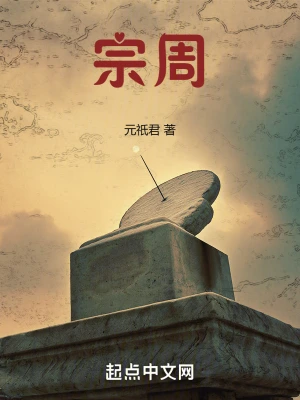
Zhou Dynasty: The Young Marquis
宗周:孺子侯
- Status
- Completed
- Length
- 556k Words
- Genre
- Historical
- Subgenre
- Pre-Qin Antiquity
- Updated
- 1y ago
- Source
- Qidian
Stats
192Chapters
0Votes
11.3kRecs
14.3kFans
Tags
Synopsis
More by this author
In booklists 4

Stories Worth Following
A personal list.
30Books171Follows9moUpdated
A Taste for Ranting
I haven't found a book I've really loved in ages.
77Books472Follows9moUpdated
A Reading List Full of Personal Favorites
Interesting books
15Books0Follows10moUpdated
History, Reality, and Alternate History
Yanhuang, Yu, Xia, Shang, then Zhou fell to the Warring States age. Qin united the six states, and Ying Zheng became the First Emperor. The Chu-Han divide was marked by Honggou, and Liu Bang won in the end. The Western Han gave rise to Xin under Mang, while the Eastern Han moved its capital to Luoyang. In its final years, the Yellow Turbans arose, and the Three Kingdoms each claimed kingship. The Western Jin became the Eastern Jin, whose capital moved to Jiankang. Tuoba entered the Central Plain
18Books15Follows1yUpdated
Readers also read
 Daming: Asking for the Throne at the Beginning, Lao Zhule Went Crazy
 A Guide to Building Civilization in a Primitive Tribe
 My Father Is Wen Tianxiang, and We Win the Battle of Yashan from the Start
 My Only Method: I Will Add More Points to Become Stronger at the End of Ming Dynasty
 Have I Revived the Han Dynasty Today?
 Han Descendants of the Jin Court
 Greece Rebuilds Rome
 1422: The Revival of the Eastern Roman Empire
 The Shadow of Great Britain
 War, Court Intrigue, and Lap Pillows: Austria’s Divine Destiny
 I Am Lord Xinling
 Rebirth of Heian Kyo: the Road to Photography
 Passing as a Native of Jiangdong
 Immortal Throughout History, Forging a Clan That Lasts Three Thousand Years!
Reader comments 39
Google Translate
I've read a few chapters, let me know what you think after reading them.
The author's writing style is very good, which cannot be denied, but the emphasis is too much on not changing history, and the character design is not good. Another point is that although it is written about various rules that should be used in the Shang and Zhou dynasties, the most important thing for online articles is to have a wide audience. Unless you are a very professional person, you will see that most people have only a little knowledge. If you emphasize not changing history and show it badly, it is easy for people to lose interest in reading. This is a failure.
This is a historical novel of the Zhou Dynasty that requires a certain historical foundation, but it feels great if you read it carefully!
The good thing about this book is that it is highly professional, but the bad thing about this book is that it is highly professional. Readers who want to read a pure novice historical article will find it difficult to read. The names of men appearing in this book, the geography of the Zhou Dynasty, and the culture of witchcraft and divination can dissuade a series of novice readers. Because you have never been exposed to this thing, it will be difficult to read. For example, if a certain father and a certain son appear frequently in articles, if you don't have some knowledge about titles during the Spring and Autumn Period, you will definitely be confused. For example, why can't the protagonist be called Jifeng directly? . . At the same time, this article also contains a large number of uncommon characters, a series of place names and ritual vessel names unique to the Pre-Zhou period. . . The author obviously has a certain understanding of the rituals of the Zhou Dynasty! Rather than just using a few modern words to prevaricate it like other historical novels! But in exchange for such an obscure term, it has a sense of immersion in the Pre-Zhou era! To sum up, we can see that the author has put a lot of effort into researching the pre-Zhou period. Not to mention anything else, just knowing that the Zhou people migrated from Bindi has already killed many novels. Xianzhou is originally a niche, and it is even rarer to find such fragrant grass in niche books. Why was the minority in the Zhou Dynasty far inferior to the Three Kingdoms, Ming and Qing Dynasties? First, it is because high school textbooks do not teach it, and fifty percent of people's historical knowledge is limited to high school history textbooks. But this thin book does not even mention the Sanjian Rebellion in the early days of the Zhou Dynasty, let alone the longer Wang Ji era. Two, there is no TV series. Good cultural and entertainment works have always aroused people's attention to a certain era. Just like the Ming Dynasty before, ever since a series of dramas such as "The Ming Dynasty" became popular. Ming Dynasty, which originally didn't attract so many people's attention, suddenly gained a large number of fans. But TV dramas also have their downsides. Many people like to use the plots in TV series as official history to debate scriptures. . . Third, the history of dynasties after the Qin Dynasty is more accessible and easy to understand. In the pre-Qin period, there will not be the situation where a person has multiple names and a vassal state has multiple names. Moreover, because of the lack of professionalism, even a marketing account can come up and say a few random words. . . In the current historical novel environment, as soon as you open the novels from the pre-Qin era, 90% of them are exaggerating about Emperor Xin and Qin Shihuang. I really feel quite powerless as I watch batch after batch of netizens using their marketing accounts to belittle Zong Zhou, the man who really laid the foundation for Zhu Xia, with their outrageous speeches. At such a moment, seeing such a fragrant book really brings tears to my eyes. . .
Traveling back to the turn of the Shang and Zhou dynasties, it is the ancient primitive era, and there is great potential in the world. You don't need to worry about changing history, because you are the origin of new history, and the end will be covered by myths I don't know which era you are in now. I can only vaguely guess whether it is the Neolithic or the Paleolithic. With the knowledge from the previous world at that time, you are undoubtedly the origin of the new civilization. You will shape a brand new civilization that is unique to you. If your image is not recorded in detailed historical records, it will be completely molded into a myth by later generations (Yellow Emperor and Yan Emperor?) (The joy of shaping a civilization alone) Backwards are the Spring and Autumn Period and the Warring States Period, the Spring and Autumn Period, and the Warring States Period. The most important ideological discussion in the Warring States period, there are many that can be written At the turn of the Shang and Zhou Dynasties, the first is the system of the Shang Dynasty, the most classic one is human sacrifice, which will undoubtedly make people from modern times feel uncomfortable, followed by the Zhou rites, which will definitely be adaptable to a lot. The Shang Dynasty is a product of the budding era of civilization, which makes modern people feel extremely uncomfortable with nausea and cruelty. , Where modern people at most feel the lack of productivity and the discomfort of the thoughts of the people around them, but in the end they are still able to accept it. The protagonist is at the turn of the Shang and Zhou Dynasties, carrying the knowledge of the previous world. He not only wants to have the ambition to change the world, but also is afraid that the butterfly effect he brings will affect the Zhou Dynasty's formation of Chinese civilization. There is constant conflict between the two, which ultimately causes internal friction and distortion. It depends on how the author handles it |・ω・`)
Regarding the protagonist Gongzi Feng, is there such a person?
Ji Feng should exist, and Ji Li had at least four legitimate sons. Why do you say that? Because the ranking of the legitimate sons of the Zhou people was based on the "brothers and uncles". Among them, "Bo" is the eldest son, "Zhong" is the second son, "Ji" is the last son, and the other sons are "uncle". Taking King Wen as an example, the eldest son Boyikao, the second son Zhongfa, the last son Ji Zai, and the rest are Shuxian, Shudan, Shudu, etc. Taking Gong Danfu as an example, the eldest son Taibo, the second son Zhongyong, and the third son Jili. Ji Li has three sons, Bochang, Guo Zhong and Guo Shu, as shown in the history books. Therefore, he at least had one son, and this son was still alive when Uncle Guo was crowned, otherwise Uncle Guo would not be called "Uncle", but Guo Ji. However, there is no record of this son in history, so he most likely died within a few years after Uncle Guo's crowning ceremony. Otherwise, according to the Zhou people's tradition of valuing relatives, as long as he lives to be crowned, he will be reused in the Zhou state and cannot remain unknown.
King Wen of Zhou was important, but not that important. In fact, the important thing is Zhou Gongdan. From Zhou Gongdan onwards, the Chinese nation really existed.
Regarding the uniform system of Zhou Dynasty, ordering Qing system and supervising system
The service system is also very chaotic, and there is not much historical data on the ordering system and supervision. The system of appointing ministers: "Book of Rites" records that "the three ministers of a big country are all appointed by the emperor,... The three ministers of a minor country, the second minister is appointed by the emperor, and the first minister is appointed by his king... The two ministers of a small country are all appointed by his emperor." (The three ministers of a large country are all appointed by the emperor. , The second-level vassal state, two of the three ministers are appointed by the emperor, and one is appointed by the princes themselves. The two ministers of small countries are all appointed by the princes themselves) According to this view, the emperor directly controls the personnel appointment power of the princes. There is also a division of the country, big country, secondary country, small country and vassal (it is not clear when this division appeared, but there are many mentions in pre-Qin historical materials, which can be traced back to the Spring and Autumn Period) Wang ordered Zuo Zuo to say: Geng Naizu was admitted to be the tomb sifu in Cai... (To the effect: The emperor ordered "Shuo" to say, inherit the business of your father and grandfather and work as tomb sibling in Cai.) Tomb Si Gong is Da Sikong, a senior official in charge of the manufacturing and construction industries in the Cai State, and one of the most important "three officials" (Si Gong, Sima, and Si Tu) in the vassal states. This nobleman named "Left and Right" has been working as a tomb master in the State of Cai for generations. His official position does not come from his own monarch Cai Hou, but from the appointment of the Emperor of Zhou. The king ordered Douguan to be ordered in the internal history book. The king said: "Guan, I will give you weaving clothes... Use the copy to test the ancestors' affairs." Si Ma, bow and arrow... (The general idea: The emperor ordered Douguan to be ordered in the internal history book. The emperor said: Douguan, I will give you some ceremonial guards... You must inherit the duties of your father and grandfather and manage the horses, bows and arrows of Yu State...) However, in the first month of Renshen, the king came to the imperial palace. Wang Ruo said: "Yin, since I have ordered you to be the master of the ancestors, I have ordered you to give you a red bow, a hundred red arrows, and four horses. You will be the emperor with respect, and you will not be defeated." (Effectiveness: In the first month of Renshen, the emperor Arriving at Gongwang Temple, the emperor said: "Yin, I once appointed you to inherit your grandfather's ministry and manage the army. Now I reiterate my order and give you some honor guards. You must drive the chariot well and not fail.") In these two inscriptions, the masters of the vessel, Douguan and Yin, were both important officials who had served as officers of the vassal states for generations. Douguan was responsible for managing the horses, bows and arrows of the Yu State. Managing these materials essentially controlled the army of the Yu State; Yin was responsible for managing the army of the Qi State. The Qi State was a large eastern country with the power of "five princes and nine uncles, you can conquer them", and its army was actually governed by officials appointed by the emperor. The inscriptions on these two bronzes reflect the emperor's control over the vassal states under the "Mingqing" system. Is this the emperor of the Western Zhou Dynasty?😍 Supervision: The state supervision system is the dynasty sending officials to supervise the vassal states. During the Spring and Autumn Period, the State of Qi still had two "state supervisors", Guo and Gao. The overlord Duke Huan of Qi wanted to treat Guan Zhong, the virtuous prime minister, with the courtesy of a superior minister. Guan Zhong declined and said: "I have ministers when I am humble, but there are two emperors who guard the country and Gao Zai. If you come to accept the king's orders during the Spring and Autumn Festival, how can you be polite? Accompanying ministers dare to resign." (To the effect: I dare to resign. They are low-status officials. The Guo and Gao families sent by the emperor are still there. If one day they come with the king's orders, what etiquette should we use to treat them? I hope you can let me decline.) It shows that in the Spring and Autumn Period, the state supervisors sent by the emperor still had a high status. The inscription on Zhongji's father's gui shows that state prisons are common: Zhongji's father sent several envoys to princes and governors... (To the effect: Zhongji's father sent several envoys to princes and governors...) The system of "guojian" and "mingqing", one on the outside and the other on the inside, comprehensively restricted the power of the princes, allowing the authority of the emperor of Zhou to penetrate deeply into the vassal states to a considerable extent, preventing local political power from being lost. The system of the Western Zhou Dynasty was more complete and mature than that of the Shang Dynasty, and the authority of the king was further strengthened. It is difficult to say about the five-level nobility system. It is a bit similar to the five-level nobility system. It also involves the tribute system. Hou Henan may have evolved from the service system. When the king came out, Taibao led the princes from the west to the left of the gate, and Duke Bi led the princes from the east to the right of the gate. They all wore yellow and red banners... Wang Ruo said: "The princes of Shu, Dian, Nan, and Wei, only one person can report the imperial edict." "——"Shang Shu·Kang Wang Zhigao" The Houdian male guards are mentioned here, which is obviously an official position and not a title. The so-called external service and internal service are based on whether the royal official serves in the capital. "Fu" means to serve. Hou, Dian, Nan, Wei, etc. All belong to external service. These four positions have actually been in existence since the Shang Dynasty. For example, we can see "Xhou" and "Hou X" in inscriptions. The titles "Tian (Dian) Service refers to serving official positions rather than regional divisions. In addition to Xu Nan, Su Nan, and Li Rongnan recorded in the "Chun Qiu Zuo Zhuan", there are also Xu Nan, Tang Nan, etc. In the bronze inscriptions. Among them, "Xu Nan" can be confirmed by two layers of evidence, which is clear and undisputed. In addition, it is found in the documents handed down from ancient times. The king of Xu State is often called "Xu Xgong", and this "gong" should be the general name of the king; and "Hou Yuxu" is mentioned in "Shuowen Jie Zi Preface" and "Tsinghua Bamboo Feng Xu's Ming" (so confused) When Duke Mu of Xu died in the army, he was buried as a marquis. All princes who passed away at court meetings were given a first rank; those who died as kings were given a second rank. - "Zuo Zhuan: The Fourth Year of Duke Xi" In the past, the emperor's tribute was based on the order of priority. Those who were humble and paid high tributes were given the honor. Zheng, Bo Nan, was afraid of not being able to pay tribute. ——"Zuo Zhuan: The Thirteenth Year of Zhao Gong" (This Zheng, Bo Nan, can also be Zheng Bo, male) This paragraph is talking about the Zhou system, which generally has high tribute and high tribute, such as Gong (the Duke is regarded as the "Three Dukes of the Emperor") and Hou Fu; of course, there are also low tribute and high tribute, such as Dian Fu. However, Zheng is just "Bo Nan" and should not bear such a heavy tribute. The king of Zheng is often called "Zheng Bo" in the literature, and "Bo" is mostly used for Zhou aristocratic leaders. "Nan" can be interpreted as "male service" "Zuo Zhuan" also has two hidden kingdoms of Dianfu: one is Cao, "Cao is Bodian" in "Dinggong Four Years", and people generally only know the names of Zheng Bo and Cao Bo, and tend to ignore the services of Zheng Nan and Cao Dian; the other is Jin, "Jin Dian Hou" is mentioned in "Huan Gong Two Years", Hou and Dian cannot coexist, but considering that the king of the early Jin Dynasty was called Tang Bo, it is possible that the Tang Dynasty was also "Bodian", and he became a marquis in Jin Dynasty. "Gonghou Bozinan" is a phenomenon that refers to a certain prince in a fixed way. This should be related to the background of the Spring and Autumn Overlord Alliance. The alliance needs to determine the strength and service relationships of the princes, but because the strength of the princes waxes and wanes, it is impossible for the emperor and any overlord to formulate a complete order of titles and services. Under this need, "Gongbozi" gradually separated from the kinship title and had a relatively fixed usage. "Dian" and the stronger "Nan" were also included in the title of "Bo", while the weaker ones such as Xu and Su were still called "Nan". At this time, "Nan" had a subordinate meaning. Hou, Dian, and Nan are all official positions that fulfill their respective obligations. Hou may be more noble. Gong, Bo, and Zi are mostly titles for the lord of the fief. (It seems easier to understand this way)
Extras collection stickers
It is difficult to describe the names of pre-Qin people, especially when there is no family name. It's really hard to tell the difference among a bunch of brothers and uncle Ji. But some people appear again and again, and you have to give them a name. Currently, I have selected several book friends' IDs and given a few supporting names: Wang Zitong: Wu Ding's younger brother and Emperor Yi's uncle; Taibu Zimo: a distant branch of the Shang royal family in Dayi, the leader of Taibuliao; Zhongyuan: one of the clan leaders directly under Jifeng and the father of Zhongxing Gan, the leader of the bodyguard.
? Is this the author going too far? If you cut the book, please tell everyone. For those friends who are pursuing reading, you can also send a message in the book circle.
Zong Zhou is pretty good, why do you want to change the name to a fast food style? The author has done a good job with his style, so this book is still okay. At least you can write it elegantly, and there is no need for the name Nong to attract readers.
Look how many poems appear
Post a post to record it 🤫