


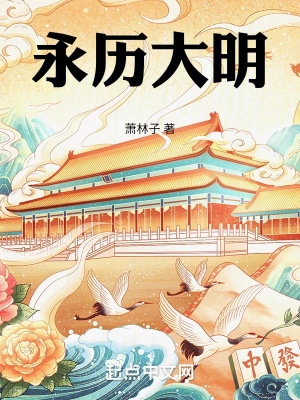
The Eternal Ming Dynasty
永历大明
- Status
- Ongoing
- Length
- 1.7M Words
- Genre
- Historical
- Subgenre
- Song-Yuan-Ming Dynasties
- Updated
- 1y ago
- Source
- Qidian
Stats
429Chapters
0Votes
18.2kRecs
28.2kFans
Tags
Synopsis
More by this author
In booklists 1


Readers also read
 Germany: 1914
 Seizing the Direct Descendant in the Red Mansion
 Great Ming: His Father Is Useless, So He Must Summon the Founding Emperor
 A Literary Master in Ancient Greece
 Hong Kong Films: In Wo Hop To, Uncle Deng Begs Me to Take Charge
 The Wily Qin
 The Prosperous Longwan Era
 I’m Not a Suit-Wearing Thug, I’m a Chameleon Actor!
 In Shrouding the Heavens, I Rule All Worlds from a Chat Group
 The Great Ming
 Sun and Moon: Yongli 1656
 Reviving Han Prosperity, 1844
 Supreme Demon Lord
Reader comments 39
Google Translate
At that time, the Ming army was really not bad. As long as the treatment was improved, they would be able to fight you with full pay. There is no need to overstate that the Qing army was very powerful. As long as the Ming army had real land of their own and high treatment, they could really beat the Qing army into dogs.
Guo Xingye is too cheating. Historically, Guo Xingye was too selfish. Li Dingguo made an appointment with him to play in Guangzhou together. But Li came and he didn't come. They almost broke into Guangzhou. I can only say that Nanming cheated his teammates in a certain way.
On military issues
This book is well written. Although the writing style is not as sophisticated as many authors, the basic logic and IQ are still there. Many historical texts (especially in the late Ming Dynasty) seem to think that finding loyal ministers and famous people will solve problems. However, loyal ministers do not mean capable ministers, nor do they mean incorruptible. Knowing people well, exploiting strengths and avoiding weaknesses are manifestations of the monarch's ability. Although it is difficult to describe, the author is at least writing (currently writing a posture of win-over and integration, I think it is very difficult) The writing is good, and there are general things. So far, it is I was afraid that the writing would collapse due to military issues, and most of the late Ming Dynasty texts were written blindly. In one book, 3,000 men charged into Wu Sangui's 100,000-strong Qing army. It's not that they couldn't charge, and it wasn't that they couldn't cheat. At least, it set the stage. It started inexplicably and won inexplicably... Because this is a big problem, I can only talk about it in general. I hope it can help the author a little, improve the quality of the book, and give bookworms like me some good books to read. In the military wars of the Ming and Qing Dynasties, I personally think that there were two main points that affected the victory of the battle. One was the intuitive military formation (including tactics), and the other was the very hidden connotation, such as the military service system and the superficial military pay (actual finance). Finance was linked to the military service system and land, so the internal impact was very complicated. The second point will be discussed based on the situation. Because it is a very long article, here I will talk about the military formation issue that is ignored and ignored by almost 100% of the authors (I seem to have hardly seen any authors who understand military formations in historical texts), but it was almost a decisive victory in the cold weapon era. Military struggle is not a fight. The performance in most novels and film and television dramas is an emotional expression, that is, a scene is given where someone dies, and then a certain commander shouts revenge, and then the soldiers are hit with chicken blood, rush forward and chop around to wake them up. Or, shout, rush, and then solve the problem... First of all, in ancient war command, command is a verb, which means that the general observes the situation (some climb on a mound, or a special watchtower), observes the situation and then issues orders, that is, waving a hand (or a flag). After the order is issued, how does the army accept the order? The answer is drums and flags (and other things such as trumpets). Shouting and rushing on the battlefield like in the TV series is unworkable and stupid. You can recall the scene of a teacher giving a class at school. Normal people's voices can't be heard by more than about 50 people in a walled place like a classroom. In a noisy and open place on a battlefield, 20 people can hear you. You already have a loud voice. How do you expect to be able to command thousands of troops? It is impossible for armies to fight independently. That is fighting, not military. So, we rely on sound and sight to command, that is, drums and flags. Many people have heard this idiom: beat the drums and march, and the same principle applies to the ringing of gold and retreat of troops, including various other musical instruments, such as trumpets, conch shells, suonas, trumpets, clappers, etc., Which can be used according to the conditions. Then, starting from a small team of about 10 people, there is a team flag, and the larger divisions, bureaus, and battalions have their own flags. Once an order is given, the soldiers must stare at their own flags and follow them in the battle, and cannot get distracted. The core logic here is to cooperate with each other. During the day, you can rely on the flag. If you can't see it at night, you can listen to the sounds. The several sounds of the drum (instrument) also represent different commands, etc. The author can consider and make a basic description. The second is the military formation, which is different from the fancy one-word snake and dragon gate formations on TV. In the war of cold weapons, there is indeed such a thing as formation, and it is almost the most intuitive thing to determine victory. I personally think that formation is simply to use the position of soldiers in order to produce the maximum output of our capabilities and reduce the output that the enemy can produce. One increase and one decrease, and we will win the final victory. So, how does it actually work? It's complex, but can be briefly explained with some examples. For example, if two armies have 100 soldiers, and their equipment and basic physical fitness are almost the same, how can they win? Army A sets up the most conventional 10*10 square formation. We have many ways to change the military formation. For example, we set up a 7-figure formation, that is, the front horizontal (50 people) is the same as the opponent's square formation, but the remaining 50 people are placed on the right side to form a column. Once the attack starts, attack the enemy from the right wing. To the left, if the enemy's formation remains unchanged, you will find that in the outermost corner of the left hand, one soldier has to face the front and two enemies on the flanks. Therefore, it will soon become a structural collapse, and finally the army will be defeated. Therefore, our side can easily win if the number of people is even less than that of the enemy. Of course, the actual military cannot be so simple. Everything is relative. If you reduce the troops from the front to the flanks, the front will be weak. The enemy can also concentrate his troops to break through from the front and encircle the two wings in reverse after division. Or the enemy can concentrate his troops from his right wing to attack our left wing. At this time, something came into being, the reserve force. In ancient times, it was sometimes called a garrison or another name. For example, General Yu Dayou called one of his special formations of reserves Mantianxing. The core logic here is that of course one's own side can have various military formations to cooperate with tactics to attack the enemy's weak points, but the converse is also the same. You don't know which point the enemy is planning to attack before the war starts. In order to prevent the situation from getting out of control, it is natural to allocate some troops as reserves before the war starts. That is, if the enemy attacks a certain point and our front army cannot hold it and the structure collapses, the reserve team must be sent to reinforce it to stabilize the situation. Speaking of which, I would like to add another rumor or misunderstanding that has been around in the late Ming Dynasty, which is the issue of three-stage shooting. According to the generally taken-for-granted idea, the firearms troops equipped with matchlocks are divided into three columns and shoot in turns (there are two ways here, one is people walking around, the other is the first row is responsible for shooting and the back is responsible for loading), thinking that three-stage shooting can solve everything. The problem, not to mention the three-stage formula, is that there are records in many firearms books in the late Ming Dynasty. It is not a secret book at all, and even if it is a cheat book, it is useless, because the default premise of everything is that the enemy is stupid and charges in a dense formation from the front, and then our side shoots and harvests. But can any military strategist be so stupid? The enemy only needs to deploy 30% of his troops on the front and 70% on the wings to conduct a roundabout attack. Pure firearms troops have no melee combat capabilities and will be defeated in one strike. The impact of artillery, cavalry, etc. Is not taken into account here. Some people may think that if the enemy attacks from the flank, we can also shoot from the flank and still achieve final victory. So I have introduced the basic military command system before, from observing the enemy's attack point, to issuing orders, to drums and flags (sometimes messengers are also needed), to the troops receiving orders. There is not enough time, and there is no way to ensure that 100% flank shooting can kill all roundabout enemies. Once close, it will be massacre. The shooting distance of the bird gun and the three-eyed gun is 100 steps (not the farthest, but the killing distance is about 160 meters, see the formation record, the new book of Jixiao, long-distance training rules, etc.), The distance of 160 meters, you can calculate the middle school running results, my impression is that 100 meters is about 11-12 seconds, 160 meters is 20 seconds, even if the load is huge, it will be in the face for 1 minute, not to mention the impact of the cavalry... So, The conclusion is that in the late Ming Dynasty, pure firearms could not form an independent army. They had to be protected by cold weapons (car camps were also a product of this logic, but there were cannons...), And the army needed to be mixed. That is, out of 10 people, maybe 4-6 people were weapons. The rest of the firearms, to be more clear, the emergence of fire blunderbuss at that time replaced the effect of crossbows. In ancient times, were there pure crossbow soldiers to form an army and conquer the world? Because the system is complex, we cannot finish it all and make a basic conclusion. That is, in the late Ming Dynasty, although there were firearms and cannons, pure firearms could not conquer the world unless cheated. It must be a mixture of hot and cold weapons, relying on the position of the formation to cause as much damage as possible and cause the enemy's structure to collapse. (Because of time and space, many things have not been explained thoroughly, such as how cavalry fights, including the actual tactics of infantry squads, cooperation, detours, outflanking, including how to retreat in defeat, how to pursue in victory, including the practical application of artillery in the army, the difference between heavy artillery and light artillery, etc... It is a big hole) I will talk about the above if I have the chance.
The best development route in the late Ming Dynasty is the peasant uprising, and the mass base is very poor. It is the most miserable thing to travel through time and become the emperor in the late Ming Dynasty. Unless you have a golden finger, it will be for nothing. The starting point of the emperor is too high, and ordinary time travelers cannot control it. To be a good emperor, you must have full political talent.
I don't even want to read the introduction. Zheng Chenggong, that mixed-race guy, just wants to be okay. I talked to Qing Ting, but Qing Ting didn't agree.
It's too slow, so the heat can't rise
Readers who like to read historical texts generally don't like books that describe too many relationships between men and women. The author must not accommodate those readers who are full of hormones.
Let's add a picture of the current situation when Yongli succeeded to the throne. The picture is from the History Library. It can be seen that the situation was very dangerous and bad at this time. It is still very difficult for the protagonist to revitalize
Nanming can recruit the Shunxi peasant army and create another plate, one that breaks away from the old landlord literati class and is based on the peasant army to protect the bourgeoisie. Behind it are the two pillars of nobility and assets. The old landlords can only be forced to progress, which will speed up the process of civilization. A political system like the one in Germany during World War I 😁, this new dynasty will flourish within a hundred years. It's time to consider the issue of new ideas. The protagonist must focus on the ideological aspect in the later stage. Also, don't think that change can be achieved in one generation. It will take at least four or five generations, which is about a hundred years. This time can be regarded as a prosperous dynasty, and it is also in line with the laws of scientific development 😐😐😐
Update notification
Recommendation notifications are usually sent on Friday afternoon, but I still haven't received a notification, so I still can't make it to the second round of recommendations next week This book now has 150,000 words. If it continues at this rate, it will be removed from the new book list next week, so this book will not have any recommendations Everyone knows that there are so many books now. , If there is no recommendation, it is basically impossible for others to see a book Therefore, starting from tomorrow, the book will be updated to 3,000 words in one update. This is the only way to make the book recommendable In addition, if you play with microwaves, you can play with me on the top. The user name is Gu Tingchao. After the first update, I should have some time to go up there in the evening