


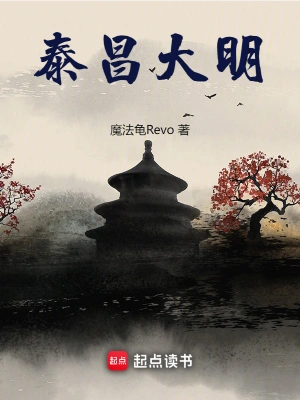
The Great Ming of the Taichang Era
泰昌大明
- Status
- Ongoing
- Length
- 4.2M Words
- Genre
- Historical
- Subgenre
- Song-Yuan-Ming Dynasties
- Updated
- 1mo ago
- Source
- Qidian
Stats
Tags
Synopsis
In booklists 8
【Historical Novels】
A history-loving bookworm sharing novels with friends who are out of things to read. If you like any of these, come back and give them a like. Thanks!

A Reading Journal for History and Urban Fiction
I consider myself fairly knowledgeable about urban and historical fiction. The books I recommend have qualities I think are worth recommending. I’m not afraid of flaws, but I do want a story to have something distinctive. Evaluating a book isn’t about nitpicking; it’s about weighing its strengths against its weaknesses. I recommend books whose strengths I personally feel outweigh their flaws. Of course, every reader has their own taste, and a book not being to your liking isn’t something you can
A Reading List for a 12-Year Veteran Reader: Solid Picks and Better
I've been reading for twelve years, from beginner-friendly web novels to ones aimed at veteran readers. I've gotten pickier over time, and I hope this list can help others discover books they'll enjoy.
Stories Worth Following
A personal list.

Books I Think Are Worth Saving
Interesting books about history, xianxia, the War of Resistance, and family intrigue
Transmigration Through History: Masterpieces from East and West
Transmigrate to ancient times and build an empire

Keeping Track of the Novels I Read Often
A strange reading list that's been stuck under review forever
The Sun and Moon Shine as One
Those Things in the Ming Dynasty
Readers also read
 A Literary Master in Ancient Greece
 Germany: 1914
 Seizing the Direct Descendant in the Red Mansion
 Great Ming: His Father Is Useless, So He Must Summon the Founding Emperor
 Hong Kong Films: In Wo Hop To, Uncle Deng Begs Me to Take Charge
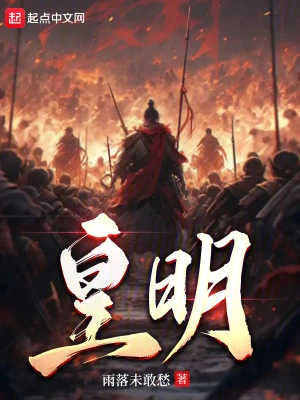 The Great Ming
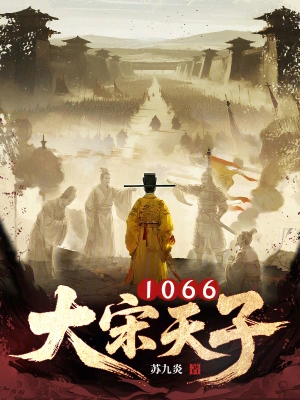 Emperor of the Great Song: 1066
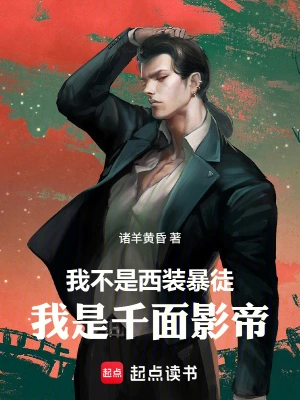 I’m Not a Suit-Wearing Thug, I’m a Chameleon Actor!
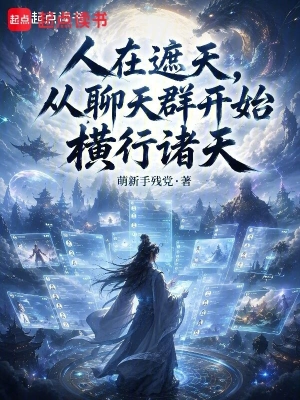 In Shrouding the Heavens, I Rule All Worlds from a Chat Group
 Northern Qi: My Father Is Emperor Wenxuan
 The Prosperous Longwan Era
 Sun and Moon: Yongli 1656
Reader comments 48
Google Translate
The Qing Dynasty was truly the pinnacle of feudalism. All it takes is the establishment of a military aristocratic group under the Eight Banners system, with military honors and titles, and civilian officials can be killed like dogs. When the emperor of the Ming Dynasty saw the power of the Literary Prison, he was so envious and jealous that he couldn't even think about it.
Introduction updated, Note: "Three major struggles" are not "three major conquests". The three major expeditions refer to the expedition to Kuaibai in Ningxia, the expedition to Korea to resist Japanese aggression, and the expedition to Yang Yinglong in Bozhou. The three major struggles refer to the struggle for the foundation of the country, the struggle for the establishment of the country, and the struggle for the title of the three kings.
When did arithmetic become an overseas knowledge? Please check more information. Before the Qing Dynasty, Chinese arithmetic was not weak, but it was not taken seriously.
No emperor in history has ever been able to save a dying dynasty. It's easier to tear it down and rebuild it, so when I read this kind of novel, I just give up.
On the perspective of novels and the problem of "procrastination"
In today's author's statement, the author clarified the purpose of writing, stating that he wanted to write about "Da Ming" rather than Taichang, so he needed to take into account multiple perspectives. I strongly agree with this point of view, but there are a few points that I would like to discuss with the author. First, there is no contradiction between multi-perspective description and the clear purpose of writing. The purpose of multiple perspectives is to reflect the full picture of an event, to show the different choices of different parties in the process of introducing and promoting a policy, the decision-making basis of the superiors, the implementation wisdom of the inferiors, and the substantial experience of the people at the bottom. The key here is "event". Taking two incidents as an example, the author wrote better about the Donglin Incident, which took more than a hundred chapters and more comprehensively reflected the thoughts of the various factions within Donglin, the anti-Donglin, the factory guards, and the emperor. Finally, it ended with Zhang Juzheng being rehabilitated. It has a beginning and an end, and feels relatively complete and coherent. What is worse is the North Korean guardianship incident, because a lot of space is devoted to the internal political struggles and intrigues between North Korea, but in the end it lacks a breaking point. The readers are not watching Taichang North Korea, and they don't care much about North Korea's political struggles. In this incident, they should pay more attention to the reaction of Ming Dynasty officials, not the internal reaction of North Korea. Moreover, this plot is too bland and boring. If there is a rebellion within North Korea, a large-scale action scene may be much better. After all, who reader cares about Li Erzhan and who is Zheng Renhong? The second issue is rhythm control. The author tries to intersperse multiple parallel events while narrating from multiple perspectives, which results in an extremely slow pace. The climax is neither high nor low, and the context and context are easily mismatched. The Korean guardianship incident and the Liao-Shenyang battle incident, the rumor incident in the capital, the water transport corruption incident, and the Tianjin port opening incident were all mixed together. Readers follow up every day and there are thousands of threads. In fact, the experience is very poor. The third is that emotional description should not be too much. Emotions should be embellishments. There are too many emotional descriptions in historical articles. The description of the harem is actually quite embarrassing. Even if the harem reform is to be written, I am afraid it is not the focus of the Ming Dynasty novel that readers expect. It is too focused on the concubines' fight for favor and the emperor's water-carrying, which is actually quite boring. The emotional description I admire the most is Liu Yijing's true feelings on the land transfer bill. This is very good. It shows both the politician's rational consciousness and the entanglement of his own personal relationship. The above is a brief opinion, please refer to the author.
This novel can be read in a skip. You can skip a hundred chapters without affecting your reading. It didn't fit in well with the previous one. I skipped a few chapters because I thought it was too much nonsense. What happened next? I have no desire to read anymore, so I just deleted it. I searched for similar novels recommended by Wan Ming, otherwise I wouldn't read them at all. The main character's dialogue in the first part was very good and attracted me, but in the later part I wrote some silly stuff. I was swearing. There is also some information on how to write a good novel before it is put on the shelves. This is to trick a dog into killing him. It's said that the cliff is well written and I haven't read any details.
The Cruelty and Limitations of Imperial Power——Also a post-reading review
I first became interested in this book after reading the author's listing description. It took me two days to read the latest chapter. The reading experience was very good. I will briefly talk about a few advantages and experiences. The greatest advantage of this book is that it describes the cruelty and hypocrisy of the emperor himself. Whether it is dealing with figures such as Dong Lin, the relatives of the country, or the Heavenly Master, he is very decisive in killing people and distributing lunch boxes. Moreover, by portraying the behavior of the eunuchs, it shows the hypocrisy of the emperor himself. He wants both political gain and reputation, and wants others to be grateful. It even feels like a thorn in the back when reading it. This is rare, and it is much deeper than blindly portraying a seemingly great and upright template wise emperor. The second is to describe a large number of secondary characters, shift the perspective away from the protagonist, and depict the formation process and transformation logic of political decision-making. Although this is the norm in historical novels, this book applies it well. After all, history is not a strategic game. How every decision is implemented and executed actually requires consideration of personal interests at all levels. When reading this book, it even has a sense of déjà vu in Ming Dynasty 1566. The third advantage is the author's outstanding description and narrative ability. Able to describe complex plots in a concise manner and choose appropriate entry points. This book also has several problems, and I suggest the author give more thought to them. The first is the attitude towards the harem personnel. Personally, I feel that the author spends too much time dealing with the concubines of Xi Li and Dong Li - with all due respect, if you don't plan to seal the story, these plots will be very dragging and have little significance in promoting the plot and characterizing the characters. The second issue is the issue of actual positions held by princes and concubines. The author's design of giving real power to concubines as female auditors and arranging magistrates for princes is extremely inconsistent with the political environment of the Ming Dynasty. First of all, the palaces in the Ming Dynasty were strictly forbidden, and it was unimaginable in the Ming Dynasty for concubines to control the real power of external yamen. Secondly, giving the prince local administrative power is very similar to Zhu Houzhao who gave himself the title of general. It is a self-deprecating status, because actual administration will definitely make mistakes. But as Zhu Youxiao, if you don't punish him, it will be in vain to pay attention to the national law. If you punish him, it will shake the country's foundation, which will not work on both ends. Therefore, the prince does not hold real power unless he supervises the country. This has been the case since the Song Dynasty. Finally there is a hope. That is to hope that the author can carefully consider economic issues. Finance is of course a Yuan proposition that cannot be avoided in the late Song Dynasty and late Ming Dynasty, so this should be the real big boss of the whole book, whether it is to suppress land annexation, transform the industrial revolution, carry out colonial activities, or whatever. I hope the author can give as little trouble to the dynasty as possible, and write about the emperor's powerlessness just like the emperor's hypocrisy was written before.
Tell me about the feeling of reading this book
In the plot, the protagonist traveled through time and became the emperor of the late Ming Dynasty, Emperor Taichang, and then helped the building to collapse. First, Huang Quan's knives and Jinyiwei East Factory were transferred, and then the West Factory was newly established to supervise the internal officials. Then rectifying Liaodong to resist the establishment of slaves, of course, mainly relied on ministers. This is the current main line. Overall, the writing style is very good, and it can be regarded as fairy grass, but it is a bit delayed at the end, so it can be regarded as food. The front of the article revolves around the protagonist, and the back is like a group portrait. It's worth watching, but there are more than 600 pictures, and the plot has not yet been released in the first year of Taichang 🙂
Chapter 300 is all water, and I didn't write a few things. Goodbye.
Water keeps flowing
You have been writing a branch story about North Korea for almost two months. I jumped on the subscription and read it again for ten days without any impact at all. Am I here to see North Korea? Am I coming to see North Korea as a filial piety? If you don't watch it for a year, it won't affect the plot. Water floods the golden mountain, you! !