


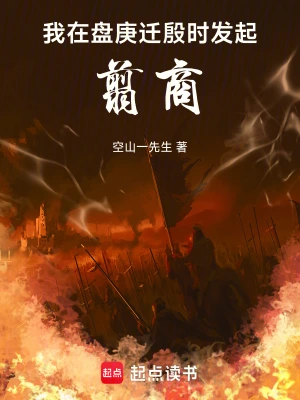
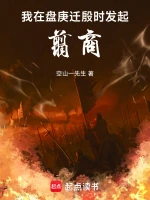
I Launched the Shang Conquest During Pan Geng's Move to Yin
我在盘庚迁殷时发起翦商
- Status
- Completed
- Length
- 2.1M Words
- Genre
- Historical
- Subgenre
- Pre-Qin Antiquity
- Updated
- 9mo ago
- Source
- Qidian
Stats
Tags
Synopsis
More by this author
In booklists 3
No System, Not Mainstream, Full of Character
There are so many popular novels, but you still feel like none of them suit your taste. Maybe your perspective has changed, or maybe you're longing for a certain kind of feeling. Then come on in and take a look! Most of the picks here aren't popular titles, but they're definitely worth savoring in peace.
Web Novel Picks: Not for Beginners, Off the Beaten Path
Not beginner-level fiction. Personal taste, entirely subjective. I'll score each work based on my preferences, out of 10. The books on the rankings are pretty good, but most put commercial success first. They're like junk food: great the first time, but too much gets cloying, and they don't have much to offer beyond passing the time. These days I mostly browse at random, and I'm not as free as I used to be, so finding a book that suits my taste is pretty rare. I've read every book I review. I
Transmigration Through History: Masterpieces from East and West
Transmigrate to ancient times and build an empire
Readers also read
 My Father Is Wen Tianxiang, and We Win the Battle of Yashan from the Start
 A Guide to Building Civilization in a Primitive Tribe
 My Only Method: I Will Add More Points to Become Stronger at the End of Ming Dynasty
 Daming: Asking for the Throne at the Beginning, Lao Zhule Went Crazy
 A Record of a Mortal's Journey to Immortality: I Earn Immortality by Grinding Achievements for Rewards
 The Wily Qin
 The African Entrepreneurial Saga
 Lord Evolution
 A Record of a Mortal's Journey to Immortality: Choosing Hextech in the Chaotic Star Sea
 War, Court Intrigue, and Lap Pillows: Austria’s Divine Destiny
 Northern Qi: My Father Is Emperor Wenxuan
 Overlord Origin
 Douluo Dalu: I Have a Ten-Thousand-Year Plan Too
 From Stand-In to Emperor
Reader comments 32
Google Translate
I have a new understanding of King Zhou of the Shang Dynasty. At the end of the Shang Dynasty, King Zhou reused slaves, listened to the opinions of women, opposed the use of human beings as sacrifices, disrespected the gods, and seriously damaged the interests of theocracy and the nobility. These became the reasons for attacking him. Moreover, the nobles and wizards had too much power, which negated the royal power. King Zhou had very strong military capabilities and was able to expand the territory in the late period, nearly doubling his territory. However, the prisoners were not handled well, which led to the holding back of the army. The royal family was also all spies. As a royal family, they did not support their own king and worked as spies for Zhou. But Zhou was really aggrieved. After winning the battle, his strength was too great, and his territory had to be divided. Most of the wealthy places were given to the major princes. Military power was dispersed. Each princely state had its own independent military power. As the emperor, Zhou's political power and legislation were broken down and left to his own hands. His younger brother mastered "rituals", the basis of politics and legislation, and he only lost the title of emperor. There was also Qi State. Jiang Ziya, the sixth, gave himself the richest and largest place, and stayed away from Zhou to avoid being restricted in his development. He also took over the marriage of the emperor. , The emperor had to get married, but later he was gradually ignored, and a lot of chaos happened. After that, human sacrifice was redeveloped, slaves were oppressed, and women were suppressed. Later, Ji Dan used the weapon of "ritual" to quietly re-complete the unfinished changes of King Zhou. He used the method of respecting the king to repel the barbarians, completed part of the centralization of military power, used "ritual" to regulate the behavior of the nobles, took back some legislative power, attacked the divine power, and human sacrifice and other barbaric and harmful behaviors to productivity. Combining the above, he truly established his political status as emperor.
The scissors are not history books, but they are just imaginative articles based on some archaeological discoveries. It is good to use them as reference for writing novels, but there is no difference between taking this as historical fact and bragging about Emperor Xin.
[Trial Reading] "I initiated Jian Shang when Pan Geng moved to Yin"
General comment: It is a time-travel historical novel, but it is not a popular one like the Han, Tang, and Ming dynasties. Instead, it travels back to the Xia, Shang, and Zhou dynasties. A primitive society is portrayed through a large number of environmental descriptions and detailed descriptions. The overall performance of the work is not boring, but I personally think it has unlimited potential. Tags: time travel, Shang and Zhou Dynasties, struggle for hegemony Plot: The story tells the story of the male protagonist who traveled to the Xia and Shang Dynasties, faced with the oppressed tribesmen, and faced with the position of the patriarch who was in danger. The male protagonist realizes that if he wants to survive, he must break the existing class, so he embarks on the path of rebellion to accumulate food and become king. After reading the overall plot, the story is quite interesting. It has always followed history and has not opened any weird technology trees. I hope this will continue. But it may be that it is too consistent with the historical trend, which makes me feel that I have lost some interest when reading. I often don't want to read anymore after reading. But this is not important. What is important is that some of the male protagonist's behaviors can easily arouse doubts, and the ancients were not stupid, so I hope the author will continue to study it carefully and eliminate some too advanced ideas and practices. Maybe it will be better. Characters: As for the characters, in my opinion, the author's character creation is very good. There are not too many characters at the beginning, and all the characters related to the plot are introduced one after another, and every aspect of the characters is described and portrayed through the advancement of the plot. Even in the novel, I saw the author effectively divide the forces through the way the characters do things. It does not introduce the relationship between characters, but uses their words and actions to effectively divide the characters' power and hierarchy. This is very worthy of recommendation. Brief review: This is an ancient historical text that is almost based on history. Compared with the past when choosing this period of history to write about fairy tales or fantasy, the author chose history, or history without a lot of magical changes. For this courage, it is worth recommending it so that more people can see it. Although such a book lacks something interesting. However, for the ancient pre-Qin period, which is currently relatively unpopular, the emergence of this kind of book proves that historical literature is broadening its boundaries and is worthy of encouragement. So when I saw this book, I personally recommended it after reading it, and I hope more people can read this book. But I still hope that the author can change the title of the book. This title is too convoluted and is not conducive to promotion. {"TopicId":"847235287436099584","TopicName":"New book trial"}
It depends on which class overthrows the previous dynasty!
Those who say that Emperor Xin was a tyrant will be discredited in history books. You must remember: 1. Those who rebelled and overthrew him were nobles with feudal states! Since the beneficiary is the aristocracy, it must be that Emperor Xin's policies at that time harmed the interests of the aristocracy! As for the history books compiled by the Zhou Dynasty? If you don't discredit Di Xin, how can you stand up legally? He is said to be promiscuous. How many wives does he have? The one hundred wives of the Zhou Dynasty are recorded in history books, right? Those who say he is cruel are not based on "The Romance of the Gods", right? As for human sacrifice? He wanted to change it, but would the other nobles agree? Human sacrifice really began to change when Qin Shihuang did a better job and chose to make pottery figurines. If the force that overthrew a dynasty was dominated by the peasant class, then I would think that the previous dynasty must have been too cruel and excessive in taxes and miscellaneous taxes, and it deserved to destroy the country. However, apart from Zhu Yuanzhang, who in history had a real grassroots background as a farmer?
I remember obeying the system internally and externally, respecting heaven and protecting the people, and moving the capital many times.
It's rare. No novel about traveling through the Yin and Shang Dynasties has been published for hundreds of years. Come on, the author, write well.
It's not easy. Finally, there is an author who writes about the Yin Shang Dynasty and no longer writes about the gods. In the past, when I read novels written by the Yin and Shang Dynasties, almost all of them were fantasy novels based on the list of gods, and few wrote about history.
After the world was unified, the leader of the Xin clan proclaimed himself emperor and was called Emperor Xin.
It takes several generations to cut a business. Business is too powerful at this time.
I particularly admire the enfeoffment system of the Emperor of Zhou. It was originally a desolate and remote place with such a large population. It was enfeoffed and allowed them to occupy, develop and expand the place. Let alone the attempt to unify the Zhou Dynasty, it was meaningless. According to the saying, some people use the modern yield per mu to represent ancient times. In the late Eastern Han Dynasty, the yield per mu was 120 kilograms. Only by first understanding what common people are, you will know what common people are. If you can ask a nobleman to rent a house for you and give you 40%, he is a great benefactor. He will give you 20% cruelly.