


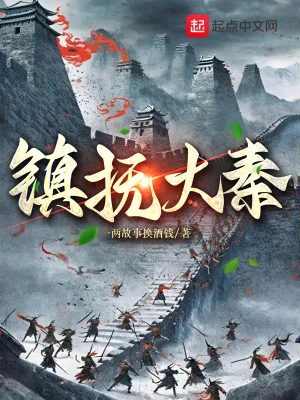
Subduing the Qin Dynasty
镇抚大秦
- Status
- Completed
- Length
- 1.8M Words
- Genre
- Historical
- Subgenre
- Qin-Han & Three Kingdoms
- Updated
- 2y ago
- Source
- Qidian
Stats
Tags
Synopsis
More by this author
In booklists 21
🎄💜 Dreamy Historical Fiction 💜🎄
💜 Historical Fiction List 💜 🔔 I don't have much time to read, so my reviews are pretty brief. Please bear with me~(•́ω•̀ ٥) 💜 Advertisers are welcome to leave their ads. Books I like will get at least a week of promotion; books I don't like will be removed. Please don't post duplicate ads! 🛎 Promotion terms for books that suit my taste: 💜 Under 100,000 words: promoted for one week~ 💜 Over 100,000 words: promoted for two weeks~ 💜 Published books with steady updates will get longer promotion~ 🔔 No

❄💜Dreamlike Book Nook💜❄
💜My list, my rules💜 I only accept six genres: urban, supernatural, sci-fi, historical, xianxia, and anime-inspired fiction~ 🔔I don't have much time to read, so my reviews are brief. Please understand~ (•́ω•̀ ٥) 💜Feel free to leave an ad. If I like the book, I'll promote it for at least a week. If I don't, I'll remove it. Please don't post the same ad more than once! 🛎Promotion terms for books that suit my tastes: 💜Under 100,000 characters: promoted for one week~ 💜Over 100,000 characters: promote
Kunlun Mirror
Some books I like, with both male and female protagonists. No harem protagonists, no ambiguous relationships, and no romance. Mostly fantasy, xianxia, historical, urban, and sci-fi stories. Reborn or transmigration plots, with a golden finger, are a must. I don't read mysteries, horror, or gay romance, and I don't like stories that torment the protagonist. Actually, I don't read any angst-heavy stories. I'm out of things to read, so please recommend some good novels!
My Five-Star Favorites
I like stories that are informative, thought-provoking, and entertaining
Test Account's Genre Lists (Light Novels, Wild-Idea Fiction, Fan Fiction)
Recommendations of ongoing and completed novels followed by the test account. Anything that hasn’t updated for over thirty days will be removed.
Books Focused on Imagination and Logic
My list mainly recommends imaginative stories with smart characters, and has fewer power fantasies. I also make sure I've read every book on it. Some other books are pretty good too, such as Old Dao's This World Is on the Brink, Riding in Another World, and Half a Frog's From 1935 to 2020. Highly recommended.

Mickey Mouse Clubhouse for a Certain No-Harem Fan♂
Solid reads to tide me over when I'm out of books
Rare Finds
No restrictions on genre. These are novels I’ve read and think are worth checking out. No promising new stories here: I’m still raising those myself, and whether they’re any good is another matter. I don’t update often, and only add books that really suit my taste. Hope you enjoy them.

🌱Promising New Releases to Look Forward To🌱
New books I've been reading lately. They seem pretty good so far. I'm looking forward to seeing how they turn out.
Yuan Yuan's Private Collection
Books I've read over the years
My Book Collection: Only the Best
I've been reading web novels for five years and have plenty of experience. Nothing on this list falls below a solid read. It's a mixed bag, with books from all kinds of genres. Some may have been abandoned or gone on hiatus, but I'll note that in the description. Updates are irregular, but I won't leave it too long. Ratings: ★★★★★ Fairy Herb: a top-tier masterpiece you can enjoy without overthinking it. ★★★★ Top-Quality Rations: excellent books with no major flaws, loved by most readers. ★★★ Sta

What Makes Them Special Is Their Warmth
All kinds of System stories, reborn stories, and transmigration stories.
🌟 What Is History? 🔥 Learn from the Past ☀ Understand the Rise and Fall of Dynasties 🔥
🌺That beloved fellow, A Gou. That’s me!🌺 🌟Countless stories of remarkable people have been passed down through the ages. They’re part of history, and they make the years more fascinating. ⚡Whenever I encounter their ideas and stories in historical fiction, I get completely absorbed.🌟 🌹This list is all about historical fiction. Remember to like, save, and follow! A Gou loves you!🌹
Heroes of the Ages: A Look Through the Dynasties
Throughout history, countless remarkable figures have left their mark. Let the authors guide you through history and experience its sweeping changes in every era.
My Book Collection
I've been a devoted reader for five years and have plenty of experience. Nothing on this list falls below fodder quality. There are no restrictions on genre, and these are books I'm reading myself. Some may be abandoned or on hiatus, but I'll note that in the description. Updates are irregular, but I won't leave you waiting too long. Rating scale: ★★★★★ Immortal grass: top-tier masterpieces you can read without a second thought. ★★★★ Top-tier fodder: excellent books with no major flaws, loved by


Behind-the-Scenes Stories Collection
Pulling the strings from behind the scenes.
Out Looking for My Next Read
☞ Drop by and read whenever you have a moment... ♛ I'll add books I've read and enjoyed here. I hope good books find their readers.
Recommended Historical Gems: Fixing the Past's Regrets and Avoiding Frustrating Plots!
Recommendations for promising historical novels. If you enjoy following historical fiction, come on in. History is full of regrets. What if Qin Shi Huang hadn’t ruled with tyranny and harsh punishments? What if Yang Guang hadn’t launched so many massive construction projects? What if Guo Jia hadn’t died of illness? What if Wang Jinggong’s reforms had succeeded? What if Tang Wan hadn’t revisited that old place? What if Wei Sheng had fled instead of waiting by the bridge? Authors can take history
Gold Rush Bookshop
Anime-inspired, historical, urban, Korean entertainment, and sci-fi

Yuan Yuan’s Picks: Historical Transmigration
If you could transmigrate, which period of history would you choose? A unified dynasty such as the Qin, Han, Sui, Tang, Song, Yuan, Ming, or Qing, or a divided era such as the Spring and Autumn period, the Warring States period, the Five Dynasties and Ten Kingdoms, or the Wei, Jin, and Northern and Southern Dynasties? Which would you pick? Help a wise ruler usher in a golden age, bring peace to a chaotic world and help its people, unify the realm and ascend the throne, or end the feudal dynastie


#New Release Preview#
A first look from a four-year-old veteran reader
Readers also read
 The Corpse Plague of 1916
 Chronicles of the Red Mansion
 An Important Town in the Residual Tang Dynasty
 In the Ming Dynasty, the Days When the Cows and Horses Turned Over
 Simultaneous Transmigration: Becoming a Legend Before the Story Begins
 Zhu Di: Are My Advisors from the Future?
 Sole Master of Mohism
 Starting with Saving Manchester United
 Myriad Worlds: Starting with Darkest Dungeon
 In the Hongwu Era, Starting Out as a Rebel
 Revealing My Identity, I Become Deputy Emperor of Shu-Han
 Northern Song Dynasty: I Spoiled the Future, and Zhao Kuangyin Broke Down
 Bad Comprehension? What’s That Got to Do with Me? I Can Unlock It All!
 Great Ming: From the Imperial Exams to Ruling the Realm
Reader comments 42
Google Translate
The pinnacle of ideological PK? As a book that is very similar to "The Master of the Ming Dynasty", where should "The Prime Minister of the Qin Dynasty" go?
{"TopicId":"847235287436099584","TopicName":"New book trial reading"} The pinnacle of ideological PK? As a book that is very similar to "The Master of the Ming Dynasty", where should "The Prime Minister of the Qin Dynasty" go? ⚡️After reading: I have read 240 chapters of "The Master of the Ming Dynasty", and I plan to read it for a while. I will wait for the May Day holiday to read it in one go. At this time, I happened to read "The Prime Minister of the Qin Dynasty", which has only tens of thousands of words (I only read it briefly, but what I want to say There are already a lot), similar settings that travel through multiple lives, similar teachings in prison, similar second-generation students, similar princes with unstable status, similar powerful emperors... Because the two books were almost read front to back, and they are still fresh in my memory, I can still remember the details very clearly, and there are many similarities. Next, I will focus on analyzing "The Prime Minister of the Qin Dynasty" mainly from the two aspects of "details" and "depth of connotation". After all, "The Prime Minister of the Ming Dynasty" has already broken out of the siege. One more review by me will not mean more, and one less with me will not be more. 1⃣️ First, in terms of details, "The Prime Minister of the Qin Dynasty" is slightly inferior to the "National Preceptor of the Ming Dynasty", which is mainly reflected in the early teaching terms, character portrayal, and detailed setting: · Teaching terms: Chapter 2, when the protagonist Ji Heng gives a lecture to Master Ji (Hu Hai) on "The Changing Situation of the World" , the previous dialogue and the subsequent dialogue were all in vernacular, and there was no tendency to use classical Chinese for daily communication. However, the teaching content in the middle paragraphs was not in vernacular, and there was no explanation. As a reader, I felt very abrupt and not smooth enough when reading. And I happened to be listening to a book at the time, so this feeling was even stronger. ·Characterization: The characters are not clear enough. For example, it is hard to tell whether Hu Hai is good or bad, loyal or traitorous. Historically, I most likely hate him. However, in this book, apart from speaking for Zhao Gao, I have not seen his problems or flaws for the time being, so I don't know how I should treat him, so the sense of substitution will be much worse. Another example is Prince Fusu. Maybe I like him more than Hu Hai, so when the author describes his mood swings, my desire to complain is full. Why? Because Young Master Fusu's behavior was inconsistent with his identity and thoughts. Although he was clearly not afraid, he would still "feel frightened" from time to time. When encountering problems, he immediately "passes the blame", which makes Fusu appear to be emotionally unstable, unstable, immature, and startled, which does not match his level of education in history. As a reader, I am not optimistic that he can be a good king of a country in the future, and my expectations for his future have been greatly reduced. Compared with Hu Hai and Fu Su, the shaping of the First Emperor was much more successful, which finally made me feel more at ease. · Detailed settings: What dissatisfied me most is that when the protagonist Ji Heng gave a lecture to Hu Hai in prison, the First Emperor and Fusu were listening next door. As a result, the First Emperor and Fusu could hear the voices of Ji Heng and Hu Hai clearly. , And Ji Heng and Hu Hai could not hear a single word of the conversation between the First Emperor and Fusu, but the author did not set a single sound transmission function for the wall like Xihu Yuyu did in "The Master of the Ming Dynasty", so how did he do it? In short, for readers like me who are obsessed with details and suffer from late-stage obsessive-compulsive disorder, who need to find a sense of empathy through details, it will be quite uncomfortable if the above three points are not handled well, especially after reading "The Master of the Ming Dynasty" first. 2⃣️ Second, in terms of depth of content: · "The Imperial Master of the Ming Dynasty" has been stable so far, using the most simple (learned in high school) history (tax reform) and political knowledge from the very beginning Later, it gradually deepened, and the dynastic periodicity, geopolitics, and world island wars in "On National Destiny", "On Sea Power", "Chinese Monetary History", etc. Were all explained in simple terms and enlightening. My scalp went numb after reading it because it was so shocking. But when I was reading this book, I was very worried about one thing. I was very afraid that in the later period of West Lake Yuyu, I would copy the development of the West, such as colonial genocide, constitutional monarchy, etc. This would abandon many of the advantages of Chinese culture. Instead, I would release Dora's Box and let rampant desires corrode the Ming Dynasty in the book. I hope my worries are unfounded... Please🙏 · As for "The Prime Minister of the Qin Dynasty", I don't think the author will follow the path of "The Imperial Preceptor of the Ming Dynasty". After all, the reality of the two dynasties is completely different. The Ming Dynasty has the conditions and the need to develop industry. In addition, the rise of the West is very close, so the string must be tightened and there must be a strong sense of crisis. The Qin Dynasty is different. It is far from meeting the conditions for the development of industry in later generations. If it jumps over a thousand years of development and directly industrializes, wouldn't it be a typical negative example of a step that is too big and easy to be trivialized? ! Therefore, "The Prime Minister of the Qin Dynasty" must follow a path that is suitable for this era. It would be great if the author asked Ji Heng to explain it in a thorough, thorough, appropriate, logical, well-reasoned, and easy-to-understand manner... That would be great. If this is really the case, it will be just around the corner for "The Prime Minister of the Qin Dynasty" to break out of the circle and fight his way out of the siege! This is what I, as a reader, really look forward to seeing. Come on, author! ! ! Final conclusion: No matter how you say it, "The Prime Minister of the Qin Dynasty" is still worth looking forward to and reading. However, Wen Wen recommends that it is best not to read "The Prime Minister of the Ming Dynasty" first, which will make it easier to read. As a new author, the writing style of "One or Two Stories for Drinking Money" is still good, please stay tuned~!
There has been a shortage of books recently, and I can't read them with interest. You can keep it up for a while. Here are some historical texts that I recommend that I have read and left a deep impression on. Give me a thumbs up for Jingming, Prime Minister of the Qin Dynasty, High-ranking Hanshi, Wenkui at the end of Han Dynasty, First-rank official residence, Floating life in the late Tang Dynasty, End of the Song Dynasty, Elegy of the prosperous Tang Dynasty, and The troubles of finding one's heart in the Northern Dynasty emperors.
It is quite well written. This book and the Master of the Ming Dynasty discuss the guidance of governing the country from two aspects. This book is biased towards the wisdom of governing the country in ancient China, while the book of the Master of the Ming Dynasty is biased towards the summary experience of modern Western countries. I just read it. I don't know how it will be written in the future, but now this book is very thought-provoking, especially about the many views of the First Emperor's unification of the six countries. And I also read part of the book of the Master of the Ming Dynasty. I have always felt that there is something wrong with this book. But I never thought about it clearly, so I stopped reading. It wasn't until I read this book that I realized that it turned out that I was not accustomed to the climate. His theory looked good, but it was very difficult to implement it in practice, so I felt something was wrong and stopped reading. I don't know if this will happen later in this book.
Let me say that the author's research on Qin is not very deep. It is recommended to take a look at the latest research. We actually have misunderstandings about the demise of Qin The first is that Qin really did not lose the support of the people. Those who say that Qin has high taxes and many corvees are mostly slanders for later generations. Judging from the Qin bamboo slips unearthed from the Qin Mausoleum, the taxes of Qin were lower than those of the Han emperors Wen and Jing. The taxes of Wen and Jing's rule, which was said to be self-cultivation, were higher than even during the reign of Ying Zheng. It can only be said that the Han Dynasty spared no effort to smear Qin. Qin's Epang Palace and the Great Wall did not have as many people as you might imagine. Sima Qian's casual handwriting of more than 700,000 people to build Epang Palace has long been falsified by today's historians, because Xianyang could not bear so many people. In addition, judging from the drawings of Epang Palace, the amount of work was not that exaggerated, and was not much different from that of many Han emperors in later generations. The real and more credible number is hundreds of thousands, and they are divided into three groups, each working for three years. There are many soldiers repairing the Great Wall. Another thing is that after Qin fought the unification war, there were many prisoners of war. Qin used these prisoners of war to carry out construction, instead of recruiting farmers from among the people. Qin attached great importance to agricultural production The second is that basically none of the anti-Qin forces were pure peasant uprisings. Chen Sheng and Wu Guang are actually an army, and the army must have strict discipline. Strictly speaking, Chen Sheng and Wu Guang are called army mutinies. Moreover, the anti-Qin forces are basically the remnants of the Six Kingdoms. Liu Bang also made his fortune relying on the remnants of the Six Kingdoms. The third thing is, don't think too much about the Han Dynasty. Everyone in modern times knows that war definitely hurts the people the most. During the five years of conflict between Chu and Han, the number of soldiers who died alone was over a million, and they were still strong men, and this did not include the losses of Liu Bang and Xiang Yu who massacred the city. At that time, the total population was about 20 million, which can be said to have basically accounted for one-third of the young population. As for Liu Bang, he entered Xianyang and inherited Qin's system, greatly squeezing the people of Qin and Shu. He defeated more than 500,000 soldiers in the Battle of Julu, and later squeezed more than 300,000 soldiers from those two places. Chun Chun sent all the men from those two places to the battlefield, and with so many troops there had to be food supplies. On the one hand, the fundamental reason why Liu Bang was able to win was that he inherited the institutional advantages of the Qin Dynasty, such as high-speed recruitment of troops and military supplies, and high administrative efficiency; on the other hand, Liu Bang did not regard the people in his base area as human beings at all, and simply squeezed them to death. Therefore, it is completely unreasonable to put Liu Bang on Liu Bang's head when it comes to winning the hearts of the people. He only won the hearts of the people by arranging obedient historians to record them The direct cause of Qin's demise was the chaos of Hu Hai and Zhao Gao. On the other hand, the aristocratic power is still deeply rooted. This is the essential reason. Of course you say that Qin Law is not suitable for the Six Kingdoms of Kanto. Indeed, this can only be part of the reason. What Qin Law really offends is the aristocracy and warrior class of the Six Kingdoms of Kanto, not the lowest slaves and farmers. Finally, Xiang Yu, the fierce man descended from heaven. Zhang Han was defeated abruptly. Before the Battle of Julu, Qin's military situation was really good. Zhang Han's fighting style was steady and steady, basically fighting for national strength. Everyone knows that if it were not Xiang Yu, Zhang Han would probably take over the Six Kingdoms again (provided that Hu Hai doesn't mess around) Historically, if Fusu did not commit suicide and returned to Xianyang to preside over the government, Meng Tian still had an army of 300,000 men. There is still one year left before a nationwide rebellion. As long as Fusu can fight back to Xianyang and rectify Hu Hai, basically relying on Qin's national strength foundation and the quality of its generals, it will be impossible to defeat the Six Kingdoms again. It's not like an old gangster named Liu Ji made everything cheaper later
IntroductionAfter reading this book, it is indeed very good. Although the beginning is similar to the routine of the recently popular "Master of the Ming Dynasty", the essence is different. One is the Ming Dynasty, the other is the Qin Dynasty, one is to develop capital, and the other is to attack capital. One is the transformation of the peaceful and prosperous times, and the other is the saving of the building from collapse. The routes are different and comparison is meaningless. [Recommendation] Nine reincarnations, time and space are reversed. Once reincarnated into this world, sit back and watch the changes, and try to see if Ji Heng can go against the general trend of the world, suppress the safety of the empire, and solve the overall situation of the ages. [Highlights of this book] I think the nine reincarnations are a very good point. Don't tell others to be kind if you don't know others are suffering. It is a very stupid approach to talk about all kinds of things directly after time travel. To promote something without practice can be said to be completely wrong and completely whimsical. The protagonist of this book makes people feel that he is doing practical things. He did not say that everyone is equal at the beginning, nor did he directly set up any positions at every turn. Instead, he bought time for Da Qin by cutting off his flesh to feed the wolves, which felt very real. There has never been anything that can directly reverse the general trend of history. Only by starting from the details and influencing the direction of the general trend by reversing the small trends can we truly change history and have a new ending. [Reflections after reading] It is highly recommended to read it. This is a book that is truly written from the heart, rather than just a fantasy. The author may have checked a lot of information and felt that the background was rigorous and very good.
Zhang Juzheng's evaluation of the Qin Dynasty and his views on the demise of the Qin Dynasty are similar to the views of many people today.
I feel like the author thought Qin was a bit weak.
The biggest flaw of this book is that Hu Hai is written too much like a thing. Judging from historical records, he is not a thing at all.
Aren't those nonsense alchemists killed by the First Emperor "experts"? No wonder they have been smeared for thousands of years😂
First of all, observe and observe. The author can learn from other good books about the Qin Dynasty. At least he can learn from some thoughts on the system of the times and spiritual culture. Qin officials, picking up a Shihuang, etc., It is best not to have too many pure opinions on the advancement of the times. Be careful when writing. Don't directly ignore the limitations of the times and geographical restrictions like the Ming Dynasty. Suddenly started to engage in constitutional monarchy and separation of powers. I originally subscribed to more than 200 chapters and gave me the poison.