


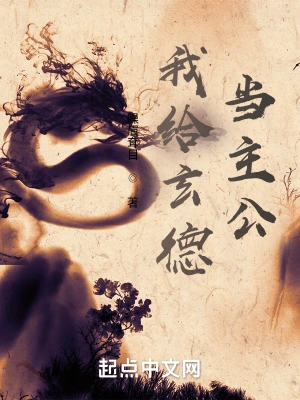
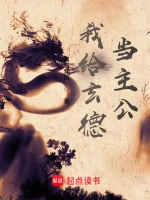
I Serve as Xuande's Lord
我给玄德当主公
- Status
- Completed
- Length
- 2.6M Words
- Genre
- Historical
- Subgenre
- Qin-Han & Three Kingdoms
- Updated
- 6mo ago
- Source
- Qidian
Stats
845Chapters
2Votes
58.8kRecs
225.8kFans
Tags
Synopsis
More by this author
In booklists 8
The Green Hills Remain, While the Sunset Glows Again! Historical Bookshelf
Five thousand years of Chinese history: excellent historical novels with over 10,000 subscriptions, recommended here.
87Books15.4kFollows22dUpdated
Favorite Picks
Finding good books and collecting the best
48Books2.6kFollows1moUpdated

Books I Read, Do Not Disturb
The characters have brains
13Books1Follows1yUpdated


A Hodgepodge of Great Reads and Promising New Novels: Douluo and Swallowed Star Fan Fiction, Heavens, History, Xianxia, and More
Put together by a ten-year veteran reader. I mainly recommend high-quality, distinctive stories with a positive message.
22Books230Follows2yUpdated
Not Sure If These Are Your Cup of Tea, but They're Definitely Mine
You can tell just from the title.
11Books5Follows2yUpdated
My Reading List
Take a look
9Books3Follows2yUpdated
A Newbie’s Three Kingdoms Reading Picks
The Three Kingdoms, the Three Kingdoms! Who could fail to love an era teeming with heroes and shining stars?!!! (⌯︎¤̴̶̷̀ω¤̴̶̷́)✧︎
6Books28Follows3yUpdated

A Newcomer’s Reading List ♬︎*(๑ºั╰︎╯︎ºั๑)♡︎
I'm a newbie, and this is my first time making a reading list. I'll do my best to recommend all the good stuff to everyone! ❛˓◞˂̵✧
6Books28Follows3yUpdated
Readers also read
 Seizing the Direct Descendant in the Red Mansion
 A Literary Master in Ancient Greece
 Great Ming: His Father Is Useless, So He Must Summon the Founding Emperor
 Germany: 1914
 Forum Troll, Romance Master
 I Found the First Emperor
 The Ambitious Hero of the Late Eastern Han
 Hong Kong Films: In Wo Hop To, Uncle Deng Begs Me to Take Charge
 I’m Not a Suit-Wearing Thug, I’m a Chameleon Actor!
 The Grand Strategists' Alliance
 The Han and the Traitor Cannot Coexist, the Royal Cause Will Not Cower in a Corner
 My Father Is Liu Bei, Strive to Become a Dragon Like Your Father
 A Gentleman in the Three Kingdoms
 Three Kingdoms: Drive Out the Sun Clan and Restore Han Rule to Wu
 I Am a Rebel in Black Mountain
 I Rule the Yuan Clan in the Three Kingdoms
 The Three Kingdoms: I Begin by Riding Alone into Jingzhou
 The Greatest Son-in-Law in History
Reader comments 43
Google Translate
[Book Review] Time Travel Wen You Ge Ge is really brilliant
This book is a successful time-travel historical text. Why is it successful? Because the author grasps the real advantages of time travellers. What is the biggest advantage of a time traveler? Did you know it from birth? Do you know the heroes of the world? Do you know about future technology? Are you aware of historical events? None. The real advantage is that as a modern person, a comprehensive view of history across five thousand years is the pattern. Mediocre authors simply cannot control this point. Why can the protagonist have smooth sailing no matter whether he is making waves in the officialdom or recruiting troops? Because his position is too advanced. Do you want to restore the Han Dynasty? Does he want to revitalize the family? Does he want to eliminate violence and bring peace to the good people again? Well, my purpose is to revitalize China, to make the entire nation prosperous, and to make the Han Dynasty great again. I am the ultimate goal of all your goals. When my goals are achieved, your goals will naturally be achieved. What? Are you concerned about whether you can get a salary increase? Forget about salary, you will be the boss. I am discussing with the emperor to create a business environment in order to support a group of outstanding private entrepreneurs like you to contribute to the country. What? Are you worried about other businesses doing well? Don't be stupid, no matter how good he is, he will only sell goods. We are engaged in hybrid rice and manned spaceflight-level Cathay people's livelihood projects. If they are successful, they can be included in Chinese language documents. Will you fuck with me? The authorities are obsessed with it. The understanding and vision of historical figures are limited by the times. No matter how smart Zhuge Liang is, he cannot come up with ideas such as "jointly building a global village". The real advancement of modern people relies on the depth of history. It does not mean that modern people are powerful if they make all the smart people in ancient times look like fools, nor does it mean that modern people will be powerful if they develop gunpowder to shoot at the three armies. It is that they can stand out among a group of smart people, break the rules, convince a group of capable people, and be able to do greater things than before. This is the genius of this book.
I laughed so hard. I read this novel while squatting on the toilet for half an hour. I almost couldn't stand up. If the author had written more, I might have donated my legs to the toilet🚽
After reading this book, other Three Kingdoms novels seem bland and boring. Other novels are basically a copy of the Romance of the Three Kingdoms, which is not rigorous at all. It contains a bunch of modern words and has no ancient flavor at all. I hope the author will continue to maintain this style in the future.
Regarding the imperial examination and the imperial examination Nowadays, when we talk about the imperial examination system, everyone thinks that it is a backward and catastrophic policy. When it comes to the imperial examination, it is regarded as a standard... If we carefully study the historical laws, we come to the surprising fact that during the period when the imperial examination was booming, our country and the nation as a whole were in a conservative and conservative stage. During the period of the decline of the imperial examination, we as a whole were actively exploring outwards. Let's demonstrate through various historical periods: Since the Qin Dynasty established a centralized dynasty, the two Han Dynasties were our first period of development. After inheriting the basic plan of the Qin Dynasty, we developed the Western Regions, Sanyue (Nanyue, Ouyue, Minyue), Liaodong (+North Korea), Southwest, and Monan. Many of these places were later lost due to wars, but they provided the basis for our subsequent unification. The second development stage was in the Sui and Tang Dynasties, which added Qinghai-Tibet and Mobei to the two Han Dynasties, but neither was completely included in the rule. The third stage was the Yuan and Ming dynasties (Song Dynasty? Bah ~ shameful stuff. The Yuan Dynasty was too short to support a pioneering period, Genghis Khan's Mongol Khanate... You know, it was basically a one-shot existence...) The direction of development during this period was basically in Qinghai-Tibet and the southwest region. The legal basis for rule was established in Qinghai-Tibet, and the southwest provinces were completely included in the rule. The last pioneering period was during the Qing Dynasty. I have to say that the Qing Dynasty exerted a lot of force on our land. In addition to the Northeast and Monan that it conquered before entering the Customs, it also successively brought Qinghai, Tibet, Mobei, and Xinjiang under its rule. Looking at the corresponding development of the imperial examination system, since the birth of the Sui Dynasty, the imperial examination system in the Sui and Tang Dynasties was completely different from what we know later and what we know now, just like the difference between the Sui and Tang Dynasty Grand Canal and the Beijing-Hangzhou Grand Canal. First of all, not everyone could participate in the imperial examinations of the Sui and Tang Dynasties. They had to have letters of recommendation from officials of a certain level. Moreover, the imperial examinations were not anonymous, and there was no teacher avoidance. The most important thing was that there were few officials who came from the imperial examinations, and their futures were not so bright. Throughout the Sui and Tang Dynasties, the inspection and promotion of noble families was still the most important way to select officials. In the following Song Dynasty, the imperial examination was booming. The number of officials who passed the imperial examination was rising steadily. It was not uncommon for seven or eight officials to be in one position, but I didn't see any great achievements. I still just wandered around in the Central Plains, not to mention Hexi... There was no shortage of oppression of the people, and the level of corruption among officials was even higher... It was just a naked butt grinding, going around in circles to embarrass people. In the Yuan Dynasty, only a few imperial examinations were held in the past hundred years, and these were mostly during the period of imminent destruction. The Ming Dynasty was also an important stage in the development of the imperial examination. However, during the most powerful period of the Ming Dynasty, that is, the period of Taizu Taizong, the imperial examination had little status. Emperor Hongwu stopped the imperial examination more than ten years after the Nanbei Bang case. He always liked to use the Imperial College to supervise students. In the era of Emperor Yongle, the imperial examination was basically held normally, but many great talents had to go through the "imperial prison" to complete their "transformation". In the Qing Dynasty, especially in the early and mid-Qing Dynasty, the imperial examination was only responsible for the selection of basic officials, responsible for the selection of ordinary magistrates, county magistrates, academic administrators and assistant officers. The key positions of ministers, governors, governors, and resident generals were basically talents selected by the emperor from his own talent pool. Moreover, as the "national" Eight Banners people of the Qing Dynasty, they did not need to take the imperial examination to become officials. The emperor could directly select them. In the final analysis, the imperial examination is a way to select talents. It is extensive, fair, scientific, and advanced, but it does not mean that it is a universal truth. It is a kind of procedural justice and a policy that stabilizes basic governance. If the collusion in the imperial examination system is a divergent regional collusion through the collusion of the governors and families, then the nationwide covering collusion formed by the imperial examination system is even more terrifying, and the new political struggle brought about by the imperial examination - party struggle is harmful to the country and the people. This kind of political struggle that only focuses on positions, regardless of right or wrong, destroys the body and annihilates the spirit, has ruined the Tang Dynasty one after another. The three dynasties of Song, Ming and Ming were so terrifying Moreover, with all due respect, in addition to expanding the channels for selecting officials, the imperial examination was also developed to have a private function, which was to waste the time and energy of young intellectuals. During the Sui and Tang Dynasties, there was a saying that "fifty young Jinshi, thirty old Ming Jing", Fan Jin in the Scholars and Foreign History was also over fifty years old and still taking the exam. It was the use of the imperial examination, a fair and just channel, to firmly control intellectuals, especially young intellectuals: If young people have nothing to do, don't bother or ponder. If you are energetic, just study for me and prepare for the exam... You must know that becoming an official at the age of twenty is compared with becoming an official at thirty, or becoming an official at thirty compared with being an official at forty. Not only are the career prospects completely different, but even what they do is very different. Cao Cao, who served as the Northern Lieutenant of Luoyang when he was in his twenties, dared to use five-color sticks to punish the families of eunuchs who committed crimes and took risks to assassinate Zhang Rang. However, Cao Cao, who was thirty years old, was concentrating on studying in his hometown. Xun Yu, who was in his twenties, served as the palace guard. After several years of experience, he defected to Cao Cao and became Cao Cao's minister of political affairs and chief steward. What is the difference between Cao Cao and Liu Bei? As for the starting point, when Lao Cao was in his twenties, he already had a thorough understanding of the leadership and administrative operations of the central government at all levels, while Lao Liu was still living in a mixed society. As soon as Lao Cao started the war for hegemony, he knew that he had to find a place to develop in peace, cultivate people's livelihood, organize the army and prepare for war, recruit talents, make friends at a distance and attack at close range... It took Lao Liu more than 20 years to realize this, and it was under the Prime Minister's instructions. Therefore, after Lao Liu and the Prime Minister talked about Longzhong, he felt "a sudden enlightenment". He really realized it, but he was still more than twenty years behind Lao Cao. Lao Cao had basically unified the north, and Lao Liu just figured out how to fight for hegemony and started his own business... In a word, you have to get famous early, and you have to succeed early. Late bloomers are special cases, and all stupid birds know how to fly first. Among the officials who passed the imperial examination, those in their thirties were considered young, and they were already married. Some were older and some were younger. The ambition I set in my early years has been realized (the ambition is to pass the exam), and my subsequent career will basically be the enjoyment of completing the task. If the imperial examination is the foundation for stability, then the imperial examination is a probabilistic explosion. To sum up, I personally think that the Qing Dynasty's political team composition method is the best. Under the condition of ensuring the imperial examination of basic officials, the emperor has special imperial examination power. If the emperor thinks that a young man is good, he first calls him to be a guard. Once the real ability is tested, the grassroots level of experience will be delegated. The promotion speed of the people under the emperor's personal care is not very fast, and it will not take many years to return to the emperor. There were many such people in the early and middle periods of the Qing Dynasty. In their thirties, they became ministers, ministers, military aircraft officers, and even military aircraft ministers. The central government is different from the local governments. The central government needs talents and great talents. Some powerful people cannot pass the imperial examinations. It is a pity that talents are the second priority if such people are left behind. If it causes a brain drain and harms you, then you will suffer... The imperial examinations also need checks and balances. If you were to play purely imperial examinations, the scholar-bureaucrats in the Song and Ming Dynasties would shamelessly tell you what "people's hearts and minds" mean, what "not competing for profits with the people" means, and what it means to "share the world not with the people, but with the scholar-bureaucrats"...
Let me sigh, I didn't expect that the Three Kingdoms area would eventually be occupied by officialdom novels. The few Three Kingdoms novels published in recent years are all officialdom novels. It's really difficult to find a decent war novel. I still remember that the author's Yuan Jia Wo Zhu Zhu and Shu Han Wo Zhu Da were both excellent Shuangwen works, but now they have also moved towards officialdom literature.
There are various factions in the party. In history, a large part of the reason for Yuan Shao's defeat was the intensification of the struggle between the Yingchuan faction and the Jizhou faction, which undermined each other and led to his defeat. A brief summary of the current factions within the protagonist's power should be divided into three factions. The Youzhou faction headed by Liu Bei, Guan Yu, Zhang Fei and Jian Yong represents the interests of the Youzhou family. The Jizhou faction represents the interests of the local aristocratic family through the tearful award of Tian Feng.
The writing is really good and very fascinating. It is a bit superficial for me, a ten-year-old bookworm, but I can read it. If the author can read it, I would like to say a few words! The protagonist you describe is a bit like a saint. He is not lustful, has a deep brotherly love, and is quite serious about women, but he lacks some sense of reality. The man's shortcomings, character flaws, and lack of courage are not shown. If the author can improve it, the protagonist can be considered complete. Recommend this book here too! ! ! There are no problems with the logic of the story, the politics are fairly easy to understand, and the conflicts are clearly described. However, the characterization lacks a little strength. It is an excellent book, and it can be easily addictive for bookworms who have been reading for three or four years.
I was just about to quit when I saw that the author was quite surprised
If you can be the emperor, just do it. Why should you tie yourself up and leave yourself with a perfect reputation? Speechless
Good guy, the author wanted to write more about women but was afraid that the protagonist would ruin his character, so he made a plan to give women to the protagonist. Damn, that's awkward. You want to accept women in a normal way? I'll go.