


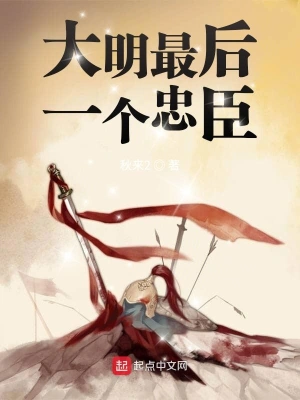
The Last Loyal Official of the Great Ming
大明最后一个忠臣
- Status
- Completed
- Length
- 607k Words
- Genre
- Historical
- Subgenre
- Song-Yuan-Ming Dynasties
- Updated
- 4y ago
- Source
- Qidian
Stats
Tags
Synopsis
More by this author
 Three Kingdoms: Don't Get Me Wrong, I'm Not Targeting You.
 Start by Killing Japanese Pirates
 I'm Such a Good Person
 My Cultivation of Immortality Relies on My Liver Brother
 The Death-Defying Brigade in the War of Resistance
 Zhu Yuanzhang Can See My Dreams
 From Courier to Emperor
 How to Topple the Empress
 Starting at Changban Slope
In booklists 4


Nurture Newcomers, Seek Xianxia Gems, Avoid Toxic Reads
I’ve been an avid reader for ten years and only read the best, though of course, the best books that suit my taste.


A Little Book Bag With Absolutely No Standards
I actually use this list as a bookshelf. I add books I've finished or that haven't finished updating yet, then wait until they've built up enough chapters to binge. So I have no particular standards for what I collect here. I don't care about recommendations, favorites, or monthly ticket rankings. I just go by the book's appeal, its updates, and whether it has been abandoned. Anyway, everything on this list is something I've read, so if you find something you like, give it a try. The rest doesn'


Novels I Like. Good Books Are Hard to Find, and a Reading Slump Is Miserable
Just my personal taste. If it's not for you, please quietly head out. Thanks.
Mainly Recommending Late Ming Novels!
No marriage alliances, no reparations, no ceded territory, no tribute. The emperor guards the frontier; the ruler dies defending the state. After the Yuan dynasty fell, the Ming was established by the Han people on Chinese soil. Its founding improved the status of the Han, restoring the majority population to a commoner's standing and creating favorable conditions for China's future development. Though the Ming realm was smaller than the Yuan's, at its height it held the Mongols in check to the
Readers also read
 My Father Is Wen Tianxiang, and We Win the Battle of Yashan from the Start
 Daming: Asking for the Throne at the Beginning, Lao Zhule Went Crazy
 A Guide to Building Civilization in a Primitive Tribe
 My Only Method: I Will Add More Points to Become Stronger at the End of Ming Dynasty
 Slaughtering My Way Through the Marvel Universe: Starting with The Boys
 The Age of the Yellow Sky
 Liu Xie: I Really Just Want to Abdicate!
 The Road Less Traveled
 The World of the Extreme Path: Tempering My Body Through Terror
 Transmigrated to the Ming Dynasty to Become a Tyrant
 A Plan to Revive the Northern Song
 My Big Brother Is Called Zhu Chongba
How to Topple the Empress
From Courier to Emperor
Zhu Yuanzhang Can See My Dreams
The Death-Defying Brigade in the War of Resistance
Starting at Changban Slope
My Big Brother Is Called Zhu Chongba
How to Topple the Empress
From Courier to Emperor
Zhu Yuanzhang Can See My Dreams
The Death-Defying Brigade in the War of Resistance
Starting at Changban Slope
Reader comments 32
Google Translate
Many novels written in the late Ming Dynasty were either depressive or violent. After all, it is a period of humiliation, and the era is relatively recent, so it is not as easy to compile as before the Song Dynasty. Combining the appearance of historical figures with the humor of the writing style is not as easy as in the previous book. Wait and see
On the morning of March 19, the seventeenth year of Chongzhen (1644), Emperor Chongzhen Zhu Youjian, accompanied by the eunuch Wang Chengen, climbed Meishan (Jingshan) and hanged himself from a crooked old locust tree near the Shouhuang Pavilion on the mountainside. Wang Chengen also hung himself from the crabapple tree next to him. At noon, Li Zicheng entered the palace and ordered: "Those who offer themselves to the emperor will be rewarded with tens of thousands of gold and be made count. Those who hide themselves will be exterminated." Chongzhen's body hung from a tree for three days. It was not discovered until March 21. It was parked outside Donghua Gate and placed in a willow coffin. Li Zicheng ordered Chongzhen to be buried on April 4th. During the reign of King Fu, he was given the posthumous title Zhongmin. Chengen was later praised by Emperor Kangxi of the Qing Dynasty, and a monument and biography of Wang Chengen were erected near Siling. So the last loyal minister of the Ming Dynasty🙂🙂
To be honest, when I read this book now, the author has worked very hard on it, and it seems that he has been working hard on the refreshing style. But will this book still have any vitality if this continues? If historical novels lack depth and a certain level of thought, their fate will be worrying.
The initial transformation of high-end is unprepared
The opening chapters of this book are really well written. The description of the war scenes and the environment are basically in line with the era of hot and cold weapons wars. After escaping from Chengdu, I started to let myself go more and more, as if it was written by another person, and the attraction suddenly stretched... And the bandits went further and further into internal fighting... On the whole, the spirit of the beginning was lost... This period is the most interesting, but the author wrote Pig's Foot as a low-key character. The period of saving the nation is not suitable for low-key development in the rear. . . . . To a certain extent, it goes against the theme of saving the nation from extinction...
Write less female lead roles. Before it was released, the heroine had a lot of scenes, so I almost gave up on it. As exciting as the opening chapter is, the first twenty chapters are terrible.
Let's talk about Zhu Yuanzhang who joined the Red Scarf Army in 1352. At that time, Guo Zixing and Sun Deya had already occupied Haozhou. "General Yuan Cheli did not dare to attack, but he captured good people in Japan and invited them to reward him." In the winter of this year, Jia Lu came to attack Haozhou. In the spring of the next year, Jia Lu died and the siege was relieved. Zhu Yuanzhang began to establish his own branch, eliminated the Zhang Zhiyuan Department of the Yuan Army, and occupied Chuzhou. In 1354, during Tuotuo's southern expedition, Zhu Yuanzhang negotiated peace with him, and Tuotuo was able to concentrate on dealing with Zhang Shicheng. Tuotuo was later dismissed from office. In 1355, the Yuan army launched a massive attack on Hezhou and was defeated by Zhu Yuanzhang. Zhu Yuanzhang captured Taiping and led Guo Zixing's old troops. In 1356, Zhu Yuanzhang conquered Jiqing and became the Duke of Wu. It is unfair to say that Zhu Yuanzhang took advantage of Liu Futong. From the above timetable, we can see that Zhu Yuanzhang's achievements were also obtained through bloody battles with the Yuan army. However, Liu Futong persisted in resisting the Yuan Dynasty for 12 years and regained Bianliang. The contribution of the three-way Northern Expedition cannot be ignored. At the end of the Yuan Dynasty, all the heroes contributed to the fight against the Yuan Dynasty, and it was not Zhu Yuanzhang alone. Under the repeated attacks of various anti-kings, by the time Zhu Yuanzhang occupied Jiqing, the Yuan Dynasty no longer had much power to interfere in the south. The rule of the Yuan Dynasty was not strong in the last years of the Yuan Dynasty. The south had long entered a state of separatism among the heroes, so Zhu Yuanzhang was able to build high walls and accumulate grain. Among the peasant armies in the late Ming Dynasty, the early leaders He Chongwei, Zhang Cunmeng, and Wang Jiayin also tried to separate one side from another, but they all died miserably because they simply did not have such conditions. The demise of the Yuan Dynasty was a gradual process, and in the Ming Dynasty, until the last year before Chongzhen hanged himself, the court still had control over most local officials and could still mobilize an army of 100,000 to fight Li Zicheng. Until Sun Chuanting's death, the last bit of energy was exhausted, and it collapsed. The Yuan Dynasty was a person who stayed on the bed for a long time and finally died, while the Ming Dynasty was more like a sudden death. Although his physical condition had been deteriorating before, he was still alive and kicking. Precisely because the Ming Dynasty suppressed the peasant army much more severely than the Yuan Dynasty, Li Zicheng's state in 1643 was equivalent to Zhu Yuanzhang's state in 1356. Did Zhu Yuanzhang have a complete political power in 1356? Do you have a strong team? Is there a thorough system in place? Aren't you going to kill the local tycoons and take advantage of the big ones? How many outstanding performances did Xu Da, Chang Yuchun, and Li Shanchang perform before 1356? The historical tasks that Li Zicheng had to undertake in 1644 were much heavier than those that Zhu Yuanzhang had to undertake in 1368, because the Qing Dynasty was much stronger than the Yuan Dynasty in 1368. It is natural that Li Zicheng's performance is not as good as Zhu Yuanzhang's. In 1644, Li Zicheng faced twelve enemies at the same time: 1. The Qing army led by Dorgon 2. Zhang Xianzhong's Great Western Army 3. The Nanming army led by Ma Shiying, Shi Kefa and others. 4. Guan Ning's troops from Wu Sangui, Gao Di and others 5. Feng Quan, Ling Jun, Lu Deshui and other country squires in North China 6. The surrendered army represented by Jiang Yu in Xuanda area 7. Tuzhai forces represented by Liu Hongqi in Henan 8. Zuo Liangyu's tribe in Wuchang br> 9. The peasant army rebel general Wang Guangen in Yunyang 10. The chieftain forces in Qinghai 11. Xitao Mongolia 12. The surrender of the Ming Dynasty in Shaanxi These twelve forces either openly became enemies of Li Zi, or surrendered in name, but in fact they formed their own faction. If we want to subdue them one by one and slowly digest them, how long will it take? Zhu Yuanzhang spent twelve years to pacify the south. Did Li Zicheng have twelve years? At the beginning of 1644, the Qing army was already preparing for war. Hong Chengchou and Sun Chuanting were already finished, and Chongzhen no longer had the main army in his hands that could hold back the Qing army. The Qing army did not know that Li Zicheng was coming at first, so their plan was to break through the Great Wall from Jimen and then attack Shanhaiguan from behind. At this time, Chongzhen had no troops available, and the strongest combat force in the Gyeonggi region was Tang Tong. Faced with such a situation, it is obvious what choice Wu Sangui would make when surrounded by the Qing army. If Li Zicheng had not chosen the Eastern Expedition, the Qing army would have easily captured Zhili, Shandong and even Shanxi. Once the Qing army moves south, how many days can the small court in Nanjing resist? In 1645, Duduo went south in March and entered Nanjing in May. This was the result of a year of management by Ma Shiying and Shi Kefa. No matter whether Li Zicheng chooses Huguang or Sichuan, he will not make progress too quickly. If he had not fought the Qing army, the Qing army would have controlled Zhili, Shanxi, Shandong, southern Zhili, a small part of Henan plus half of Zhejiang by the summer of 1644. And what can Li Zicheng do in these six months? At most, it would be enough for him to eliminate Zuo Liangyu and control Huguang. If you choose to go to Sichuan to fight Zhang Xianzhong, you may not be able to win it in half a year. At this time, Li Zicheng relied on the two poor provinces of Henan and Shaanxi, as well as Huguang, which had just been conquered and had no time to operate, to fight the Qing army, which had occupied half of China and gained the wealth and wealth of Jiangnan. Could it be that he had a chance of winning? If you want the Ming Dynasty to serve as a buffer between Qing and Shun, you must not eliminate Sun Chuanting, but Chongzhen and Sun Chuanting may not agree with this plan.
Everything is just for loyalty
Just say a few words! I am an experienced Ming Dynasty fan, and I have read almost all Ming Dynasty novels on the market. You can watch it at the beginning, but you can hardly watch it at the end. The one that I can completely read is Wu Laolang's (Returning to the Ming Dynasty to Be a Talented Scholar). Today, when I was writing a novel in the late Ming Dynasty, I suddenly saw this book, which really made my eyes light up. This novel is written in a tight, exciting and somewhat logical way. I hope the author will take Chang'an's 12 hours as an example. Don't click too much on the technology tree. Use your brain to play with the end of Ming Dynasty. For example, if the author does something exciting, it can attract those who were loyal to the Ming Dynasty in the late Ming Dynasty. It's rolling like a snowball. Rather than being written in a unified way like those late Ming Dynasty novels. Farming. Make guns, line up and shoot. Seeing too much makes me sick! Finally, I hope the author will continue to work hard. I hope to write like Wu Laolang. At least compare. Forget about other late Ming Dynasty novels.
Emperor, look how loyal this is
I watched it at the beginning, and the protagonist was shocked again. The others acted like fools and cooperated with the protagonist. It was such a mentally retarded plot.