


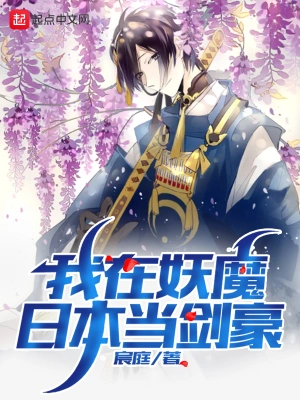
I’m a Swordmaster in Demon-haunted Japan
我在妖魔日本当剑豪
- Status
- Completed
- Length
- 495k Words
- Genre
- Light Novel
- Subgenre
- Original Fantasy
- Updated
- 5y ago
- Source
- Qidian
Stats
241Chapters
0Votes
4.4kRecs
34.4kFans
Tags
Synopsis
More by this author
 Zongwu: the Imperial Examination Is About to Take Place, and I Realize That My Mother Is Extinct.
 Fabricating Myths: I, the Sky at the End of Han Dynasty
 One Piece: Reading Makes Me Stronger
 Bleach: Medicine Can’t Save the Soul Society
 Tang Sanzang, the One-Punch Monk
 Three Kingdoms: My Strategy Simulator
 One Piece: The Summit War, I’ll Stand Above the Heavens
 Three Kingdoms: Oh No, I've Become a Seductive Enchantress at the End of the Han Dynasty
In booklists 1

Readers also read
 The Ming Dynasty's Manned Spaceflight Program
 Stop Ruining the Worldbuilding
 Time Travel at the Same Time, Starting from the Mystery and Deciding the Eternity
 No Matter What, Try Adding Them All Together
 Slaughtering My Way Through the Marvel Universe: Starting with The Boys
 I'm Really Not Some Great Swordmaster
 I Turned into an Evil Dragon
 The Road Less Traveled
 The World of the Extreme Path: Tempering My Body Through Terror
 The Sword Saint's Interstellar General Store
 Starting with The Lord of the Rings
 Infinite Journey of Prototype
Three Kingdoms: Oh No, I've Become a Seductive Enchantress at the End of the Han Dynasty
One Piece: The Summit War, I’ll Stand Above the Heavens
Three Kingdoms: My Strategy Simulator
Tang Sanzang, the One-Punch Monk
Bleach: Medicine Can’t Save the Soul Society
One Piece: Reading Makes Me Stronger
Infinite Journey of Prototype
Three Kingdoms: Oh No, I've Become a Seductive Enchantress at the End of the Han Dynasty
One Piece: The Summit War, I’ll Stand Above the Heavens
Three Kingdoms: My Strategy Simulator
Tang Sanzang, the One-Punch Monk
Bleach: Medicine Can’t Save the Soul Society
One Piece: Reading Makes Me Stronger
Reader comments 25
Google Translate
I think the author wants to express the breakup of the protagonist. How should I put it? For example, a time traveler travels back to the Tang Dynasty to become friends with Li Bai, and then suddenly discovers that Li Bai gave away his pregnant concubine to others. Although it was common in that era and everyone was accustomed to it, the time traveler will choose to slowly dilute the relationship in the future because of the three views he has developed. Stay away from this kind of thing 😅
I feel that many authors who write about Japan are used to writing just for fun.
I prefer this. The protagonist is sometimes smart, sometimes stupid, sometimes emotional, sometimes cold. I don't know what to say, but the setting of this protagonist is a bit unclear. You can call him smart. He hasn't discovered that Kosaburo is Oda City yet. You can call him stupid. But after seeing some secrets and comprehending them, he is very smart. The emotional and cold words can be seen in Oda Nobunaga. Anyway, regarding Oda Nobunaga, I don't know whether to express emotion or coldness. The benevolent sees benevolence and the wise see wisdom. What annoys me is that a time traveler has not yet realized that this Kosaburo is Oda City. I read in this chapter that many people have already said this. You're almost there, there are so many. If you haven't made it clear yet, in the future, depending on your fate, the gods will fight with them. Do you still care about love and love? In my personal opinion, now is a good time to clarify this relationship. Oda Nobunaga died, Oda City replaced him as Oda Nobunaga. It's over, Oda City likes the protagonist again. The protagonist also realizes the idea of relying on his own influence to change this era. What a great opportunity, why are you just pretending to be here? What an old routine. Anyway, it's more awkward to read the latest chapter here. It's really annoying. Forget it, just sit back and watch. If you can uncover it sooner, do it sooner. As a reader, it's really frustrating and awkward.
How can I put it, I personally feel that it is a good book. Although the subject matter is not very novel, the use of monsters and the Warring States Period is really attractive to me. The plot is not bad so far The only problem may be that the character of the protagonist is not comfortable and very contradictory Both the protagonist in the front and the back has a non-stick feeling. Nobunaga invites the protagonist to be his guide to the art of war. The protagonist Refusing to say that finances will only affect his mentality, but the protagonist enjoys all the things and benefits Nobunaga gave him. Since you want to refuse, you refuse them all, and you don't want to make trouble, but you also have to accept benefits from others. Isn't this disgusting? You don't want to help others, but you want benefits from others. In fact, you just want to prostitute for nothing, but you also want to enjoy the benefits and scold him. Don't give him things, which affects the state of mind 😅 The second The protagonist's personality is contradictory and has double standards. No matter how many bad things his monsters did or how many people he killed before being subdued, the protagonist will help explain it, claiming that they are my friends and family. Once others do bad things or kill people, they must question it. For example, in the battle between the narrow senses, the protagonist's ideas conflicted with Nobunaga. All things can be waited until after the war to confront Nobunaga. At the critical moment of the war, he ran to the big house. She questioned Nobunaga for using the lives of ordinary people to shake the morale of the army. I see that Nobunaga has nothing to do to the protagonist now. If there is a conflict of ideas, he can talk about it calmly. If he can't be persuaded to leave, just leave. On the eve of the war, you went to question others and showed shame to others. It's like that The main protagonist gives people the feeling that you should be nice to me. If you do something sorry for me, I will give you a shame and kill you.
When I watched it, I was a bit concerned. When the protagonist broke up with Oda Nobunaga, he said that he did not accept this kind of behavior. I can understand that he still has the correct values of modern people. But while he hates the behavior of demons cannibalizing humans, he subdues the demons under his control without even receiving punishment after subjugation, as if subduing the demons will absolve him of the sin of cannibalism. I also saw the author's reply in the chapter: The problem is that the first person to kill is not the gun but the person who uses the gun. The first metaphor is not valid in the first place. One is the demon taking the initiative to kill, and the other is the enemy using the gun to kill; The second metaphor is, do beasts have wisdom? The demons in this book are intelligent, that is to say, the demons here are active in eating people, one is passive and the other is active. This must be understood clearly. The monsters under the protagonist all took human lives, but after the protagonist conquered them, everything seemed to be fine. After joining the protagonist's group, they became good monsters, which is outrageous. Murderers must be punished in society, so the protagonist acquits them. If subduing demons is the way for the protagonist to improve his strength, this kind of behavior is essential and understandable. However, the problem is that the protagonist has no awareness that the demons he owns have eaten and killed people, and he has no idea of punishing them. Treating them as one's own family is equivalent to making friends with murderers. Isn't it inconsistent with normal people's views to accept murderers? Since the protagonist can maintain the current three views, refuse to accept the death of the people, and part ways with Nobunaga, why do the three views here become outrageous?
Brother, you were sacrificed by Sister Lily
How can I put it, only if you are a fencing person in your heart, you will have an ambiguous feeling when you see the cross-dressing guy. I have watched so many live broadcasts of cross-dressing and I don't have much feeling. Your description of teaching kendo is too much. He is so gay.
Author, would you like to put women's clothing on the shelves?
The creativity of the book is not bad, but the author's quality is not good enough.
I thought it was okay at first, but when I saw Chapter 121, I was completely surprised. How should I put it? At first, he wanted to survive, then kill the other party, and then the other party just told him. I didn't kill your person, yes, the mistress didn't die, but was the blood shed in vain? And then he actually forgave him. This logic is too far-fetched. Well, I no longer have the mood to watch it.