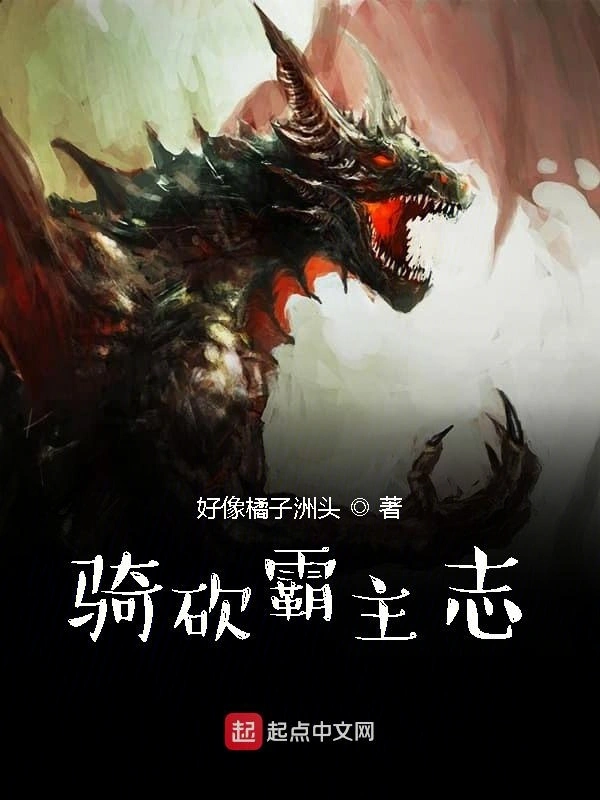
Riding and Slashing Overlord's Ambition
骑砍霸主志
- Status
- Completed
- Length
- 727k Words
- Genre
- Western Fantasy
- Audience
- Male
- Subgenre
- Epic Fantasy
- Updated
- 5y ago
- Source
- Qidian
Stats
0Monthly votes
5.3kRecommends
11.2kFans
301Chapters
Tags
Synopsis
Reader comments
Readers also read
 Wizard: Starting from Immortality
 Panlong: the World First Opens, the Souls of the Four Series Mutate
 I Unlocked the Extraordinary Craftsman Panel
 This Adventurer Just Wants to Plant Trees
 I'm Not a Lord
 Extraordinary Voyage
 Beginning with Lord of the Rings
 Aztec Immortal
 The Witcher World: the Road to Dominance Begins with Velen
 Lord of Warcraft: Start a Human Hall
 Start in the Middle Ages, on the Crusades
 Medieval Times: I Build a Manor in the Mountains
 Lord of Both Worlds, Have You Opened up Magic?
 Governor's Self-Cultivation
 The Crew Asked Me to Play a Fake Taoist Priest, but I Am a True Heavenly Master
 Why Don't We Sit Down and Talk First?
 Part-Time Olympic Silver Medalist, My Identity Was Exposed
 Chuanwu: Live Broadcast of Breaking Rebar, the Whole Network Went Crazy
Fantasy worlds have various appearances, from the "hardcore" medieval world to the more fantasy-rich classical fantasy (high fantasy) world, from the traditional dirty and messy world to the smooth and white castles and magnificent gardens. Despite all their differences, these worlds have one important element in common: ordinary people. Most fantasy worlds, no matter how intricate or magical, are inseparable from a cast of ordinary farmers, merchants, squabbling royals, and palace guards. They live in small groups in villages and crowded in cities, serving as a human background for adventure journeys. Of course, figuring out how common a large city should be, or how many shoemakers can be found in a small town is a time-consuming task, and not every GM (game host) has the time to do this homework. I prepared this article to create a more satisfying world setting. This article is a distillation of possibilities drawn from various historical reference points, focusing more on outcomes than on the detailed causes of those outcomes. The rules here are only to provide a baseline that can be adjusted as needed, not a rigid number. Following my favorite fantasy roleplaying (FRP) tradition, I focused on a well-developed medieval version of the world - I randomly drew from the time range of the 11th to 15th centuries, and the chosen regions were as diverse as Russia, England, France, Germany, and Italy, but when I need a default rather than an average result, I tend to use late medieval France as a good template for a traditional fantasy game world. Halve it, double it, or mess around with it, as long as it feels the way you want it to; what I've summarized are guidelines for constructing numbers that fit your needs. Population Density: How many people are there in the kingdom? Unless it is a very new country, it is usually dotted with villages, located every 1 to 2 miles, covering every inch of farmable land within the country. Rural communities of the size of villages and hamlets will exist widely. The only notable exception to this principle is in the backwoods, where isolated small towns inevitably exist. But these towns are usually large and walled - everyone has to stay together for safety. In remote areas, food and goods were often delivered in merchants' wagons rather than relying on local agricultural production. The presence of monsters will undoubtedly make this tendency more obvious. The average population density of a highly developed medieval state may range from 30 people per square mile (in a country that is rocky, rainy, icy, or with a cruel and violent mad king) to a maximum of 120 people per square mile in a land with fertile soil, a pleasant climate, and possibly magical assistance. [Translation Note: Approximately 11.6 To 46.3 People per square kilometer] As long as conditions allow settlement and farming, no land will be abandoned. Many factors influence the population density of an area, but none are more important than farmability and climate. As long as food can grow, so can farmers. If you wish, the exact density can be rolled out randomly and then worked backwards from it to derive how cultivable the land is. A 6d4x5 roll does this beautifully. X5 can be reduced to any number not less than x1 to represent a land with a low level of development, or a country whose population has been reduced by military invasion, plague, or other disasters. Countries hit by these disasters may shrink their populations for centuries unless there is an influx of immigrants. Natural population growth rates were generally stagnant in the pre-industrial world. Some historical comparisons: During the 14th century, medieval France had the highest population density, as high as 100 people per square mile. The French were blessed with a large amount of arable land. The population density of modern France is more than twice that amount. Germany, which has a slightly less than perfect climate and a slightly lower proportion of arable land, has an average of about 90 people per square mile. Italy is similar (mountainous and rocky areas). The British Isles have the most sparse population, with just over 40 people per square mile, mostly concentrated in the southern half of the island. Hexagonal grid: For some GMs, it may be important to use this article to determine how much land should be covered in a hexagonal area! To determine the area of a hexagon, multiply its width by 0.9306049 And square the result. Thus, if the hexes on your game map span 30 miles, each hex has 780 square miles (a convenient size for travel, since as a rule of thumb, a day's journey on foot or horseback is about 30 miles). Urban population: How many people live within the city walls? For the purposes of this article, settlements will be classified as villages, towns, cities, and large cities ("megacities" in the terminology of urban historians). The population of a village ranges from 20 to 1,000 people, with a typical village having between 50 and 300 people. Most kingdoms will have thousands of these villages. Villages are agricultural communities under the auspices of civilization. They guaranteed the supply of basic food resources and the local stability of the feudal system. Generally speaking, a village is called a "hamlet" if its supporting industry is orchards (rather than grain land). Sometimes, though, game designers will use the term to refer to a particularly small village, regardless of what kind of food it produces. The population of a town ranges from 1,000 to 8,000 people, with a typical population around 2,500. Culturally, they are equivalent to the smaller American cities that line the interstate highways. Only when a town was frequently threatened would one want to build a wall. Urban populations typically range from 8,000 to 12,000 people, with the average being somewhere in the middle of this range. In a typical large kingdom, only a handful of cities would have populations in this range. Academic centers (universities) generally exist in cities of this size, with rare exceptions flourishing in large cities. The population of large cities ranges from 12,000 to 100,000 people, and there are some unprecedented cities that exceed this size. Some historical examples are London (25,000-40,000 people), Paris (50,000-80,000 people), Genoa (75,000-100,000 people), and Venice (100,000+). The population of Moscow in the 15th century even exceeded 200,000 people! Large population centers of any size are the result of transportation. Coastlines, navigable rivers, coasts, and road trade routes form an intricate network of trade routes. The busier the traffic arteries, the larger the town. Villages are densely distributed among large settlements throughout the country. Population Distribution Okay, now you know how big your kingdom is, and how many people live in it. But how many people live in cities, and how many cities are there? How many people live in small settlements, such as towns and villages? First, determine the population of the largest city in the kingdom. This number is equal to (P times M). P is the square root of the country's total population, and M is a roll of 2d4+10 (expected value is 15) The size of the second-tier city will be 20%-80% of the largest city. To make the numbers randomly distributed, roll 2d4 and multiply it by 10% (expected value is 50%) Each remaining city will be 10%-40% smaller than the previous one (2d4 times 5% - the expected value is 25%); keep adding to the list of cities, as long as the number is within the city's population (more than 8000 people) To determine the number of towns, multiply it by 2d8 (the expected value is 9). The rest live in villages, villages and smaller settlements; a few live in isolation, or as itinerant workers and wanderers. Adjust the number of towns: The ratio of towns to cities determined in the above way determines whether there is a significant and prosperous commercial society here. If you increase it by 50% or more, you can get a fantasy world close to the Renaissance. If you decrease it significantly, you will get a fantasy world close to the Renaissance. With just a few numbers, you can get a pre-Crusade world (if trade was geographically limited in scale, then there wouldn't be many more towns than cities; just continue to reduce the size of the cities by 10%-40% to make a general list of towns) . Historically, the number of town charters in many European countries increased tenfold. The economic changes during this period reshaped the original agricultural system into a more stable commercial system. If your world has a considerable number. For merchants, thieves, and other types of townsfolk (like most), use 2d8 or more. To create a world somewhere between these two extremes, choose a compromise number that you like. A kingdom case: Chamluk Chamluk is an island country with a total area of 88,700 square miles, a good climate, a well-watered countryside, but some rocky hills. Its population is just over 6.6 Million, and the average population density is about 75 people per square mile. (An ordinary dice result based on the recommended range of well-developed areas) Using average values to determine city size and town distribution, we will determine the rest of Chamluck: its largest city, Restag, has a population of 39,000. The secondary major cities are Waltham (19,000), Myklanik (15,000), Kermidiger (11,000) and Obersloth (8,000). 5 Towns, with a total urban population of over 200,000 (approximately 3% of the country's total population). The remainder is rural - approximately 1 town center per 1800 square miles. If we use the early medieval ratio and continue to use city size, there will be only 7 towns (1 town center per 7500 square miles). Merchants and Services How many hotels and taverns are there realistically in a village of 400 people? Not too many. Maybe not even one. While running around the country, members of the team shouldn't be able to easily find a sign saying "Motel: Free Cable TV and Pool" every 3 leagues. In most cases, they will have to sleep in their own tents or borrow accommodation from residents. If the local residents are friendly, it won't be too difficult to choose the latter. A farmer can stay in the same place for a lifetime, and he will be happy to hear stories and news about the adventure, not to mention that these heroes may also pay some rewards! Each type of business has a specific support value (SV). This refers to the number of people required to maintain a business type. For example, the SV of a spice merchant is 1400 in an area. This number can go up or down by 60%, but this is still a useful baseline for GMs. Depending on the town's main industry type, this maximum value can be adjusted more flexibly; medieval Paris, which serves as a template for this list and is an excellent template for any fantasy city, is a shoemaker's center) and decide which value needs to be adjusted. For example, a port will have more fishmongers. To determine a quantity, such as the number of inns in a city, divide the city's population by the inn's SV (2000). For a village with a population of 400, it has only 20% of the inn's SV! This means that if there is an inn, it will be smaller and more inconspicuous than a city inn. Industry SV Industry 2 SV 150 Butcher 1200 Fur Trader 250 Fishmonger 1200 Maid 250 Brewer 1400 Tailor 250 Buckle Maker 1400 Barber 350 Plasterer 1400 Jeweller 400 Spice Merchant 1400 Tavern/Restaurant 400 Blacksmith 1500 Old clothes dealer 400 Painter 1500 Pastry chef 500 Doctor* 1700 Mason 500 Roofer 1800 Carpenter 550 Locksmith 1900 Weaver 600 Bathhouse worker 1900 Grocer 700 Ropemaker 1900 Dapron 700 Inn 2000 Cooper 700 Tanner/tanner 2000 Baker 800 Scribe 2000 Water Carrier 850 Sculptor 2000 Sheathmaker 850 Rugmaker 2000 Alcoholic 900 Harness maker 2000 Hatter 950 Bleacher 2100 Saddlemaker 1000 Trader 2300 Chicken Butcher 1000 Knifemaker 2300 Bag Maker 1100 Glove Maker 2400 Lumber Merchant 2400 Wood Carver 2400 Magic Shop 2800 Bookseller 6300 Binder 3000 Manuscript illuminator 3900 * refers specifically to legally practicing doctors. The SV value of all doctors is 350 Other numbers: There is one noble family for every 200 people, one lawyer ("defense lawyer") for every 650 people, one priest for every 40 people, and one priest for every 25-30 priests. For unlisted business categories, SV usually reaches 5,000-25,000! "Magic shop" refers to a place where magicians can buy spell-casting materials, scrolls and the like, not that you can buy a magic sword from the shelf. Agriculture One square mile of settlement (including essential roads, villages and towns, as well as crops and pastures) could support 180 people. This took into account the common occurrences of blight, rats, drought, theft, etc., All common occurrences in most of the world. Situation. If magic is common, GM may allow one square mile of land to support much more people than this. Note that the number of people that one square mile of agricultural land can support is different from the country's maximum population density. Once you determine the capacity of the land to support the population, you can work backwards to figure out the amount of wilderness/wasteland in the country. Taking the example of Chamullak again, this means that there are about 37,000 square miles of developed agricultural land - about 42% of the island. The remaining 58% of the country is wilderness, rivers and lakes. Even with the maximum population density in Chamluck (120 people per square mile), huge farmland would occupy 2/3 of the country, with the remaining third being occupied by wilderness (mostly forested mountains between farms) and waterways. This is almost close to the absolute maximum limit, although a higher ratio is theoretically feasible in the environment of the earth, if the GM decides to make the entire country arable. Although the average distance between population centers can be extrapolated from the area of the entire region, it is more practical to determine the average walking distance from one village to another based solely on the size of the settlement. Villages and towns tend to be closely clustered along major transportation routes that connect cities - leaving large areas of wilderness in between.
I just read the beginning. The poor people in the pig's foot territory are a bit nonsense. These are not poor people, but the father of the nobles. Not only do they not have to work and pay taxes for the nobles, but they also have to provide food for their maintenance. Every time, the knight comes to offer food to them. The man who feeds this village! If the pig's feet don't come, will all the people in this village starve to death in two days?
I have read seven books of Qi Qian, five eunuchs, one missing, and one alive.
The character of Richard is really a failure, how can there be such a tribute. This character design is based on the protagonist's template, and it is in severe conflict with the protagonist's design in your book. If you use the character of Richard as a very important supporting role or plot support, for now, the negative effect it has is really too great. It was as if there was sand in my eyes. The effect of persuading people to quit is first-rate. This is not just a matter of popularity. 😅
12 Gold coins for a slave? What is the concept? If selling slaves makes so much money, then there are probably no free people in the world of the novel.
Many people who read Qiqiao Wen know Richard, and this image is somewhat unknown to others. In fact, it would be better to change the name, otherwise I will always feel an indescribable sense of dissonance.
You yourself said at the beginning that you are not a fan of "Qiu Fengyun Lu", you just want to catch the popularity. This is okay, and there is nothing shameful about a small author trying to rub off against a big author. But Li Cha should not be allowed to appear directly. Your writing styles are completely different. Don't you think it's inconsistent if these two protagonists appear in the same article? He is also the neighbor of the protagonist. Li Cha himself is a well-shaped character. When your protagonist appears next to him, people will unconsciously compare with Li Cha. The difficulty of your character creation will increase exponentially, and if there is anything inferior to Li Cha, it will make people feel unusually outstanding.
Ten cavalry cuts! 9 Flutters, one tasteless
Author, your biggest failure in the early stage was to write about a nine-year-old child, and it was a pig's foot. In fact, the background you gave the pig's foot was very thoughtful, but for a nine-year-old pig's foot, even if you gave him all the good or geeky people in the world, not many people would be able to read it, because everything is too fake. Even if the pig's foot is a time traveler, the age will prevent readers from entering.
The author's writing is good, and the plot is okay. It is still very attractive to readers who like riding and slashing. Although the appearance of Richard is a bit awkward for most of the readers who like riding and slashing. After all, readers who like the riding and slashing genre have basically read "Mounting and Cutting". The author makes it easy for readers to make comparisons. Read this book The current performance of the book is probably considered a failure. Excluding other aspects, it is still very interesting. For example, the description of the army, population, nobles and civilians is reasonable. There are no casualties on the battlefield like 100 to 1000 and only single digit casualties. Overall, it is worth reading. The performance of this book is a bit poor. It should be considered that riding and slashing is a niche game, and even fewer people like to read novels. In addition, the pit dug by the author has discouraged some readers of the riding and slashing genre. Furthermore, when it comes to novels, basically all the great gods came from being ignored. They wrote a novel with one to two million words, completed the novel, slowly accumulated old readers, and then worked hard to become a god with a book. Come on, author, your writing style is very good among the books I read, come on 😁
This is Sivana, not Shyvana... Big brother, not the dragon girl in the alliance... The picture was found in the forum and deleted.
Work related
There is an explanation post related to the work. If you have any doubts before and after reading this book, you can take a look. Thank you all for supporting the author. ฅ۶•ﻌ•♡
I don't quite understand the author's thinking! The writing style can be read at a glance, but I feel there is a big problem with Richard's appearance. He is completely wrong!
Alpine Fort, Richard Barbarian Warrior. The protagonist of a novel by Qidian
Seeing the protagonist decide to save the mission, I felt very disappointed. It was too sudden. The knight suddenly showed inexplicable chivalrous virtues to save people. The protagonist suddenly took a gamble. If the protagonist had Richard's strength or Richard and the barbarian were both the protagonist's subordinates, then I didn't say that saving people should be done according to one's ability or someone who has nothing to do with it. I doubt that he would save the princess and then become a bitch.
It is recommended that the city entry tax be revised. Two silver coins is really outrageous, and the tax rate for a commoner who has to take off his pants every time he comes in and out is too high.
The writing is pretty good and the plot is okay too
I had endured the previous ones, but I just couldn't stand it anymore until Chapter 40. I don't want to say more, just go and see it yourself. Blizzard weather,
Name: Hedwig Race: Human Occupation: Necromancer Gender: Female Age: 16 Faction: Order Talent: Summon Death (Death with a Scythe) Prophecy Weapon: Queen's Scepter Treasure: Book of Death (recording the death magic of the multiverse) Artifact: Kingdom of Death Character: Dark-minded Wish: Want to advance to the God of Death with the Kingdom of Death Image: A young man wearing a crown, white silver hair, and a gothic blue dress, surrounded by stars Female Introduction: The mysterious girl who masters the magic of death likes the male protagonist and wants to follow him all the time {"NickName":"I hope I can make a fortune in 2020","UserId":307028360}
Write more about the overlord system 😥😥 Just for this point
There is also the character of Richard, who looks a bit awkward and looks like a doppelgänger of the protagonist. Otherwise, the lord next door is still starving to death and is a powerful lord who is much stronger than the protagonist. If so, I don't believe him if he doesn't steal the protagonist and fight against the surroundings.
The author's writing style is still good, but the audience for cavalry and slashing is probably still small. In the next book, the author should try to use full-war explosive troops to conquer various low-demon planes. Similar to Zhutian Liu, Zhutian Liu is also very popular now. You can make a hodgepodge of Zhutian Wanjie plus full battle plus system 🤭 to see if you can attract some audiences to watch it.
The author is crazy about money. Everything he said to the readers in the last chapter is about money. He wants money at the expense of his life. Every day. No wonder the eunuch
The author of the riding and slashing novel wrote well. I collected it first and waited for it to be fattened up The book review section suggested not to set a fan point requirement. I had to give a reward of 100...
Keep up the hard work, the author has the potential to become a god. Come on
This is great for the author, come on!
. I have been a regular reader of Qidian for almost 20 years. Nowadays, I really don't like a lot of white articles that are highly ranked. I have read your novel and also read your real life. I want to say that I like your writing very much. It is really strong and stable. The troubles in life are only temporary. You are still young and I sincerely look forward to your next work. Be well prepared, stick to yourself, and it's better to be short-lived than to waste too much!
I've been doing a lot of political tricks lately, and I want to see something military.
Congratulations for investing 100 people to assist ヾ ^_^♪
The writing is okay, why are there so few subscribers?
There are so few chapters