


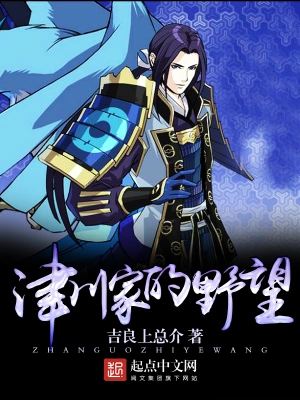
The Tsugawa Clan’s Ambition
津川家的野望
- Status
- Completed
- Length
- 2.6M Words
- Genre
- Historical
- Subgenre
- World History
- Updated
- 7y ago
- Source
- Qidian
Stats
Tags
Synopsis
More by this author
In booklists 19
Nine Netherworlds, Boundless Realms
♂ For male readers

Urban and Entertainment Fiction
These are simply my favorite books

Wish-Fulfillment, History, Classics, Anime, Systems, American Comics, Rebirth
Classics from the past decade, updated regularly. Save the list if you like it. For now, I’m not following any live-streaming novels. I’ll check out books recommended in the comments, and add them if they’re good. Thanks so much for all the flowers and support. 2017-7-8: Revised the list again and removed many novels that stopped updating later on or became tedious. 2017-10-06: Curated the list again. 2018-05-24: Made another major revision. 2018-11-1: Made a small revision. 2020-02-09: Revised
Stories with Strong Writing and Gripping Plots: A Shortlist of Good Reads
My first recommendations after ten years as a veteran reader. These are absolutely painstakingly selected gems. The books on my shelf are ones I like; I don't care for simplistic writing or books with no style.
Private - Cold
Books I've been following lately
My Favorite Historical Fiction
They're all historical novels.

A Filter for Books to Follow, With Fresh New Reads
Books I'm reading, usually by new authors or newly published writers. I prefer historical and fantasy novels, but sometimes I read other odds and ends too.

Handpicked Hidden Gems
Good books I personally think are worth reading. I hope you'll find something you like here. Thank you.
A Recommendation List of Foreign Historical and Anti-Japanese War Fiction: Not Quite Masterpieces, but Few Enough to Count
I think I'll only introduce books covering events before the first battle.

Manual Sarcasm
A bit of everything, including decent anime. Funny, right? You can only add 10 books a day. And the limit of 30 books is so annoying.

Ghost Valley
None
Give These a Look
For when you’re out of things to read


Great Reads
Good books.
Great History Reads
Pure historical fiction, alternate history, or transmigration

Made This on a Whim
I like them, that's all
Japanese Sengoku-Era Novels
Pretty good, I'd say.
Looking for Something Different
The more books you've read, the more a veteran reader thinks about what makes a good one. It needs quality, but also originality and depth. I'm not looking for a long, comprehensive list; I want books that are a pleasure to read and let you relax as you go.
Japanese Sengoku-Era Historical Novels
Historical novels set during Japan's Sengoku period. If you enjoy this subject, come join the Japan Sengoku Historical Novel Alliance. Group number: 570031522. If you love the Sengoku era, whether it's the commanding spirit of Furin Kazan or the boldness of living just fifty years, you're welcome here. Maybe you're tired of the weight of history or the predictable paths of games. Have you ever felt an urge to write, only to give up for one reason or another? Here, you'll find everything you want
My Great Book Forest
My book list.
Readers also read
 My Father Is Wen Tianxiang, and We Win the Battle of Yashan from the Start
 A Guide to Building Civilization in a Primitive Tribe
 Daming: Asking for the Throne at the Beginning, Lao Zhule Went Crazy
 My Only Method: I Will Add More Points to Become Stronger at the End of Ming Dynasty
 Slaughtering My Way Through the Marvel Universe: Starting with The Boys
 Sengoku Japan: The Rise of the Tiger of Wakasa
 Sengoku Japan: The Ruler of Ise
 The Road Less Traveled
 The World of the Extreme Path: Tempering My Body Through Terror
 The Lord of the Oasis
 War, Court Intrigue, and Lap Pillows: Austria’s Divine Destiny
 Japan's Warring States: The Crossroads of Glory
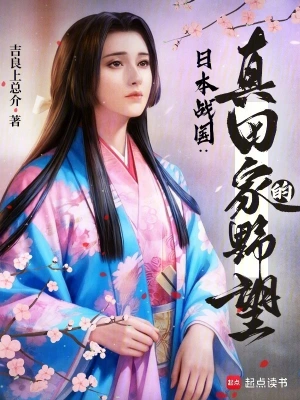 Sengoku Japan: The Sanada Clan's Ambition
 The Kyogoku Clan’s Ambition
Reader comments 28
Google Translate
In Chapter 780, they finally came out as one, which is worth remembering. But I feel that the performance of the book is getting worse and worse, the monthly tickets are not as high as before, and the book group is a bit deserted. Warring States literature is still too niche. Now there are only one Jinchuan and one Kuroda left in the starting point, and the rest are almost tj. The Warring States period will not be extinct in a few years, right? Yoshihiro persisted, hoping to see the Jinchuan family's platycodon planted on the top of a nearby mountain.
After working hard to read the free chapters, I can only say that although it is not a beginner's article, the writing style needs to be improved. Although it is written about Japanese history and the Warring States Period, there is a strong hatred of Japan between the lines, which makes the plot and dialogue weird.
A guest appearance is just a guest appearance, why do you have to use parentheses to remind everyone? You even gave it a name like Nobita Nobita, for fear that people wouldn't know about the linkage? For example: Zhuge Liang: Hello, my lord, I will introduce you to two local talents. This is Sun Wukong (played by Shuiyou A), who can use a long stick, but ordinary heroes can do nothing. This is Xiao Yan (played by Shuiyou b), who is good at transforming fighting spirit🐎.
After reading many novels, I feel that the authors have gone into misunderstandings. Why do they have to write about things before time travel? You don't need to explain your identity, deeds, personality, and interpersonal relationships before the time travel too clearly. You can fill it in later if necessary. Although this is not very good, it is much better than using one or two pages or one or two thousand words to introduce it. We readers don't care much about the protagonist's identity in his previous life.
It's really unbearable to see someone being poisoned at every turn. This book is like chewing your teeth suddenly while you are having a good meal. How capable is the daughter of an Orion family? She is also capable of assassinating the protagonist... Aren't those ninjas going to lose their jobs?
I read this book a long time ago, and I have also read other books about the Warring States Period in Japan. I didn't feel the problem before, although it was a bit enjoyable. I recently read the history of the Warring States Period in Japan, and suddenly discovered a common problem with this kind of novels, fatal Every novel that is weak to strong, whether it is a system or a cool novel, starts with a common sense mistake. For example, this book starts with a small city with dozens of samurai under its command. Such a weak force was bullied by the neighboring city and then destroyed the owner of the neighboring city. Do you then own two small cities? Then the forces accumulated to hundreds of subordinates. After a while, the forces with three cities on the other side were wiped out, and there were five cities in total. By analogy, it gradually grew bigger. It seemed like it was a completely independent force In fact, you are not an independent force. Even if you were, when you attacked the small town next door, you thought it was just a small town. Maybe you were facing the city lords of dozens of big cities behind the small town But in fact, every village and every city has its own owner. The little castle lord samurai has a master above him. This master is also a retainer of a certain daimyo This retainer may be a retainer of a country or a guardian. A daimyo who owns a country has many samurai. Only important samurai can obtain fiefs. This is why in the Warring States Period in Japan, every time a daimyo sends troops to the main city to gather, in addition to the land he directly owns, he must also send troops to the fiefdoms of his retainers Use our villages, townships and counties The city is replaced. The provincial capital is equivalent to the status of Kyoto. Each city has an official who protects it. The county is equivalent to a daimyo. The retainers under the daimyo enfeoff the townships. Most of the townships belong to the daimyo's own family. A small part is enfeoffed to the core retainers. The retainers also have their own samurai to collect supplies in their own sphere of influence. Suppose the daimyo family in the county town is fatuous or has civil strife and is stolen by the retainer of the township or other powerful retainers. Seizing the territory of the county is called subjugation. In the same way, the lord of the county city drives the guardians away, conquers and eliminates other prefectures, and becomes a daimyo. Or the counties are evenly matched and keep fighting, and the guardians are unable to stop them until they are annexed by other unified cities. A common problem nowadays is that in novels such as the Japanese Warring States period, a protagonist comes out of the village and annexes the village next door. After a while, the larger village next door is annexed. Then when the strength is almost reached, the entire township is annexed and accumulated in this way. In the end, the county, city, and the protagonist regard themselves as an independent force, annexing along the way, becoming bigger and stronger. The actual situation is that the protagonist was born in the village. All your forces actually belong to the village and the county. The village next door is more of your fellow samurai. You said you have a grudge against the samurai of the village next door. When you use force to destroy the village next door, you first have to face the anger of your boss in the village. If you are not from the same township and you wipe out the village next door, you will face the revenge of the neighboring township and the next county. This is a war between two daimyo forces So those who started from the village and township to develop the so-called lower-level lords are actually merging and becoming stronger. This is simply ridiculous. Have your own team, and then think about the following things in the town. If you start with a sphere of influence like a county, and have a territory where you can make independent decisions, then go for hegemony. But if your county belongs to a unified sphere of influence like Kaiguo, then just be a retainer, because your power is like a village facing a township, and facing a power gap like a county, you will be wiped out before the annexation begins.
To be honest, unlike the time traveler, the protagonist has no advantage at all.
Having played Nobunaga's Resolute Legend, I feel more immersed, especially since I used the Tianzhi Castle that the Anton family has cultivated for 50 years in Yugo to build a country to fight against the world. I have an impression of the place names and cities that appeared in the early stage in my mind. I know the approximate location, which makes it more comfortable to read.
I barely managed to read it until I got to Chapter 805. But I had to go out of my sphere of influence to show off and I couldn't stand it any longer. Only novels written by second-rate idiots can have this kind of death-seeking character.
In fact, you can try out the position of emperor. Let the princess marry him and give birth to a son. Then let the son marry a princess and give birth to a grandson. In this way, the blood relationship will be closer. The third generation can be the candidate for the emperor. If the previous heirs die or give up, they can inherit. Then in the beginning of the government