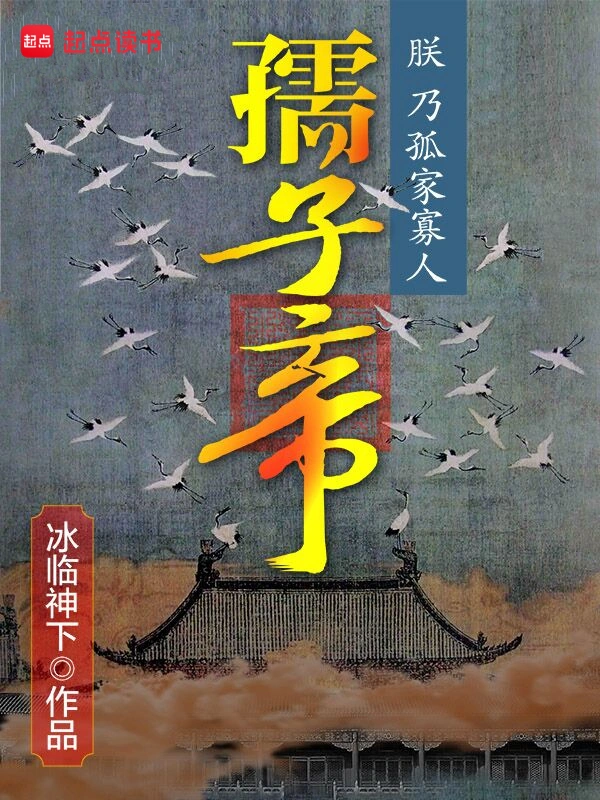
Ruzi Emperor
孺子帝
- Status
- Completed
- Length
- 1.8M Words
- Genre
- Historical
- Audience
- Male
- Subgenre
- Alternate History
- Updated
- 5y ago
- Source
- Qidian
Stats
Tags
Honours
Synopsis
Reader comments
In booklists 663
Explore more →
Works of the Gods
A book list, a volume of memories. Keep company with books and keep company with friends. Perhaps by chance, you saw this book list and saw the four words "The Work of the Gods". I find it novel and want to see what it means to be a god. If you have this mentality, you should leave. There are books about great gods here, but of course there are also books that can be called "masterpieces". Everyone defines this differently because each of us is an individual. This book list holds so many memori
High-Quality Grass Jelly for Logic and IQ Online
❤️I prefer cool stories that focus on plot and high strategy, and reject fast-food stories with weak logic. ❤️The screening criteria only look at the quality of the text, not the author's reputation, and all high-quality works on various themes are included. ❤️The top books are the works I am currently reading, and I occasionally recommend potential new authors. ❤️Each book has been screened through long-term reading testing, and there is no perfunctory reading. It is suitable for collection
I Love Reading
Picky old bookworms who are hungry for books can add this book list, which mainly recommends serialized novels and collects complete novels of classic masterpieces. The authors I mainly follow: A Line of Egrets in the Blue Sky, Three Days and Two Sleeps, Ice Comes Under the God, Jie Yu 2, Fang Xiang, Xiao Ding, Zhiqiu, Ermu, Chenci Laidiao, Far Eyes, Angry Squirrel, The Reader, zhttty, etc. I have read many novels, from junior high school to now, just like the divine farmer tasting a hundred
Learn from History
Since I was very young, I have dreamed of becoming a great hero, going back in time, changing the world, and leaving my name in history. I believe many people have this idea. The fictional historical novels satisfy people's spiritual needs, which is why today's time-travel novels are so popular. If history could repeat itself, how would you choose? In the face of the general trend of history, every change you make will change the trajectory of history. This book list will collect and update va
The Historical Scenery Along the Road Gathered in the Ox Cart
Some are finished and some are being updated. But I have seen them all. No matter which one you prefer, as long as the characters in the plot are outstanding, they will be included. After all, it is history, and you will understand if you listen to it. Serious or frivolous, or romantic like Yue Guan or Yu Yan, it doesn't matter. I will keep about half to one-third of the new works, and some of my favorite completed works, which will be updated regularly.
Excellent Book!
The subject matter is not important, and the master is not important either. What is important is that it looks good, and what is important is the quality. I only recommend high-quality products, which are available in all types. Reading different kinds of books feels like experiencing different lives. You can't go wrong adding this book to your collection! It allows you to travel across the six realms (gods, demons, immortals, demons, ghosts, and humans) regardless of ancient, modern, Chinese,
Some Books That I Will Never Forget
I sit at my desk late at night every day and write my dreams. The following books, except those written by myself, are all books that left a deep impression on me. If you have similar readers, you can try to read what I wrote.
How to Spend Time When You Are Bored
Small transparent book list
After Going Through All Kinds of Difficulties, Historical Records Can Be Completed
Historian
Weekly Book Recommendations Library
There is no limit to the subject matter, all new books are included, both writing style and interest are taken into consideration, and they are updated every week. As a reader, I have been around for ten years. I know the pain of the book shortage and how difficult it is to find books that meet my taste. I would like to use my ten years of online reading experience to test the water for everyone. Your attention and collection are the best encouragement for me!
Very High Quality Unpopular Book List
I have been reading for many years, and my hobby is quite wide, so this book list has a variety of subjects! I prefer online game writing, but I really hate rebirth online games! I also like historical articles, but all kinds of time travel are badly written. It's not easy to find a good book. I really hate the non-serious beginning of time travel, such as eating, drinking, wearing clothes, etc. If you don't know how to write the beginning, don't write the beginning. Just start with the main tex
Highly Recommended by a 14-Year-Old History Major
It only contains books above food and grass, majoring in history. Most of the books on the list are history books. I have tried poison for 14 years. Please feel free to eat it. If you think it is okay, add it to your collection. Thank you in advance. Ps: stick to the top every 10 likes
Record the Books You Have Read 👉History/infrastructure/western Fantasy/the Fourth Natural Disaster, Etc.
Latest update: Too lazy to write recommendations. Stay in 2025 Record the books you have read 🚩 (I tend to record more than recommend books) 🌀I like to read about infrastructure/management/farming/the fourth natural disaster/history/behind the scenes, but I'm short on other genres and I'm quite omnivorous. 🌀The evaluation is only for the read part and will be updated from time to time as the reading progress progresses. The fan value is basically my real progress. ❤️Watching / Finished watchin
If the Jade Emperor Asks About Human Affairs, Articles in Troubled Times Are Worthless
Online novels often contain hundreds of millions of words, but they can only be sold at a cabbage price. Therefore, they can only rely on updates to increase income, and the more updates there are, the more water will be poured into them. Such a vicious cycle makes the text less and less valuable, but fortunately there are still some who do not water it and polish the text seriously. I would like to recommend it here.
Reject Mindless Upgrades, a Gathering Place for Good Plot-Driven Books
Only accept fairy grass with good plots! The book list is full, and one book with the lowest support will be moved to the review section each week. Book list transferred to the book review area: 1. The High School of Death
Recording Good-Looking Books, New Book Selections, Imaginative, Plot-Oriented, and Refreshing Articles
Collection of some fun and interesting books, Record your reading experience, and authors are welcome to recommend themselves. Asking for collection, asking for attention, and asking for flowers. Many books are also published by Amway friends. The unfinished reviews will be revised at any time, and the merits and demerits will be carefully evaluated. Classification: S level: high-quality fairy grass, imaginative, and excellent writing. Grade A: imaginative, unpopular, unique writing, controversi
Hobby Complaints
It's been a while since I saw a book I particularly liked.


Personal Reading List
I only recommend good books that I have read, even if they are recognized as good books by others, I will not recommend them if I have not read Trial Poison. I have been professional in Trial Poison for thirty years (๑• . •๑) (What I like may not necessarily follow the crowd, but is interesting and readable).
Transparent Book
Tongming's favorite book!
Unparalleled Romantic Guest 🌛 Comments by Ren
Go back to the past and trace the present, appreciate the music and appreciate the text. This is a story about a group of people who traveled through time and became strangers in a foreign land.
🎇🍃Bad Breath & Aftertaste🔔🎶
🐾The bad taste, these are books that are pretty good in all aspects, but just a little short of a breath. 🐾The aftertaste may not be perfect, but even after a long time, I still remember the good writing. 🐾Let's read novels. The three perspectives must be consistent, the aesthetics should be similar, and the psychological maturity should be similar. I like an author or a novel, not because he is the best, but because his choices of worldly affairs are similar to mine. His level is neither too f
My Book List
Don't click on my book list, book list, book list.
Book of the Past
A rough reflection of the books I read
🌱Bookworm Complaint Conference🌱in the Urban Era, the Family Cultivates Immortality!
A bookworm of 20+ years! In 2003, when martial arts came to power, I came into contact with Liang Jingu, and I loved Jin Yong the most! In 2005, the origin of online literature began with "Sword Immortal" written by ordinary people, and then the originator "Piaomiao Journey". From cultivating immortals to fantasy, online games, cities, and history, I only love cultivating immortals! The book list is more about releasing the negative energy gained from reading, and also recording your own read
Readers also read
 At the Beginning, Please Ask Chongzhen to Abdicate!
 I Am a Tyrant in Nanming
 Fu Ming 1627
 Red Mansion Xiaoke
 Qingdu Shanshuilang
 Picked up a Copy of Chronicles of the Three Kingdoms
 A Lifetime of Wealth
 Disciples of Fangcun Mountain, Traveling Westward
 I Have a Dark Secret Martial World
 Picked up a Shihuang Emperor
 Training Da Song
 Jinting Han People
 Plan to Destroy Kyushu
 Book of the Dead
 Daming Monster
 Spy Family
 Exorcism
The restrictions on the emperor in "The Child Emperor" are understandable: Look at China Unlike other countries, the emperors in China from the Qin Dynasty to the Qing Dynasty were not autocratic monarchs (there are exceptions, but please read my thoughts later) Although the emperor of China is respected as the emperor and has the obligation to sacrifice heaven and earth for the country and pray for grain, but since the Qin Dynasty, China's administrative system has been dominated by a bureaucratic system. Although imperial power has continued to expand since the Ming and Qing Dynasties, it is still different from the "absolute monarchy" of Western Europe. The view that China is an absolute monarchy was largely constructed since the May Fourth Movement. Read this book again In fact, there were exceptions among the emperors, such as Emperor Qin, Emperor Wu of Han, Ming Dynasty, etc., But most of them had a powerful army, and they had absolute control over this army. , Unlike the Northern and Southern armies controlled by Han Ruzi, most of them are nobles, and most of their fathers are ministers and nobles. If Han Ruzi goes to war with the ministers, they may not necessarily help Han Ruzi, so Han Ruzi does not have an army with absolute control. And Han Ruzi suddenly proclaimed the emperor. He has never been a prince and does not have many close confidants, so he will be restricted by ministers such as dismissal from office. Emperor Qin? He is a survivor of the sixth generation of Fen, and Lu Buwei has found many cronies for him. Hanwu? Jinwu Cangjiao gained the trust of the Queen Mother and her cronies. Bright**? Those who joined him in rebelling against the world were his cronies. Therefore, Han Ruzi actually asked for help from the ministers, because he was the emperor but could not rule the world with his own power. So in the face of many conventions, he was sometimes forced to adapt. Of course it is just my personal understanding. I hope that when you read this book, you will not wonder about the point of view of "Why is the emperor so weak?" This is a good book, and that's all I can say. The last sentence: I am alone!
This book is indeed good in the early stages, but after it unfolds, for example, the plot of deposing the emperor at the end of the first volume is a bit unreadable. It seems naive for a group of Jianghu people to enter the palace and kidnap the emperor and queen mother in an attempt to replace her. The operation of national power is not that simple. You can say that Jianghu people are generous and righteous, but this episode feels like playing house, and the involvement of Luo Huanzhang, who was very resourceful in the early stage, seems to have no political acumen, is too idealistic, and gives people a strong sense of violation. The very good writing is not paired with a matching plot logic. The "personal" part of the author's novels is very well written, sometimes even with a touch of genius. Problems will begin to arise when it comes to the "organizational" level, and the logic will be difficult to reconcile.
Ruzidi, compared to the previous two books, this one is really suitable for a physical book.
"I am a lonely person" Without any relatives, I am the enemy of the whole world..
I have never been fond of reading historical books, but I have to read Bingda's books, and I found that historical books are also so fascinating.
The pace is too slow. The first 3 chapters are about two little brats entering the palace and chatting there.
Thoughts on reading "The Ruzi Emperor"
The beginning is like an epic unfolding slowly. I have always suffered from the disadvantage of being soft-hearted and not having a long memory. I read the historical analysis clearly and logically. I hesitated and obeyed. I only learned Liu Bei's benevolence. Liu Bei's methods can't be learned even by a hair.
Those who say this book is untrue, go back and read more history books, do you really think that the emperor killed people and killed Buddhas? The positioning of this book is that during the Han Dynasty, which of the relatives, eunuchs, and civil servants could not fight against the emperor? The status of Ruzi Emperor in the early period corresponds to Han Shao Emperor, Ru Ziying, and the emperors in the late Tang Dynasty. Does the puppet understand? The Empress Dowager of the Han Dynasty would abolish you if she said she would. Why do you think Emperor Wu failed in his first pro-government reform? Find out more about the authority of Empress Dowager Dou. In the later period, it was true that Emperor Ruzi ascended the throne by force, but the world was in chaos. What else could we do if we did not rely on civil servants to govern the country? The later period was a simplified version of the Ming Dynasty. The Ruzi Emperor is Chongzhen, and the officials below are hiding it from you. You are really like that Chongzhen man who kills officials if they disagree with you. Then change more than 50 prime ministers? Learn how Chongzhen wanted to change the clan and appoint a chief minister to take drastic measures, but then the clan rebounded and killed the chief minister directly? Power is the art of compromise. It is nothing more than me giving in and you giving in. Do you really think that everything can be solved with one blow? Are vested interest groups really just living off the job? The reason why King Chuzhuang stayed dormant for three years was because his subordinate Xun Gui was too powerful. When Emperor Xuanzong of the Tang Dynasty ascended the throne by force, he did not appoint Yao Chong and Song Jing. Taizong killed his brother and his brother, forcing his father to abdicate. Do you really think that Taizong did all the political affairs? Fang Mian Du Duan, the twenty-four heroes of Lingyan Pavilion, admonished Taizong Shi Sishu to understand. I suggest that if you really can't stand it, you can also read some cool articles.
In summary, the writing is strong and the images are full of sense, but the plot is just a mess.
Mbmbmbmbmbmbgs Out of stock I thought it was about a boy emperor slowly coming to power, deposing the queen mother in a coup, taking control of the government, and then ruling the world without changing his original intention. It turns out that the book is all about power and intrigue. The so-called world does not exist at all, and the world is limited to within ten steps of the emperor. When I saw the first palace coup and the Jianghu people entering the palace and doing whatever they wanted, I felt that this book was a piece of cake and guarding foreign soldiers was like child's play! At the end of the dynasty, there were heroes who rose up in power, but in history, were there such powerful figures as in the book who entered the palace and acted wantonly? Although it was finally reconciled by various minor accidents and the author's force, and the Jianghu people were killed, what is the plot behind it? The Queen Mother was still in power, and it was okay for her to kill the emperor and her son. After such a big change, the Queen Mother's authority was completely shattered. No one dared to make her son the true emperor, and no minister dared to take advantage of the merits of this appointment, so why not abdicate. It's so fun for me, what did the author think? The writing is good. Indeed, this is also the reason why I started to read it. I thought I had found a good book, but it turns out that the general score of this book is not unreasonable. The relationship between the characters in the back is also messy. Some people have criticized it, saying that Machiavellian is well written. The relationship between these people is complicated, with constant reversals, and it is very exciting. But in my opinion, many of them are illogical and forced to plot for the sake of power. In order to highlight the power, the relationship is written in an overly morbid way. The reason why some parts are not clear is because the writing is originally confusing and illogical. Moreover, this article is too small-minded. As an imperial article, it does not have the momentum to take a global view. As for the following four emperors fighting for the throne, seeking the consent of the ministers, etc., Not to mention, it is difficult for the author to come up with this plot. As for the fact that all the members of the protagonist group are dead and injured, and the villain lives until the end, this is also a routine operation of this type of author. The word "emperor" in this book can be ignored, leaving only "ruzi".
When I came back to read it two years later, I found that many people still didn't understand it. People who don't want to understand will never understand. I will just explain it a little bit for those who want to understand. Bing Da's novels express many things, among which what I see the most (or what I feel the most deeply about) is about the generation and transfer of power. Whether they are children of officials, nobles or ordinary people, they can all be equal under certain special circumstances. A person's power can come from many sources, including reputation, money, and wisdom. An ordinary person can also compete with a superior person, as long as he has power in a specific situation. Emperor Ruzi was an ordinary person from the beginning. He was a prince, but he was also a child. There are many children in the world, but not every child has the opportunity to compete for the throne. But Emperor Ruzi had it. At this time, the power of "competing for the throne" arose in him. In the palace, the words of King Donghai are actually very interesting - the emperor is omnipotent and the emperor can do whatever he wants. The King of East China Sea here represents the "secular" perception of the emperor. Then the Queen Mother came out and told us with her actions that the emperor can also be a symbol. The emperor is not the power itself, at least not the emperor who is determined by his ministers. Later in the fishing village, Emperor Ruzi was the "deposed emperor", and the emperor's power was transferred from him. However, the emperor's momentum was borrowed by those who were ambitious, and a process of "making something out of nothing" unfolded before us. Yang Feng's "within ten steps, a thousand miles away" superficially refers to the emperor's bottom line and limit, but actually also refers to the lower limit and upper limit of secular power. The reason why officials are superior to the people is not because they are more noble. The power of officials originated from the emperor, and the emperor's power was extended through swords and guns (violence), imperial examinations (room for advancement), and criminal and prison justice. Officials serve the emperor, and the emperor shares the power of swords, imperial examinations, and justice with the officials. At this point, the emperor's power was transferred to officials, and the emperor's power also needed to be reflected by officials, so "you can't be an emperor without officials." Similarly, if an official has no people under him, he is not called an official. Power can come into existence out of nowhere, and it can also disappear suddenly. Many people like to write stories like this: the enemy leader is dead, so the war is over. 1-1=0, Simple and easy to understand, I used to like it too. But after watching Ruzi Emperor, I realized that such a story is incomplete. There are countless numbers in a complete 1 that are greater than zero but less than one, and a group also has countless powers that are created, operated, and destroyed. No one can replace power itself, not even the emperor. But this truth cannot be expressed in this way. To say this clearly in any era is tantamount to "anti-book". Same now. How to understand it is everyone's business. Whether you are inspired and decide to work hard, or whether you feel greater constraints and hold back, it all depends on your fate.
Let those who tell the truth get it. This book is purely for the purpose of promoting one of my own ideas and forcibly reducing my intelligence. Let's just talk about Han Silk, not to mention that you are already the emperor in power. It's so troublesome to kill a minister who has no real power and is insignificant. Everything must be justified. Isn't it funny that the evidence is conclusive. The emperor has the highest right of interpretation. Let alone the fact that huge corruption has long been a capital crime if there is evidence, even if there is nothing, will it be framed? Could there be an assassination? Will it cause an accident? Others can assassinate and frame you at will, but you are still an emperor, and you still have to follow the steps and have conclusive evidence? Isn't this a disease? There are also ministers who value human relationships and are obviously not very intelligent, but can always trick the emperor. However, the ministers are played around by the Jianghu people. Many plots are divorced from reality in order to be realistic
[Comment] For interpretations of Han Chou, Empress Dowager Cining, Luoyang merchants, and Uncle Wang's family, the author or book friends are welcome to slap them in the face
Some people are wondering what Han Chou is doing? Is the Queen Mother Cining going to have a disagreement with Ruzi? Is there something wrong with the businessman? Is Uncle Wang's family too ignorant of propriety? I am doing a tentative interpretation here. The authoritative interpretation needs to wait for tonight's chapter. The author or book friends are welcome to slap you in the face. Regarding Han Chou's series of behaviors, we need to put ourselves in his role and consider it. What was Han Chou's situation after he was promoted from Luoyang to Zong Zhengqing by Ruzi? The body is like duckweed, it cannot reach the sky or the earth. Han Chou's roots are in Luoyang. In Luoyang, he is a local emperor with no one to supervise and dominate, holding filial piety in his left hand and wine in his right hand. He lives in the second rank of Zongzheng Mansion in Chang'an, but it is equivalent to resigning early to retire. If it were you, would you be willing to do so? Anyway, Han Chou was unwilling to give in and wanted to regain power. There were two ways in front of him. He could assist Yun Mengze to kill the existing emperor and wait for the new emperor to come to power and take the opportunity to gain new power, or prove his worth to the existing emperor. He decided to grab it with both hands, but it turned out that neither hand seemed to be strong. Yun Mengze failed, so he could only put all his chips on the second path. He had previously persuaded the businessman to spread rumors to buy the remaining IOUs, and then turned around and asked the merchants to burn the IOUs. This was a vivid demonstration of his ability among Luoyang merchants to Ruzi. Backhand, he sold Yunmengze's people to Ruzi to show his loyalty. The explanation in front of Ruzi Jin Chunzhong, Qiao Wanfu, and Yuan Jiuding was a reasonable explanation to the outside world. However, all these are tricks and conspiracy. If you want flowers to bloom, you need Ruzi to appreciate it, otherwise everything will be messed up. Han Chou needs a substantial middleman who can make Ruzi calm down and consider the pros and cons instead of feeling that he is being tricked and further suppressing himself - the Queen Mother Cining. Empress Dowager Ci Ning is now most worried about the transition from the instability of Ruzi's throne to whether Ruzi can fully control the court. Whether Han Chou is a good minister is not her concern. Whether he can be used by Ruzi and whether he can help Ruzi is the key point. The most important thing for the emperor to fully control the court is that the court cannot have only one voice. The court must have strange phenomena to disturb the emperor in order to make a middle choice and face an invincible position. Now Ruzi wants to make progress, but she has to compete with the important officials of the imperial court herself. The Queen Mother feels that it is not appropriate. If she wins, she will lose her honor and if she loses, she will lose her prestige. At this time, she needs to introduce visions to the court. The only choice for the Queen Mother is sycophants. Han Chou, who helped her in Luoyang's big draft but was repaired by Ruzi, also loves power. The two hit it off. The Queen Mother originally wanted to make her intentions clear to Ruzi first, but she didn't expect Ruzi to be too impatient, so she had to send Zhang Youcai three times in a row to urge Han Chou, not wanting the situation to get out of control. Luoyang merchants have always been bargaining chips in this competition. From playing tricks on the payments signed with farmers to Han Chou lamenting that the door was deserted as soon as he entered Zongzheng's mansion, the Luoyang merchants' tragedy has been determined. Han Chou used his greed to let Luoyang businessmen spread rumors and buy the remaining IOUs at half price to pave the way for him. Later, he probably used the bribes that had been known by the emperor to intimidate the Luoyang businessmen, and then pointed out a clear path - Uncle Wang's family came to Beijing, killed and beat him, burned the IOUs, offered gifts and bribed Uncle Wang's family, and that's what happened. Uncle Wang's family, this group of people is an unknown number. It depends on how Bing Shen wants to write it. When Emperor Heng is on the throne, it is not their turn to be relatives. Now that the young emperor is on the throne, they can be regarded as proper relatives. In history, there are Wei Qing, Huo Qubing, and Huo Guang, as well as Wang Mang and Liang Ji. Uncle Wang's family is similar to Wei Huo's. Once rich, I hope that one of the great talents will be chosen by the children again. Perhaps it is the person who suggested not to refuse to accept the gift but to create a register and take the initiative to present it to the emperor. This is interesting, right? Let me reiterate: I am doing a tentative interpretation here. The authoritative interpretation needs to wait for tonight's chapter. The author or book friends are welcome to give it a slap in the face.
Why are there so many people who don't like to read Binglin Shenxia's book circle... I really like Ruzi Emperor and The Book of the Dead. After all, I've been reading online books for ten years, so these two books won't have mostly negative reviews!
No wonder those who like this book love it so much, and those who hate it find it so annoying. The natives are the natives. They do not have the authority of the time travellers. They are exploited in various ways by a group of villains from the old era. And there must be many people who feel that there is something wrong in the logic of this book, but they can't explain it. It is that the concept of responsibility is particularly poor. There is no trace of Confucianism's thousand-year rule of the world. Everyone is the same. Everyone is an old fox. Every good person and minister in the book came out to choose the emperor. It was funny or not to let four people in the palace become emperor. In the end, the Queen Mother had nothing to do, everyone was fine, and some soldiers died. Or was everyone happy? No one thinks anything is wrong? Cui Hong's two blatant rebellions were nothing. He was still a general and a tutor. The change of military power was a joke. The Imperial Seal seemed to be more important than the emperor himself. This really underestimated the feudal imperial power and everyone.
I feel that the author takes the deposed emperor too much for granted. Looking at China for two thousand years, there are very few deposed emperors, and a queen mother in the harem wants to depose the emperor. Have you asked the court ministers? Have you asked the clan nobles? Even a great empress dowager like Ci Xi would not dare to say that she should abolish the emperor, let alone a queen mother who has only been in power for a few years. Some people might say that Huo Guang should abolish the emperor, but the prerequisite for Huo Guang to abolish the emperor is that Huo Guang is a veteran of the three dynasties, a minister who cares about orders, and has military power. In this way, Huo Guang's dethronement of the emperor still faced many obstacles and was ruined by history books. A queen mother wants to dethrone the emperor. She really thinks that the royal family has not had a single loyal minister for a hundred years.
I can't stand the stupid plot. I just became the emperor and went on an inexplicable personal expedition, and then he was suddenly trapped and killed by the Huns in a city. Because the emperor was here, reinforcements came one after another to die, and hundreds of thousands of people died before they could escape. What is the necessity of this personal expedition?
I can't stand it after reading the introduction. When did the eunuchs and maids have a say? Which eunuch with great power in ancient times was not supported by the emperor? Ten permanent attendants? Zhao Gao? Wang Jin? Wei Zhongxian? Without the emperor, they are nothing.
When I first entered the pit, I saw the section at the beginning of the Noblesse volume about going to the Broken Iron City. . . I feel like this book is a bit too depressing. . . When he first became the Ruzi Emperor, he could tell that the protagonist had a kind of wisdom that seemed to be as wise as a fool, and he had the necessary talents to survive in the palace. Later, the Ruzi Emperor really survived the palace change. Although he abdicated, at least he did not lose his life, and he still had his own people. It is indeed a bit dangerous to become a tired marquis and dethrone the emperor, but after cheating on the government, his identity and status are temporarily stable. At this time, the protagonist wants to return to the palace and become the emperor. Shouldn't he keep a low profile and bide his time? You have to be tough to strike iron, right? After finally having a chance to breathe, the protagonist insists on risking his life and gambling with nobles to make money? Once you make a bet, everything will come out. A lucky person will take a look at the opportunity, and you, Han Ruozi, will fall into the quagmire again after a calculation. Well, you are resourceful and fooled for a while, and your life is saved again. The King of East China Sea is also a hostage and has his own soldiers. Although they are all weak, they at least have some capital, but that King of East China Sea and a group of B-type gangsters really make me unbearable. I can still accept the conspiracy. The hoper is, yes, the villain. He can even instigate rebellion and palace rebellion. It is really powerful. Brainstorming is very exciting to watch, but the setting of internal strength is really intolerable. A majestic emperor still has people who practice internal strength. During the palace rebellion, he escaped from the palace and was caught by a random gangster who appeared. If it weren't for Meng E, he would have burped, right? Heroes are all just looking for fame, but none of them have any real benevolence. Even Gu Long's book is not so depressing, right? Why doesn't the protagonist have any growth? After experiencing the palace coup and the rebel uprising, why do you still have no opinion at all? At the beginning, he was deceived by the Crown Princess and the King of East China Sea, and then he tried to die by gambling to make money and was tricked by the King of East China Sea, and he almost got involved. Later, he relied on 70% luck and 30% adaptability, and finally turned the corner. But you can see that the protagonist here has at least changed a bit, right? Who would transform into a true emperor after going through so much? At least be more resolute and courageous. It doesn't mean that you should attack without thinking and ignore everything, but at least you can make others feel that they can rely on you in times of crisis, right? You must be a bit arrogant, right? As a result, the protagonist was listening to King Donghai's nonsense from beginning to end. If I had warned him earlier, he would not dare to think too much. King Chuzhuang would have become a blockbuster after three years of silence, but what about the protagonist? He has thoughts about the throne in his heart, but he is always passive. The king of Donghai is much more powerful than him. The protagonist himself only has a honey head to analyze and occasionally realizes that he is in danger. He only calls Yang Feng for help and has no ability to save himself. He can really survive to the 100th chapter and half of it depends on luck. I don't know how such a protagonist can command the army to defeat the Huns, win military honors, and then return to the capital to seize the throne. If he is still so depressed later, I can only take it easy, otherwise he will really be sick.
There is a problem with Bingda's book. Once the world view is laid out, it is somewhat unreasonable, and the plot is a little delayed compared to the previous period. The biggest problem with this book is the setting of the hopeless person, especially the fight for position, which destroys the sense of reality too much. It was unheard of and unheard of for a charlatan to lead the succession of the throne. Like the Dead Man's Book, it's the most exciting part in the early stage when you're precariously struggling with conspiracies and intrigues.
"Since ancient times, there has never been anyone more capable than Li Shimin, followed by Zhu Yuanzhang. Li Er is the God of War, right?
The young emperor is sitting in the bright hall, with foxes on the left and right, slyly wearing gold and purple, and domineeringly conferring the title of king; There is the dignified Virgin Mother raising her courtiers, kneeling down in the robes of the aristocratic family hiding their hearts, and the hall is hung with blood and tears of loyalty. The mottled green bamboo with a few lines of tears, the white-haired wolf on the battlefield, fell into the hometown of Hu Chen Wangdi, saying that although Chu has three households and three houses, it is strong. The righteous and loyal heart hangs high above the sun and the moon, and we work hard to regain the old territory. Construct rivers and canals to build salt and iron, and then select Han generals to go to Shuofang. There were Long March athletes who carried their swords at night, bent their bows, and headed west to Dunhuang. They beheaded Mao Dun in Shule, and his head was hanging in Gao Street. The flying generals shot tigers and broke the leaves under the leaves, and they all protected Jiemulu City. Looking at the Luoshui River and living in Zhoucheng, I asked the ministers on my left and right, how are my land, my people, and my country? I sing the tune of King Qin, drink wine and eat dolphins, and draw eyebrows in the boudoir.
[Comment] "The head of the family, Cui Hong, is under a heavy burden"
It should be that the head of the family, Cui Hong, was seriously injured.
An outstanding attempt at historical novel writing
An extremely remarkable attempt at fictional historical writing. In the entire historical section of Internet novels, there are many various textual criticism writers. I am sure of their achievements, just as I think the skills of the masters of Qianjia Puxue are unfathomable. But personally, I prefer Zhang Xuecheng. Although most of his readings were "reckless" (Yu Jiaxi's words) and his various arguments were full of errors, his "General Meanings of Literature and History" still became a peak in ancient historical theory. Therefore, when reading Zhang's book, the material can be put aside for the time being, but the theoretical ideas cannot be ignored and must be played over and over again. I probably have the same attitude towards the books under Binglin Shenxia. Judging from the materials, his grasp of ancient China is really unflattering (of course he himself emphasized that he does not engage in textual research). However, from the perspective of the layout and even the thinking, it can be said to be a breakthrough in the creation of Internet historical novels. He opened up a new space - within ten steps and ten steps away. This distinction is extremely important. It cleverly connects individuals with the huge state apparatus, and to a certain extent avoids the common problem of Internet novels, that is, the general trend of history is simply covered by the conflicts between the protagonists. To give a very famous example, "Swordsman in the Snow", the so-called distinction between temples, temples, rivers and lakes in the whole story is a failure (of course I do not deny that some plots are handled well). The relationship between individuals and the huge state apparatus is described in an extremely simple and crude manner, even so absurd that one cannot help but ask oneself, in this case, why do people come together to form a state? (Is it because the world is a national war server, so people have to participate in the national war on Wednesday nights or other absurd reasons?) The new space opened up by Bing Lin Shenxia obviously solves this problem more effectively. In this new space, the ancient palace, the emperor, the jade seal, the concubines, the eunuchs... Everyone gained life. Gaining life here definitely does not mean a cliché written in a lifelike way, but gaining a true social identity or even a true political identity. Compared with this kind of living character with a real political identity, those knights who say "sword comes" and other "bold words" are just self-deprecating paper figures at best. Aristotle said it well, man is a born political animal.
The reason why Bingdashu is so niche is probably because it is too real. People nowadays basically only read novels in two categories, one is to escape reality and the other is to make money. Bing Da's book is a bit abusive, but this cannot be called abusive, but because the reality is like this. No one will follow your will, and you can't do whatever you want, let alone make a fuss because it doesn't go with what you want. This book clearly states this. Obviously according to "convention", after this character offended the protagonist or even plotted against the protagonist, it was found that according to "convention", he should be slapped in the face by the protagonist in various ways and then die. But this book is different. He will not let you die for no reason, nor will he not die because the character is very popular, so not many people read it, because it looks depressing and unhappy. Who doesn't enjoy reading novels nowadays? It makes me feel uncomfortable if I don't look at it, let alone those who look at it. I thought that all the hardships would be rewarded, but in the end, I became more and more constrained in dealing with the ministers. However, it can be explained or it can be said that I am speechless. But the reality is like this. Reading novels is to escape reality, but you write reality in novels, so most readers are unhappy, only a few people like it.
What are your thoughts after watching this?
It took me a while and I finished reading them one after another. Bringing the greatest feeling is actually the survival mentioned by the author in his final remarks. Although the main plot is that Han Ruzi gradually takes power from the beginning as a puppet and even becomes the real emperor. But the growth in it is the essence. Han Ruzi was ignorantly promoted as the new emperor at first. In order to survive, he slowly grasped the power within ten steps around him. Later, he took advantage of the trend and took the initiative to withdraw from the political whirlpool and became the deposed emperor "Tired Marquis". He truly understood the saying that "the emperor's power is only ten steps away and within a thousand miles." The only way to survive at that time was to fight against the Huns. At the same time, Han Ruzi also began to learn and think about what he should do as a real emperor. In the process of accumulating strength, he built his own team, and unexpectedly saw through the true nature of the fortune-seeker under his disguise - a charlatan who sought benefit for himself under the guise of following the trend. In the process of regaining the throne, I gradually discovered the core contradiction that the court and the Jianghu were naturally incompatible with, that is, they wanted different things. The Jianghu people sought "fame" to survive, while the court people fought for "profit" to consolidate power. This leads to another point that the author wants to express: "Selfishness has a bottom line: don't be so selfish that you think others are not selfish." In the second half of the book, there is not much to say about purging the court and fighting against foreign enemies. Basically, it is about seeing through the interests and demands of all parties, then dividing them, and defeating them one by one. It is worth mentioning Yu Han Ruzi's compromise. He deeply realized that "all the efforts you have made are different in the eyes of others" and understood the boundaries between what the emperor did and what he did not do. From the initial desire to use loyal people but there was no one available, to the later period when he had no choice but to "use only those who are qualified", he increasingly realized the deep helplessness and necessity behind the words "I am alone." In the last few chapters of the book, the author uses the protagonist's words to tell that the so-called "Inspirational Organization" does not exist at all. In fact, it is also revealing that the world is just a grassroots organization. When Han Ruzi told the princes, "There is a mysterious organization in this world...", He had unknowingly become a new "hopeful person". The author uses Yang Feng's words to reveal that "Chun Yu Xiao" may be just a book, or even a mental trick, which is the finishing touch. This profoundly reveals a certain nature of power: many seemingly strict and mysterious organizations or rules may have nothingness at their core, or in other words, the power structure itself is a "narrative" that needs to be jointly maintained. Han Ruzi finally accepted the court's "conventions", not to admit defeat, but to truly understand the rules of the game and learn to play with ease within them. From a resister of power, he eventually became a skilled user and even guardian of the rules of power, which completed the last step of his growth. As the author said in his closing remarks: "Han Ruzi's throne will no longer be threatened. In my imagination, he will still face a lot of troubles, but he no longer has to worry about his position. He failed to change the emperor's direction, failed to establish a new system, and failed to develop magical equipment, because this is not that category. This film is about survival. Even the emperor faces survival difficulties and needs to work hard to earn money. We need to keep changing. Struggle and change are life itself. When we envy someone, we often ignore the difficult situation that person is in. I am not trying to excuse all the unreasonable phenomena in life. I just want to say: everyone does not have to feel embarrassed and painful about their struggles. If you struggle for a long time, you will feel the joy in it. People who have no struggle and have never struggled are not really alive. "
Drive high and go low, leaving the palace to gain wisdom
In the early stage, the Ruzi Emperor sought to survive in the palace, and it was indeed okay to abdicate and leave the palace. The protagonist himself knew that deposing the emperor would not end well. Yang Feng also warned him that when someone contacted him, he informed him immediately. However, the protagonist felt that he was very wise. For the first time, he was tricked by the King of East China Sea through a crazy monk and a sorcerer. The protagonist had to rely on his own mental retardation to find out the person behind the scenes. If Meng E hadn't been secretly protecting him and Yang Feng had done something about it, something big would have happened a long time ago, and he would have been reprimanded by Zong Zhengfu. The second time, I gambled with Zhang Yanghao. I knew that Zhang Yanghao was related to the King of Donghai, but I still ended up personally. I really didn't take my identity as the deposed emperor seriously and jumped around. I don't think he was deposed, but a waste. The third time, I went to fight with Mr. Cui Ershao with that little prince. If he hadn't been lucky enough to discover the death of the Huns proton during the fight, this big blame would have been completely eliminated. The fourth time, he clearly knew that someone framed him for the death of the Xiongnu hostage, and still fooled around with the young prince. The fifth time, he first left Xiao Du, and then rode away from Meng E in the dark. As expected, he was taken hostage by Hu You. They have all become deposed emperors. They are making a fuss every day and don't do serious business. Either they keep a low profile and bide their time, or they secretly develop their power without keeping a low profile or laying a solid foundation. They really have no brains. Some fools may want to raise their objections, saying that they are being watched and cannot develop their power, make connections, etc. However, you have deposed the emperor. No matter which party frees up its hands, you will be sent to death. You know this yourself, but you are still gambling and fooling around?
I feel like a lot of people in the comment section say this book is not good.
Instead, I am using this book to fit the template in my mind. The emperor's writings should be as they should be, but not as they should be. Regardless of whether the book is well written or not, as long as it does not meet the imagination and expectations of an emperor's novel, the book is unreasonable and should not be called an emperor's novel. All readers who like this book do not understand history or Internet literature.
It's a pity to make plans for the sake of planning, and create difficulties when there are no difficulties!
The writing and plot in the early stage can be said to be a masterpiece. The protagonist, an ignorant boy, grows up step by step. Although there are occasional awkwardnesses, for example, Luo Huanzhang starts out as a god-like character and suddenly becomes a fool. Another example is that in the early stage, the various forces have been fighting each other for so long, but in the end A few Jianghu people almost picked up the fruit. There is a huge problem here. Not to mention that the Jianghu people in the article did not succeed. Even if they succeeded in tying up the Queen Mother and the Emperor, without the support of the ministers, the army and the nobles of the major families, could these Jianghu people control the government? It's impossible even if you think about it! Of course, the flaws are not hidden. The author's writing and character description are so outstanding. I watched the middle period in one breath. After the protagonist matured, he finally regained his throne through all kinds of forbearance and conspiracy. At this time, the operation began to be completely incomprehensible. The emperor did not consolidate his throne in the capital in the early stage. The good guys started running around and suppressing the bandits. At this time, Shangguan Sheng had thousands of remnants and defeated generals, so did he need to personally conquer them? Okay, you said it would be okay to patrol various places to calm the people's hearts, but in the end you brought 10,000 troops, and then divided the troops into 5,000? ? ? I don't understand this kind of operation at all. Isn't Da Chu so poor? ? Not to mention nationwide mobilization, just the southern and northern armies plus another army near the capital. Two to three hundred thousand people can be mobilized immediately. Why are you keeping those generals when you are already the emperor? Wouldn't it be okay to directly promote a few young generals in an honest and fair manner, and each lead an army of 10,000 to 20,000 to suppress bandits? , But the emperor personally led thousands of soldiers and horses out to suppress the bandits? ? ? Is there really no difficulty in creating difficulties? He started to use tactics to solve the problem again. Not big brother, you are the emperor, so you should act royally and bring the power of the world to directly defeat the enemy, instead of continuing the conspiracy. Also, since you are the emperor, can you organize a team of your own confidants? If the minister is really untrustworthy, wouldn't he go to the Imperial Academy to select ten or eight smart people with innocent wealth to serve as his reserves and think tanks? Even though he is an emperor, the only people he can negotiate with are the super rebellious King Donghai and the fool Cui Er, who are simply numb! I endured the discomfort and read on, and sure enough, the Huns suddenly appeared again out of nowhere and wanted to get out of the earthen fort before abandoning it. Simple summary: The early stage is a masterpiece, the middle stage is for the purpose of planning, no difficulty creates difficulties, and forced intelligence is the most deadly!
The training in this book is funny, right?
It's all a joke. You read historical novels as history. You can't read orthodox history books. You want to find a sense of existence in novels. Bah.
"The Ruzi Emperor" Imperial Lineage Chart
I did it when I was studying before