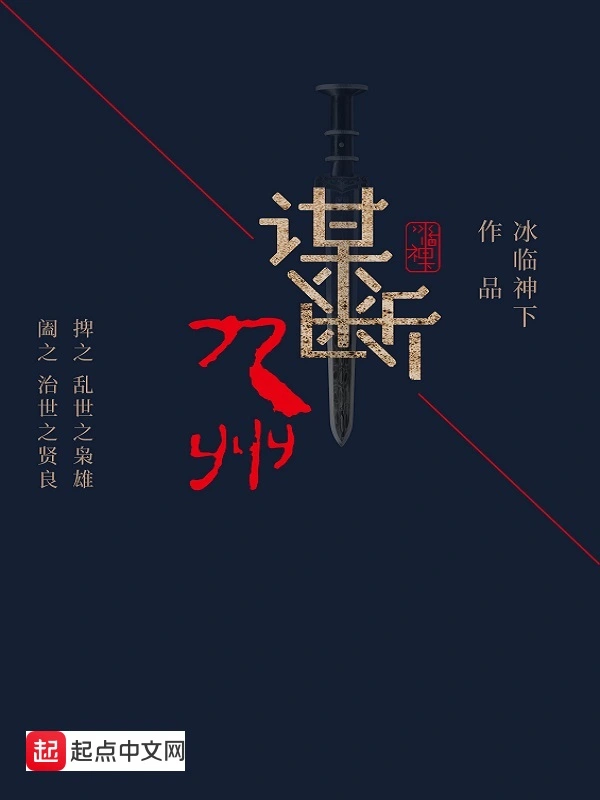
Plan to Destroy Kyushu
谋断九州
- Status
- Completed
- Length
- 1.8M Words
- Genre
- Historical
- Audience
- Male
- Subgenre
- Alternate History
- Updated
- 5y ago
- Source
- Qidian
Stats
Tags
Synopsis
Reader comments
In booklists 181
Explore more →
The [Most] Book List to Read Even If You Stay up Late
[Special Note] Click on Lao Chai's avatar to see Lao Chai's main book list. With 30,000 followers, the main book list is even more exciting. Haha, I wanted to take stock of some of the most interesting works in 2018. I would like to thank Qidian for giving me this opportunity. [Special Note] Comrades, be sure to collect the book list, click on the small five-pointed star🌟 at the bottom of the screen, and turn it into a red star to collect the book list, instead of paying attention to me! ! Let'
🔥Lao Chai's Book List No. 7 [History] - the Dust of History🔥
[Special Note] Comrades, be sure to collect the book list, click on the small five-pointed star🌟 at the bottom of the screen, and turn it into a red star to collect the book list, instead of paying attention to me! ! ! It's not about me! ! ! Click the little heart below 👇! 😄 Please pay attention to Lao Chai's main book list - The Divine Book Seedlings🔥A complete masterpiece🔥Imaginative and wonderful articles🔥Unpopular fairy grass 1. (I am planning to create a series of high-quality historical au
Good Historical Records
History Book ListDedicated to History Mainly, I recommend some good historical books and high-quality seedlings to everyone! There are many storms on the list, but they are all indifferent. Guys, do you feel familiar looking at the books in this list? I only recommend high-quality history books! Dear readers who like historical articles, please come in. If you like it, please give it a like, add a follow, and add it to your bookmark list. Please click "Pentagram⭐️" below to bookmark this boo
My Library
I recommend these books to all book lovers. I have read every work here. I feel that the author's writing style is very good and each book is a fine product. You can give it a try and you should find a novel you like.
I Love Reading
Picky old bookworms who are hungry for books can add this book list, which mainly recommends serialized novels and collects complete novels of classic masterpieces. The authors I mainly follow: A Line of Egrets in the Blue Sky, Three Days and Two Sleeps, Ice Comes Under the God, Jie Yu 2, Fang Xiang, Xiao Ding, Zhiqiu, Ermu, Chenci Laidiao, Far Eyes, Angry Squirrel, The Reader, zhttty, etc. I have read many novels, from junior high school to now, just like the divine farmer tasting a hundred
Learn from History
Since I was very young, I have dreamed of becoming a great hero, going back in time, changing the world, and leaving my name in history. I believe many people have this idea. The fictional historical novels satisfy people's spiritual needs, which is why today's time-travel novels are so popular. If history could repeat itself, how would you choose? In the face of the general trend of history, every change you make will change the trajectory of history. This book list will collect and update va
The Future Little White God
Don't miss it if you pass by, it's a gathering place for newcomers Xiaobai Miao's books. Come and take a look! They are ignorant novices now, but they will definitely become new great masters in the future. No matter how the writing is, for the sake of Xiaobai's success, give it a chance! Regardless of the quality, for their continuous advancement on the road of growth, please pay attention! For their persistence, could you give me a recommendation for collection? Dear readers. Note: This book i
The Historical Scenery Along the Road Gathered in the Ox Cart
Some are finished and some are being updated. But I have seen them all. No matter which one you prefer, as long as the characters in the plot are outstanding, they will be included. After all, it is history, and you will understand if you listen to it. Serious or frivolous, or romantic like Yue Guan or Yu Yan, it doesn't matter. I will keep about half to one-third of the new works, and some of my favorite completed works, which will be updated regularly.
Excellent Book!
The subject matter is not important, and the master is not important either. What is important is that it looks good, and what is important is the quality. I only recommend high-quality products, which are available in all types. Reading different kinds of books feels like experiencing different lives. You can't go wrong adding this book to your collection! It allows you to travel across the six realms (gods, demons, immortals, demons, ghosts, and humans) regardless of ancient, modern, Chinese,
Sudong's Librarycomplete Book from Personal Collection
This book list mainly collects completed books that I personally like. Welcome to pay attention to the main book list: Sudong's LibraryMainly recommends good books that are currently being serialized
A Collection of History Books
Now I like history books, which are very interesting, so I want to create such a book list.
Not Aloof or Noob, but Fun and Intelligent to Pass the Time.
1 Or above, at least the writing is passable. 2 If the setting or plot is interesting, there is no need to read the mediocre work. I can't be considered a literary young person, but I still have some requirements for writing. In the early days, I had a rather tricky taste. Later, when I was tired from work, I just wanted to take it easy, but I couldn't stand the mindless upgrading and sex. Basically, this list is based on this standard and I think it is pretty good. It is best if it has highlig
🏥A Veteran Military Doctor Who Specializes in Treating Book Shortages, Follow Me and You Will Have Books to Read🏥
A long-time military doctor who specializes in treating book shortages🏥 I am an old military doctor. One day I suddenly realized that studying medicine cannot save the Chinese people! So I resolutely threw away the medical books, upheld the benevolence of doctors, imitated Shen Nong's spirit of tasting hundreds of herbs, and devoted myself to the army of online articles. 🚑🚑🚑🚑🚑🚑 From now on, skipping classes is a common thing, and failing classes is a daily routine. This is the rhythm of the pill
Very High Quality Unpopular Book List
I have been reading for many years, and my hobby is quite wide, so this book list has a variety of subjects! I prefer online game writing, but I really hate rebirth online games! I also like historical articles, but all kinds of time travel are badly written. It's not easy to find a good book. I really hate the non-serious beginning of time travel, such as eating, drinking, wearing clothes, etc. If you don't know how to write the beginning, don't write the beginning. Just start with the main tex
Book List of Jing Guan Fang Tian
"Don't play with men." "What do you mean?" "If there are men who don't play, there are men who don't play." "Who knows what you're talking about?" "This is a book of mottoes from the Emperor. It has a miraculous effect on the demons of the warp." "Where is the evil spirit??" "You will know after reading this sentence."
Recording Good-Looking Books, New Book Selections, Imaginative, Plot-Oriented, and Refreshing Articles
Collection of some fun and interesting books, Record your reading experience, and authors are welcome to recommend themselves. Asking for collection, asking for attention, and asking for flowers. Many books are also published by Amway friends. The unfinished reviews will be revised at any time, and the merits and demerits will be carefully evaluated. Classification: S level: high-quality fairy grass, imaginative, and excellent writing. Grade A: imaginative, unpopular, unique writing, controversi
Hobby Complaints
It's been a while since I saw a book I particularly liked.
Starting Point Masterpiece
I have been reading books for many years, I guess I am a hardcore reader. I hope you can come in, communicate with each other regardless of each other, and recommend what I love to you. Book list, this thing is very interesting. I never thought that I would actively create a book list. Following the author's flowing writing, the entanglements between the protagonists will unfold, and you will even cry silently (crying is just an action), which is very enjoyable. The single owner has a wide range
Recommended Place for the Historical Novel "The Prodigal Son Dreaming Back to the End of the World"
🌟This book list actually means to click it as a favorite. The books in it are all ones that I plan to read, am currently reading, or have finished reading. I will not put books in there that I don't want to read. In addition, there are some books that I did not recommend separately, that is, I mentioned them in the introduction of the book, but not recommending them separately does not mean that the book is not good ~ but because I feel that there is no need to recommend them separately. These b
My Heart Pleases
First of all, let me state that this book list is not limited to novels from the main site but also female-channeled novels. I am a female owner of the book list, so please don't be surprised to see female-channeled novels in the book list. This book list is a novel that I personally like. I think the plot is attractive and the writing is pretty good, so I put it on the book list. Regardless of the main website or the female channel novel, for me, it is a novel worth reading. Secondly, I persona
🔥The Divine Book Will Not Be Erased by Time🔥
☕☕Some books will never be forgotten and will only last forever! Fantasy, fairy tale, supernatural, western fantasy, urban, science fiction, martial arts, games and more! There are some books that you may have never heard of. It doesn't mean that these books are not excellent, just because they are not famous. I recommend the book, firstly the writing, secondly the plot, thirdly novelty, other systems, styles, settings etc. Come second. 🌴🌴Starting point, there are really some good books...🌴🌴
Thousands of Miles of Joyful Wind
My book list is not divided into levels, and I have read every book in it seriously. Some of them are very imaginative, some have novel plot settings, some are touching, and some make people feel comfortable. Mainly recommending new books with potential, potential is equal to a thousand miles, and good books come with the wind. Everyone is welcome to come and see.
"Ice Is Under the God" It Is as Dark as the Stars, but It Feels Quiet in the Clouds and Forest.
Binglinshenxia special performance
Afternoon Tea Time for Fruit Tea, Stop Busy, Read a Book and Drink Tea Together
The male videos that girls watch tend to have a light and new taste. They don't read mindless stories, they don't read harem stories, and they don't read cruel stories that are pretentious and slap in the face.
Readers also read
 Red Mansion Xiaoke
 At the Beginning, Please Ask Chongzhen to Abdicate!
 Fu Ming 1627
 I Am a Tyrant in Nanming
 Qingdu Shanshuilang
 Picked up a Copy of Chronicles of the Three Kingdoms
 My Neighbor Is the Emperor
 Disciples of Fangcun Mountain, Traveling Westward
 I Have a Dark Secret Martial World
 The Heroic Ambitions of the Late Eastern Han Dynasty
 Song Beiyun
 Nine Days
 Book of the Dead
 Daming Monster
 Spy Family
 Exorcism
 Ruzi Emperor
The part about giving up being king is really disgusting. An author who is good at writing dark conspiracies has such a big flaw in the structure of his work. A person who assassinated the emperor, a leader of the peasant rebel army, and a person who used various conspiracies to expand his power. This kind of person will not be trusted by the princes in troubled times, and it is impossible to survive. His political life is over. The science of name and reality, for the protagonist, his name is already bad, and he no longer has any strength in his hands, only his brain and tongue, which are useless no matter what. As generous as Liu Bei, he did not dare to use Ma Chao when the Shu Han Dynasty was in decline. The author takes it for granted! ! ! ! ! Also, the main plot of this book is flawed. The first fifty chapters are just a childish attempt to prove that I assassinated the emperor. In the next hundred chapters, it's okay to traverse the princes in order to be useful. Later, if you feel that it is better to pacify the world by yourself, that's fine. But after giving up on becoming king, what is the main line? To pacify the world? In order not to kill the servants, he just walked away and called it unbearable. In troubled times, there is no aura of the protagonist. After this gang breaks up, they will all be the prey of others and they will all die. The chaos in the world was caused by the protagonist. He said it was for the people, but it prolonged the war period and caused more deaths. He said it was for his subordinates, but just walked away. It was easier than throwing away the tools. Hypocritical! I came here as a fan of a dead man, but I ate a poisonous weed and it felt like it was lodged in my throat. I was really disgusted. I accept that the protagonist is confused and frustrated, but I cannot accept the protagonist**.
This plot of giving up the title of king is completely unreasonable.
Exorcism, Book of the Dead, and the Ruzi Emperor were chasing after him. I was really disgusted. The short plot of giving up on becoming king was so unreasonable. The male protagonist went round and round and found that there was no one to persuade, and that others were inferior to him, so he finally made up his mind to become the king. With a lot of clever tricks, he defeated the kings and finally captured the Eastern Capital after going through a lot of hardships. As a result, a princess, who was previously a smart and self-righteous playboy, showed up several times and performed far worse than Xu Chu, Emperor of All Things, and Prince Ning, and unexpectedly came to be in charge of power alone. When the Emperor of All Things died, the ministers were obviously plotting one after another. They were all a bunch of people who had been playing power for decades. Suddenly their IQs were in arrears? Many of these people have fought in the country. How could they lose to a princess who has never seen the world in troubled times and let her take power alone without checks and balances? The author forcibly laid the groundwork for a long time, forcibly improved the princess's resourcefulness, controlled it remotely in Yecheng, and created an image of having no plans left and winning thousands of miles. That would be fine. But then, in order to target the male protagonist, the princess ignored everything and made huge sacrifices to besiege the Eastern Capital? This is obviously a little woman who is driven by her own ambitions and cannot achieve great things. How did she come to be in power? And no one else cares about her and just does what she wants? Isn't this Xiaobaiwen's routine? It's okay to write it this way. That's the tone of Xiaobai's novel. The protagonist's domineering spirit attracts the heroine to target him. As a result, the tone changed again at this time. The protagonist clearly had a chance to win, but at this time, he was so angry that he gave up halfway? The reason is also inexplicable. It is not because of the civilians, but because of the army. Isn't the army born to fight? Isn't it normal for the army to make sacrifices in war? And he didn't mean to die in vain. He first used a small force to lure the enemy into a fight, and then used the main force to encircle and annihilate him. It was a very common strategy, and it didn't even count as a method of war, right? The protagonist actually has a mother's heart. This is really more holy than ordinary mothers. Xu Chu's character is a bit soft-hearted, but he is obviously not such a person. Even if the Holy Mother's heart explodes, the next decision is not to face the difficulties, but to give up on becoming the king? It is obvious that each of these princes is more cruel than the last. If it were not for King Wu, Dongdu would have been in ruins. Wouldn't giving up the title of king be equivalent to giving up the world to them? If you become a counselor, how can you guarantee that you will meet a wise king? How do you ensure that people listen to you? This is a contradiction no matter how you look at it. It is impossible for Xu Chu's mind to make such a decision. From Huanyan to Xu Chu, this plot may be as unreasonable as it is unreasonable, as awkward as it may be, but this is still a conspiracy novel? Just to force the protagonist to be a counselor? I don't like to read cool articles either, and I don't necessarily want to watch King of Kings, but this plot is really disgusting, so I'll give up.
A brief discussion on the writing process of Bing Linshenxia
Starting with "The Book of the Dead", he abandoned various paradigms of online novels and began to experiment with free writing. He chose the declining martial arts theme and created a gloomy and realistic martial arts world from the perspective of a killer. It was in this novel that the author established his personal style, with simple writing, twists and turns, diverse characters, and a full and beautiful character arc. In the later "Drawing Out the Demon", the author once again began to try the fairy tale theme. Different from the original Shuangwen-style writing, this time he did not stand on the shoulders of famous fairy tales, but completely used his own conception and logical deduction to depict an "overhead" fairy world. This leads to the obvious advantages and disadvantages of "Drawing Out the Demons". The advantage is that it is novel and unconventional, giving readers who have read too many templated assembly-line fairy tales a refreshing feeling. Also, because the overall world structure is based on the author's logical deduction, the background setting of the entire story is relatively complete, and there are no major logical flaws. When writing based on other people's settings, there will often be various common sense and logical flaws. If some flaws happen to be in the unacceptable zone of a certain reader, then the reading experience will be very bad. Of course, the shortcomings of "Bad Demon" are also fatal, that is, it is too logical and too vague. Regarding logic, the author mentioned it in the interview after completing the book. Regarding being too vague, the creation mode of online novels determines that the chapters are published as soon as they are written, and the draft cannot be polished and reworked repeatedly, and the preparation cycle is short. This determines that the author cannot spend seven years like JK Rowling to repeatedly conceive of a specific and subtle magical world. Even some unscrupulous fat old man who wrote "A Song of Ice and Fire" drew heavily on the real history of the Wars of the Roses. Therefore, "Drawing Out the Demon" seems reasonable at first glance, but upon closer inspection, it is too vague and lacks texture. The next "Ruzi Emperor" may be regarded as the most recognized by the majority of readers among the author's later books. The author of this book has returned to the field of fictional history that he is good at. This setting not only draws on the real sense of history, but also complements his rigorous writing style. If "Drawing Out the Demon" gives people the impression of a freehand painting of a landscape with freehand brushstrokes and black ink on white paper, then "The Child Emperor" has color. The red of the imperial city, the coldness of the deep palace, the smoke and dust on the hunting road, etc., Have all become palpable. However, the view that "power is only within ten steps and within a thousand miles" and the overt and covert struggles between officials and officials, monarchs and ministers are settings that are both novel and consistent with logical reasoning. This book is both topical and in line with popular tastes, and also has a very personal style. It is full of wise words but also simple and unpretentious. It can be said that it has both topicality and high quality. It can be regarded as a very successful writing attempt. What I admire the most is that the author did not go down the path of assembly line work just because of one success, and started writing novels about the child emperor such as "The Boy Emperor" and "The Female Emperor". Instead, he made a bold move and wrote a completely different novel "The Monster of the Ming Dynasty" with a small character as the protagonist. The success of "The Child Emperor" is only a milestone on his writing journey, not the epitaph of his entire writing career. I have seen too many online writers unable to let go of the baggage of their own success, and have forever become their own repeaters. In contrast, I admire Bingda's pursuit and straightforwardness. In the book "Monsters of the Ming Dynasty", the author uses the things of gods and ghosts to describe the unpredictable nature of people's hearts, and also follows and further develops his unique narrative method. A group of people with different purposes participate in a conspiracy event, each with their own plans and plans, but because of everyone's participation, the event will become unknown chaos and eventually lead to an ending that no one expected. This method of plot planning is not suitable for novels that are too long, but for a novel with more than one million words and four or five main stories like "The Monster of the Ming Dynasty", it is unexpectedly suitable. The plot is often unexpected but reasonable. What makes me most gratified is that compared with the realism of "Emperor", the author's writing skills in this book are on a higher level, concise and full of fireworks, just like Hu Guiyang's bowl of steamed noodles. The noodles are fragrant and warm enough even after hundreds of years of changes. As for "The Conspiracy of Kyushu", I haven't finished the book yet so I can't make a final conclusion. As far as my personal impressions are concerned, I remembered what Bingda said in an interview with readers that he planned to write an epic group portrait novel, but he felt that he was not ready enough to write it in a few years. And "Conspiracy to Determine Nine Provinces" is more like a practice for the epic he planned. This book takes the information asymmetry in "The Child Emperor" to the extreme. The characters in the book only know two or three points of information, and the readers can only see four or five points. Combined with contextual reasoning and analysis, they can guess at most seven or eight points. For example, in the section when the Five Kings conquered the Eastern Capital, from beginning to end, readers only know that Tan Wuwei borrowed the Wu King's cavalry, but they do not know how he led the Luoyang soldiers to fight with the King of the World's headquarters. For example, the betrayal of the King of Shu, readers only know the result but not the process. Readers who like to ponder over and over the details in the text will of course find it very enjoyable and even unfinished, while readers who are used to looking at the overall situation from a God's perspective will be very uncomfortable with this feeling of being in the clouds. Let's write this first. Welcome to discuss
The essential weakness of Xu Chu's thought
Xu Chu's biggest problem is that he believes that there must be a reasonable reason for unifying the world, so he regards the idea of the leader of the force as this reason, but in fact the reason is not the idea, but luck. The idea of governing and uniting the army in power only give you the ability to seize opportunities. If Emperor Yi had not sent Liu Bang to the west, there would have been basically no Liu Bang in the world. If Chen Yu had listened to Li Zuoche, it is hard to say what would have happened if Han Xin attacked Zhao. If it hadn't been for the emptiness in Guanzhong when Li Yuan raised his army, I don't know what would have happened. Yuan Shao died two years earlier and two years later, and the situation in the world was also unknown. Zhu Yuanzhang became emperor in his later years. He sighed to the Forbidden City in Nanjing and Empress Ma, "You are doing a great job if you do it randomly!" Could it be that he unified the world because he had some awesome ideas when he joined the Red Scarf Army? He is just a farmer who wants to earn a living. That's why everyone was so dissatisfied with Xu Chu giving up the throne and the army. In troubled times, only the soldiers and talents in hand are real. If we advance, we can rule the world, if we retreat, we can protect the country and the people. Taking ten thousand steps back, even if you find a master with perfect ideas, how can you guarantee that he will not die from a high fever due to bad food? Zhang Xidi is so awesome, so what about Zhang Wanwu? To put it bluntly, as long as you don't change productivity and introduce industrialization, then everyone will live on land rent. Is there any essential difference if the idea is better or worse? Didn't the Manchus still rule until 1840 when they were so brutal? Do you think Dorgon is like God?
How does "Conspiracy to Destroy Nine Provinces" attract a novice in the political conspiracy world?
How does "Conspiracy to Destroy Nine Provinces" attract a novice in the political conspiracy world? Bingda proved to me that power and strategy can be an element separated from history. Although it borrows some historical settings from the Southern and Northern Dynasties, the stories of the characters in the book are basically based on history, and the plot development revolves around the word power and strategy. The slow writing pace of this book makes it difficult to get into it at the beginning, but it gradually gets better after Chapter 59 "Three People". An emperor who seemed to have potential as a villain boss at first glance was stabbed to death by the protagonist within less than a hundred chapters. A protagonist who was expected to be a counselor actually opened up a new world of combat counselors "stabbing Kyushu". The death of the Emperor of All Things seems to have been foreshadowed in the work information. The death of the emperor is a key to unlocking the troubled times required for the story, and it is also an opportunity for the protagonist Xu Chu to really open his mouth and travel around to conspire to conquer the world. The strategies in Bing Da's writings are different from the "conspiracies of ghosts and gods" with supernatural attributes that are elevated to the level of "using the heaven and earth as the chessboard and the common people as the pawns" in some fairy tales or fantasy novels. Instead, they are limited "mortal strategies" that sink among all living beings. It's not uncommon to find protagonists with the "ultimate strategy" type, but readers with God's perspective will never really marvel at the protagonist's "ultimate strategy", because we all know that this setting is just an internal requirement to achieve the corresponding cool point of the novel, but Bingda uses a restrained writing style to consciously lighten the story. Although the story is still told from a third-person perspective, there is little description of the psychological activities of the characters, and there are no statements such as "XXX has already anticipated the direction of the enemy's march." Instead, the characters are often outlined in a few simple sentences or actions. Of course, the protagonist who lives in the writing of such an author will seem a little pitiful. Recently, in this chapter, a reader wrote an inner narration for Xu Chu, saying "he deeply doubts his identity as the protagonist." Although the protagonist has suffered many setbacks, it does not make people think that Bingda is abusing his master. Since the beginning of the troubled times, Xu Chu first assisted and then became the king, then abdicated and found the true dragon. He vividly performed "how a counselor is made." This may also be Bingda's skill. For me, another highlight of this book is Bingda's attempt to deepen the "core" of the novel while writing about power and strategy. In "Extracting Demons", he unconventionally discussed the "heart of a Taoist priest" to imagine the difference in thinking between Taoists and mortals. In "Conspiracy of Nine Provinces", he used strategies to talk about names and facts, classifying counselors' actions as "according to names and responsibility for facts." Frankly speaking, in the first volume, Xu Chu talked about the theory of name and reality from time to time, which made me feel as if he was forcibly advertising the theory of name and reality. However, as the story develops, the word name and reality are more integrated into the actions of the characters. Xu Chu's quest also brings more readers in this chapter to the discussion rhythm of "name" and "reality". At the same time, Huanyan County advocate Shi Chan also started a wave of discussions or complaints about the concept of "willfulness". These rhythms and discussions made the novel seem not thin but thicker, and also opened up intriguing space for online articles that are often associated with "fast-food reading".
For book friends who are still wondering whether to fall into the trap, I have something to say, please listen carefully.
The reason why "Conspiracy of Kyushu" attracts me is not that I prefer historical books. It is not just the ups and downs of the plot, not just the rich and three-dimensional character portrayal, and not just the cool writing style. I have read a lot of these outstanding books, but I always forget what the other books are about faster than this one (yes, it is the kind that I don't know what I talked about before after a month 🙂). I have been reading online articles for more than ten years from 2006 to now. I have read a lot of them, whether they are fantasy, science fiction, historical military, or Urban Infinite. It was only in recent years that I gradually discovered that what really attracts me is not books of a specific category, but books that can really tell stories. "The Conspiracy of Kyushu" is one of the books I found from the starting point that really attracted me to read and gave me some ideas to express. (I now believe that the ultimate goal of all methods used by an author should be to tell a good story, and anything else is nonsense!) Once again, I am not good at analyzing plots and characters (don't think about spoilers 🙂). Although I have my own understanding, it is very subjective. Carrots and cabbages all have their own preferences, so I won't go into detail about my fairy grass and your poison. The purpose of writing this book review is to share my feelings about the story of Bingda with book friends who read the review before reading the book, and to give a reference to book friends who want to read it. I feel that each of the characters in Bing Da's works has his own behavioral habits and ways of thinking. What is especially important is that the characters' thinking and behavior are dynamic. The growth of the protagonist in Bing Da's works is an upward spiral. Changes in the environment stimulate changes in the protagonist's thoughts and behaviors, and the changes in the protagonist have an impact on the environment. Growth under interaction is what I think is the reasonable growth process of the protagonist. How to let events promote the growth of the protagonist, how the growth of the protagonist triggers new events, how the supporting characters and the protagonist interact with each other, etc., In my opinion, Bingda handles it with ease. So, in "Conspiracy of Nine Provinces", what I feel is a dynamic world. If you don't like to brush pictures, then this book will teach you how to PK. Opening "The Trial of Nine Provinces" is like fighting with opponents one after another, and this is a first-person perspective. The information in front of you is the same as the information in front of the protagonist. Everyone except the author is fighting in the first person in "The Trial of Nine Provinces". Book lovers who like to think can enjoy the joy of being in touch with Bing Da, and book friends who like to place bets can enjoy the surprise when Bing Da reveals the answer. If you can finish reading this book review, then please don't miss "Conspiracy to Destroy Kyushu"!
Some thoughts on making decisions
First, Bing Da's article is really spiritual. It sets up the pre-war emotions just right, and the way of describing the war is also unique. There is no mechanical description of troop formations, no boring list of military numbers, and no deliberate sensationalism. However, the feeling and atmosphere of the battlefield have not diminished at all. I admire the spirituality of Bing Da's writing. Second, I personally think this book is a rare and good book about strategists. Xu Chu is a strategist of the strategic faction. Take a look at the theories about strategists on the Internet. This is a unique group of counselors and the most special diplomatic politicians. Seven requirements: Be aware of the overall situation, be good at reasoning, be fluent in rhetoric, adapt to opportunities, be wise and courageous, have good strategies, and be able to make decisions. Political experts pay attention to trying to figure out the psychology of lobbying targets, either to win over or divide them. There is no final decision on the matter, and there is no final word in what they say. Everything is based on realistic political requirements. Reading this book carefully, I feel that Bingda has described the profession of strategist to the extreme. Xu Chu gradually matured in the middle and later stages, and he wandered among the heroes. Regardless of his success or failure, he showed these seven obvious characteristics of a political strategist. Xu Chu mostly cooperates with others, unites the weak to attack the strong, and has many plots and few plots. Guo Shifeng's thinking is mainly about horizontality. He attacks the weak with one strong attack and creates rifts among the heroes. There are many conspiracies and few evil plans. The plot of this kind of book is difficult to conceive, and the details, especially the dialogue and ideas between the characters, are very demanding. If the author is a little lazy and wants to improve the word count, it will greatly affect the reading experience. Fortunately, Bingda never disappoints in this aspect. Third, I didn't expect to see such sophisticated, restrained and precise writing style when reading online articles. Many emotions are just a few simple strokes, but they hit the heart directly. Friends in the book club often mentioned Huanyan's cloak, Changyan's death, etc. There are also many plot descriptions that are very interesting in my opinion, such as the wine tasting between Princess Xu Chu and Ju Niang, Xu Chu and Jin Shengnu from their acquaintance to their farewell in the east capital, Xu Chu and Huanyan's several meetings, Xiao Tang's second grade, the Goddess of Jin Shengnu's father, Zhang Shiqing's dependence on Xu Chu, etc., Etc., I will not list them one by one. I am too lazy to type. This is my first time typing so many words. I would like to pay tribute to Bingda! Thank you Bingda for bringing you such a unique and wonderful book. The above words about making decisions are all personal and one-sided opinions. Please forgive me for any misunderstandings.
Some understanding of the plot of this book and some understanding of following the truth
Let me talk about my thoughts after reading this article. From the beginning of this article, I introduced a concept of "honesty and responsibility", and then introduced whether name is more important or reality is more important. Anyone who is ambitious to compete for the world must consider this issue intentionally or unintentionally, and the protagonist is no exception. The protagonist just started to listen to the teacher telling him this truth and he felt like a treasure. He immediately used it to observe and analyze other people's thoughts and hearts. But he forgot to observe and analyze his own thoughts and heart. The protagonist is young and talented and wants to express himself, but he has been suppressed by the imperial court for the rest of his life. He also wants to avenge his mother, wants to do something big to make others respect him, and wants to stand out. He believes that "fame" is more important than reality. Later, he is defeated by the emperor's plan. Due to luck and opportunity, he kills the emperor. Just when he is in an advantage, he wants to take over again. Li Rang's father, the general, rebelled but was betrayed by the general. At this time, he realized that he could not entrust his wishes to others and let others realize them. If his wishes were to be realized by himself, no one could replace him. Later, he was rescued by his rival and confidant Princess Huanyan. Although he knew that his wishes had to be realized by himself, he came out of the imperial city to assassinate the emperor and was hunted for his reputation, but he did not It didn't bring him greater benefits. He wanted to realize his wish but didn't know how to achieve it, so he had to be a counselor and deal with several parties, like a headless fly flying around, entangled in name and reality, which is more important. After receiving the guidance of a famous person in the world and struggling with several questions in his heart, he seemed to understand something. He believed that "reality" was more important than name, and he had to have himself. Instead of following the crowd, he thought that an army in the imperial court used a strategy to take over some props for ceremonial purposes and became an envoy of the imperial court. He returned to his hometown to build his own army and began to compete for the world. Later, he used his own strategy to succeed in the game between several parties and became the final winner. However, along the way, he made many decisions that were difficult for him to make, and he also forced himself to death. The general whom he trusted, because he made decisions for him without permission, treated himself like a child, and killed thousands of soldiers who were burned to death because he let the enemy go. He forced himself to be ruthless in order to become emperor but always showed mercy at the end. He lied to himself that this was a ploy, which was the best thing to do. He slowly deviated from his own nature, making his heart more and more painful, and he was always in trouble. In the midst of the entanglement, I finally couldn't lie to myself and admitted that I was a kind person who couldn't sacrifice everyone for the sake of being the emperor. I finally faced my deepest self, but found that I had never been so relaxed and peaceful. In fact, we are all the same. When we are young, we always want to get ahead, do something to make ourselves great, and think about what others have. What can't I have? I'm always tossing for fame and etiquette. I'm tired of tossing and still refusing to give up. I'm not willing to give up until I've endured twice the pain, ten times the pain and a hundred times the pain. I'm not willing to give up until I'm crushed to death by the pain. Or I can admit that I am like this, that I'm useless and not as powerful as I imagined. I will relax when I admit my true self. My understanding of following the name and being responsible for the reality is to first get the name you want, know what it feels like to get the name, experience everything you go through in getting the name, experience the pain and joy, and finally slowly find your own reality in this constant struggle.
[Review after the completion - Ruzi Black Swan, plotting to resolve asymmetry]
Whether it is a tyrant or a plot, they both demonstrate two characteristics of Bingda: the asymmetry of the information everyone knows and the risks they take, and the uncertainty of personal fate and plot direction. I did not follow up on this book from the beginning, because at that time I had just got rid of the influence of "The Book of the Dead" on me and was busy reviewing "The Child Emperor". Of course, it took me at least more than eight months to pursue this book, watching Lou Chu go from being silent to opening up, and watching Xu Chu go from being king to being in hiding. In the whole process of Xu Chu entering the world, being born as a small hermit, re-entering the world, and being born as a great hermit, the most gratifying thing for me is that Xu Chu did not become a fool fooled by uncertainty. Xu Chu was a complex person: he was a concubine of a general and the heirloom of a prince; he had stood at the pinnacle of power, when calculations could determine the life and death of his followers, and he had also fallen to the lowest point in his life, and he could not save anyone's life even though he tried his best. He is also a simple person: he has never given up on understanding himself, nor has he stopped understanding others. He is hesitant, he is firm, he lets go, he is persistent, and he keeps growing for what he wants in his heart. Although Xu Cuzhi's actions were often beyond my expectations, I did not feel helpless because he gave up competing in the Central Plains and aspired to conquer the Nine Provinces, nor did I feel sorry for him because he hid in a valley and gathered people to think about his mistakes. On the contrary, I was very happy that he gave up his power of being arrogant and blind, and turned to the experience of traveling around the world and lobbying the powerful, because he is full of contradictions and constantly struggling, which makes him more real. "If you abandon the sage, you will get the true Confucius." If you abandon the power, you will lose the false king of Wu.
The running dog under the ice gate, to all readers.
After reading it, let me tell you my opinion. I have followed Kyushu since it first came out, and have experienced the Book of the Dead, Exorcism, Ming Dynasty, and Ruzi Emperor. Not to mention the previous ones, as far as Kyushu is concerned, it is my favorite and it feels the most real. The author has fully introduced the wonderful points in it. However, the shortcomings and failures in the eyes of you readers are exactly what I like about this book. The hundred chapters after the abdication and abdication, I wisely closed the chapter reviews. I think Mr. Xu is a gentleman who has thought about the valley. The confusion and asking for self-examination and waiting, you guys think it is a drag. I think the blurred information caused by the single perspective of the white painting is that the protagonist is in the same room, the princes are playing chess, watching the changes in the situation, pointing out the major events in the world, you guys are complaining that there is no grand historical scene. The majestic scenes of war and history are written in the yellowed lines. Then, what Bingda restores is a real troubled time. There is no grandeur like Lord Grim lying drunk on the battlefield, nor is there any new energy spreading to the golden watch, cold light shining on the iron clothes, letting go of the past. God's perspective, through the eyes of Mr. Xu, allows readers to truly experience a "history". Han Xin, the man behind Brother Tan, originally hesitated and retreated bravely, but ended up with a cunning rabbit dead, a running dog cooked, and a bird with its bow hidden. There are also Xiang Ji who were born as heroes and died as ghosts. The cruel and unkind side that burns the Wu soldiers. It turns out that the heroic warrior like a field craftsman did not kill one person every ten steps. In Hou Chuanli, Zhang Liang, who retired after his achievements and was repeatedly rejected, did not emerge from troubled times and retreat in peace because of his indifference to fame and fortune, as later generations praised him, but he was wise and wise in protecting himself from the rapids. Perhaps this is why there are not many detailed historical records of Zifang, which has gone through three dynasties. The author also said that Bingda's writing style is not accommodating to readers and is not suitable for online novels and Internet literature. But isn't this the valuable thing about Bingda? 100 Years ago, articles published in newspapers or like our current Internet literature, Internet literature is not just cool articles, small white articles, fast food articles, Bingda's clear stream, or in the eyes of later generations, it is the pioneer of change, and the Internet is only the carrier. It does not have a threshold, which does not mean it has an upper limit. New changes and attempts that cannot be made in physical books can be achieved in online texts. Why bother to use contemporary online text formats to limit the traditional literary skills of Bingda University? The success of Ruzi Emperor should be to cater to the tastes of most people. Those who pointed out that there are shortcomings here and there in Jiuzhou are already good, but they still need to be improved before they can become immortal and become masterpieces. How long did it take to read it and how many times did it become a masterpiece. If you just read it as an online article, of course you won't be able to see Bingda's hard work. Go to hell with master authors, god-level writers, hell with fairy herbs and seedlings. It's just that today's people are ignorant and let the pearls fall into dust. Let's wait and see in future generations! !
The writing is okay, and the story is readable, but it's unpleasant, even irritating. This book, and even more than this book, has a characteristic: the author deliberately conceals it and uses it to reverse it crazily. This feeling is a bit like the domestic detective movies I watched before, slowly devouring the mystery, and when the secret was finally revealed, it was all details that were not shown in the show. But there is no revealing part in this book. It is always hesitant and mysterious. The focus of the writing is always on a few people, and they are all just words, and the overall environment is briefly described, making all the reversals and accidents seem reasonable, but endless. After all, we are just reading a book, not experiencing it ourselves. As for the details of life, the author leaves them blank, so we can only be blank. But the author will never truly write about what the world is like, and no one will analyze and summarize the actual situation. Kyushu is obviously very big, but from a distance, we can only see a few tiny outlines. We can only see the flowers in the fog amidst the awkwardness of the protagonist. And there are always people who have a sense of superiority and will say things like "Go and read Xiaobai's article". It's true that one pink is better than ten black. Is this book profound? No. It's just that the author made the plot heavy and unexpected. Bing Da's secretiveness is his style, but it is not his advantage. The world here is always separated from the readers.
Unable to bear the weight of other people's lives
Mr. Zui has regained his original intention. In other words, he has never lost it. Some people are decisive in killing and not only don't care about the lives of others, but also don't care about their own lives. Such people may succeed. Some people value other people's lives as much as their own, which may seem indecisive, but what a precious kindness that is. It is a great thing to remain kind in troubled times. But I think Mr. Zui will always remember his mother who is a weakling. So regardless of his success or failure, I should admire such a person.
Emperor Ruzi is better
This book is too weird, with twists and turns. The story lacks any logical foundation and relies entirely on the comments. The story is not as clear and complete as Ruzidi's. It feels like I wrote whatever I thought of.
Xu Chu will have troubles in the future, but the general trend is bullish! The reason is very simple. The time when the assassin was forced to agree to the eldest princess to take power, the author has discussed a fact from a God's perspective. The original words are "Lou Chu doesn't know at this time that this will be one of the most important lessons in his life." That time was the limit. Xu Chu's mistakes after that were just small mistakes.
After Mr. Xu gave up his title of king, have you noticed that the world written in Bing has become broader? If we still focus on the warlord strife in Dongdu, this book will soon be out of writing. Over and over again, several people will try their best to fight for Dongdu, and then it can only be written as a monster-fighting and upgrading article. Now Bing Da's Mr. Xu takes a big step back and leads us readers to see a broader view of Kyushu. Among them are not only the warlords striving for profit, but also the leader of the He Rong tribe outside the Great Wall who is about to have a child. There are also those who pursue the path of heaven and earth. There may be more wonderful people in the future. If you abandon the book because Mr. Xu no longer wants the throne, won't you lose the chance to read more stories about the land of Kyushu?
At this point in writing this book, I feel very disappointed. What the author Bing Lin has been doing is nothing more than following a deceitful path to attract people's attention. How can he become a great god if he is on the right path? Xu Chu chose to be a commoner for the sake of the world. This plot was too stupid and completely ruined the book, leaving many readers who were waiting to read completely disappointed. How does one persuade those in power? Encourage the king of Jin to be happy. If I were the two of them, I would send a warrior to kill someone like Xu Chu, and let Xu Chu go directly to persuade the aliens to retreat. How can you change the world without strength? It's just Mi Heng; in the end he will only be killed by Cao Cao. Did Binglin's loyal fans see it? Bear with me, there's a reason why Binglin's books are lukewarm. Don't argue, it's pointless.
Just write about Xu Chu
Basically, I started following this book from the beginning, but now the more I read it, the more awkward I feel. Let me just talk about Xu Chu in my heart and share it with you! Assassination of the Emperor of All Things is the beginning of everything. If the Emperor of All Things did not die, the world might be even more chaotic. This may be true, but it was not the reason why Xu Chu decided to assassinate the Emperor of All Things. The fundamental reason why he assassinated the Emperor of All Things was his identity. If this dynasty continued, Xu Chu would only be an ordinary person doing nothing in his life, which he absolutely could not accept. Because he is fundamentally a restless person. The reason for this restlessness is that he is talented, or he thinks he is talented (because no one sees or recognizes this talent). It's normal. Talented people have always been arrogant, and the most intolerable thing is to live a life of mediocrity. Compared with various imposed reasons, I agree that Xu Chu assassinated the Emperor of All Things for himself, stemming from his injustice and impulse toward himself. You can't say he is selfish, but it is really funny to say that he is doing it for the people of the world. When reading novels, many people like to look at issues from the perspective of the protagonist, because he is the main line and the protagonist. From his point of view, it is very relaxed and easier to understand the context of things. Therefore, when most people see how the general treats Xu Chu, they will think that the general is ruthless. But if you look at it from the perspective of a general, what will happen to the entire Lou family if you assassinate the Emperor of All Things? That was the crime of assassinating the emperor and genocide. The general had many heirs, but he didn't take Xu Chu seriously. How much affection did Xu Chu have for his nominal father? As for his later change of surname, it was calm and there was no big emotional turmoil. This father and son, half a catty versus eight ounces, are both ruthless people, and Xu Chu's ruthlessness is particularly obvious. In the battle of Luoyang, Xu Chu proclaimed himself king and became the leader of the kings. Among them, I think the most interesting one is Fei Zhen, a minister who governs the world, but his performance is so powerless in troubled times. His words fully demonstrate the attitude of the common people in troubled times. If you always passively accept your fate instead of taking the initiative to grasp it, you will definitely gain nothing in the end. Compared with them, those rebels who couldn't survive and took the initiative to fight were so cute. What happened in Luoyang pushed Xu Chu to a high position, but it also made him confused. He could not accept the necessary choices that people in high positions needed to make. General Meng killed the women and children of the Lou family and then committed suicide. Nine out of ten of the Wu soldiers led by Wang Dian were burned to death by Ning Baoguan. Under such circumstances, although it is disappointing that Xu Chu chose to retreat, it is not too surprising. Becoming king is just a kind of excitement that Xu Chu has under the promotion of certain external factors. It may be what he wants in his heart, but he finds that what he has to pay is far greater than what he can get. It is quite admirable that he actively chooses to give up. Intolerance was the reason for Xu Chu's abdication, but whether in the front or the back of the book, I really didn't feel that Xu Chu had too much intolerance. I think what he pursues is a kind of inner comfort and stability, that is, how to feel comfortable. And he really did it, but those who followed him met with tragedy one by one, and Xu Chu really didn't think much about them. In troubled times, everyone is responsible for their own choices, but at the same time, everyone also bears certain responsibilities. Just for the sake of a little feeling in my heart, I gave up completely. Anyway, I was quite drunk watching it. Xu Chu was very ambitious. He knew that the path to becoming king would not work, so he chose another path. Use Fan Xian's reputation and Si Guogu to expand your reputation little by little, making yourself more known. One thing I particularly admire about Xu Chu is that he always controls his own path and knows what is best for him, and his intelligence helps him achieve everything. Waiting became his mantra, what are you waiting for, wait for the opportunity to soar into the sky. But did he wait? Wait. The situation was getting worse, and he felt his chance to step up had arrived. All parties are running around, and he wants to realize his own value. Some people like to be the emperor and think that only such people are really awesome. But if one person can decide who will be the emperor, isn't it even more awesome? Therefore, when he evaluates the world's heroes and chooses the world's heroes, he thinks you can't do this or that. In the end, Song Qianshou, who was the least powerful, was chosen. Why, the hell difficulty can realize the value of a counselor. The reason mentioned was out of character. Even Song Qianshou himself said why he sent that letter. The later buffs were forcibly added, and I was really stunned for a moment. That's all. I'm leaving.
The road of a young master is full of high mountains and long rivers
If we say that becoming a black-hearted and ruthless king step by step is the only way. Secretly, I always feel sorry for the child who watched the death of Princess Wu and the young man who traveled to Luoyang. His choice at this moment really makes up for all my regrets. So what if you can't become a king? What if you're not decisive enough to kill? Are there still a lack of ambitious people in this world who want to "succeed"? What is lacking is people who cherish the lives of Sheng Dou Xiaomin as their own lives. Since ancient times, there have been so many emperors, but only a few saints. We don't lack cruel kings, we really don't. It's great that Mr. Zui admits that he can't be cruel.
"Planning to Break the Nine Provinces" - a historical experiment of the Ding Revolution "Planning to Break the Nine Provinces" is the first book I have read about Binglin Shenxia. If I were asked to describe my impression of the whole book, I can only say: The author has unresolved confusions in his heart, so it starts but ends. It is difficult to say that "Conspiracy to Break Nine Provinces" has a main line that is relaxed and clear in rhythm. This is indeed a major problem in the later period of this book. Binglin refers to real history. Judging from official positions and some events, it can be roughly positioned to the Wei and Jin Dynasties, or an accelerated version of the Wei, Jin, Five Dynasties and Ten Kingdoms. It tells the story of the world from chaos to order, the success and failure of the previous dynasty to the stability of the new dynasty. The protagonist Xu Chu, as a real participant in history, directly participated in the assassination, proclaiming the king, and abdicating the throne. In the second half, he is more like a camera position observing the general trend of the world. If we look at it from the perspective of the protagonist Xu Chu's personal quest, there are only two words throughout the book, name and reality. In terms of reading experience, the first half of the book is excellent, but the second half is sloppy and boring after it is released, and even has some outlines. Only some chapters and paragraphs have high standards, such as the death of Ma Wei. I think the most important reason is that when achieving the major goal of the second half of the book - driving the barbarians out of the Central Plains, there is no truly reliable historical logic in troubled times to rely on. In real history, the Rebellion of the Eight Kings with the help of barbarian power was followed by the demise of the Western Jin Dynasty, which ushered in the entry of barbarians into the Sixteen Kingdoms of the Five Hus and the Central Plains in the north. Not to mention the history of the Five Dynasties and Ten Kingdoms, national integration will always be accompanied by inevitable bloodshed. When Binglin discussed names and realities, he used a pair of classic ancient Chinese philosophical categories. Mingshi is originally a metaphysical knowledge that explores the concept and essence of things. In Binglin's case, "according to names and responsibility for reality" is used as a guide. In fact, it explores the art of appraising people, and is more inclined to the metaphysical method of appreciating the talents of characters in Liu Shao's "Characters". Xu Chu himself, or the author Binglin, is more inclined to the Taoist and Zhuangzhuang's way of survival value. The development of history is determined by "the way of heaven" and "the general trend", which cannot be changed without human intervention. "To learn more and more, to do Taoism, we will lose each day." This inability is also the potential reason why Xu Chu abdicated the throne and King Wu lived in seclusion in the valley. Writing this, everyone must be able to find the contradictions. If the logic of real history is that the barbarian regime must occupy the north in troubled times, then the stories in the second half of the book are suspended, which exactly violates the logic of "seeking truth". The smoothness of the first half of the book is based on the logic of the collapse of the real historical dynasty, while the outline flow of the second half lacks the support of real historical logic, that is, the "general trend". Binglin writes about He Rongbu, and dares to let go and affirm it from the front, but cannot accept the ending of the Five Hus and Sixteen Kingdoms - the true end of a Chinese empire and the rebuilding of the empire. I have to say that "Conspiracy to Break the Nine Provinces" is a very courageous attempt, and can even be said to be an experiment, but the thinking of the details is still a little hasty, so that at the end, I still feel that Binglin has not really solved his doubts. Only great chaos can lead to great governance. In the plot, everything in the past has not disappeared. From Tiancheng to Song Qizhu, at best it can only be called the Ming and Qing dynasties, but not a real revolution in troubled times. There are countless accidents in history, and history will not repeat itself, but history always rhymes.
You can stop reading this book after you read Abandoning the Throne
If it weren't for the protagonist and had the aura of the protagonist, he would definitely not survive the third chapter. If he didn't have the strength in the past, forget it. If he had the strength, he would abandon the king and go into seclusion, and he would still hang around under his former subordinates. Isn't it obvious that after being slapped on the right cheek, he would lean on the other cheek?
Look at Xu Chu from another angle
Xu Baoxin, who influenced Xu Chu's life His whole life is inseparable from his childhood, that is, Xu Baoxin influenced his life After his mother died, people were forgetting her, even himself, so he stopped talking, contacted others, and kept recalling and deepening the influence and memory of his mother until he was a teenager. Those who know a little bit can know how powerful long-term inner hints are. Until he was a young man, he understood that it was useless to remember it by himself. He wanted to sleep with others, and everyone would remember Princess Baoxin. Therefore, he sought fame and success, and if he failed or was too slow, he assassinated the king and killed him. But the Lou family regarded him as an abandoned son, which caused the Lou family's weight in his heart to drop sharply, so his surname is Xu. First, he lives for his mother's obsession. Second, you all think that I am a nobody, so I will break away from this identity just to prove myself! Just like the Prime Minister in Black. The combination of the two made the government bigger and bigger, from the ruler, to the ruler, to the king of Wu. When you look at a person, you should not only look at his words, but also his behavior most importantly. What he says may not be what he really wants in his heart. Indirectly killing his parents and using his subordinates as pawns. It wasn't until he was about to trick tens of thousands of people to death that he realized that his womanly kindness was not suitable for his tyranny. So he retreated. When he lived in seclusion for the first time, he was looking for himself and wanted to live for himself, so he didn't care about anything outside. He has found himself, so he wants to make up for his previous mistakes. He wants to end the troubled times and find a king who can end the troubled times and cause the world the least loss. He searches. He found it. Only then did he really let go of his worries. The second time he lived in seclusion, he was truly relieved, not only for himself, but also for his mother's resentment. He lived the life he really wanted. Although it was a bit unfree, it was acceptable. So this is the story of a lost mother and son on their journey to relief and find themselves.
It's so frustrating. In the final analysis, it's really a bad viewing experience. I'm not saying that I want to see the brainless dragon Aotian. At least he is a person who has a track record of doing things. Maybe it's because I don't have a clear mind. I feel that I can't read this book after finishing the assassination, and I can't read it no matter how it unfolds later. I'm sorry to bother you, and it's not to give a bad review. It's just to make it easier for people to prepare mentally before reading this book in the future.
Xu Chu does not have a God's perspective. All his vision and scheming come from what he is best at, and he follows his name and fulfills his responsibilities. I saw the chapter about removing the king's account that everyone has been talking about, and it is not as unbearable as some people said. Instead, I felt that this was just the beginning. I thought of Tian Jiang. Tian Jiang saw through the fictitiousness of the name and opened up new horizons for Xu Chu, making him understand that he was going further and further on the detour of getting a name and seeking fame. His origin restricted him from being able to experience the sadness and pain of ordinary life. He was becoming the second Emperor of All Things. The young dragon-slaying boy finally discovered the scales growing on his body, and the name-following scroll ended. The next step should be to realize the responsibility. It must be a humble reality, a painful reality, and a small reality. Although they are all humble realities, they are the best medicine for people to grow. In fact, compared with Xu Chu, those Jin princes and Huanyan princesses (except Prince Ning) are more like cheating and recharging their lives. Xu Chu is the number one troublemaker in troubled times. The ending is no longer important, I just want to see how he takes responsibility.
So realistic. This is what Binglinshenxia's books are like. The protagonist in the book is not omnipotent and is often controlled by others. The female characters in it also have their own ideas, and they even often oppose the protagonist. Sometimes it makes people confused whether they like the protagonist or not. None of the people in it are appendages of the protagonist. They have distinct personalities and ambitions. It often makes me hold my breath while watching it. I often feel constrained in reality, my ambitions cannot be fulfilled, and I can never pursue the goddess I like. I wanted to read a novel, but ended up being the protagonist, and I felt the protagonist's powerlessness, hesitation, and helplessness. When I read the book Bing Lin Shen Xia, it was simply self-abuse! I am still suitable to watch Shuangwen. At least the male protagonist of Shuangwen will never be powerless or hesitant. Even if he is occasionally in trouble, he can still pretend to be a slap in the face in the end. Moreover, the heroine of Shuangwen will definitely like the male protagonist of Shuangwen. But Bing Lin Shen Xia is very harmful. After reading his book and then reading Shuang Wen, I can't lose my mind. I always feel that Shuang Wen is not "realistic" enough. Perhaps because it is realistic enough, Bing Linshenxia's books occasionally contain sweetness, which always makes people feel dizzy from the sweetness and shiver with pleasure. This is probably because if there is no pain, then comfort will become normal. But I still have complaints, why not let the protagonist become more awesome, why not let the protagonist marry three wives. Written this way, the novel may be more popular and read by more people. I can't imagine how enjoyable the book under Bing Lin Shen Xia would be if it had more elements of enjoyable writing. But it is possible that if you write it that way, it will be lost to everyone. In short, I love reading Bing Linshenxia's books, but if I were given the chance to start over, I would rather not open the first book he wrote, and let me continue to enjoy writing. The reality is too bitter, I hope the novel can be sweeter.
What about the new book? All the fans have run out!
Emperor Assassin (Leng Touqing) Rebellion Proclaimed the king (unworthy of the name, exhausted his efforts) Abandoned the throne (if you want to live, you have to run away) The King of Wu who was defeated and captured could not survive, but Mr. Xu who retreated bravely had a way to survive The refugee army who occupied the eastern capital could not survive, but there was a way to survive in the corners br> Raise a name Zongheng Semit (old and cunning) The first half proves that he is not the protagonist The second half sees the world fighting for the dragon through his series of Zongheng Finally, he retires with success, his wife and children are reunited, he has merit and connections but does not love power, and his life is nourishing. All kinds of joys and sorrows, love, hatred and resentment are not enough for outsiders to understand. He is a hero in life and a hero in death. To this day, I miss Xiang Yu and refuse to cross the Yangtze River.
It was simple when we were in Dongdu
Dare to kill tyrants for the world, and are willing to raise the flag of justice for the people. Take a break first and make up a long essay review when you have time.
Don't read for fear of spoilers
I can never fully understand the conspiracy in the book Bing Lin Shen II. I just roughly saw a very clear main line. Xu Chu has been chasing He Rongbu, targeting He Rongbu very much. The purpose of giving up the title of king at the beginning was to prevent both the World Army and the official army in front of Dongdu from losing, and to give He Rongbu a direct chance to take control of the Central Plains. When Chanyu invaded the Central Plains later, Xu Chu also spared no effort and kept persuading forces from all over the country to fight against He Rongbu. Even in the end, Shanyu died and He Rongbu was no longer as brave as before. Xu Chu and the Shishi Army continued to chase and kill He Rongbu until He Rongbu completely withdrew from the Central Plains, and Xu Chu also completely retired not long after. Although King Ning was prolific in murdering people and committing all kinds of evil deeds, Xu Chu must have hated him, but he only secretly stirred up trouble for King Ning and placed and supported a few people who were against King Ning. I didn't try my best like Qian He Rongbu, which made me laugh. If Shan Yu had chopped Xu Chu into pieces with one knife, he might have taken over the Central Plains long ago. However, foreigners are really foreigners. In the book, many kings who massacred many cities did not end well, and the He Rong tribe happened to be the army that massacred the most cities. And Xu Chu's wife is always threatened by He Rongbu. It's not good to offend anyone but Xu Chu. Hahaha😁 I didn't understand the name and reality in the book, nor did I understand the struggle for hegemony. I only understood that Xu Chu was madly instigating various places to do He Rongbu. I don't like Princess Huanyan either. It's Princess B who does everything for Tiancheng, attracting the Ministry of He Rong, and then it's easy to ask the gods but difficult to send them away. It can be said that Xu Chu and Princess Huanyan understood each other and helped each other most of the time. However, Xu Chu refused to give in when facing Commander He Rong. It can be seen that Xu Chu has a very clear central idea. It is okay to rebel, it is okay for kings to fight for hegemony, but it is not okay for foreign invasion! Is this also Bingda's main idea?