Library
Browse and search books
3,417 novels found
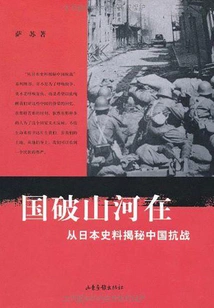
国破山河在
Sassou
The History of the War of Resistance Against Japan, edited by Sassou, tells a history of the Anti-Japanese War. The author of this book reviewed a large amount of information to help us understand the history of the Anti-Japanese War more comprehensively. History has passed, and now walking in the streets and alleys, you can still see the various traces left by that war - the commemorative monuments that can be seen everywhere in the city, and the large square-pointed tombstones in the cemetery, all silently describe the fading memory of that war.
The History of the War of Resistance Against Japan, edited by Sassou, tells a history of the Anti-Japanese War. The author of this book reviewed a large amount of information to help us understand the history of the Anti-Japanese War more comprehensively. History has passed, and now walking in the streets and alleys, you can still see the various traces left by that war - the commemorative monuments that can be seen everywhere in the city, and the large square-pointed tombstones in the cemetery, all silently describe the fading memory of that war.
中国历史学年鉴(2002~2012)
Editorial Board Of The "yearbook Of Chinese History" Of The Chinese Historical Society
"Yearbook of Chinese History (2002-2012)" is sponsored by the Chinese Historical Society. Famous scholars such as Zhang Haipeng and Wang Wei are specially invited to elaborate on the important progress of history in the past ten years in the new era by subject and topic. The yearbook is divided into columns such as "Special Articles", "Discipline Review", "News" and "Major Archaeological Discoveries". It is an indispensable reference book for understanding the frontiers of academic development, grasping the context of academic development, and clarifying academic development trends.
"Yearbook of Chinese History (2002-2012)" is sponsored by the Chinese Historical Society. Famous scholars such as Zhang Haipeng and Wang Wei are specially invited to elaborate on the important progress of history in the past ten years in the new era by subject and topic. The yearbook is divided into columns such as "Special Articles", "Discipline Review", "News" and "Major Archaeological Discoveries". It is an indispensable reference book for understanding the frontiers of academic development, grasping the context of academic development, and clarifying academic development trends.
晋宋社会文化史论(优势丛书)
Wang Yongping
Metaphysics in the Wei and Jin Dynasties and its metaphysical trends have been a subject of long-term intensive research by scholars in literature, history, philosophy and other disciplines. This book is a "reversal of the topic" and strives to comprehensively and systematically sort out the anti-metaphysical trends at that time. The content includes issues such as metaphysics and xuanfeng in the Wei and Jin Dynasties, and the academic tradition of gentry sociologists; there are also issues such as the rise of academic groups in the Beifu region and low-income academic groups during the Jin and Song Dynasties, and the characteristics of their academic styles; there are also issues involving the rise of middle and lower social culture and the integration of elegance and secularity with the culture of the upper class, such as the secularization of the lives of Buddhist monks and nuns in the Eastern Jin and Liu Song Dynasties and their participation in political activities, as well as Liu Yu's use of arithmetic culture in the process of becoming emperor.
Metaphysics in the Wei and Jin Dynasties and its metaphysical trends have been a subject of long-term intensive research by scholars in literature, history, philosophy and other disciplines. This book is a "reversal of the topic" and strives to comprehensively and systematically sort out the anti-metaphysical trends at that time. The content includes issues such as metaphysics and xuanfeng in the Wei and Jin Dynasties, and the academic tradition of gentry sociologists; there are also issues such as the rise of academic groups in the Beifu region and low-income academic groups during the Jin and Song Dynasties, and the characteristics of their academic styles; there are also issues involving the rise of middle and lower social culture and the integration of elegance and secularity with the culture of the upper class, such as the secularization of the lives of Buddhist monks and nuns in the Eastern Jin and Liu Song Dynasties and their participation in political activities, as well as Liu Yu's use of arithmetic culture in the process of becoming emperor.
神圣与凡俗:明末至鸦片战争前天主教与民间信仰的遭遇
Zhang Zhenguo
The process of Catholicism spreading around the world is actually a process of continuous cultural transplantation. The key to the success of this cultural transplantation lies in how to deal with local culture. If Catholicism wants to take root in China, it must identify the development context of China's local customs and culture and adapt to the cultural traditions of civil society. Chinese folk beliefs have a long history and have penetrated into people's daily life. How to deal with China's folk beliefs is the primary issue that Catholicism has to face in the process of spreading in China, and it is also one of the most important issues. This book provides an objective description of the encounter between Catholicism and Chinese folk beliefs from the late Ming Dynasty to before the Opium War.
The process of Catholicism spreading around the world is actually a process of continuous cultural transplantation. The key to the success of this cultural transplantation lies in how to deal with local culture. If Catholicism wants to take root in China, it must identify the development context of China's local customs and culture and adapt to the cultural traditions of civil society. Chinese folk beliefs have a long history and have penetrated into people's daily life. How to deal with China's folk beliefs is the primary issue that Catholicism has to face in the process of spreading in China, and it is also one of the most important issues. This book provides an objective description of the encounter between Catholicism and Chinese folk beliefs from the late Ming Dynasty to before the Opium War.
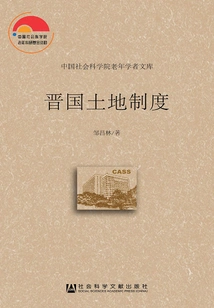
Jin Land System
History晋国土地制度
Zou Changlin
The main part of this book, "The Land System of the Jin State", provides an in-depth explanation of the Jin State's changes in three stages: early, middle and late. It is of high reference value for the study of the land system of the Spring and Autumn Period and even the history of the Spring and Autumn Period; the appendix "On the Nature and Development Stages of Liangshan Yi Society before Democratic Reform" provides a detailed demonstration of the social development stage of the local Yi people, and "Guo "Characteristics of the Periodization Study of Ancient History and Re-Elucidation of Issues Related to Warring States Feudal Theory" and "The Sinicization of Marxism - On the Characteristics of Guo Moruo's Periodization Study of Ancient History" respectively evaluated Guo Moruo's periodization research on ancient history from different angles. "On the Development Stage and Tasks Confucianism is Facing Now" explores the significance and value of Confucianism in today's situation.
The main part of this book, "The Land System of the Jin State", provides an in-depth explanation of the Jin State's changes in three stages: early, middle and late. It is of high reference value for the study of the land system of the Spring and Autumn Period and even the history of the Spring and Autumn Period; the appendix "On the Nature and Development Stages of Liangshan Yi Society before Democratic Reform" provides a detailed demonstration of the social development stage of the local Yi people, and "Guo "Characteristics of the Periodization Study of Ancient History and Re-Elucidation of Issues Related to Warring States Feudal Theory" and "The Sinicization of Marxism - On the Characteristics of Guo Moruo's Periodization Study of Ancient History" respectively evaluated Guo Moruo's periodization research on ancient history from different angles. "On the Development Stage and Tasks Confucianism is Facing Now" explores the significance and value of Confucianism in today's situation.
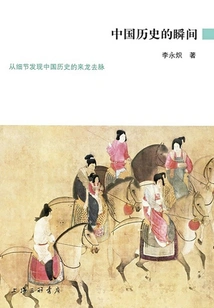
Moments in Chinese History
History中国历史的瞬间
Li Yongchi
The chapters of "Moments in Chinese History" are arranged by era, starting from the "Beijing people" in ancient times, covering many aspects of ancient Chinese social politics, economy, culture, internal and external exchanges, etc. "Moments in Chinese History" is written in lively modern language, and also uses various interesting writing methods. The text is concise and friendly, making it a historical book readable by everyone.
The chapters of "Moments in Chinese History" are arranged by era, starting from the "Beijing people" in ancient times, covering many aspects of ancient Chinese social politics, economy, culture, internal and external exchanges, etc. "Moments in Chinese History" is written in lively modern language, and also uses various interesting writing methods. The text is concise and friendly, making it a historical book readable by everyone.
中国学术思想史
Kwong Shi-yuan
"Chinese Academic Thought" is the first monograph in China to comprehensively discuss the history of Chinese academic and intellectual history. The author uses a research method that combines intellectual history and social history to systematically expound the academic development and ideological context from the pre-Qin Dynasty to the late Qing Dynasty. He also has a profound and unique discussion of the important schools and thinkers of each dynasty and each specific historical period, as well as major academic exchange activities, their emergence and development, and their impact on later generations. It demonstrates the excellent ideological tradition and brilliant humanistic spirit of the Chinese nation.
"Chinese Academic Thought" is the first monograph in China to comprehensively discuss the history of Chinese academic and intellectual history. The author uses a research method that combines intellectual history and social history to systematically expound the academic development and ideological context from the pre-Qin Dynasty to the late Qing Dynasty. He also has a profound and unique discussion of the important schools and thinkers of each dynasty and each specific historical period, as well as major academic exchange activities, their emergence and development, and their impact on later generations. It demonstrates the excellent ideological tradition and brilliant humanistic spirit of the Chinese nation.
Chinese Economic History
History中国经世史
Kwong Shi-yuan
Applying knowledge to the world is a fine tradition for Chinese intellectuals to learn. It dates back to Confucius, following the end of the Spring and Autumn Period, matured in the Ming and Qing Dynasties, and runs throughout the development of Chinese culture. They pay attention to social reality, face social contradictions, and use what they have learned to solve social problems in order to achieve the effectiveness of national security and public security. This thought embodies the ideological characteristics of traditional Chinese intellectuals who emphasize utilitarianism, truth-seeking, and pragmatism, as well as the sentiment of "taking the world as their own responsibility." From this perspective, the author elaborates on the development of China's economy, politics, military, transportation and other aspects over the past dynasties. In the economic aspect, the focus is on the land tax system and commercial economy; in the political aspect, the focus is on the gains and losses of the central and local political systems, imperial examinations, education, and supervisory administration; in the military aspect, the focus is on the review of the gains and losses of the military systems of the past dynasties; as for the transportation aspect, the development of politics, economy, and culture is involved, and key points are analyzed, and new and old historical materials are combined for detailed discussions.
Applying knowledge to the world is a fine tradition for Chinese intellectuals to learn. It dates back to Confucius, following the end of the Spring and Autumn Period, matured in the Ming and Qing Dynasties, and runs throughout the development of Chinese culture. They pay attention to social reality, face social contradictions, and use what they have learned to solve social problems in order to achieve the effectiveness of national security and public security. This thought embodies the ideological characteristics of traditional Chinese intellectuals who emphasize utilitarianism, truth-seeking, and pragmatism, as well as the sentiment of "taking the world as their own responsibility." From this perspective, the author elaborates on the development of China's economy, politics, military, transportation and other aspects over the past dynasties. In the economic aspect, the focus is on the land tax system and commercial economy; in the political aspect, the focus is on the gains and losses of the central and local political systems, imperial examinations, education, and supervisory administration; in the military aspect, the focus is on the review of the gains and losses of the military systems of the past dynasties; as for the transportation aspect, the development of politics, economy, and culture is involved, and key points are analyzed, and new and old historical materials are combined for detailed discussions.
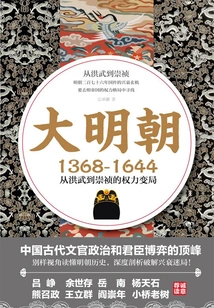
大明朝(1368—1644):从洪武到崇祯的权力变局
Zong Chenghao
At the beginning of the founding of the Ming Dynasty, Zhu Yuanzhang abolished the prime minister system that had lasted for thousands of years, used an iron fist to eliminate the founding officials, strictly ordered the harem and eunuchs not to interfere in politics, and pushed the imperial power to unprecedented heights. Later successors did not have the brilliance and enthusiasm of their ancestors, so eunuchs began to appear in the empire's power system. At the same time, the cabinet gradually formed and the voting system came into being. The power of the empire gradually flowed from the emperor to the eunuchs and ministers. Under the imperial examination system, the civil service group was prone to partisan struggles for power. The close relationship between the eunuchs and the emperor gave them the convenience of accessing the highest power. Therefore, strong eunuchs or strong cabinet ministers acted as power agents for the weak emperor. Although the contradiction between civil servants and eunuchs is irreconcilable, there are times when the two unite. In this way, the intricate and ever-changing relationship between the three gradually dragged down the political machine of the Ming Dynasty, and eventually led to its inevitable demise.
At the beginning of the founding of the Ming Dynasty, Zhu Yuanzhang abolished the prime minister system that had lasted for thousands of years, used an iron fist to eliminate the founding officials, strictly ordered the harem and eunuchs not to interfere in politics, and pushed the imperial power to unprecedented heights. Later successors did not have the brilliance and enthusiasm of their ancestors, so eunuchs began to appear in the empire's power system. At the same time, the cabinet gradually formed and the voting system came into being. The power of the empire gradually flowed from the emperor to the eunuchs and ministers. Under the imperial examination system, the civil service group was prone to partisan struggles for power. The close relationship between the eunuchs and the emperor gave them the convenience of accessing the highest power. Therefore, strong eunuchs or strong cabinet ministers acted as power agents for the weak emperor. Although the contradiction between civil servants and eunuchs is irreconcilable, there are times when the two unite. In this way, the intricate and ever-changing relationship between the three gradually dragged down the political machine of the Ming Dynasty, and eventually led to its inevitable demise.
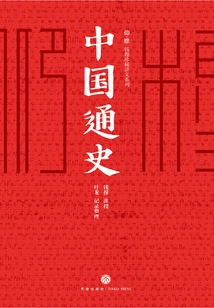
General History of China
History中国通史
Professor Qian Mu And Compiled By Ye Long
Mr. Qian Mu has taught "General History of China" three times: once at Peking University, secondly at Southwest Associated University, and thirdly at Hong Kong New Asia. After teaching at Peking University for four years, many students came to listen, with nearly 300 people in each class. Everyone was sitting and standing, and the occasion was unprecedented. When he was teaching at Southwest Associated University, the lecture scene was so spectacular that Mr. Qian had no way to go to the podium and had to step on the students' desks to pass. After that, Mr. Qian Mu traveled to Hong Kong and resumed teaching the "General History of China" course. This book is based on the transcript of Mr. Qian Mu's third lecture at New Asia College in Hong Kong. It can be regarded as the "Classroom Edition of "Outline of National History"". Lecture notes that have been dusty for many years, a more concise narrative. This book is compiled and published in a legendary way and is a rare and precious historical material. At that time, a "National History Outline" drew the spiritual power of national rejuvenation and national transformation from the evolution of traditional culture, inspiring and inspiring countless Chinese people, and then seeking ways to resist the war and save the nation; now, with its dual role of historical pattern and cultural sentiment, this "General History of China" will give current readers new enlightenment and provide us with the possibility to look back on history, face the future, and reshape the personal knowledge pattern.
Mr. Qian Mu has taught "General History of China" three times: once at Peking University, secondly at Southwest Associated University, and thirdly at Hong Kong New Asia. After teaching at Peking University for four years, many students came to listen, with nearly 300 people in each class. Everyone was sitting and standing, and the occasion was unprecedented. When he was teaching at Southwest Associated University, the lecture scene was so spectacular that Mr. Qian had no way to go to the podium and had to step on the students' desks to pass. After that, Mr. Qian Mu traveled to Hong Kong and resumed teaching the "General History of China" course. This book is based on the transcript of Mr. Qian Mu's third lecture at New Asia College in Hong Kong. It can be regarded as the "Classroom Edition of "Outline of National History"". Lecture notes that have been dusty for many years, a more concise narrative. This book is compiled and published in a legendary way and is a rare and precious historical material. At that time, a "National History Outline" drew the spiritual power of national rejuvenation and national transformation from the evolution of traditional culture, inspiring and inspiring countless Chinese people, and then seeking ways to resist the war and save the nation; now, with its dual role of historical pattern and cultural sentiment, this "General History of China" will give current readers new enlightenment and provide us with the possibility to look back on history, face the future, and reshape the personal knowledge pattern.
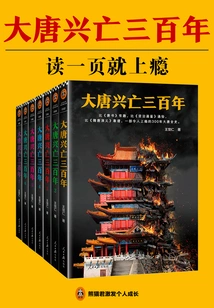
大唐兴亡三百年(全集)
Wang Jueren
The best-selling book "The Bloody Tang Dynasty" is newly revised! You will be addicted after reading one page! More interesting than "Book of Tang", more popular than "Zizhi Tongjian", and more reliable than "The Romance of Sui and Tang Dynasties", it is an addictive 300-year history of the Tang Dynasty. Recommended books from the well-known reading program "Luo Ji Thinking"! To understand the history of the Tang Dynasty, reading this set is enough! "The Bloody Tang Dynasty" and "Wang Yangming's Psychology" are classic works of Tang history by best-selling historical writer Wang Jueren, and a best-selling book on the history of Chinese dynasties! Open this book and experience the 300-year history of the Tang Dynasty that will make you addicted throughout.
The best-selling book "The Bloody Tang Dynasty" is newly revised! You will be addicted after reading one page! More interesting than "Book of Tang", more popular than "Zizhi Tongjian", and more reliable than "The Romance of Sui and Tang Dynasties", it is an addictive 300-year history of the Tang Dynasty. Recommended books from the well-known reading program "Luo Ji Thinking"! To understand the history of the Tang Dynasty, reading this set is enough! "The Bloody Tang Dynasty" and "Wang Yangming's Psychology" are classic works of Tang history by best-selling historical writer Wang Jueren, and a best-selling book on the history of Chinese dynasties! Open this book and experience the 300-year history of the Tang Dynasty that will make you addicted throughout.
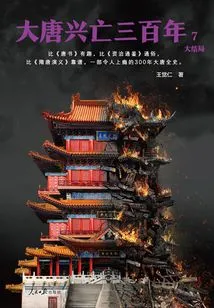
大唐兴亡三百年7
Wang Jueren
The best-selling book "The Bloody Tang Dynasty" is newly revised! You will be addicted after reading one page! More interesting than "Book of Tang", more popular than "Zizhi Tongjian", and more reliable than "The Romance of Sui and Tang Dynasties", it is an addictive 300-year history of the Tang Dynasty. Recommended books from the well-known reading program "Luo Ji Thinking"! To understand the history of the Tang Dynasty, reading this set is enough! "The Bloody Tang Dynasty" and "Wang Yangming's Psychology" are classic works of Tang history by best-selling historical writer Wang Jueren, and a best-selling book on the history of Chinese dynasties! Open this book and experience the 307-year history of the Tang Dynasty that will make you addicted throughout.
The best-selling book "The Bloody Tang Dynasty" is newly revised! You will be addicted after reading one page! More interesting than "Book of Tang", more popular than "Zizhi Tongjian", and more reliable than "The Romance of Sui and Tang Dynasties", it is an addictive 300-year history of the Tang Dynasty. Recommended books from the well-known reading program "Luo Ji Thinking"! To understand the history of the Tang Dynasty, reading this set is enough! "The Bloody Tang Dynasty" and "Wang Yangming's Psychology" are classic works of Tang history by best-selling historical writer Wang Jueren, and a best-selling book on the history of Chinese dynasties! Open this book and experience the 307-year history of the Tang Dynasty that will make you addicted throughout.
大唐兴亡三百年6
Wang Jueren
The best-selling book "The Bloody Tang Dynasty" is newly revised! You will be addicted after reading one page! More interesting than "Book of Tang", more popular than "Zizhi Tongjian", and more reliable than "The Romance of Sui and Tang Dynasties", it is an addictive 300-year history of the Tang Dynasty. Recommended books from the well-known reading program "Luo Ji Thinking"! To understand the history of the Tang Dynasty, reading this set is enough! "The Bloody Tang Dynasty" and "Wang Yangming's Psychology" are classic works of Tang history by best-selling historical writer Wang Jueren, and a best-selling book on the history of Chinese dynasties! Open this book and experience the 306-year history of the Tang Dynasty that will make you addicted throughout.
The best-selling book "The Bloody Tang Dynasty" is newly revised! You will be addicted after reading one page! More interesting than "Book of Tang", more popular than "Zizhi Tongjian", and more reliable than "The Romance of Sui and Tang Dynasties", it is an addictive 300-year history of the Tang Dynasty. Recommended books from the well-known reading program "Luo Ji Thinking"! To understand the history of the Tang Dynasty, reading this set is enough! "The Bloody Tang Dynasty" and "Wang Yangming's Psychology" are classic works of Tang history by best-selling historical writer Wang Jueren, and a best-selling book on the history of Chinese dynasties! Open this book and experience the 306-year history of the Tang Dynasty that will make you addicted throughout.
大唐兴亡三百年5
Wang Jueren
The best-selling book "The Bloody Tang Dynasty" is newly revised! You will be addicted after reading one page! More interesting than "Book of Tang", more popular than "Zizhi Tongjian", and more reliable than "The Romance of Sui and Tang Dynasties", it is an addictive 300-year history of the Tang Dynasty. Recommended books from the well-known reading program "Luo Ji Thinking"! To understand the history of the Tang Dynasty, reading this set is enough! "The Bloody Tang Dynasty" and "Wang Yangming's Psychology" are classic works of Tang history by best-selling historical writer Wang Jueren, and a best-selling book on the history of Chinese dynasties! Open this book and experience the 305-year history of the Tang Dynasty that will make you addicted throughout.
The best-selling book "The Bloody Tang Dynasty" is newly revised! You will be addicted after reading one page! More interesting than "Book of Tang", more popular than "Zizhi Tongjian", and more reliable than "The Romance of Sui and Tang Dynasties", it is an addictive 300-year history of the Tang Dynasty. Recommended books from the well-known reading program "Luo Ji Thinking"! To understand the history of the Tang Dynasty, reading this set is enough! "The Bloody Tang Dynasty" and "Wang Yangming's Psychology" are classic works of Tang history by best-selling historical writer Wang Jueren, and a best-selling book on the history of Chinese dynasties! Open this book and experience the 305-year history of the Tang Dynasty that will make you addicted throughout.
大唐兴亡三百年4
Wang Jueren
The best-selling book "The Bloody Tang Dynasty" is newly revised! You will be addicted after reading one page! More interesting than "Book of Tang", more popular than "Zizhi Tongjian", and more reliable than "The Romance of Sui and Tang Dynasties", it is an addictive 300-year history of the Tang Dynasty. Recommended books from the well-known reading program "Luo Ji Thinking"! To understand the history of the Tang Dynasty, reading this set is enough! "The Bloody Tang Dynasty" and "Wang Yangming's Psychology" are classic works of Tang history by best-selling historical writer Wang Jueren, and a best-selling book on the history of Chinese dynasties! Open this book and experience the 304-year history of the Tang Dynasty that will make you addicted throughout.
The best-selling book "The Bloody Tang Dynasty" is newly revised! You will be addicted after reading one page! More interesting than "Book of Tang", more popular than "Zizhi Tongjian", and more reliable than "The Romance of Sui and Tang Dynasties", it is an addictive 300-year history of the Tang Dynasty. Recommended books from the well-known reading program "Luo Ji Thinking"! To understand the history of the Tang Dynasty, reading this set is enough! "The Bloody Tang Dynasty" and "Wang Yangming's Psychology" are classic works of Tang history by best-selling historical writer Wang Jueren, and a best-selling book on the history of Chinese dynasties! Open this book and experience the 304-year history of the Tang Dynasty that will make you addicted throughout.
大唐兴亡三百年3
Wang Jueren
The best-selling book "The Bloody Tang Dynasty" is newly revised! You will be addicted after reading one page! More interesting than "Book of Tang", more popular than "Zizhi Tongjian", and more reliable than "The Romance of Sui and Tang Dynasties", it is an addictive 300-year history of the Tang Dynasty. Recommended books from the well-known reading program "Luo Ji Thinking"! To understand the history of the Tang Dynasty, reading this set is enough! "The Bloody Tang Dynasty" and "Wang Yangming's Psychology" are classic works of Tang history by best-selling historical writer Wang Jueren, and a best-selling book on the history of Chinese dynasties! Open this book and experience the 303-year history of the Tang Dynasty that will make you addicted throughout.
The best-selling book "The Bloody Tang Dynasty" is newly revised! You will be addicted after reading one page! More interesting than "Book of Tang", more popular than "Zizhi Tongjian", and more reliable than "The Romance of Sui and Tang Dynasties", it is an addictive 300-year history of the Tang Dynasty. Recommended books from the well-known reading program "Luo Ji Thinking"! To understand the history of the Tang Dynasty, reading this set is enough! "The Bloody Tang Dynasty" and "Wang Yangming's Psychology" are classic works of Tang history by best-selling historical writer Wang Jueren, and a best-selling book on the history of Chinese dynasties! Open this book and experience the 303-year history of the Tang Dynasty that will make you addicted throughout.
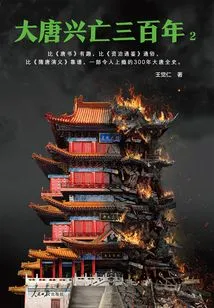
大唐兴亡三百年2
Wang Jueren
The best-selling book "The Bloody Tang Dynasty" is newly revised! You will be addicted after reading one page! More interesting than "Book of Tang", more popular than "Zizhi Tongjian", and more reliable than "The Romance of Sui and Tang Dynasties", it is an addictive 300-year history of the Tang Dynasty. Recommended books from the well-known reading program "Luo Ji Thinking"! To understand the history of the Tang Dynasty, reading this set is enough! "The Bloody Tang Dynasty" and "Wang Yangming's Psychology" are classic works of Tang history by best-selling historical writer Wang Jueren, and a best-selling book on the history of Chinese dynasties! Open this book and experience the 302-year history of the Tang Dynasty that will make you addicted throughout.
The best-selling book "The Bloody Tang Dynasty" is newly revised! You will be addicted after reading one page! More interesting than "Book of Tang", more popular than "Zizhi Tongjian", and more reliable than "The Romance of Sui and Tang Dynasties", it is an addictive 300-year history of the Tang Dynasty. Recommended books from the well-known reading program "Luo Ji Thinking"! To understand the history of the Tang Dynasty, reading this set is enough! "The Bloody Tang Dynasty" and "Wang Yangming's Psychology" are classic works of Tang history by best-selling historical writer Wang Jueren, and a best-selling book on the history of Chinese dynasties! Open this book and experience the 302-year history of the Tang Dynasty that will make you addicted throughout.
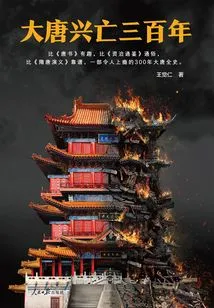
大唐兴亡三百年1
Wang Jueren
The best-selling book "The Bloody Tang Dynasty" is newly revised! You will be addicted after reading one page! More interesting than "Book of Tang", more popular than "Zizhi Tongjian", and more reliable than "The Romance of Sui and Tang Dynasties", it is an addictive 300-year history of the Tang Dynasty. Recommended books from the well-known reading program "Luo Ji Thinking"! To understand the history of the Tang Dynasty, reading this set is enough! "The Bloody Tang Dynasty" and "Wang Yangming's Psychology" are classic works of Tang history by best-selling historical writer Wang Jueren, and a best-selling book on the history of Chinese dynasties! Open this book and experience the 301-year history of the Tang Dynasty that will make you addicted throughout.
The best-selling book "The Bloody Tang Dynasty" is newly revised! You will be addicted after reading one page! More interesting than "Book of Tang", more popular than "Zizhi Tongjian", and more reliable than "The Romance of Sui and Tang Dynasties", it is an addictive 300-year history of the Tang Dynasty. Recommended books from the well-known reading program "Luo Ji Thinking"! To understand the history of the Tang Dynasty, reading this set is enough! "The Bloody Tang Dynasty" and "Wang Yangming's Psychology" are classic works of Tang history by best-selling historical writer Wang Jueren, and a best-selling book on the history of Chinese dynasties! Open this book and experience the 301-year history of the Tang Dynasty that will make you addicted throughout.
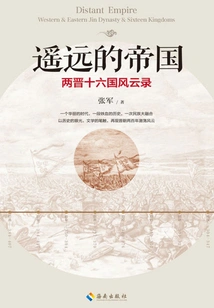
遥远的帝国:两晋十六国风云录
Zhang Jun
After reading the Three Kingdoms, I want to read the Two Jins and Sixteen Kingdoms - the most chaotic era in Chinese history. This book is written from the founding of the Western Jin Dynasty in 265 AD to the fall of Northern Liang in 439 AD, a period of 174 years, including the four stages of the Western Jin Dynasty, the Sixteen Kingdoms of the Eastern Jin Dynasty, the early years of the Northern Wei Dynasty, and the Southern Dynasty and Song Dynasty. The book covers more than 70 countries, nearly 200 monarchs, more than 300 generals and counselors with distinctive personalities, more than 400 wars, more than 100 coups, more than 40 allusions, and countless strategies of great and small power. The article contains many incisive discussions and analyzes of the social situation and future development by outstanding politicians, diplomats, and military strategists, as well as summaries and reflections of experience and lessons by losers. Of course, tragic and heroic stories, emotional and passionate scenes are also indispensable. This is a historical drama, a stage where heroes gather.
After reading the Three Kingdoms, I want to read the Two Jins and Sixteen Kingdoms - the most chaotic era in Chinese history. This book is written from the founding of the Western Jin Dynasty in 265 AD to the fall of Northern Liang in 439 AD, a period of 174 years, including the four stages of the Western Jin Dynasty, the Sixteen Kingdoms of the Eastern Jin Dynasty, the early years of the Northern Wei Dynasty, and the Southern Dynasty and Song Dynasty. The book covers more than 70 countries, nearly 200 monarchs, more than 300 generals and counselors with distinctive personalities, more than 400 wars, more than 100 coups, more than 40 allusions, and countless strategies of great and small power. The article contains many incisive discussions and analyzes of the social situation and future development by outstanding politicians, diplomats, and military strategists, as well as summaries and reflections of experience and lessons by losers. Of course, tragic and heroic stories, emotional and passionate scenes are also indispensable. This is a historical drama, a stage where heroes gather.
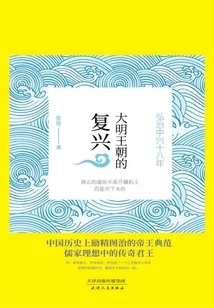
大明王朝的复兴:弘治中兴十八年
Zhang Xin
This article tells the life of Zhu Youtang, Xiaozong of the Ming Dynasty and the prosperous era of Hongzhi he created. Zhu Youtang, Emperor Xiaozong of the Ming Dynasty, with the reign name Hongzhi, was the ninth emperor of the Ming Dynasty. Although he only lived a short life of thirty-six years, he created a prosperous and splendid eighteen-year era. This period of history is sandwiched between the dark years of the Chenghua Dynasty and the absurd era of the Zhengde Dynasty of the Ming Dynasty, but it has brought the Chinese people a life that is happy and nostalgic enough. Zhu Youtang, Emperor Xiaozong of the Ming Dynasty, was known as the "Zhongxing Order Master". During his reign, he worked hard to govern and appointed a number of upright ministers such as Wang Shu and Liu Daxia, creating a prosperous era known as "Hongzhi Zhongxing" in history. This book traces the origins and presents a panoramic view of the legendary life of Zhu Youtang, Emperor Xiaozong of the Ming Dynasty. It also tells the ups and downs of famous officials such as Liu Daxia, Wang Shu, and Ma Wensheng.
This article tells the life of Zhu Youtang, Xiaozong of the Ming Dynasty and the prosperous era of Hongzhi he created. Zhu Youtang, Emperor Xiaozong of the Ming Dynasty, with the reign name Hongzhi, was the ninth emperor of the Ming Dynasty. Although he only lived a short life of thirty-six years, he created a prosperous and splendid eighteen-year era. This period of history is sandwiched between the dark years of the Chenghua Dynasty and the absurd era of the Zhengde Dynasty of the Ming Dynasty, but it has brought the Chinese people a life that is happy and nostalgic enough. Zhu Youtang, Emperor Xiaozong of the Ming Dynasty, was known as the "Zhongxing Order Master". During his reign, he worked hard to govern and appointed a number of upright ministers such as Wang Shu and Liu Daxia, creating a prosperous era known as "Hongzhi Zhongxing" in history. This book traces the origins and presents a panoramic view of the legendary life of Zhu Youtang, Emperor Xiaozong of the Ming Dynasty. It also tells the ups and downs of famous officials such as Liu Daxia, Wang Shu, and Ma Wensheng.
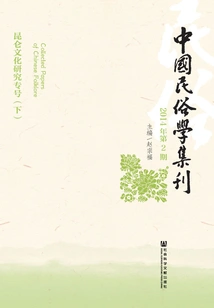
中国民俗学集刊(2014年第2期)
Zhao Zongfu
"Chinese Folklore Collection" is hosted and compiled by the Qinghai Provincial Folklore Society. It focuses on the value of folk culture in the national and local cultural construction strategies, highlights the research on western ethnic folk culture, observes the construction of local folklore in the context of international and domestic folklore, and contributes to the development and prosperity of Chinese folklore academic undertakings. This volume takes Kunlun culture as its theme and provides a multi-faceted interpretation of Kunlun culture.
"Chinese Folklore Collection" is hosted and compiled by the Qinghai Provincial Folklore Society. It focuses on the value of folk culture in the national and local cultural construction strategies, highlights the research on western ethnic folk culture, observes the construction of local folklore in the context of international and domestic folklore, and contributes to the development and prosperity of Chinese folklore academic undertakings. This volume takes Kunlun culture as its theme and provides a multi-faceted interpretation of Kunlun culture.
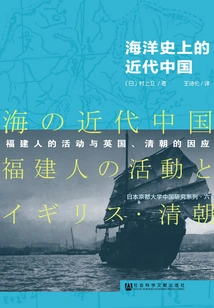
海洋史上的近代中国:福建人的活动与英国、清朝的因应
(japan) Mamoru Murakami
What was the actual situation of China's coastal trade in the late Qing Dynasty, and how was the trade order constructed? How was social management carried out in the coastal areas of South China? What role did Britain play in modern China? This book discusses the opium trade, treaty port trade, piracy, shipwrecks, secret societies and rebellions, taxation, immigration and other issues along the South China coast from the 1830s to the early 20th century under the framework of "maritime history". By describing the activities of the Fujian people, it shows the process of the disintegration and reconstruction of the coastal order in the late Qing Dynasty.
What was the actual situation of China's coastal trade in the late Qing Dynasty, and how was the trade order constructed? How was social management carried out in the coastal areas of South China? What role did Britain play in modern China? This book discusses the opium trade, treaty port trade, piracy, shipwrecks, secret societies and rebellions, taxation, immigration and other issues along the South China coast from the 1830s to the early 20th century under the framework of "maritime history". By describing the activities of the Fujian people, it shows the process of the disintegration and reconstruction of the coastal order in the late Qing Dynasty.
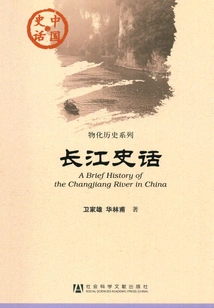
Yangtze River History
History长江史话
Wei Jiaxiong Hua Linfu
This book tells the historical changes of the Yangtze River's nature and humanity in a schematic way. It first introduces the origin of the name of the Yangtze River, the history of exploring the source of the river for thousands of years, the historical and natural geographical changes of the Yangtze River channel, and the development of the golden waterway. Then it is divided into three sections: the upper reaches, the middle reaches, and the lower reaches, and a brief history of the development of some important towns along the Yangtze River trunk road and the historical changes of the great lakes and famous mountains are described. He also introduced the scenic spots along the Yangtze River and reviewed some wars and even economic and cultural activities that had occurred on the Yangtze River in history. As a large number of long-lasting legends, stories and folk customs are interspersed in the book, it makes it more interesting to read.
This book tells the historical changes of the Yangtze River's nature and humanity in a schematic way. It first introduces the origin of the name of the Yangtze River, the history of exploring the source of the river for thousands of years, the historical and natural geographical changes of the Yangtze River channel, and the development of the golden waterway. Then it is divided into three sections: the upper reaches, the middle reaches, and the lower reaches, and a brief history of the development of some important towns along the Yangtze River trunk road and the historical changes of the great lakes and famous mountains are described. He also introduced the scenic spots along the Yangtze River and reviewed some wars and even economic and cultural activities that had occurred on the Yangtze River in history. As a large number of long-lasting legends, stories and folk customs are interspersed in the book, it makes it more interesting to read.
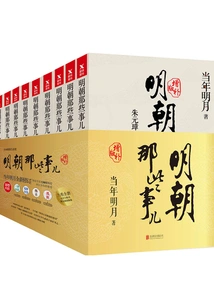
明朝那些事儿(增补版)(套装全九册)
The Bright Moon
"Those Things in the Ming Dynasty (Supplementary Edition) (set of 9 volumes in total)" includes: "Those Things in the Ming Dynasty (Part 1)", "Those Things in the Ming Dynasty (Part 2)", "Those Things in the Ming Dynasty (Part 3)", "Those Things in the Ming Dynasty (Part 4)" )", "Those Things in the Ming Dynasty (Part 5)", "Those Things in the Ming Dynasty (Part 6)", "Those Things in the Ming Dynasty (Part 7)", "Those Things in the Ming Dynasty (Part 8)", "Those Things in the Ming Dynasty (Part 9)", a total of 9 volumes. This book mainly tells about some things about the Ming Dynasty during the three hundred years from 1344 to 1644. It is based on historical materials, with the chronology and specific characters as the main line, and adds the novel's writing style to give a panoramic view of the fate of the seventeen emperors of the Ming Dynasty and other princes, dignitaries and minor figures. It especially focuses on officialdom politics, wars, and the emperor's intentions, and also adds a romance about the political and economic system, human ethics and morality at that time.
"Those Things in the Ming Dynasty (Supplementary Edition) (set of 9 volumes in total)" includes: "Those Things in the Ming Dynasty (Part 1)", "Those Things in the Ming Dynasty (Part 2)", "Those Things in the Ming Dynasty (Part 3)", "Those Things in the Ming Dynasty (Part 4)" )", "Those Things in the Ming Dynasty (Part 5)", "Those Things in the Ming Dynasty (Part 6)", "Those Things in the Ming Dynasty (Part 7)", "Those Things in the Ming Dynasty (Part 8)", "Those Things in the Ming Dynasty (Part 9)", a total of 9 volumes. This book mainly tells about some things about the Ming Dynasty during the three hundred years from 1344 to 1644. It is based on historical materials, with the chronology and specific characters as the main line, and adds the novel's writing style to give a panoramic view of the fate of the seventeen emperors of the Ming Dynasty and other princes, dignitaries and minor figures. It especially focuses on officialdom politics, wars, and the emperor's intentions, and also adds a romance about the political and economic system, human ethics and morality at that time.
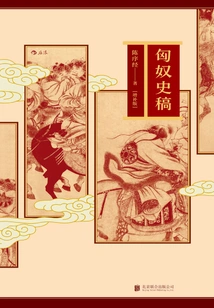
History of the Huns
History匈奴史稿
Chen Xujing
This book comprehensively introduces Chinese and foreign historical materials and research results related to the history of the Xiongnu. In the context of world history and Western European history, this book discusses the entire process of the rise, power, migration, and decline of the Xiongnu from a macro perspective. The author extensively cites various documents and classics and research works of Chinese and foreign scholars, and conducts in-depth research on the geographical environment, economic life, military and political system, religious consciousness, language customs, cultural concepts and other aspects of the ancient Huns' life. Among the research results on the history of the Xiongnu so far, this book is outstanding in terms of length, materials, coverage, and academic level. It can be said to be a comprehensive work on the history of the Xiongnu.
This book comprehensively introduces Chinese and foreign historical materials and research results related to the history of the Xiongnu. In the context of world history and Western European history, this book discusses the entire process of the rise, power, migration, and decline of the Xiongnu from a macro perspective. The author extensively cites various documents and classics and research works of Chinese and foreign scholars, and conducts in-depth research on the geographical environment, economic life, military and political system, religious consciousness, language customs, cultural concepts and other aspects of the ancient Huns' life. Among the research results on the history of the Xiongnu so far, this book is outstanding in terms of length, materials, coverage, and academic level. It can be said to be a comprehensive work on the history of the Xiongnu.
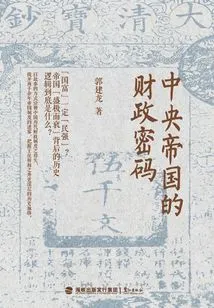
中央帝国的财政密码
Guo Jianlong
The author of this book takes Chinese dynasties as the basis and modern economic theory as the latitude, from the Qin and Han Dynasties to the late Qing Dynasty, to comb in detail the changes in the financial system of the central empire that lasted for more than two thousand years, to analyze the gains and losses of the financial systems of past dynasties, and to try to explain from the land tax system, the currency system, and the official economy that the rise and fall of traditional Chinese politics is closely related to the financial status of the empire. This book is divided into three parts, using the three social and financial reconstructions in Chinese history as the criteria for dividing stages. The first part focuses on the period from the Qin and Han Dynasties to the Southern Dynasties, using the state-owned system established by Emperor Wu of the Han Dynasty, the financial monopoly of Emperor Wu of the Han Dynasty and Wang Mang, and the land and household registration system in the Wei, Jin, Southern and Northern Dynasties as clues to interpret the financial phenomena during this period; the second part uses the land state-owned reform in the Northern Wei Dynasty It begins with the great chaos caused by the state ownership of land in the Tang Dynasty and ended with the great collapse caused by the financial reform in the Song Dynasty. The third part starts with the experimental fiscal policy of the Yuan Dynasty government, then discusses the conservative finance in the Ming and Qing Dynasties, and ends with the efforts and inertia of fiscal modernization in the late Qing Dynasty.
The author of this book takes Chinese dynasties as the basis and modern economic theory as the latitude, from the Qin and Han Dynasties to the late Qing Dynasty, to comb in detail the changes in the financial system of the central empire that lasted for more than two thousand years, to analyze the gains and losses of the financial systems of past dynasties, and to try to explain from the land tax system, the currency system, and the official economy that the rise and fall of traditional Chinese politics is closely related to the financial status of the empire. This book is divided into three parts, using the three social and financial reconstructions in Chinese history as the criteria for dividing stages. The first part focuses on the period from the Qin and Han Dynasties to the Southern Dynasties, using the state-owned system established by Emperor Wu of the Han Dynasty, the financial monopoly of Emperor Wu of the Han Dynasty and Wang Mang, and the land and household registration system in the Wei, Jin, Southern and Northern Dynasties as clues to interpret the financial phenomena during this period; the second part uses the land state-owned reform in the Northern Wei Dynasty It begins with the great chaos caused by the state ownership of land in the Tang Dynasty and ended with the great collapse caused by the financial reform in the Song Dynasty. The third part starts with the experimental fiscal policy of the Yuan Dynasty government, then discusses the conservative finance in the Ming and Qing Dynasties, and ends with the efforts and inertia of fiscal modernization in the late Qing Dynasty.
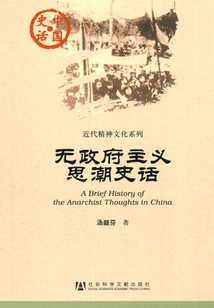
History of Anarchist Thought
History无政府主义思潮史话
Tang Tingfen
Anarchism is a petty bourgeois social and political trend in the international workers' movement. It emerged in the mid-19th century when capitalist contradictions began to intensify. In the late 1880s, after this trend of thought was introduced to China from Europe and Japan, it was mixed with the traditional Chinese idea of equality, the inaction thought of Lao and Zhuang, and the Western utopian socialist thought, forming a Chinese-style anarchist theoretical system. The anarchist trend of thought went through several ups and downs in China's modern history, and finally went bankrupt in the 1940s. As a political trend of thought and a political faction, it withdrew from the stage of China's political history. However, it is not extinct. Whenever there is social unrest, it will breed and spread, confusing some people, especially young people. Therefore, it is particularly important and significant to understand and clarify the historical process of its rise, development and destruction, and to understand its essence and basic characteristics today.
Anarchism is a petty bourgeois social and political trend in the international workers' movement. It emerged in the mid-19th century when capitalist contradictions began to intensify. In the late 1880s, after this trend of thought was introduced to China from Europe and Japan, it was mixed with the traditional Chinese idea of equality, the inaction thought of Lao and Zhuang, and the Western utopian socialist thought, forming a Chinese-style anarchist theoretical system. The anarchist trend of thought went through several ups and downs in China's modern history, and finally went bankrupt in the 1940s. As a political trend of thought and a political faction, it withdrew from the stage of China's political history. However, it is not extinct. Whenever there is social unrest, it will breed and spread, confusing some people, especially young people. Therefore, it is particularly important and significant to understand and clarify the historical process of its rise, development and destruction, and to understand its essence and basic characteristics today.
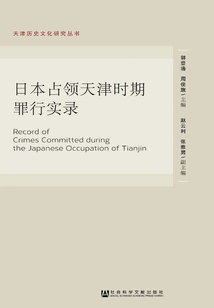
日本占领天津时期罪行实录
Guo Denghao Zhou Junqi Zhao Yunli Zhang Yanan
Our academic circles attach great importance to the study of the history of the Anti-Japanese War, and the relevant research results are also very rich. However, the research on the colonial rule of the Japanese invaders in Tianjin is still relatively scattered and weak. This book aims to establish a basic research framework and lay a good foundation for future in-depth research in the academic community. This book makes a thematic review of the colonial rule during the Japanese occupation of Tianjin. It outlines the basic situation of Tianjin's social life at that time from the military, political, economic, cultural and other fields at multiple levels, exposing the criminal rule of the Japanese invaders in Tianjin and the unprecedented disasters this rule brought to the Tianjin people.
Our academic circles attach great importance to the study of the history of the Anti-Japanese War, and the relevant research results are also very rich. However, the research on the colonial rule of the Japanese invaders in Tianjin is still relatively scattered and weak. This book aims to establish a basic research framework and lay a good foundation for future in-depth research in the academic community. This book makes a thematic review of the colonial rule during the Japanese occupation of Tianjin. It outlines the basic situation of Tianjin's social life at that time from the military, political, economic, cultural and other fields at multiple levels, exposing the criminal rule of the Japanese invaders in Tianjin and the unprecedented disasters this rule brought to the Tianjin people.
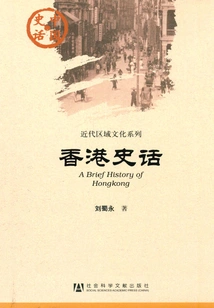
Hong Kong History
History香港史话
Liu Shuyong
This book is a popular book on Hong Kong history written by Professor Liu Shuyong, an expert on Hong Kong history at the Chinese Academy of Social Sciences. It is a revised version of the 2000 edition. The content includes Hong Kong before the Opium War, the British occupation of Hong Kong, Hong Kong and the Revolution of 1911, Hong Kong and the Anti-Japanese War, Hong Kong's political system, Hong Kong's economic development, Hong Kong's culture and education, Hong Kong's social issues, the signing of the Sino-British Joint Declaration and the formulation of the Basic Law, etc. It is concise and comprehensive, and can be explained in simple terms. It can be used as an introductory book for readers to understand the history and current situation of Hong Kong.
This book is a popular book on Hong Kong history written by Professor Liu Shuyong, an expert on Hong Kong history at the Chinese Academy of Social Sciences. It is a revised version of the 2000 edition. The content includes Hong Kong before the Opium War, the British occupation of Hong Kong, Hong Kong and the Revolution of 1911, Hong Kong and the Anti-Japanese War, Hong Kong's political system, Hong Kong's economic development, Hong Kong's culture and education, Hong Kong's social issues, the signing of the Sino-British Joint Declaration and the formulation of the Basic Law, etc. It is concise and comprehensive, and can be explained in simple terms. It can be used as an introductory book for readers to understand the history and current situation of Hong Kong.
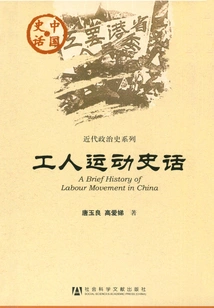
工人运动史话
Tang Yuliang
The modern working class is the product of capitalist machine industry. Since it is inherently in a position of opposition to the bourgeoisie, it has been engaged in unremitting struggle with the bourgeoisie since its birth. Using time as a clue, this book starts from the emergence of the Chinese working class and introduces readers to a series of historical events closely related to the Chinese workers' movement, such as the early spontaneous struggles of the working class, the first upsurge of the national labor movement, the glorious years and painful lessons of the Great Revolution, the arduous struggle during the Agrarian Revolutionary War, the struggle during the Anti-Japanese War, the struggle in the War of Liberation, and finally the welcoming of New China, thus giving a panoramic view of the ups and downs of the Chinese working class in modern China.
The modern working class is the product of capitalist machine industry. Since it is inherently in a position of opposition to the bourgeoisie, it has been engaged in unremitting struggle with the bourgeoisie since its birth. Using time as a clue, this book starts from the emergence of the Chinese working class and introduces readers to a series of historical events closely related to the Chinese workers' movement, such as the early spontaneous struggles of the working class, the first upsurge of the national labor movement, the glorious years and painful lessons of the Great Revolution, the arduous struggle during the Agrarian Revolutionary War, the struggle during the Anti-Japanese War, the struggle in the War of Liberation, and finally the welcoming of New China, thus giving a panoramic view of the ups and downs of the Chinese working class in modern China.
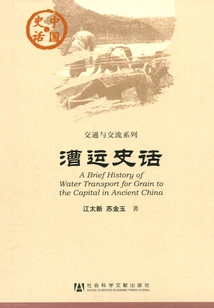
History of Water Transport
History漕运史话
Jiang Taixin
The research object of this book is the history of water transportation in ancient China. The content includes: the reasons for the emergence of water transportation in ancient China, the development process, and the overview of water transportation in past dynasties; the construction of the economic zone by the feudal government, and the efforts made by the people in the economic zone to develop the economy and ensure the supply of water; and the water control and river digging activities carried out by the past dynasties to ensure the smooth flow of water transport. At the same time, it also reveals to readers: the emergence and development of water transportation had a huge impact on China's feudal social economy, as well as its contribution to consolidating national defense and stabilizing social order. This book is rich in content and full of information, which can not only meet the needs of general readers, but also benefit those who are interested in water transport researchers, making this book a useful friend for the majority of readers.
The research object of this book is the history of water transportation in ancient China. The content includes: the reasons for the emergence of water transportation in ancient China, the development process, and the overview of water transportation in past dynasties; the construction of the economic zone by the feudal government, and the efforts made by the people in the economic zone to develop the economy and ensure the supply of water; and the water control and river digging activities carried out by the past dynasties to ensure the smooth flow of water transport. At the same time, it also reveals to readers: the emergence and development of water transportation had a huge impact on China's feudal social economy, as well as its contribution to consolidating national defense and stabilizing social order. This book is rich in content and full of information, which can not only meet the needs of general readers, but also benefit those who are interested in water transport researchers, making this book a useful friend for the majority of readers.
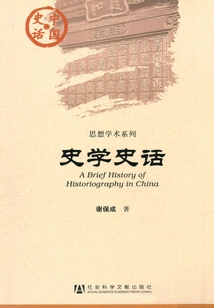
Historiography
History史学史话
Xie Baocheng
Historiography is a discipline that uses historical materials to study and describe human history to show the future. The development of Chinese historiography can be roughly divided into six stages: The pre-Qin period was the formation stage of historiography. During this period, a number of historical monographs that had many influences on later generations appeared, such as "Spring and Autumn", "Zuo Zhuan", "Guoyu", and "Warring States Policy". The period from the early Han Dynasty to the early Tang Dynasty was the stage when the status of history was established. During this period, historical works such as "Historical Records", "Han Shu", and "Hou Han Shu" appeared one after another, and biographical history books gradually gained the "supreme" status. The period from the mid-Tang Dynasty to the end of the Ming Dynasty was the development stage of historiography. During this stage, the formation of the "Tongdian" and "Three Tong" series, the "Zizhi Tongjian" and the evolution of its genre, and the continuous revision of the chronicle-biographical "official history" constituted the three main pillars of the development of Chinese historiography. The early Qing Dynasty was a period when traditional historiography was returning to glory. During this period, official history books were much more than any previous dynasty, covering almost all major categories of history, showing the glory of historiography during the Qiang-Jia period. The late Qing Dynasty and the early Republic of China were a period of fission in historiography, and the development of historiography ushered in a new trend of thought called "historical revolution." The middle and late period of the Republic of China was a period of collision between old and new historiography. As a world historical trend, "democracy and science" collided with China's cultural traditions with an unstoppable force, which also caused some new changes in Chinese historiography itself.
Historiography is a discipline that uses historical materials to study and describe human history to show the future. The development of Chinese historiography can be roughly divided into six stages: The pre-Qin period was the formation stage of historiography. During this period, a number of historical monographs that had many influences on later generations appeared, such as "Spring and Autumn", "Zuo Zhuan", "Guoyu", and "Warring States Policy". The period from the early Han Dynasty to the early Tang Dynasty was the stage when the status of history was established. During this period, historical works such as "Historical Records", "Han Shu", and "Hou Han Shu" appeared one after another, and biographical history books gradually gained the "supreme" status. The period from the mid-Tang Dynasty to the end of the Ming Dynasty was the development stage of historiography. During this stage, the formation of the "Tongdian" and "Three Tong" series, the "Zizhi Tongjian" and the evolution of its genre, and the continuous revision of the chronicle-biographical "official history" constituted the three main pillars of the development of Chinese historiography. The early Qing Dynasty was a period when traditional historiography was returning to glory. During this period, official history books were much more than any previous dynasty, covering almost all major categories of history, showing the glory of historiography during the Qiang-Jia period. The late Qing Dynasty and the early Republic of China were a period of fission in historiography, and the development of historiography ushered in a new trend of thought called "historical revolution." The middle and late period of the Republic of China was a period of collision between old and new historiography. As a world historical trend, "democracy and science" collided with China's cultural traditions with an unstoppable force, which also caused some new changes in Chinese historiography itself.
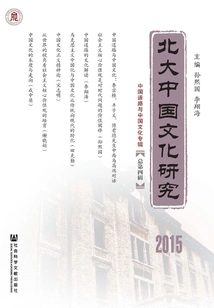
北大中国文化研究(2015 总第4辑)
Sun Xiguo Li Xianghai
"Peking University Chinese Culture Studies" is a continuous disciplinary publication sponsored by the School of Marxism at Peking University and the Chinese Cultural Development Research Center at Peking University. It is dedicated to exploring fundamental issues in the construction and development of Chinese culture, striving to promote dialogue and integration between Chinese culture, Western culture, and Marxism, and promote the great development and prosperity of Chinese culture. This is the fourth volume. Most of the authors of the papers included are experts in related fields, such as Li Zonggui, Feng Ziyi, Fu Youde, Sun Xiguo, Li Xianghai, Tian Kele, Song Zhiming, Xie Xiaojuan, and Cheng Zhongying.
"Peking University Chinese Culture Studies" is a continuous disciplinary publication sponsored by the School of Marxism at Peking University and the Chinese Cultural Development Research Center at Peking University. It is dedicated to exploring fundamental issues in the construction and development of Chinese culture, striving to promote dialogue and integration between Chinese culture, Western culture, and Marxism, and promote the great development and prosperity of Chinese culture. This is the fourth volume. Most of the authors of the papers included are experts in related fields, such as Li Zonggui, Feng Ziyi, Fu Youde, Sun Xiguo, Li Xianghai, Tian Kele, Song Zhiming, Xie Xiaojuan, and Cheng Zhongying.
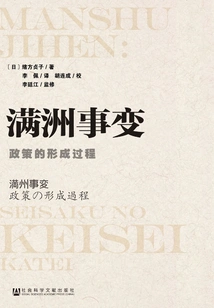
满洲事变:政策的形成过程
(japan) Ogata Sadako
The author excavates the first-hand historical materials preserved by the senior staff officer of the Kwantung Army, Katakura Satoshi, and clarifies a series of extremely important details of Japan's foreign policy, elucidating the intricate relationship between the Kwantung Army, the military department, and the Japanese government. It reveals the specific scenarios of the three-party game in detail, and shows the multifacetedness and complexity of the history of the Manchurian Incident.
The author excavates the first-hand historical materials preserved by the senior staff officer of the Kwantung Army, Katakura Satoshi, and clarifies a series of extremely important details of Japan's foreign policy, elucidating the intricate relationship between the Kwantung Army, the military department, and the Japanese government. It reveals the specific scenarios of the three-party game in detail, and shows the multifacetedness and complexity of the history of the Manchurian Incident.
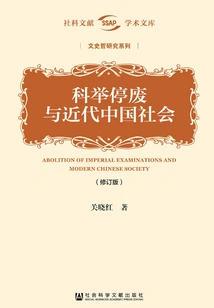
科举停废与近代中国社会(修订版)
Guan Xiaohong
The abolition of the imperial examination was one of the most important changes in modern society. Based on the full exploration of historical materials, especially the use of a large number of media historical materials, the author linked the abolition of the imperial examination with the overall social changes in the late Qing Dynasty. Through careful exploration, he corrected some misunderstandings in the past, allowing readers to have a clearer understanding of the relationship between the abolition of the imperial examination and modern society. The study confirmed that the change in the system was not isolated. The process of abolishing the imperial examination must be linked to the overall changes in society at the end of the Qing Dynasty and the beginning of the Republic of China in order to rectify the source.
The abolition of the imperial examination was one of the most important changes in modern society. Based on the full exploration of historical materials, especially the use of a large number of media historical materials, the author linked the abolition of the imperial examination with the overall social changes in the late Qing Dynasty. Through careful exploration, he corrected some misunderstandings in the past, allowing readers to have a clearer understanding of the relationship between the abolition of the imperial examination and modern society. The study confirmed that the change in the system was not isolated. The process of abolishing the imperial examination must be linked to the overall changes in society at the end of the Qing Dynasty and the beginning of the Republic of China in order to rectify the source.
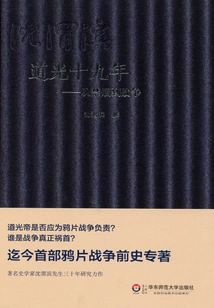
道光十九年:从禁烟到战争
Shen Weibin
"The Nineteenth Year of Daoguang: From Smoking Ban to War" describes Chinese society on the eve of the Opium War and the interaction between legitimate trade and opium smuggling and anti-smuggling between China and Britain from multiple perspectives. This article historically examines the proliferation and flow of opium in China, systematically describes the evolution of the Qing Dynasty's anti-smoking policy at various stages, and explains that the Opium War was a process in which the anti-smoking policy gradually evolved into a ban on smoking, eventually leading to armed conflict.
"The Nineteenth Year of Daoguang: From Smoking Ban to War" describes Chinese society on the eve of the Opium War and the interaction between legitimate trade and opium smuggling and anti-smuggling between China and Britain from multiple perspectives. This article historically examines the proliferation and flow of opium in China, systematically describes the evolution of the Qing Dynasty's anti-smoking policy at various stages, and explains that the Opium War was a process in which the anti-smoking policy gradually evolved into a ban on smoking, eventually leading to armed conflict.
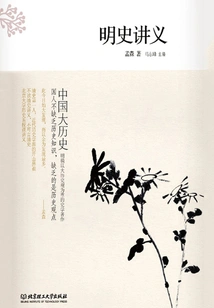
中国大历史:明史讲义
Monson
This book is the lecture notes given by Mr. Meng Sen at Peking University in the first half of the 20th century. The book uses time as a clue and uses a large number of historical materials to conduct a comprehensive investigation of the important historical facts and institutional evolution of Ming history. It pays special attention to various internal and external interest struggles during the reign of successive rulers, and also provides an in-depth analysis of the reasons for the rise and fall of dynasties. The book has a smooth narrative, well-cut and thorough analysis. It is still an important reference book for understanding the history of the Ming Dynasty.
This book is the lecture notes given by Mr. Meng Sen at Peking University in the first half of the 20th century. The book uses time as a clue and uses a large number of historical materials to conduct a comprehensive investigation of the important historical facts and institutional evolution of Ming history. It pays special attention to various internal and external interest struggles during the reign of successive rulers, and also provides an in-depth analysis of the reasons for the rise and fall of dynasties. The book has a smooth narrative, well-cut and thorough analysis. It is still an important reference book for understanding the history of the Ming Dynasty.
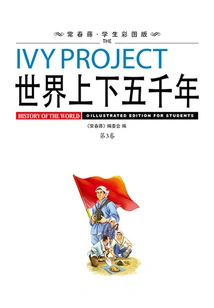
世界上下五千年(下)
"ivy" Editorial Board
As a popular popular reading on world history, "Five Thousand Years of the World" strives to reach a new level in terms of authenticity, interest and inspiration, and interprets world history in an all-round, new perspective and multi-level through scientific methods and innovative forms. The book is divided into 11 parts: ancient civilization, warring empires, the Middle Ages, the Renaissance, and the bourgeois revolution. It brilliantly and concisely outlines the basic context and development process of world historical evolution. The organic integration of concise text, diverse visuals, exquisite pictures, novel designs and other elements makes history and text easy and friendly, and accompanies teenagers to embark on a pleasant colorful reading journey. As the days and months pass, things change and the stars change. For thousands of years, human beings have gone through an unusual path: prosperity and decline, glory and tragedy...
As a popular popular reading on world history, "Five Thousand Years of the World" strives to reach a new level in terms of authenticity, interest and inspiration, and interprets world history in an all-round, new perspective and multi-level through scientific methods and innovative forms. The book is divided into 11 parts: ancient civilization, warring empires, the Middle Ages, the Renaissance, and the bourgeois revolution. It brilliantly and concisely outlines the basic context and development process of world historical evolution. The organic integration of concise text, diverse visuals, exquisite pictures, novel designs and other elements makes history and text easy and friendly, and accompanies teenagers to embark on a pleasant colorful reading journey. As the days and months pass, things change and the stars change. For thousands of years, human beings have gone through an unusual path: prosperity and decline, glory and tragedy...
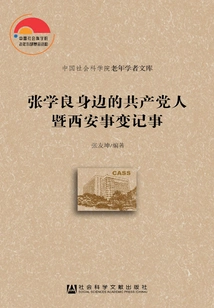
张学良身边的共产党人暨西安事变记事
Zhang Youkun
After the September 18th Incident, the Communist Party of China and its Red Army carried out united front work against Zhang Yang and his army in order to achieve a partial armistice against Japan and promote the formation of a unified national anti-war situation. Before the Xi'an Incident, Zhang Xueliang had a group of Chinese Communists around him. Among them, Liu Ding, Song Li, Wang Yizhe, Gao Fuyuan, Li Caicai, and Pan Dongzhou had a huge influence on Zhang Xueliang. The author specially lists the true deeds of these six people, aiming to fully display Zhang Xueliang's ideological transformation trajectory under the influence of the Communist Party of China from different aspects, and details the causes, consequences and process of the Xi'an Incident in "Number of the Xi'an Incident (September 1935 to February 1937)".
After the September 18th Incident, the Communist Party of China and its Red Army carried out united front work against Zhang Yang and his army in order to achieve a partial armistice against Japan and promote the formation of a unified national anti-war situation. Before the Xi'an Incident, Zhang Xueliang had a group of Chinese Communists around him. Among them, Liu Ding, Song Li, Wang Yizhe, Gao Fuyuan, Li Caicai, and Pan Dongzhou had a huge influence on Zhang Xueliang. The author specially lists the true deeds of these six people, aiming to fully display Zhang Xueliang's ideological transformation trajectory under the influence of the Communist Party of China from different aspects, and details the causes, consequences and process of the Xi'an Incident in "Number of the Xi'an Incident (September 1935 to February 1937)".
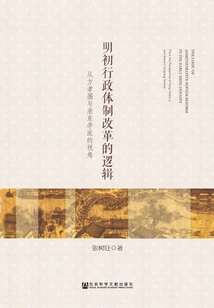
明初行政体制改革的逻辑:从方孝孺与浙东学派的视角
Zhang Shuwang
Chinese cultural tradition has had a strong social order complex since Confucius. Fang Xiaoru's government reform plan and rural governance plan are both based on endogenous governance of more than two thousand years of humanistic tradition. They are institutional designs for scholars to realize Confucian ideals, benefit the country, and stay away from the scourge of autocracy. Its government reform plan could not be implemented due to the restoration of the military power group, while its rural governance plan inherited the rural autonomy system of the Song Dynasty, initiated the rural autonomy system of the Ming and Qing dynasties and even modern times, and became an important part of the development of my country's traditional rural autonomy system.
Chinese cultural tradition has had a strong social order complex since Confucius. Fang Xiaoru's government reform plan and rural governance plan are both based on endogenous governance of more than two thousand years of humanistic tradition. They are institutional designs for scholars to realize Confucian ideals, benefit the country, and stay away from the scourge of autocracy. Its government reform plan could not be implemented due to the restoration of the military power group, while its rural governance plan inherited the rural autonomy system of the Song Dynasty, initiated the rural autonomy system of the Ming and Qing dynasties and even modern times, and became an important part of the development of my country's traditional rural autonomy system.
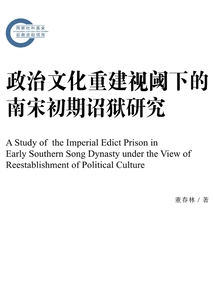
政治文化重建视阈下的南宋初期诏狱研究
Dong Chunlin
This book takes the imperial edict cases in the early Southern Song Dynasty as the research object, and takes the rule of law situation in the early Southern Song Dynasty, the relationship between individual edict cases and the politicization of Taoism in the Jianyan and Shaoxing years, the negotiation between group edict cases and political operations in Shaoxing, and the political reconstruction of the Xiaozong Dynasty after the "Shaoxing Genghua". As a framework for investigation, we comprehensively examine the political process and the path of political interest exchange, reveal the political and cultural orientation behind this political behavior, and then reveal the interaction between state power and social control in a specific historical period, in order to outline the general context of political operations in the early Southern Song Dynasty.
This book takes the imperial edict cases in the early Southern Song Dynasty as the research object, and takes the rule of law situation in the early Southern Song Dynasty, the relationship between individual edict cases and the politicization of Taoism in the Jianyan and Shaoxing years, the negotiation between group edict cases and political operations in Shaoxing, and the political reconstruction of the Xiaozong Dynasty after the "Shaoxing Genghua". As a framework for investigation, we comprehensively examine the political process and the path of political interest exchange, reveal the political and cultural orientation behind this political behavior, and then reveal the interaction between state power and social control in a specific historical period, in order to outline the general context of political operations in the early Southern Song Dynasty.
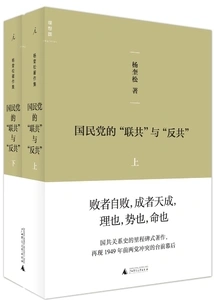
国民党的“联共”与“反共”
Yang Kuisong
There were two revolutionary parties in modern China: the Kuomintang and the Communist Party. The direction in which the Chinese revolution will take depends on the strength and competition between the Kuomintang and the Communist Party. This contest lasted for nearly thirty years. In the end, the young and weak Communist Party defeated the Kuomintang and shaped the subsequent history of China. The two revolutionary parties have been separated and reunited for a long time. You have me in you, and you have me in you. Why did the Kuomintang lose and the Communist Party win? For the first time, this book uses various archival documents and other historical materials from both the Kuomintang and the Communist Party to conduct a comprehensive and in-depth investigation and research on a series of major issues related to the development of relations between the Kuomintang and the Communist Party.
There were two revolutionary parties in modern China: the Kuomintang and the Communist Party. The direction in which the Chinese revolution will take depends on the strength and competition between the Kuomintang and the Communist Party. This contest lasted for nearly thirty years. In the end, the young and weak Communist Party defeated the Kuomintang and shaped the subsequent history of China. The two revolutionary parties have been separated and reunited for a long time. You have me in you, and you have me in you. Why did the Kuomintang lose and the Communist Party win? For the first time, this book uses various archival documents and other historical materials from both the Kuomintang and the Communist Party to conduct a comprehensive and in-depth investigation and research on a series of major issues related to the development of relations between the Kuomintang and the Communist Party.
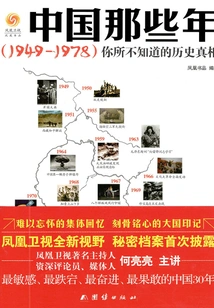
中国那些年(1949-1978):你所不知道的历史真相
Compiled By Phoenix Books
This book interprets major events and figures in the past 30 years from a unique perspective, and is a uniquely vivid chronicle of contemporary China. It captures the most representative historical moments from 1949 to 1978 - the founding ceremony of the People's Republic of China, the War to Resist U. S. Aggression and Aid Korea, the peaceful liberation of Tibet, the promulgation of the first constitution, the self-defense counterattack of Zhenbao Island... Through real historical events and characters, it reflects the historical development and rise and fall of the 30 years since the founding of the People's Republic of China. The content covers all aspects of politics, economy, culture and social development. It not only focuses on major events that affect the overall situation, but also contains real historical details obtained from relevant archives, chronologies, diaries and other new historical materials. It not only ensures the integrity of history, but also has vivid readability. It opens up a grand and moving path for readers to have an in-depth understanding of contemporary Chinese history.
This book interprets major events and figures in the past 30 years from a unique perspective, and is a uniquely vivid chronicle of contemporary China. It captures the most representative historical moments from 1949 to 1978 - the founding ceremony of the People's Republic of China, the War to Resist U. S. Aggression and Aid Korea, the peaceful liberation of Tibet, the promulgation of the first constitution, the self-defense counterattack of Zhenbao Island... Through real historical events and characters, it reflects the historical development and rise and fall of the 30 years since the founding of the People's Republic of China. The content covers all aspects of politics, economy, culture and social development. It not only focuses on major events that affect the overall situation, but also contains real historical details obtained from relevant archives, chronologies, diaries and other new historical materials. It not only ensures the integrity of history, but also has vivid readability. It opens up a grand and moving path for readers to have an in-depth understanding of contemporary Chinese history.
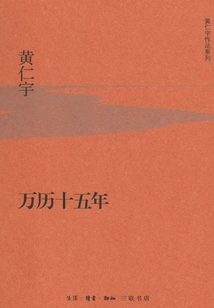
万历十五年(精装版)
Huang Renyu
The popular anti-corruption drama "In the Name of the People" mentioned "The Fifteen Years of Wanli" many times. Why do so many people study this book? This book is the famous work of Mr. Huang Renyu, a Chinese-American historian, and is also one of his masterpieces. It integrates Mr. Huang's decades of life experience and academic experience. It is the first time to analyze the crux of Ming Dynasty society with a "big historical perspective" and observe the path of modern China. It is thought-provoking. Although the title of the book is "Fifteen Years of Wanli", its content overlooks the rise and fall of the entire Ming Dynasty, and tells us about Hai Rui and Zhang Juzheng who are different from previous history books... Reading Huang Renyu's book, you will deeply understand that "history gives people wisdom." This is a classic that opened up the horizons of the Chinese people, and has been praised as "like a dagger, tearing open the iron curtain of historical writing dominated by ideology." Shi Jingqian, Mou Fuli, Yang Liansheng, Liu Zhiqin, Chen Xuelin, Zhao Shiyu, Zhu Xueqin, Yang Nianqun, Jiang Xiaoyuan, Xiao Gongqin, Shang Chuan, Fan Shuzhi, Mao Peiqi, Updike, Wang Xiaobo, Wang Shuo, Xie Mian, Yi Zhongtian, Wu Si and many other famous people at home and abroad unanimously recommended it!
The popular anti-corruption drama "In the Name of the People" mentioned "The Fifteen Years of Wanli" many times. Why do so many people study this book? This book is the famous work of Mr. Huang Renyu, a Chinese-American historian, and is also one of his masterpieces. It integrates Mr. Huang's decades of life experience and academic experience. It is the first time to analyze the crux of Ming Dynasty society with a "big historical perspective" and observe the path of modern China. It is thought-provoking. Although the title of the book is "Fifteen Years of Wanli", its content overlooks the rise and fall of the entire Ming Dynasty, and tells us about Hai Rui and Zhang Juzheng who are different from previous history books... Reading Huang Renyu's book, you will deeply understand that "history gives people wisdom." This is a classic that opened up the horizons of the Chinese people, and has been praised as "like a dagger, tearing open the iron curtain of historical writing dominated by ideology." Shi Jingqian, Mou Fuli, Yang Liansheng, Liu Zhiqin, Chen Xuelin, Zhao Shiyu, Zhu Xueqin, Yang Nianqun, Jiang Xiaoyuan, Xiao Gongqin, Shang Chuan, Fan Shuzhi, Mao Peiqi, Updike, Wang Xiaobo, Wang Shuo, Xie Mian, Yi Zhongtian, Wu Si and many other famous people at home and abroad unanimously recommended it!
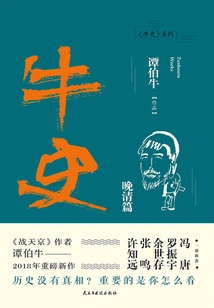
Niu Shi·late Qing Dynasty
History牛史·晚清篇
Tan Boniu
The book takes time as its warp and characters' stories as its latitude. Based on extensive historical materials, it starts with details and clarifies many misunderstandings in the dazzling history of the late Qing Dynasty from a human perspective. It once again demonstrates Tan Boniu's proficiency in history and understanding of human nature, and finely polishes a military and political world in the late Qing Dynasty that is different from your impression. The things here may be rare to those who know them, but they are worth remembering; the people here, even if they think about them a hundred years later, will still make people today deeply admire them. Here are Zeng Guofan, a famous minister of the ZTE who loves to complain, Zuo Zongtang who is chatty, and Li Hongzhang who is a ruffian; there is also the famous general Bao Chao who turned the tide by himself; Qian Amu, the "Ocean" who has superb political skills but can't see the direction of the times... In Tan Boniu's works, the heroes of the late Qing Dynasty escape from the stereotyped impression frame of you and me, and they are either solemn or harmonious, sad or happy, showing their vivid humanity.
The book takes time as its warp and characters' stories as its latitude. Based on extensive historical materials, it starts with details and clarifies many misunderstandings in the dazzling history of the late Qing Dynasty from a human perspective. It once again demonstrates Tan Boniu's proficiency in history and understanding of human nature, and finely polishes a military and political world in the late Qing Dynasty that is different from your impression. The things here may be rare to those who know them, but they are worth remembering; the people here, even if they think about them a hundred years later, will still make people today deeply admire them. Here are Zeng Guofan, a famous minister of the ZTE who loves to complain, Zuo Zongtang who is chatty, and Li Hongzhang who is a ruffian; there is also the famous general Bao Chao who turned the tide by himself; Qian Amu, the "Ocean" who has superb political skills but can't see the direction of the times... In Tan Boniu's works, the heroes of the late Qing Dynasty escape from the stereotyped impression frame of you and me, and they are either solemn or harmonious, sad or happy, showing their vivid humanity.
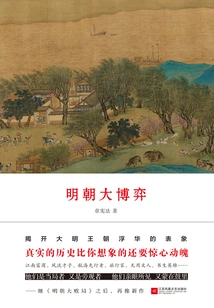
明朝大博弈
Chapter Constitution
This book is another masterpiece of author Zhang Xianxian's study of the history of the Ming Dynasty after "The Great Defeat of the Ming Dynasty". It turns his attention from the court to the broader world, including wealthy businessmen, romantic talents, pioneers of navigation, travelers, etc. Explore and restore the details and dark sides of the Ming Dynasty as three-dimensionally as possible, and discover the well-known characteristics of the last Han Dynasty king. Using a more unfamiliar perspective, it recreates the ups and downs of the lives of historical figures; it uses microscope-like analysis to restore historical details and dark sides, and recreate the thrilling power game of the Ming Dynasty in a new way.
This book is another masterpiece of author Zhang Xianxian's study of the history of the Ming Dynasty after "The Great Defeat of the Ming Dynasty". It turns his attention from the court to the broader world, including wealthy businessmen, romantic talents, pioneers of navigation, travelers, etc. Explore and restore the details and dark sides of the Ming Dynasty as three-dimensionally as possible, and discover the well-known characteristics of the last Han Dynasty king. Using a more unfamiliar perspective, it recreates the ups and downs of the lives of historical figures; it uses microscope-like analysis to restore historical details and dark sides, and recreate the thrilling power game of the Ming Dynasty in a new way.
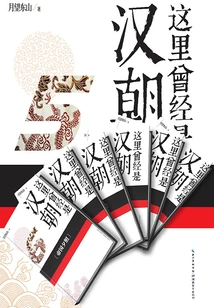
这里曾经是汉朝(全集)
The Moon Looks At Dongshan
"This Was Once the Han Dynasty" is the most popular history of the Han Dynasty! "This Was Once the Han Dynasty" is a set of popular historical books that comprehensively interprets the history of the two Han Dynasties. It completely presents the prosperity and decline of the Han Dynasty over four hundred years, and is by far the most complete, powerful and transparent historical reading of the Han Dynasty in vernacular. Haotian Muyun, Luo Jie and others sincerely recommend it, and millions of netizens are crazy about it. Palace fighting, alienation, bloodshed, bloodlust, conspiracy, and sophistry, watch this turbulent historical drama together!
"This Was Once the Han Dynasty" is the most popular history of the Han Dynasty! "This Was Once the Han Dynasty" is a set of popular historical books that comprehensively interprets the history of the two Han Dynasties. It completely presents the prosperity and decline of the Han Dynasty over four hundred years, and is by far the most complete, powerful and transparent historical reading of the Han Dynasty in vernacular. Haotian Muyun, Luo Jie and others sincerely recommend it, and millions of netizens are crazy about it. Palace fighting, alienation, bloodshed, bloodlust, conspiracy, and sophistry, watch this turbulent historical drama together!
中国史前信仰简史
Li Zhi
This book is an academic work on the development history of Chinese prehistoric beliefs. The author, Mr. Li Zhi, has been engaged in research on the history of primitive society and culture for a long time in the Banpo Museum. He has a solid foundation, rich field practical experience and a wide range of coverage. This book is based on archaeological excavation and investigation and research of ethnic folk customs, from archaeology, sociology, history, folklore From the perspective of secular science and anthropology, a large number of physical materials are quoted, taking the cultural relics unearthed from various sites from the Paleolithic Age to the Neolithic Age as examples, and based on the Marxist point of view, the author analyzes and explores the ins and outs of my country's faith culture, and correctly understands the historical development and evolution of faith culture. A tentative exploration of the customs and beliefs of prehistoric humans.
This book is an academic work on the development history of Chinese prehistoric beliefs. The author, Mr. Li Zhi, has been engaged in research on the history of primitive society and culture for a long time in the Banpo Museum. He has a solid foundation, rich field practical experience and a wide range of coverage. This book is based on archaeological excavation and investigation and research of ethnic folk customs, from archaeology, sociology, history, folklore From the perspective of secular science and anthropology, a large number of physical materials are quoted, taking the cultural relics unearthed from various sites from the Paleolithic Age to the Neolithic Age as examples, and based on the Marxist point of view, the author analyzes and explores the ins and outs of my country's faith culture, and correctly understands the historical development and evolution of faith culture. A tentative exploration of the customs and beliefs of prehistoric humans.
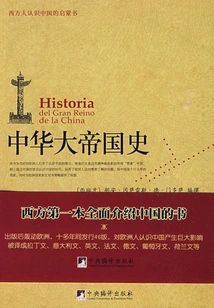
中华大帝国史
(spain) Compiled By Juan González De Mendoza
"History of the Great Chinese Empire" opened a window for Europeans at that time to understand China, allowing them to move from "imagining" China through mysterious rumors to an era of understanding China through China's reality. It answered the question that Europeans urgently needed to know, that is, what kind of country China is, and at the same time provided a basis for European countries to formulate strategies against China.
"History of the Great Chinese Empire" opened a window for Europeans at that time to understand China, allowing them to move from "imagining" China through mysterious rumors to an era of understanding China through China's reality. It answered the question that Europeans urgently needed to know, that is, what kind of country China is, and at the same time provided a basis for European countries to formulate strategies against China.