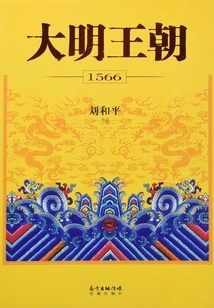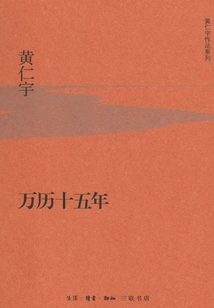
The Fifteenth Year of Wanli (hardcover Edition)
by Huang Renyu
About This Novel
The popular anti-corruption drama "In the Name of the People" mentioned "The Fifteen Years of Wanli" many times. Why do so many people study this book? This book is the famous work of Mr. Huang Renyu, a Chinese-American historian, and is also one of his masterpieces. It integrates Mr. Huang's decades of life experience and academic experience. It is the first time to analyze the crux of Ming Dynasty society with a "big historical perspective" and observe the path of modern China. It is thought-provoking. Although the title of the book is "Fifteen Years of Wanli", its content overlooks the rise and fall of the entire Ming Dynasty, and tells us about Hai Rui and Zhang Juzheng who are different from previous history books... Reading Huang Renyu's book, you will deeply understand that "history gives people wisdom." This is a classic that opened up the horizons of the Chinese people, and has been praised as "like a dagger, tearing open the iron curtain of historical writing dominated by ideology." Shi Jingqian, Mou Fuli, Yang Liansheng, Liu Zhiqin, Chen Xuelin, Zhao Shiyu, Zhu Xueqin, Yang Nianqun, Jiang Xiaoyuan, Xiao Gongqin, Shang Chuan, Fan Shuzhi, Mao Peiqi, Updike, Wang Xiaobo, Wang Shuo, Xie Mian, Yi Zhongtian, Wu Si and many other famous people at home and abroad unanimously recommended it!
Official Sources
What Readers Think
Rating
Community(0)
Official(267)Scraped 2mo ago
The strong wind started at the end of Qingping
1587 is the fifteenth year of Wanli and the second year of Dinghai. On the surface, it seems that the world is at peace and there is nothing to remember. In fact, our Ming Empire has reached the end of its development. At this time, the emperor (Wanli) worked hard to govern or had a good time, the chief assistants (Zhang Juzheng, Shen Shixing) were dictatorial or conciliatory, the senior generals (Yu Dayou, Qi Jiguang) were creative or insecure, and the civil servants (Hai Rui) were honest and honest. Public service or corruption, thinkers (Li Zhi) being extremely progressive or absolutely conservative, the final result is that there is no distinction between good and evil, and they are all unable to achieve meaningful development in their careers. Some people are ruined, some are ruined, and some are ruined both. The root cause is that in a country with a large population, everyone's actions are restricted by simple and unfixable Confucian principles, and the laws lack creativity, then the degree of social development will inevitably be limited. Even if the purpose is good, it cannot make up for the lack of technology.
The grand view of history does not focus on the personal gains and losses of rulers or the pros and cons of the implementation of policies, but looks at our Ming and Qing dynasties and even the entire modern history from the basis of a broader national operating system. The stability of the conservative small-scale peasant economy requires that the fundamental dominance of Zhu Fu's Confucianism for thousands of years since the Han Dynasty should not be shaken. The civil servant group has used it as the basis for governance. However, due to various reasons, the actual implementation is one set of positive words and another negative action. Hai Rui cannot tolerate the same, and the separation of morality and behavior has become the norm. The civil servant group's replacement of the rule of law with the rule of virtue and rule by people seems to be the root cause of China's modern decline in Huang Renyu's opinion, and the Opium War was just a coincidental trigger. Highly recommend a novel way to watch Chinese history!
"The vast majority of palace maids spent their youth as servants. After middle age, they may be assigned to a certain eunuch as a companion, which is the so-called "promise"." Isn't it a food exchange?
Well, I'm just wandering around too!
Diaosi's evaluation in one word: Ridiculously expensive
Good,,,,,,,
I came here because of my summer vacation homework, and I wanted to ask where I can start writing my thoughts after reading. .
In the struggle for power, it is difficult to retreat with success, but only with ruin.
A pool of stagnant water cannot stir up living water. Every group may struggle to go against the flow or go downstream, and may feel a deep sense of powerlessness in the stagnant water.
Each of us can have awe of history. When we watch historical dramas, we will leisurely feel a sense of national pride. This is the responsibility of historical dramas. However, some directors nowadays are not rigorous at all and are full of loopholes and errors. They are simply making fun of their own culture. Artistic creation must be created within a reasonable range, but are today's historical dramas within a reasonable range? Some have simply changed completely. We don't respect our own history, how can we ask others to respect it?
Rating
Community(0)
Official(267)Scraped 2mo ago
The strong wind started at the end of Qingping
1587 is the fifteenth year of Wanli and the second year of Dinghai. On the surface, it seems that the world is at peace and there is nothing to remember. In fact, our Ming Empire has reached the end of its development. At this time, the emperor (Wanli) worked hard to govern or had a good time, the chief assistants (Zhang Juzheng, Shen Shixing) were dictatorial or conciliatory, the senior generals (Yu Dayou, Qi Jiguang) were creative or insecure, and the civil servants (Hai Rui) were honest and honest. Public service or corruption, thinkers (Li Zhi) being extremely progressive or absolutely conservative, the final result is that there is no distinction between good and evil, and they are all unable to achieve meaningful development in their careers. Some people are ruined, some are ruined, and some are ruined both. The root cause is that in a country with a large population, everyone's actions are restricted by simple and unfixable Confucian principles, and the laws lack creativity, then the degree of social development will inevitably be limited. Even if the purpose is good, it cannot make up for the lack of technology.
The grand view of history does not focus on the personal gains and losses of rulers or the pros and cons of the implementation of policies, but looks at our Ming and Qing dynasties and even the entire modern history from the basis of a broader national operating system. The stability of the conservative small-scale peasant economy requires that the fundamental dominance of Zhu Fu's Confucianism for thousands of years since the Han Dynasty should not be shaken. The civil servant group has used it as the basis for governance. However, due to various reasons, the actual implementation is one set of positive words and another negative action. Hai Rui cannot tolerate the same, and the separation of morality and behavior has become the norm. The civil servant group's replacement of the rule of law with the rule of virtue and rule by people seems to be the root cause of China's modern decline in Huang Renyu's opinion, and the Opium War was just a coincidental trigger. Highly recommend a novel way to watch Chinese history!
"The vast majority of palace maids spent their youth as servants. After middle age, they may be assigned to a certain eunuch as a companion, which is the so-called "promise"." Isn't it a food exchange?
Well, I'm just wandering around too!
Diaosi's evaluation in one word: Ridiculously expensive
Good,,,,,,,
I came here because of my summer vacation homework, and I wanted to ask where I can start writing my thoughts after reading. .
In the struggle for power, it is difficult to retreat with success, but only with ruin.
A pool of stagnant water cannot stir up living water. Every group may struggle to go against the flow or go downstream, and may feel a deep sense of powerlessness in the stagnant water.
Each of us can have awe of history. When we watch historical dramas, we will leisurely feel a sense of national pride. This is the responsibility of historical dramas. However, some directors nowadays are not rigorous at all and are full of loopholes and errors. They are simply making fun of their own culture. Artistic creation must be created within a reasonable range, but are today's historical dramas within a reasonable range? Some have simply changed completely. We don't respect our own history, how can we ask others to respect it?